
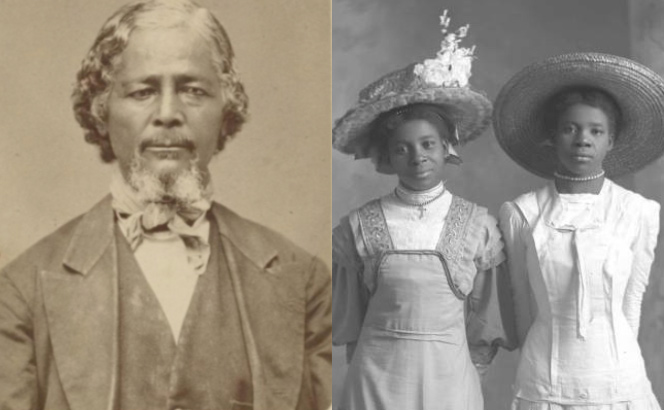

When Reconstruction ended in 1877, southern whites used violence, economic exploitation, discriminatory laws called Black Codes, and political disenfranchisement to subjugate African Americans and undo their gains during Reconstruction. Kansas and other destinations on the Great Plains represented a chance to start a new life. Kansas had fought to be a free state and, with the Homestead Act of 1862, the region offered lots of land at low cost. As a result, between the late 1870s and early 1880s, more than 20,000 African Americans left the South for Kansas, the Oklahoma Territory, and elsewhere on the Great Plains in a migration known as the “Great Exodus.”
These African American migrants, or Exodusters, came primarily from Mississippi, Louisiana, Texas, and Tennessee. Some participated in organized recruitment efforts to establish black colonies in Kansas. Others just picked up and left, often traveling by steamboat to St. Louis, where they received help to get the rest of the way. One prominent promoter of the Exodus was Benjamin “Pap” Singleton, who organized several colonies in Kansas and recruited African Americans from Tennessee to move there. The peak of the Exodus occurred in the spring of 1879 when 6,000 migrants arrived in Kansas in only a few months.
For many Exodusters, the “promised land” of Kansas proved more punishing than they had hoped; the land was difficult to cultivate, and building homes and businesses with few resources proved challenging. The Exodus slowed in the 1880s and, by 1900, the population of many of the rural Exoduster towns and settlements began to decline.
The Exodus demonstrated that formerly enslaved people were claiming their freedom of movement—the power to decide where they would travel and live that slavery had denied them. In doing so, they sought better lives for themselves and rejected the violent white supremacist regime that was taking hold in the post-Reconstruction South. The predominantly black communities the Exodusters created provided important models of black self-government and community building in the West at the end of the nineteenth century.