
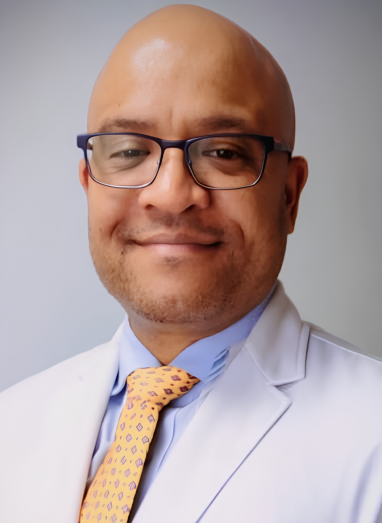

By : Brian Hall,MD FACS, Chief of Surgery, One Brooklyn Health Interfaith Medical Center
1. What are the most important risk factors for breast cancer, and how can someone better understand their individual risk?
The biggest risk factors for breast cancer are being female and getting older. Other risk factors include a family history of breast or ovarian cancer, inherited gene mutations such as BRCA1 and BRCA2, dense breast tissue, and a personal history of certain breast conditions.
Additional factors that increase risk include early periods, late menopause, having a first child after 30 or not having children, radiation to the chest before age 30, alcohol use, and excess weight after menopause also raise risk.
The best way to understand your own risk is to ask your doctor for a formal risk assessment, ideally by age 25–30. We use validated tools that combine your family history, health history and breast density to estimate your risk.
2. When should women begin breast cancer screening, and how often should they receive a mammogram?
The U.S. Preventive Services Task Force recommends that women at average risk get a mammogram every two years from age 40 to 74. Some organizations, including the American College of Radiology, recommend yearly mammograms starting at 40. Women should talk with their doctor about whether annual or every-other-year screening is right for them.
3. Are there circumstances where someone should begin screening earlier than generally recommended?
Yes. Earlier screening, often including a breast MRI, may be recommended for people who:
- Carry a BRCA gene mutation
- Have a close relative such as a mother, sister, daughter diagnosed at a young age
- Had chest radiation before age 30
- Have a lifetime risk estimated at 20% or higher calculated through screening models/tools
For some high-risk women, screening may start at 25 or 30, or 10 years before the age at which a close relative was diagnosed.
4. What role do family history and genetics play in breast cancer risk?
Having a mother, sister, or daughter with breast cancer roughly doubles a woman’s risk, and the risk is higher if more than one relative was affected or if they were diagnosed at a young age. Only about 5–10% of breast cancers are linked to inherited mutations like BRCA1 and BRCA2, but those mutations can raise lifetime risk dramatically.
Most people diagnosed with breast cancer have no family history, so no family history does not mean no risk. People with a strong family history of breast, ovarian, prostate or pancreatic cancer should ask their doctor about genetic counseling and testing.
5. What does it mean to have dense breasts, and how can breast density affect screening?
Dense breasts have more glandular and fibrous tissue than fatty tissue. About half of women age 40 and older have dense breasts. Density can only be seen on a mammogram, not felt.
It matters for two reasons: dense tissue slightly raises cancer risk, and it can hide tumors because both look white on a mammogram. Since 2024, federal rules require mammogram reports to tell patients whether they have dense breasts. Women with dense breasts should ask their doctor whether they need extra screening, such as ultrasound or MRI. New York State law requires most insurance plans to cover breast cancer screening and diagnostic imaging with no out-of-pocket costs.
6. What signs or changes should people pay attention to in addition to finding a lump?
- Swelling of all or part of the breast (inflammatory breast cancer presents like this)
- Skin dimpling, puckering, or a texture like an orange peel (peau d’orange)
- Redness, scaliness or thickening of the breast or nipple skin (Paget’s disease)
- A nipple that turns inward when it didn’t before (nipple retraction)
- Nipple discharge other than breast milk, especially if it’s bloody (number one cause of bloody nipple discharge is an intraductal papilloma, which is benign, but is considered high risk)
- Breast pain that does not go away
- A lump or swelling in the underarm or near the collarbone (these are lymph nodes)
Any of these changes should be checked by a doctor, even after a recent normal mammogram.
7. What are some common misconceptions about breast cancer risk and screening?
- “No one in my family had it, so I’m safe.” Most women diagnosed have no family history.
- “I’m too young.” Risk rises with age, but younger women can get breast cancer.
- “Mammograms are dangerous because of radiation.” The radiation dose is very low, and the benefit of early detection far outweighs the risk for most women.
- “If I feel fine, I don’t need screening.” Mammograms are meant to find cancer before it causes symptoms, when it is most treatable.
- “A breast cancer diagnosis is a death sentence.” When detectedearly, the five-year survival rate is about 99%.
- “Men can’t get breast cancer.” They can.
8. What should men know about their risk, warning signs and when they should speak with a doctor?
Men make up about 1% of breast cancer cases, and their lifetime risk is about 1 in 726. Risk is higher for men who:
- Have a BRCA2 mutation (or BRCA1)
- Have a strong family history of breast cancer
- Are older
- Have obesity, liver disease or Klinefelter syndrome
- Have had chest radiation
Warning signs include a painless lump behind or near the nipple, nipple discharge, a nipple turning inward, skin changes on the chest, or a lump in the underarm
Because men don’t receive routine breast cancer screening, their cancers tend to be found at later stages. Men should see a doctor promptly about any chest change. Men with a known BRCA mutation should ask about yearly clinical breast exams.
9. Are there disparities in breast cancer diagnosis and outcomes that are particularly important for communities in Central and East Brooklyn to understand?
Yes. Central and East Brooklyn, including neighborhoods like Bedford-Stuyvesant, Crown Heights, Flatbush, Brownsville and East New York, are home to large Black and Caribbean communities. Nationally, Black women are about as likely as white women to get breast cancer but roughly 40% more likely to die from it. They are also more likely to be diagnosed before age 50, at a later stage, and with aggressive types such as triple-negative breast cancer. New York City data shows the same gaps.
Structural barriers can make these disparities worse, including:
- Insurance and cost
- Distance to high-quality imaging
- Delays in follow-up after an abnormal mammogram
- Limited time off work
For these communities, it’s especially important to get a risk assessment by age 30,begin screening on time, follow up quickly on any abnormal result, and ask about genetic testing when there is a family history.
10. What steps can people take throughout the year to be more proactive about their breast health?
- Know what’s normal for your breasts and report changes promptly.
- Keep screening appointments and put reminders on your calendar.
- Update your family health history each year and share it with your doctor.
- Ask about your breast density and risk level.
- Limit alcohol, stay physically active and maintain a healthy weight.
- Breastfeed if possible.
- Talk with your doctor before starting or continuing hormone therapy.
- If cost is a barrier, ask about free or low-cost screening options through the NYS Cancer Services Program or services available through One Brooklyn Health.
This October, let’s encourage awareness, support those impacted by breast cancer, and empower our communities to prioritize their health. To learn more about our breast health services, please visit us here.