Home Blog Page 698

A Black Panther Voice Roars from Brooklyn

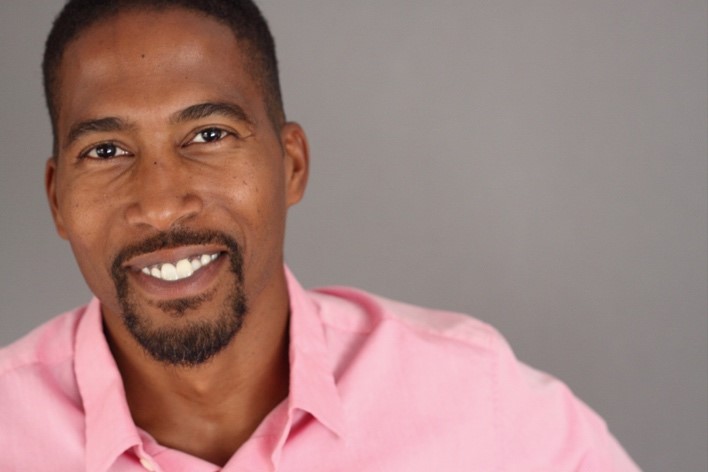
James Mathis, III has been the voice of the Black Panther in Marvel’s Avengers for four seasons.

The “Black Panther” movie continues to break box office charts. According to IndieWire on line magazine, the movie is “on course to become the greatest comic-book movie in history.” These accolades mostly point to the millions it will make. Other political and cultural factors contribute to its distinctive success such as display of black power, black pride and black beauty. While the movie sets historical records, a part of its foundation has its origins right here in Brooklyn, New York.


James Mathis III has been the voice of the Black Panther in Marvel’s Avengers for four seasons. He joins a list of a few well-known actors who have played that role before him according to Behind the Voice website: Keith David, Taye Diggs, Djimon Hounsou.


The voice behind what is emerging as a global movement has its roots right here in Brooklyn. Mathis’ early beginnings include P.S. 327, Dr. Rose English Elementary School, in East New York. He continued in Bushwick, Brooklyn at Philippa Schuyler Intermediate for the gifted and talented, where, according to his mother, Minister Shirlene Holman, “The acting spark was ignited.” Mathis said, in his Fort Greene high school, Brooklyn Tech, he found his niche when school play director Susan Palmieri cast him in leading roles. Shakespearean English teacher and Assistant Principal Dr. Robert Sinclair also provided inspiration. “He made Shakespeare fun and encouraged a deeper understanding of literature and Elizabethan English.”


During a phone interview with Dr. Sinclair, he stated, “Mathis always had the voice and was always a professional even as a teenager,” which, no doubt, explains how he rose to represent his school in the NYC Shakespeare Competition reciting sonnets and excerpts from plays.


In addition to his teachers, Mathis credits Spike Lee and Denzel Washington for his deep dive into acting. The release of “Malcolm X” when Mathis was still a high school student and the proximity of 40 Acres and a Mule (a novelty shop across the street from his school) conveyed a message of the possibilities the world of acting could provide. For college, he attended University of Southern California to study production.

Trained as an actor, Mathis landed roles on television shows such as “ER,” “Pacific Blue” and “City of Angels.” He harnessed his thespian skills, education, training and the depth of his voice to find voice-over acting in various video games and animated series.


Mathis found staying power, most recently, as T’Challa, the Black Panther, in Marvels Avenger series through which he supports his wife and two children in California.


Speaking of her son, Minister Holman stated, “I’m grateful he stayed the course and persevered. He is blessed to do what he loves.”


Black Panther, the animated series is available on YouTube, Amazon Video, itunes, Vudu, and Google Play. James Mathis III will continue to harness his Brooklyn, Shakespeare and other thespian skills as he approaches season five of Marvels Avengers, and T’Challa will play a greater role.



The State of the Mets

0

After a dreadful 72-90 (wins to losses) 2017 season, injuries and disappointments are probably the best words to sum up the New York Mets. It was simply a “Mess” in Flushing, Queens that consisted of injuries to key players. The team’s future seemed to be in doubt. Their offense was just as bad and suffered just as much injuries as the team’s pitching rotation. A year later, there is a new manager in place for the Mets and the star players are back and ready to redeem themselves. Although the Mets do not appear to be contenders in a stacked and competitive National League, I believe the Mets will indeed be better than what people will think and I will tell you why.

New Mets Manager Mickey Callaway was a pitching guru as the Cleveland Indians pitching coach the past couple of years. The Indians pitching rotation was in the top five in ERA (earned run average) the past few years, something the Mets pitching rotation have had issues with as far as giving up runs to opposing offenses in bunches. Callaway’s presence will impact the team’s pitching and I believe he has the smarts to stabilize the rotation and bring a much-needed new voice in the clubhouse. As far as the team goes, there are many players on the roster whose season ended early due to injury. The team’s best player on offense, Yoenis Cespedes, has been plagued by injury the past few seasons and was shut down yet again last year. Cespedes has reported to camp in great shape, has added yoga to his off-season workout to improve his stability. If healthy, Cespedes is one of the most dangerous players in all of baseball. He has the ability to post up a 40-home run/120 RBI (runs batted in) season. However, nearly 75 percent of the pitching rotation are coming off season-ending injuries. Pitchers like Noah Syndergaard is coming off a torn lat muscle injury. As we saw 2 years ago, when Noah is right, he is a certified flamethrower and simply has strikeout stuff.  Fellow pitcher Matt Harvey looks to redeem himself this year. His past two seasons have not been good. If he can capture the magic he did three years ago when he earned the nickname “The Dark Knight,” he will complement a strong young rotation with Syndergaard and Jacob deGrom.

Health will be the big question for the Mets to be amazing this year. They have the pitching rotation that can win games for them along with closer Jeurys Familia, who will be looking to redeem himself as one of the dominant closers in baseball. The acquisition of Todd Frazier will impact the team. His grit and presence will be infectious for the team. Their young guns of Dominic Smith and Amed Rosario could take their games to another level and could complement the veteran-like batting order for the Mets. Let’s not forget, they got back Jay Bruce in free agency. He still can hit 20 home runs in a season. This Mets team can very well turn some heads and can be one of 2018’s surprising teams just like the Yankees were in 2017. With the season a month and a half away, we will see what this Mets team is really made of.

Lerone Bennett Jr. Chronicler of African American Life, Passes at 89

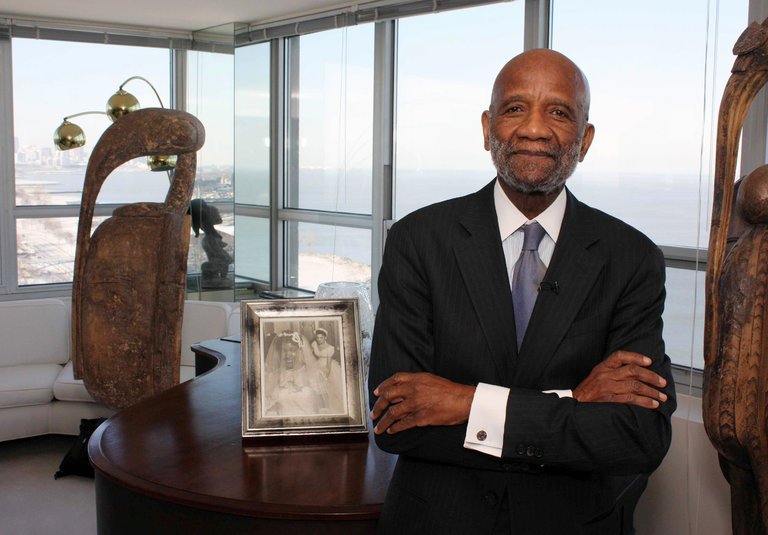
Another of our mighty trees has fallen and the impact will be felt around the world. Lerone Bennett Jr., 89, made an extraordinary contribution as a historian and author and to the field of journalism. He died at his home in the Kenwood neighborhood of Chicago’s South Side on February 14th of complications from vascular dementia, a cruel blow for such a superior intellect.

Born in Clarksdale, Miss., Bennett grew up in Jackson and earned his bachelor’s degree from Morehouse in Atlanta, where he and Dr. Martin Luther King Jr. were classmates. He served in the Army during the Korean War and pursued a career in journalism after returning home. His first job in the field was as city editor for the Atlanta Daily World. In 1953, he moved to Chicago to take a job as associate editor of Johnson Publishing’s Jet magazine. He became associate editor for the company’s Ebony magazine in 1954 and senior editor in 1958. He interviewed Dr. King about the Montgomery bus boycott in 1955, one of the first of many articles in Ebony about King’s civil rights crusade.

Bennett devoted his great mind to people of African descent, seeking to inspire as much as inform. While working for Ebony, Bennett also taught as a visiting professor of history at Northwestern University.

The author of the 1962 classic, “Before the Mayflower: A History of Black America,” which has been hailed as a critical component to the comprehension of a peoples’ history. Bennett repeatedly updated the book in subsequent editions to include events such as the Civil Rights Movement.

Bennett Jr. also wrote, “What Manner of Man: A Biography of Martin Luther King” in 1964, “Confrontation: Black and White” in 1965, a collection of essays, “The Challenge of Blackness,” in 1970 and “The Shaping of Black America” in 1975. Among his most controversial work was his 2000 book about Abraham Lincoln, “Forced Into Glory,” which cast Lincoln in shadow as a racist and white supremacist who practiced a politics of expediency rather than of mission and service.

Rev. Jesse Jackson, Sr. president of the Rainbow/PUSH Coalition, said. “His legacy of scholarship and activism is writing history and making history.”

“He gave Ebony its voice and its perspective on empowering African-Americans, and also was very much a champion of civil rights,” said Ebony Media CEO Linda Johnson Rice. “And everything that he did, he did with class and with style.”

Bennett remained at Ebony, becoming its executive editor in 1987 before retiring from the magazine in 2003.

“I can’t remember a time when I didn’t know Lerone Bennett,” said Johnson Rice. “I watched him work side by side with my father to create the editorial direction at Ebony. What Ebony stands for today really stands on the foundation of what Lerone Bennett envisioned for the magazine and what he championed for the years that he worked with us.”

Bennett was on the board of trustees of Columbia College and of the Chicago History Museum. President Bill Clinton appointed him to the President’s Committee on the Arts and Humanities, and President George W. Bush named him to the Presidential Commission on the proposed National Museum of African-American History and Culture. Bennett also sat on the board of the Chicago Public Library while Harold Washington was mayor.

One of the biggest surprises for Bennett was a resolution by the state of Mississippi commending his literary career as one of the state’s most successful Black writers of the 20thcCentury.“

Bennett’s wife, Gloria, whom he met when she was an associate editor at Jet and married in 1956, died in 2009. A son, Lerone III, died of lymphoma in 2013. He is also survived by three daughters, Alma Joy, Constance and Courtney, as well as three granddaughters.

A visitation will take place from 5 to 9 p.m. on Friday, Feb. 23, at A.A. Rayner & Sons Funeral Home, 318 E. 71st St., Chicago. The visitation will continue at 10 a.m. on Saturday, Feb. 24, at St. Columbanus Catholic Church, 331 E. 71st St., Chicago, followed by a memorial service at 11 a.m.


By now, the world knows about Nikolas Cruz, the 19-year-old former student at Marjory Stoneman Douglas HS in Parkland, Florida. On Valentine’s Day he killed 17 people — including students, teachers and other staff —with an AR-15 assault rifle designed for combat and known for speed, light kickback and for easily rending flesh and bone. A local white supremacist group, The Republic of Florida, which seeks to create a “white ethnostate” out of Florida, has said that Cruz is a member.

The world is also coming to know the names and faces of young people in Florida and across the U.S. who have decided to do what adults in charge have not done — force President Trump and the GOP to wean from the teat of the NRA and substantively address gun violence. We will be hearing a lot more from these angry and determined students.

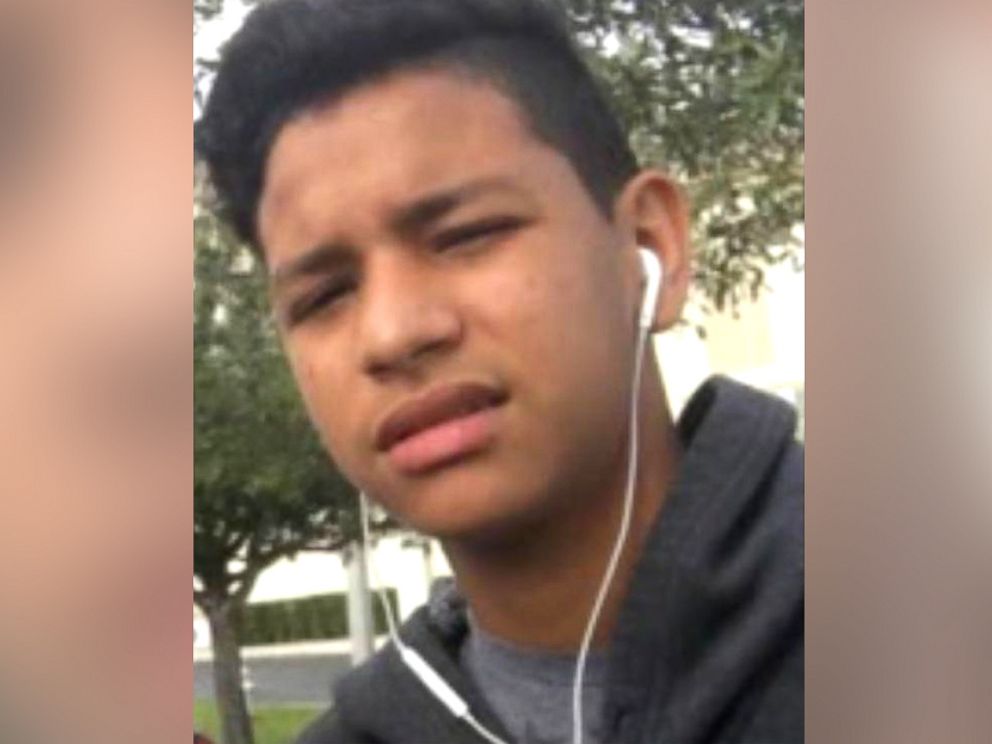
We’ve heard less, however, about Anthony Borges. If anyone deserves the title of hero, it’s Borges. He was shot five times in the back as he attempted to lock a classroom to prevent Cruz from entering. He may have saved the lives of the 20 students inside. Likely, Borges was a welcome target for the crazed white supremacist. A bullet went through Borges’ back, his left thigh was shattered, and he was shot in both legs. He clung to life for several days and it now appears that he will survive. A GoFundMe page has already raised $198,000, but more may be needed to cover his medical expenses.

Angry students have been walking out of classrooms across the country in protest. In Washington, D.C., students quickly formed an organization called Teens for Gun Reform. They staged a lie-in on the White House lawn on Presidents’ Day and the message on their Facebook page read: “By doing this, we will make a statement on the atrocities which have been committed due to the lack of gun control and send a powerful message to our government that they must take action now.” Following the lie-in, protesters marched around the premises shouting, “Shame on you” and “Disarm hate” toward the White House. The group also chanted “No more deaths,” “Am I next?” and “Hey, hey, NRA, how many kids have you killed today?”

A formal and coordinated walkout is organized for March 14th when students, teachers and other staffers at many schools across the nation will participate in the      “Enough! National School Walkout” to protest lax gun laws at 10am in each time zone. Protestors will wear orange and the walkout will last 17 minutes – one minute for each of the students murdered in Florida. Students are being helped in the planning by organizers of the National Women’s March. Ten days later on March 24th, a “March for Our Lives” is planned on Washington, D.C. Actor George Clooney and his wife Amal are donating $500,000 to this protest, which will be led by Stoneman Douglas High School students. Hearing that, other big names came on board with donations, including Oprah, Steven Spielberg and others.

Along with calling for a ban on assault weapons and greater protection overall, the students want to know how officials could leave them in harm’s way when there was ample evidence that this tragedy might occur. On January 5th, a person close to Cruz called the FBI tip line to report that Cruz had “a desire to kill people, erratic behavior and disturbing social media posts,” and that there was a “potential of him conducting a school shooting.” The Broward County Sheriff’s Office had been called to Cruz’s home 39 times since 2010 over reports of a “mentally ill person” and “domestic disturbance.” He posted a photo of himself on social media standing in his yard aiming a rifle, wearing nothing but boxers and a Make America Great Again baseball cap.

Meanwhile, the president has done little more than spout rhetoric, with his avoidance of the very mention of the word “gun” sparking both outrage and ridicule.

“No child, no teacher, should ever be in danger in an American school,” said Trump. But a year ago, less than two months into his administration, Trump rolled back an Obama regulation making it more difficult for the mentally ill to purchase guns. The Trump Administration has also proposed $680 million in cuts in 2019 to the Substance Abuse and Mental Health Services Administration amidst a reported growing mental health crisis among millennials. The Affordable Care Act mandated coverage for mental disorders that had previously been denied, including anxiety, bipolar disorder, depression, obsessive-compulsive disorder and schizophrenia. No more.

Gun control advocates say that much is needed across the board and that sustained attention must be paid if this longstanding crisis is to be properly addressed at long last. Young students, angry and fearful for their lives, appear ready to go the distance.

BED-STUY GRADE SCHOOL KIDS HEAD OFF TO COLLEGE

Students to Participate in Medgar Evers SOAR with STEM

On Friday, February 2nd, some of Dr. Ronald E. McNair Public School 5’s students left their neighborhood school classroom for college campus life. The students were chosen to participate in “The Soar with STEM” Program. The 16-week curriculum, created in concert with PS5, was created to expose students to Science, Technology, Engineering and Math. As part of the program, students travel weekly to the Medgar Evers campus to take classes taught by top professors in those fields. In addition to learning about robotics, creating apps, they’re exposed to advance mathematics. The program is part of Medgar Evers College Pipeline initiative.

“We’re excited to have you all here,” said Dr. Terrance Blackman, one of the attending professors. “And we all look forward to having you go out and be successful leaders and millionaires.”

According to the college’s website, the Medgar Evers College Pipeline is an intentionally designed system by which students from Central Brooklyn are guided through a strong K-12 experience, transitioned into college, and then provided high-quality opportunities to be on board into the professional world. The MEC Pipeline rests upon the theory that supporting schools through the Pipeline’s Whole Child, Whole Community model will increase the capacity of not just the students, but also families and the community as a whole.

Located in the Bedford-Stuyvesant neighborhood of Brooklyn, the Ronald E. McNair Public School 5 affirms as its central mission that every child has the right to a quality education in a safe and secure environment which reflects high expectations and high academic standards; that literacy is the first and most essential goal; and that every child can, and will succeed, in ways that mirror his or her own aptitudes, interests and culture. PS5 supports collaboration among staff, parents and community groups to ensure that each child will become a contributing member of his or her community, our nation and the world of the 21st century.