Home Blog

Helped Me Find My Voice

by Hortensia Gooding

On Dr. Norma Raybon, Spelman College

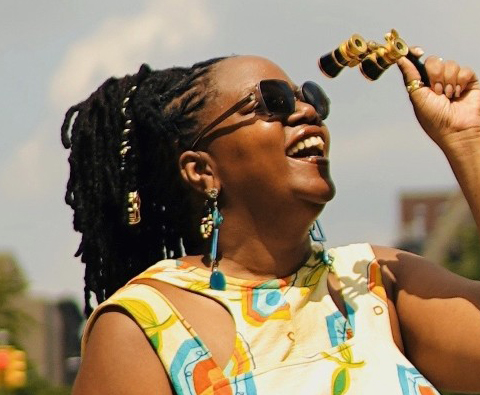
“To inspire” originally carried a literal sense of breathing life into something. Its meaning expanded later to include an external influence animating a person’s mind or spirit. It is the sentiment I apply to my resilient college music instructor, Dr. Norma Raybon, who inspired me to sing by breathing life into my voice.

I first joined my church’s choir around age 11, and from grades 6 through 12 I had an “average” voice. But my church choir was filled with loving, maternal women who were always gracious and supportive. My choir director was my mentor & protector, making sure I always had a ride to and from rehearsal to whichever random foster home the State of Massachusetts had assigned to me. 

Because of my disorganized childhood, I nearly missed my opportunity to attend Spelman College in Atlanta, Georgia. I registered for classes over the phone and most of the required first-year classes were already full. The registrar asked if I had any hobbies or interests that would translate into courses. I casually mentioned the debate team, working after school at the Red Cross and singing in the choir. I never guessed how important the choir would be. The next thing I knew, I was enrolled in Music Theory and The Spelman College Glee Club (SCGC) under the direction of Dr. Raybon. 

Unlike my church choir that rehearsed once a week and learned music by ear, SCGC met Monday through Friday, and I learned music via sheet music. Prior to Music Theory class, I had no idea how to read sheet music. Dr. Raybon seemed not to care. She held us responsible for singing every song with breathtaking beauty and an exhausting amount of power. 

Dr. Raybon was different in that she focused on demanding intentional skill instead of rewarding genetic talent. Singing beautifully went from being forever impossible to presently difficult. Becoming an effective and reliable singer meant stacking certain habits until they became instinctive.  Singing requires very deep and consistent breathing; the engagement of muscles in my abs and my back; constantly accurate posture; keen listening; uninterrupted observation and a good memory. 

I also learned under Dr. Raybon that “singing beautifully” also requires: Punctuality. Organization. Practice. Rehearsal. Articulation. Volume. Precision. 

I was so busy absorbing these new skills and alien concepts that I had no idea I was finally learning to create art with my own body. All I knew was that Dr. Raybon was always asking for more and I was always willing to give it. 

What Dr Raybon did not tell me was as important as what she knew and perhaps intentionally did not share.  Dr. Raybon never warned me that singing could take over my identity. She did not promise free travel, billboards, hotels & beautiful clothes. She made no mention of applause, awards or financial gain. 

Yet she gave me what she knew I already had inside: tools for life.

In the fall of 2000, I was on tour as a professional gospel vocalist singing both lead & background vocals in a whirlwind tour of Australia, New Zealand, Hungary & Italy. Since then, I’ve added many cities in France, Brazil, Argentina, Ecuador, Columbia, Mexico and here in the US. 

In New York City, I’ve had the honor to perform multiple times at Carnegie Hall, Radio City, The Apollo, City Center, Lincoln Center, Symphony Space, and Aaron Davis Hall and innumerable sacred spaces and performance venues.

Dr. Norma Raybon gave me tools, and directives and standards. Because of her consistent reminders, I have permanent mental, physical and spiritual habits. Because of her expectations I am always seeking to learn music and to improve how I learn music. Because of her groundedness, being a professional vocalist is a fact instead of a compliment.

Because of her artistic generosity, I can honestly say that I sing to live and I live to sing and to inspire others coming after me. For that, I am eternally grateful.
View From Here

By David Mark Greaves

It is widely acknowledged, and has been for some time, that our president is a sociopath.
We looked to the midterms as being a chance at salvation, aware that the Trump regime, like the Iranian regime, will use all its levers to retain power, and law be damned.


But while the war of the midterms will intensify into November, the war with Iran is now and this president is acting as though he intends to put our soldiers’ lives at risk because of his delusions and complete absence of empathy.


Already 13 soldiers have been killed and hundreds more wounded. And a wound can be a piece of shrapnel and a dressing, or a lifetime with a concussive brain injury. And these may only be the beginning, because there are reports of airborne paratrooper units and marines, deploying to the area.


On the one hand, no, they can’t possibly be really thinking of putting “boots on the ground,” on Iranian territory. If so, then the thirteen men and women already lost, could be joined by 130 or 1,300 more, and the Republicans in the Senate, not having voted to stop this man, will be complicit in their deaths.


There is no one in his orbit who will tell him “No”, that’s why they’re called “Yes” people. However, he will hear “No” and hear it loudly this weekend at the “No Kings” rallies across the nation. They refuse to be complicit in the deaths of soldiers or institutions.


The rallies will be an expression of the deep frustration and even fear of what is happening to the country and the quickening pace of an AI future that we don’t feel ready for.
This is a dangerous time in the nation. There are scenes of tear gas in the air, protestors being shot, and armored masked men acting with no restraint regarding individual rights or dignity. Americans should know that this is not the first time that scenes of noise and tumult against authoritarianism have played out.


In October, 1997 we published Police Control of the Slave in South Carolina written in 1914 by Howell M. Henry, and we can see that what is happening now is not new. Henry wrote, “The precautions against insurrections, however, were rigid, one section prohibiting beating drums, blowing horns or the like which might on occasion be used to arouse slaves to insurrectionary activity.”


And Renee Good and Alex Pretti, killed by ICE agents, are part of a long tradition that includes the abolitionists, that was so strong that Howell writes, “Some fear apparently had come to be had of unprincipled and irresponsible whites who for any reason might aid in insurrectionary movements.

The act of 1805 made it treason punishable with death for “any person” in any way to aid in an insurrection.”
These challenges to the idea of America come and go, but they don’t leave on their own accord. Only constant vigilance keeps the worst among us at bay. This is our time to fight.

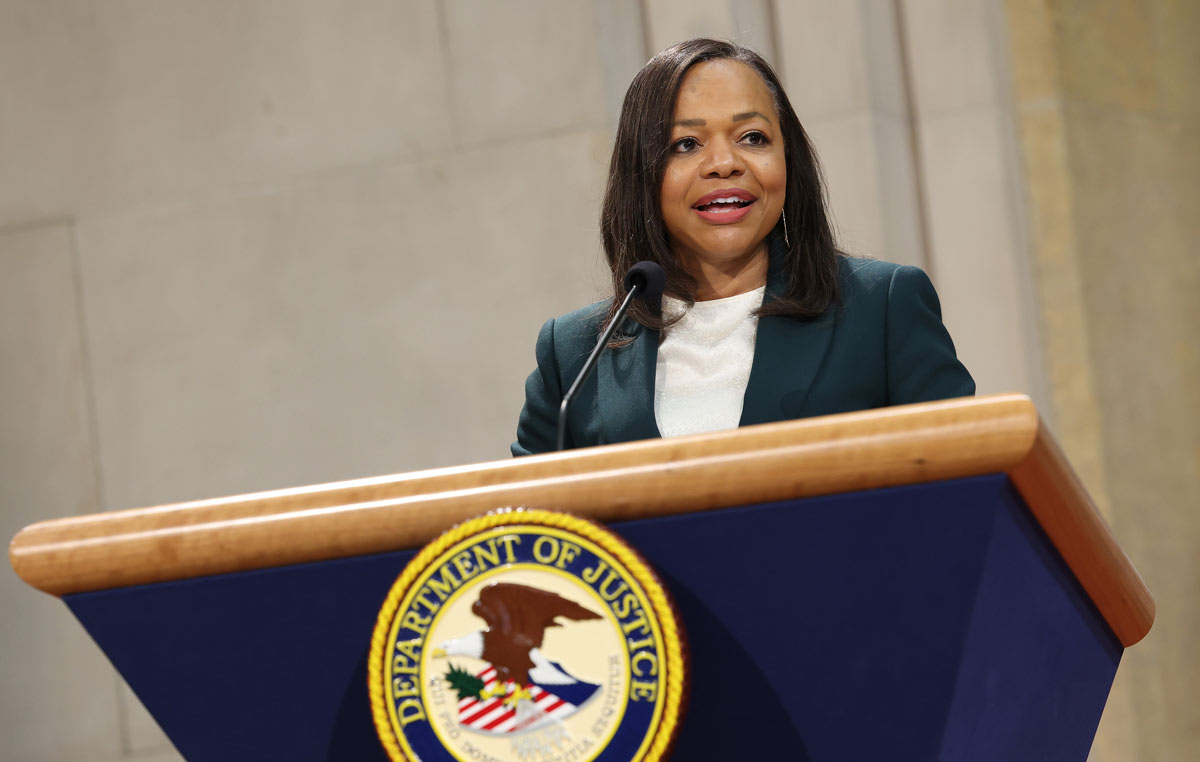
Kristen Clarke Named General Counsel of the NAACP

The NAACP today announced that Kristen Clarke, one of the nation’s most respected civil rights attorneys and legal advocates, has been appointed General Counsel of the Association. The move comes as the Trump Administration works to erode democratic institutions and dismantle civil rights protections.

To meet the moment, the NAACP is expanding its own capabilities and ramping up its investment in its legal advocacy efforts by hiring the former senior Justice Department official to fight back.

Clarke’s appointment marks a pivotal moment for the NAACP as it mobilizes its legal firepower to protect the right to vote and doubles down on its mission to secure the civil and human rights of Black Americans and all people across the country.


“Kristen Clarke is exactly the legal mind this moment demands,” said Derrick Johnson, President and CEO of the NAACP. “Her record of fearless advocacy, leadership, and deep commitment to justice makes her the ideal General Counsel to help chart our path forward.

As we face unprecedented attacks on voting and civil rights, having Kristen Clarke at the helm of our legal operations brings strategic vision, disciplined leadership, and innovative advocacy. It’s a new day at the NAACP’s Office of General Counsel.”

“Our communities are under relentless attack — from the ballot box to their wallets — and this moment demands that we use the full weight of the law to promote justice and accountability.”


As General Counsel, Clarke will oversee the NAACP’s legal strategy and operations, leading litigation efforts and the Association’s team of legal scholars, advising senior leadership and the Board of Directors on legal matters, and representing the Association in key legal proceedings addressing the most pressing civil rights and social justice issues of our time.

She will work closely with NAACP program teams to ensure the Association’s advocacy, policy, and legal work remain coordinated and impactful, and rooted in the lived experiences of the communities across the country that are the lifeblood of the Association’s efforts.


“The NAACP has stood on the front lines of justice for over a century, and I’m deeply honored to join this historic organization at this critical moment in our democracy,” said Kristen Clarke, NAACP General Counsel. “Our communities are under relentless attack — from the ballot box to their wallets — and this moment demands that we use the full weight of the law to promote justice and accountability.

Together, we will protect the right to vote, challenge discrimination in all its forms, and ensure that Black America’s voice is heard loud and clear.”

Glyne’s Fulton St. Barber Truck

Interviewed by Kazembe Batts
IG: @kazbatts


Tell us a little about yourself.
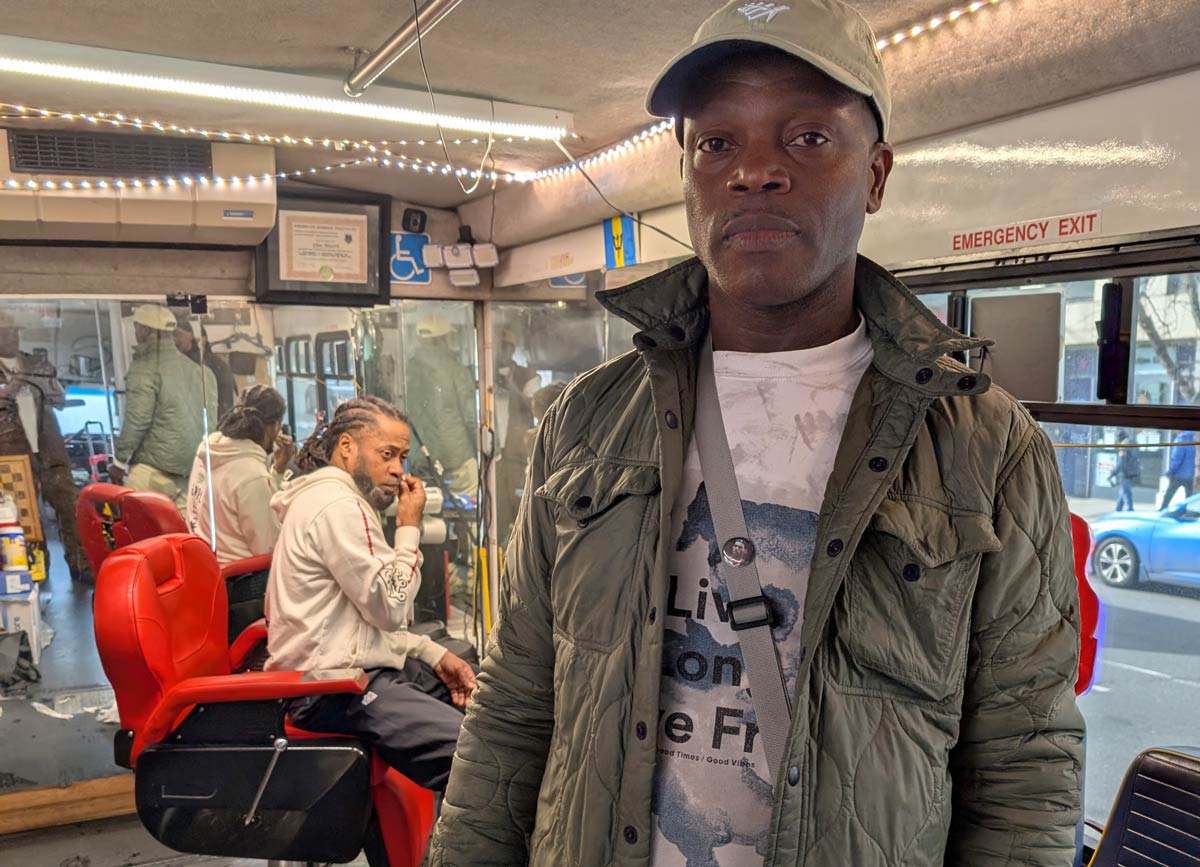
My name is Glyne Maccup. I am a native of Barbados grew up until high school and then came to Brooklyn from the late Eighties up until now. I’ve weaved myself into the culture of Brooklyn. I know a lot about the streets and places to go, I’m very familiar with the neighborhood and the people in it and a lot of the people know me.
How and when did you start cutting hair?


I did know how to cut hair with a scissors back in Barbados, but my first professional cut was at a place in the Bronx located at 225th St and Gunhill Road in 1992. My cousin told me that it is a profession where you can make a living and meet a lot of people. He said that “you will always have work if your good at it and people will come to you.” With everything it is your personality, a people person personality, people always gravitate to people like that. I think I have a good “people” personality.


How did you go from the Bronx to Bed-Stuy.
The first time I cut in Brooklyn was on the corner of Kingston & Fulton. I met a guy everyone knew named D White the beltman and he said that you belong on the main street, on Fulton St. He took me to a burned-out barber shop called Thomas. The spot was refurbished and a Trinidadian guy named Lucky took me under his wings and I learned a lot from him. My skills improved and I moved to another shop that, me, Tony and Kevin, started a new barbershop further down on Fulton near McDonalds called Stylistics Barbershop. The owner of the property did not want the lease in three different people’s names, so we moved again to Marcus Garvey Blvd, near Fulton.


What can a customer expect while waiting in the truck for their turn to be serviced?
The truck is always full of people. We have good conversations, politics, and often listen to WBAI or Caribbean music. Chess players visit all the time, and we set up tables out in front of the barber truck. You can expect a good, clean environment. We talk about politics so you can gain some knowledge while waiting.
How did you come to set up on Fulton St., near Albany Ave?


Covid happened years later and I moved into my own mobile truck. The first truck was stolen so I purchased a next one and retrofitted it so people would be comfortable in it. Now I’m actually moving into another space, around the corner, you know, so I’m trying to always keep improving so my customer base will grow, and people will see that I’m trying to improve my skill and the comfortability of the people.


Who are your customers?
I do have a broad base of customers. I can say now that many customers are the younger Gen-Z, because they always want to look sharp all the time. I also have three sons aged from 16 – 24 so they help keep me trendy with the cuts. So, I would say the young men but also, I have a broad female base of customers.
Who are your key business partners, helpers and do you have any relationships with other businesses in the neighborhood?


I am a little independent right now and don’t have any business partners. I’m not subscribing to any business partners now but if anyone wants to come and we can do an alliance because it’s always good to reach out and incorporate more. I am working on some other things now and would love if people want to come together.
How are you able to maintain your truck on the street? Considering parking regulations?


Well, I do get tickets, not as frequently, where I’m parked you can only get two tickets a week. So when I do the math it is cheaper than renting a brick-and-mortar store for $4,000 a month when you pay two tickets a week or eight a month at $90 a ticket.

So that is how I do my math and it makes better economic sense to me.
Glyne Barber Truck is located on Fulton St., near Albany Ave. Service is provided daily from Noon till 8:00pm. Call 917 482-4560 for more information.

NAKO Hosted Forum on Mayor Mamdani and Black New York

By Mary Alice Miller
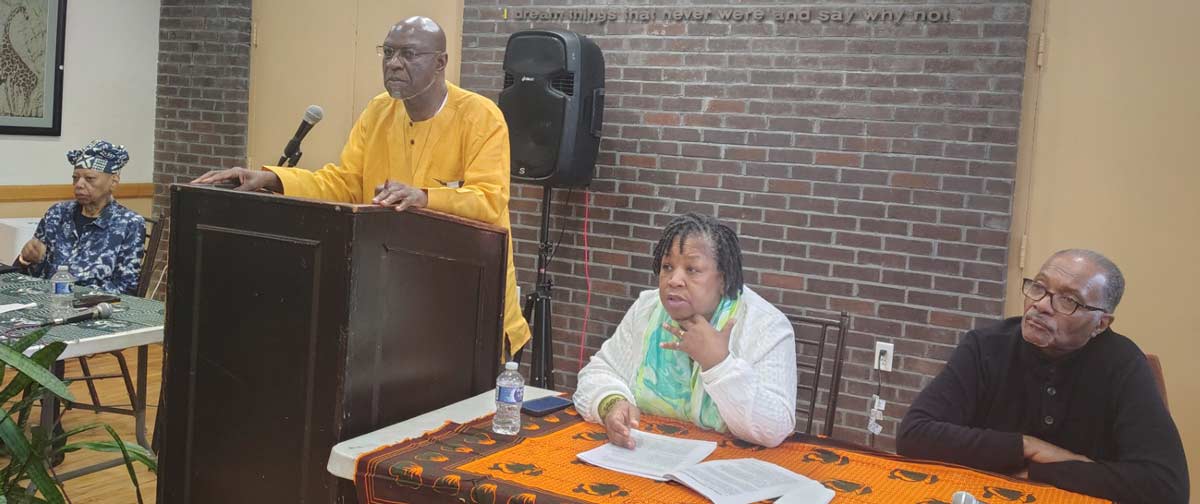
The National Association of Kawaida Organizations (NAKO) in conjunction with the International African Arts Festival hosted its monthly forum entitled ‘Mayor Zohran Mamdani and Black New York: Expectation and Possibilities’ at Restoration Plaza.


The guest speakers were Dr. Esmeralda Simmons, Esq., founding Executive Director of the Center for Law and Social Justice at Medgar Evers College and Dr. Roger Greene, former NY State Assemblyman and current professor at CUNY Law School.


Both Attorney Simmons and Professor Greene worked with Mayor Mamdani’s campaign to bring his message to the Black community throughout New York City. Their efforts helped get Mayor Mamdani elected as the first Muslim and Indian mayor based on a progressive agenda, not one that bowed or caved to the powers that be.
Dr. Esmeralda Simmons and Dr. Richard Greene are founding members of a new coalition called Coalition for a Democratic and Just New York.


“We challenged then candidate Mamdani to come to the Black community in Brooklyn, meet with savvy community activists. We presented him with a full agenda for Black people in Brooklyn and the rest of the city,” said Simmons.


“To someone coming from a Democratic Socialist background, none of this should have been shocking. In fact, we felt we were just informing and building out some of the rhetoric being tossed around,” said Simmons. “We all heard about the city-owned grocery stores and the free buses and housing limits on rent, some of which we knew he could do and some he would have a hard time doing – not because it is not doable, but because there is major opposition.”


Simmons said, “We presented him with our agenda at the Major Owens Wellness Center. Dr. Greene dialoged with Mamdani and got him to promise that he was going to come back to the Black community and say what he was going to do. “


Simmons issued a warning: “I want you to understand that you have three years and nine months to get some change in New York City government because in the next election the powers that be are going to throw every thing they have to make sure he is not re-elected.

The chances of him being re-elected in very, very slim.”
She continued, “It is up to us to come up with the agenda. Why? Because it is very clear talking with members of his administration and him that them came in without a plan. They knew how to campaign and run an election, but they knew nothing about governing the City of New York.”


Simmons added, “For those of us who have been in city government, or state government, we know it is not for a lack of ideas or good intentions. It is the fact that there is a permanent government that is aligned to the wealthy in this city that stops anything progressive from happening, and particularly around two things: real estate in any form (rent, mortgages, property taxes), anything that has to do with real estate gets sidestepped. And the second thing they want to do is to keep labor, workers at bay. Even though there are powerful unions in this city, those unions have been tamed. No offense, I am a proud union member.”


“We are asking you to become community activist,” said Simmons. “Either you are a community activist or a victim. Either you are fighting for your life, or you are waiting for them to push you out.”


“Dr. Simmons is talking about purging us from our communities via displacement,” said Dr. Segun Shabaka. “This government, unlike European governments, feel that they made a mistake that Europe did not make. They did not let the poor people control and dominate the cities by population and otherwise.

So now the city’s gentrification is spurned by whites knowing that they want to control cities because cities are still the centers of power in this country. That is why you see people being forced out of our communities. They are vulcanizing and breaking up our political power, our economic power and our cultural power.”


Dr. Greene explained the impetus for the new coalition.
“When we decided to create the Coalition for a Democratic and Just New York, we were thinking about the Coalition for a Just New York that was organized around Jesse’s first presidential campaign in 1984 that served as a basis to get David Dinkins elected.”


He said, “When this election was coming up and we had our brother in office who I feel had some serious contradictions in terms of how he was approaching governance, particularly as related to our communities, and he began to topple. I began to get phone calls from other elected officials about what should we do.

I said we should organize. Where is our agenda.? You didn’t have an agenda when Eric Adams was running. They didn’t put a Black agenda together. There was no criteria for leadership. There was no definition of a public policy framework that would respond to the crisis that we are in as a community.”


Greene continued, “So, I said who is the candidate, win or lose, that the Black community can organize around with an agenda to force the powers that be to address the crisis that we are confronting. Crickets. I looked around and said what are we leaving for our children? There was not succession planning, no intergenerational strategy.”
Greene explained, “The crisis we are facing is related to last stage capitalism, how it is configured in the economy and how it is impacting us.”


Greene’s solution is “a concept of African socialism that was grounded in the family. You would have a form of socialism that was not based upon command economy of Marxism, but was based upon something that was decentralized down to the local level within the family and community.”


“We began thinking about how do we do this in Brooklyn and New York City?,” said Greene.
“The healthcare sector in New York City (both voluntary and public health system) is valued around $40 billion in purchases that they make, from laundry to pharmaceuticals, food, detergents, light bulbs, etc.,” Greene said. “None of that is being recirculated in our communities via contracts. All of those products and services are primarily being developed in the global south as unregulated corporations attempt to exploit labor in the global South and Right to Work for Less states.”


Greene continued, “We went to Governor Cuomo reform the deformed supply chain to redirect opportunities back in the local economy. And we wanted to do it with a new definition of what an enterprise should look like in production of those products.

The ability in our communities to co-create enterprises that would build furniture for the health care sector, do laundry for the health care sector, produce food for the health care sector organized as unionized worker coops, a concept called economic democracy with the boards of those corporations a strong percentage of the board should be comprised of the workers themselves.”


“They got promises from Cuomo, with laws signed and budgets,” said Simmons. “They delivered on nothing and blamed COVID.”
The Coalition for a Democratic and Just New York has developed a detailed Public Policy Platform that can be obtained at cdjny2025@gmail.com.