Home Blog Page 697

A Rousing Discussion at Black Media Roundtable

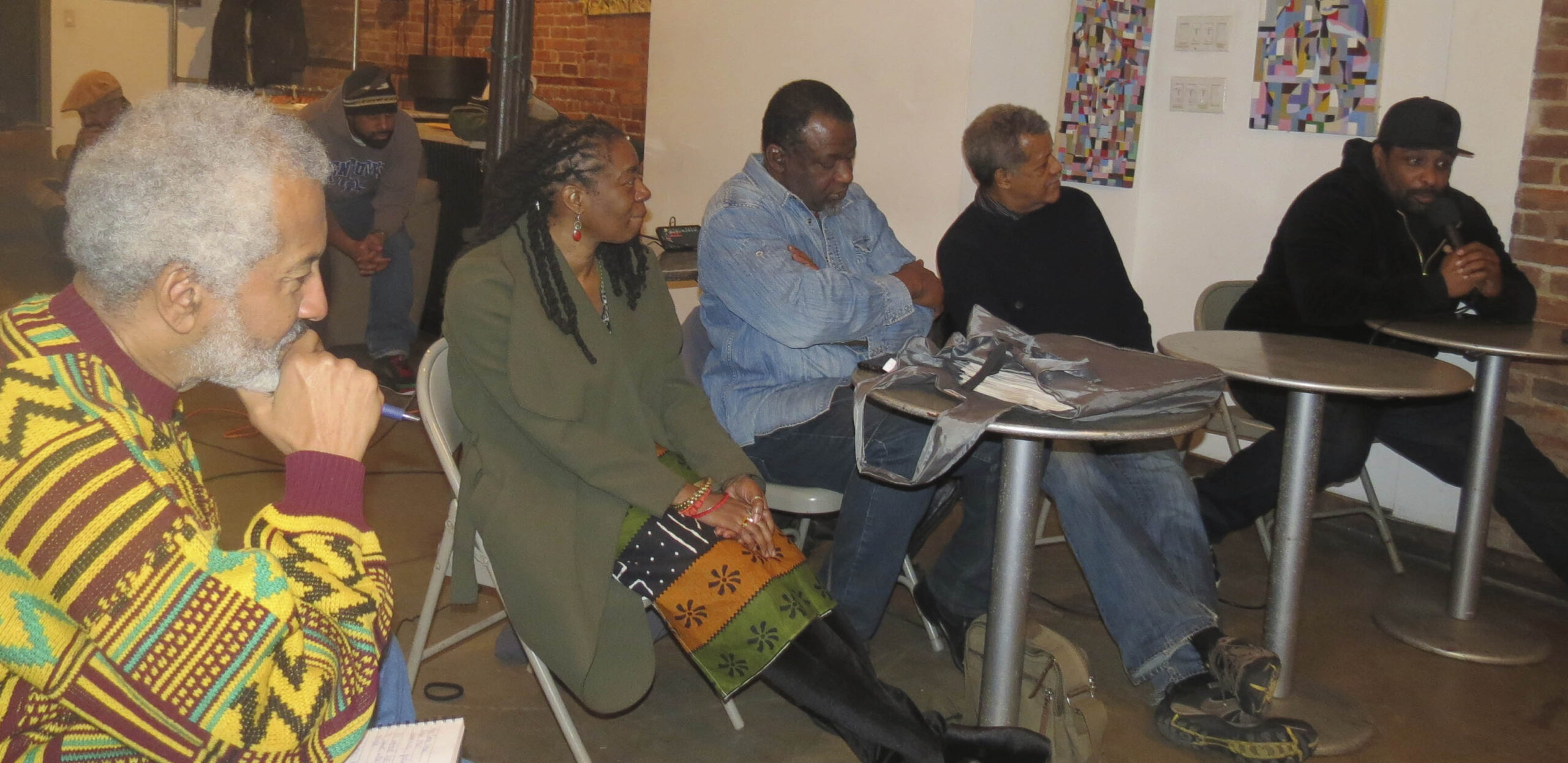
The Black news media – its importance and survival – was the subject at hand during Monday’s roundtable at For My Sweet in Brooklyn. “Real Black Media or Fake News?” brought community members out to share perspectives and strategies for supporting, accessing and centralizing Black media sources. On the panel were: editor of the long-running Amsterdam News Nayaba Arinde; Wuyi Jacobs of Afrobeat Radio, a public affairs and music show on WBAI-FM; native Brooklyn filmmaker Attika J. Torrence, and our own David Greaves, founder and publisher of Our Time Press.

The event, presented by the Jitu Weusi Institute for Development, Education and Activism, was organized by Marlon Rice and hosted by Basir Mchawi, whose show, “Education at the Crossroads,” airs on WBAI-FM radio. The gathering proved to be fertile soil for the germination of ideas, which were shared without reticence. We present here only a few snippets of what was an honest, thorough and uplifting conversation:

     Wuyi Jacobs promoted the idea of Black publications in the U.S. partnering with African Continental news media. But he warned that the press does not exist in a vacuum and that a stable economy within the Black community is necessary in order for it to meet its full potential to thrive.

“The press cannot survive without an economy,” said Jacobs. “If you don’t have jobs, if your children don’t have jobs, they’re not going to be buying newspapers or visiting your website. They don’t come to my website. You know why? Because there are others that employ them, that have the resources to innovate, resources to get them into their own market. If we don’t pay our own children, somebody else is going to pay them. They’re not going to be working for you if you don’t pay them.

“So, there are some things that we really need to do beyond talking about creating content. That’s very important. We’re talking about owning our own narratives. That’s very important. But we need to move to the next step. What does it mean to own? How do you create ownership structures? How do we create sharing structures? How do we create partnership structures? And how do we make sure that it’s available to the 4.6 billion people on this planet if they want it at the tip of their fingers? And it’s possible. It’s not like we don’t have the market. Every nation on the African Continent has a television station. Some have big media companies now.

“I went to Nigeria for the first time in 2013 and every single television I came across was tuned to FOX News and American stations. That’s distressing, but it’s also an opportunity. Let’s focus on the money, how we’re going to get the money, retain the money. Turn the tables. Turn the tables!”

David Greaves saluted veteran radio host Bernard White, who was in the audience, and the late Samori Marksman as well, for the high-level of teaching they did over the air while at WBAI-FM. His thoughts on the evening’s topic were about optimizing the Web.

“We can come together on the Internet, in terms of sharing files and videos, sharing links – African media, African-American media and Caribbean media. People should have a place on the Internet where they can see the list of various publications and Black radio stations. That way, we can throw in our appeal and send out our message. The Internet radio station that Bernard has is an example of something we can link to on our own websites.

[CPR Metro at communitypublicradio.org]

“In terms of linking together, I think the Web is the easiest way to do it, although I think, as my wife says, that the Black media should come together around some particular subjects – have a theme each month or week to multiply our efforts so that people will hear the message through whichever medium. So that’s something we can think about.”     Filmmaker Attika Torrence stressed the power of collaboration and the need to recognize that we already have it.

“I live my life by the Nguzo Saba, the Seven Principles [of Kwanzaa],” said Torrence. “That whole concept of ‘Black people don’t collaborate” – it doesn’t exist in my world. I work in a 100 percent collaborative industry. I’m a filmmaker. I work with my fam, extended and immediate.

“I grew up in The EAST [a ‘70s Black Cultural Nationalist organization]. I grew up in my own Wakanda. From there, I moved to Liberia, West Africa and that was another Wakanda. We took Blackness with us everywhere we went. And there are people to this day who are from Guinea, Liberia and Sierra Leone that became my extended EAST family of sorts who didn’t understand what Kwanzaa was, who didn’t understand the Black American culture and we brought it with us. I grew up in a world where all my opportunities were available to me.” _Torrence, a publicist, asked a critically important question from the audience.

“What marketing efforts can we do as consumers– and I as a publicist – to assist you? ‘Cause I know I‘m always faced with that question, too. The numbers are the same; they’re not growing. And there have been efforts to mobilize the Black press collectively so that it can be more of a bargaining tool. What can we do over social media and otherwise to support you, to tell the world just how valuable you are in our community?

“We talk a lot about reaching out, but what I want to know is – in regard to the new ways that people get news – social media, blogs, Black Twitter… What are some of the steps that we can take – not just you news media people – but what are the steps we all can take when we leave here to dilute the amount of fake news that our children get and increase the amount of Black news that our children get?“

Nayaba Arinde responded:

“I mean, it’s really sharing the knowledge, you know? Getting it out there. Like David was saying, the Internet is probably our greatest tool right now. And we all have to use that more successfully. For example, the Amsterdam News had a cover story featuring Ja Rule, who was speaking at City Hall. We had it on the front page, but he shared FOX’s interview on his social media, and not the Amsterdam News. Why would you share that and not all of them – or at least not ours – as well?

“So it’s how we view ourselves and what value we put on our mediums. And we (the Black media) know it; we share amongst ourselves. But we’ve got to get the community to know that. Don’t see our media as lesser than. Share the links. Understand that we’re working together and that when we help you, you help us. Radio, Facebook, Snapchat, Instagram – all of those we have to use better so that we can reach them [readers] where they live.”


“It’s Not a Game”

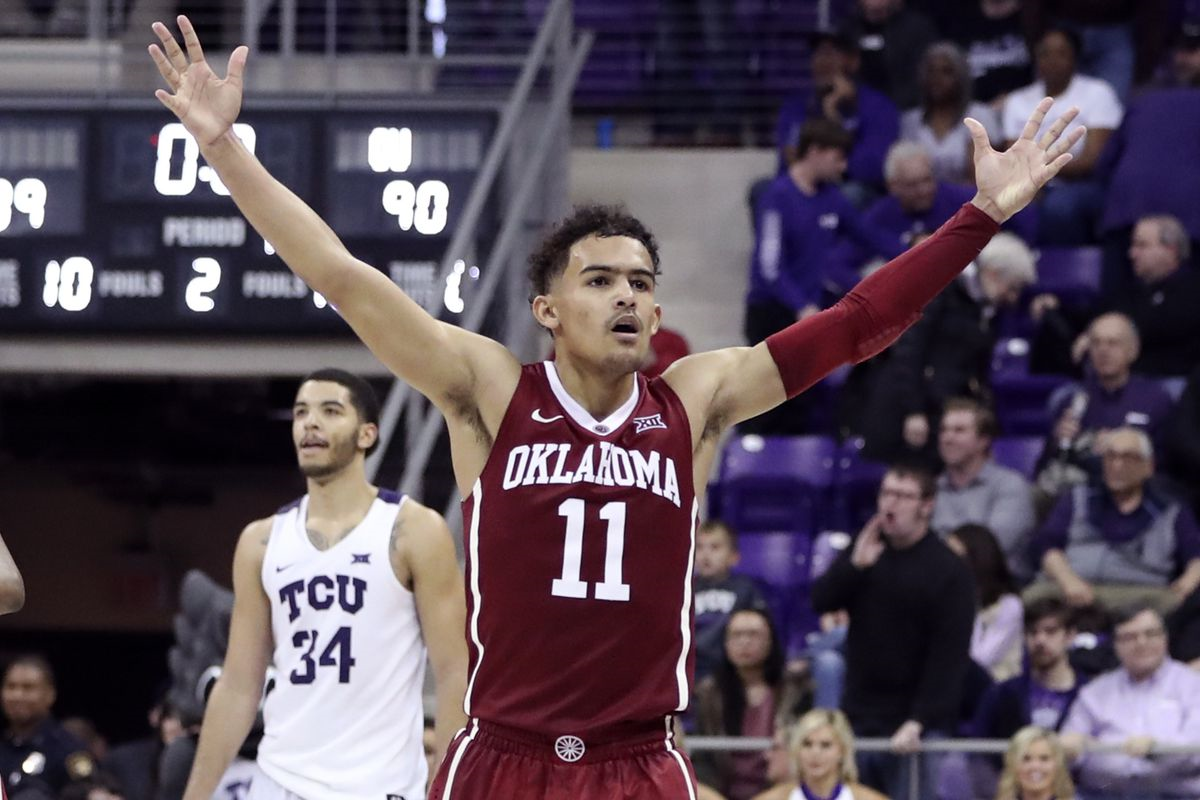
In 2015, the University of Oregon generated $196 million dollars in revenue from their Division I sports program. That figure includes $35.6 million dollars in licensing fees, $26.6 million dollars in ticket sales, $54 million dollars in football revenue, $8.7 million dollars in basketball revenue and $124.9 million dollars in booster donations to the sports program. In that same year, the University of Texas generated $161 million dollars, the University of Michigan generated $158 million dollars and the University of Alabama generated $153.2 million dollars. The 231 NCAA Division I schools generated a total of $9.15 billion dollars in revenue from their sports programs in 2015, every dime of it created from the participation of student athletes that aren’t being paid anything at all.

In October 2017, Lawrence “Poppy” Livers, a former student athlete, filed a Class Action lawsuit against the National College Athletic Association and 20 universities. His claim was that student athletes are “employees,” and as such are entitled to compensation. His contention is a simple one. Student athletes receive scholarships to universities. These scholarships require them to participate in NCAA athletics under supervision on a full-time basis. They work for the school. They practice and compete for the school, and this act generates revenue for the school, and therefore, they are employees in the same way as student ticket-takers and concession-stand employees.

Recently, in response to the lawsuit, the NCAA cited a famous 13th amendment case as the reason why they believe they shouldn’t be forced to pay student athletes. The case is Vanskike vs. Peters, and deals with Daniel Vanskike, a prisoner at a correctional facility in Joliet, Illinois, suing Howard Peters, director of the Illinois State Department of Corrections. Vanskike argued that prisoners should be paid a federal minimum wage for their work while incarcerated. He lost his lawsuit due to the 13th amendment which states that, “Neither slave nor involuntary servitude, except as punishment of a crime whereof the party shall have been duly convicted, shall exist within the United States.” The amendment supports free prison labor, and so Vanskike lost his claim.

But wait a minute. What on earth does free prison labor have to do with paying student athletes? Why would the NCAA cite a case involving a prisoner seeking minimum wage for prison work as a supporting precedent against paying kids that go to college and play sports? Well, one reason is that they’ve used the case as precedent before and won. In the 2016 Berger vs. NCAA case, the Vanskike case was used to establish that, just as prisoners working in a prison, there is no employment relationship between the NCAA and its athletes. The NCAA won that argument and that case. In fact, the Vanskike case has been cited 16 times, 14 times in reference to another case involving a prison labor dispute, and the other 2 times in reference to cases involving the NCAA. So then, it seems evident that the NCAA is content with defining the work that student athletes do as unpaid labor, and that unpaid labor nets billions of dollars to the colleges these student athletes play for. Let that sink in for a moment. The NCAA just signed a $8.8 billion-dollar extension with the CBS network to televise March Madness until 2024. To those of us who love college basketball, March Madness is the climax of the season, a time to see our favorite young basketball players compete at the highest level against one another. We tune in to see the athletes, not to see the schools or the concession workers or the broadcasters. We don’t tune in for athletic directors or the alumni boosters. We watch the games to see the players. They are the draw. And yet, they aren’t paid a red cent for the blood, sweat and tears that they give to the game. And furthermore, the NCAA is perfectly content with the way things are set up. The exposure of this issue makes it difficult from a moral standpoint to support college sports. Making billions of dollars off of unpaid labor is akin to slavery, bottom line. March Madness starts next week. Let’s really make the NCAA have a mad March. Let’s not support this new age indentured servitude.

A Black Panther Voice Roars from Brooklyn

The “Black Panther” movie continues to break box office charts. According to IndieWire on line magazine, the movie is “on course to become the greatest comic-book movie in history.” These accolades mostly point to the millions it will make. Other political and cultural factors contribute to its distinctive success such as display of black power, black pride and black beauty. While the movie sets historical records, a part of its foundation has its origins right here in Brooklyn, New York.

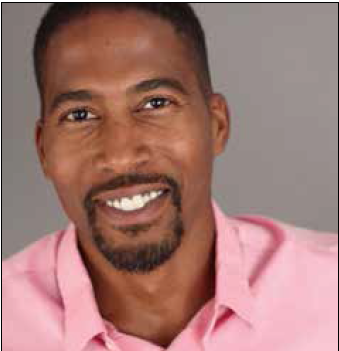
James Mathis III has been the voice of the Black Panther in Marvel’s Avengers for four seasons. He joins a list of a few well-known actors who have played that role before him according to Behind the Voice website: Keith David, Taye Diggs, Djimon Hounsou.

The voice behind what is emerging as a global movement has its roots right here in Brooklyn. Mathis’ early beginnings include P.S. 327, Dr. Rose English Elementary School, in East New York. He continued in Bushwick, Brooklyn at Philippa Schuyler Intermediate for the gifted and talented, where, according to his mother, Minister Shirlene Holman, “The acting spark was ignited.” Mathis said, in his Fort Greene high school, Brooklyn Tech, he found his niche when school play director Susan Palmieri cast him in leading roles. Shakespearean English teacher and Assistant Principal Dr. Robert Sinclair also provided inspiration. “He made Shakespeare fun and encouraged a deeper understanding of literature and Elizabethan English.”

During a phone interview with Dr. Sinclair, he stated, “Mathis always had the voice and was always a professional even as a teenager,” which, no doubt, explains how he rose to represent his school in the NYC Shakespeare Competition reciting sonnets and excerpts from plays.

In addition to his teachers, Mathis credits Spike Lee and Denzel Washington for his deep dive into acting. The release of “Malcolm X” when Mathis was still a high school student and the proximity of 40 Acres and a Mule (a novelty shop across the street from his school) conveyed a message of the possibilities the world of acting could provide. For college, he attended University of Southern California to study production.

Trained as an actor, Mathis landed roles on television shows such as “ER,” “Pacific Blue” and “City of Angels.” He harnessed his thespian skills, education, training and the depth of his voice to find voice-over acting in various video games and animated series.

Mathis found staying power, most recently, as T’Challa, the Black Panther, in Marvels Avenger series through which he supports his wife and two children in California.

Speaking of her son, Minister Holman stated, “I’m grateful he stayed the course and persevered. He is blessed to do what he loves.”

Black Panther, the animated series is available on YouTube, Amazon Video, itunes, Vudu, and Google Play. James Mathis III will continue to harness his Brooklyn, Shakespeare and other thespian skills as he approaches season five of Marvels Avengers, and T’Challa will play a greater role.


MARCH 2018

March arrives this week along with its typical offerings. It is Women’s History Month. It is March Madness and the NCAA Tournament  It is vernal equinox time and the year’s first Retrograde Mercury cycle. Look out for Daylight Savings Time on March 11, St. Patrick’s Day on 3/17 and Palm Sunday 3/25. 

US POLITICS 101

ALBANY, NY: All branches of government and politicos from both sides of the aisle attended most of the official and private parties at the Annual NYS Association of Black and Latino Legislative Weekend Conference in Albany on February 16-18. This year, New Yorkers will vote for NYS Governor, Lieutenant Governor, Attorney General, Comptroller and for congressional reps. US Senator Kirsten Gillibrand is running for reelection. NYS Assemblymen and Senators are also on the ballot. So, 2018 is a midterm year, and a very busy one.  NY incumbents Governor Cuomo and Lieutenant Governor Kathy Hochul were ubiquitous and gracious hosts during the weekend.   Hochul was endearing herself to downstate Blacks and Latinos. Hochul will have an African-American Primary opponent downstate, NYC Councilman Jumaane Williams, from Brooklyn, who is a rising star in downstate Democratic politics. NY: The #METOO movement spread like an epidemic all across the United States since its inception. Its message normally is loud and clear, and many men have suffered consequences unimaginable a year ago. Albany, NY is tone-deaf or does not give a damn about #METOO. A young political aide alleged that NYS Senator Jeff Klein involuntarily French-kissed her in front of a bar and nothing has happened.  Senator Klein heads the rogue Democrat group, the Independent Democratic Conference, formed in 2011, which caucuses with the Senate GOP minority, giving the latter majority status. Klein’s power as the head of the IDC in Albany, has grown astronomically.   A real power broker in the Senate, Klein has become the 4th person in the “Three Men in A Room” power circle, which makes everything happen in Albany. Three men in a room used to be the governor, the Assembly Speaker and the Senate Majority Leader. Now it includes rogue Senator Jeff Klein, who cannot be contained by the Democrats. He ignores their leaders and enjoys great independence.   Will Albany do something about the former Senate aide’s claim about Klein’s alleged forcible kissing episode in 2015.  Many powerful men have fallen

Jessie Hamilton

like trees because of untowards behavior towards women. The IDC takes power from everyone who voted for a Democrat. In addition to the untouchable Klein, the Independent Democratic Conference members are Jesse Hamilton, Marison Alcantara, Jose Peralta, Diane Savino, Tony Avella, David Valesky and David Carlucci. Most of them will have Primary challengers this year.   Klein is like Teflon.


HARLEM UPDATES

The Carver Federal Savings Bank sold its Harlem headquarters, located at 75 West 125th Street, for $19.4 million to CHOMPOL, a subsidiary of Gatsby Enterprises. Founded in 1948, Carver Federal Savings Bank is the largest African-and Caribbean-American-managed bank in the USA. When it opened, its welcome mat attracted Black customers and depositors. It offered mortgages for adults and a Xmas Club for children. For 60 years, Carver has been positioned on 125th Street, Harlem’s main commercial corridor until Freedom National, a commercial Black bank, opened in the 60s, until it folded in the 70s. Today, Carver Federal Savings boasts nine NYC branches in Harlem, Brooklyn and Jamaica.

BUSINESS MATTERS

Three commercial banks commit $40 million for use by NYC for a loans initiative targeted to minority- and women-owned businesses.   The donor banks are Amalgamated, which will put up $20 million; TD and Bank of America will each put up $10 million.   NYC has already invested $20 million toward this revolving loan fund.

Visit cityandstateny.com and read “NYC’s 100 Most Powerful People,” which was headed by President Donald Trump. African-Americans who made the power elite list include Carl Heastie, #5; Chirlane McCray, #6; George Gresham, 1199 SEIU, #7; John Banks, Real Estate Board of NY, #8; Dominick Williams, Advisor to Mayor de Blasio, #29; Ruben Diaz, Bronx Boro Prexy, #30; Congressman Hakeem Jeffries, #34; Letitia James, NYC Public Advocate, #35; Errol Louis, NY1, #40; Eric Adams, Brooklyn Boro Prexy, #48; Congresswoman, Nydia Velazquez, #50; Bill Thompson, former NYC Comptroller and Mayoral hopeful, #62; Gregg Bishop, NYC Dept. of Small Business Services, #68; Alphonso David, Counsel to Governor Andrew Cuomo, #76; NYC Councilman Ritchie Torres, #79; Keith Wright, Manhattan Democratic Leader, #87; NYC Councilman Jumaane Williams, #99; and Shola Olatoye, NYCHA Chairperson, #100.

INTERNATIONAL AFFAIRS NIGERIA: More than 100 Nigerian schoolgirls are missing after a suspected Boko Haram attack last week at the Government Girls Science Technical College in the Yobe state, which is approximately 170 miles away from the Chibok School where close to 300 schoolgirls were abducted in April 2014. SOUTH AFRICA: A special edition of Africa.com reports updates on new South African President Cyril Ramaphosa and his cabinet reshuffling. The following is a truncated list of his new top ministers: Nhlanhla Nene-Finance; David Mabuz-Deputy President; Pravin Gordhan-Public Enterprise; Knosazana Dlamini-Zuma, Minister in the Presidency, Zuma’s ex-wife; Lindiwe Sisulu-Foreign Affairs; Gwede Mantashe-Mineral Resources. Cabinet choices seem to be a mix of politics and strategy in an attempt to satisfy diverse factions within the African National Congress Party, whose popularity has eroded during the Zuma years. National elections are scheduled for next year.

ARTS AND CULTURE Congrats to the multiple recipients of awards during Black History Month 2018. They include Professor/author Herb Boyd for his books, “By Any Means Necessary: Malcolm X Real,” “Not Invented” and his latest book, “Black Detroit: A People’s History of Self-Determination”   and author/historian Grant Harper Reid for his books, “Rhythm For Sale,” about the Harlem Renaissance through the lens of his grandfather’s experience and “The Harlem Bible,” who were honored by the NAACP Mid-Manhattan Branch on behalf of its Founders’ Day Award.

Manhattan Borough President Gale Brewer hosted a Black History Month

Activism Awards ceremony at Harlem’s Apollo Theater, honoring Hawk Newsome, President of Black Lives Matter of Greater New York; Kemah George, Community Engagement Manager, NY Immigration Coalition; Nkechi Ogbodo, Kechi’s Project about women’s empowerment in Africa and the USA. Nkechi is Nigerian, and Samuel Sinyangwe, co-founder of Campaign Zero and Planning Team Member of OurStates. Congrats to all the honorees.

BLACK PANTHER devotees are encouraged to read Milton Allimadi’s blackstarnews.com essay “Real Wakanda – A Battle of Adwa, Searching for Heroes & Liberators and the Political Economy of ‘Black Panther’,” which is both commentary and review, and I would add, a prequel to this celluloid wonder.

NEWSMAKERS

Lerone Bennett

RIP: Lerone Bennett, 89, died last week. Black American historian and journalist who worked at Johnson Publications for decades, first with Jet magazine, then Ebony, where he landed as executive editor.  A prolific author, he wrote BEFORE THE MAYFLOWER, a nonfiction work about Africans in North America before the Mayflower arrived.     He also wrote “What Manner of Man: A Biography of Martin Luther King, Jr.”


RIP:  Bill and Camille Cosby’s daughter, Ensa Cosby, 44, died from renal disease.   One of the Cosby’s five children, she is survived by her parents and sibling Ericka, Erinn and Evin.

SPRING CALENDAR

Check the Academy Awards on Sunday, March 3rd on ABC-TV. There are lots of Black talent on Oscar’s short list for Best Film, Best Actor, Best Supporting Actress, Best Song.

A Harlem-based management consultant, Victoria can be contacted at Victoria.horsford@gmail.com.

A Real-World Member of the Dora Milaje

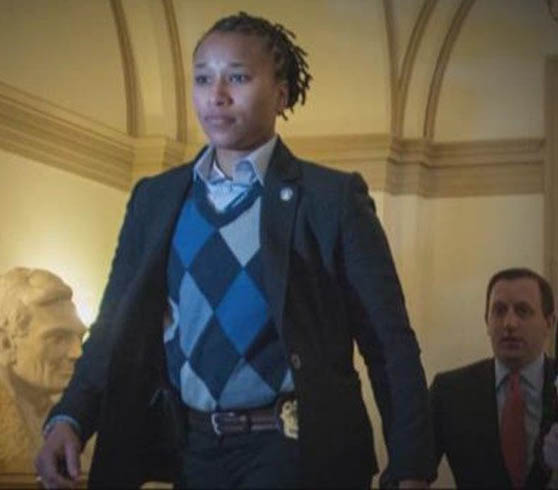
The behavior of security officers at the recent shooting at Marjory Stoneman Douglas H.S. in Parkland, Florida stands in stark contrast to the heroism of Capitol Hill Police Officer Crystal Griner at a ballpark shooting in Washington, D.C. last June. On this first day of International Women’s Month, we salute the bravery of Griner, who, along with her partner David Bailey, rushed toward disturbed gunman James T. Hodgkinson, who had suddenly started shooting, critically wounding Republican House Majority Whip Steve Scalise and four others. The shooting took place at a Congressional Republican baseball practice game at a park in the nation’s capital.

Griner and her partner both continued to run to help apprehend the shooter, although they both sustained injuries from bullets he fired. She was hit in the ankle and Bailey in the arm. Griner and her partner, a Black man, helped prevent what pols present said could have been a large-scale massacre. “A rifle against a handgun. That is not a fair fight… …They were warriors,” one congressman said. They had the Public Safety Office Medal of Valor placed around their necks by President Trump, who recently claimed he would run into gunfire himself.

Also interesting is that both Griner, a lesbian, and Bailey, are assigned to Scalise’s detail and are credited with helping to save his life. Of note is that Scalise was criticized for speaking at an anti-gay forum a few months later.