Home Blog Page 699

Ryan Coogler, Black Panther Director, Sends Thank You to World

Danai Gurira stars as the warrior Okoye in the super hit “Black Panther” film. Gurira, 40, was raised in Zimbabwe, and says she “ Writes plays about the continent,” and considers herself an Africanist. She is already well known for her role as the warrior Michonne on the AMC series “The Walking Dead.”

I am struggling to find the words to express my gratitude at this moment, but I will try.

Filmmaking is a team sport. And our team was made up of amazing people from all over the world who believed in this story. Deep down we all hoped that people would come to see a film about a fictional country on the continent of Africa, made up of a cast of people of African descent.

Never in a million years did we imagine that you all would come out of this strong. It still humbles me to think that people care enough to spend their money and time watching our film. But to see people of all backgrounds wearing clothing that celebrates their heritage, taking pictures next to our posters with their friends and family, and sometimes dancing in the lobbies of theaters- often moved me and my wife to tears.

For the people who bought out theaters, who posted on social media about how lit the film would be, bragged about our awesome cast, picked out outfits to wear, and who stood in line in theaters all over the world – all before even seeing the film…

To the press who wrote about the film for folks who hadn’t yet seen it, and encouraged audiences to come out…

And to the young ones, who came out with their parents, with their mentors, and with their friends…

Thank you for giving our team of filmmakers the greatest gift: The opportunity to share this film that we poured our hearts and souls into, with you.

Sincerely, Ryan Coogler

Panther, to the People

0


To most of the world, Wakanda is a simple third world farming country, with very little if any technology and no real international significance. But, when it comes to the Country of T’Challa’s birth, there is more than meets the eye. A long time ago, a meteor crashed into Wakanda. The meteor was made of vibranium, a sound-absorbing element that cannot be found anywhere else on the planet, and that very rare and precious metal is where the true story of Wakanda begins. Black Panther is the eighteenth movie in the Marvel Cinematic Universe. It is the story of T’Challa, a young king who was thrust into power due to the sudden death of his father T’Chaka. He rules Wakanda, the most isolated and the most technologically advanced country in the world. Ruling Wakanda has a very interesting fringe benefit, for the ruler of the Country is gifted the mantle of The Black Panther, protector of Wakanda and its secrets.

This past weekend, movie theaters were filled to capacity, with moviegoers excited to be a part of the opening weekend of Black Panther. The energy for this movie was unlike anything you’ve ever experienced! Whole movie theaters were sold out weeks prior to opening weekend. Moviegoers came to visit Wakanda in their best African fashion, and this wasn’t just about cosplay for the film, this was an opportunity for Black folk to key in on their African roots and to represent Black pride.

How does a movie about a fictional superhero from a fictional African nation cause so much pomp and circumstance? Well, it starts with the storyline: an autonomous African nation that is light-years ahead of the rest of the world, never touched by imperialism or colonization. And then it’s the cast, virtually an all-Black ensemble, directed by young film maverick Ryan Coogler. Add to that an opening weekend coinciding with both Black History Month and Valentine’s Day, and you have the makings of a historic event. But in show business, the show is only one part of it. What about the business? Is the movie any good?

With fascinating imagery, vibrant outfits, ingeniously-layered characters and a story relevant to real life dynamics, Black Panther is an amazing ride, definitely worthy of the dozens of think-pieces sure to be published and printed over the next few weeks regarding the prevailing themes of the movie. You’ll no-doubt read about the women of this movie, both in the symbolic paradigm, speaking of the power, grace and influence of the Wakandan women, and also – in the real paradigm – lauding the superior work of Lupita Nyong’o, Angela Bassett, Danai Gurira and newcomer Letitia Wright. You will read about Wakanda’s policy of isolation, and whether or not upholding such a policy is smart or selfish. By far, though, most will discuss Killmonger, portrayed flawlessly by Michael B. Jordan. Killmonger is the son of King T’Chaka’s brother N’Jobu. He is a half-American child who is left to fend for himself after the death of his father. He grows up resentful of his African roots and when he gets his opportunity, he challenges T’Challa, causing he and all of Wakanda to defend their actions. Killmonger is the most enigmatic villain we’ve seen in a long time, he is the true bridge between the symbolism of the movie and the real-life dynamics that the symbolism speaks to. What he really represents is an even bigger discussion, one that involves a myriad of issues including the slave trade, the Black Diaspora and the accountability regarding the idea of a disconnect between Africans and African Americans. Regardless of how you feel about Killmonger, you feel him.

There is much to unpack, much to dissect and analyze with regards to Black Panther, and these conversations are taking place in real time, in taverns, in churches, or on social media. And this is a good thing. When art invokes such a passionate need for one to express what they have experienced, that work of art can be considered a masterpiece. Black Panther is a masterpiece. Wakanda Forever!


Compromise is Not an Option for These Crown Heights Residents…when It Comes to Gentrification and Protecting the Environment

Crown Heights Meets Manhattan

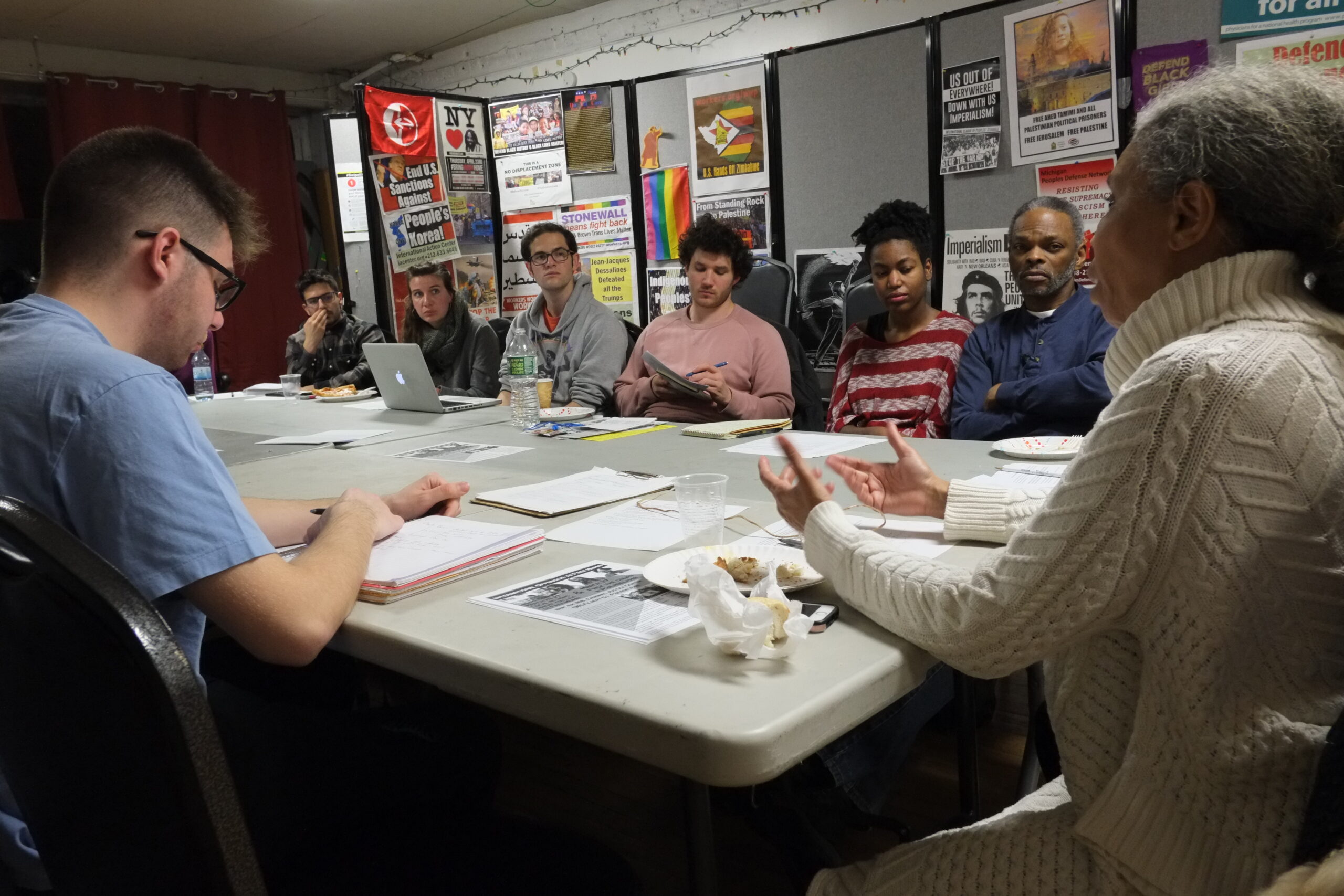
A few dozen Crown Heights residents assembled in a Manhattan meeting to address ways in which they can mobilize to thwart the process of zoning and its corollary – gentrification, in their community. Alicia Boyd, one of the leaders of MTOPP (Movement to Protect the People), made the meeting highly informative and easy to comprehend, even for someone who may know nothing about the intricacies and nuances of gentrification. If any college or university is considering creating a course on gentrification, I wholeheartedly recommend that you immediately seek out Alicia Boyd to lead it. That’s how thorough she was in terms of delivering a message palatable for even the least informed. The meeting ran like any other meeting, in that there was an overview of an agenda, and, to a lesser extent, a recap of previous meetings and organizing efforts by the group.

Development Proposal on BBG Land

An issue that came up on more than one occasion was that of a proposed plan to develop a 40-story high-rise on land near the Brooklyn Botanical Garden (BBG) greenhouse conservatories. Should such a plan go through, it would effectively compromise the subsistence of the three conservatories that are housed in the garden. Boyd made it a point to highlight that such a proposal invites more than just the common complaints of gentrification and zoning. What also comes with such a detrimental zoning plan are concerns pertaining to the environment and sustainability. Turning the meeting into a brief science lesson, Boyd explained how a 40-story building in an area with, by and large, structures that are no more than six feet, would compromise the “visual integrity” of the three conservatories of the BBG that it would directly impact – in addition to the obvious environmental issue. It is for this reason that Boyd made a call to action for all in attendance to come up with creative ways to defeat such a proposal.

Assemblyman Barron Sets the Tone

Perhaps to further inspire those in attendance, Boyd referred to the example of Assemblyman Charles Barron, who, as a prominent politician, refuses to compromise with developers. Development in the East New York area in Barron’s district is contingent upon “developers making housing 100% affordable for the residents of East New York.” Evidently, Barron’s advocacy for the people in his district worked, as Boyd saw, firsthand, “buildings built by the same developers that create buildings in other neighborhoods like Crown Heights and Prospect Heights , but that are affordable for the people inhabiting East New York.” Boyd added that “East New York is the only neighborhood in Brooklyn where the Black population has increased over the years.”

In addition to the 40-story building proposal on land near the BBG conservatories, not compromising with developers imposing their rezoning and gentrification plans was another major theme of the night.

The Point of it All

Yet another portion of the meeting was spent describing terms connected to zoning and gentrification. For example, Boyd described how certain areas are easier to develop than others, such as in commercial versus residential areas. In general, if there was a term that Boyd mentioned and felt she needed to possibly define, she briefly polled the room to ensure everyone was on the same page. This is one of the many reasons why people should be encouraged to attend meetings such as these. The get-together concluded with a reiteration of the group’s commitment to social and economic justice as it pertains to housing. The group also planned the next meeting.

Priscilla Mensah covers topics related to improving health, wellness and overall community empowerment. She is also a former Health Reporting Fellow at the CUNY Graduate School of Journalism and can be reached at pmensahbrooklyn@gmail.com.


New York’s Undeveloped City-Owned Land

0

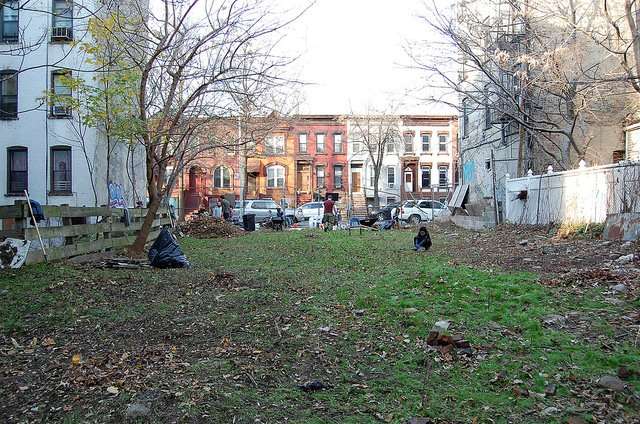
New York City’s shortage of affordable housing could be solved in a matter of months if the NYC Department of Housing Preservation and Development (HPD) constructed buildings on the vacant lots in its portfolio. In a February 12, 2018 press release, NYC Comptroller Scott Stringer stated, “HPD is not building new affordable units, though 1,007 City-owned lots are vacant. The comptroller claims, “up to 900 of these empty lots have been owned by the City of New York for at least 20 years and up to 50 years.’” The obvious question is why is this the case?

Between September 2015 and September 2017, 90% of the lots in the portfolio were still undeveloped. In that time, 64 lots were transferred for development and 54 transferred to NYC agencies. In 2016, Stringer saw this land as an opportunity to lower the vacancy rate, provide new – and actually affordable – housing to low- and middle-income households. In the comptroller’s 2016 audit, Building an Affordable Future, The Promise of a New York City Land Bank, it weighed the pros and cons of establishing a land bank, which is a quasi-governmental entity that would be created by the City of New York to effectively manage an inventory of underused, abandoned or foreclosed property. During the 1970s and 80s, there was extensive arson and owner abandonment occurring throughout four of the five boroughs, especially in The Bronx. Land banks are often chartered to have powers that allow them to accomplish these goals in ways that existing government agencies are not able.

This reporter queried the Comptroller’s Office about how HPD was able to hold on to the parcels for so many decades without developing them? Was there a statute or term that required otherwise? Press contact Tyrone Stevens explained, “There’s no statute: they own these properties and have allowed them to sit vacant.” According to Stevens, “There are 473 vacant city-owned sites in Brooklyn alone. Again, these are sites HPD itself says are suitable for development, even though they have not formally transferred these sites, as they previously scheduled, to developers to build affordable housing.”

Focusing on Central Brooklyn community districts, it is found that: Community District No. 2 (Ft. Greene/Clinton Hill) has 16 city-owned vacant lots; Community District No. 3 (Bedford-Stuyvesant) has 48; Community District No. 4 (Bushwick) contains two; Community District No.8 (Northern Crown Heights) has 6 lots and Community District No. 9 (South Crown Heights/Prospect-Lefferts Gardens) does not have any city-owned vacant lots.

From HPD’s viewpoint, its mission is to “promote quality and affordability of the City’s housing and the strength and diversity of its many neighborhoods.” HPD states it strives to achieve this mission by developing new affordable housing and engaging neighborhoods in planning. Mayor de Blasio has given the agency the task of executing Housing New York 2.0, an effort to build or preserve 300,000 affordable homes by 2026. Some quarters may question the realization of this goal given what has been produced from the 1,007 city-owned lots.

As is the usual course of this writer’s news stories, the elected, nonprofit managers, private citizens and/or grass-roots community-led bodies are asked to weigh in on the issue under examination. The Association of Neighborhood Housing Developers, Coalition for the Homeless, Brooklyn Anti-Gentrification Network, Erasmus Neighborhood Federation and Brooklyn Neighborhood Housing Services were contacted. The four questions posed include:

Are you aware that this large portfolio of City-owned property exists? If yes, has your organization taken steps to get any lots released for your organization’s development?

Given HPD is mandated to develop housing units, how is it possible that HPD not do its job with immunity?

  • What do you believe is the purpose for holding on to these undeveloped lots for 20 – 50 years?
  • Share your understanding of land banks.

Uncharacteristically, the five organizations did not submit responses, though the four questions were sent out on the beginning of the business day. It is possible that these entities are considering their next steps given the drastic cuts in the US Housing and Urban Development agency’s budget.

What’s Going On

Week in Review

BLACK PANTHER, the superhero film set in Africa, with a predominantly Black cast, did all that it was supposed to do. Many viewers talked about how empowered the BP women actors – Lupita Nyong’o, Danai Gurira and Letitia Wright – were. It shattered most worldwide superhero records by generating more than $235 million in box office receipts from Thursday to Sunday.  That figure excludes China, Japan and Russia where it opens later this year. BLACK PANTHER grossed $169 million overseas. Highest overseas gross was in South Korea where it earned $25 million. In Africa, grosses were huge. The South Africa gross was $1.4 million. Based on a Marvel Comics character about 52 years ago, BLACK PANTHER will no doubt invite a film sequel. Film was budgeted at $200 million, another Hollywood first. African culture, the film and its marketing heft will be the subject of countless essays and party chatter for the next few weeks. More importantly, BLACK PANTHER is an aspirational story about Africa and its Diaspora.

Gun culture and violence in American schools has been a regular occurrence since 1999 when the Columbine massacre stunned the nation.  It means that most American millennials, people born between 1980 to about 2000, grew up reading about gun violence in their schools. The American Federal Government has been impotent in introducing legislation to curb the gun violence or to curb the power of the National Rifle Association and gun manufacturers. Last week, America seemed to have turned a corner vis-à-vis gun violence in American schools after a gunman kills 17 people and injures a dozen more at the Marjory Stoneman Douglas HS in Parkland, Florida. The survivors of last week’s massacre are hurt, angry and disgusted with political systems and with President Trump. Next month, millennials will partner that anger with political engagement by demonstrating against government gun violence apathy at the precincts of power like Washington, DC and local statehouses.   Millennials have surpassed baby boomers as the nation’s largest living generation. Now to get the millennials to the polls.

NEW YORK, NY HARLEM:   NYC opened 34 “supportive housing” units on West 118th Street in Harlem to shelter homeless families. The $11.5 million building was financed by a Housing Preservation and Development (HPD) loan and tax credits.   Project is run by nonprofit WIN, which is headed by Christine Quinn, former NYC Council Speaker. West Harlem has a disproportionately large number of shelters.

 WORLD NEWS

SOUTH AFRICA: Cyril Ramaphosa was sworn in as South African President on February 15, succeeding Jacob Zuma, who resigned a year before his term expired owing to widespread government corruption, an economy in free fall and the threat of impeachment.   President Ramaphosa promises an economic  turnaround, begging South Africans to “channel the spirit of Nelson Mandela.”

ETHIOPIA: Ethiopian Prime Minister Hailemariam Desalegn offered his resignation on February 15 to placate a restless population which has been plagued by riots and unrest for about two years.   Ethiopia is one of Africa’s fastest-growing economies, is a one-party state where there is not equal power sharing among its ethnic groups. Desalegn remains caretaker until Parliament elects a successor. Government announced a “state of emergency” on February 16.

NIGERIA: UK Export Finance approves Nigeria’s naira as trade currency. It is one of only three African currencies recognized by the UK. This move bolsters and supports trade and investment between Britain and Nigeria.

CHILE:   The Wall Street Journal essay, “Chile Gingerly Embraces Migrants,” reports that it is THE destination in the Americas for immigrants of color. In contrast to the Trump Administration’s curbing travel by people of color to the United States, Chile welcomes them, especially Haitians and Venezuelans. Last year, almost 105,000 Haitians entered Chile. Why such a good neighbor? A large aging population (average 82-year life expectancy) and a declining fertility rate are two good reasons for the open immigration policy.   Most people enter Chile on tourist visas. It they get job contracts before their visas expire, they can apply for work permits and get permanent residence. “It is immigration from one developing country to another.” The UN estimates that 92 million people fall into this category, which accounts for 1/3 of global migrants. PS. According to World Bank stats, outside of Canada, Chile has the lowest homicide rate in the Western Hemisphere.

ARTS AND CULTURE

 The NY-based Black Public Media, the nation’s only public television documentary series about the global Black experience, recently celebrated its 10th Anniversary at the Gate House.    Nicholas Ashe of “Queen Sugar” moderated a panel which included Maria Hinojosa and Herbert Peck, who co-produced films such as “Fatal Assistance” and “I Am Not Your Negro.” [Visit blackpublicmedia.org]

The 21st Annual David Dinkins Leadership and Public Policy Forum convenes on April 24 from 6-9 pm at the Miller Theatre at Columbia University. Eric Holder, former US Attorney General, will be keynote speaker.

TALKS: Professor Yinka Stanford conducts a talk, AFRICA IS A CONTINENT. It is not a country at the Countee Cullen branch of the NYPL, located at 110 West 136th Street, Harlem USA, on March 3 at 1:30 pm.

NEWSMAKERS

Kathy Waller was named Coca-Cola’s EVP and Chief Financial Officer in 2014. She talks about how the company is reformulating and expanding in the 2/20 issue of the Wall Street Journal.   She joined Coca-Cola in 1987 as a senior accountant.   “She oversees cost-cutting and plays a role in deciding which products and companies Coca-Cola should buy or back.” Presumably, it is a matter of time before she joins the rarefied list of African-American CEOs on the Fortune 500 List.

PISCES SHOUT-OUTS: Imhotep Gary Byrd, Harriette Cole, Loris Crawford, Alfred Edmond, Jr; Attorney Tyreta Foster, politico Tyson Lord-Gray, realtor Franklyn Hernandez, Professor Myrtle Jones, Sylvia Lewis, KJ Sidberry, Maxine Larmond, Henrietta Lyle and politico Athena Moore.

RIP: Dr. Gwendolyn Goldsby-Grant died on February 13. An Essence magazine advice columnist for about 25 years, she received two master’s degrees in guidance counseling and in behavioral science, and two doctoral degrees in theology and education. Her celebration of life will be held on Thursday, February 22nd at 10 am at the Trinity SDA Church, 35 Hillside Avenue, Newark, New Jersey.

SOCIAL CALENDAR

One Hundred Black Men of NY hosts its 38th Annual Benefit Gala on Thursday, February 22nd at 6:30 pm at the Sheraton New York Times Square Hotel, located at 811 Seventh Avenue, Manhattan. New York State Assembly Speaker Carl Heastie and billionaire entrepreneur John Catsimatidis are two of the five distinguished OHBM Gala honorees.

Londel’s Restaurant, which for almost two decades was the only fine dining venue in Harlem north of 135th Street, is closing on February 19-25 for a face-lift and upgrade.     Founder/restauranteur Londel Davis says that it reopens on February 27th with a “better look and attitude” as the business sails into its 25th Birthday Anniversary.

The Harlem Haberdashery hosts its 2018 Masquerade Royal Ball in Harlem, which benefits #TakeCareOfHarlem, on March 3rd from 7-11 pm at The Riverside Church, 490 Riverside Drive @ West 120th Street. The Masquerade Ball honorees include local luminaries Michael Garner, Chief Diversity Officer, Metropolitan Transportation Authority (MTA) and President of 100 BLACK MEN; Margarette Purvis, President/CEO Food Bank of NY; and Bevy Smith, co-host of “Page 6 TV” and host of Sirius Satellite Radio Show “Bevelations.” [Visit harlemhaberdashery.com]

Ty Stephens and the Belafonte Alumni Group salutes Harry Belafonte on the occasion of his 91st birthday with a show, “The Music and Legacy of Harry Belafonte,” at Aaron Davis Hall on Convent at 134th Street, on the City College campus on March 1st at 7:30 pm.