By Sophia Chang The Gothamist New York City will send home two COVID tests with every public school student on Friday ahead of the week-long midwinter break, but students won’t be required to show a negative test result to return to class on Monday February 28th.
“To keep our school communities safe after the midwinter recess, we strongly encourage all students to get tested for COVID-19 before returning to school on February 28, regardless of vaccination status,” the Department of Education said in a letter to parents that will be distributed Friday.
The DOE asks that parents test their schoolchildren twice: the first time on the evening of Saturday, February 26th, and the second time on the evening of Sunday, February 27th. Students who present negative results and feel well may return to school on Monday the 28th. Families can use a PCR test, a lab-based rapid test, or a home test kit, like the ones to be distributed to students this week.
While all students in 3K, pre-K and K-12 will receive test kits, the DOE said any student who has recovered from a confirmed case of COVID-19 within the past 90 days does not have to take a test and can return to school on February 28th. Last week, Governor Kathy Hochul said the state would distribute enough home tests for all school districts in New York to issue to their students before winter break, in hopes of preventing another surge in COVID cases like the omicron variant which ripped through New York City and schools around the winter holidays.
Hochul urged parents to test their students twice before returning to school after the break, and announced that if case numbers remained low among children, she would revisit the current statewide mask mandate for schools.
“After the break, after we have kids tested, we are going to make an assessment that first week of March,” Hochul said at a February 9th press conference, adding that there is a “very strong possibility” the state’s school mask mandate could be lifted then.
The DOE said the COVID test kits have printed instructions included and there are instructional videos in 11 different languages posted online at schools.nyc.gov/HomeRapidTestKits.
Students who test positive are to stay home and isolate – for students in kindergarten and up, the quarantine period is five days and and they can return to school on the sixth day if they are symptom-free. For students in 3K and pre-K, the quarantine period is still ten days.
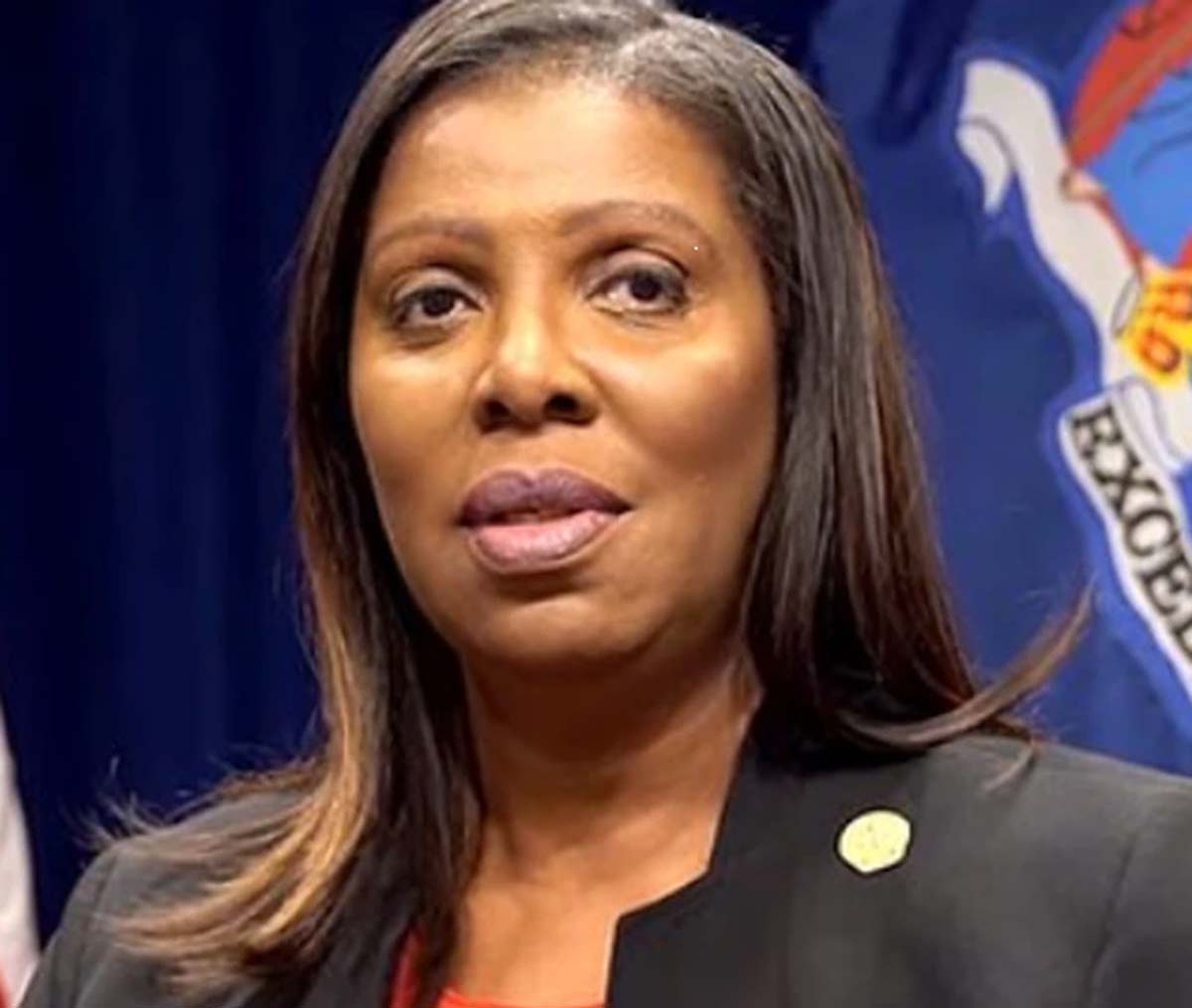
NEW YORK – New York Attorney General Letitia James today filed a cross reply in her office’s ongoing legal action to compel Donald J. Trump, Donald Trump, Jr., and Ivanka Trump to appear for sworn testimony as part of the office’s ongoing civil investigation into the Trump Organization’s financial dealings.
As laid out in today’s brief, Donald J. Trump, Donald Trump, Jr., and Ivanka Trump have failed to address in any way — much less rebut — the facts alleged in OAG’s 113-page supplemental petition laying out in detail the numerous misrepresentations contained in Donald Trump’s Statements of Financial Condition. Just last week, the Trump Organization was informed by their former accounting firm, Mazars, that the Statements of Financial Condition from 2011 through 2020 should no longer be relied upon. Taken together this evidence demonstrates the gravity and extent of the conduct at issue and confirms the merits of this investigation.
“As the most recent filings demonstrate, the evidence continues to mount showing that Donald J. Trump and the Trump Organization used fraudulent and misleading financial statements to obtain economic benefit,” said Attorney General James. “There should be no doubt that this is a lawful investigation and that we have legitimate reason to seek testimony from Donald J. Trump, Donald J. Trump, Jr., and Ivanka Trump. We will continue to follow the facts and ensure that no one is above the law.”
Urges social media to ban “drill” rap videos that glorify and promote violence
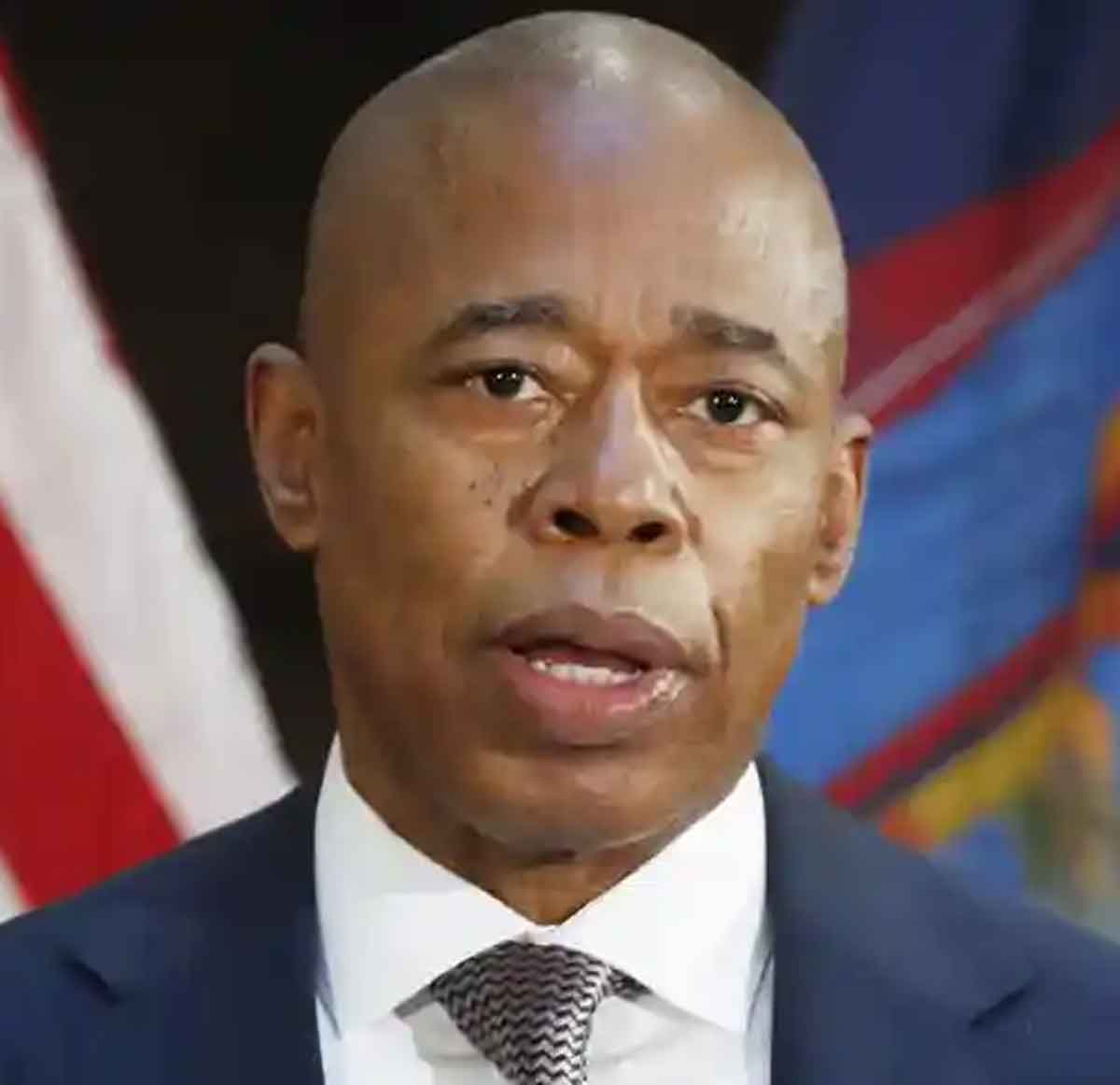
Damon K. Jones New York City Mayor Eric Adams is stepping out of the political box and publicly taking on a style of rap music socially called “Drill Music.” His goal is to remove it from social networks because of its promoting violence, especially in Black communities across the nation. “Social media companies have civic and corporate responsibility,” said Mayor Adams.
Drill Music – originated in Chicago – is a form of rap music that can be compared to trap music. Both are about life in the streets, but while trap music is about the trap (hence the name) and the drug dealing side of things, drill music is about the violent side of the streets. This style of music is recognized for its violent, dark lyrical content. Drill music focuses on crime and street life, and the word “Drill” itself is the street word for using an automatic weapon. It refers to killing, doing a hit, or retaliating.
“We are alarmed by the use of social media to over proliferate this violence in our communities,” said Mayor Adams.
During a press conference, Mayor Adams spoke about the music and its connections to violence. He urged social media platforms to pull the music. He said, “I had no idea what drill rapping was, but I called my son, and he sent me some videos, and it is alarming. We are going to pull together the social media companies and sit down with them and tell them that you have a civic and corporate responsibility.”
Mayor Adams also made a point to point out that former President Donald Trump was pulled off social media platforms after his lies about the 2020 election incited a deadly attack on the U.S. Capitol. However, music and videos that promote violence in Black communities are still allowed on social media.
“We pulled Trump off Twitter because of what he was spewing. Yet we are allowing music, displaying of guns, violence, we’re allowing it to stay on these sites.” Mayor Adams also stated he plans to meet with some well-known rappers to discuss how this music impacts our communities
Reporter Tremaine Lee Explores How Families Torn Apart Worked to Find Each Other
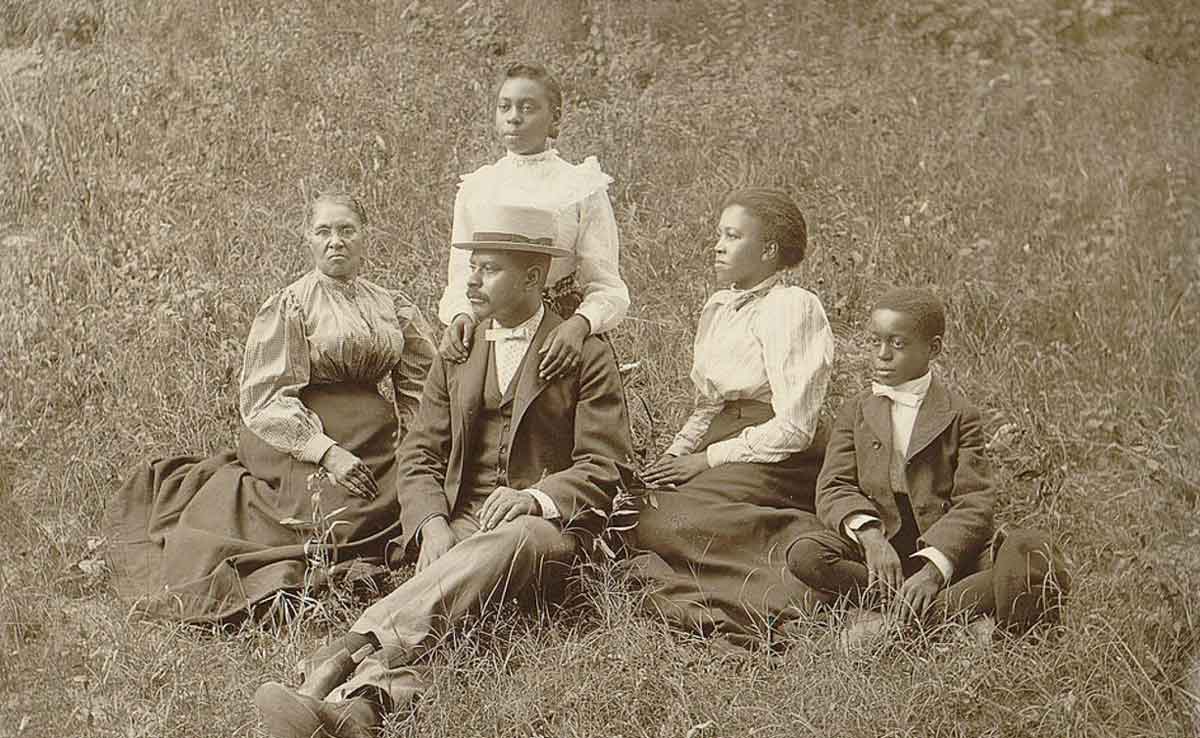
Claretta Bellamy Provided by NBC News Throughout slavery, Black family units were in constant danger of disruption, and those in bondage had no control over the structure of their families, let alone their lives. But the Reconstruction era, which followed the Civil War and the end of enslavement, was a pivotal turning point in history for African Americans and their families.
In the latest episode of the MSNBC podcast “Into America,” journalist Trymaine Lee visits the National Museum of African American History and Culture in Washington, D.C., to get an exclusive look at the exhibition “Make Good the Promises: Reconstruction and Its Legacies.” During the interview, he speaks with Spencer Crew, the curator of the exhibit and the emeritus director of the museum, to help tell the story of Reconstruction through the Black perspective. During Reconstruction, from 1865 to 1877, 4 million previously enslaved Black people worked to establish themselves in their new independence.
Three new constitutional amendments, Crew said, “changed the nature of citizenship in this country.” The end of slavery also gave the opportunity for African Americans to reconnect with family members displaced over generations. Families would travel to nearby plantations and farms, while also placing advertisements in newspapers in hopes of being reunited with their long-lost loved ones.
“What was interesting is that after the Civil War, there’s a lot of movement of African Americans around the country,” Crew said. “Well, in fact, what they’re doing is trying to reconnect family members — trying to find people that were lost.”
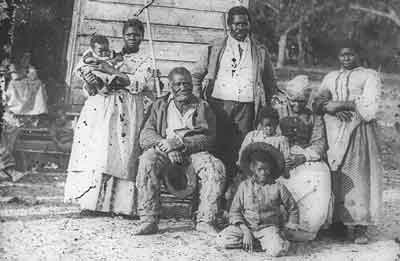
A family on the plantation of Dr. William F. Gaines in Hanover County, Virginia, circa 1862. Library of Congress
Churches also became conduits for people to find their families through word of mouth. In addition to helping reunite lost loved ones, Black churches established schools to promote education and later became arms of the civil rights movement. Furthermore, as a foundation of faith and stability in the community, the churches gave Black people hope in the midst of difficult circumstances.
“Faith is what brings the community together with faces,” Crew said. “Faith gives you the kind of attitude and worldview in which you can forgive others for the kind of terrible things that they do and to move forward.”
Although the process of reuniting families proved difficult and sometimes impossible, the Black family unit strengthened as a “very strong institution” that was stabilized within the next generation, said Eric Foner, DeWitt Clinton professor emeritus of history at Columbia University.
He said many people tried to reconnect with family members through the Freedmen’s Bureau, an agency established by the federal government as a resource for formerly enslaved people. However, this system often proved unsuccessful because there was no real record of what happened to separated family members, he said. “There were tragic results, because people were unable, in many cases, to locate family members,” Foner said, “or they face these problems where somebody may have remarried after 10 years of separation.”
Many Black families were also separated by far distances, making it difficult for family members to travel and find them. During Reconstruction, an important part of strengthening the family unit was through marriage. African American couples married under slavery participated in legal ceremonies to make their relationships recognizable by law. This showed that the sanctity of marriage and the closeness between husbands and wives, as well as their children, was very important, Crew said.
Reunited families also had desires of acquiring land to establish communities and create generational wealth. “The key thing in having land is having control over your own economic destiny,” Crew said, “and usually the first concern is your family. How do I take care of my family, my immediate family, and then my larger family? So that community building is an important part of the process.”
After Reconstruction, one of the ways African Americans were able to buy land was from those willing to sell it to them. In many cases, Black people who had land were renting it from a landowner, who required payment at the end of the year. Despite these challenges, according to Crew, about 15 percent of rural land in the United States during 1900 was owned by Blacks, compared to less than 1 percent now.
New disruptions arose with the Great Migration — the movement of over 6 million African Americans from the South to Northern and Western cities and states — which had a destabilizing effect on families, and is associated with issues relating to unemployment, low wages and poor housing conditions, Foner added.
Black families continue to experience financial disparities. According to 2019 data provided by the Survey of Consumer Finances from the Federal Reserve Board, the median wealth of white families is four to six times greater than the median wealth of Black families, based on data analyzing the Black and white wealth gap in middle- and older-aged families. While wealth increases with age for all families, the report also found that substantial wealth gaps between white and Black families persist throughout the lifecycle.
While Foner said he believes it’s important to preserve all history, African American history has often been sidelined and ignored for much of the nation’s past. He also said understanding the Black experience, including the inequalities and prejudices that Black people were subjected to, is crucial to understanding the disparities in the nation.
“That’s the explanation why there’s such a gap in wealth,” he said, “or a gap in life expectancy, or gap in, you know, other educational attainment or other divisions between Black and white in this country. You need to know the history to understand how the United States got into the divisive situation it’s in today. Without history, there’s no way of understanding the society we live in right now.”
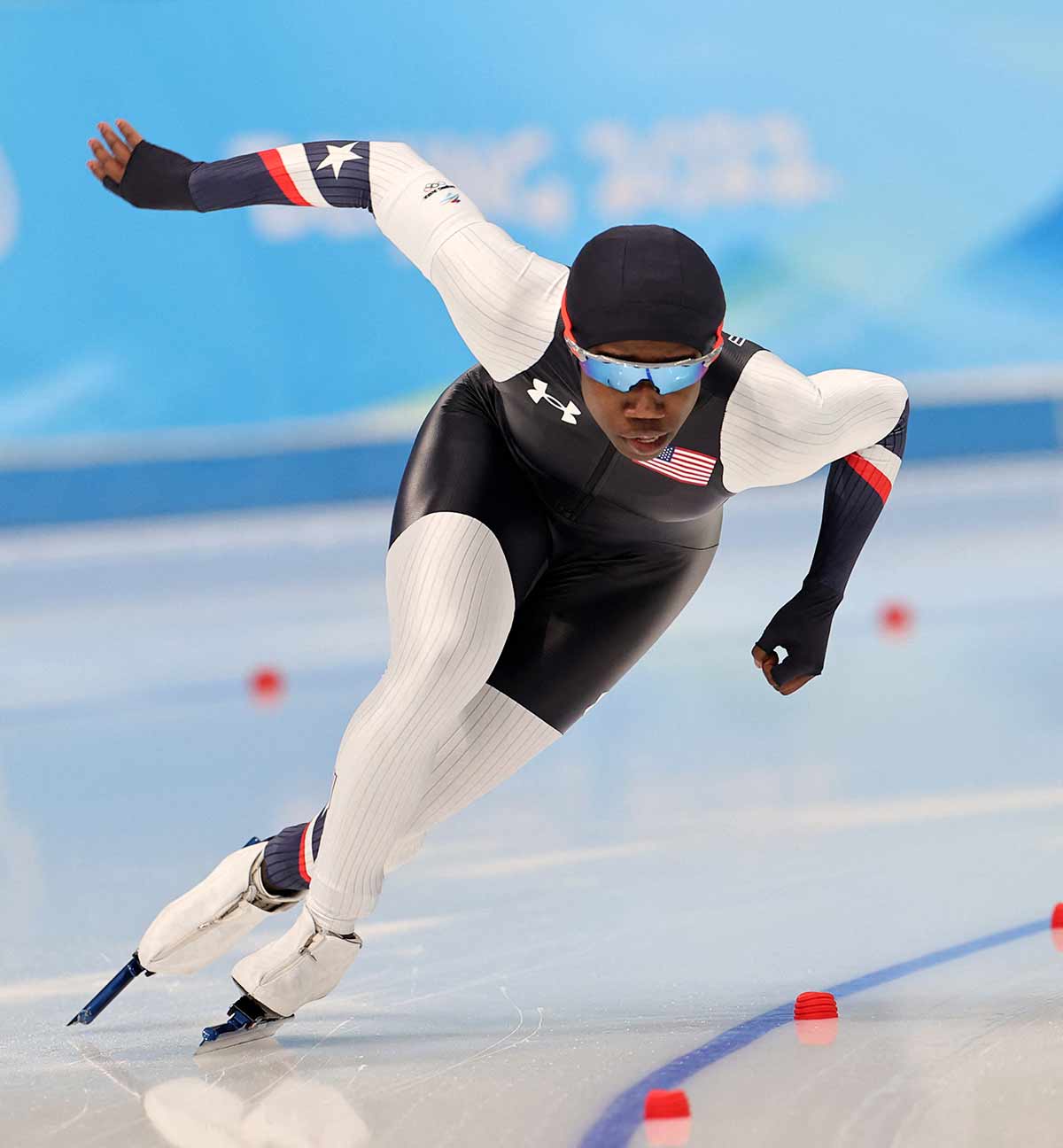
Speedskater Erin Jackson Makes History at 2022 Winter Olympics
Mike Vulpo Super Bowl Sunday isn’t the only sporting event with a champion. On Feb. 13, Team USA’s Erin Jackson earned her very first Olympic medal after winning gold in the women’s 500-meter speedskating race thanks to a speedy time of 37.04 seconds. If that wasn’t impressive enough, the 29-year-old Florida native also made history by becoming the first Black woman to win Team USA a gold medal in speed skating. “Olympic Champion,” Erin wrote on Instagram after her race. “It’s going to take me a while to process those words.”
She immediately received support from fans and athletes including the US Speed Skating team who wrote, “You deserve every second of this!!!! Soak it in.” As if the win wasn’t sweet enough, many Olympic followers may remember the touching story of how Erin made it to Beijing. Despite being ranked No. 1 in the world, Erin stumbled during the Olympic trials, jeopardizing her chase for gold.
But in an example of true sportsmanship, close friend and fellow skater Brittany Bowe didn’t hesitate to offer Erin her spot. “It’s the right thing to do,” Brittany told NBCSports.com in January. “There’s not a doubt in my mind that she wouldn’t do the same thing for me. She has earned her spot; she deserves it.” As for Erin’s reaction to the gesture, she was blown away. “Just for her to do something like this for me, it’s amazing,” she said. “I’m just incredibly grateful. I’m really humbled, and she’s just an amazing person.”
Top: Erin Jackson of the United States celebrates with the national flag of the United States after winning gold at the Beijing Winter Olympics, Feb. 13, 2022.