Home Blog Page 348

Photographer Chester Higgins, Jr. Has a Spiritual Journey in The Sacred Nile

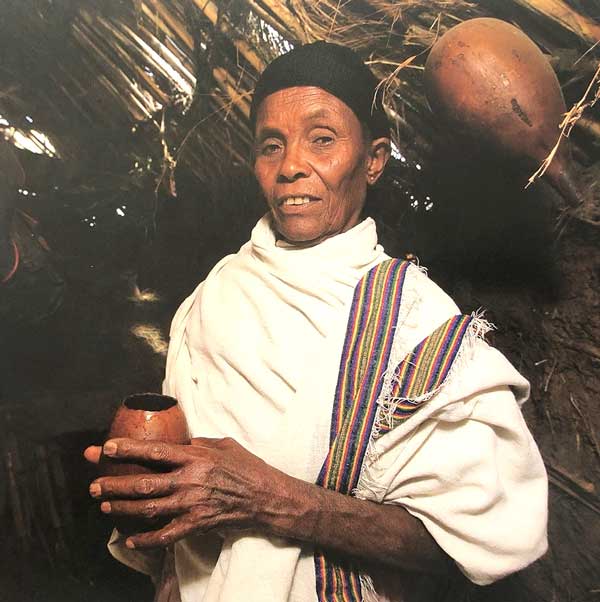
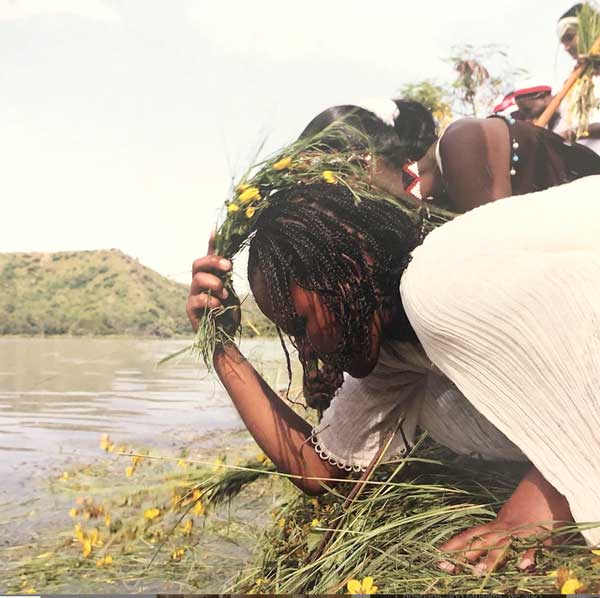
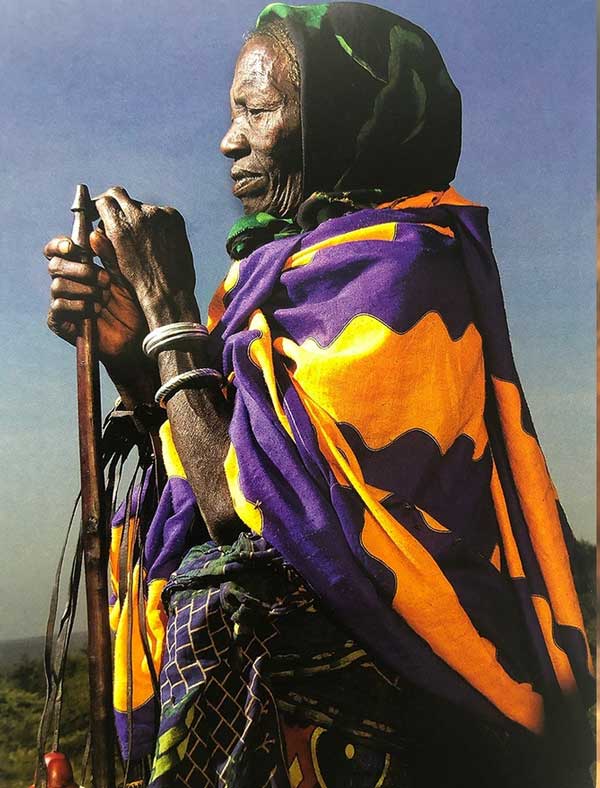
In The Sacred Nile, acclaimed photojournalist Chester Higgins, Jr. intertwines powerful photography with spirituality in a journey depicting African peoples who have lived along the banks of the African river since antiquity. The book, with texts from writer Betty Kissam, was 50 years in the making. “I have made some 20 trips to Egypt, 18 trips to Ethiopia and 4 trips to Sudan made yearly during two to six weeks field trips,” Higgins, a longtime Fort Greene resident, told Our Time Press.
Spirituality is an important part of Higgins’ life. Growing up in Alabama during Jim Crow, he was known as a child preacher giving powerful sermons. As an undergrad at Tuskegee Institute in the 1960s, he discovered the spiritual power of photography. Legendary Tuskegee photographer P.H. Polk, known for his photographs showing the dignity of African American life in the rural South during 1930s, became his mentor. “P.H. Polk was my first mentor. He placed the first camera in my hands,” he said. “I spent a few years guided by his example and under his influence. He represented the best of the Tuskegee School of photographers.” Later his mentors would be photographer Gordan Parks and artist Romare Bearden.
Over the years, Higgins has published wondrous photography books vividly documenting the African Diaspora. This includes Feeling the Spirit: Searching the World for People of Africa; Elder Grace: The Nobility of Aging; Echo of the Spirit: A Photographer’s Journey. His work has been exhibited in the Smithsonian and the Museum for African Art and he’s received grants from the Ford Foundation, Rockefeller Foundation, and Andy Warhol Foundation. He’s photographed for Look, Life, Newsweek, Time Fortune, Essence, Ebony and Black Enterprise.
From 1975 to 2014, Higgins was a leading photographer at the New York Times. His photography style on documenting Black peoples’ lives whether historic or every day is legendary. They are distinctive, remarkable, and poignant. “I don’t take pictures, I MAKE them,” he explained. “My personal mission as a New York Times photographer was to make sure that the issues of decency, dignity and virtuous character would always be upfront in any image that I made of my people.”
Our Time Press recently spoke with Higgins about The Sacred Nile and his spiritual journey through the ancient riverbanks.

 
OTP: You visited Egypt for the first time 50 years ago. Was that origin of the idea to create this book?
 
HIGGINS: On my first visit to Egypt 1973, I had no idea until I arrived and experienced the sight of pyramids, monumental temples and museum artifacts that I realized I was looking at the remains of the grandest African and human experience ever. I spent more than 20 years going back and forth just following the spiritual attraction of this place–the monuments, the artifacts and tombs. Just opening up to and embracing this ancient past. After much study and amassing a huge research library, it become clearer to me that there was indeed a book here for me to do and pay homage to our ancestors.



OTP: Why was it important for you to showcase the beauty and strength of Black women in The Sacred Nile?
 
HIGGINS: The glory of the African women has been historically censored in Western civilization and the Bible. We don’t have the imagery in Western culture of divine women, but in ancient Egypt, this recognition and adoration of the divine African women is expressed in stone portraits in so many forms all over the place as well as underground in tomb paintings. It was amazing to see the African woman in all her divine glory and I was so excited to make a photographic record of these messages left behind thousands of years ago that speaks directly to the sacred worthiness of the African woman.
 
OTP: You reflect on the role of Africans along the Nile in creating spiritual faith. You were a child preacher growing up in Alabama. Did that spirituality add to your insights on African spirituality?
 
HIGGINS: Historical records in stone show that African people were the first to have a sacred dialogue with the divine. My early spiritual and religious experiences enabled me to recognize the ceremonial messages carved into the stone walls and columns and to faithfully interrogate their meanings.
 
OTP: You discuss soul ascension and Egypt being a nation of faith and temples. How did visiting your first Unas tomb personally impact you?
 
HIGGINS: The Tomb of Unas is a time capsule. The tomb is 4700 years old occupying three underground vaulted chambers underneath a pyramid. Inside, lining the tomb walls, is the earliest spiritual expression ever with over 300 vertical lines of holy scripture that extends from the floor to the 12-foot ceiling. This chiseled writing in stone speaks to every religious concept that we know; nature, the soul, spirit, faith, a moral compass, life after death and the ascension to heaven of the king’s soul AS it is rejoined to the ENERGY of the cosmos. This tomb proves the ancient sacred agency of African people. Its very existence proves that religion, as we know it, stands upon the cultural shoulder of ancient Kemet (the Black land). Unas is our messenger from the past bearing the ancient good news for the present.

OTP: Your research has made you an Egyptologist. Who were the historians that influenced your interest in Egyptology?
 
HIGGINS: I would prefer the description of an independent Egyptological researcher. The historian who set fire to my imagination and love of ancient Egypt is the late Dr. John Henrik Clarke. I would visit him at his home library on the first floor of his brownstone on Harlem’s Striver’s Row sit on the floor and be entranced for hours by his description of ancient Egyptian history. There is still so much to learn. Our people first created civilization, the first to become literate, developed astronomy, mathematics, medicine, agriculture and built and dedicated monumental structures to worship their God Amen. Over time their colonnade architecture, which is called Empire architecture spread to Greece, Italy and all over the world. We see this architecture in our midst as buildings fronted with columns used by government and financial institutions. The most unique monumental design of their architecture is the obelisk, a square monolithic stone structure that rises high and is topped with a pyramid — here we call it the Washington Monument in DC.

 

Brooklyn Neighborhood Services partners with the Visiting Nurse Service of New York to bring health care assistance to older adults in District 36-Brooklyn

Commencing on Tuesday, February 15, 2022, between the hours of 9 AM and 2 PM, seniors will be able to call in to Brooklyn Neighborhood Services (BNS) to schedule appointments (in person or virtually), with an on-site, Registered Nurse, provided by the Visiting Nurse Service of New York (VNSNY). The VNSNY nurse will provide health-related information, support and direction to our senior community through health assessments, health education, and health care linkages to needed health services. Working in collaboration with our BNS NORC team, the VNSNY nurse will help to support seniors to live successfully in their home and community.


VNSNY is a leader in home-based health care for more than 128 years, providing a wide range of in-home services for those in need of short-term care, ongoing chronic health care, end of life care and mental health services and supports.


Establishing a Naturally Occurring Retirement Community (NORC) in District 36 was a vision of former District 36 Council Member, Robert E. Cornegy Jr., as Bedford Stuyvesant is one of NYC’s first Age Friendly Neighborhoods, that developed the Aging Improvement District, under the leadership of former District 36 Council Member Albert Vann. In 2017, District 36 was designated a NORC, and BNS was appointed Administrator of the first NORC Program in the district. Now an on-going project to create and support initiatives that enhance the social, physical, and psychological lives of our seniors. The designation has been a monumental accomplishment for our district and continues to flourish and continually provide resources and services to our most cherished population.


Funding for the NORC Program is made possible by the New York City Department for the Aging (DFTA). “Providing direct assistance to older adults since the establishment of the Age Friendly Neighborhood Initiative (AFN) in 2015, has been a most rewarding experience for us at BNS and we look forward to continuing the success of the program,” said BNS Executive Director, Richard M. Trouth.
“We look forward to our collaborative work with the staff of BNS to address the health needs of District 36 seniors. Our experience working with NORC programs throughout NYC has shown that NORCs have been extremely effective in assisting seniors to successfully age in place. We know that seniors will benefit by our shared dedication to home-based support services” said Rhonda Soberman, Manager of Program Development, VNSNY.

White Coats 4 Black Lives

We came across this item and it reminds us that throughout the struggle of Africans in the Americas, there have always been small groups of the racially aware that have grown and made a difference.

Alyssa Jones ‘23 |
Virginia Campus Correspondent
On Jan. 26, the group “White Coats 4 Black Lives,” an organization with a mission to “dismantle racism in medicine and fight for the health of Black people,” gave the University of Rochester’s School of Medicine & Dentistry its “Racial Justice Report Card.” 
The result was nine “F” grades based on campus activity and administration policies during the 2020-2021 academic year. 
Founded in 2014, White Coats 4 Black Lives has 75 chapters at universities across the nation and pushes the Black Lives Matter agenda within medical schools. 


The University of Rochester received failing grades for “Recruitment & Admissions,” “Curriculum,” “Clinical Education,” “Student Affairs,” “Physical Space,’ “Relationship to the Carceral State,” “Treatment of Workers,” “Research,” and “Institutional Response to Student Activism.” 
“Campus Police have been not been abolished [sic], and the Board of Trustees has yet to take action to divest from companies that profit from private prisons,” the report card states in reference to the “Relationship to the Carceral State” failing grade. 


In a likely reference to its political mission, White Coats 4 Black Lives also publishes the online magazine The Free Radical, which covers a range of issues pertaining to social justice and health care. 
“We hope that a robust political framework that centers marginalized people and communities will help create a generation of health care providers who are committed to dismantling oppressive structures, confronting institutionalized racism in our profession, and creating an equitable society,” the outlet states on its website. 


Campus Reform reached out to the University of Rochester and White Coats 4 Black Lives; this article will be updated accordingly. https://campusreform.org

Mayor Adams Appoints NYC Parks Leadership

NEW YORK – New York City Mayor Eric Adams today announced the appointment of two officials who will carry out his vision for a more equitable parks system where all New Yorkers can enjoy the physical, mental, and emotional benefits that open space provides.
Susan Donoghue will serve as the commissioner of the City of New York Parks & Recreation. In that role, she will oversee more than 30,000 acres of land under the agency’s purview, including parks, playgrounds, recreational facilities, and beaches. A staunch advocate for parks equity, Donoghue will ensure that the agency’s mission of preserving and expanding well-maintained parkland is aligned with the mayor’s goal of reducing long-standing disparities in access to greenspace.
Iris Rodriguez-Rosa will serve as the first deputy commissioner. As first deputy commissioner, Rodriguez-Rosa will manage the agency’s efforts to improve parks throughout the city and create more high-quality greenspaces. A veteran of NYC Parks who currently serves as the Bronx borough commissioner, Rodriguez-Rosa has been a steadfast champion for better parks in underserved areas.
 
“Parks are more than places for recreation and enjoyment — they are powerful tools for equity,” said Mayor Adams. “For too long, many communities throughout our city have been denied easy access to these vital spaces. Under the leadership of Sue Donoghue and Iris Rodriguez-Rosa, we will work to ensure that every New Yorker can enjoy the myriad benefits greenspaces can provide.”
“In between our concrete and asphalt are New York’s most precious assets, it’s free public green spaces,” said Deputy Mayor for Operations Meera Joshi.  “Sue and Iris’ unwavering commitment to nurturing, and growing our precious parks, ensuring they are available for all and fortifying them against climate crisis will make ours a stronger and more beautiful city.”
“Our parks and open spaces are critical to the quality of life of all New York City residents. They improve the air we breathe, enhance our physical and mental health, and strengthen our communities. I am extremely honored and humbled to take on this role as NYC parks commissioner and work alongside the dedicated and essential workers who care for our 30,000 acres of parkland. Mayor Adams and his administration understand the importance of safe and equitable access to parks for all New Yorkers, and I’m committed to joining the team and ensuring that parks and open spaces across New York City are accessible and welcoming for all,” said incoming Commissioner Susan Donoghue.  
“I have dedicated my career to making the New York City park-going experience one that helps connect communities to amazing open spaces that provide mental, physical, and emotional benefits to all. I am thankful to Mayor Adams, his administration, and Commissioner Donoghue for allowing me the opportunity to continue to serve the City as its new NYC Parks first deputy commissioner. It is my honor to join the agency’s leadership team and I look forward to continuing to work with our invaluable Parks staff in their steadfast commitment to our great park system,” said incoming First Deputy Commissioner Iris Rodriguez-Rosa.
 

BAM welcomes back Gina Duncan as our incoming president

0

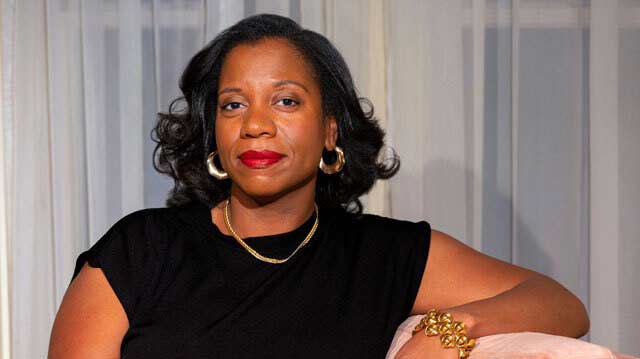
On behalf of BAM’s Board of Trustees and the BAM leadership team, we are overjoyed to announce that Gina Duncan returns to BAM as our new President. 


We saw Gina’s extraordinary leadership skills firsthand during her four years steering BAM’s film and strategic programming initiatives. She has the ability to bring people together toward clear goals, and she understands that BAM must always evolve in order to nurture new audiences and champion innovative programming. We are excited to have her back and look forward to working with her once again.
Gina returns to BAM from the Sundance Institute, where she served as its Producing Director since September 2021. During her tenure, she was responsible for producing the Sundance Film Festival online and in person, as well as managing the Institute’s year-round operations. As Producing Director, she was an integral part of fiscal and artistic planning and oversight for the Institute.


Prior to Sundance, she joined BAM’s executive team in January 2017 as Associate Vice President, Film—a newly created role overseeing BAM Rose Cinemas and the institution’s repertory film program. Under her leadership, its film program flourished, and a revolutionary approach to repertory programming which centered underrepresented voices in cinema was recognized as a “vital” part of the New York film landscape by The New York Times. In 2019, she was promoted to Vice President, Film and Strategic Programming, adding Humanities and Archives to her portfolio. Duncan also served as interim head of Marketing and Communications during the first six months of the pandemic and led BAM’s curatorial team in transitioning to programs online to reach audiences across the nation. 


Previously, she was a film and community programmer at Jacob Burns Film Center and has produced film, TV, and theater for artists Titus Kaphar, Ja’tovia Gary, and comedian Mike Birbiglia. Gina started her career at NFL Films, where she received a 2004 Sports Emmy Award for her work on HBO’s Inside the NFL. She is a member of the Board of SPACE on Ryder Farm, the Advisory Board of Jacob Burns Film Center’s Creative Culture fellowship, and on the Editorial Advisory Board for SEEN, a film and visual culture journal produced by BlackStar Projects.


We are eagerly anticipating Gina joining us in April, and we hope you will join all of us in extending an enthusiastic, warm welcome to Gina in the coming months as we embark on this exciting new chapter.
Nora Ann Wallace, Board Chair