Home Blog Page 2

Brooklyn Supports Harlem in a ‘Moment of Commercial Silence,’ for Malcolm X 101st Birthday

0

By Nayaba Arinde
Editor-at-Large


Malcolm X would have been 101 years old on Tuesday, May 19th, 2026.
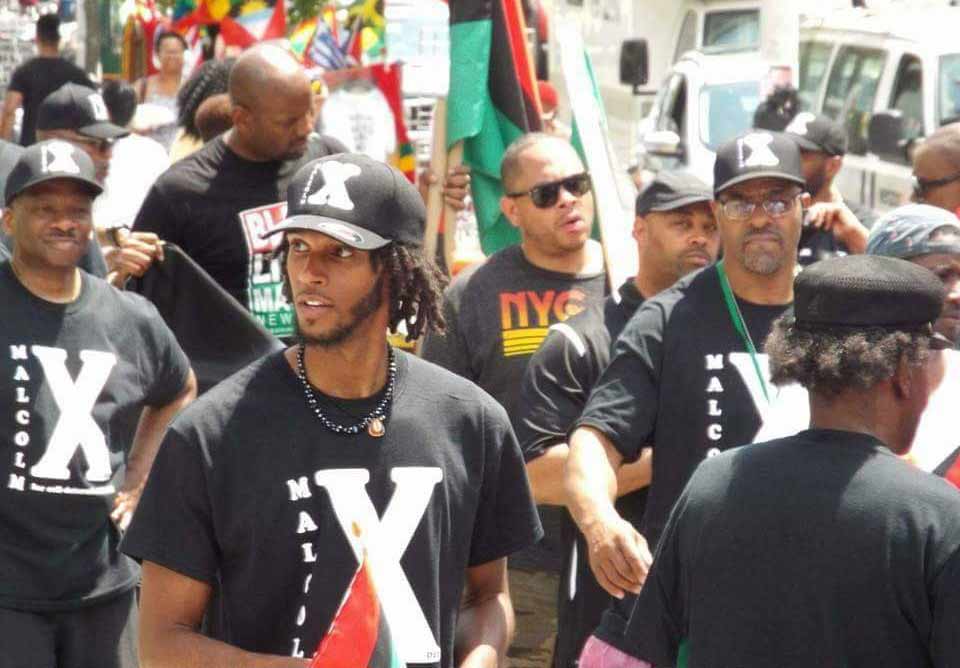
The Brooklyn-based December 12th Movement is once again organizing the annual Harlem 125th Street tradition of a ‘Moment of Commercial Silence,’ closing down all the stores in honor of “Our Black Shining Prince” Malcolm X.


Attorney Roger Wareham told Our Time Press, “This May 19th will be the 36th year that the December 12th Movement has led the community in a tribute to Malcolm X by having businesses across 125th Street close for three hours. This annual ‘moment of commercial silence’ is a unique and historic homage to one of Black people’s greatest heroes on the day of his birth. It reflects the power of and sets an example for what an organized Black community can do.”


Commemorative events will also include two celebratory events at the Audubon Ballroom – now The Shabazz Center (The Malcolm X & Dr. Betty Shabazz Memorial and Educational Center), and the annual pilgrimage to Malcolm’s grave, where he is interred with his wife in Ferncliff Cemetery, Ardsley.


El Hajj Malik El Shabazz – Malcolm X was assassinated on February 21, 1965, during a speech in the Audubon Ballroom. After organized pressure by grassroots activists, the building was landmarked as Malcolm X and Dr. Betty Shabazz Memorial and Educational Center – also known as The Shabazz Center.


Last summer, celebrating the icon’s 100th birthday, the 110th Street subway stop in Harlem was renamed Malcolm X Plaza.
There will also be another rally for the ongoing quest to rename the Bed Stuy-Utica Avenue subway station. Organizer and Our Time Press writer, Kazembe Batts told Our Time Press that activists will be on the corner of Fulton Street and Malcolm X Blvd., in Bed Stuy, on Tuesday, May 19th at 5pm, to honor “Malcolm’s 101st birthday…in a simultaneously celebratory and serious activation, community members, activists, and poets will share thoughts about ‘Our Black Shining Prince.’”


Batts encouraged, “All elected officials for the area are invited to update us on what they have done and how they can help get the Utica Avenue A-train subway station to be renamed to Malcolm X Blvd., and to build a complementary plaza above ground.”
Senator Zellnor Myrie told Our Time Press, “Malcolm X had a profound and lasting influence on Black history and New York history. It is only fitting that we honor his legacy by renaming the subway station located at the first NYC street named in tribute to him. I look forward to working with my colleagues to get this done.”


Assemblywoman Stefani Zinerman’s bill has passed in the Assembly, she told Our Time Press, “Preserving the history and culture of Bedford-Stuyvesant and Crown Heights is central to my mission as Assemblymember for the 56th District. Last year, we advanced legislation to rename the Utica Avenue train station Malcolm X Boulevard–Utica Avenue, and this year, as we mark the 101st anniversary of Malcolm X’s birth, we have renewed our efforts and once again passed the bill in the Assembly.

We are determined to see this recognition finalized by the May 19 event. Aligning the name of the train station with the surrounding streets is more than symbolic; it creates an opportunity to drive economic development along the commercial corridor, bring vital cultural programming to the open plaza, and honor the pride, power, and purpose Malcolm X brought to Brooklyn and to the world.”


Malaak Shabazz told Our Time Press, “We should have the subway station renamed after my father, Malcolm X, especially as Brooklyn is home to many people from the Caribbean Diaspora, and my father was Grenadian-American. My grandmother, my father’s mother [Louise Langdon Norton Little], was from Grenada. But, given that he is a human rights activist, there should be one in every borough.


My mother worked at Medgar Evers for 20 years and worked so hard to remind people who he was and the importance of his role in promoting the African Diaspora and the Caribbean Diaspora. She worked in Harlem with Ed Koch, even with opposition, to get Lenox Avenue renamed Malcolm X. Blvd.”


That was in 1987. Also facing some opposition, Reid Avenue in Brooklyn was renamed Malcolm X Boulevard in 1985.
“She was committed to Brooklyn, and I am sure if she were still alive, she would be absolutely, 100 % for it. She was totally Brooklyn. Her heart was in Brooklyn. She could have taught anywhere, and she chose Medgar Evers College in Crown Heights, Brooklyn. She was an Assistant Professor of health sciences, and worked there for 20 years.”


Another special connection–all six Shabazz daughters were delivered in Brooklyn by Dr. Josephine English, the first Black woman to open a private obstetrical practice in New York, and she founded the Adelphi Medical Center in Fort Greene in 1979.
Although born in Nebraska, Malcolm Little grew up in New York.


After he left the Nation of Islam, Malcolm X, husband to Dr. Betty Shabazz, and father to Attallah, Qubilah, Ilyasah, Gamilah, Malaak, and Malikah, grew internationally as a civil and human rights advocate till the day he was gunned down in 1965, aged 39.
“Malcolm and his ever-insistent call for a United Front is as relevant as ever,” Zayid Muhammad, chair of the Malcolm X Commemoration Committee, told Our Time Press. “Whether we are talking about police brutality and fascism here or oil addicted imperial wars abroad, the clarion call for a radical United Front, rooted in principled, unapologetic solidarity, is the order of the day! X as in Malcolm is the Answer.”
On Monday, May 18th, 2026, at The Shabazz Center, Betty and Malcolm’s daughter, Dr. Ilyasah Shabazz, will be hosting a 7pm book signing for her latest tome, ‘Malcolm In The Desert: Wisdom From the Spiritual Transformation of Malcolm X.’


For weeks, December 12th Movement (D12) chairman Omowale Clay and members visited 125th Street to remind the stores about the annual 3-hour shutdown in honor of Malcolm X’s birthday. The odd holdouts out of the dozens, upon dozens of stores, experience instant storefront rallies, where marchers shout chants such as, “No Respect for Malcolm X.”


Activist attorney Wareham concluded, “Malcolm stood for Black people’s rights to self- determination, self-defense, and Black Power. His teachings are as valuable today as they were 60 years ago. We invite the community to join us to honor ‘Our Black Shining Prince,’ and demonstrate the unity we need to survive in these perilous times.”


On Tuesday, May 19th, there will be a caravan of cars and coaches for the pilgrimage to Malcolm X’s gravesite in Ardsley, gathering at the Adam Clayton Powell Jr. State Office Building on 125th Street, leaving at 9 am.
On the same day, at the same location, at 12 noon, begins the D12 ‘Commercial Moment of Silence and Black Power Walk.’


That evening at 7 pm, the Shabazz sisters will host their annual tribute to Malcolm X at The Shabazz Center.
For more information, contact info@theShabazzCenter.org, or phone: (332) 345-9620
For the Malcolm X Commemoration Committee bus text 973 202 0745 or 917 346 8142.
For more information about the Brooklyn rally contact bkmalcolmx100@gmail.com.
Dr. Lisa Scott-McKenzie, NYC Aging Commissioner: Caring for Caregivers

Fern Gillespie
Caregiving has become a way of life for millions of people. They are caring for an elderly parent, a sick relative or friend or even a grandchild. Many caregivers are a part of the “sandwich generation,” balancing jobs, families, and personal responsibilities while helping loved ones remain safe and independent at home.


In New York City, 1.3 million people are caregivers. Yet many people who help care for others do not necessarily identify themselves as a caregiver and, as a result, do not realize they qualify for services designed to support them. The NYC Department for the Aging (NYC Aging) has launched a caregiving awareness multimedia campaign, “You Care for Them, We Care for You,” to help caregivers recognize their role and learn how NYC Aging can support them and the people they care for.


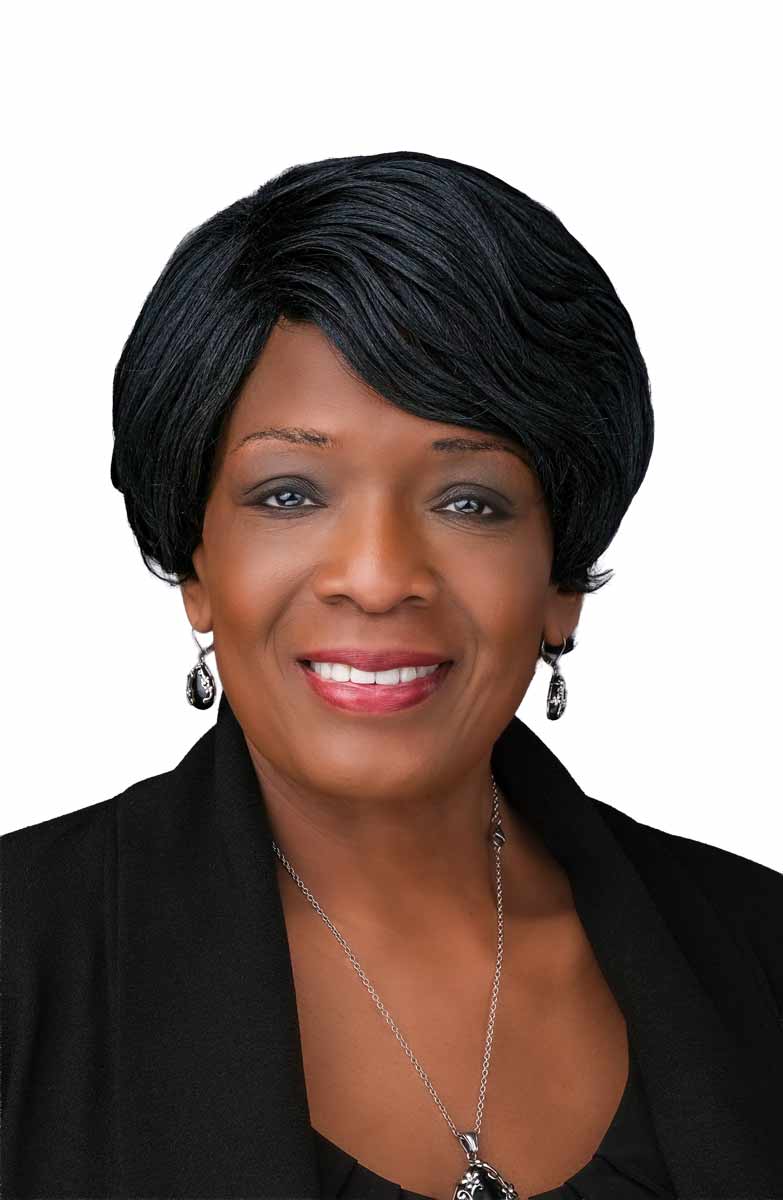
Under the direction of NYC Aging Commissioner Dr. Lisa Scott-McKenzie, the caregiver campaign meets people where they are, and makes sure they know that NYC Aging has resources to assist them. Born in Brooklyn, Dr. Scott-McKenzie has worked for over 40 years in the healthcare field. Prior to NYC Aging, she was Chief Operating Officer at New York City Health +Hospitals/Woodhull in Brooklyn, where she led initiatives improving patients’ care, multi-million-dollar capital construction projects and emergency events as a Certified Emergency Manager. She has earned the Power Woman of Brooklyn Award for managing crisis encompassing the 2003 Northeastern Blackout, 2012 Superstorm Sandy and the COVID pandemic. Our Time Press recently spoke with Dr. Lisa Scott-McKenzie about NYC Aging’s outreach to assist NYC caregivers.

OTP: What inspired NYC Department for the Aging to create an initiative focused on caregivers?
LSM:
NYC Aging recognized the need to support caregivers who are struggling to meet complex and varied responsibilities. People balancing work, family, and financial pressures take on caregiving every day. Today, over 1.3 million New Yorkers provide care, and many do not identify themselves as caregivers or know support exists. The initiative grew from the need to recognize caregiving as essential and to connect people to support earlier. Many caregivers have questions and look for a place to start. NYC Aging provides that entry point, offering guidance, information, and access to services.


OTP: What are the benefits of the NYC Aging caregiver program for caregivers?
LSM:
The program gives caregivers practical support they can use right away. This includes counseling and support groups that help caregivers troubleshoot and learn problem-solving techniques from peers, training to build skills, and benefits navigation to help them access services. It also offers limited financial assistance for caregiver-related expenses, as well as long-term care planning and referrals through our citywide provider network. These supports help caregivers stay stable, remain in the workforce, and manage the emotional and financial demands of care, while also ensuring the person they care for receives the services needed to meet their care needs.

OTP: Many caregivers are in the sandwich generation. Why is it important for them to take care of themselves and join support groups?
LSM:
Caregivers cannot sustain care if they are burned out. Many are balancing children, older relatives, and working at the same time. Support groups and counseling provide a space to share experiences, learn from others, and reduce stress. Taking care of themselves allows them to continue caring for others and maintain their own health, stability, and income. Much of the caregiving journey involves trial and error, and support groups are a safe space to learn what has worked for others and to build new skills in care, communication, and planning.

OTP: There are many older adults who are caregivers. What advice do you give them on handling obstacles?
LSM:
Do not try to do it alone. Start by identifying yourself as a caregiver and reach out for support. NYC Aging’s “You Care For Them, We Care For You” campaign encourages caregivers to recognize their role and connect to services designed for them. Use resources like Aging Connect to find programs that support family caregivers with day-to-day needs, get help with care planning, and take advantage of respite when it is available. Small steps, like getting guidance on benefits or connecting with a support group, can make a big difference.

OTP: What programs are available for caregivers to be paid, and what training is available?
LSM:
NYC Aging focuses on supporting caregivers through services like respite, counseling, training, and benefits navigation. For those seeking paid caregiving roles or compensation pathways, options may exist through other systems such as Medicaid-funded programs or workforce training partners. NYC Aging helps connect individuals to information, training opportunities, and referrals so they can explore those pathways.

OTP: Why should caregivers have a long-term plan?
LSM:
Caregiving often starts suddenly but can last for years. Without a plan, families end up making decisions in crisis, which can lead to higher costs and fewer options. Long-term care planning helps families understand what services are available, how to manage care over time, and how to maintain stability for both the caregiver and the person receiving care.

OTP: What obstacles do underserved Black and Brown caregivers face, and how can NYC Aging assist?
LSM:
While many have support and resources within reach, many others face higher financial strain, limited access to information, language barriers, and weaker connection to formal support systems. Caregivers may also be less likely to seek support, viewing caregiving as a family responsibility rather than something that requires outside help. Some are also more likely to balance caregiving with full-time work. NYC Aging works through community-based organizations across neighborhoods to provide culturally responsive services, multilingual support, benefits counseling, and trusted entry points to care.

OTP: How can a caregiver become eligible for NYC Aging programs?
LSM:
Caregivers can start by contacting Aging Connect at 212-AGING-NYC (212-244-6469) or visiting the NYC Aging website to find services near them. Eligibility depends on the type of caregiving an individual provides, but the first step is reaching out. From there, staff can guide individuals to the right supports based on their situation.

Book Review- Our Time Press

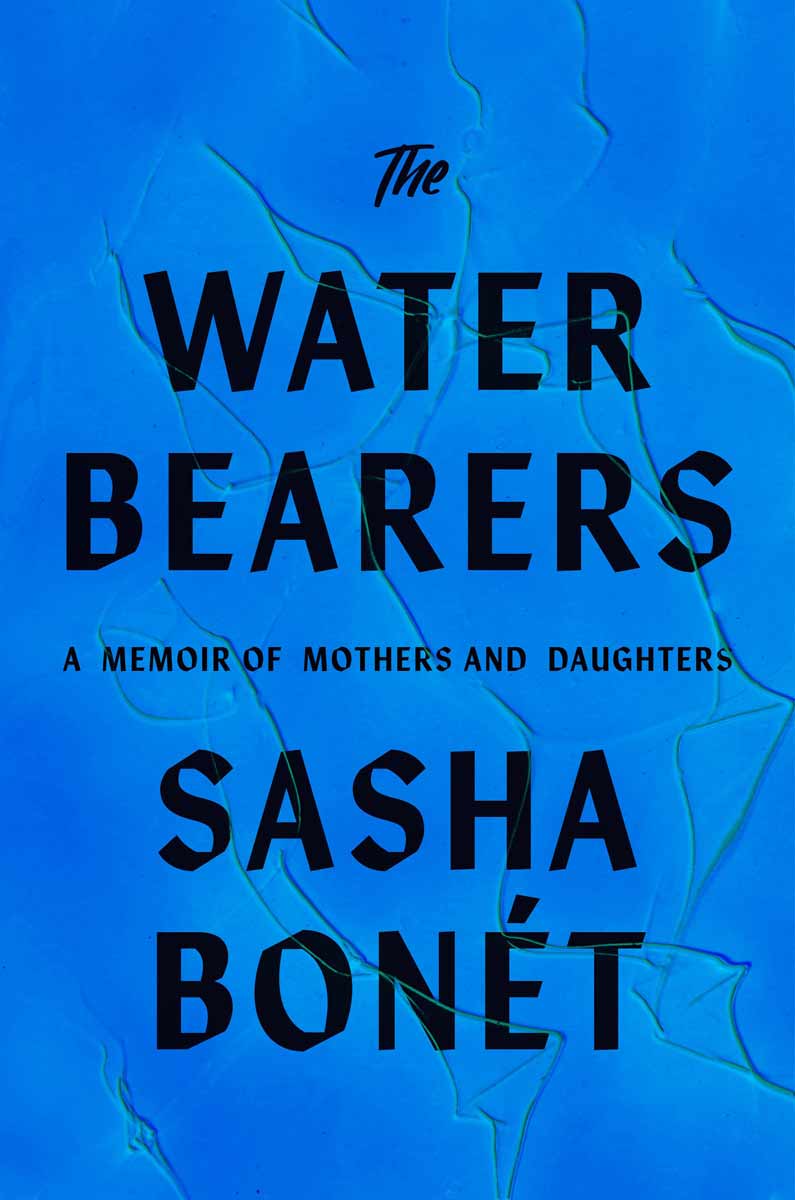
Sasha Bonét’s The Waterbearers: A Memoir of Mothers and Daughters

By Dr. Brenda M. Greene

“Stories Always Come Back in the Water” Bonét (26)

Sasha Bonét’s The Waterbearers: A Memoir of Mothers and Daughters (Alfred Knopf, 2025) draws from Tony Morrison’s classic essay, “The Site of Memory.”  Morrison posits that “All water has a perfect memory and is trying to get back to where it was.” (99) In The Waterbearers, Bonèt informs readers that “stories always come back in the water” and using the connection between water, memory, and story, she provides a framework for uncovering the memories of three generations of women: herself, her mother Connie, and her grandmother Betty Jean.

Like water, which remembers and continues to flow toward its destination despite obstacles in its path, Bonet’s grandmother and mother maintain their course as they navigate the travails of raising their families.  They provide Sasha Bonét with a roadmap for survival, and as she tells their stories, readers gain insights into the interior lives of strong Black women who, notwithstanding heartaches, losses, grief, abuse, their own insecurities, and the absence of men in their lives, find ways to “mother” and nurture those around them.  These women are the waterbearers, the keepers of memories.  As Bonét reflects on the lives of her mother and grandmother, she evolves and comes to understand what she must do for herself and Sofia, her daughter.

Bonét’s memoir is a meditation on life and love; an exploration of what happens when people feel abandoned, insecure, and unloved; lessons on the importance of emotional, physical, and mental self-care; and reflections on the value of the family and community.  She understands that her healing from pain, loss, and the feeling of abandonment necessitates that she intentionally find ways to love.  This involves becoming like the bend in the river that breaks away. In her words, “It is from those closest to us that we learn how to love and how to hate ourselves too.”(16). 

A central part of Bonét’s memoir focuses on her complicated relationship with her mother.  She knows that Connie, her mother, loves her, but she feels unloved and ponders on her mother’s troubled childhood.

My mother had forgotten most things about her childhood, but she clings to her anger. . . . Anger for never knowing her father, the midnight man.  Anger for never being held. Never being told that she was loved.  Never being protected. (72)

Bonét also observes how her mother covers up her insecurities by projecting a strong, tough exterior in a male-centered world and going over and beyond in her home and workplace. This behavior eventually harms Connie; she compensates for the absence of love and a feeling of emptiness by becoming addicted to food.

Creating safe spaces for the community is another central theme in this memoir. The Third Ward, where Bonét’s family house, 5010, is located, is known as Houston’s Black Mecca, a safe place for Blacks who have migrated from the south. Blacks in The Third Ward own businesses and “remain undead.” 5010 is a safe, communal space for all of Bonét’s nuclear and extended family.   Bonét reflects on a memory of 5010. “It was at 5010 that I learned about the complexities of relationships, that you can openly despise someone and still love them hopelessly.” (20)

The water metaphor is present throughout The Waterbearers.  In describing what it was like growing up in Houston, Texas, Bonet looks at a map of Houston and thinks, “it seems as if the highways were built to resemble the water.” . . . “The murderous waters and winds return each year, trying desperately to cleanse us.” (55)  Water is comforting as well as threatening.  Bonet ponders on the role that the water played when her mother tried to forget her childhood.  “Perhaps the proximity of the bayou wouldn’t let her release the past. . . .. whenever my mother experiences discomfort, she takes to the water.  The water settles her.”(155, 187) When Sasha eventually moves from Houston to Manhattan, she understands and reflects on the necessity of her connection to water. “I knew that I needed to live near the water; the island embraced me.  With every breath, the moisture and salt in the air felt like home.” (223) 

Memoirs give readers windows into a person’s life; they do not tell the entire life story and because they are memories, they do not move in a linear path. Like the waterbearers, Bonét’s personal story and the stories of the women in her life ebb and flow. She becomes a waterbearer, one who symbolizes the many interloping narratives of the lives of Black women in America.

Sasha Bonét is a writer and cultural critic.  Her criticism and essays have appeared in The Paris Review, Aperture, and New York, among other publications.  She is a professor of creative writing at Columbia University.  For more information, visit see https://www.sashabonet.com/

 Dr. Brenda M. Greene is an Author, Professor Emerita, and Founder and Executive Director Emerita of the Center for Black Literature at Medgar Evers College, CUNY. For more information, visit https://www.drbrendamgreene.com

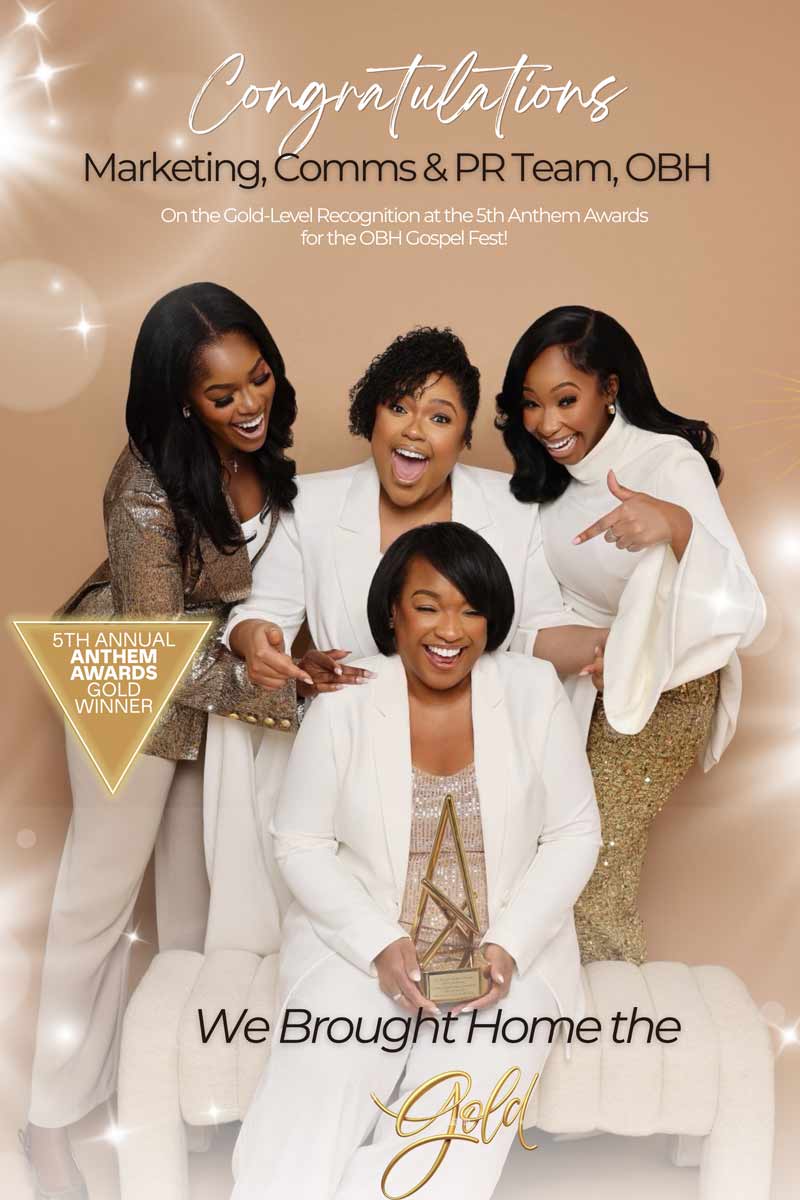
One Brooklyn Health Marketing, Comms & PR Team, Wins Gold at the 5th Annual Anthem Awards for Community Impact

BROOKLYN, NY — One Brooklyn Health’s Marketing, Comms & PR Team has been named a Gold winner in the Community Event category at the 5th Annual Anthem Awards for the Production of the OBH Gospel Fest, currently in its 16th year.
The OBH Marketing, Communications & Public Relations team—comprised of women of Caribbean heritage, Brooklyn-born and raised, reflecting the communities they serve—earned Gold-level recognition for its work on the Annual Gospel Fest. The team was recognized for this community-driven initiative, which reflects a unified approach to care by bringing together medical staff and community partners for a musical healing experience. Through their marketing, communications, and storytelling, the team bridges the gap between healthcare systems and underserved populations.


The event, created by Senior Director Enid Dillard in partnership with Pastor Gil Monrose, was designed to celebrate the invaluable partnership between One Brooklyn Health and the clergy of central Brooklyn, and to acknowledge the important connection between physical and spiritual wellness.


Anthem Winners are selected by the International Academy of Digital Arts and Sciences. Judges for the 5th Annual Anthem Awards include Nancy Brown, Chief Executive Officer, American Heart Association; Anjelika Lours’ Kour, Creative Director & Managing Partner, DD.NYC®; Miguel Castro, Head of Global Media Partnerships, Gates Foundation; Belén Frau, Global Communication & Positioning Manager, IKEA; Heather Malenshek, SVP & Chief Marketing Officer, Land O’Lakes, Inc.; Singleton Beato, Global EVP, Chief DEI Officer, McCann Worldgroup; Trovon Williams, Sr. Vice President of Marketing & Communications, NAACP; Lauren Garcimonde-Fisher, Vice President of Brand, Planned Parenthood; Roma McCaig, Chief Public Affairs and Impact Officer, REI Co-op; Brett Peters, Global Lead, TikTok for Good, TikTok; and Michelle Waring, Steward for Sustainability and Everyday Good, Tom’s of Maine, among others.


“This has been a challenging year for the impact sector, but the Winners of the 5th Annual Anthem Awards have shown their resilience and continued commitment to a better tomorrow,” said Anthem Awards General Manager, Patricia McLoughlin. “This year’s winners are a source of hope, and I am excited to celebrate their work with the world today.”


“Winning this gold award is a powerful reminder that true wellness goes beyond the physical, it lives at the intersection of body, mind, and spirit,” said Enid Dillard, Senior Director of Marketing, Communications, and Public Relations at One Brooklyn Health. “The OBH Gospel Fest beautifully honors that connection, bringing people together through the healing power of gospel music. This event reflects our deep commitment to fostering not only clinical excellence, but also compassion, inspiration, and a sense of shared humanity within the community.”


The 5th Annual Anthem Awards received more than 2,000 submissions from 42 countries worldwide. By amplifying the voices that spark global change, the Anthem Awards are defining a new benchmark for impactful work that inspires others to take action in their communities.

About One Brooklyn Health
One Brooklyn Health (OBH)—comprising Brookdale Hospital Medical Center, Interfaith Medical Center, and Kingsbrook Jewish Medical Center—is nationally recognized for high-quality care in heart failure, stroke, and diabetes, among other acute care. The system includes 12 ambulatory care centers, two nursing homes, an assisted and independent living facility, a transitional housing program, an urgent care center, and a retail pharmacy. OBH’s mission is to expand access to quality medical care for Brooklyn’s most vulnerable communities. For more information, please visit onebrooklynhealth.org


About The Anthem Awards:
Launched in 2021 by The Webby Awards, The Anthem Awards honors the purpose & mission-driven work of people, companies and organizations worldwide. By amplifying the voices that spark global change, we’re defining a new benchmark for impactful work that inspires others to take action in their own communities. The Anthem Awards honors work across seven core causes: Diversity; Equity, Inclusion, & Belonging; Education; Art & Culture; Health; Human & Civil Rights; Humanitarian Action & Services; Responsible Technology; and Sustainability, Environment & Climate. This season’s sponsors and partners include AARP, Virgin Hotels NYC, The Bloom, The Social Innovation Summit, Sustainable Brands, NationSwell, and TheFutureParty. The Anthem Awards were founded in partnership with the Ad Council, Born This Way Foundation, Feeding America, Glaad, Mozilla, NAACP, NRDC, WWF, and XQ.

About The Webby Awards:
Hailed as the “Internet’s highest honor” by The New York Times, The Webby Awards is the leading international awards organization honoring excellence on the Internet, including Websites & Mobile Sites, Video & Film, Advertising, Media & PR, Podcasts, Social & Games, Apps, Software & Immersive, Creators, and new this year, AI. Established in 1996, The Webby Awards received nearly 13,000 entries from all 50 states and over 70 countries worldwide last year. The Webby Awards are presented by the International Academy of Digital Arts and Sciences (IADAS). Sponsors and partners of The Webby Awards include WP Engine, Meltwater, KPMG, NAACP, WSJ, Fast Company, Deadline, The Hollywood Reporter, Morning Brew, The Hustle, AIGA NY, and The Publish Press.

Haiti & Israel: History Memory & Contemporary Needs

By Kazembe Batts IG: @kazbatts
Profound similarities and stark differences exist with Haiti and Israel. Haiti’s population of about 11.5 million people is slightly more than Israel’s population of about 10 million people, including over 2 million Arab residents. Haiti’s geographic area of 10,710 square miles is also slightly bigger than Israel’s size of 8,019 square miles. People who Identify with Haiti and Israel have made Brooklyn, New York home in huge numbers for many years.

The population of Haitian Americans in the NYC metropolitan area is about 200,000 The population of Israeli Americans in the metro area is about 100,000 and Jewish-Americans about 1.4 million.

Just as with power on the world stage where Haiti and Israel cannot be compared, so too the political influence of the two communities living in NYC on American issues vary greatly.
Haiti, a nearby country founded in 1804, contributed to the development of the USA even before becoming independent. Hundreds of free Black men, the Les Chasseurs Volontaires de Saint Domingue, fought to capture Savannah, Georgia from Britain in 1779. Some of these soldiers would soon return home and lead the revolution that created Haiti.


Although General Jean-Jacques Dessalines proclaimed Haiti as an independent and sovereign state on January 1st, 1804, the USA refused to recognize Haiti’s independence until 1862. Having many Black people in chattel slavery, the USA establishment was terrified of the implications of a state controlled by free Africans.


Economically, although not recognizing Haiti’s independence, the USA nonetheless during the mid-19th century exported more goods to Haiti than to any other country in Latin America. But now the economic relationship between Haiti and the USA consists mostly of the USA providing humanitarian aid and corporations exploiting the extremely low wages of the masses of people in sweatshops.


On the positive side, a few weeks ago Congress advanced H.R. 1689, a bill requiring DHS to designate Haiti for TPS (Temporary Protected Status) for the remainder of the Trump Administration. The House passed the bill on April 16, 2026 (224–204). It now awaits Senate action. This bill came after the Department of Homeland Security formally moved to terminate TPS for Haiti effective February 3, 2026. However, on February 2, 2026, the U.S. District Court for D.C. issued a stay, preventing the termination taking effect.

This means Haitians with TPS continue to live and work legally in the U.S. while the case proceeds. If the bill is also passed by the senate and enacted, then the bill would override the DHS termination and secure TPS for Haitians through January 2029.


Contrasting the USA government’s relationship with Haiti compared to Israel. On May 14, 1948, David Ben-Gurion, proclaimed the independence of the State of Israel and that very same day USA, led enthusiastically by President Harry S. Truman became the first nation to recognize Israel. In hours Israel was recognized but it took Haiti sixty-one years to be acknowledged reluctantly by the US government. Israel is located on the other side of the world and was founded 144 years after Haiti in 1948. 250 years ago, when America was founded, Israel didn’t have a role because it did not exist. The land was part of the Ottoman Empire. Haiti existed before modern day Israel. Yet, Israel has a “special relationship” and is treated very differently than Haiti.

Recently another U.S.-Israel Free Trade Agreement (FTA), became law, adding to several treaties and agreements that foster a strong bilateral economic relationship between the USA and Israel. The annual $50 billion trade relationship is encouraged by universities, elected officials and prominent American and Israeli persons.


Focusing on the two nations, since the independence of Haiti in 1804 and for Israel in 1948, up till now, the strategic, diplomatic, economic and military relations the USA has maintained are completely different. This imbalance of historic memory is magnified by the imbalance of contemporary material support for the two nations. The diplomatic, economic, military, civil and political relations between the USA and Haiti compared to the USA and Israel are shamefully different negatively affect the quality of life for people in all three nations, but especially Haiti.

The Earth is nearly 25,000 miles in circumference but only ninety miles from the Florida is the historic and deserving nation of Haiti for American Africans and all residents of the USA to prioritize for support, while respecting sovereignty. Haiti can use Black people’s Pan African assistance, including forcing the USA government and corporations to do the right thing regarding Haiti. Can we practice “HI”. “H” before “I”, Haiti before Israel in all discourse regarding aid, foreign affairs and what is a good use of American tax dollars.