Home Blog Page 3

New York vs Philly: Knicks Drop Hammer on Hawks, Prepare for Philly’s Counterattack

By Eddie Castro
This past Monday, the New York Knicks advanced to the Eastern Conference Semi-Finals after putting away the Atlanta Hawks in Game 5, 140-89. The 51-point win marked the largest playoff win margin in franchise history. New York proved their dominance and seemed to have found another gear winning the last three games of the series after being down 2-1.

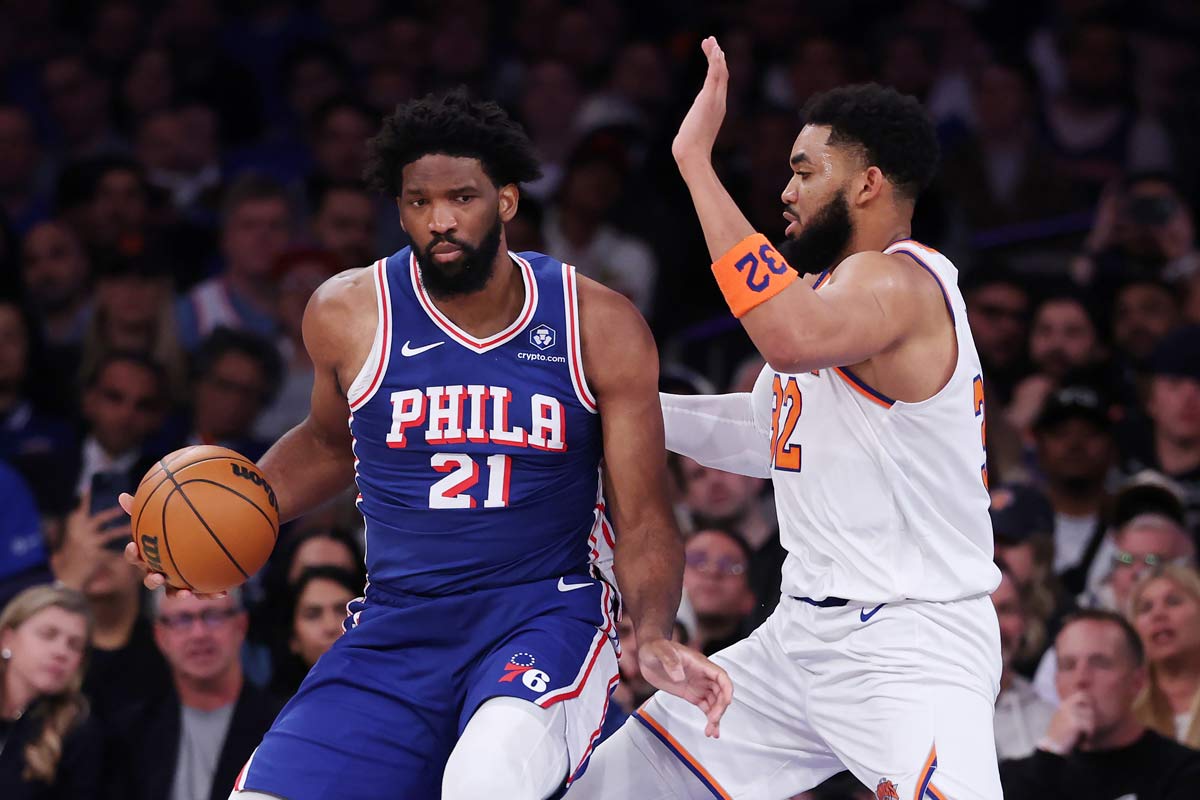
With a few days off in between, the Knicks awaited the winner between the Boston Celtics and the Philadelphia 76ers. Led by their Super Star player Joel Embiid, the Sixers were able to upset the No. 2-seeded Celtics in seven games, leading up to the first playoff meeting between the Sixers and Knicks since the first round of the playoffs back in 2024.


However, you slice and dice it, New York and Philadelphia will always be quite the head-to-head rivalry in many ways. Whether it be Giants vs Eagles in Football, Mets vs Phillies in football, or the Classic Bacon, Egg, and Cheese opposing the Philly Cheese Steak. You get where I am going with this? New York/Philly is one of the staple rivalries in all sports. The Sixers have already opened some eyes by defeating the Boston Celtics and have looked better than ever since the return of Embiid who missed the beginning of that series with an emergency Appendectomy surgery.

Since his return, Embiid has been working his way back into being one of the most dominant players in the league As he once was. Although many may think the Knicks matched up better against Boston, let us keep in mind that Embiid along with teammate, Tyrese Maxey, have had tremendous success in their careers against New York. Embiid alone in 22 regular-season games averages 25.5 points,10.4 rebounds and 3.2 assists all posting a 17-5 record in his career against New York, which includes a 50-point performance in April of 2024.

Embiid is surrounded with talent teammates such as Maxey, Kelly Oubre Jr., Paul George, and rookie V.J Edgecombe. The Knicks will counter that with Brunson, OG Anunoby, Josh Hart, Mikail Bridges, and Karl-Anthony Towns. The two teams met four times this year, splitting their season series at two wins apiece.


Both the Knicks and the Sixers meet each other in the playoffs with both teams flourishing in the first round with timely scoring and suffocating defensive performances. After sealing the series against the Hawks, the Knicks are now the favorites to come out of the East and hope their consistent play continues against the 76ers. As for the Sixers, after the adjustments they were able to make during the first-round series versus Boston, the team discovered new life.

They know very well that the health of Embiid could determine just how good they are and how far they can really go in the playoffs as a No.7 seed. As we go to press, Game 1 was this past Monday and the Knicks were able to protect home court winning once again in blowout fashion by a score of 138-97. With Monday’s dominant win, the Knicks became the first team since 1986 to end a playoff series winning by 30-plus points and win the beginning of a new playoff series winning by 30-plus points. Despite the Knicks winning Game 1, Jalen Brunson and company know very well you cannot take your foot off the gas against this resilient Sixers team. It should be another intense, drama-filled playoff series, but then again, would you expect anything else for a classic New York/Philadelphia playoff series?


Sports Notes: (WNBA) The New York Liberty revamped their roster during the off-season signing three-time All-Star Satou Sabally to a Multi-year deal. New York was also able to retain their big three of Sabrina Ionescu, Jonquel Jones, and Breanna Stewart in hopes of bringing another World Championship back to the borough of Brooklyn. The team will kick off their 30th season at the Barclays Center against Brittney Griner and the Connecticut Sun tomorrow Night. (Baseball) The New York Yankees are 14-2 in their last 16 games and now have the best record in the American League.

The team will head to Milwaukee for a three-game set against the Brewers tomorrow night. The Mets have been the opposite of the Yankees as the team currently holds the worst record in baseball. The team will head to the desert to begin a three-game set against the Arizona Diamondbacks tomorrow night. Please be advised that this week’s Sport Talk With Eddie aired on Wednesday. Thank you guys for calling in and receiving the heads up on our recent schedule change. On behalf of myself and everyone here at Our Time Press, we would like to wish all the wonderful mothers out there a Happy Mother’s Day!
“Beyond the Scale”: OBH’s Approach to Bariatric Surgery 

By: Amanda S. Barrett 

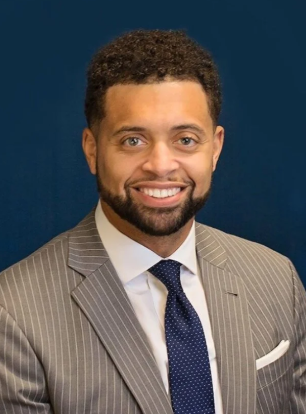
Something that doesn’t show up on any chart or diagnostic test but often determines how care is received long before a patient walks through the door is perception. The issue is not whether high-quality care exists in Brooklyn. It’s whether people believe it does. Dr. Charles E. Thompson III, a board-certified general and bariatric surgeon at One Brooklyn Health, discusses the barriers of perception in healthcare and how education and long-term outcomes can help address them. He notes that perception can often be one of the most difficult challenges for patients to overcome. 

“Oftentimes what patients deal with is perception,” Dr. Thompson said, reflecting on years of practice. “And it’s one of the hardest things for an institution to overcome.” 

In his view, that gap between perception and reality becomes one of the biggest barriers to care, especially in communities that already face systemic obstacles. Across One Brooklyn Health facilities, he says the challenge now is not just providing care but making that care visible. 

“It’s constantly reminding our communities what we offer,” he said, pointing to neighborhoods across Brooklyn. “Not just saying it, but showing it—being present, holding events, and physically engaging with the community.” 

One Brooklyn Health has bariatrics services that are committed to treating patients who have difficulty losing weight with respect and sensitivity through its Bariatric Care program and surgery options. A medically supervised and highly specialized staff of bariatric surgeons, internists, psychiatrists, nutritionists, nurses, and support staff provide specific care plans unique to each individual suffering from the effects of carrying extra weight. Often, OBH holds community events to educate Central Brooklyn on their services and care. 

Although perception for institutions can be a barrier to communities who need help, the perception of health around obesity is often misunderstood, avoided, or softened in clinical settings. 

One reason, Dr. Thompson explained, is cultural sensitivity. In some communities, body size is more normalized or less openly discussed, while in clinical settings, providers often hesitate to address weight at all for fear of causing offense. 

“There’s tension,” he said. “Even though patients can perceive physicians discussing losing weight as body shaming, this is certainly not the intent of the physician. Therefore, to avoid the patient feeling this way, nothing is said… and an opportunity to intervene early is missed.” 

The result, Dr. Thompson said, is a gap in care that is not just clinical, but conversational. And closing that gap requires a different approach. 

“It is our job to have that conversation with patients, making them feel comfortable talking about this specific topic, and also have them understand how devastating the effects of carrying a significant amount of extra weight can be to their health.  It is well-known that this leads to diabetes, hypertension, and kidney disease that continues to devastate our communities,” he said. 

For Dr. Thompson, that is where systems like One Brooklyn Health have an opportunity to change the trajectory of care. Not only by offering bariatric surgery and obesity treatment, but by reframing how those conversations begin in the first place. 

The goal, Dr. Thompson said, is not about aesthetics or numbers on a scale — think beyond. It’s about preventing the rapid fall of chronic illness that follows untreated obesity. And most importantly, doing so in a way that feels accessible and respectful to the communities most affected. 

The goal of One Brooklyn Health bariatric surgery doctors is to safely operate and treat patients with excess weight to reduce the complications and health risks that are associated. Since 2002, they have counseled and safely operated on more than 1,000 individuals, most of whom have kept the weight off. In addition, their surgical complication rate falls below the national average because OBH has highly skilled bariatric surgery doctors and state-of-the-art facilities. 

Healthcare doesn’t change only when systems improve. It changes when communities believe they have a reason to walk through the door—when perception gives way to trust. Visit www.onebrooklynhealth.org to learn more available bariatrics treatment options and personalized care. A healthier you start here! 

Freedom School Kick-Off at Medgar Evers College 

By – Nehemi’EL Ibrihim-Simms

On Saturday April 18th, 2026, at Medgar Evers College Campus the long-awaited Saturday Freedom School began. The program is being initiated as a partnership between powerful community stakeholders including Inspiring Minds NYC, the NAACP, and the Medgar Evers Center for Law and Social Justice. The Saturday Freedom School provides a comprehensive blend of educational programming aimed at increasing the self-knowledge and self-efficacy of students and their parents in the Crown Heights, Brooklyn area as a tactic to invigorate a fresh, new generation, a new electorate, that can be mobilized to take the polls, and to the community. This program is leading the charge in New York City as it attempts to answer the question of youth mobilization and an informed, electrified electorate as well as chart the territory of educational activism in a time when so many community facing non-profits, schools and social agencies are struggling to respond effectively to the needs of the City’s black youth. 

The entire program is based on a framework that is family-oriented, community-specific, and grounded in a long history of civic engagement and social change activism. What’s more, it is being led by a more than capable team of seasoned organizers, educators, attorneys, and executives who hold a cumulative 100-years of experience working for the improvement of families and neighborhoods of New York City. Its namesake directly connects the program to the Student Non-Violent Coordinating Committee (SNCC) “Freedom Schools” used as a tactic for voter registration during the 1964 campaign dubbed “Mississippi Freedom Summer.” Instead of being employed as a tactic for voter registration, this Freedom School is being used to combat the systemic challenges that are resulting in gun-violence, gang activity, and mental health crises rising in our communities; specifically, amidst the youth. More specifically, the program is being used to figure out how we can increase the political enthusiasm of young people and their families in Brooklyn. In the wake of the murder of 15-year-old Jaden Pierre this program is right on time. 

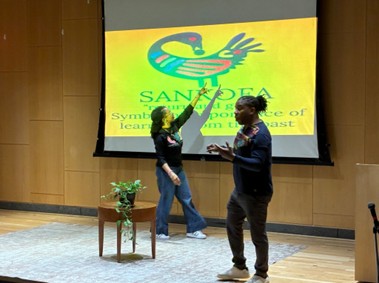
At the beginning of the day, the Committed Four responsible for this program – L. Joy Williams (NAACP), Lurie Daniel-Favors (Center for Law and Social Justice), Brian Favors (Inspiring Minds NYC) and Katrena Perou (Inspiring Minds NYC) – addressed the student body of about 50 ranging in ages from 6 to 19, and their parents, in the Edison O. Jackson Auditorium. The program began with a libation that invoked the power of the Almighty Creator and our Ancestors of the participants. The Favors gave an explanation of the guiding philosophy of the program, a brief exposition on the program’s history, and dissemination of the day’s schedule. In addition, Brian and Lurie also explained the meaning of the Akan symbol “Sankofa,” its connection to their own 25 year history of community organizing, and its application to the meaning and purpose of the entire program: learning from our past to move our community forward. Excitedly, Katrena Perou exclaims that the initiative has “been a long time coming.” She told Our Time Press that “the NAACP NY Freedom School creates the space on Saturdays to go deeper, strengthen relationships with students and deliver a more meaningful, transformative experience.” 

After this introduction, everyone went outside onto the steps of the 1638 building and engaged in what proved to be an incredibly communal and spiritual modality of learning called the “Harambee Circle.” Brian Favors explains that the Harambee Circle is meant to increase the energy and positivity of the students in preparation for them to enter the classroom. First, Haitian drummer, recording artist and cultural archivist Baba Oneza engaged everyone in traditional songs from Haiti, Benin and Central Africa reaffirming the program’s firm stance on participatory cultural immersion. Then, Brian and Lurie brought some Hip-Hop bop and groove, and began to lead the circle in call-and-response chants that included songs about the Red, Black and Green Flag and the struggles of our Ancestors to be free. By the end of the session the students, engulfed in their forebears’ spirit, were full of energy and prepared to enthusiastically engage the classrooms!

In the classrooms, the student body was split into two groups: 3 grade – 6 grade and 7th grade and higher. The first class of the day is Know Your History – where students are initially challenged to think critically about the assumptions and biases about African/Black History; followed up by civics – where students are again challenged to think about how they, as youth/students, can use that information to inspire change in their communities. The facilitators led discussions that dug deeper into the topic of the meaning and application of Sankofa into the personal and family history of the students, as well as their communities-at-large. The discussion was based on Nana Jawanza Kunjufu’s Lessons From History: A Celebration in Blackness which was selected by Freedom School’s Director of Education Mr. Brian Favors as the primary material because of its straight-to-the-point diction and the easy-to-read print. The insightful additions to the lesson and their willingness to commit to embodying the traditional African principle of social order and harmony, or Ubuntu, in and outside of the classroom is exactly what Brian Favors – Director of Culturally Responsive Teaching at Inspiring Minds NYC, and 30-year educator and community organizer – explains is the ultimate aim of the initiative. In a statement to Our Time Press Mr. Favors summarized the philosophy and approach of the Freedom School as one of partnership with the neighborhoods, and of believing in the community’s ability to cultivate and nourish itself. He says  “one thing this program shows us is that there is no shortage of brilliance and leadership in our community. Oftentimes, it just needs to be cultivated. The Freedom School allows us to do just that.” 

The Freedom School, holistic in outlook, recognizes parents as an important community stakeholder whose education and development as a group is fundamental to its mission. Lurie Daniel Favors, attorney and head of the Center for Law and Social Justice at Medgar Evers College explains that “while the students were participating in their weekly programming, the Center for Law and Social Justice at Medgar Evers college will provide advocacy and civic skills training for their parents and caregivers.” When asked to comment on the utility of this feature of the program Mrs. Favors, who is also the host of Sirius XM’s “Lurie Daniel Favors Show,” made sure to emphasize that the program is “designed to ensure that as the students are expanding their horizons, their family units will similarly be empowered to further advocate on their behalf.” 

After a lunch that began in the solidarity of prayer students selected their creative tracks. The Freedom School offers dance, theatre, music production, podcasting, drumming, and martial arts. These tracks – which are meant to allow the students a creative outlet to birth art that reflects what they are internalizing intellectually earlier in the day – are facilitated by members of the community who specialize in that specific form of creative expression.

In addition, 20 high-school students from around the city have been recruited and named “ambassadors.” These students are expected to help promote the Freedom School to other young people and play an active part in shaping the initiative in exchange for an hourly wage and an opportunity to win Inspiring Minds NYC’s Shark Tank –  a component of the overall program where five participants will be awarded $2,000 each through a Shark Tank style pitching competition called “IMconnected.” Since 2021, Inspiring Minds NYC has supported more than 50 students in launching pilot programs and businesses, many of which have since been contracted by schools across New York City. Inspiring Minds NYC CEO Katrena Perou explained that “many of us were taught that success means leaving our communities behind. We believe success means investing in them to make them stronger. That’s why we fund businesses that address critical local challenges and encourage our young people to see community advancement as inseparable from their own growth.”

Finally, the program ended where it began – in the Edison O. Jackson Auditorium with a reflection session where the youth participants along with the facilitators and administrators are able to discuss what went well and what could work better. This is a part of keeping the student voice at the center of the program. After the feedback was given everyone engaged in the closing ceremony – the “Now More Than Ever” chant. This chant encourages everyone in the room, the youth especially, to take a good look at the conditions around them and resolve themselves to find a way to change them. It was an appropriate way to end the program.

Justice Leaders Championed

From Exclusion to Leadership: Black Women Lawyers and the Legal Organizations they Established

By Hon. Rhonda Tomlinson, Kings County Supreme Court

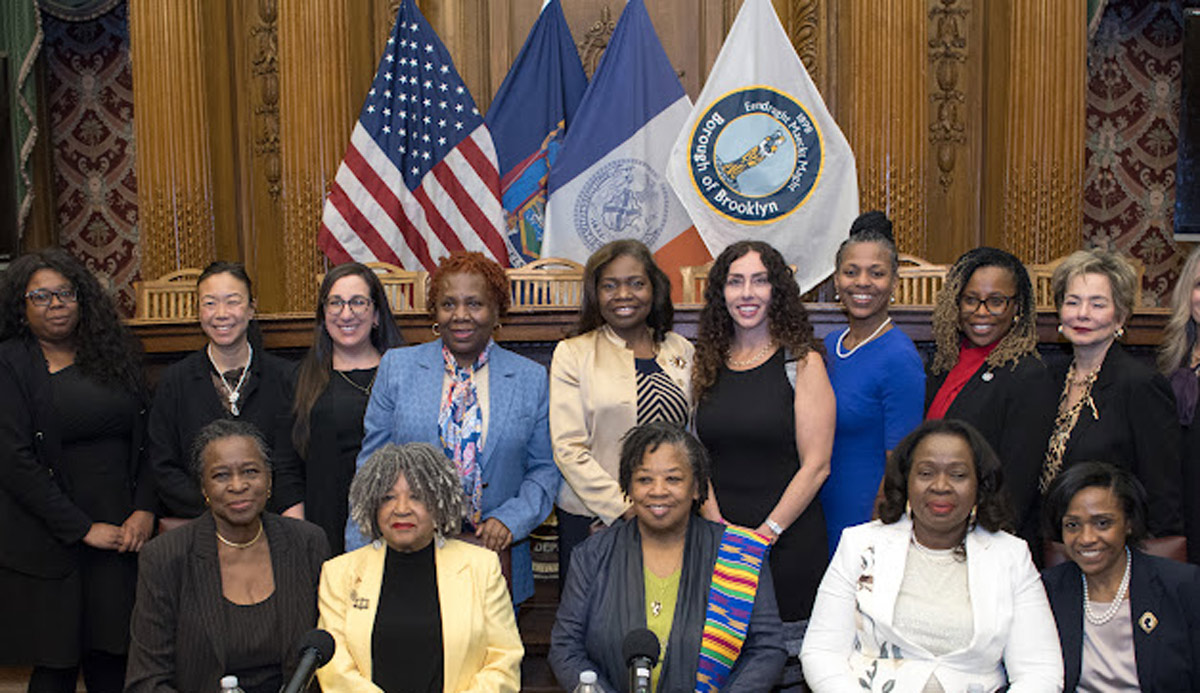
The Brooklyn Women’s Bar Association, the Caribbean American Lawyers Association and Brooklyn Borough President, Antonio Reynoso, co-sponsored a centennial celebration of Black History Month. The celebration was hosted at Brooklyn Borough Hall on April 8, 2026, with Deputy Borough President Kim Council serving as master of ceremonies.

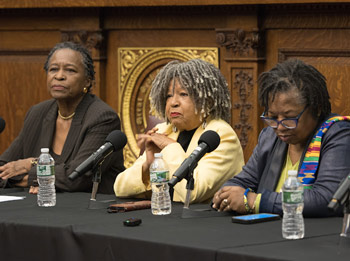
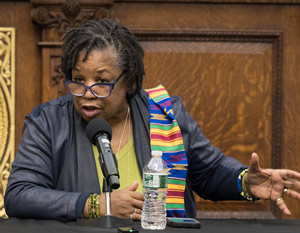
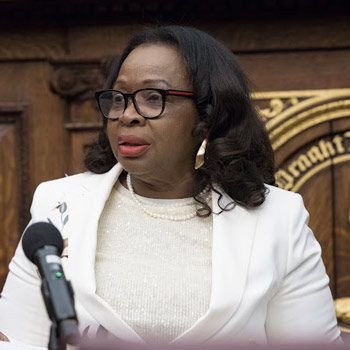
The panel featured Hon. L. Priscilla Hall (Ret.), Hon. Yvonne Lewis (Ret.), and Esmeralda Simmons, Esq., with the discussion moderated by Hon. Sylvia Hinds-Radix (Ret.), President of the Caribbean American Lawyers Association (CALA), and Hon. Rhonda Tomlinson.


The history of Black women lawyers in the United States is not simply a story of individual achievement. It is a story of collective advancement—built through institutions created in response to exclusion. From Reconstruction to the present, Black women have entered the legal profession by confronting two overlapping barriers: racism and sexism. Their progress has depended not only on individual perseverance, but on the strength of organizations that created pathways where none existed.

Hon. L. Priscilla Hall (Ret.), Hon. Yvonne Lewis (Ret.),and Esmeralda Simmons, Esq.


In the late nineteenth century, pioneers like Charlotte E. Ray—who became the first Black woman to earn a law degree in 1872 from Howard University School of Law—and Mary Ann Shadd Cary, who earned her law degree eleven years later in 1883, entered a profession that largely refused to recognize them. Both were educators who used their training to serve their communities. By 1900, fewer than ten Black women lawyers existed in the United States.

When denied access to courtrooms, they advanced justice through suffrage, education, and community organizing, laying the foundation for future generations.
A major institutional turning point came in 1925 with the founding of the National Bar Association (NBA), the first Black bar association in the United States. Established after Black lawyers were denied entry to the American Bar Association—and notably including Gertrude E. Rush as the only woman among its founders—the NBA became a national platform for mentorship, advocacy, and professional development. It provided a space where Black lawyers could be trained, supported, and heard, helping to cultivate generations of legal leadership.


From that institutional base, Black women began to make historic gains on the bench. In 1939, Jane Bolin became the first Black woman judge in the United States, appointed to the New York City Domestic Relations Court. Yet it was not until 1966 that an African American woman was appointed to the federal bench, when Constance Baker Motley broke that barrier. Her appointment marked a shift from symbolic inclusion to real judicial authority.


The decades that followed saw continued breakthroughs. In 1979, Judge Amalya Kearse became the first Black woman appointed to a United States Court of Appeals. In 2013,
Judge Sheila Abdus-Salaam became the first Black woman to serve on the New York Court of Appeals, the state’s highest court. In New York’s trial courts, Hon. Yvonne Lewis’s election to the Civil Court in Kings County in 1986—and her subsequent service on the Supreme Court—reflected the growing presence of Black women across all levels of the judiciary.

Hon. Sylvia Hinds-Radix (Ret.)


At the same time, Black women were shaping the law itself. Pauli Murray, a graduate of Howard University School of Law and a founding member of the Congress of Racial Equality (CORE), authored States’ Laws on Race and Color, often described as a civil rights handbook. Her work became a foundational resource for civil rights litigation, including arguments used in Brown v. Board of Education. In 1994, Judge Deborah Batts further expanded representation as the first openly LGBTQ Black federal judge.
These advancements did not occur in isolation. They were supported by Black legal organizations.

In New York, Esmeralda Simmons played a central role in this institutional development. She became the first woman to lead the Bedford-Stuyvesant Lawyers Association, which later merged with the Harlem Lawyers Association to form the Metropolitan Black Bar Association (MBBA) in 1984. For decades, she also served as the founding Executive Director of the Center for Law and Social Justice at Medgar Evers College in Brooklyn, building a model that connected legal practice with community empowerment.


Organizations such as the MBBA, the Association of Black Women Attorneys (ABWA), and CALA—working in conjunction with community-based institutions—have created an enduring professional ecosystem. Through mentorship, advocacy, and pipeline programs, they have ensured that Black lawyers, particularly Black women, are not only entering the profession but advancing within it.


As President of CALA, Hon. Sylvia Hinds-Radix emphasized the organization’s mission: to respond to the needs of Brooklyn’s large Caribbean community by addressing legal issues affecting that population—particularly immigration—while ensuring that Caribbean attorneys have a professional home. Central to that mission is building trust between lawyers and the communities they serve and supporting students who aspire to become attorneys committed to serving those communities.


Equally important are organizations specifically centered on Black women. The ABWA, founded in 1976 by alumnae of Howard University School of Law, has provided a space to address the distinct challenges Black women face in the profession. As Justice Hall noted, Black women lawyers often confront disrespect and assumptions about their roles in the courtroom—making it essential to have spaces for mentorship, strategy, and mutual support.
While Black legal organizations created pathways from the outside, Black women also began to transform institutions from within.


In 2015, Paulette Brown became the first Black woman elected President of the American Bar Association—the very organization that had once excluded Black lawyers. In 2020, Sheila Boston became the first woman of color to serve as President of the New York City Bar Association. These milestones reflect a broader shift: Black women not only gaining entry into majority institutions but rising to lead them.
This dual strategy—building independent institutions while ascending within established ones—has been central to the advancement of Black women in the law.


The influence of this history is both structural and deeply personal. As Hon. Yvonne Lewis reflected on the legacy of Judge Jane Bolin, the role of a judge is grounded in purpose: to do the right thing and to assist wherever possible. That ethic continues to guide generations of Black women on the bench.


Today, the work continues. Black women remain underrepresented in law firm partnerships and judicial leadership. Yet the institutions built over the past century—beginning with the National Bar Association and extending through organizations like the MBBA, ABWA, CALA, and the Center for Law and Social Justice—continue to provide the infrastructure for advancement.
As Taa Grays, President-Elect of the New York State Bar Association, has emphasized, diversity, equity, and inclusion are not abstract ideals. They are essential to professional success, equal access to justice, and the integrity of the rule of law.


As we mark the centennial of Black History Month’s origins—beginning with Negro History Week in 1926—this history offers a clear lesson. Progress is not inevitable. It is built through collective effort, institutional support, and sustained leadership.
Black women lawyers have moved from exclusion to authority. They have built institutions where none existed—and then transformed the institutions that once excluded them.
That is not only a history of progress. It is a blueprint for the future.
all photos by Roderick Randall

Celebrating the Life and Legacy of Woodie King Jr.

By Dr. Brenda M. Greene


The Woodie King Jr. Memorial Tribute at the Barrymore Theater on Monday, April 27, was an event that will be cherished and remembered in the theatrical, literary, and performance arts community.


On the stage of August Wilson’s Joe Turner’s Come and Gone, with an image of a smiling Woodie King Jr. in the background, the program opened with a stirring tribute to the “King” by Debbie Allen. This was followed by tributes from luminary actors, playwrights, producers, directors, and writers who included Kenny Leon, Pauletta Washington, Kelundra Smith, Ron Himes, S. Epatha Merkerson, Ruben Santiago-Hudson, LaTanya Richardson Jackson, Samuel L. Jackson, and Denzel Washington, among others.


The message from all of the speakers was resounding: Woodie King Jr. touched the lives of numerous people and had a generous and selfless spirit.
There were many highlights in the program. Here are a few:
∙Denzel Washington shouted “Hallelujah, Hallelujah” when he came on stage and said that Woodie was responsible for catapulting his acting career and was probably casting from Heaven.


∙Ruben Santiago-Hudson read a poem, “For Woodie: the King.” Woodie told him that if he wanted to make it in acting, he would have to leave Detroit and come to New York.
∙When Elizabeth Van Dyke, Woodie’s wife, came to the stage, she received a standing ovation. With stirring emotion, she recounted how Woodie had her heart and that she was committed to sustaining his legacy at 154 Christopher Street, the future site of the New Federal Theatre.


Attendees also expressed their admiration:
∙ “Woodie loved everybody and was in the business of setting the foundation for great Black theater professionals. He paid no attention to the word “No.”
-Diane Richards, Executive Director, The Harlem Writers Guild


Woodie flew from New York to California and returned right after seeing my performance. He just wanted to see my performance for himself.
-Levy Lee Simon, Playwright and Actor

Actor, Producer, and Jazz Vocalist Rome Neale, continued the public celebration with Jazzy Thespians Night, a public celebration of Woodie King Jr, as part of his acclaimed Banana Puddin’ Jazz series. In the words of Rome, “Woodie was not simply a King; he was a mansa, a king of kings, an emperor of a Black theatre dynasty.”
Let us remember Woodie King Jr., who charged us with nurturing and sustaining the beloved Black community through theater.