Home Blog Page 505

On the Impact of COVID-19 on the Church

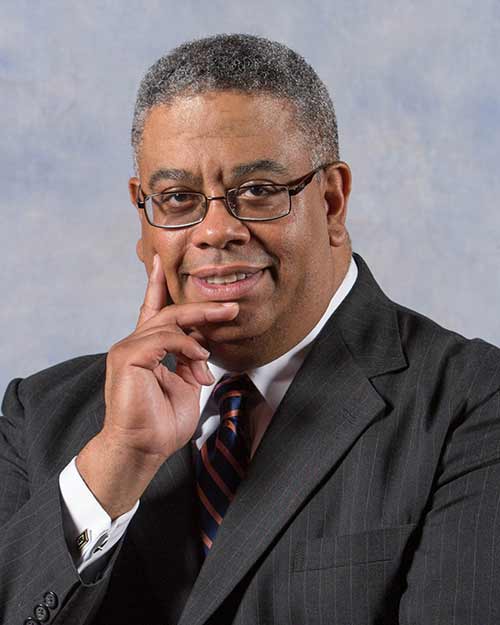
Excerpts from a video interview with Rev. Gary Simpson, senior pastor, Concord Baptist Church of Christ: The full interview can be seen at www.ourtimeathome.com

Rev. Simpson: “We have seen the immediate impact, as we have had 20 deaths in our church and another 10 or so who are family members, that our church congregants can’t get to, [in] other parts of the country.
We’ve closed our doors for public worship and have been doing virtual funerals via Zoom from the funeral home. And then there are people opting for an immediate burial and a memorial service to come, once we get to some sense of opening our doors.
That’s one piece of it. The deaths. The sickness is another. Having members who are in the hospital and cannot be visited at this time, and then there are the repercussions we’re not talking about right now, like food insecurities for people who cannot get to the store or people who don’t have the resources because they’ve been furloughed or laid off. Many of our people are the hourly workers in “nonessential” capacities; we have that going on too.
I don’t like it when people say we’re getting back to normal. We’re not going back there. Whatever that was, it’s gone. We’re going to be adapting to all of the implications for some time.
Not to mention we’ve been spending time on Zoom with the parents and children who are home from school.
Actually, we’ve been more busy, honestly, in this moment, than we were when we had the building was open. The building, I think, sometimes becomes an excuse not to do anything. We’ve had a lot of things that we’ve been doing. The people have been strong. We’ve been meeting. We’re catching a different kind of rhythm at this point.
One of the interesting things is, I have not gone to the church. I know some people broadcast their worship from Sunday morning. But I’m doing everything at home. I also want to model for the people that I think sheltering in place is the best move. If they see me at home, they might stay at home.
So it’s creating a different kind of atmosphere. I’ve seen people who have sheltered in place with their families, which I don’t get to see in the big space.”

OTP: What do you and your peers think the future looks like?
“I think we spend a lot of our time doing the group work that we need to support each other.
Everybody [fellow church leaders] is having their own manifestations of what this thing looks like. I think we all know that we’re not going to be able to do the things we’ve always done. We have to be concerned about safety. Many of our older churches also have older memberships, so you have to consider vulnerable populations, even when you reopen doors.
I’ve seen some of my colleagues send letters out to the congregation, sort of giving them a play-by-play, saying that we’re going to suggest — who would have thought that a church would suggest — its members stay home, for their safety. I think people are talking about that. I think we all are concerned about the aftermath of this, when we open up, the ripple-effect of COVID-19 is that the unemployment and grace period that people have had in paying bills is going to be over. And the means to get ample work are going to be diminished as people get back, and so there’s going to be a lull in the way people can both contribute and be present, coming back to a space. So I think that’s part of the challenge too.
We also have a credit union that was in the process of moving beyond a church credit union to a community credit union and being a part of a movement among credit unions to make their resources available to communities, when the COVID hit. And of course, the nursing home, which, like many nursing homes, faced the challenges of residents who had contracted COVID. And there were deaths, but relative to what was happening in the industry, (and we certainly do mourn with those families), they did not have it widespread. They caught it early and the staff did a great job of holding things down.”

OTP: Regarding the credit union. Did they participate in the PPE program?
“No, they were not quite ready to do that. What they have been doing, for example, Restoration Plaza is connected now to the credit union. They now have access to be credit union members. We feel the matter of economic resources and financial literacy and people getting the opportunity to leverage their money to endeavor that others who are in need should get help… We think that’s what a credit union should be and we’re very excited about some of the things they’re doing now.”

OTP: Individuals like myself can join the credit union?
“Even individuals like yourself. When it started in ’52 it was basically just for the church. And we had a number of subsidiaries, families of members of the church.
The credit union governing body determined that anyone in a financially strained neighborhood could become a member.”

OTP: On Supporting Black Businesses
“I have not had a haircut in two months, but it’s important to me that my barber is not able to get his resources because his business is closed.
We have to support those Black businesses. I’m telling everybody, even if you haven’t had a haircut in two months, if you’re able, send what you were going to send to your barber, the people in the hair salons. As we start putting back the economic pieces, we’ve got to make sure Black people are a part of the economic engine that will get us going again. The small business owner. People just like you. I hope people will get a resource [list] of Black businesses that we can support in our neighborhood. People who can provide services for us that we can use in this moment.
As we’re all getting adjusted, I think this is a great opportunity for us to be very, very, deliberate and intentional with the few resources we have in the coming months. I think it’s important that we make sure that we lay the anchors, no matter how small, to encourage people.
So we have to start some very intentional ways of finding out who our folks are who can give quality services. Plumbers, electricians, house painting, fix-it people, who can do really good work. These are the people in our churches as well.”
Worship Safely! Don’t Follow the President!

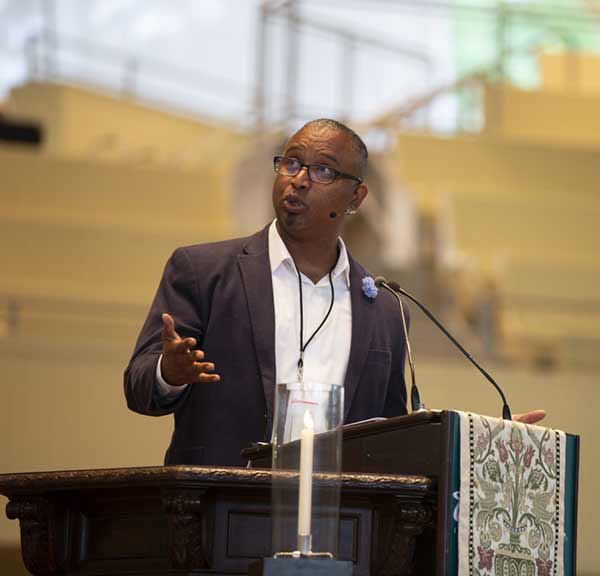
The Rev. Michael-Ray Mathews Deputy Director & Director of Clergy Organizing, Faith in Action responded to the president’s order to re-open churches despite still being in the COVID-19 pandemic. Mathews, an African American faith leader, is especially concerned about churches in hotbed communities reopening. He noted Jeremiah 23:1 “Woe to the shepherds who are destroying and scattering the sheep of My pasture!” declares the Lord.
“Faith and worship is no doubt essential, but let me be clear, faith and worship does not need, and should not yet, happen inside houses of worship, where lives will be once again put at risk. A good shepherd will not lead their sheep astray. I hope that our leaders will continue to follow the guidance of their local health and public officials and do what’s truly in the best interest of their congregations’ health and wellbeing.

Church pews and prayer rooms may be where so many of us find comfort, but we have to adapt, and we have to be patient to save lives. My greatest fear is that we see a tremendous spike in cases and also fatalities in the weeks to come. I urge my fellow clergy to do right by their congregations and continue to stay home and utilize the valuable digital tools available to us that keep our communities safe.

We can serve our congregation and communities from afar – it’s the safest, most just way to serve until we have access to testing, especially in communities that have been ravaged by COVID-19. Prayer is essential, love is essential, grace is essential, going to a physical house of worship is by no means essential.”

Rev. Mathews’ colleagues across Faith in Action programs and leaders have worked to protect to get masks for vulnerable communities, including those incarcerated and undocumented across the country, urge their state lawmakers to address racial inequities, and push the federal government to make the CARES and HEROS act more inclusive, ensuring those especially in Black and Latino communities left behind for far too long get the support they need.

They Won’t Stop

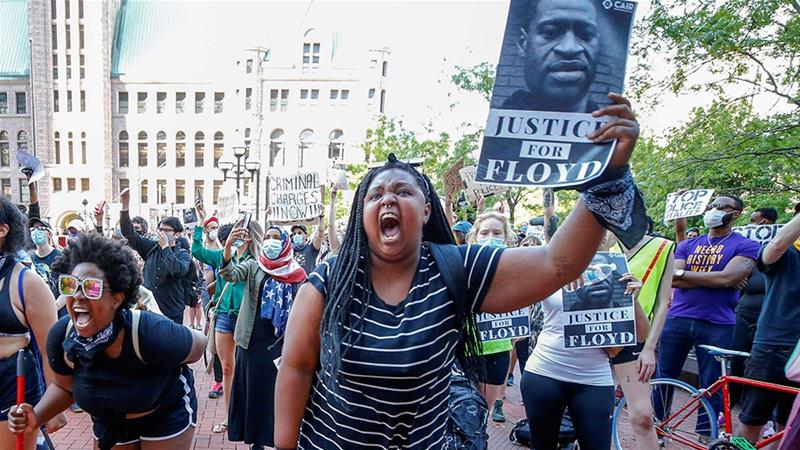
Again, “I can’t breathe.” This time it’s not a chokehold that a police officer used for killing Lloyd George, yet another Black man. It was a knee on the neck while other officers stood and watched, the same as in old pictures of the crowds at lynchings and burnings of Black people. This primitive desire to rejoice in the pain of others, like the picnics at lynchings and the ancient Romans at the Coliseum, will not be prayed away or brought to reason. Only surveillance and severe punishment will deter. The demand for justice is on-going, and Black people have to fight that battle as well as the virus and voter suppression..

100,000 Lives Lost,
A Nation in Danger

By mid-August, if social distancing and mask-wearing habits wane, and the U.S. death toll has eclipsed 150,000, let the Republicans hold a raucous convention in North Carolina, while the Democrats have a semi-virtual and masked convention that befits the Time we’re in. And the choice will be made even clearer—between the mob and the rest of us.
Every indication is that this will not be a peaceful and regular transition of presidential power. Trump’s behavior over Memorial Day weekend made that perfectly obvious. He spent his time playing golf and spewing anger, attacking vote-by-mail, and laying the groundwork to deny the results of the upcoming election. And there is nothing he will not do.
This is a man who projects who he is onto others, calling them the names that he knows are his. When he repeatedly suggests that MSNBC host Joe Scarborough could be guilty of murder, Trump is telling us what he is capable of. Having shown absolutely no concern for the 100,000 lives already lost in the U.S. alone, there is no reason to believe that the thought of civil strife added to a health catastrophe would give him pause. After all, an August 9, 2016 NY Times headline read, “Donald Trump Suggests ‘Second Amendment People’ Could Act Against Hillary Clinton.” He is quite capable of suggesting his “Trump patriots” do the same around an election he is already calling rigged.
My mother once worked for a New York waterfront shipping company in the 1950’s. About the vermin in the area, she said that the warehouse cats were large, ferocious and overnight they would deposit a pile of dead rats to be picked up in the morning. However, she was told that when the cats chased a rat in a corner and the rat turned on them, the cat walked away. Donald Trump is our rat in the corner and walking away is not an option we have. That would be to give up on the country itself and make Trump a dictator like the ones he admires, and we his subjugated underlings in a white supremacist State.

And he has evil on his side. Every nation and terrorist, both foreign and domestic, will be working on his behalf. They know that for more years of Donald Trump will complete America’s downfall.
On the other hand, perhaps by November, when the death toll is surging past 200,000 while continuing Covid-19’s penetration of Trump strongholds, the voting landscape will change. When reality is grandma dying upstairs because there is no room at the hospital, then maybe his approval rating will fall below 40% and we will be rid of him and his Senate. Maybe.

Concord Baptist and RIP Medical Debt Erase Over $4 Million in Bills for Brooklyn and Newark Families

The Concord Baptist Christfund, established by The Concord Baptist Church of Christ (Brooklyn, NY) in 1988 as a Black faith-powered endowment to uplift Brooklyn and invest in worthy social causes throughout the world, has partnered with RIP Medical Debt to erase more than $4 million in medical debt for over 4,500 people in Brooklyn, NY and Newark, NJ. Forgiveness notices are going out to the families benefiting from this effort – all recipients can expect to receive a yellow, RIP Medical Debt branded envelope in the mail next week. Relieving debt-burdened families enables them to repair their credit and access opportunities and resources previously denied to them because of credit history.
“We believe this justice investment will go a long way in relieving some of the debt-burden experienced by families who are unable to bear the high costs of health care,” said the Rev. Dr. Gary V. Simpson, Leading Pastor of The Concord Baptist Church of Christ.”
The Concord Baptist Christfund’s investment of $35,000 enabled RIP Medical Debt, a national organization, to locate, purchase, and eradicate over $4 million worth of oppressive medical debt averaging $1639.27 per recipient in Brooklyn, NY, and $719.78 per recipient in Essex County, NJ.
“What should be crystal-clear to all during this global COVID-19 pandemic is that healthcare cannot be a luxury for the rich; it is a human right,” Simpson went on to say. “We see this contribution as a Justice Investment. That millions of people are burdened by medical debt in the same country where corporate CEOs earned $25 billion in profits during this pandemic is a blistering indictment on the whole country. We are observing physical distancing, but the church of Jesus Christ is never closed, and the mandate to do justice and love mercy – to declare Jubilee – is a way to walk humbly with our Creator during a pandemic.”
RIP purchases qualifying medical debts in bundled portfolios at a fraction of their face value, so one donated dollar can abolish $100 of medical debt. Abolishment is random, and unfortunately at this time one cannot request medical debt relief.

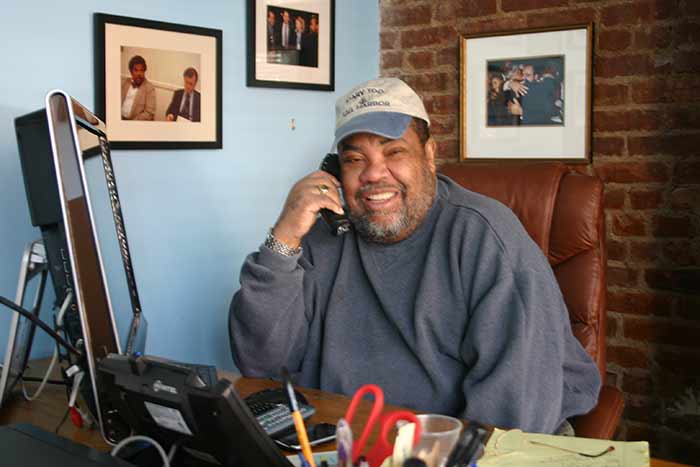
OTP Interview with Bill Lynch

Top Consultant to National Politicians Was Prescient about Today’s Economic Crisis

A $3 trillion budget was just passed by theHouse. With that much on the table we cannot afford to wait for it. Here is some advice from political wizard Bill Lynch to the community that is still relevant today. Mr. Lynch died in 2013.

Interview with Political Consultant Bill Lynch April 2009

By David Mark Greaves

The saying is, “All politics is local,” and that goes for the politics of the much-heralded stimulus package as well. When folks on the ground hear numbers like several billion dollars here, a couple of hundred million there, the question arises, “How do we get our share?”
We thought one of the best ways to answer that was to ask someone who knows how the system works, and the person who knows better than most, is Mr. Bill Lynch, president of Bill Lynch Associates, Deputy Mayor in the Dinkins Administration, campaign manager and political consultant/lobbyist extraordinaire.
What can community groups do to access the stimulus dollars we keep hearing about?
“You can’t assume it’s automatic, the operative word is “shovel-ready.” By “shovel-ready,” Mr. Lynch is not just speaking about construction jobs, he is speaking of programs and proposals that address many different areas. “We have to be sure the programs are there, and we have to be diligent in how that money is spent by the state and local government. That it doesn’t get chewed up in the traditional places, like police and fire. Not that those things are not important, but things that are important to local communities.”
How do we agree on what has to be done and then how do we translate that into programs that are fundable?
Suggesting there is no need to reinvent the wheel, Mr. Lynch said of existing nonprofits, “Most community programs have always been what I call ‘shovel-ready.’ That might be a misnomer as we talk here; there are plenty of community programs that have been written and are on the shelf and never get funded. It’s time to pull it down, shake the dust off of it, and get it ready to be funded. And then go advocate for it to City Hall or the State office. Or the governor’s office.”
Speaking regarding how to advocate effectively, Lynch said to always keep in mind, “It’s the squeaky wheel that gets the grease.” It was reported in the past that Mr. Lynch has said he wasn’t a salesman, but from his advice on advocacy, he knows how to direct them. [?] He said of the nonprofits, “They have to be down at City Hall, making their argument. Or up at the State building right now, making their argument. Or talk to their local legislators— again making their argument, about where that money will go, once it comes into the state.”
Since all politics is local, work has to be done to ensure the stimulus package is local as well. “I say talk to your Councilmember or State Representative. Write to the governor or the governor’s people. Write to the mayor. It’s the squeaky wheel.”
But there are times when an individual sees a situation that needs to be addressed, where action needs to be taken. At those times, working alone is not the answer, says Lynch. “The first thing to do is organize. Find others who would be, or are, affected by it. Bring them all together. An example would be people in a housing project all being affected by the same problem. I’d try to get them all together to advocate with me to deal with the problem. Go to the Assembly or the Senate at the State level and also they should coalesce with others. For example, say a number of people in your area are union members. You would say, “Let’s go see if they will join with us.” I’ve seen that happen a number of times. They might be transit workers, so you get the Transit Workers Union involved. They might be members of 1199, so you get 1199 involved. All of that forces attention.”
Is it better to approach elected officials as partners in your concern, rather than as antagonists? “Absolutely. If you go to an elected official with a couple of hundred neighbors and friends, the official is going to say, “How can I help you? How can I join this?”
Why is it with so many Black elected officials, there has not been a similar advancement of the masses of Black people? “Just because there is an African American in office, it doesn’t mean political power has shifted automatically. I say when you see an African American in those offices they’re more sensitive to the problems of Black communities. But at the same time, they’re being pressured by other parts of the community.” It’s not that white political power has diminished, “it’s that ours has increased,” says Lynch.
“So, it is not as easy as you think to make things happen. And I think a lot of times what happens, people in the African American community say, ‘Well we’ve got our person there, so we don’t have to do anything.’ No, you still have to be diligent and keep the pressure on. Even though they are from your community, you still have to keep the pressure on.”
You mean even with Barack Obama as President, we can’t just sit back and wait?
“No you can’t. When he talks about everybody having to be involved, he’s talking about us too.”
How can we ensure that African Americans get the jobs that are coming into the communities?
“Again, be diligent. You have to insist that it happen, it’s not going to happen automatically. If you’re not there watching, if you’re not standing in line to see what happens, when the dust settles, you’re going to find yourself missing. If you make the assumption you’re going to be taken care of, that’s a bad assumption.”
There is no guarantee just because someone of color has been elected that they’ll do for you. They do for those who keep the pressure on them.
How has the Obama election affected the thinking of elected officials such as your clients?
“I think it’s still too early to tell. Folks are still trying to figure out what he did and how he did it. What the outcome will be is still up in the air; he’s only been in office two months. Still trying to figure out how he raised that much money.”
Last words regarding the stimulus package, “It’s like everything else. If you take your eye off of it, it’ll go someplace else.”

Bill Lynch: Power Broker

Bill Lynch Associates is consultant to Councilman John Liu in his bid to become Comptroller and the first Asian to be elected citywide and to Cy Vance, running for Manhattan District Attorney. Lynch said the Liu race was “very important for the kind of coalition I’ve worked for all my life.” This race has an historical significance as well for Lynch. “I was involved in David Dinkins as the first citywide African-American candidate, Freddie Ferrer, although he didn’t win, as first citywide Latino candidate. And now we’re with John Liu as the first citywide Asian candidate.” Over the years, Lynch said the work of bringing a nonwhite candidate to citywide office does not get easier, “But I think now people are more accepting of candidates of color.” In the Mayor’s race, Lynch says, “We’re supporting Bill Thompson, but he’s not our primary client,” (such as Liu or Vance, for whom Lynch Associates acts as general consultants and run the show, recommending strategy and personnel). “For Thompson, we’re just one of the consultants.” During the interview a call came in. Apparently Patrick Gaspard, political director at the White House, had asked Lynch for recommendations for a position. “And your name came up,” Lynch told the caller, who was returning his call. “Are you interested in working for Obama? Good. Send me your resume and I’ll forward it.” Later, we asked Mr. Lynch about Gaspard, and he said, “I consider him one of my protégés. I recruited him in 1988 to work with Jesse Jacksonp; he worked with us in City Hall, and we’ve stayed in touch ever since.”