WASHINGTON, DC – On May 28th, U.S. Representative Hakeem Jeffries (NY-08) spoke on the floor of the House of Representatives about the killing of George Floyd and the rise in police violence throughout America.
“Madame Speaker, I respect those police officers in every community that are there to protect and serve and those who have fallen in the line of duty.
But we cannot tolerate police violence, and we cannot tolerate police brutality.
George Floyd was murdered by an out of control police officer.
When will it end?
Amadou Diallo. 42 shots. Police officers found not guilty.
Sean Bell. 50 shots. Police officers found not guilty.
Eric Garner. Choked to death. Police officers let go by the Grand Jury.
Decade, after decade, after decade.
When will it end?
This time must be different.
Those perpetrators must be prosecuted to the full extent of the law.
And Congress must do everything in its power to stop this type of tragedy from ever happening again.”
Rep. Jeffries On House Floor: “This Time Must Be Different”
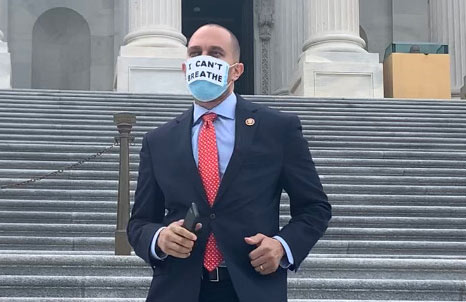
“…We Can Do Anything if We Unite And Vote”
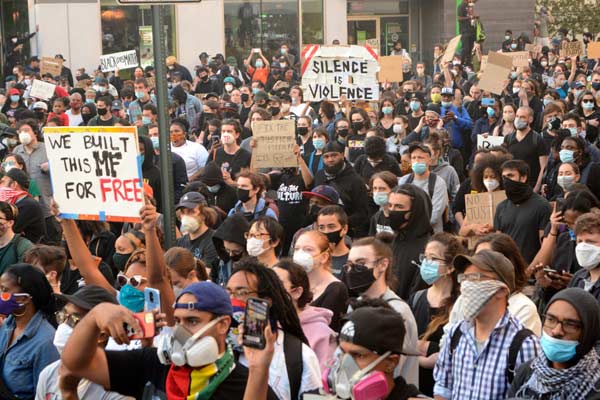
View From Here
By David Mark Greaves
It was the video recording of the casual way Derrick Chauvin murdered George Floyd — hand in pocket, dark glasses on his head, holding a conversation while Floyd lay on the ground begging to breathe with Chauvin’s knee on his neck, that made this death so painful and shocking.
We already know what justice looks like as a response to the continued police killing and violence against African-Americans. It is repeal of the shielding mechanisms for the police. An 1871 law, enacted during Reconstruction after the Civil War, has been interpreted as giving police “qualified immunity,” effectively shielding them from prosecution. It protected the only police at the time, white men, from accountability for the violence they inflict. The intent was to give them the authority over Black people they had during and after slavery, that some still dearly miss.
Then there is Civil Rights Law 50-a, which denies access to the personnel records of police, firefighters and correction officers and therefore patterns of bad behavior are hidden. These laws are the last refuge of a peculiar need to express racial hatred with impunity. There have been years of promises of training and retraining, and of department “actions” being taken to make police more accountable. Despite this work and despite the fact that most officers do not behave this way, some things cannot be trained out of the heart and out of the culture. These laws have to be recognized as the vestiges of slavery that they are, and they have to be repealed and bad police officers punished and not just with desk jobs or comments in their personnel file. They have to go to jail.
Over the last century, African Americans have voted, marched and protested lynching, killings and beatings, and here we are in 2020, still being asked to remain calm in the face of continued evil. But now others are not remaining calm. George Floyd, Breonna Taylor, Ahmaud Arbery, Eric Garner, Sandra Bland, Michael Brown, these are the names young white people are calling out as they march by the hundreds of thousands in protests in cities across the country, giving us hope that there is truly change on the horizon.
Dictator in Waiting
With his ordering of rubber bullets, tear gas, flash/bang grenades and low-flying helicopters to be used to disperse protesters across from the White House, Donald Trump has shown us what he would do to stop demonstrations, a macabre example of the old joke, “The beatings will continue until morale improves.”
And the possibility of having a peaceful transition of power in the November election is growing dimmer with his every Tweet. And he has others on his side. The Russians and terrorists, both foreign and domestic, are working mightily on his behalf. They know that four more years of Donald Trump will complete America’s transformation into the foreign dictatorships we used to feel sorry for and impose sanctions on.
On the other hand, perhaps by November, when the death toll is surging past 200,000 while continuing Covid-19’s penetration of Trump strongholds, the voting landscape will change. When reality is grandma dying upstairs because there is no room at the hospital, then maybe his approval rating will fall below 40% and we will be rid of him and his Senate. Maybe.
As Covid-19 Tears Through Navajo Nation, Young People Step up to Protect their Elders
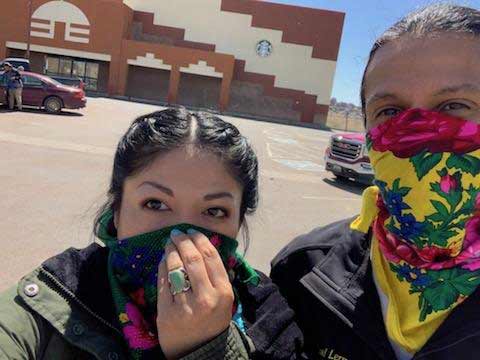
By Mona Gable for STAT
Michelle Tom stared into the screen. The Navajo doctor had just finished a grueling shift at the Winslow Indian Health Care Center urgent care facility in Winslow, Ariz., caring for Covid-19 patients. Now, she was spending her Friday night speaking via livestream to Native American youth about the pandemic.
“I’ve seen it hit everyone,” she said of the coronavirus. “But I have the strength of my ancestors, the strength of my prayers, and the strength of all of you. We have to keep talking about it, especially to our young people.”
In recent weeks, similar messages have resounded across the Navajo Nation, as younger generations have come to play a pivotal grassroots role in the pandemic response. They have moved quickly for good reason. Navajo residents have been devastated as the virus has swept through a reservation that spans four states. Already, 4,633 people have tested positive for the coronavirus, and 153 have died as of May 23, a staggering toll in a population of 356,000 — and the highest infection rate of anywhere in the U.S.
Young Navajos are motivated, in large part, by a desire to protect their elders — many of whom have underlying health conditions and who are at high risk of Covid-19 — and the vital cultural knowledge they carry. Frustrated by the federal government’s slow response, and worried about their loved ones, they have mobilized to provide health information, assistance, and supplies so their elders can stay safe at home. Those efforts have been key as the Navajo Nation struggles to contain the pandemic across its vast lands.
“What’s sacred to us is our elders,” said Allie Young, a 30-year-old screenwriter who grew up in the Navajo Nation outside Shiprock, N.M. “And tied to our elders are our language and our traditional practices, stories and culture. With this virus, there’s a threat to that. Because when our elders are dying, that knowledge goes with them that we’re still learning.”
The virus has proven particularly difficult to combat on the reservation, where many families live in multigenerational households that make social distancing and quarantining harder. Those challenges were compounded by the weekslong wait for federal aid from the CARES Act to arrive as the pandemic raged. Young Navajos, sensing that help could not wait, are now leading a variety of response efforts, from donation drives to deliver much-needed water and food, to social media campaigns to reach isolated residents, to recruiting medical volunteers to staff clinics.
Young — who recently moved from Los Angeles back to Shiprock to be with family — knew it was critical to communicate with elders as the deadly virus spread. She also knew that would be difficult, given that some residents lack internet access and even electricity. So she created a social media campaign called Protect the Sacred that instead targets tech-savvy young people, in the hope they’d bring accurate information about the virus to their own loved ones.
Since launching in late March, Protect the Sacred has held three livestreams featuring Navajo health care professionals like Tom, political leaders, and celebrity allies such as actor Mark Ruffalo and filmmaker Taika Waititi. The celebrities draw young people in — but public health officials have been able to use the panels as a way to dispense advice and beg young people to stay home.
“Even as young as you are, you can be a transmitter if you’re not careful. It’s up to you to protect yourself, your community, and your elders,” Jill Jim, executive director of the Navajo Nation Department of Health, warned Navajo youth during one of the sessions.
Building on the success of Protect the Sacred, Young and Navajo Nation President Jonathan Nez recently rolled out another campaign, #NavajoStrong, to collect financial donations and recruit badly needed medical professionals. Before a 57-hour curfew locked down the reservation recently, Young, Nez, and a caravan of volunteers — including chef Jose Andres and actor Sean Penn — donned masks, bright green vests, and gloves to deliver supplies to more than 500 families.
Like Young, Kyle Jim, a 32-year-old Shiprock resident who works with nonprofits, realized the hardships his people faced early on. As the virus hit, he grew deeply concerned after seeing his neighbors flood the town’s only grocery store. Although he knew the tribal government was providing some aid to communities, he knew many families were falling through the cracks. The reservation also relies on emergency assistance from 110 local chapter houses, which were closed due to the virus. He feared some residents — especially those without transportation — would struggle to get food or other essentials.
So Jim and his 24-year-old sister, Bree Lameman, who returned home from the University of Arizona when the pandemic hit, launched the “Northern Dine Covid-19 Relief Effort.” They quickly rallied young community leaders, organizers, and volunteers to help identify what families needed and to solicit donations, from baby supplies and cleaning products to fresh produce and water. In the 10 weeks since they began, they’ve assisted more than 600 families.
As they’ve traveled across the reservation over the last two months, they’ve found that there’s also a need to resolve confusion about Covid-19. “A lot of people don’t know what the coronavirus is,” Lameman said. “They think it’s a simple cough or flu you get over.”
The grassroots relief efforts among young Navajos have also stretched to those living afar. Miranda Beyale, who works in a fifth grade classroom in Rio Rancho, N.M., watched in alarm as the virus began sweeping through her homeland. After Beyale and her siblings moved their 62-year-old mother from Shiprock into Beyale’s one-bedroom apartment to keep her safe, Beyale and a colleague who is also Navajo decided they needed to do more.
“We felt a sense of obligation to put our young minds into action,” said Beyale, who is 32.
After starting a relief drive through their school’s parent-teacher association, they were swamped with precious supplies like hand sanitizer, wipes, shampoo, books, toys, and school supplies. They then put together care packages, which were delivered to dozens of families around Shiprock. They even received a donation of dozens of boxes of Girl Scout cookies for nurses on the frontline, each tagged with an inspirational message.
Beyale’s brother, Graham Beyale, helped ferry the boxes to the Northern Navajo Medical Center. Graham, like so many other young people, has looked for ways to protect not only his community, but also his own family. Before the virus struck the reservation, Graham was living with some cousins and their elderly parents. He quickly moved out and into a tent on some farmland he is cultivating with friends to grow crops.
But like countless Navajo families affected by the pandemic, the Beyale siblings have not been spared. Their father collapsed on Mother’s Day after being infected with the virus. He remains hospitalized and on a ventilator, his family unable to visit.
For the Beyales and many others in their generation, the intensely personal nature of the crisis has become a call to action. That’s been true as well for Heather Tanana, a 37-year-old lawyer who lives in Salt Lake City. She felt helpless watching the virus tear through her birthplace — and threaten her own family. Her 73-year-old father, a Navajo physician, works at an Indian Health Services clinic in Monument Valley and is one of the few doctors who speak Navajo.
One of eight children from a large extended family, Tanana has also had loved ones fall to Covid-19. “Every time we lose one of my dad’s siblings, one of our elders, it is really disheartening,” she said.
Tanana and some colleagues who volunteer on the Indian Child Welfare Act committee were talking about how to help the community when they came up with a plan. After reaching out to her network, and local health and social service agencies, she launched Utah Tribal COVID-19 Relief, or UTCR.
“All of us have full-time jobs, but we are either personally or professionally connected to tribal communities,” she said of her 11 partners. “A good portion of us are Native members who are worried about our families on the reservation.”
The group posted a long wish list online for donations — cloth masks, diapers, thermometers, bottled water, and more — and also asked for financial contributions. The response was more than Tanana even envisioned. They collected enough supplies to fill two large trucks and raised more than $15,000.
But the success has been bittersweet. Just two weeks ago, Tanana’s 76-year-old grandmother died in a nursing home near Gallup, N.M., of Covid-19. The day she found out, one of her partners sent her a photo of the logo for a new relief drive for the Navajo Nation. “In a time of darkness, it made me feel joy that people would do that for individuals they don’t know,” she said.
Initially, Tanana’s project was going to last two weeks. But because of the halting response from the government, and the ongoing uncertainty about the pandemic, she and her partners are considering whether to continue their work. “Everyone expects the need to be there,” she said.
“There’s a lot of attention now, but what about in the fall?”
ACLU on Voter Suppression in 2020
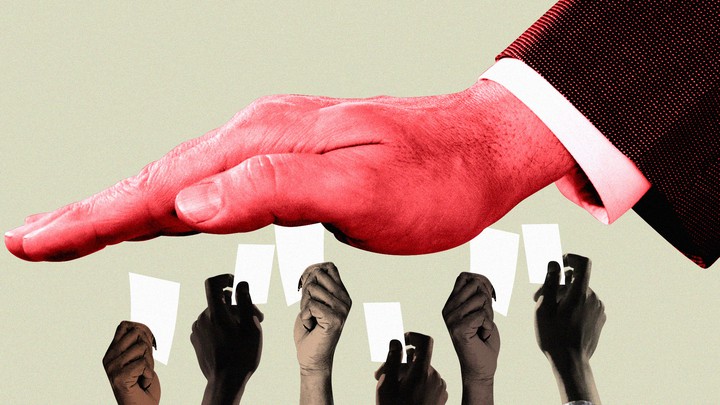
Voting should be as easy and convenient as possible, and in many cases it is. But across the U.S., too many politicians are passing measures making it harder to cast a ballot. The goal is to manipulate political outcomes, and the result is a severely compromised democracy that doesn’t reflect the will of the people. Our democracy works best when all eligible voters can participate and have their voices heard.
Suppression efforts range from the seemingly unobstructive, like voter ID laws and cuts to early voting, to mass purges of voter rolls and systemic disenfranchisement. And long before election cycles even begin, legislators can redraw district lines that determine the weight of your vote. Certain communities are particularly susceptible to suppression and in some cases, outright targeted — people of color, students, the elderly, and people with disabilities.
Below, we’ve listed some of the most rampant methods of voter suppression across the country — and the advocacy and litigation efforts aimed at protecting our fundamental right to vote.
Voter ID Laws
Thirty-six states have identification requirements at the polls. Seven states have strict photo ID laws, under which voters must present one of a limited set of forms of government-issued photo ID in order to cast a regular ballot – no exceptions. These strict ID laws are part of an ongoing strategy to suppress the vote, and it works. Voter ID laws have been estimated by the U.S. Government Accountability Office to reduce voter turnout by 2-3 percentage points, translating to tens of thousands of votes lost in a single state.
Over 21 million U.S. citizens do not have government-issued photo identification. That’s because ID cards aren’t always accessible for everyone. The ID itself can be costly, and even when IDs are free, applicants must incur other expenses to obtain the underlying documents that are needed to get an ID. This can be a significant burden on people in lower-income communities. Further, the travel required is an obstacle for people with disabilities, the elderly, and people living in rural areas.
Voter Registration Restrictions
Restricting the terms and requirements of registration is one of the most common forms of voter suppression. Restrictions can include requiring documents to prove citizenship or identification, onerous penalties for voter registration drives or limiting the window of time in which voters can register.
Politicians often use unfounded claims of voter fraud to try to justify registration restrictions. In 2011, Kansas Secretary of State Kris Kobach championed a law requiring Kansans to show “proof of citizenship” documents in order to register to vote, citing false claims of noncitizen voting. Most people don’t carry the required documents on hand — like a passport, or a birth certificate — and as a result, the law blocked over 30,000 Kansans from voting. The ACLU sued and defeated the law in 2018.
Some states restrict registration by allowing people to register long in advance of an election. For example, New York requires voters to register at least 25 days before the election, which imposes an unnecessary burden on the right to vote. By forcing voters to register before the election even becomes salient to the public, it discourages people from registering in the first place. These outdated restrictions — which were designed for a time when registration forms were exclusively completed with pen and paper, and transmitted via snail mail — can significantly impact voter participation. In the 2016 presidential election, over 90,000 New Yorkers were unable to vote because their applications did not meet the 25-day cutoff, and the state had the eighth-worst turnout rate in the country.
AARP Answers: The 2020 Census and the Coronavirus
by Kenneth Terrell, AARP
Has the census been postponed by the coronavirus outbreak?
On April 13, the Census Bureau announced it was pushing back several key deadlines in the 2020 count due to the coronavirus pandemic. The deadline for people to complete the survey forms for their households has been moved to October 31, 2020, more than two months later than its previous date of August 15. The agency also now won’t resume its full field operations — including door-to-door visits to people who have not completed the survey — until June 1, 2020. On May 4, the bureau said it was resuming some field operations. In some parts of the nation, census workers would begin going to neighborhoods to identify any new residences that may not already have been in the agency’s database. According to the bureau, those workers will not knock on doors. They will just update the database and leave census packets by the door for residents.
The Census Bureau also has said it will ask Congress to allow the agency to postpone its report on the final results of the count until April 30, 2021. The bureau previously was scheduled to present those results on December 31, 2020. The U.S. Constitution requires the nation to complete a full count of the population every 10 years, so pushing the final report into 2021 will require Congressional approval.
Do I have to complete the census to get a coronavirus stimulus check from the government?
No. Every 10 years a new scam pops up that tries to take advantage of confusion during a crisis. Stimulus checks would not be connected to the census survey in any way.
What is Census Day?
April 1, 2020 is Census Day. That’s because when you complete your survey for the 2020 count, all of your answers should be based on the information that was accurate for that specific date: your permanent residence, how many people were living in your household, etc. By April 1, every home in the nation also should have received at least one invitation to complete the census.
I lost my job. Is the Census Bureau still hiring?
Many of the temporary positions to help out with the 2020 national count have been filled already, but the bureau is continuing to accept applications and will be bringing on more staff. If you’re interested, you can apply through the 2020 Census Jobs website.
How can I avoid a census worker coming to my home?
If you complete your forms promptly, you can prevent a worker from visiting your home. By now you should have received an invitation in the mail to complete your census survey online, by phone or with mail-in forms. It usually takes less than 15 minutes to complete the form online. Because of the coronavirus outbreak, the agency has temporarily suspended in-person interviews from workers who help people complete the survey.
Do I have to pay anything to complete the census?
No. Completing the questionnaire for your household is free, no matter whether you do it online, by phone or by mail. Any request for money in exchange for completing the form is a scam.
Will the census ask for my Social Security number?
No. Your citizenship, as well as your political and religious beliefs, is among the other questions the census does not ask.
I recently filled out the American Community Survey forms. Do I still need to do the 2020 Census form?
Every year the Census Bureau randomly selects more than 3 million households to fill out the American Community Survey (ACS). That questionnaire is very detailed and is used to help policymakers and researchers get a deeper understanding of life in America at that moment. But the ACS is not the 2020 census. If you are selected to participate in this survey, you will still need to fill out the 2020 census questionnaire.
(More information on voter
suppression tactics next week)
What’s Going On
COVID-19/2020
During the American Memorial Day weekend we reflected not only on our nation’s war dead, but also on the more than 98,000 deaths of people here who were felled by the deadly COVID-19 pandemic. The figures surpass combat fatalities in the Korean and Vietnam Wars. We still await a dramatic federal response to the crisis as the 50 near-bankrupt states have “re-opened.”
Key Trump advisers Federal Reserve Chair Steve Powell and Treasury Secretary Steve Mnuchin admit that another federal stimulus is imperative. Most economists agree and advocate for a stimulus more muscular than the Democrats $3 trillion package. Money is needed to speed, not deter, the American recovery. Those trillions are needed now!
What lies ahead for the beloved country, and for the politicians tasked with governing cities and states across America? According to the Penn Wharton model projection, more than 5 million people living in the USA will be infected by COVID-19 which will kill nearly 300,000 people by late July if the states’ and cities’ politicos fail to open without precautions like social distancing. Health containment and the recovering economy must work in tandem.
PS. Remember the 4/9 WGO column re: Indian teen astrologer Abighya Anand, 14, who predicted that COVID-19 menace would recede on May 29.
Some corrections which should attend the states’ reopenings should include overhaul of public health systems, income inequality, hunger, homelessness and massive unemployment, to name a few. Concurrent with the phased-in reopening, there is an ugly, desperate presidential election season unfolding. Happy that the media no longer obsesses about the Joe Biden on-air gaffe about race and blackness during an interview with millennial radio host, Charlamagne tha God. Yeah, Joe was wrong. But do millennials want another four years of Trump, a national health menace?
BUSINESS NOTES
Magic Johnson Enterprises, Equitrust Life Insurance and MBE Capital Partners, offer $100 million in capital to minorities and women businesses, which have been hit hard by the national lockdowns resulting from COVID-19. Loans will be administered through the Feds Paycheck Protection Program, PPP.
NYS Governor Andrew Cuomo introduced the NY Forward Loan Fund, a $100 million working-capital loan program for small businesses, nonprofits and small landlords who failed to get the PPP funds in the last stimulus package. Visit the Empire State Development site, ESD.NY.GOV.
Lowe’s, the national home improvement retailer, pledged $25 million in grants for minority-owned businesses to support efforts to re-launch the economy, it was announced by its CEO Marvin Ellison, an African American.
JOB NOTES
NYS and NYC will hire between 6,400 to 17,000 contact tracers, who will work to trace contacts of people who tested positive for the coronavirus.
Don’t forget the digital universe replete with info about Work From Home job ops. #WORKFROMHOME.
FOOD NOTES
Check GETFOODNYC Program srfoodnyc@manhattanbp.nyc.gov. Seniors can request food delivered to their local senior centers…Food pantries are ubiquitous throughout NYC, where there are needy populations: Harlem, Bronx, Brooklyn, Queens. Call local churches, nonprofits and politicos to get food pantry dates and locations. Food is distributed to anyone who visits the pantry.
NEWSMAKERS
Brett J. Hart, 51, was named President of United Airlines, last week, after serving as UA EVP and Chief Administrative Officer. CEO Oscar Munez transitions to Executive Chair UA. Hart served as interim UA CEO for six months when Munez was recovering from major surgery, a few years ago. A University of Chicago Law School alum, he is a member of the National Bar Association and the American Bar Association. Prior to UA, Hart worked at Sara Lee as EVP and general counsel, at a law firm, and was special assistant to the general counsel, US Treasury. An Alpha Phi Alpha member, he is the first African American to ascend to the presidency in the U.S. airlines industry, which is in COVID-19 turmoil because or worldwide suspension of travel.
RIP: Ed Dessisso, 74, died at home in April, from heart complications. Harlem-born Baby Boomer, a CUNY alum, Dessisso was a lifelong student of philosophy, politics and the arts. He settled into the film industry where he worked as producer, director, production manager and writer. He was a mentor to young African American filmmakers. He got his start in a program which promoted diversity in the film industry, spearheaded by Harry Belafonte and Cliff Frazier. A member of the Director’s Guild, some of Dessisso’s film credits include “New Jack City,” “The Cotton Club,” “Dead Presidents,” “Ganja and Hess,” countless indie films and tv commercials. He is survived by actress/writer Sharon Dessisso, his wife of 35 years, and son Elijah.
ARTS AND CULTURE
Brooklyn’s 42nd Annual Festival, DanceAfrica, America’s largest celebration of African and African American dance, music and culture, runs through May 29 by way of digital offerings. Housed at the Brooklyn Academy of Music, the virtual DanceAfrica program includes dance classes, talks, film screenings and streams of past performances. Visit BAM.org/DanceAfrica.
Wordsmith extraordinaire Terry McMillan, author of 12 books, including the novels, “Waiting To Exhale” and “How Stella Got Her Groove Back,” which were also major movie box-office hits, is at it again, with her novel, “It’s Not All Downhill From Here,” about a 60-something widow and her cronies as they cope with aging, relationship, and loss.
The third annual CALIFEST, the Caribbean Literary Festival will be held June 6, in Los Angeles, California and will be streamed live on the web. Featured writers include Virgin Island born poet Dr. Richard Georges, Epiphanea; Trinidad and Tobado-born Ingrid Persaud, The Sweet Sop; Jamaica-born Dr. Amina Blackwood-Meeks, and Suriname-born Dr. Joan Marques. The Festival is sponsored by the LA based Jamaica Cultural Alliance along with the Jamaica Tourist Board and the Dominican Republic Tourism Board. Visit www.califest.org.
VIRTUAL CALENDAR
POLITICS: NYC Public Advocate Jumaane Williams hosts a Citywide HOUSING RIGHTS LEGAL CLINIC for all categories of NYC tenancy — Rent Stabilized, Mitchell Lama, HUD, Market-Rate and NYCHA — on May 28 at 6 pm. Clinic focuses on Housing Equity during and beyond the pandemic. Attorneys will field questions. To attend, register at NYCPAHOUSING. Eventbrite.com
THEATER: Woodie King’s New Federal Theatre, presents TUESDAYS IN JUNE 2020: Rapping with the Artists and Play Readings. The inaugural rap on June 2 features theater luminaries S. Epatha Merkerson, Ruben Santiago Hudson, and Barbara Montgomery. Open to the public free and require registration. Contributions are welcome. Visit Newfederaltheatre.com or Email NewFederal@aol.com
A Harlem-based brand architecture and media consultant, Victoria can be reached at Victoria.horsford@gmail.com