Home Blog Page 500

What’s Going On

JUNE 2020

Most of the nation is back to work, in some phase of reopening business after the two-month nightmare brought on my COVID-19. Spring 2020 will also be remembered for the police killing of another Black Minneapolis man, George Floyd, which launched a culture of protest throughout the nation. During the nation’s period of mourning, another Black man, Rayshard Brooks, was shot in the back and killed by an Atlanta, Georgia policeman. Black lives matter as do our quest for equality in a far from perfect democracy. Protests have their place in working towards race equality, but it is necessary to work towards reform and policies that are fully executed en route to our larger goals. American protests in the post George Floyd murder era have generated millions of dollars in donations to Black Lives Matter, the NAACP Legal Defense and Education Fund, for bail to cover protesters, ActBlue for bail and Color of Change. Corporate America entities like Warner Music Group, Comcast, Sony Music Group, have each committed $100 million for various social-justice causes. That’s good for starters.
How do Blacks want to reconfigure the American body politic? Does it stop or start with police reform? Where does it go from there? What about education and health disparities, and jobs? Black unemployment rate has trebled since the national quarantine began 2½ months ago.


Last week, NYS Governor Andrew Cuomo signed into law aggressive police reform measures, including a ban on chokeholds, transparency of police disciplinary records and giving the NYS Attorney General special prosecutorial power to investigate incidents of unarmed people killed by police. Let’s see what other states do, what Congress develops and what US Senator Tim Scott prophecies about delays in police reform. Will his caucus heed his advice?
Last week, was phase 1 of NYC reopening to business after the COVID-19 Pause. One report revealed that Black unemployment trebled during the COVID-19 PAUSE. Trains are running, buses are more popular, neither are places where social distancing is possible. New Yorkers are out and about flouting COVID-19 restrictions, without facemasks and social distancing. Fuggedaboutit!


June 23 is Primary Day in NY and you’d better go out to vote. Primary contests will be held for all Congressional seats and NYS Assembly and Senate seats. One of the uglier congressional races is in Brooklyn, Representative Yvette Charles’ district. One of her opponents, homophobic NYC Councilman Chaim Deutsch, is using race as a campaign tool. Rather than participate in debates, he is circulating footage of the looting in Brooklyn following a George Lloyd protest to appeal to voters. Wonder who supplied the footage! … A congressional contest in the Bronx is getting lots of media coverage. It is for the seat held by Congressman Jose Serrano. Top contenders are City Councilmen Ritchie Torres, Ruben Diaz Sr. and NYS Senator Michael Blake. Torres and Blake are hardcore progressives. Diaz is homophobic and known as a social conservative disposed to vote Republican. Wrong man for that congressional district, which is adjacent to AOC’s district.


What a difference a few weeks make. Just when it was looking like Minnesota US Senator Amy Klobuchar was on Joe Biden’s shortlist for VEEP, George Floyd was murdered in Minneapolis. The state was under microscopic scrutiny and Klobachar’s days as a prosecutor came under scrutiny. She never convicted a policeman of any wrongdoing. Since the Floyd murder, a Black VEEP seems more logical. However, I don’t see Stacey Abrams’ name on recent VEEP shortlists. The Biden campaign insider list is still all white.
Ella Jones was elected mayor of Ferguson, Missouri, a suburb of St. Louis, on June 2. A member of the City Council, Jones becomes Ferguson’s first Black mayor. Ferguson made national headlines in when African American teenager Michael Brown was fatally shot by a white policeman in 2014. Remember the national protests and outrage.
ON/OFF: The United Nations General Assembly, which celebrates its 75th birthday anniversary, will not convene in New York this year owing to coronavirus concerns and the large groups of foreign heads of state and their delegations……. The US Open Tennis Tournament will be held without fans this summer. To be sure, NYC revenues will plunge dramatically.


ARTISTIC ASIDES

Politics inevitably informs African American art and culture. Two recent films are locked in to the Black experience. There is comedian Dave Chappelle’s special, a Netflix film, “8:46” on YouTube channel, which is not funny. It’s about history and resistance… about telling the truth when it is uncomfortable and painful. And everyone is fair game, even Candace Owens and Laura Ingraham. Then there’s Spike Lee’s new Netflix film, “Da 5 Bloods” about four African American Vietnam veterans who return to the Nam, looking for the remains of their fallen commander, which is a tour de force according to media commentary.

NEWSMAKERS

Four-star General Charles Q. Brown, 58, was confirmed by the US Senate to be the next Air Force Chief of Staff, making him the first African American head of a military service at the Pentagon as the nation confronts a multiplicity of racial issues. The confirmation makes him the second African American to sit on the Joint Chiefs of Staff since General Colin Powell. He got 98 votes on the day of the George Floyd funeral in Houston, in our highly partisan US Senate. A highly decorated general, Brown is currently commander of the Pacific Air Force and oversees more than 46,000 airmen in Alaska, Guam, Hawaii, Japan, and Korea. Before the vote, General Brown posted a Twitter video on June 5 detailing his life as a Black man in and out of the US military. He will be sworn in on August 6.


Caribbean American Heritage Month salutes to: Grace Blake, Trini filmmaker, Sharon Lopez, Jamerican thought-leader and event planner; Derrick Wallace, Wadleigh Scholars Program and Aruba-born Dr. David R. Williams, PhD, Harvard University sociologist
Cancerian Birthday shout-outs to these natives: Dr. Betty Holmes Anthony, Will Anthony, Joe Bethune; Stuart Bosley, Valerie Bradley, hotelier; Dr. Bill Cosby; Cecilia Davidson; Assembly member Inez Dickens; NYC’s first and only African American Mayor David Dinkins; Missy Elliott; Fantasia; Stanley Gleaton; Danny Glover; Ernie Green; actor Kevin Hart; Patricia Jackson; writer Sandy Livingston; Harriet Michel, nonprofit administrator; Robert Hamilton; Alyah Horsford Sidberry, 50, Cove Lounge; Kendall Sidberry, real estate contractor; Cheryl Hill; Desa Horsford and twins Lillian and Karen Horsford; Aubrie Jacobs; actress Barbara Montgomery; actor Richard Roundtree, “Shaft;” Judge Sonia Sotomeyer; Barbara Sullivan; Mike Tyson, Ramona Wraggs Wall, Colloquium Depot; Goldie Watkins, public health consultant; Akia Webster, GenX thought leader; Sabrina Williams, arts curator; TV host Wendy Williams and family patriarch Ricky Wingate.

Sorry to be the bearer of bad news. Retrograde Mercury begins on June 18, for three weeks.

JUNE is the month of the Summer Solstice! Things will get better!

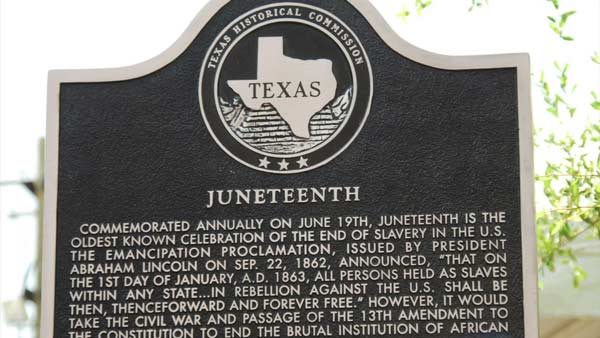
HAPPY JUNETEENTH!
HAPPY FATHER’S DAY!
Working with Scooter Joe

A Remembrance

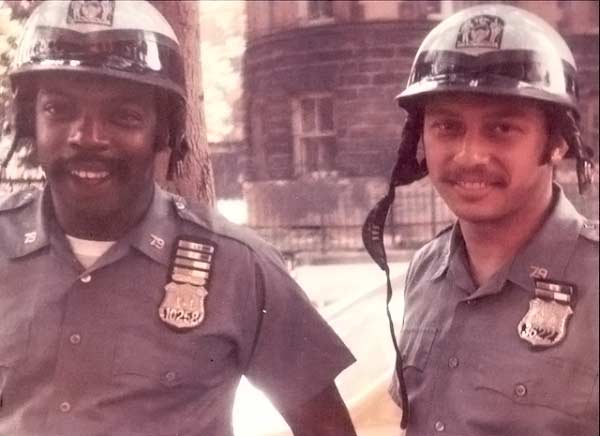
In the Spring of 1969, as a rookie police officer not long after graduating from the NYC Police Academy, I was assigned to the 79 Precinct where I came to meet Joe Willins, a tall well-built Black man who carried himself with an element of confidence. 

We seemed to be working the same shifts, as I kept running into him. He stood out, mostly dressed in street clothes rather than a uniform, and carried what appeared to be a diary under his arm. My curiosity got the best of me and I asked one of the police officers who that was. He said, ‘Oh that’s Scooter Joe.’ I thought, ‘What an odd name. After spending some time working with different Officers I asked, ‘What does he do?’

Piecing together from the various conversations with cops in the precinct, I learned the reason he was in civilian clothes was that he had many court cases for the drug arrests he was making and the book was a list of the dates he had to be in court. Growing up in a white middleclass neighborhood in the 1950’s and landing in the 79 Precinct, I wasn’t quite sure what planet I was on or did I somehow make a mistake coming here?  Being autonomous and growing up around my dad’s business as a general contractor, I was trying to figure out how I was going to fit in and work in the 79 Precinct. During the early moments spent at the 79, I couldn’t seem to find the right person or the right job that felt satisfying. All I could see was people and cops come and go. 

I decided to inquire if there was a position or opening in the Scooter Squad.  Well after completing scooter training, I was asked what scooter squad I would like to be assigned to, I said put me in the same squad as Scooter Joe.I needed to learn who I was and what it was that a cop was supposed to do. Joe seemed to be the most active cop in the precinct and perhaps I could learn something from him.  Each scooter cop was supposed to patrol a specific area in the 79, however that wasn’t very appealing to me as I had no one to talk to or learn from. So, I decided to follow along with Joe in his designated area of patrol. Of course, that made him very suspicious of who I was, as Joe had become the number one cop in making drug arrests in the 79 Precinct. As time went by, we became comfortable with each other and together we started to make drug arrests. I asked him why he did all of this when no one else in the precinct was doing anything like he was? A Black man arresting other Black men and putting them in jail? He said he grew up here and I could not allow the community to be taken over by drugs and a crime rate that was out of control. 

I had never seen drugs and crime at this level in my entire life, but I could relate to what he was doing. I convinced myself I could help and together we could make a difference. For me that was a turning point in my life, as I now had a purpose and someone who could teach me what I didn’t know. We went on together to make hundreds of drug arrests. The timing of this relationship couldn’t have come at a worse time, as the Knapp Commission had just finished its investigation of police corruption — police being paid off to overlook drug laws.’

I came to trust Joe, as he had incredible instincts about controlling crime and where to find it.  I brought a different perspective and insight as to what we were doing and when we blended those skills. The street crime, the drug dealers  and all those who made a living off the street started to take notice. We became very effective in changing the conditions in the 79 Precinct.

The street criminals whose businesses we were interrupting started to make civilian complaints about Joe and myself in order to slow us down or put us out of business, hoping the police dept. would investigate these unfounded, fabricated complaints.  I said to Joe, ’One day why don’t we arrest the same people and charge them with the major crimes they were also committing, and stop making drug arrests?’ At least they wouldn’t be coming back to the street faster than we were.


Over a period of 18 months we were involved in18 major homicide investigations where we were able to assist the detectives in arresting 36 people to stand trial for murder. Over our 20-year careers, or 40 years collectively, never was one person — criminal or otherwise — ever injured, shot or placed in a hospital. We developed skills and techniques where we could obtain vital information by establishing a rapport with the people we came into contact with. It was totally unnecessary to use force on anyone, as we built a level of trust between ourselves, the criminal element and the community.


There was an awesome level of respect as people came to realize they had nothing to fear, as dialogue between us was paramount and any issue could be resolved without fear or force. There were times where I actually believed we didn’t need guns to do our job. In closing, not one shot was ever fired nor was any one person ever injured. Police work is an art and has to be perfected. Joe and I remained friends until his death this year. Our friendship lasted more than 50 years. He was the greatest cop I have ever met or had the pleasure to know. Our families were one, we never saw color, we only wanted to make Bedford/Stuyvesant a better place to live. I will miss him every day.    

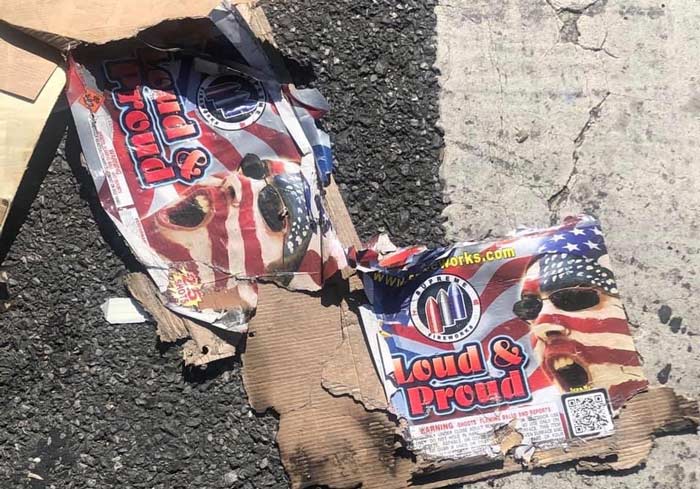
So. Who’s doing all of the fireworks?

Fireworks and Agitators

So. Who’s doing all of the fireworks?
It was in the evening of the first round of protests that I started noticing them. It started at dusk, and continued until well past midnight. Fireworks, seemingly being let off all around me. I’m born and raised right here and I’m of the age where one can remember countless summers of playing with fireworks. I remember when a pack of firecrackers were 25 cents, jumping jacks were 35 cents. We’d take two dollars to the corner store and stack up and then we’d have a ball putting firecrackers in bottles and garbage cans. This was summer fun for a 12 year old kid living in Brooklyn in the 80’s.
I can tell the difference between fireworks and gunshots, another trait that I gathered from growing up here. Gunshots are let off in rapid succession, brief, rhythmic and poignant. Fireworks are steady and random, a continuance of pops with no pattern. So, I know when I’m hearing fireworks. I also know that as we head closer to the July 4th holiday, kids find themselves with access to more fireworks than usual, which leads to hearing more of them in the air as we creep towards Independence Day. Taking all of that into consideration, the first night I heard the cacophony of explosions in and around my neighborhood, my first thought was that it was way too soon for the July 4th traditions to get started. We were barely out of May.
Night after night, the same thing. Fireworks. Usually when kids are stocked with fireworks they play with them in the basic area that they hang out in. On their block. In their projects. What I was hearing wasn’t that though. The fireworks were being ignited all around me, in various areas. And, it wasn’t your run of the mill child accessible fireworks. These are M-80s and bombs, not just firecrackers. One night, I spent the evening in the backyard of a friend who lives like ten minutes from me. As soon as dusk settled, I heard fireworks around his home too. Can that be a coincidence? Maybe. I mean, kids all over like fireworks, right? But still, when I asked my friend he said he had been hearing them every night too, again since the beginning of the protests.
I started asking friends in various neighborhoods, “Do you hear fireworks at night?” A friend from Flatbush said he did. So did a friend from Harlem and the Bronx and New Rochelle, and Brownsville. Everybody is hearing fireworks every night. Even when the firecrackers at my corner store were a quarter, I couldn’t afford to buy packs of them daily. Who are these kids that are supposedly purchasing enough fireworks to light up the whole city night after night? And then, the timing of it all is weird. These fireworks start every night at dusk. Kids are home from school all day due to quarantine. If these fireworks were the work of random kids, why do they wait until dusk to start? Why not start in the middle of the day?
The final piece of this sordid puzzle came from social media. Friends from as far away as Los Angeles are saying the same thing. Fireworks. Every night since the beginning of these protests. In Baltimore too. In Philly too. Always after dusk.
These protests have introduced those who have been paying attention to the role of anarchist groups and other antagonists. The night that the protests began in Brooklyn, a police vehicle was torched. Police later charged two white girls from the Catskills with the crime. The Wendy’s at the center of the police shooting in Atlanta was burned down, and the suspect in the arson is a white woman. Video from across the nation revealed that there were people in the various protests who seemed planted specifically to damage property and to antagonize the police. They dress in all black. They are separate from the real protestors, almost using them as a cover for their real motives. And more often than not, they are white people. They are the ones defacing property with slogans like ACAB (All Cops Are Bastards). I saw that scrawled across a church facade on Jefferson Avenue and I know that no one from this community did that because the church is well known and, by and large, churches have been places of solace and support for protestors. That wasn’t us. The car torchings, that wasn’t us. And, neither are these fireworks.
Not everyone screaming Black Lives Matter is doing it to support the equality and equity of race in this community. Some of them are using the term to hide motives which go far beyond police brutality and systemic racism. They are co-opting our rage to incite their own agenda. Be mindful and aware of this. And, if you see random people in your community that you do not recognize igniting fireworks at night, report them immediately.

Juneteenth Sermon

By David Mark Greaves – First Unitarian Church
Sunday, June 14, 2020 (Virtual)

First, I’d like to thank the Weaving Social Justice committee for asking me to speak and be a part of your wonderful program celebrating Juneteenth, when the Africans held as slaves in Galverston, Texas, heard that the Civil War had ended and that they were free.
And I have to say, when I saw the script for today, and saw my name associated with “preaching” and “sermon,” a wave of panic swept over me and I had to say to myself, “Steady on young man, this is a church and they will be forgiving.”


Today’s theme, the importance of The Holy Wholeness of Unity, and the coming together of communities to help themselves, is especially relevant to the tumultuous time we are in.
And made even more so by The White House occupant holding a rally on Juneteenth in Tulsa, Oklahoma, where a white riot destroyed “Black Wall Street” and killed over 400 African Americans. He moved the date back, but his point had already been made. And I will return to him later.
I’d like to begin by noting the crises we’re in, followed by the briefest history of Black unity that has been practiced for survival, the current protests, the national leadership, and lastly, my hope for the future.
The nation is at the horrifying beginning of a pandemic where the number of deaths, as of today totaling over 114,000 in the US alone, could double by this September, and for all we know, double again by this time next year.
There is economic collapse, with over 44 million unemployed and the food bank next to my office has a line that stretches down the block and around the corner. People start lining up before 7am for the noon opening.
And now, unbelievably overlaying both, is the national and worldwide protests over the wanton killing of George Floyd, an African-American, by a white police officer pressing his knee on Mr. Floyd’s neck for 8 minutes and 46 seconds while three other officers, infected by the policing culture, stood and watched, just like the historical pictures of crowds of whites coming to watch a lynching and enjoy themselves.
The video of the casual killing tore the scab from the wound of racism that has never healed and held it in the face of the country so close that it could smell and be repelled by the pus as it revealed quite clearly what Africans in America have been enduring since being kidnapped and brought to these shores some 400 years ago.
In the middle of this, community self-help and the recognition of the necessity, and yes the holiness of unity, is seen as ever more important as the nation awakens to the understanding that the systems we are a part of have not been designed to help everyone and certainly not the least of these. And that is despite the best efforts of the divider-in-chief. But I said, I’d get to him later, and I will.
For now, I’d like to begin with how Africans-in-America have survived in this murderous culture by uniting among themselves, when not only was there no help coming from federal, state or local authorities, there was and is hard work being done against Black people in laws and regulations to, as Reverend Al Sharpton said at a memorial for Mr. Floyd, systematically keep a white knee on Black necks through all facets of society.

And yet, we rise.

At the 1890 Lake Mohonk Conference on “The Negro Question” Judge Albion Winegard Tourgee, spoke on behalf of the Negro and of what he personally observed as the Civil War ended.
“At the close of the war there were set free 5,000,000 of men, women, and children, without a husband, a wife, a lawful father, a legitimate child, or a legal family name among them all!
They were without homes, without money, without lands, tools, seeds, or stock, without education, without experience, without inheritance, without the impulse of generations of thrift and intelligence.
Yet, without a family name, except one of his own selection, with wages hardly one-third those of the agricultural laborer of the North, the Negro accomplished industrial results which must make any observer of facts who can lay aside prejudice and forget theories, utter, with profound amazement, those words first of all flashed through the electric wire, ‘What hath God wrought?’”
In answer, let me say that what God had wrought was an indomitable spirit and understanding to do what needed to be done.
It only takes a quick internet search to give light on how Africans came together and united to help themselves.

There was the:

Free African Union Society,
Newport, RI, 1780s

Free African Society, Boston, 1787
Free Dark Men of Color,
Charleston, 1791
New York African Society for
Mutual Relief, 1808

African Benevolent Society,
Chillicothe, Ohio, 1827

Baltimore Society for Relief
in Case of Seizure, 1830

African American Female Literary
Association, Philadelphia, 1831

Negro mutual benefit Societies
Philadelphia, 1831

Coloured American Temperance
Society, Philadelphia, 1831

Phoenix Society, New York City, 1833

Adelphic Union Library
Association, Boston, 1836

Young Men’s Literary and
Moral Reform Society,
Pittsburgh, 1837

That’s how it was done. In the middle of the horror of slavery, Africans came together in associations to support each other.
To provide health and life insurance. To provide, as has been noted, “care for the sick, burials for the dead, and support for widows and orphans.”
It was through self-help that they built their communities. And in doing so, provided examples of what could be done for all of society.
And yet, when breaking out of slavery, they were not alone. Others joined in, widening the community of support for enslaved Africans.
I speak about the Abolitionists, with many Brooklyn stops on the Underground Railroad including at Bridge Street Church, the Church of the Holy Trinity, and homes on Duffield Street.

One of the most surprising books I’ve read is a biography of Louisa May Alcott, the Woman Behind Little Women by Harriet Reisen. It must have been sent by a publisher, because frankly, I know I would not have picked it up on my own.

And that would have been my loss.

What I learned was that Ms. Alcott was an abolitionist and came from a family of abolitionists. She said she became an abolitionist at age three. And in Boston in 1830, when they would tar-and-feather abolitionists, that family must have had courage and deep commitment.
Reisen tells us that Alcott spoke of John Brown as a Saint and of being in Washington, DC, waving, laughing and cheering with the crowds of Africans and whites, when the Emancipation Proclamation was signed.
And I do not doubt for a moment, that Louisa May Alcott would have been in Washington again on June First of this year across from the house where Lincoln once lived, calling out George Floyd’s name and shouting Black Lives Matter.
She would also have been one of the marchers of mostly young white people I found myself among walking past the monument of Abolitionist Henry Ward Beecher on June 4th in downtown Brooklyn.
I’ve been in many marches since the picket line my mother took me to at a SUNY Downstate construction site, and when she took me to the March on Washington in 1963. At those times and others, I was always in the middle of crowds of Black folks.
What I saw at Cadman Plaza was complexioned more like the antiwar protests I’ve attended. Except here, it was in support of African Americans and against the ongoing police violence perpetrated against us. I think many at this service may have been there also.
Here the call-and-response was, “No Justice, No Peace!” and “Say his name, George Floyd!” And I have to say that I was at first startled to hear the chant “No Justice, No Peace” from the thousands of white people among the many races gathered. But in just a few moments, as the chants rolled on, it sounded like the beginning of that now much-used phrase, “a new normal.”
And for the last two weeks, this has been happening in cities across the country and around the world. And I believe there is promise in that.
Africans in the Americas have always been united in dragging America, kicking and screaming, step-by-step into the humanity expressed in the Constitution, but that was not here when this country was born in the genocide of the indigenous people, the robbery of their land, and the enslavement of Africans to build, clothe and feed the new nation.
What we’ve seen in the weeks since Mr. Floyd’s murder is a coming together around issues of police brutality against African Americans, and I hope it grows into a uniting around solving issues of the systemic racism on which this Republic was founded and that continues to permeate the culture today.
But resistance to a racially unified nation is a constant. That was made clear by blatant suppression of the Black vote, most glaringly seen in Georgia’s Tuesday Primary where people, Black and white but mostly at Black polling sites waited in lines for three to five hours.
Which brings me back to that man at 1600 Pennsylvania Avenue. His is truly a malignant presence. He is the antithesis of today’s theme.
There is nothing Holy about him and he is not a whole man. The elements of empathy, conscious and morality have been left out.
Now we know God doesn’t make mistakes, and maybe this is Her or His way, to finally bring us together; if so, it looks like it’s working.
The rally he’s holding in Tulsa will be populated by his faithful. A mostly unmasked hoard, proudly waving the confederate flag over the graves of Black people. And it will be made even clearer who he is and who they are.
There are no words left to describe him. As my mother would say, “He has already been called everything but a child of God.”
And he will stop at nothing to stay in power.
It is my belief that if something goes awry with the coming national election, a distinct and unprecedented possibility, what we’ve seen these past few days will only be warning tremors to the earthquake that will follow.
And if it should come to that, I believe millions will rise up, uniting around the Constitution until he is removed from the White House, preferably with his hands zip-tied behind his back, and perp-walked to the helicopter to take him away from us. But that is just wishful thinking and enough said.
If ever there was a time to unite around the recognition of a common God-given humanity, it is now.
And as long as we remain stalwart, self-examining, and recognize the holiness that can be found in unity across the races, then we will overcome what we were, and move on to what we were supposed to be, “One nation, under God, with liberty and justice for all.”
Thank you for this opportunity and May God Bless You.

Officer Charged with Felony Murder In Rayshard Brooks Case

By Nicole Chavez, Atlanta, CNN
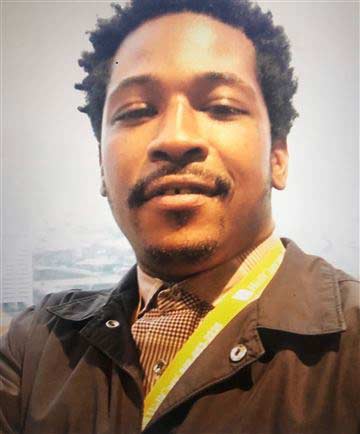
More than two minutes passed before two Atlanta police officers rendered first aid to Rayshard Brooks after he was shot. Now, they are facing more than a dozen charges combined for their actions.
Brooks had fallen asleep in his car in a Wendy’s drive-thru lane in Atlanta last week when police were called. After he failed a Breathalyzer test and officers tried to handcuff him, the 27-year-old Brooks struggled with officers and ran before being shot twice in the back.
The district attorney in Fulton County announced charges Wednesday against former officer Garrett Rolfe and officer Devin Brosnan, following protests and the resignation of the city’s police chief.
Here’s how prosecutors outlined the charges against the pair in their arrest warrants:

Rolfe, 27, the former officer who shot Brooks, is facing a total of 11 counts.
He is charged with murder in Brooks’ death and if convicted of that charge, he could face life in prison or the death penalty.
“The demeanor of the officers immediately after the shooting did not reflect any fear or danger of Mr. Brooks,” District Attorney Paul Howard said Wednesday.
The former officer is facing six other charges related specifically to his interactions with Brooks:

  • Aggravated assault with a deadly weapon linked to Brooks’ death. The offense carries a possible sentence of 1 to 20 years.
  • Aggravated assault for kicking Brooks. Rolfe was wearing a shoe “which, when used offensively against a person, is likely to or actually does result in serious bodily injury,” an arrest warrant said. The offense carries a sentence of 1 to 20 years.
  • Four counts of violation of oath by a public officer — a felony offense under Georgia law. Each offense carries a sentence of 1 to 5 years.
    Prosecutors say Rolfe broke his oath and didn’t follow the police department policies when he used a Taser as Brooks ran away, failed to render timely medical aid to Brooks, shot Brooks twice in the back and failed to tell him that he was under arrest for driving under the influence.
    Rolfe faces four additional charges linked to the third shot he fired, a bullet that hit an occupied vehicle in the Wendy’s lot.
  • Three aggravated assault charges related to the three people who were inside the vehicle.
  • One count of criminal damage of property in the first degree for damaging the vehicle “in a manner so as to endanger human life by shooting it with a handgun.”
    Rolfe was fired from the police department following the shooting.
    Another officer facing 3 charges
    The other officer, Devin Brosnan, did not shoot Brooks but has been charged for his actions in the incident.
    Brosnan, 26, is facing an aggravated assault charge for standing or stepping on Brooks’ shoulder while he was lying on the ground, prosecutors said. The offense carries a sentence of 1 to 20 years.
    Howard told reporters on Wednesday that Brosnan has “admitted that he stood on the body of Mr. Brooks.”
    Brosnan was also charged with two violations of oath of office, prosecutors said.
    He violated the police department policy when he stood on Brooks after he was shot, his warrant said. Howard said it was an “unauthorized weaponless control technique which the city of Atlanta prohibits.”
    The other violation stems from failing to render timely medical aid to Brooks.
    Brosnan is still on the force but was placed on administrative duty following Brooks’ death.
    CNN’s Jamiel Lynch contributed to this report.