Home Blog Page 26

A Third Space Built to Preserve Our Stories

0

At a time when the erasure of art, history, Black stories, and communities has become alarmingly common, a Brooklyn resident is seeking to preserve these contributions to society through a unique initiative. 

Special Collections Section, founded by Jennifer Burchette, is a cultural project committed to safeguarding our stories through intentional community-focused gatherings. Much like the area in a library or archive from which the project name is derived, the Special Collections Section centers on the notion that each of us is a “living archive” holding unique, important items of great value.

Our stories, histories, and life lessons are precious artifacts worthy of preservation. Inside a Brooklyn brownstone, where history and culture are embedded in the walls, the thoughtfully curated events bring music, storytelling, and genuine connection into an intimate setting.

 When asked how she would describe an SCS experience, Burchette used three words- intentional, archival, and communal. A self-proclaimed “home nosy” and history buff, Burchette has always been curious about her surroundings and was eager to learn the history of her brownstone when moving to her neighborhood ten years ago. “I found out that my space was an entertainment parlor in the 1920’s. Music lessons and parties were happening at that time, and I wanted to bring that back to the space.”
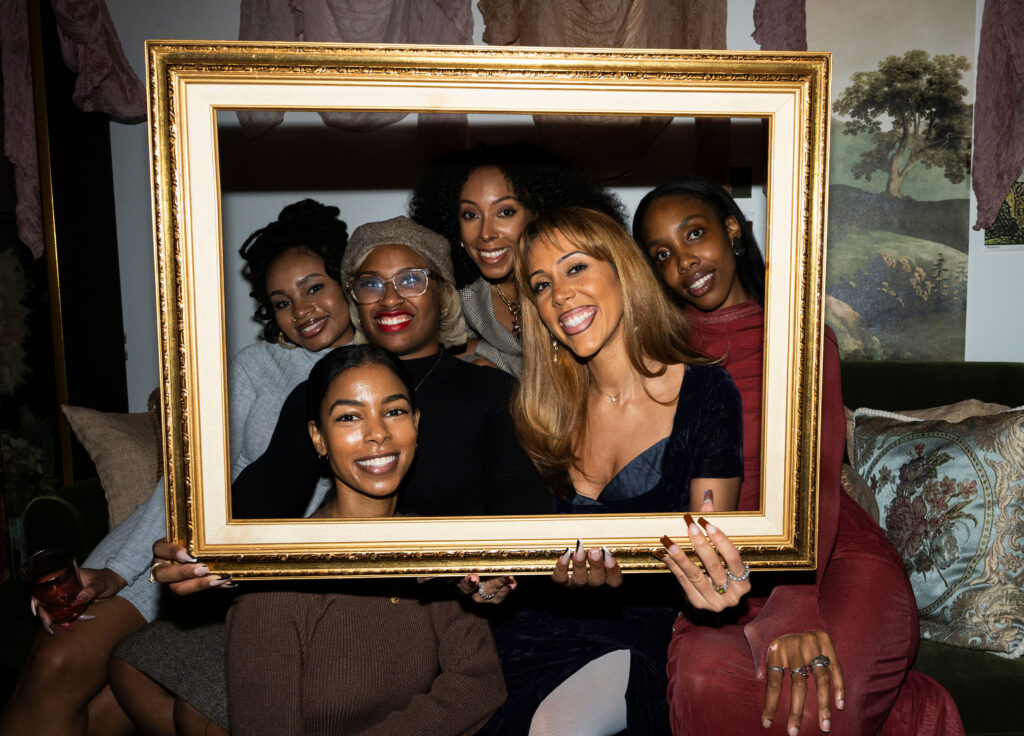
Alexandra Berrocal, SCS Design Lead (back, middle)poses with guests at SCS event. Photo cred: Hanna Wondmagegn

Witnessing the changes to the neighborhood as a result of gentrification and acknowledging her part in it, Burchette found it necessary to appreciate and honor the legacy of the space she occupies. She decided to open her home for the first public Special Collections Section event, a listening party celebrating UK singer-songwriter Olivia Dean.

Dean’s new album, The Art of Loving, which includes the hit single “Man I Need”, has captivated audiences in Britain and is now gaining even more popularity in the U.S. Burchette felt Olivia Dean was the perfect artist to usher in SCS’s first major gathering.

When asked why she chose an international artist to spotlight rather than an American, Burchette pointed to the themes woven through Dean’s music that emphasize how intertwined Black stories are, regardless of location. “Olivia Dean tells so many stories that we can relate to, not just about romantic love, but love with yourself. Music like that will transcend time. That is why I chose her to be that living archive for this event. Our stories are so similar, and we are a lot more connected than we think we are.”  

Burchette may not have anticipated how many people identified with her love for community and The Art of Loving when she uploaded an open call on TikTok, inviting her audience to the Special Collection Section x Olivia Dean Listening Party. She let people know the time and place and invited them to fill out a questionnaire detailing why they love Olivia Dean’s music and what the artist’s work meant to them. Twenty would be chosen and invited to Burchette’s home for the party. In twenty-four hours, submissions had to be closed due to the overwhelming response.  

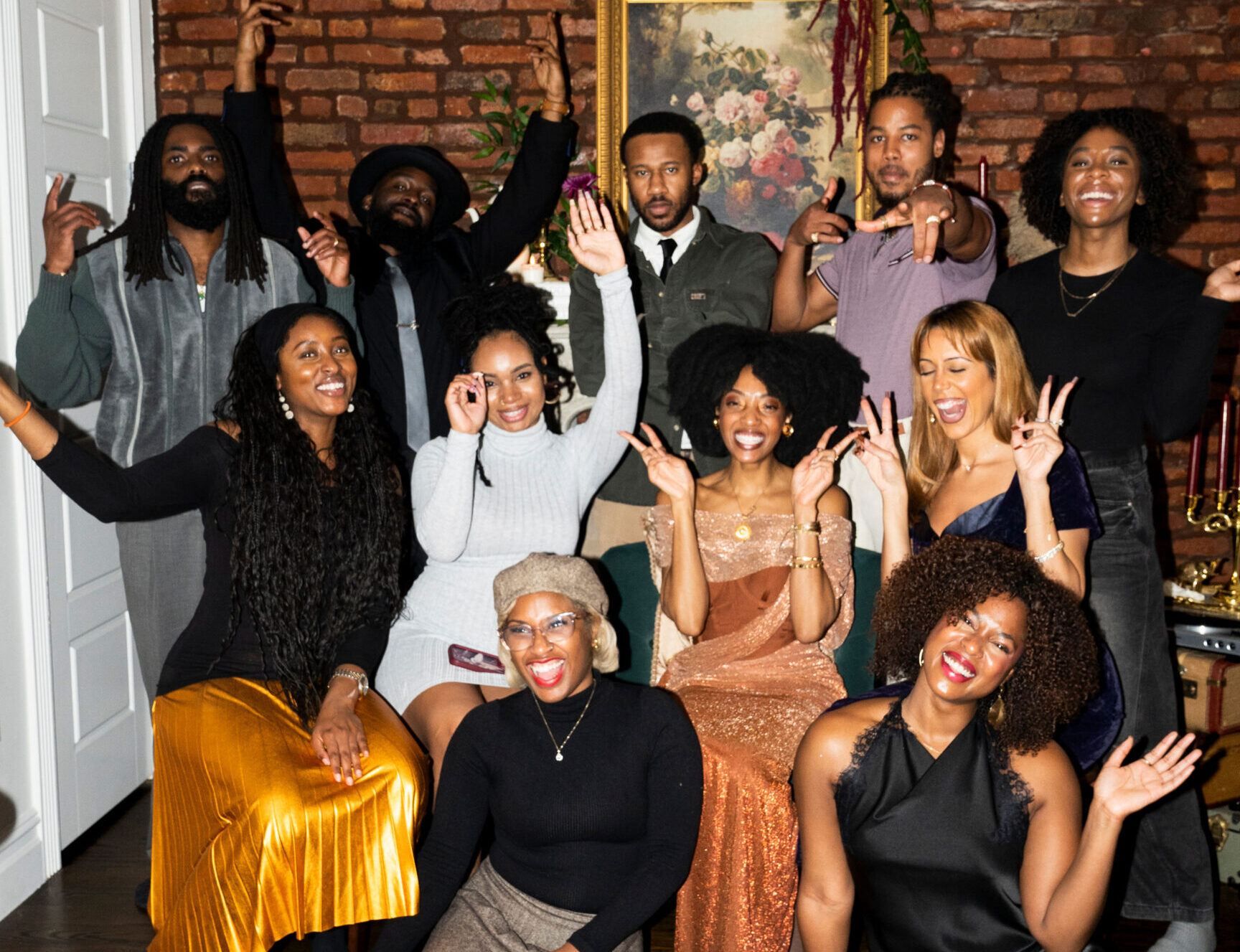
On December 11th, a chosen few strangers gathered at the brownstone to contribute to the living archive. The home, now transformed into a cozy, candlelit third space by SCS Design Lead, Alexandra Berrocal, was warm and inviting as guests mingled and introduced themselves to one another. Olivia Dean’s soulful lyrics and melodies were the backdrop as Jennifer Burchette expertly set the tone and intention for the evening, encouraging conversations and making space for guests to share anecdotes, memories, and lessons learned.

The small group was able to connect deeply over Dean’s songs that triggered emotions or inspired revelations. There were discussions of kindness, heartbreak, friendship, and forgiveness; stories of lost romantic love and self-love gained through trials. It was clear that this was more than a listening session. And while Olivia Dean’s artistry was the catalyst, it was the contributions of the individuals in the room that made the night special. The event highlighted an innate need for connection that has become harder and harder to attain in this digital age. 

Today, we have a skewed definition of community and what it feels like, settling for togetherness in the form of online engagement or surface-level networking. At a time when information is easily accessible, we still seem to be losing recipes, and preserving our cultural footprint seems to require more effort than ever before. The heart and intention behind the Special Collections Section is clear- to honor stories that often go unacknowledged and to give admiration, love, and appreciation to those pushing culture forward right now. 

When asked about what’s next for the Special Collections Section, Burchette discussed plans for more small gatherings, but also for efforts to highlight the effects of gentrification in her neighborhood. The plans range from dinner parties and more listening sessions to collaborating with other organizations to help profile stories of Bed-Stuy residents. “There’s something to be said about living in a community that you move into, but you don’t actually know anything about it. I want SCS to be a larger conversation so that people can be informed by the actual community so that they can show up better for that community.”

 To keep up with the Special Collections Section and be alerted to their next events, follow the project on social media @specialcollectionssection.
All in the Powell Family

After more than three decades working in the New York State Court Systems, Wayne Powell turned his dream of owning his own company into reality. He founded Smile4Life Security Protection Corporation in 2021.


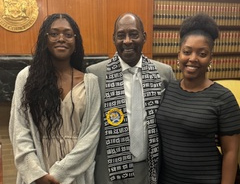
A life-long advocate for youth empowerment, Powell has something else to smile about: his daughter and granddaughter each hold executive roles in the business, and his community programs continue to change lives, young and older. Early last year, the Powells’ Smile 4Life Judicial Internship Summer Program introduced students to key members of the judiciary through their Smile4Life Judicial Internship Summer Program.


Students were awarded certificates for their participation in the program and their contributions to the community. Last Fall, Our Time Press talked to his daughter, LaNice, for the Q&A below.


LaNice Powell had a long career in education as a junior high school math teacher before transitioning into the field of technology as a software engineer. After working in a program that assisted adults transitioning into technology, she joined her father’s company as Operations Manager. “It was my father’s efforts years prior to starting his own that laid the foundations for my achievements.”
His youth development program began in 1998 when she was a high school freshman. La Nice’s sister, LaSaundra Powell, also participated when she was in high school.


“When I was enrolled in my father’s program, I learned basic skills and sat in on cases, LaNice shared,” adding, “I also recall spending time helping the secretary and the law clerk.” Although LaNice later decided the field of law was not for her, the experience, she admits, laid the foundations for her career achievements. And the program is getting bigger and stronger under La Nice’s watch. “The interns, this year, had more hands-on experience, were treated more like college interns, and actually trained by the law clerks. The interns reviewed and discussed actual cases. Law clerks and judges made sure they had a deep understanding of the process.”


“This was my first year returning to help organize and run the Smile4Life Judicial Internship Program. It was a pleasure to be back at the courts — as a former intern in 1998 and also as an alumnus of one of the participating schools.


“My dad has always had a big vision of providing a space for students. So, it was extremely fulfilling to come back, full circle, as an organizer and being able to work the program with my dad and grow his vision. The students were able to share their experiences and gain new perspectives on what it means to work in the judicial process. They spoke about being able to have discussions and debriefs with the Judges and law clerks they worked with and being able to see the compassion that they hold for their positions. It is the beginning of professionalism for the students.


“When I joined as a Benjamin Banneker Junior H.S. student, I was one of two interns. Now we have twelve: Azra Bulgan, Jeramy Bernard, Rowa Abouelker, Trinity Green, Alyssa McCloud, Abigail Alexandre, Kaylah Lawson, Kara Leu-Edwards, Sarah Sica-Robinson, Chase Jonas, Assata Jihad, and Amber Romney-Thomas.


“These young people are the new generation. The program is helping them shape their future, and we will continue to watch them and be available to them as they determine their own paths for the future.”

Brooklyn Org’s Dr. Jocelynne Rainey

0

By Fern Gillespie
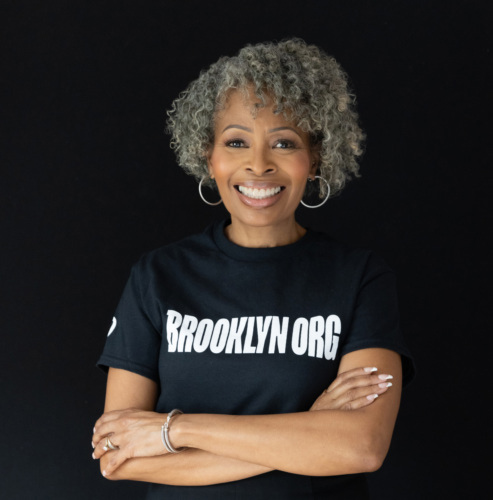
As the holiday season winds down, charities are revving up their end-of-the-year push for donations. Our Time Press reached out to Dr. Jocelynne Rainey, Ed.D., President and CEO of Brooklyn Org, Brooklyn’s major community-based philanthropic organization. Under her leadership, Brooklyn Org has surpassed $130 million in total giving and also expanded its commitments to Brooklyn nonprofits focusing on racial justice and community engagement. Our Time Press spoke to Dr. Rainey for advice on Black Brooklyn residents expanding philanthropy from “giving back” to having an active role in local nonprofits.


OTP: Studies have shown that Black Americans are actively involved in philanthropy or “giving back,” with donating 25 percent more of their income than White Americans. How can people make their involvement in philanthropy with nonprofits more formal?
JR:
Black people are the most philanthropic people. Research shows that we give the most.

A lot of our giving is to our churches, to neighborhood pantries, to family members. And as Black people, we always want to make sure that our neighbors are doing well, then we’re doing well. That’s what we do. And one of the things about Brooklyn Org is that we are really focused on is how do we bring everyone to the table to make sure that their philanthropy is recognized. That they feel comfortable, whether you can give up your time, your treasure, whatever you can give that you can be part of the solution.

OTP: How should somebody select a nonprofit to be involved with in terms of making sure that it’s bona fide and has made a positive impact?
JR: At Brooklyn Org, we have Brooklyn Gives, a website where you can see nonprofits and you can search that website by issues. I think that people should start by thinking about what the things are that “keep me up at night?” What are the things that I want to solve? Do your own research and look for nonprofits that are doing the work that you care about. I think that’s the way to really make a determination about where to give. See if there’s an opportunity for you to get engaged in that organization so you can learn more.

OTP: What is a quality that a person should have to be on a board of a nonprofit?
JR:
I think that it’s most important is to care about what the nonprofit’s issue really is. You’re not going to have a good experience if you’re on a board for an organization that is not your passion. And then you also must be willing to give up your time. You don’t want it to feel like a job, but you should give be able to give some time and show up for things for the board.

It’s really important for people to see board members there and to volunteer when it makes sense. Brooklyn Org also helps with board matching and can assist if interested in learning about Brooklyn nonprofits that need board members.

OTP: Brooklyn Org has a donor-advised Funds program, known as a DAF. What are the benefits of a DAF in donating to nonprofits?
JR: DAF is an opportunity for families or individuals to create a fund that is designated towards their philanthropic giving that is housed at the foundation. Where if you are interested in giving donations to nonprofits or other organizations, you can use your fund. It has some tax incentives. DAFs offer individuals, families and businesses support to maximize their charitable giving. When you do it with Brooklyn Org, you get an opportunity for us to help you to find organizations that are aligned with the things that you and your family are interested in doing.


And anyone can open a DAF. The minimum to open a DAF is $5,000. Brooklyn Org is doing the administrative work. So, if you have a family foundation or if you are already giving, it gives you an opportunity to be able to use the expertise and the administrative support of the Brooklyn Org to optimize your giving.

OTP: Under the Trump administration, what is the state of Brooklyn nonprofit funding that focuses on DEI and racial and social justice?
JR:
At a time like this so many people are grappling with unaffordability. People are dealing with housing instability. They are unable to get the food that they need. What we’re finding is that with the new administration that funding is difficult for nonprofits. They’re finding that a lot of funders that funded them in the past are not funding them. Some of the funders are doubling down on the organizations they already fund, so they’re not opening their doors to new funders. You know, this whole issue around not focusing on racial justice or race, the DEI initiatives.

What that means is that a lot of funders are still trying to figure out what they can do and where they can fund. So, the nonprofits in Brooklyn are saying that they’re seeing a lot less funding while their costs are rising. So, it’s really important now that you know folks are thinking about how to support nonprofits and you know donations and funding to Brooklyn Org go directly to Brooklyn-based nonprofits.

OTP: Brooklyn Org has established Brooklyn Backs Brooklyn. What is the goal of the project?
JR:
We also found that nearly 70 percent of nonprofits saying that there’s a real financial strain on families at this moment and how difficult it is for them to just get the basic things they need like food, pay rent, and childcare. We decided to that is really important for us to do more this year.

This year, with our strategic grantmaking, we gave $1.5 million, but we want to increase that. To give 25 percent more grants this year, Brooklyn Backs Brooklyn is about Brooklyn communities and Brooklyn neighbors supporting Brooklyn and the people that live here. So we have a campaign going on right now that we’re looking for people to give, to give more to Brooklyn. We want to raise $5 million in order to expand our grant-making.

OTP: Why is it personally important for you to help Brooklyn nonprofits through Brooklyn Org in their racial justice outreach?
JR:
I grew up with my Flatbush. I live in Bedford Stuyvesant. I raised my kids there. So, I love Brooklyn. I always feel like it’s my dream job. It’s the intersection of philanthropy, racial justice and my beloved Brooklyn.
These are all the things I care about.
For more information on Brooklyn Org, contact: www.brooklyn.org

Across the Diaspora and Beyond, Cultures of Families Keep America Live

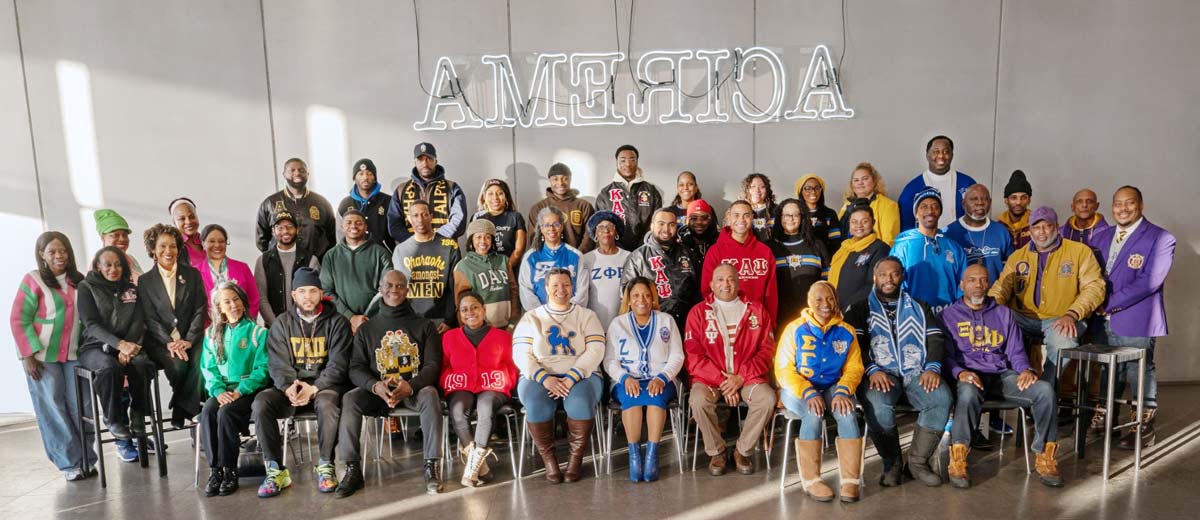
“Divine Nine Sunday, December 14, transformed the Whitney Museum of American Art in New York City into a winter wonderland, filled with color, creativity, and community spirit,” wrote event organizer Donna Kuhne-Walker, in a thank you to attendees.


“This event is more than just a gathering—it’s a celebration of art, culture, and community. With the Whitney’s Free Second Sunday programming, guests had the opportunity to explore incredible exhibitions, enjoy family-friendly artmaking activities, engage in storytime, and experience interactive tours.

The day also offered special access to the surrounding High Line, West Village, and Meatpacking District, tying the museum experience to the broader New York City cultural landscape.

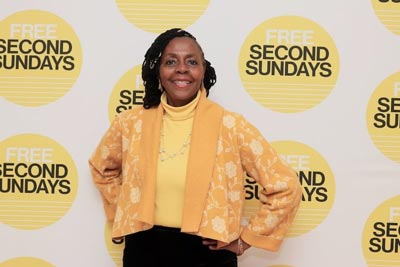
Donna Kuhne-Walker


A highlight of the day was the now-famous Divine Nine Group Photo, organized this year by photographer Lia Chang who welcomed Legacy Ventures photographer Barry L. Mason (shooting for Our Time Press) to capture the moment in the main photo above.


In describing the assembling of the Divine Nine (D9) “proudly displaying their colors,” Ms. Walker-Kuhne said that the experience is, however, “more than a moment.”


“It is a symbol of unity, pride, and shared legacy, celebrating the impact of Black Greek Letter Organizations in our community. It stands as a visual reminder of our collective dedication to culture, service, and togetherness.


Ms. Walker-Kuhne is already looking forward to the winter and spring of 2026 to continue highlighting the importance of art, culture, and community. “This event,” she wrote, “is a shining example of what we can accomplish when we come together in celebration and unity.” And family.


One of the most anticipated family reunions occurred at The Whitney Museum last Sunday. It was the gathering of members of the historic Divine 9 (D9) fraternities and sororities of HBCUs to create their 2025 group photo.

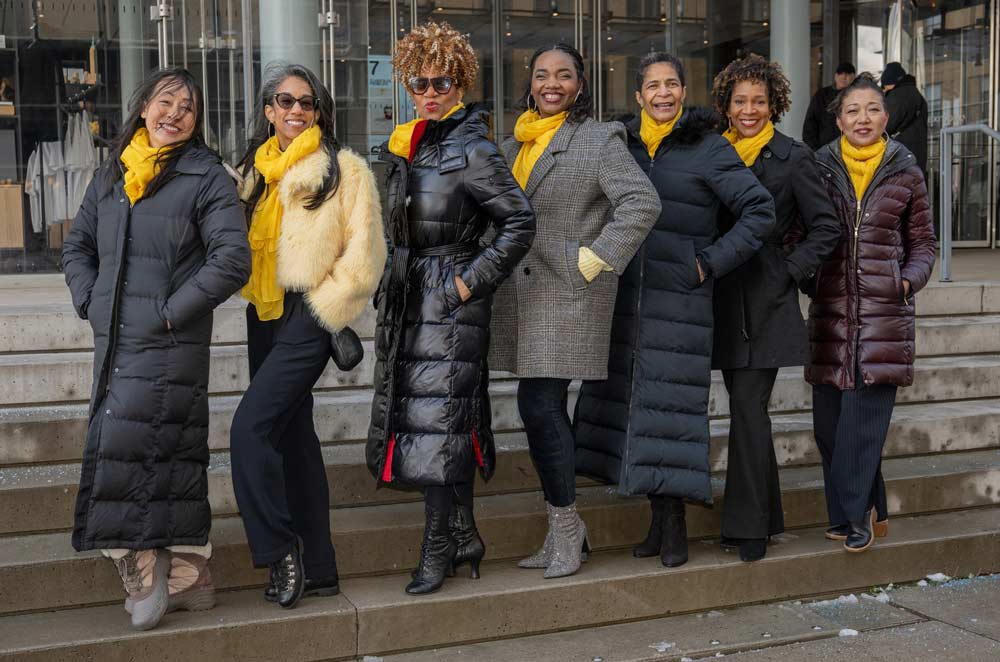
( Photographer Mason also captured another historic group shot: the gathering of former Radio City Music Hall Rockettes of color at the Divine Nine event. Our Time Press is in the process of identifying each member of this historic group in the photo.)

Helmed by “planner” Donna Walker-Kuhne of Walker International (above), the event, free to the public, was hosted by The Whitney partnering with the National Pan-Hellenic Council of New York City (an umbrella organization for historically African American fraternities and sororities, collectively known as the Divine Nine and referred to as Black Greek Letter Organizations) and the Meatpacking District.

Reflections on My Trip to Egypt

0

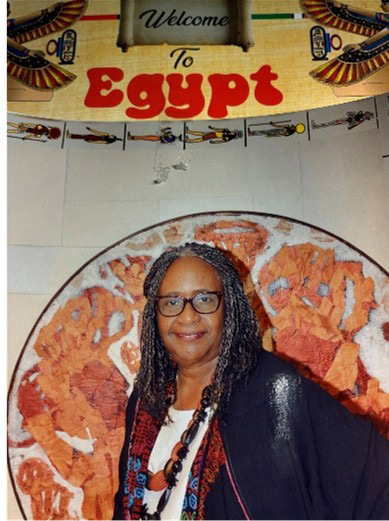
By Dr. Brenda M. Greene
As we read and meditate on our shared history and cultural experiences and on books, art, and images we see, these meditations leave imprints in our dreams and become part of our personal consciousness; however they do not become firmly etched in our memories until we find ways to connect them to past and present experiences, to the places we visit, and to the people with whom we interact.

Traveling to Egypt had always been on my bucket list, and when I formally retired, I determined that I would take this journey. Plans to make this journey during the first year of my retirement came unexpectedly.


I had just visited the Flight into Egypt: Black Artists and Ancient Egypt, 1876-Now exhibit at the Metropolitan Museum of Art with two of my friends. As we were on our way back home, my friend said an email announcing a 10-day tour to Egypt with a three-night cruise on the Nile had just popped into her inbox.

This was synchronicity in the making; I began to envision the fulfillment of my trip to Egypt. We had an option to take the trip in fall 2025 and decided that making this journey would be a great way to celebrate our birthdays, which would occur respectively in October and November. We had been members of the young adult division of the National Association of Negro Business and Professional Women’s Clubs in the 1970s and collectively embarking on a trip five decades later would be a full circle moment for us. Fast forward, we recruited five others for the trip, and on November 15, seven Black women left for Cairo, Egypt.

We became part of a racially and ethnically diverse tour group that included us (seven professional Black women), two Chinese couples, one Korean couple, one White couple, and one White woman. Our tour guide was an Arab Egyptologist who motivated us to connect with each other by telling us that we would be his family for the next ten days.


Like many, my initial impressions of Egypt and the continent of Africa while growing up in the 1950s were formed by Hollywood. My knowledge of Egyptology and Ancient Africa evolved as I began to read scholarship on African history, art, religion, and philosophy while in college and over my years as a university professor and scholar in Black literature and culture. I had read and researched scholars who included Chancellor Williams, Anthony Diop, Ben-Jochannan, John Henry Clarke, John Mbiti, Clinton Crawford, and Chester Higgins, among others.

I also worked in and visited the Brooklyn Museum of Art, where I had an opportunity to view and study the museum’s extensive collection of Egyptian artifacts. The information that I gained from reading and digesting scholarship on Ancient Africa and Egyptology was stored in my memory; however, the content of this scholarship did not excite my intellectual consciousness and impact my emotional consciousness until I visited and witnessed the majestic pyramids, temples, colossal stone Gods, and Ancient Egyptian deities in all their original splendor.

Viewing the pyramids, tombs, and temples up close and observing firsthand the encryptions, hieroglyphics, and detailed drawings on the walls of the tombs and temples touched my spirit and stirred my emotions. I could never have imagined being able to walk into the Great Pyramid of Giza.


Dr. Brenda M. Greene is Professor Emeritus and Founder and Executive Director Emeritus of the Center for Black Literature at Medgar Evers College, CUNY. For more information about Dr. Brenda M. Greene, visit www.drbrendamgreene.com.