

By Nayaba Arinde
Editor-at-Large
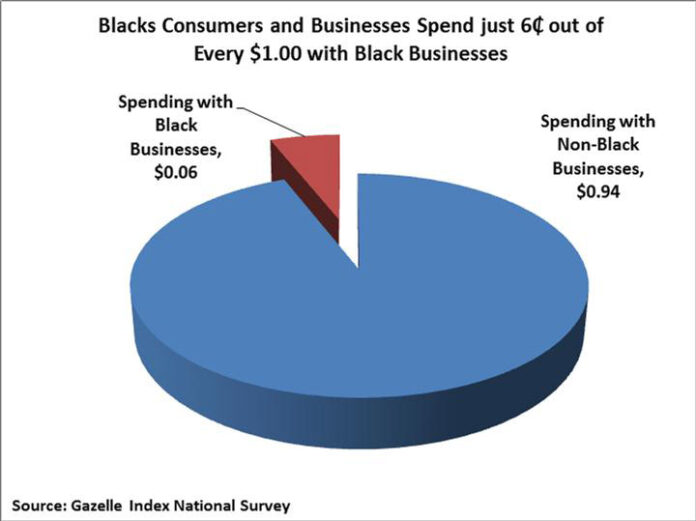
From armchair activists who just refused to click and drag to shopping carts on major shopping sites during last week’s Mass Blackout, proving the power of the Black community’s dollar, to those who shopped from Black and small local businesses on Small Business Saturday instead, the economic point was made. Time will tell how effective the protest action was, but creating an acknowledgement and practice of intentional behavior was the point. Shopping patterns are an indicator of the economy.
Michael Williams, the Creative Director and Designer at Restoration Plaza’s Moshood Creations, told Our Time Press, “Small Business Saturday generally helped boost local economies by driving traffic to small businesses, increasing sales, and building community support.”
By the end of this year, Black consumer spending is projected to reach $1.98 trillion. Activists are attempting to leverage this into economic and socio-political influence.
Social commentator Tatiana Solomon asked, “Dear Black People…I need you to understand that the power you have is in your purse….for the life of me, I do not understand why during this economic blackout–you @#$ can not stay your Black @$$ out of Target…out of Walmart…and off online shopping…and Amazon. The Montgomery boycott was 380 days, we are literally asking you to stop spending money with these organizations until December 2nd….Collectively stand with your people.”
This Saturday, the “Winter Wonderland” event, hosted by the Bed Stuy Gateway BID, took place on Marcy Plaza, located on Fulton Street in Bedford-Stuyvesant. This annual celebration honored both small businesses and the community, with art, music, and family-friendly activities. Supporting local businesses even more was the “Walk the Ave, Read the Tale” tour initiative.
Just before Small Business Saturday shopping, from his office in the David N. Dinkins Municipal Building, New York City Public Advocate Jumaane D. Williams released a new report, ‘Diverse Entrepreneurial Inclusion, assessing the city’s support of Minority and Women-Owned Business Enterprises (M/WBEs).’ The report examines gaps in city contracting and proposes new ways to empower small minority business owners.
The report came in the middle of the Mass Black Out and “We Ain’t Buying It” nationwide action in reaction to the President Donald Trump administration-inspired pulling of Diversity, Equity, and Inclusion initiatives in agencies, multi-state conglomerates, and companies across America. Black community organizers responded with the massive boycotts in February, September, and December. Still, they have been ongoing, creating reported losses to companies such as Target–21% decrease in net income, market value drop of over $20 billion, with about $12 billion reportedly linked to their DEI decision; Home Depot– 5–10% revenue decline equaling $100–$300 million; and Walmart’s almost $22 billion loss during the week long March 2025 boycott.
While folks with packed bags could be seen in the streets of Brooklyn in the latest one-week boycott window, conflicting news reports indicate both lower and higher store visits.
Consumer causation and correlation will be studied and politicized as the activated intentional dollar usage campaign continues throughout Christmas and Kwanzaa and beyond.
The ongoing boycott is a reaction to certain companies rolling back their Diversity, Equity and Inclusion policy, which had ensured legally to a degree, the hiring and protection of Black, Latino, Asian, women, and disabled employees. Companies like Target, Amazon, and Walmart have been among the main corporations that protestors have been focusing on.
Public Advocate Williams told Our Time Press, “In New York City, we have long strived to celebrate diversity, recognizing it as a strength for not only our culture, but our economy. Small businesses built by immigrants, minorities, and women are at the core of our economic identity in this city – but too many systemic barriers still prevent these ventures from growing their bottom line and our economy.”
Williams continued, “Many of the same critics that attack DEI principles are currently fanning the flames of hysteria about the incoming administration and its economic agenda, claiming it will harm businesses. But… this can be a new era for business in New York City – strengthening the small and diverse businesses we are fortunate to have today, and supporting the entrepreneurs of tomorrow.”
Online motivator eight-thousand-follower-having Money Bates stated that Disney has a $4 billion loss because of their replacing DEI with their “Talent Strategy.” Additionally, between September 17 and 23, 2025, and following the Jimmy Kimmel fracas, Disney’s stock declined by 2.39%, resulting in a nearly $5 billion loss in market value.
“Disney is taking hit after hit,” he said, noting that a woman cancelled her $150 million Disney wedding, and others are ending their Disney, Hulu, and ESPN subscriptions.
“We are the people that fund their businesses, so when they do [things] that they are not supposed to do, this canceling thing is working the right way,” Bates said. “You silence our voice, we silence your money. We have the power.”
Joe Shasteen, global manager of advanced analytics at RetailNext, told CBS News that there was a 6.2% decline in in-store traffic for the days leading up to Thanksgiving, and real-time foot traffic in brick-and-mortar stores on Black Friday fell 3.6% from 2024.
Black Friday online sales reached $18 billion, according to Salesforce. A 9.1% increase since 2024, said Adobe Analytics.
A myriad of activist groups pushed for the national conglomerate store boycotts, urging people to support businesses that support them – local, neighborhood stores and family-owned shops.
Pressing his new report, P.A. Williams said that it “highlights both the importance of enterprises – often small businesses – owned by women and minorities, and the systemic barriers those businesses face. It argues that bolstering M/WBEs, supporting diverse entrepreneurs, is both socially and economically responsible, and in the city, which serves as an economic engine for the world, this is an opportunity we have to embrace. It also applies these principles to specific programs that our city can improve and invest in to lift up historically marginalized groups and enterprises.”
Last week, the Public Advocate noted that between Black Friday and Small Business Saturday, New Yorkers will spend a lot of money, “Let’s work to spend it in our communities, seeking out and supporting M/WBEs as we decide, with our dollars, the kind of economy we want to build. We can build economic power by exercising the economic power we have already fought for and gained.”
Williams said that his report “finds that small businesses, particularly M/WBEs, face a competitive disadvantage when pursuing city contracts compared to larger, longer established, and often national or international corporations. This is one reason that M/WBEs are awarded only about 5% of city contracts, and that these small businesses need greater support to truly compete in procurement. M/WBE contracts with the city are also often relatively low in value.”
While Mayoral-Elect Zohran Mamdnani did not respond to Our Time Press’ request for comment, Williams’ list of recommendations includes restoring the budget for the Department of Small Business Services and making the City’s contract and procurement systems more efficient.
M/WBEs, Williams said, “tend to hire locally, creating job opportunities for residents within the neighborhoods they serve, thereby fostering community wealth and reducing unemployment.”