Home Blog Page 713

End of the Year

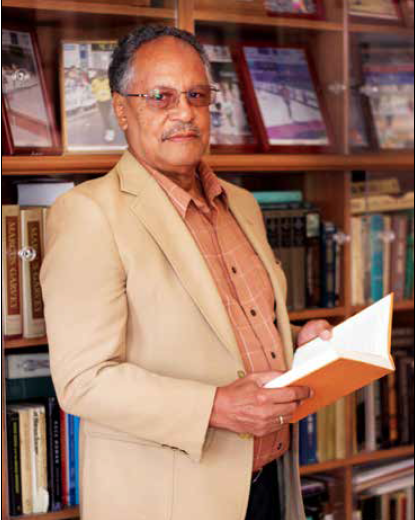
Scholar William Seraille, Ph.D., Speaks on“The Common Condition vs. Common Culture”

 (Below are excerpts of a recent interview with Louise Dente on Cultural Caravan TV)

  1. The Problem: Common Situation versus Culture

Racial oppression and slavery made it necessary for African-Americans to work together in unity. Even under the harsh conditions of slavery, we still had a strong African value system of communal self-help. This later led to the development of strong African-American institutions after slavery which led to the development of Black-owned schools, businesses, self-help, savings and loans. Later, discrimination, prejudice, segregation and poverty was a common situation which led to the development of Black-owned institutions, schools, self-help agencies, churches, savings and loans, and other institutions that enabled us to develop communities that not only survived, but in some cases thrived (i.e., Rosewood and Tulsa, OK), which became models of Black economic development.

  1. Historical Reference

Discrimination led to the development of self-sufficiency. Booker T. Washington spoke about the need for African-Americans dominating certain industries in which we had some involvement, experience, expertise such as the service industry. Washington believed that if we monopolized a market it would ensure greater economic development by making other people depend on us. For example, he made reference to the ice industry, coal, mills to grind corn, barley, wheat, etc. Control of these industries would mean greater economic development. Washington’s belief was to, “Make people depend upon you the way you are dependent upon them”. Booker T. Washington had influenced the leaders that followed him like Marcus Garvey, Elijah Muhammad and Malcolm X. Garvey focused on the control of the businesses in our community. He developed doll factories, hats for church and other industries that the community could patronize. Booker T. Washington had also stated the National Negro Business League in 1900, which had branches all over the country. The focus was on economic independence within the Black community.

  1. Lessons from other ethnic groups

We can learn from other ethnic groups that are currently here who may not be familiar with the American way of life but who have nevertheless created businesses that can serve them. Example, West African immigrants have started cab companies, restaurants, money transfers, hair-braiding salons that benefit themselves and serves the larger community. Asians tend to support businesses run by their ethnic group. Ethnic groups in America tend to stick together and support each other’s businesses. They understand that the group (community) survives, not the individual. However, African-Americans today tend to think as individuals and don’t understand that individualism will not enable us to develop community economic empowerment. As a group, we have not learned the lessons from history which have enabled us to thrive during times of injustice (i.e., segregation, racism, Jim Crow).

For example, while African-Americans protested their treatment by some Korean store owners which led to the closure of these establishments, we failed to take ownership of that same establishment. This led to yet another Korean business opening up in the same spot. The economic resources of our community are still being diverted from our community and not reciprocated by others whom we support. We should be controlling these businesses. Immigrants also pool their resources together, aka sousous, that enable them to finance each other’s businesses without depending on mainstream banking that they may not qualify for. This strategy is used to provide employment opportunities for others within their group who might be subject to discrimination by people outside of their community.

A phrase used in the early 1900s to 1960s in the Black community, known as “Double-duty dollar”, meant that the money should stay in the community and exchange hands at least four or five times before it leaves the community.   It was an earlier form of the “Don’t work where you can’t buy campaign” in the 1930s. If you spend your money with people who look like you and who buy from you, it enables you and others in the community to benefit.

So far, the only two industries that Blacks consistently support within our community are beauty parlors and barber shops. Although, the beauty supply and nail care industry are still dominated by Asian merchants.

  1. Solutions for the Future: Learn the lessons from history.

Consider the creation of cooperatives such as savings and loans, food co-ops and sustain buy Black campaigns throughout the year for essentials and livelihood.

There’s a need for African-American organizations, churches, fraternities, sororities, labor unions to strategize together to create small businesses and sustain them.

The key is to organize and sustain our businesses using the lessons of our ancestors and the strategies that were laid out by our leaders and thinkers (Booker T. Washington, Dr. Carter G. Woodson, Garvey, Elijah Muhammad, Malcolm X).

We are trying to be capitalists without the capital. Capitalism is based on profits. Some of us start businesses without understanding the forces of economics, which means that you might have to sustain losses before profits, rents may increase at any time, and that the needs of the market may change. “You can’t sell umbrellas on a sunny day.” You have to know your target market interests and cater to them to sustain and maintain businesses in our community. We need to sustain business ownership in our community. We also have to support the existing businesses so that they survive and thrive.

The Future of New York Football

0

Coming into the 2017-18 NFL campaign, both the New York Jets and Giants had high hopes. The Jets was expected to have a more athletic team than they have had in years past and the G-men was expected to make a deep run into the playoffs with the acquisitions they made during the off-season. Unfortunately, inconsistency, injuries and losing was the plot of both football teams, which made this year quite hard to endure for the respective Jets/Giants fans.

The New York Jets released a lot of their top players and relied on younger and a more athletic roster as well as a veteran quarterback in the 38-year-old Josh McCown. With the team in a rebuilding faze, it is safe to say that no one expected the Jets to compete with the rival New England Patriots in the AFC East. Through the team’s first 6 games, they played some tough-nose football and for the moment, turned a few heads with their play. Eventually, the team’s brutal strength of schedule reared its ugly head and got the best of the young Jets team. Going into this Sunday’s finale, the team has a won-loss record of 5-10, last place in their division. On top of that, the team’s best player, Muhammad Wilkerson, has been inactive for the past 2 games despite being healthy. Wilkerson was recently fined by the organization for a conduct issue. He is expected to be inactive for the season finale on Sunday, which will indicate his days as a Jet are over. In 2016, Wilkerson signed a five-year/$86 million deal, but it seems like the team is ready to part ways. A few things we can say regarding the Jets future: If they decide to release Wilkerson, that will only give them more cap room space, which means more money to be able to sign top-tier players. According to Overthecap.com, in 2018, the Jets are expected to have nearly $80 million in cap space. Let’s not forget that the team did play hard for Coach Todd Bowles, they just didn’t tank their season to get a top draft pick.

As for the New York Giants, injuries played a huge part in their season. They suffered crucial injuries on both sides of the ball including top defenseman Olivier Vernon and season-ending ankle injuries to top receivers Odell Beckham, Jr. and Brandon Marshall. The injuries took such a toll on the team it led to the benching of quarterback Eli Manning. Manning had his 210 consecutive starts snapped as he was benched by the team. At 36 years old and a lot of mileage during his 14-year career, Manning could be looking at his last days as Giants QB. The team currently has a win-loss record of 2-13 and it is almost certain the Giants will select a quarterback to relieve Manning either now or towards the future. Coach Ben McAdoo and General Manager Jerry Reese were let go by the organization. As we look toward the future, who will be the next head coach for the Giants? Will Odell Beckham, Jr. come back from his devastating injury stronger than before? Has Eli Manning played his last game as a Giant? So many questions loom for both New York teams as we head into 2018.

On behalf of myself and everyone here at Our Time Press, we would like to wish the Our Time Press universe a safe, healthy and Happy New Year!

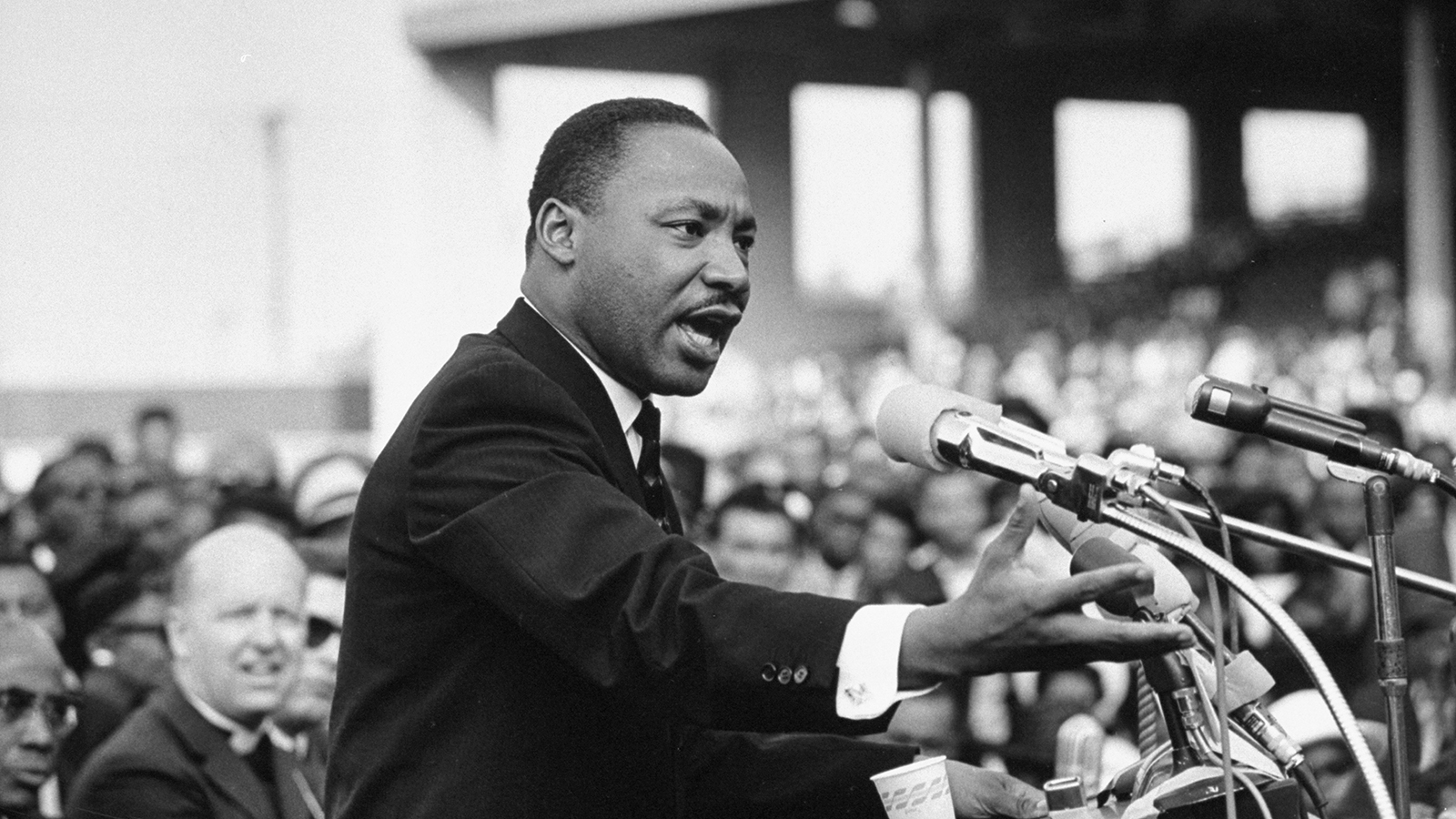
MARTIN LUTHER KING DAY

What principle do you believe in so much that you would risk your life for it?

Is America getting better or are we getting soft?

I grew up in the “assassination generation”, the turbulent 60’s and 70’s, in the midst of riots, demonstrations and wars which made us angry. People, ordinary people, were so angry about social injustices that they would put themselves in grave danger in order to make a point.

There were many, many serious injustices at that time. It didn’t seem as if you were making a choice. It seemed as if there was only one way to go; as if you were wading in water and before you knew it, you were so far out that you were swimming; swimming with the sharks. We followed our ethical DNA. We swam so far out that if you were a student of principles at Kent State University, you could get shot by your own army.

Is there any principle that you hold so dear to your heart that you feel worth dying for?

Is there anything you feel so strongly about that you would risk your life for it?

During slavery, Harriet Tubman risked her life by smuggling slaves from the South.

Northerners risked their lives by hiding them in their homes. The Fugitive Slave Law of 1850 made it difficult for both sides. The slaves who were caught were handed down much more cruel sentences than those who hid them; nevertheless, those who hid them were risking their lives.

As you may recall, one of the more distressing scenes from Colson Whitehead’s fictional novel, “The Underground Railroad”, is the one in which the white wife is murdered for housing a runaway slave in her home even though she did not instigate the action.

In 1859, at Harper’s Ferry, John Brown didn’t set out to get himself hung for treason. He simply could no longer take the pacifism of the other abolitionists and set out on an insurrection plan “by any means necessary”, which had a faulty exit plan. He knew the risk, like Malcolm X, he had to take it. True, he had a crazy wild look in his eye that made him look like a madman, but his motives were pure and he had the clarity to know that slavery was abominable and that it was every man’s duty to do something about it. Those are not the thoughts of a crazy man.

Frederick Douglass risked his life almost daily by mouthing off to large groups in public. As a fugitive slave, he was always at risk in the North; which meant that every time he gave a speech, he was putting himself up for arrest, or being returned to the South and possible death.

At that time, people believed in the principle of freedom so much that they made a conscious decision to risk their lives for the freedom of someone else.

Those gentiles in Nazi Germany knew that they were risking their lives when they took in and hid Jewish people. They accepted the consequences because they believed in the principle of liberty so much that they chose it over life.

In the 1930’s, when unions were trying to organize workers, they knew that their lives were at risk.

In the 1950’s, when civil rights activists in the South began organizing for the vote, they knew they were at risk. When Harry T. Moore went to vote in Florida he knew he was putting himself and his family at risk. On Christmas Day, he and his wife were killed when the Ku Klux Klan burned down their house. Was he surprised? Believing in being able to vote was more precious to him than his life.

In 1961, Lumumba was assassinated, he knew the moment he was elected that the end was near.

In 1965, we had the Watts riots in California. 34 people died and we don’t even know their names. Many of us got better jobs as a result of those riots, and we don’t know who to thank.

Martin Luther King, Jr. knew his life was at risk at all times. He knew he had a family which he loved dearly, yet it was worth it to him to continue the struggle which would cost him his life. We are reaping those benefits today. Would you do the same?

The last few decades have shown us a period of peaceful demonstrations against political parties, against disenfranchisement and even animal rights. Many of us grumbled but as long as we had our plasma televisions, a job with a pension and a car, we were lulled into a sense of thinking that things were getting better.

Was America getting better?

Were our causes dwindling?

Once Obama was elected and the Williams sisters won every title there was, we had a poignant sense of hope.

And we were proud of ourselves. “Let the young folks take over, we did our part in the 60s and 70s. No more draft, no more bras and no more legal segregation. We were young and reckless. We had no regrets.”

Wal-Mart gave us a sense of complacency, they offered us dreams we could afford.

And then came Black Lives Matter.

They organized and demonstrated over atrocities which we old fogies barely noticed.

All of us, of a certain age, participated in the Civil Rights Movement one way or another. The list of those who risked their lives is far too long to go into. Then we sat down and took a nap. Did we really think the dot-com people were going to take up the torch?

While we were napping, the alt-right was doing the demonstrating, citing diversity as white genocide.

Isis grows in numbers every day, what is it that they find so moving as to risk their lives? America has twice as many white terrorists as Islamic, what do they find so moving as to risk their lives?

They offer secret military training to lonely, maladjusted young men and when finished, get jobs as policemen and state troopers. There is no mystery as to why unarmed, innocent Black men are disproportionately murdered by the police. 74% of extremist-related crimes are carried out by the right wing. They are the corporeal bodies behind that silent majority which seems to be finding its voice–a voice for polarization and blatant racism.

Then came neoliberalism, the “caring capitalists”, if you will. Those who think that money can solve all problems and that profit is next to divine. The “bottom line” is pretty much equal to God.

“We would like to stop putting Coca-Cola in the grammar school machines, but Coke pays us and we must look out for the bottom line.” The Dow Jones is their spiritual leader and they obey it. The neoliberal seems as if he is every color, but really he is only one color – Green. “Let’s privatize the prisons. We can send the inmates out to fight forest fires at less than $1 an hour. They won’t mind. They will welcome the exercise, no need to give them any choice.” “If we privatize all of the schools, we can deunionize them, overcharge them for everything and make sure we have a body of undereducated people to do our dirty work for us.”

This New World Order can figure out stuff for us even if they have never walked a step in your shoes.

One thing is for sure, you’re not going to see an Ivy League, neoliberal on the front lines of the battlefield.

And then came Charlottesville.

Charlottesville woke us up. It shook the complacency off of us and made us realize that the struggle was far from over. We still have something to believe in.

So, ask yourself, sitting there in your Lazy Boy seat watching the new revolution on TV as you eat your gluten-free cookies: What principles do you believe in so much that you are willing to risk your life for them?

When Heather Hyer went to Charlottesville to demonstrate for a cause she strongly believed in, did she know that she was risking her life? Does it matter? She put up her body when other people just mouthed off. Old-time activism was in play; not just signing a petition on the Internet. She showed up. And because she showed up, her life was taken away from her in a most outrageous manner. Each person at that demonstration put themselves in harm’s way. Each person who put their body into action could have had their life taken away for “the cause”.

How splendid to see young people of every color (except Green) and every background come together and act as one, to protest as one, and sadly, to mourn as one.

I don’t want to hear another word about young people frittering away their lives on dope, rap music and cussin’. We, grandpas and grandmas, can no longer sit in front of the television and watch “Jeopardy” and “Wheel of Fortune”. We must participate. America may be getting better, but we still have a long way to go. We can’t afford to get soft.

So, stop your grumbling, you can put flowers on your canes or turn them into nightsticks. You can hang incense from your walkers or turn them into AK-47s. You can do anything you want, but do something, what you do is up to you. Get out there with the dope-smoking youngsters and unite in making this a greater and better America. We are all going to die anyway, we may as well make our lives worth something. If we risk death for our beliefs, how wonderful that we had beliefs. MLK, Jr., Fannie Lou Hamer, Medgar Evers, Heather Hyer; they will be watching us, make them proud.


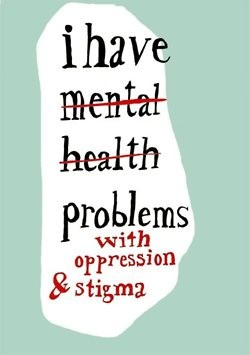
Having Good Health Above the Neck is a Right

It is the middle of December where the days are shorter and it is dark before 5:00 PM. Many people deal with the mental low called “Winter Blues”. They wait for the onset of spring that brings longer daylight hours. For some people, the winter blues are experienced all 365 days of a year. The blues can take the form of depression, anxiety or other mental or emotional distress.

The last #BHeard Town Hall held at BRIC Art Media House on December 13, 2017 brought together professionals from the medical, legal and media fields to talk about “Mental Health as a Civil Right”–civil right in terms of the rights of people struggling with mental illness; the right to be regarded as a person; one’s legal rights and access to therapeutic options.

Brian Vines, the moderator of #BHeard Town Halls, led a conversation between the panelists consisting of:

Jonah Bossewitch, educator, technologist and Radical Mental Health activist;

Beth Haroules, Senior Civil Rights Attorney at New York Civil Liberties Union;

Orlando Mendoza, Health and Housing Director at Brooklyn Community Services;

Dr. Maysa Akbar, Clinical Psychologist at Yale Child Study;

Akeem Browder, Executive Director at the Kalief Browder Foundation;

Ashley Ford, Writer and Host of 112BK; and the live audience.

Vines opened the panel discussion by asking, “Why should mental health be associated with civil rights?” Jonah Bossewitch explained, “People with mental conditions are categorically considered irrational and therefore put outside of the conversation. [ However,] they have the civil right to determine where and how folks with mental health conditions can claim a voice”. Bossewitch encapsulated the position by saying, “Nothing about us without us”.

Attorney Beth Haroules explained, “Mental health is dealing with autonomy and dignity issues and personal privacy rights. They have the right to refuse medication and treatment. They have the right to be protected from harm; the right not to be chemically or physically restrained; and not to be removed from the community. Your individuality is directly linked to your civil liberties”.

Dr. Maysa Akbar contended, “Everyone should be mentally and emotionally stable and have access to care. The medical field ought to serve as a partner in the client’s journey, partnering with them in their struggle for mental health”. Akbar stressed access to the gamut of therapies for all clients.

Orlando Mendoza provided a historic review of mental health services in New York City. He said, “In the past, electric shock and lobotomy were common practices. During the 60s and 70s, patients were discharged from institutions; however, there were insufficient outpatient facilities and funding to do so. Mendoza explained the current conditions were not much better. He said, “The street homeless are overpopulating the city’s homeless shelter and criminal justice systems”. The public needs to consider this situation and think carefully about ways to effectively address matters. Mendoza stated, “As of 2017, 40% of Rikers Island’s population has been diagnosed with a mental illness”.

There were many intersections between the panelists’ viewpoints. The concern about the reliance on pharmaceuticals and the age when they are first administered were brought to light by Bossewitch. “The age when pharmaceuticals are prescribed gets younger. There are children 12 years, 8 years and 4 years of age who don’t remember when they weren’t medicated.” He suggests that “friends become the medicine. It may be hard for readers to believe but “over 80,000 infants under one year of age are on antipsychotics”. It is hard to fathom the kind of blood chemistry and nature of the anatomy these infants have.

Akeem Browder, Executive Director of the Kalief Browder Foundation, asserts people must make time for self-care and involvement with other people. He contends, “Life is becoming the barrier to accessing mental health options”. Browder uses the word life to mean a job, bills to pay and meetings to attend.

An audience member questioned the validity of the Diagnostic Statistical Manual (DSM). Browder said, “The book is a deviant tool. It is very biased. For example, 88% of those diagnosed with PTSD are white. There is more money thrown at that diagnosis whereas the paranoid schizophrenia diagnosis does not have the same access to alternatives to care…It is hard to breach DSM”. Browder said, “The community of care must move from conversation to action”.

Another panelist, Ashley Ford, wants to take the stigma away from mental health issues. Ford explained that she scheduled a therapy session on her 18th birthday. “I knew something was wrong.” Ford knew also that her mother had been opposed to therapy and, therefore, waited to be of legal age. She asked everyone, “How can we affect change in our families?” She contends, “Shame in the light doesn’t grow and fresh air kills it”. Ford challenged people to “learn how to be allies for people with mental illness”.

Dr. Akbar shared a stunning discovery during her discussion on the impact of trauma. Akbar said, “Trauma started in 1619 when the first group of [enslaved] Africans came to America. The medical field has identified the FKBP5 gene underpinning that is mutated as a result of slavery and mental illness”.

A Bit about Bitcoin

0

Anybody with a Facebook or Twitter account has probably seen the conversations and news links scattered along their newsfeeds over the last month. Bitcoin is on the rise. The value of a Bitcoin has risen from $766 this time last year to about $17,000 currently. The surge has caused an enormous amount of attention, as those who hadn’t even heard of Bitcoin until now are making plans to buy in. Hyperbole concerning how much money a person would have made if they purchased Bitcoin a year ago, or five years ago, is fueling speculators and neophytes looking for the next gravy train. Coupled with the innate financial pressures that the holiday season tends to bring, and Bitcoin has begun to look like a safe and solid “get rich quick” scheme. One thing though, before you dump your savings account into Bitcoin, maybe you should know what Bitcoin is first.

Bitcoin is a cryptocurrency, which is defined as a digital currency designed to work as a medium of exchange that uses cryptography to secure transactions, control the creation of units and to verify assets. It is a peer-to-peer electronic cash system. Cryptocurrency is alternative currency, not at all affiliated with the traditional currency which is printed and controlled by the Federal Reserve. There are currently over 1,300 cryptocurrencies available for purchase and sale. Bitcoin was the first, created and introduced to the world in 2009 by Satoshi Nakamoto. Nakamoto is an unknown, the name could represent one person, or it could represent the group of people that designed and implemented Bitcoin. No one knows the truth about Nakamoto. What is known is that those who designed Bitcoin also designed the entire scope of structure to buy, sell, trade and use Bitcoin as a currency.

The attention given to its meteoric rise in value over the last year has made the idea of cryptocurrency a necessary conversation for those in the financial sector and an aspirational conversation for those who seek to escape the rat race. Will cryptocurrency last? How does it work? Can it be trusted? Buying Bitcoin is different than trading stocks. Buying a share of a company (commonly referred to as stocks) is normally a strategy that investors use in order to attain some sort of capital appreciation, meaning that as the company you’ve purchased stock in grows and expands, your stock in the company will appreciate in value, and when you sell it the value of your stock would be worth more than when you purchased it. Although the strategy in buying into Bitcoin is similar, the difference is that Bitcoin isn’t a corporation. Bitcoin doesn’t manufacture products or services. Bitcoin, its value and worth, is simply an agreement between buyers, sellers and corporations that accept Bitcoin as payment for services.

As more people buy in to the concept, the price of a Bitcoin has soared, reaching heights that would make the early buyers quite wealthy. As with any financial product that is traded, potential investors should apply due diligence before jumping in headfirst. Bitcoin has gone through numerous cycles of bubbles and bursts. In 2011, the price of a Bitcoin rose from 30 cents to $32, before falling back down to $2. In 2013, the price of a Bitcoin rose to $266, before falling back to around $50. Financial analysts have stated that the volatility of Bitcoin is roughly 18 times that of the American Dollar, all the more reason for new investors to apply strategy and common sense to their potential investments.

So, while the news of an alternative currency that is making people rich may seem like a heaven-sent opportunity, before you listen to your Facebook friends and begin to spend your dollar and a dream, do your homework. There are many financial products that you can invest in for financial growth. Don’t be lulled into this new one because of its shine and attention.