Home Blog Page 516

Op-Ed: Can We talk about Black and Brown Women’s Healthcare Now?

By U.S. Rep. Yvette Clarke,
Kings County Politics
 
 Today, we commemorate World Health Day in the midst of a public health crisis that will grip the public psyche for years, if not decades, to come. To fend off the worst outcomes among the vulnerable populations among us, we have implemented protocols that present their own challenges in communities of color where health care disparities have existed for generations.
In time, we will find a need to address the fall out from the trauma of COVID-19, the anxiety caused by prolonged isolation, deal with the psychological burden of fearing human contact all the while working feverishly to build our way out of the economic hole this pandemic has created. In no uncertain terms, these are extremely troubling times applying unprecedented pressures on our civil society that we have never faced before. Unfortunately, the societal and institutional shortcomings highlighted by this crisis are not unique to this situation.

The pain felt by the wrath of COVID-19 has had a disproportionate impact on black and brown communities. The source of this disparity has long since been identified, yet left woefully and inadequately addressed. For the 27 million uninsured Americans, our system remains in a state of perpetual crisis without any reasonable timeline for improvement. People of color and working-class Americans disproportionately hold jobs that are part of the essential workforce and do not easily allow for teleworking. Further, they do provide these workers with employer-based access to comprehensive, affordable health insurance. This alone does not begin to describe the full extent of the systemic inequities.

Women of color, especially black women, have suffered some of the worst outcomes that our broken healthcare system has produced. Unfortunately, this has been the case for generations. Though we might assume that the scientific and medical community would rely more on data, the American medical profession has proven itself as susceptible to racial bias and stereotyping as anyone else.
These misplaced beliefs do not simply cause misunderstandings in the doctor-patient relationship — they continue to be a matter of life and death. This is evidenced by the fact that Black women are 3–4 times more likely to die from pregnancy-related causes nationwide, than their white peers, indicating that this problem is far more than a series of unfortunate misunderstandings. Clearly, COVID-19 has not caused these disparate outcomes. Unfortunately, the immediate steps necessary to slow the spread will not deliver black women from the wrath of the larger failings in our healthcare system.
Put plainly, our healthcare system has always categorically failed marginalized populations. Even as healthcare delivery evolves through advances in technology, there continues to be pervasive bias which expands the probability of poor outcomes for communities of color. Racial bias has even managed to undermine the allegedly race-neutral decision-making of algorithms that have become commonly used in all manner of human analysis and decision-making.
It is becoming increasingly evident through the use of this technology that algorithms carry the implicit biases of their programmers. This means that an algorithm and a biased medical practitioner may both ignore a black pregnant mother’s pain and the human elements of an accurate diagnosis and treatment without justification. In this light, it is clear that institutionalized bias pervades every aspect of the healthcare experience that involves medical professionals with internalized implicit biases.
For far too long, we have responded to crises by presuming that the challenges presented in that moment are unique. We do this to not only improve our shared healthcare outcomes, but rather as a means of assuaging our fears about the longstanding underlying injustice that remains so pervasive in our civil society. Instead of jumping to comforting conclusions, we must confront this crisis that is compounded by the inequities of the pervasive racial discrimination in healthcare and make clear that the public health crisis that COVID-19 has presented.
It has also shed a light on exposing the gaping wounds and inequities of a healthcare delivery system that has been permitted to fester, rot and neglect the health and well being of black, brown and immigrant communities for far too long. Simply put, our health care system is one that provides disparate treatment to its citizens. The longer we fail to address these inequities, the more black women and girls will continue to live their lives with their health and well being at risk.
I applaud the healthcare professionals who put their lives on the line each day to support our community. That said, I would be remiss to not acknowledge the systemic failures of our healthcare system. It doesn’t have to be this way.
U.S. Rep. Yvette Diane Clarke represents New York’s 9th congressional district including the neighborhoods of Brownsville, Crown Heights, East Flatbush, Flatbush, Kensington, Park Slope, Prospect Heights, Midwood, Sheepshead Bay, Marine Park, Gerritsen Beach, and Prospect Lefferts Gardens.
What We Have Lost in the Pandemic

I have a favorite bodega: Ralph’s, on the corner of South Portland and Lafayette. I’ve been going to Ralph’s since I was a freshman in High School, as it rests directly in my walking path to my old high school, Brooklyn Tech.
Every day as a kid, I’d stop at Ralph’s for a turkey-and-cheese hero and sour cream-and-onion potato chips for breakfast. My whole family knows Ralph, my mom, my sisters, my aunt. He’s a legend in Fort Greene, absolutely the kindest, most considerate store owner in the community.

Mexico

Mexico…
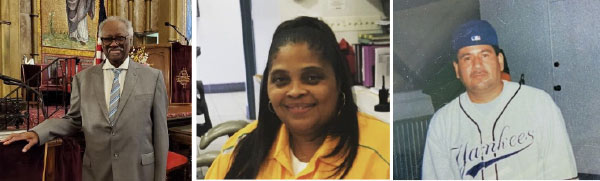
There’s a guy who has worked for Ralph for at least the last 15 years. We all called him Mexico, or Mexi for short. Mexico has always been like Ralph’s second-in-command. If Ralph isn’t at the store, Mexico is. He made great sandwiches; he was always in good spirits. The community loved Mexico, because Mexico loved serving them at Ralph’s.
A couple of weeks ago, Mexico was shooting the breeze with a worker from Habana Outpost. This was normal. The establishments in that area, Ralph’s, Mo’s and Habana, the workers and even the customers, are a tight-knit group. The worker from Habana, Mexico, and another one of Ralph’s workers, Julio, kicked it with each other for a few minutes. When the worker was leaving, he mentioned that he thought he might be coming down with pneumonia, and people who saw him said he didn’t look so good. A week later, the worker from Habana was dead. Two days after, Mexico died of complications from COVID-19. Julio, the third guy that was there, is fighting for his life in a hospital.
A normal interaction killed Mexico, and left a hole on the corner of South Portland and Lafayette. Ralph can hire other guys, but he’ll never be able to replace Mexico.

Ms Janice

Ms. Janice …
I don’t even remember the first time that I met Ms. Janice. I’ve been a member of the Bedford YMCA off and on since I was a teenager. I can’t tell you how long she’s worked the front desk, I just kinda feel like she’s always been there, though I do understand that isn’t the case. Few who frequent the Y would tell you any different. She was the anchor of the place, the face of the Bedford Y in my opinion. When I published a book in 2009, I had my first booksigning at Rustik Tavern. Even though I didn’t send her an invite or even notify her of the event, Ms. Janice showed up. She purchased a book, and sat next to me so that I could sign it. I asked her, “Ms. Janice, how did you know about my booksigning tonight?” She replied, “Don’t worry about that. You’re a good man and you deserve to be supported in your works.” Not only did I never forget that she was there for me in that way, but her action endeared her to me in a special way. And even though we only interacted at the Y and at the booksigning, I loved her. I loved her because she loved her community. I last saw Ms. Janice in the fall of 2019.
Admittedly, I haven’t been back to the Y in a few months.
Last week, I was scrolling through Facebook and I saw that someone posted that Ms. Janice had passed away from COVID-19. It hurt to see that. I don’t think I’ve ever been hurt by the passing of someone that wasn’t family or even a good friend. But I know Ms. Janice and what she gave to our community, what she gave to me. You don’t just replace someone like her. You can’t.

Rev. Cunningham

Rev. Cunningham …
Brown Memorial Baptist Church is my church home. Reverend Clinton Miller is a friend, and a good man. Under his leadership, Brown has transformed into more than a place of worship. It is a community hub, a crossroads for Clinton Hill, a place of safety and peace in an ever-changing world. Brown Memorial has been hit so hard from this virus.
Day after day I am receiving calls notifying me of the passing of a parishioner or the status of another. It’s so difficult to consider losing so many elders. James Baldwin once wrote that “children have never been very good at listening to their elders, but they have never failed to imitate them.” The elders at Brown make up a blueprint for community. You don’t just see them in church, you come across them in all walks of community life. Rev. Cunningham was like that. A soft-spoken man with a firm handshake and an even disposition.
I remember the first time I saw him outside of church. He was working at the polling station at PS11 during an election day. I’ve done polling work too, so when I saw him, we spoke for a while about the need to get Black men more civically active. He said, “Son, your voice is only as good as your action. Voting is action.” That sentence has stuck with me ever since. It’s such a powerful thing to say, delivered with such a slightly drawled cadence that you might have missed the jewel if you were looking for it to be delivered with a bang.
To date, I’ve heard of ten members of Brown Memorial succumbing to COVID-19. Last Monday, Rev. Cunningham was the 9th person to be counted among the lost. A man like Rev. Cunningham was fashioned in faith and a lifetime of experience. You can’t replace a guy like that.

The Resurrection …
We are losing so much more than time away from loved ones, more than being able to socialize with people, more than the freedom of walking the streets with others. We are losing more than businesses, more even than money to survive. We are losing pieces of our community that we cannot replace.
But that is why Baldwin’s quote speaks to me in this moment, because the one thing that we can do to survive whatever comes next, is to emulate the character and integrity of some of the elders we have lost.

What’s Going On

COVID-19 UPDATE

The Coronavirus has infected 1,359,398 people worldwide and killed 74,565. Effective April 7, the United States leads the world in COVID19 incidents, with 368, 449 cases and more than 10,000 deaths. NYC: 72,324 cases in the five boroughs with 2,475 deaths, which is greater than the 2977 killed at the World Trade Center and the Pentagon on September 11. On some levels things seem to be falling apart.

During the 24/7 coronavirus media cycle, there is little mention of the impact of the virus on African Americans. Read Ibram X Kendi’s Atlantic Magazine essay, “What the Racial Data Show. Pandemic seems to be hitting people of color hardest,” as it plows across the lower 48 states. He submits the following info re: Blacks living in states like NC, NY, Michigan and Louisiana, and Illinois – their virus-infection rates: NC’s Mecklenburg County, which includes Charlotte, where 32.9 % of the residents are Black, they represent 43.9% of the infection cases. In Milwaukee, Blacks represent 26% of the county, but their infection rate was 50% and 81% of the deaths. In Illinois the infection rate among Blacks doubles their number in the state. In Louisiana, 70% of the COVID-19 deaths are Black residents. In Michigan, Blacks comprise 14.1% of state population, but are 40% of the COVID-19 deaths. Meanwhile, A NY Times report of COVID-19 cases by zip codes indicates high virus numbers in Brooklyn, Queens and the Bronx.

Kendi is the Director of Antiracist Research and Policy Center, at the American University and author of the acclaimed 2019 book, How To Be Antiracist. More Americans of all colors must be tested.
While the rest of the world is battling the perilous virus, China’s Wuhan province, an industrial corridor with a population of 11 million, which was sealed off in late January to contain the COVID-19 contagion, is coming out of its 10- week lockdown and opens for business and normalcy on April 8.


The search for treatments and a vaccine continues worldwide. Almost 70 drugs and experimental compounds are being used to treat COVID-19. Scientists like Dr. Anthony Fauci, Director of the National Institute of Allergy and Infectious Disease, the most vital arm of the White House’s Coronavirus Task Force, talks about an 18-month timeline for clinical trials for a COVID-19 vaccine. The Federal Drug Administration has approved at least 24 drugs, some used to treat cancer, hypertension, Parkinson’s Disease, schizophrenia and diabetes, as treatments for COVID-19. The drugs are used in combination in the US, are quite potent and toxic. The plan is to save lives by any means necessary! Why does Trump continue to promote hydroxychloroquine, a drug useful for the treatment of malaria, lupus and rheumatoid arthritis? According to 4/7 media reports, it is alleged that he has financial interests in the French company Sanofi, which manufactures the drug. COVID-19 will generate scores of book deals and inform countless works of art!
Visit the Atlantic.com essay by Ed Yong “HOW THE PANDEMIC WILL END; The U.S. May end Up with the worst COVID19 outbreak in the Western World. This is How It’s Going To Play Out.” Yong writes with laser precision about COVID-19 and observes that “pandemics are democratizing experiences…people whose privilege and power would normally shield them from a crisis are faced with quarantines, testing positive and losing loved ones.” He delineates some virus endgame-options with a light at the end of the tunnel, an opportunity for America to rebound to its former status as a world power in science, technology, military might and public-health authority.

There is more good news, if you are disposed to astrology. A 14-year-old Indian guru/astrologer Abighya Anand predicts that the coronavirus peril ends on May 29. Last August, he correctly predicted its start date, which was November. He says that coronavirus is a global war – a war between the virus and humanity. The war is a result of a conjunction of the planets March, Saturn, Jupiter, the moon and its nodes, which climaxed on March 29. The moon, he opines, is considered the planet of watery spreading: i.e. coughing and spreading…disease. Hold the date! Listen to him walk you through the final days of the coronavirus plague on YouTube. Use his name or phrases like, “World’s youngest astrologer may have predicted the End of COVID-19” or “14 Year-old Abighya Anand says coronavirus to end May 29th. You listen to the DC Task Force for two hours daily – see what Anand says in 15 minutes!

COVID-19/AFRICA

COVID-19 has touched down in 34 of Africa’s 54 nations as of March 19, but not with a vengeance. Ethiopian Dr. Tedros Adhanom Gbebreyeus, World Health Organization General Secretary, reports that Africa will not be the testing ground for any COVID-19 tests – a plan proposed by the French. Many countries throughout the Continent have been on lockdown. By March 19 more than 600 cases of COVID-19 were reported in Sub Saharan Africa. To date, virus-related fatalities in Africa have not exceeded 60. Nationals who defy curfews run the risk of being shot by police. Africa has been proactive in dealing with COVID-19. Many countries were buying antivirals from Cuba and Japan, following the Chinese lead. Nations like South Africa and Nigeria sent planes to China to collect their nationals. Africa’s wealthiest man, Nigerian billionaire Aliko Dangote, donated $200 million naira from his eponymous Foundation, to support COVID-19 testing in Nigeria. In Youpangan, a town near Abidjan, Cote D’Ivoire, people burned down a half- built testing facility recently. And Kenyan fisherman are enjoying a resurgence of popularity since locals are averse to Chinese fish imports. An excellent $64,000 opinion piece, a must-read is, “Why Are There Few Coronavirus Cases in Africa and Russia?” Could Africa’s hemispheric position be one of the answers?

Newsmakers

RIP: Earl Graves Sr., 85, founder/publisher of Black Enterprise magazine died on April 6 after a battle with Alzheimers. Capitalized at $250,000 in 1970, Black Enterprise quickly became the Black business bible which has served four generations of African American business denizens. Black Enterprise evolved into a multimillion-dollar corporation. The annual BE 100 List was the Graves’ response to the Fortune 500 list. It was something to which most Black entrepreneurs in the United States aspired. The BE 100 list included a multiplicity of businesses, from oil companies, to savings and commercial banks, Wall Street firms, advertising agencies and the hospitality industry. BE was about Black business imperatives, ownership, building wealth, career advancement and money management. The son of Caribbean parents from Barbados, Bedford-Stuyvesant born and bred, Graves graduated from HBCU Morgan State University. His book, How to Succeed in Business Without Being White, was an NYT and Wall Street Journal bestseller. He served on corporate boards of American Airlines, Daimler Chrysler and Federated Department Stores, and was an avid supporter of the presidential campaigns of Jesse Jackson and Barack Obama. And Graves was a generous philanthropist.

Eight Bodies Left Several Days in Crown Heights Nursing Home

By Ariama Long and
Stephen Witt, Kings County Politics
The corpses of eight elderly people were reportedly left for days in a nursing home on the Bedford-Stuyvesant/Northern Crown Heights border before the city finally picked them up yesterday, according to local Bed-Stuy sources.
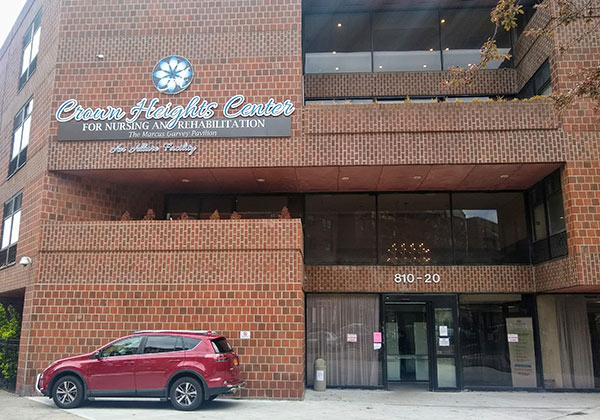
KCP received calls from several reputable neighborhood sources about the dead being left to decompose – including two since last week – at the Crown Heights Center for Nursing and Rehabilitation (CHC), 810 St. Marks Avenue.
Neither the City’s Office of the Chief Medical Examiner (OCME) or the State Department of Health, which oversees nursing homes, returned emails or phone calls at post time to confirm or deny that the bodies were left at the facility for such a length of time.
Longtime civic activist and assembly candidate Stefani Zinerman received texts and calls from workers at the facility requesting her assistance to get the bodies removed as several had been left in their rooms and the workers were resorting to pouring bleach on the floor to cover the stench.
The workers also told Zinerman they were concerned about their health because of a lack of personal protective equipment (PPE) 
Zinerman said she immediately contacted Mayor Bill de Blasio’s office as well as State Sen. Velmanette Montgomery and U.S. Rep. Hakeem Jeffries. The mayor’s office responded with a text that funeral directors were coming to pick up three of the bodies, which they did on Wednesday, Zinerman said.
Two other longtime Central Brooklyn community activists said they were working with the OCME as of this post to get the other five bodies removed.
Funeral homes, crematories, city morgues, hospitals, and nursing homes have been hit particularly hard by the influx of COVID-19 patients or outbreak-related deaths. 
“All nursing homes, they’ve had to accept COVID-19 patients from hospital partners,” said David Simpson, a spokesperson for the Allure Group, which is the company that owns CHC, a large brick building with a bed capacity of 295 and over 300 employees, on 810 Saint Marks Avenue. 
Simpson did not confirm or deny the bodies being left at the facility for any length of time, but did acknowledge that CHC is a hospice and has an incredibly vulnerable population, especially with COVID-19.
“What’s happening inside is that we don’t have enough space to isolate everyone,” he said, about how live-in residents or patients in the center were being treated. “Typically they have roommates. If they’re suspected of having COVID-19 because of the symptoms, if patients or residents are experiencing symptoms, even without the test, or [are] confirmed cases, [they] are being isolated.”
Essentially, the center was adhering to the governor’s executive orders in isolating patients, eliminating visiting, and taking precautions, like checking staff’s temperatures at the only point of entry at the front door. 
Not everyone is happy with these circumstances.

Dr. Gerry and Audrey Baker, identical twin sisters right down to their matching hairstyles, outfits, and cream-colored cars, are palpably worried about their 105-year-old mother, Grace Marie Baker, who has been in CHC’s care since November 2014.
“They’ll call us troublemakers because we’re advocates for our mother,” said A. Baker, of some of the staff at CHC. She openly said that she and her sister have had “cultural clashes” whenever they inquired about their mother’s care. They complained about the lack of communication since the crisis began. 
In a complaint letter, on March 31, they emailed the previous CHC Administrator Kevin Carey, claiming the “forced isolation” was “cruel, abusive, and negligent to a person of her age.”  
Carey said in his correspondence back, on April 2, that CHC was following the guidelines set by the New York State Department of Health in regards to visits and communications.
“It’s a tough time for them,” said Simpson, who insisted that they keep regular communications with the families of patients and residents during these challenging times. “For some families that’s enough.” 
The incident comes as recently released City data indicates that Black and Hispanic neighborhoods are suffering disproportionately higher rates of catching coronavirus and of COVID-related deaths.
According to this data, Hispanic coronavirus victims make up 34% of all fatalities while comprising 29% of the city’s population of 8.4 million people. Black residents account for 28% of the city’s deaths, while making up 22% of the population.
Zinerman said a part of the problem is that the OCME, funeral homes and EMT personnel is being strained to the maximum.
“We were not prepared for this. Someone died in their house and it took 12 hours to pick them up. People are dying in their houses because they think it’s safer to be home than hospitals. We need more emergency personnel and refrigerator trucks,” said Zinerman.

Black Communities Nationwide Hit Disproportionately Hard by Coronavirus

Editors Note: the absolute best local coverage of the coronavirus in New York is at www.gothamist.com. Read and donate!

By Jake Offenhartz and
Gwynne Hogan, Gothamist, WNYC

Data is emerging showing major racial disparities in coronavirus death rates across the country. In Chicago, 70% of COVID-19 fatalities have been Black residents, despite making up less than 30% of the population. In New York City, coronavirus patients from the Bronx, which has large Black and Latinx populations, are twice as likely to die from the infection as elsewhere in the city. City and public health officials say the disproportionately higher rate is due to a greater number of underlying health conditions, such as diabetes and asthma, lack of access to testing and healthcare, and poor conditions in public housing that promote the spread of the disease. New Orleans, a majority-Black city, now has the highest coronavirus death rate in the entire country.
 New York City may soon be forced to bury bodies in temporary mass graves on public land, as the number of COVID-19 fatalities exceeds the available capacity of local funeral homes and cemeteries.
City Councilman Mark Levine detailed the “gruesome reality” in a series of tweets on Monday, explaining that even the refrigeration trucks deployed by the Office of the Medical Examiner would soon be out of space. As a result, the city was looking at “temporary interment” sites, where bodies could be buried in trenches ten in a row.
“There are going to be thousands of more people who will die, and we need the resources to manage that in a dignified and orderly way,” Levine told Gothamist. The “ultimate goal,” he added, was to avoid the tragic circumstances seen in Italy, where scores of caskets were left awaiting burials in local churches and halls.
A spokesperson for the Mayor’s Office later clarified that this would not be done at local parks, as Levine initially indicated.
We are NOT currently planning to use local parks as burial grounds. We are exploring using Hart Island for temporary burials, if the need grows.
During a press conference on Monday morning, Mayor Bill de Blasio acknowledged that the city was exploring temporary burials for victims of COVID-19. He declined to go into details about the plan, beyond noting that Hart Island, a Bronx location previously used a burial site for the city’s indigent dead, was “the place we have used historically.”
Governor Andrew Cuomo also declined to elaborate on the plans, calling the idea of mass graves in city parks a “wild rumor.”
A 2008 report from the Chief Medical Examiner about managing an influenza pandemic references the possibility of “temporary interment” on Hart Island in the Bronx for up to 19,200 people. The city has reportedly offered to pay detainees on Rikers Island to dig the mass graves on the island.
 The planning comes as the city’s morgues, funeral homes and cemeteries buckle under the rising death toll from the virus, which reached 2,475 on Monday morning. The makeshift morgue trucks deployed to city hospitals, known as “Body Containment Points,” are “mostly full,” Levine said.
A spokesperson for the Office of Emergency management said that 80 refrigerated trucks had been dispatched to hospitals across the city and they were monitoring morgue capacity, but declined to give specifics.
Speaking to Gothamist, Levine said the plans for temporary graves was more than just a hypothetical. “I think [people] have not wanted to talk about the system for bodies because it’s very hard to talk about,” he said.