Transcript (Edited for length)
Democracynow!.org
AMY GOODMAN: As the confirmed cases of coronavirus surpass 2 million around the world, President Donald Trump says he will cut U.S. support for the World Health Organization. Richard Horton, editor-in-chief of The Lancet medical journal, called it a “crime against humanity.” Oxfam America said the cuts slash “any hopes for the responsible international cooperation and solidarity that is critical to save lives and restore the global economy.” This comes as a new Oxfam report estimates the pandemic’s economic fallout could push more than half a billion more people into poverty.
As the death rate from the coronavirus pandemic continues to accelerate, with more than 2 million confirmed infections worldwide and at least 127,000 deaths, President Trump said Tuesday he would cut off U.S. support for the World Health Organization. Speaking from the Rose Garden, Trump sought to shift blame for his administration’s disastrous handling of the pandemic onto the U.N. public health agency, accusing the WHO of helping China to cover up the spread of the coronavirus when it emerged late last year.
Trump’s decision sparked international outrage and condemnation. Richard Horton, editor-in-chief of The Lancet medical journal, tweeted, “President Trump’s decision to defund WHO is simply this — a crime against humanity. Every scientist, every health worker, every citizen must resist and rebel against this appalling betrayal of global solidarity.”
The American Medical Association’s president, Patrice Harris, called on Trump to reconsider the cut, saying, quote, “Fighting a global pandemic requires international cooperation and reliance on science and data,” she said. The global anti-poverty organization Oxfam America said the cuts slash, quote, “any hopes for the responsible international cooperation and solidarity that is critical to save lives and restore the global economy.”
This comes as a new Oxfam report estimates the pandemic’s economic fallout could push more than half a billion more people into poverty. For nearly 3 billion people already living in poverty and facing malnutrition, the virus could be deadly. In all, it estimates half of the world’s 7.8 billion people could be living in poverty in the virus’s aftermath. The report is called “Dignity Not Destitution: An ‘Economic Rescue Plan For All’ to tackle the Coronavirus crisis and rebuild a more equal world.”
For more, we’re joined by Oxfam America’s vice president, Paul O’Brien.
Let’s begin with President Trump. In the midst of this pandemic, where the U.S. is the epicenter of the world’s pandemic — more deaths than any other country in the world — President Trump announces he’s ending support for the World Health Organization. Paul O’Brien, your response?
PAUL O’BRIEN: It was pretty shocking to hear that last night. We had predicted last week that the number of deaths from coronavirus could be as high as 40 million over the coming period. So, we’re already in crisis, but it could get significantly worse.
President Trump has his treasury secretary talking to other G20 finance ministers today, and what that leader needs to be able to show is America’s role in leading multilateral cooperation. And at the same time, he’s announcing that he’s going to cut the legs off the World Health Organization, thereby undermining his own attempt to show global leadership. It was profoundly self-destructive for U.S. leadership. It’s profoundly harmful for our world.
And it seems to be nothing other than short-term blame shifting and scapegoating in order to distract people from the failures of this administration to properly lead on the issue. But its consequences could be devastating for people.
AMY GOODMAN: Paul O’Brien, there are many critics of the World Health Organization. But across the board now, with President Trump announcing that he is cutting the funding for this organization — the U.S., the largest funder of the World Health Organization — explain what this organization does and why it is so critical.
PAUL O’BRIEN: The U.S. is now facing more deaths per day than has been seen. We are facing our own health crisis here. We’re also facing our own economic crisis here at the same time. You’ve got 17 million new unemployed in the United States. And even before the crisis started, you had 40% of Americans didn’t have $400 to their name for an emergency. And then the crisis hits. So, you’ve got a health crisis and an economic crisis here. You’ve got that, in many ways, even worse in many of the communities that Oxfam works in. We work in 90 countries around the world, including the United States. But you’ve got this health and economic crisis coming at the same time.
You’ve got a World Health Organization, whose job it is to convene leaders to make sure that the response is coordinated and evidence-based, is based on science, and that there is a truly global response to a global pandemic. So, apart from the financing of the organization, the leadership and the moral authority of the organization to be able to drive global consensus to respond to this health and economic crisis is absolutely critical. And for President Trump, the world’s most powerful politician, to stand on a stage yesterday, for whatever reason he had, and to attack them, in order to blame shift, undermines their ability to get that global consensus at a critical time. So, this act, in itself, could have profound repercussions for many of the people that we see as particularly vulnerable in the United States and around the world.
Particularly when you look at the combination of bad health systems or weak health systems and economic vulnerability, three areas are at greatest risk: sub-Saharan Africa, North Africa and the Middle East. You’ve got, in our — our report found that we think 500 million more people could go into poverty as a consequence of this, essentially wiping out all the progress that’s been made over the last 30 years, in some contexts, and, on an average, the last 10 years of progress.
Trump Cuts Funds for World Health Org as Oxfam Warns Pandemic Could Push Half a Billion into Poverty
BP Adams, PA Williams Address Unattended Bodies in Nursing Homes
By Ariama Long,
Kings County Politics
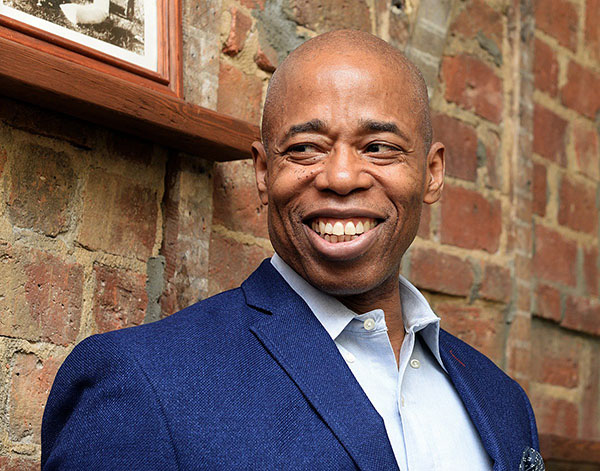
Brooklyn Borough President Eric Adams and Public Advocate Jumanne Williams, in a virtual press conference yesterday, addressed the morbid situation of unattended bodies in the borough’s nursing homes which was brought to light last week.
“We knew at the start of COVID-19 that those who would have the most challenging time to cycle out of COVID-19 were those who had preexisting conditions, over the age of 60 and 65, had diabetes, heart disease, respiratory issues. That clearly states nursing homes,” said Adams, as he cited one report that said a nursing home in Brooklyn had to convert one of their rooms into a makeshift morgue.
“We should have had an immediate plan not to just cosmetically address this issue but to address it on the ground,” said Adams, about the city and state playing catch up.
The death toll is well over 10,000 in New York City according to newly released figures that factor in deaths of people that never tested positive for the virus.
Numerous sources indicate that the coronavirus has wreaked havoc on nursing home residents, their families, and the staff that work in these facilities across the state. Unfortunately, the conditions in these places had fallen below standards before the global pandemic pushed everyone inside. For example, nursing homes have been understaffed, with too few certified nursing assistants (CNA’s) to patients in their care, for years.
“The virus didn’t create the problems. They’re highlighting and exacerbating the problems that already exist. We’ve had complaints about the lack of oversight in nursing homes. We’ve had complaints like this before. Nothing was done about it,” said Williams.
An anonymous whistleblower, dubbed Jane Doe, has a relative in a Flatbush/Crown Heights nursing home and spoke in silhouette and a disguised voice during the virtual conference.
She said that there’s a lack of communication in these places that could have at least video conferencing set up for residents and their families. “The bottom line is if people were to see their loved ones. They would see what they’re looking like now. And some of them have deteriorated in a month,” said Jane Doe, “they’re just like detainees. In their rooms with the door closed with very little activity.”
She spoke about the lack of compassion society has for its seniors as draconian and unacceptable.
New York City especially knows how taxing forced isolation can be on a person’s mind. Countless studies and reports on incarcerated persons at Rikers Island kept in solitary confinement demonstrated serious psychological consequences, and long-term effects if abused over time.
Williams said with an elderly person a cascading effect of depression and other problems can happen when you can’t even see loved ones anymore. “Many of these things were foreseeable, none of this was a surprise,” said Williams, “The people who were most vulnerable, were most vulnerable before the coronavirus came about.”
BP Adams said that his office was working this weekend with State Attorney General Letitia James to formulate a plan of action.
He said his office is asking for more personal protective equipment (PPE) for nursing home staff, and for the attorney general to have a hotline set up with her office to assist people with conditions in nursing homes throughout the city and state amid the COVID-19 pandemic. He said they are also asking that the attorney general and her team implement random inspections in nursing homes to see firsthand how patients are treated.
Lastly, they discussed the need for video conferencing and more consistent health reports for families of patients.
“The doctors are not calling because they’re stressed out,” said Jane Doe, about not getting updates or knowing whether a relative has died or not.
Emerging from the Shadows
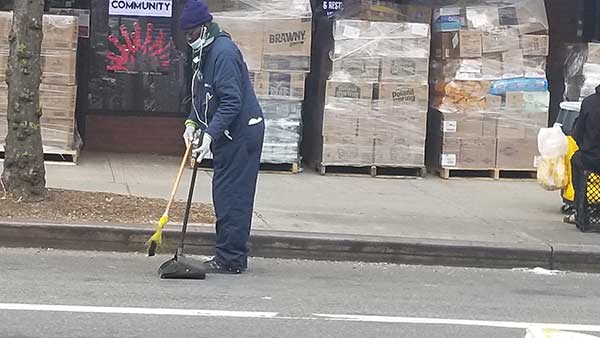
Face of America’s Essential Last Responder Once Concealed, Now Revealed
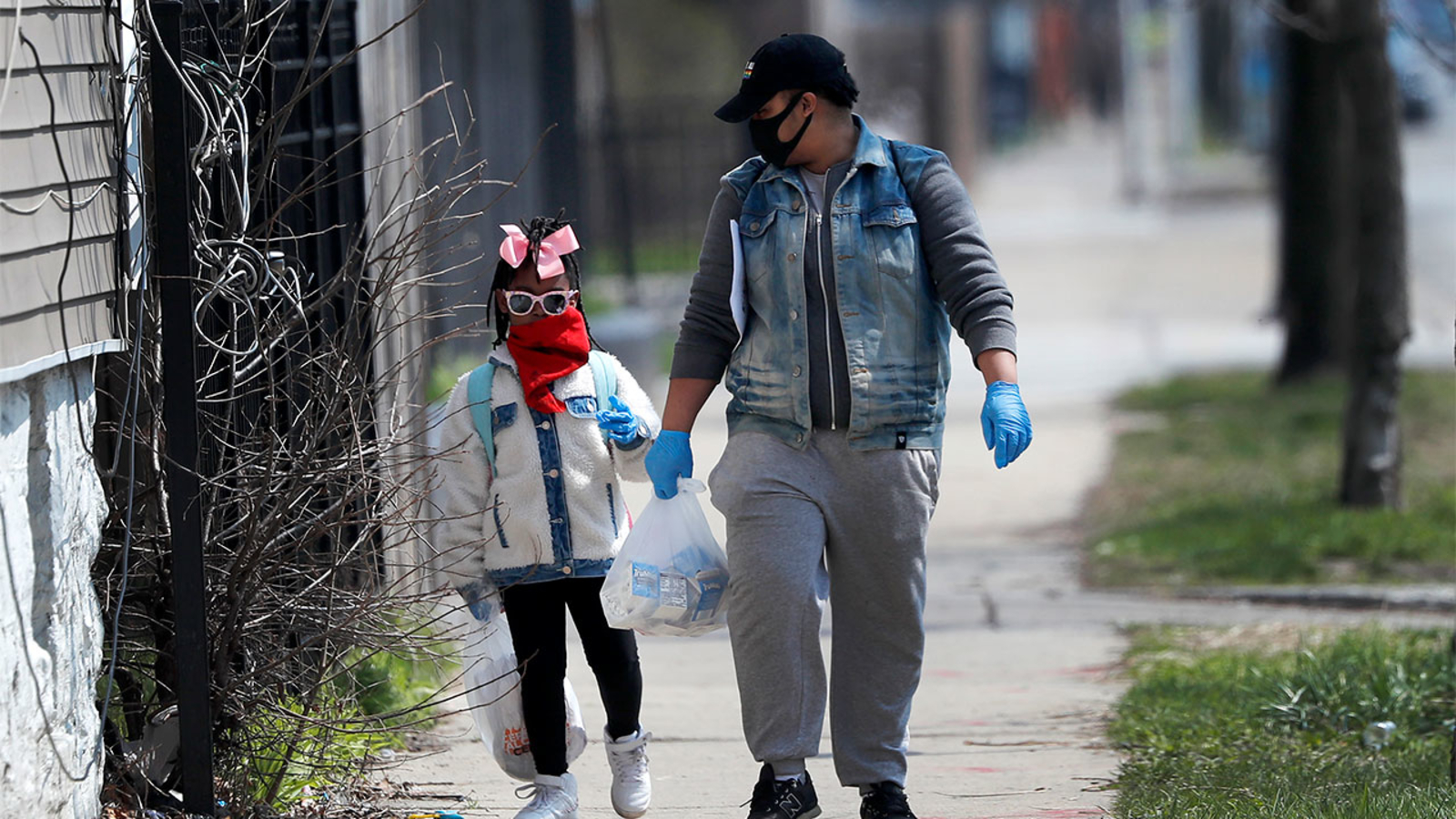
Essential Edict: Effective April 15 employees of businesses in direct contact with the public are required to wear face coverings. And their employers must provide them. This mandate is part of the Governor’s efforts to stop the spread of the coronavirus. The image was taken by a neighborhood writer/photographer earlier this month on Fulton Street in Clinton Hill.
Who CARES About Us? Attorneys General Urging Feds to Ensure Stimulus Payments Go to Families, Not Debt Collectors
From the Office of Attorney General Letitia James
The CARES Act authorizes the Treasury Department to issue emergency stimulus payments of up to $1,200 for eligible adults and up to $500 for eligible children. Similar government relief programs intended to provide for Americans’ basic needs — like Social Security, disability, and veterans’ payments — all are statutorily exempt from garnishment, a legal mechanism that typically involves the “freezing” of funds in a bank account by creditors or debt collectors.
But — in what was a likely oversight by Congress to quickly pass the law — the CARES Act does not explicitly designate these emergency stimulus payments as exempt from garnishment, allowing debt collectors to potentially benefit before consumers.
Earlier this week, York Attorney General Letitia James sent two letters to the federal government in an effort to help Americans deal with the ensuing economic fallout of the coronavirus disease 2019 (COVID-19) public health crisis.
First, Attorney General James led a bipartisan coalition of 25 attorneys general in sending a letter to Treasury Secretary Steven Mnuchin, calling on the U.S. Department of the Treasury to take immediate action to ensure billions of dollars in emergency stimulus payments authorized by the Coronavirus Aid, Relief, and Economic Security Act (CARES Act) go to American families AND NOT debt collectors. Congress passed the CARES Act three weeks ago to provide direct and immediate economic relief to all individuals and businesses affected by COVID-19, but — unlike other government programs — the CARES Act does not explicitly designate these emergency stimulus payments as exempt from garnishment from creditors.
“During this public health and economic crisis, the States do not believe that the billions of dollars appropriated by Congress to help keep hard-working Americans afloat should be subject to garnishment,” the attorneys general write. Continuing, “Treasury has stated that ‘[i]n the weeks immediately after the passage of the CARES Act, Americans will see fast and direct relief in the form of Economic Impact Payments,’ and we request Treasury’s assistance in ensuring Americans are able to retain that monetary relief.”
Attorney General James, as part of a coalition of 23 attorneys general, also sent a second letter today to the Consumer Financial Protection Bureau (CFPB), demanding the federal agency enforce the provision of the CARES Act that protects consumers who obtain relief under the Act from incurring harm to their credit scores, after the agency recently announced that it would not be enforcing the provision. The letter demands that the CFPB require both lenders and credit reporting agencies to meet their obligations under the Fair Credit Reporting Act during the COVID-19 crisis.
Emerging from the Shadows
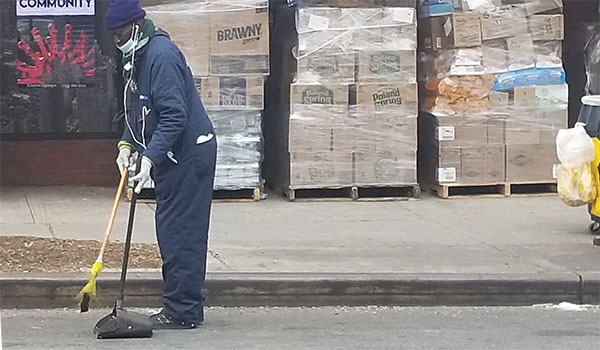
Face of America’s Essential Last Responder Once Concealed, Now Revealed
Essential Edict: Effective April 15 employees of businesses in direct contact with the public are required to wear face coverings. And their employers must provide them. This mandate is part of the Governor’s efforts to stop the spread of the coronavirus. The image was taken by a neighborhood writer/photographer earlier this month on Fulton Street in Clinton Hill.
Death and Other Challenges
Ten congregants were lost at Brown Memorial church writes Marlon Rice in his column this week. And when you see how the demographics of death from COVID-19 so closely match the very pillars of the Black church, you know the impacts of this viral assault are going to be deep and long-lasting and that real-estate vultures will be circling.
And what does this portend for the November elections? Older Black people dying by the tens of thousands, or too frightened by good sense to not come out of their homes, can only help the reelection chances of Donald Trump.
And the United States Supreme Court decision agreeing that the Wisconsin primary be held as the Republicans insisted on its original Tuesday, April 7 date, despite the pandemic and stay-at-home recommendations, because it helps their candidate for the State Supreme Court – is a portent of what’s to come in November.
For African Americans, we have the Russians’ misinformation campaign, the U.S. Supreme Court, the Executive Branch – including the Justice Department – and the U.S. Senate, all aligned against us. And all the while dealing with a health crisis not seen in a hundred years.
We have often quoted the great historian Professor John Henrik Clarke when he told Our Time Press in a 1996 Interview, “They will have no compunction against making slaves of you again.” With “they” being the power structure – and with a financial system birthed in slavery, “they” can make all the chains they need.
What can we do?
We can try to protect ourselves against the virus for up to 18 months more. When an antibody test is made and widely disseminated, then those with the viral antibodies – indicating they’ve already had the virus – will be able to go out with no danger to themselves.
Those without the antibodies will know not to let anything into their environment that has not been disinfected, and that when they leave the house, they may be taking their lives in their hands. And this condition of fear and awareness will last until a vaccine is developed. Researchers say it could be ready in about 18 months. That would make it sometime before September, 2021.
In that time the deaths won’t come as fast, but they will be a constant drumbeat, slower for some, but rising to a staccato in the African American communities across the country.
In their Washington Post article, “To save lives, social distancing must continue longer than we expect” J. Alexander Navarro and Howard Markel demonstrate, with graphs and data, that the lessons of the 1918 Spanish flu pandemic that killed 100 million worldwide, are that social distancing works and must be enforced.
This will be hard, especially with spring in the air. Governor Andrew Cuomo is right to keep his PAUSE in place. The lesson Navarro and Markel shared about stopping too soon from social distancing, is that it can lead to a disaster worse than the first. The governor says the public’s health comes before economic concerns, and in that, he is on the money.
Respond to the Census, vote, support the new abolitionists like Alexandria Ocasio Cortez, organize, educate and stay in the fight for future generations.
In those 18 months there will be therapeutic trials that could ease the suffering, but nothing that can stop COVID-19’s relentless migration from person to person, except to move those people apart.