Jerome Archer is both a business owner and an essential worker. As a business owner, his barber shop Platinum Cuts has been closed for weeks due to the shutdown of beauty industry shops. As an essential worker, he is still working with the Department of Sanitation every day. We talk with him about both roles and how he manages his day to day responsibilities in a way that is safe and protects himself and his family from danger.
Stressed in Place? Solutions are Closer than You Think!
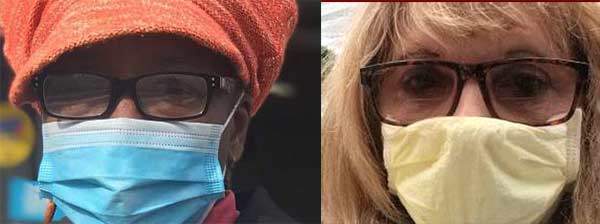
OTP Journalists Dr. Laurie Nadel & Maitefa Angaza
Share Tools At-Hand for Coping At-Home
Observing Kwanzaa Principles During COVID-19
By Maitefa Angaza
As we know all too well, COVID-19 is having a deadly and disproportionate impact on Black people in the U.S. We can use all the help we can get right now to move forward and should consider turning to the Nguzo Saba (Seven Principles) of Kwanzaa, which have significance beyond just one week of the year. Kwanzaa creator Dr. Maulana Karenga says that based on traditional harvest celebrations, Kwanzaa is one of Africa’s many gifts to the world. We can surely make good use of it now.
Umoja (Unity)
What we need now is one another. There’s more than enough coronavirus news; we should ascertain what views we hold in common about this crisis. Then we take action – demanding greater access to relief resources and testing, sharing trusted information sources and organizing around the imperatives to surely follow in the wake of the virus. A Musical Resource:
Saxophonist Andrew Lamb’s Circadian Spheres of Light Project gathers artists for multi-genre performances with music, dance, visual art and spoken word. The inspiring expression of harmony is artistic unity in action.
Kujichagulia (Self-Determination)
We can determine how we eat, exercise and otherwise optimize our health. We can use the Black press and other independent media to get our COVID-19 stories out ourselves. We can think for ourselves and rely on our experts when determining the significance of proposed policies affecting our communities. A People Resource:
Celeste Morris of MorrisAllsop Public Affairs trains/assists leaders, political candidates and business owners in strategies for advocacy, campaigning, marketing and strategic planning. http://www.morrisallsop.com/
Ujima (Collective Work and Responsibility)
Let’s use this time to plan for the future as well as meeting the needs of others right now. Is someone living alone in need of consistent contact? Can people chip in for an elder’s food delivery and share where to get cleaning supplies, gloves and masks? What important emergency plans can be made collectively? An Organizing Resource:
Diddy’s, “State of Emergency: The State of Black America and Coronavirus,” gathered activists, policymakers and artists on his REVOLT TV channel last week to discuss urgencies and strategies. See at https://bit.ly/34ChXLW
Ujamaa (Cooperative Economics)
If you know someone who’s making masks, buy from them rather than a megacorporation that pays no taxes. If you’re in the fortunate position to hire someone or to give a loan to a business, please do so. And if you have a skill, a product or idea to help support you and yours, by all means let people know and ask for their support. A Mask Resource:
Designer Denise Beckford made and donated masks to hospitals. Now she, mom Pam, and daughter Senmeri sell beautiful African print versions on Instagram. See them @kintecloth and her other work @denisebeckford.
Nia (Purpose)
We can move forward by acknowledging our vulnerability as we summon our courage. Pretending we are invincible and need not follow crisis guidelines is disastrous in the face of evidence to the contrary. Instead, we can work along with those whose mission it is to inform and equip the community so that our survival rates rise. A Personal Growth Resource:
Harness the insight and resilience you’ve gained. Personal Development Coach Sahuspete can assist, and also support your health with reflexology treatments after social distancing. She’s at totalbeing.k55@gmail.com.
Kuumba (Creativity)
Simple things add value during this tragic time. Express yourself through writing. Make art. Design and sew something. See a play online. Put on music and dance it off. Family members might take turns reading remotely to a toddler. This gives the parents a break while helping the little one remember your face and voice during this separation. A Black Lit Resource:
African Voices is a poetry, fiction and essay magazine that produces events, workshops and a women’s film festival, all in support of Black artists. Find founder Carolyn Butts’ brainchild at https://africanvoices.com/avblog/
Imani (Faith)
It must be our foregone conclusion that we’ll survive our losses. We must commit to creating a new normal – one in which our demonstrated strength predicts our future and the example of our essential workers inspires belief in the good and in one another. A Gratitude Resource:
Join your neighbors – and join the world – in honoring the healthcare and other essential workers risking all to save lives and provide critical services during COVID-19. Applauding them outside or at a window at 7pm each evening is beneficial, not just for them, but also for you and for us all.
MAITEFA ANGAZA is an author, journalist, editor, public relations writer and filmmaker. Her nonfiction book, Kwanzaa: From Holiday to Every Day (Dafina Books 2007) was updated and reissued in September 2019. The former executive editor of The City Sun newspaper and former managing editor of African Voices magazine, Maitefa’s news and feature articles appear regularly in Our Time Press newspaper and other print and online publications.
Find Your Calm
By Dr. Laurie Nadel
April is Stress Awareness Month.
We’re not talking regular everyday stress: getting to work on time, taking care of your family and friends, paying bills and taxes, and meeting deadlines.
Since life turned dark in a heartbeat, everyday stress is now in our rear view mirror, making this April COVID-19 Stress Awareness month because we are now going through acute stress.
Acute stress is a very different animal.
Suddenly, we find ourselves living a nightmare: Contagion meets Twilight Zone. The familiar patterns, habits, and routines that guided us through life have been ripped away. Our map of reality feels like London after the Blitz. Unlike the Germans’ bombing during World War Two, we hear no warning sirens nor are there any truly safe places to seek shelter.
We are stumbling through the darkness together, fearful of what lurks around the corner.
Fear, too, is contagious. Like any sudden act of mass violence, we are flooded with horror, helplessness, and acute stress.
Trauma is Not a Bad Day
We tend to say “trauma” whenever we mean “upsetting.”
But trauma is not a bad hair day.
Trauma means you have been exposed to sudden, unexpected death. Directly or indirectly, trauma imprints the soul with awareness that life itself is uncertain, fragile, and beyond human understanding.
And yes, you can be traumatized by the terror you see online and on TV. V.T. — vicarious traumatization — is real and leads to acute stress reactions.
You are a normal person having normal reactions to an abnormal situation
Even first responders and emergency medical personnel who go mano-a-man with life and death on the job suffer from acute stress. It doesn’t mean they are not professional. It means they are human. The International Critical Incident Stress Foundation (ICIS) provides peer support for first responders after disturbing calls where they were unable to save lives. As a member of a critical incident debriefing team at Marjory Stoneman Douglas High School after the school shooting in which 34 people were shot, I was privileged to work with leaders in the field who provided information about acute stress and how to cope with the unthinkable.. “You may never understand why this happened,” said Dr. Jeffrey Mitchell, a former paramedic and founder of ICISF, “but, in time, you can come to terms with it.”
The first step in coming to terms with a mass fatality event like the pandemic is to accept that your reactions are unique to you and that you are a normal person having normal reactions to an abnormal situation.
COVID-19 Stress
Some elements of stress, include: shock, feeling flooded with horror and helplessness whenever you think about the pandemic; fear; sense of dread; feeling unsafe in your own skin; and Hypervigilance: expecting another shoe to drop
The good news is that acute stress usually resolves on its own. We wake up and start our day without feeling dread about what happened. Our normal appetites and sleeping patterns resume. (Acute stress that resurfaces or continues months or years after the event itself becomes Post-Traumatic Stress Disorder/PTSD at which time it is important to seek professional help.)
Stress: 5 Things You Need to Know
- Find your calm. Finding your calm is essential for surviving in a climate of fear. Set aside five minutes a day to go to your place of inner safety. This is a private place within where only you can go. Close your eyes and ask your mind to take you back to a place and time when you remember feeling relaxed and safe Make a fist and as you tighten your fist, allow those warm, good feelings of calm and safety to build until they reach a peak and fade away like a chord of music. Open your eyes and release your fist. To get back to your place of inner safety, make that fist and say, “Take me back.” (Your fist becomes a bioswitch that activates molecules of emotional memories that are the best antidote to COVID-19 stress.)
- Eat regular meals. Choose healthy food and try not to eat alone. Avoid sugar, junk food, alcohol and caffeine. Remember: choosing your food will help you regain some sense of control.
- Meet your three “elephants”. As the pandemic continues our fears can escalate. Embedded in our unconscious, they often show up as three elephants: loss of control, loss of safety, and loss of identity. In facing the first elephant, it’s important to become mindful of patterns, habits and routines that we can control. Calming the second elephant means finding patterns, habits and rituals that help us feel safer. It can be a chair or couch, or garden. Spend time in your place of inner safety. This will reinforce your sense of self. Write or say this affirmation: Despite the chaos around me, I can find calm and safety within myself.
- Start a happiness jar. Take an actual jar, glass, or bowl and label it “HAPPINESS.” Keep it someplace where you will see it throughout the day. Place scrap paper and pens or markers next to the jar. Write down one thing that makes you happy per piece of paper. Put the “happy papers” into the jar. Wait at least a month before you empty the jar and read your “happy papers” aloud.
- Hold on to hope. We are living through a painful, turbulent cycle. But all cycles in nature come to an end and new life begins. This, too, is a law of nature.
“Even the withered branch grows again
And the sunken moon returns.
Wise ones who ponder this
Are not troubled in adversity.”
— Hindu proverb
Looking for hope, healing and strength when disaster strikes?
Need support? www.laurienadel.com
Brooklyn Grieves For Dr. Roy Hastick

By Ariama Long,
Kings County Politics
Brooklyn has seen many deaths in the last few months. Adding to that daunting list of men and women is the passing of Dr. Roy A. Hastick Sr., founder, president and CEO of the Caribbean American Chamber of Commerce and Industry (CACCI). Hastick, 69, died early Thursday morning April 9, after being hospitalized with complications from coronavirus. Hastick was born in the parish of St. David in Grenada. He migrated to the U.S in 1972 and worked hard as a multifaceted entrepreneur before founding the CACCI in 1985.
The organization focused on business and, for over 31 years, engendered a powerful community of small businesses, community leaders, corporate partners, and elected officials, in both the Caribbean and the U.S. “Many will remember the way he continuously fought, not for himself, but for those around him. Dr. Roy Hastick was a rare individual who passionately did what he believed in,” said Small Business Services Commissioner Gregg Bishop. Borough Brooklyn Borough President Eric Adams said, “His steadfast endeavors to strengthen commercial links between the Caribbean and the Diaspora is unparalleled, and will not soon be forgotten. I will cherish the decades-long collaboration and friendship that he and I shared. May he rest in eternal and well-deserved peace.” The borough president’s office said it was still unclear if Hastick’s death was coronavirus-related at the time of inquiry. Hastick reportedly succumbed to the deadly virus that his wife, Dr. Eda Hastick, is still recovering from. “Uncle Roy, as we affectionately called him, was a mentor to many of us,” said State Senator Roxanne J. Persaud (D-19th District). “He wanted to ensure that we excelled in whatever we did. He wanted Caribbean people to be proud of their heritage and to showcase it.” New York City Council Majority Leader Laurie A. Cumbo said Hastick’s influence spanned throughout Brooklyn, New York City, New York State, the Tri-State area and the Caribbean.
She said he mentored and encouraged countless business owners, and was passionate about the inclusion of the Caribbean and all of Africa’s Diaspora in the business and commerce of the United States. “We are united in our grief and steadfast in beating this thing together,” said Cumbo to her constituents about combatting grief. “Stay safe everyone, and love your loved ones virtually until you can be with them again.” Hastick was honored in February 2020 by the Brooklyn Chamber of Commerce as an outstanding business and community leader. His organization conducted trade missions to the Caribbean and conducted and held business meetings and briefing sessions on behalf of several Caribbean Heads of State. “An impassioned advocate for hardworking people, he spent his career focused on providing resources to help entrepreneurs pursue the American Dream,” said Councilmember Mathieu Eugene (D-Crown Heights, East Flatbush, Flatbush, Kensington, Midwood, Prospect Park, and Prospect Lefferts Gardens). “I am profoundly grateful for his support and partnership through the years that helped establish a network of resources for the next generation of business owners in this great city. His dedication to the community was undeterred by the recent health struggles he faced, and reinforced his unique legacy of public service.”
What’s Going On
2020/COVID-19
Life and lifestyles are falling apart for global culture with the arrival of the Virus, the 2020 grim reaper. The USA, Western Europe, with Spain and Italy, are heavily targeted, followed by China, Japan, and South Korea in Asia, Iran in the Middle East. It has hit Africa, South America and beyond. It has visited actors, prime ministers and first responders the world over alike. There is no end in sight – well, for at least 18 months, as epidemiologists and virologists work on a vaccine to check the monster virus, which is an equal-opportunity menace.
There’s talk about relaxing quarantines on the American Northeast Coast and the West Coast states. None have talked about dates. According to Johns Hopkins University’s April 13th data, global stats indicate that two million people have been infected by the coronavirus with 110, 493 deaths. In the United States, there are 582,607 COVID-19 cases and 23,628 deaths. The April 12 New York State COVID-19 statistics indicate 196,146 cases with 10,058 deaths. In NYC, there are 106,763 COVID-19 cases.
New York is the American epicenter. Why? Public health practitioners answer: The Big Apple is the nation’s largest and most densely populated city. In reviewing stats about the most negatively impacted NYC residents, it is obvious – the coronavirus fatalities are disproportionately in neighborhoods of color.
Cases by borough: Staten Island, 8,198; the Bronx, 23,352; Queens, 33,468; Brooklyn, 28, 035; Manhattan, 13,705. The virus death rates by race: Hispanics, 521; African Americans, 428; Whites, 424; Asians, 112 and Other, 70. The virus caught the world and NYC unawares. Normally, the White House would take the lead in dealing with a public health menace of this scale. Not this one! The 4/12 NY Times piece, “He Could Have Seen What Was Coming: Behind Trump’s Failure on the Virus,” delineates a timeline – January to the present – the genesis of Donald Trump’s inability to tackle crisis management and the unraveling of his presidency.
How are New Yorkers managing the crisis? Many are waiting for unemployment checks and a $1200+ stimulus check, which will be electronically deposited to their bank accounts. Nearly, 200,000 taxpaying New Yorkers – most of them people of color – are ineligible for the coronavirus relief because of GOP meddling. Users of an IRS form, the Individual Taxpayer Identification Numbers (ITINs) are ineligible for stimulus checks. Many ITIN users are undocumented people, who pay as much as $11.8 billion annually in taxes. Other people are unemployed and living precariously.
In the Bronx a group of residents, small business owners, public and private types, formed the Bronx Community Relief Effort to raise $10 million to help needy residents, many of them heads of households, during the coronavirus crisis. NYS Assemblyman Michael Blake observes. “There was a pandemic of poverty in the Bronx long before COVID-19 arrived.”
The NY-based Robin Hood Foundation headed by Wes Moore sees that New York is at the epicenter of the COVID-19 Pandemic and that New Yorkers living in poverty will be the hardest hit. Moore launched the Robin Hood Relief Fund and has given COVID-19 grants totaling $8.4 million to 106 nonprofit organizations on the frontlines to provide emergency support through food, housing and job security. The RH Relief Fund welcomes donations and grant requests. Many more foundations and Corporate America must follow suit.
The Brooklyn Community Foundation is awarding grants via its Brooklyn COVID-19 Response Fund Grants. Foundation award funds up $10,000 to address social, health and economic impact of the coronavirus in the borough’s more vulnerable groups, with a focus on support to communities of color. Food access, older adults, small business and immigrant communities. Grant applications accepted at Covid19@brooklyncommunityfoundation.org.
COVID-19 Origins: Last week the New York Times and the Washington Times documented two studies, one by the Icahn School of Medicine at Mt Sinai Hospital and the other by the NYU Grossman School of Medicine, which concluded that the COVID-19 outbreak in New York originated in Europe, not China. A 3/11 Centre for Research on Globalization study notes, “Further evidence … suggests COVID-19 originated in the USA,” which dates back to August 2019, when there was a surge in inexplicable pneumonia deaths, which at the time, Americans wrongfully attributed to vaping from e-cigarettes. Now Trump has suspended payments to the World Health Organization (WHO), his new scapegoat for his ineptitude handling the pandemic crisis.
The pandemic has brought global economies to a near standstill, and a long and painful recovery is imminent. The International Monetary Fund predicted (4/13) that “the coronavirus pandemic will plunge the global economy into the worst recession since the Great Depression.”
So, President Trump is eager to get the United States back to business, a thought easier said than done, considering the enemy is a virus in search of a vaccine. The USA must first engage in a government-sponsored antibody virus-testing program for its 330 million residents.
THE 2020 PRESIDENCY
The results are in from last week’s Wisconsin primary, won by Joe Biden. Bernie got the message. On 4/13, he endorsed Biden for U.S. President in an attempt to unify the Democratic Party’s two factions, the progressives and moderates. He appealed to Democrats, Republicans and Independents, saying, “We must come together to defeat the most dangerous president in modern history.”
A day later, President Barack Obama announced his endorsement of Joe Biden’s presidential bid. Truth to tell, he has been working undercover for months supporting his Vice President, according to some media.
While the Trump Presidency and the Republicans should be put to pasture in November, based on their post-2016 performance, the path to the White House will not be an easy, linear one for the Democrats. Change must come and Joe Biden must be the next WH occupant. Who knows what America will be up to re: COVID-19 devastation, by November? Will voters be able to get to the polls? Can there be a national write-in vote? No way! Trump says. “Republicans would never win another election,” if the write-in vote was de rigueur in all states. Remember GOP resistance to a write-in vote or postponement of last week’s Wisconsin vote against the backdrop of the COVID-19 terror.
COVID-19/INTERNATIONAL:
Treatment of Africans in China
According to a Quartz Africa story, “After Months of Lockdown, Africans in China are being targeted and evicted from apartments!” African governments Ghana, Nigeria, Kenya and Uganda, and the African Union unite in protest to Chinese Ambassadors about treatment of Africans in China after the 76-day COVID-19 lockdown.
African migrants are personae non gratae at hotels and local shops and are being harassed by police in Guangzhou, China’s third largest city, known as Little Africa. Beijing is another city where Africans are not welcome. Africans are not in the majority of foreigners in China who tested COVID-19 positive. Chinese authorities are not forthcoming with answers. McDonalds stores in China apologized to Africans for signs banning them.
Wonder what would happen if African capitals started to demonize the 2 million Chinese living in Africa?
Who’s Zooming Who?
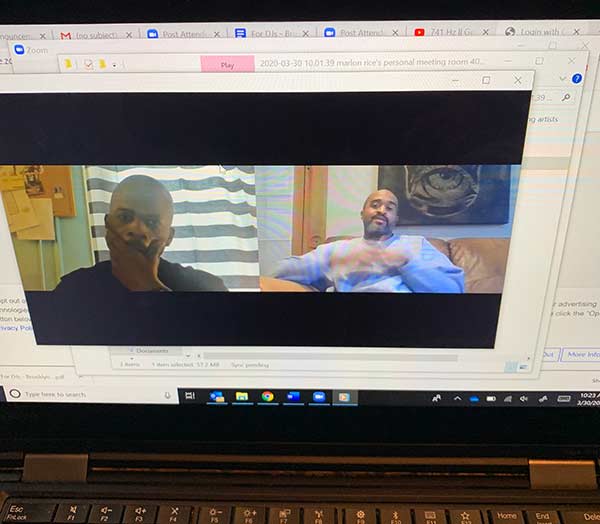
This was my work day today. I had a 9am Zoom conference with the NAACP. I had an 11am Zoom interview with an awesome Creative, and I had a Webinar at 12:30pm. After work, I did a Zoom Happy Hour with my friends.
Sound familiar?
For those of us working from home, Zoom has become our go-to app for all video conferencing. Prior to being quarantined, I remember using Zoom maybe a couple other times. These days, I’m on Zoom for two-four hours a day easily. It’s sudden mass appeal lies in its simplicity. To join a meeting, you only need to click the invite link that the meeting host sends out. If you’re on your laptop, you don’t even need to download any app. But even from your phone, installing the app is as simple as installing Words With Friends or Whatsapp. You don’t even need to create a username and password. You can log in using your Google account. Another big plus is that it’s free to use. You can host a 100 person conference for 40 minutes for free. You can basically access Zoom anywhere, from any mode of communication, and that has really made it the site to use for video conferencing.
Our way to communicate, and in a bigger sense to co-exist with one another, has been adjusted as a result of COVID-19. Eight weeks ago, restaurants, taverns and bars were teeming with socialization. Movie theaters were full. We had options and venues in which to interface with one another. You could go to dinner with your spouse. You could go to church with your mother. You could go to brunch with your girls. COVID-19 halted all of it, almost all of it. What it didn’t stop is our desire to interact with one another, our need to be together. Zoom has stepped up as the most seamless way to do this.
I have done family zooms that have bought together an entire family of folk quarantined in different communities. I have done brunch zooms where all of the callers were in their homes making and eating brunch. My friends and I have even done an open mic zoom where people who wanted to perform poetry did so while the rest of us watched. As more and more people flock to Zoom for their social interaction needs, the site has held up pretty well. The sudden surge in usage has pushed the market cap of Zoom to $45.5 Billion dollars, an increase of $26.7 Billion dollars when compared to their market cap in 2019. Reports are that Zoom is currently valued higher than all of the airlines, combined.
So, is this the new normal? Depending on who you speak to, working from home is either not bad at all, or the worst thing a person has ever tried to commit to. My experience has been kinda middle of the road. While being home all day is certainly more comfortable than waking up at 7 to be at work by 8, the discipline of managing work flow and house business takes time to get right. When are clothes required? I’d be lying if I said I always put clothes on for Zoom conferences. Early on, I was comfortable doing Zoom conferences in my hooded robe. Others though, were probably not as comfortable with this. Zoom etiquette is fluid and still developing, especially for work-from-home parents trying to homeschool their children. All of it requires patience, as we continue to adapt to this. Some companies are actually satisfied with the paradigm shift. My sister’s company, for example, is considering selling the lease on their brick and mortar and going full-on tele-commuting. With encrypted networks and proprietary software, companies are becoming more and more confident having workers work from home.
And while we learn how to work from home, we also are learning how to socialize from home. Social media has become the club, with DJs going live all day and night for fans to enjoy. Facebook posts, Twitter posts and Instagram posts have all increased compared to this time last year. People are relying on the Internet to connect with one another, and Zoom is poised to be a mainstay of connectivity. With no end in sight, the day-to-day work of millions of Americans will continue to be conducted through the Internet, and through sites like Zoom.