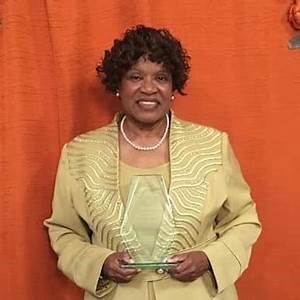
The family, church family, and friends of Sr. Pastor Gwendolyn H. Dingle of the Pentecostal House of Prayer Church in Bedford-Stuyvesant mourn the recent passing of a beloved community contributor. Noted for her warmth and kindness, the pioneering Brooklyn native, daughter of the late Bishop Luther and Shepherd Mother Georgia Dingle, was raised in her father’s church, where she would one day take the lead. She had just celebrated 11 years as senior pastor before passing away on April 21st.
Also an educator at heart, Dingle received her B.A. Degree in Elementary Education in Virginia before returning to New York to attend the highly regarded Bank Street College of Education. After graduating, her father appointed her administrator of The Pentecostal House of Prayer. Not long after however, Pastor Dingle married and moved to Nashville, Tennessee. Over years she spent there she was active in two churches, Seay Hubbard United Methodist Church and Mt. Zion Baptist Church, where she would later be ordained as a minister.
Pastor Gwen Dingle’s voice rang out, not only in church, but also during her successful tenure in radio. She worked as an announcer on two gospel programs in Nashville and, while there, founded the city’s first 24-hour gospel station. Along the way, she rose to contribute on a wider scale, working with Dr. Bobby Jones on his Gospel Explosions and the Bobby Jones Show on BET. She traveled with the Show and worked with the Stellar Awards when it came to Nashville’s Grand Ole Opry. Pastor Dingle cherished these unforgettable experiences, as gospel music was in her blood, having played piano and organ since a child, to the delight of her beloved father.
Her father’s prayers were answered when she arrived back in New York in 2003, although she was returning home as a result of her mother’s illness. Bishop Dingle later ordained his daughter as an elder in the church before making his transition. In April 2009, Elder Gwen Dingle was installed as the Pastor of The Pentecostal House of Prayer. Her mother was beside her, carrying on the legacy, at what the pastor declared was, “… the best church this side of heaven.“
A leader and protective presence in the community, Pastor Dingle stood up for what she believed was right. She spoke out and signed clergy letters aimed at building bridges across faiths, improving community-police relations, calling for expanded Pre-K programs or advocating against the sale of NYCHA properties. She was also affiliated with “Engaging the Power,“ working with the modern-day Poor People’s Campaign at Union Theological Seminary. Her commitment and dynamic presence will be missed by the many people whose lives she touched.
Beloved Pastor Gwen Dingle, 70, Makes her Transition
COVID-19:We Weren’t Ready for This, Will We Be Ready for What Comes Next?
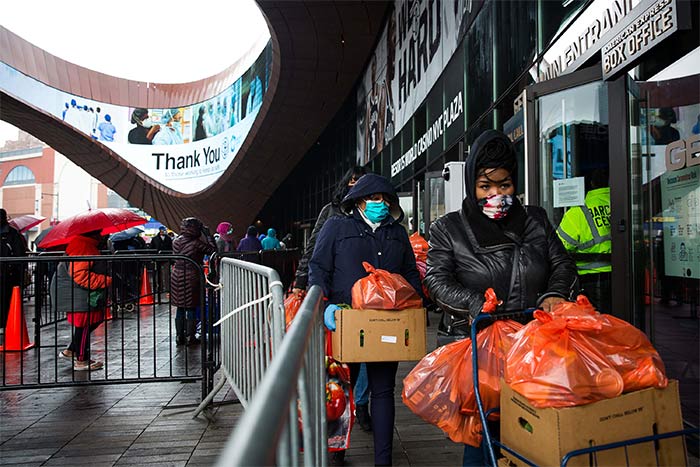
Above image:People pick up food at a food bank distribution site at the Barclay’s Center in Brooklyn on April 24, 2020. More than 60,000 people have died of COVID-19 in the United States while debates are heightening over reopening the country’s economy, severely battered by the virus. Over a million cases have been reported in the United States according to the Center for Systems Science and Engineering (CSSE) at Johns Hopkins University. (Photo by Michael NagleXinhua) (Credit Image: © Xinhua via ZUMA Wire)
Reopening America
View from Here
by David Mark Greaves
The coronavirus pandemic has laid bare and made plain the racism and plantation-owner attitude that has always been at the foundation of the nation. Many have commented on how the legacy of racism, in all its aspects, was magnified and brought into sudden relief by the health disparities in outcomes for Black and Brown people.
And now the press to reopen around the country has exposed the consciousness of what historian W.E.B. DuBois called the “Planter” — those plantation owners who wanted the crops, no matter the human cost. And that’s what we’re seeing today. The Hispanics, descendants of those from whom the land of the western hemisphere was stolen, and the African Americans, descendants of those whose labor was stolen to work that land, were exploited then, and they are exploited now. 400 years and the dynamic has not changed.
We see it in the white Republican governors of Georgia and Texas, forging ahead to open up businesses and venues, and the Black mayors of Atlanta and Houston leading the chorus of mayors saying no. Too soon. People will die.
The majority of working white folks, those who interact with people, they don’t want to open up either. You can wonder if it were the rich dying at a greater percentage than their population, would the Republican rush to open America be as furious as it is now?
Cashiers, clerks, workers in slaughterhouses, men and women with rough hands, they see they’re not of the Planter class, and therefore are expendable, with lives of lesser value. And that could be one of the world-changing lessons learned at this horrible price. And it had to be taught by the teacher from hell, Donald Trump.
Trump just said today that social distancing was a problem for restaurants and that, “We want it to be the way it was.” The man is a simpleton. Most people know it will not be the way it was, not until a vaccine is given to hundreds of millions of people will it even be close. Hopefully before the 2021 flu season. Dr. Anthony Fauci, Director of the National Institute of Allergy and Infectious Diseases sees hope in the antiviral drug remdesivir, which showed “quite good news” as a therapeutic to shorten the recovery time of the virus and perhaps lower the mortality rate as well.
It seems like only a few weeks ago when I saw the number of deaths in the country ticking over the 300 mark. Today it passed 60,000. More than were killed in the Vietnam War. Another 33,000 and the total will include the Korean War as well. And history will record it was Trump who did the killing.
The COVID-19 Interviews: Dr. Anael Alston
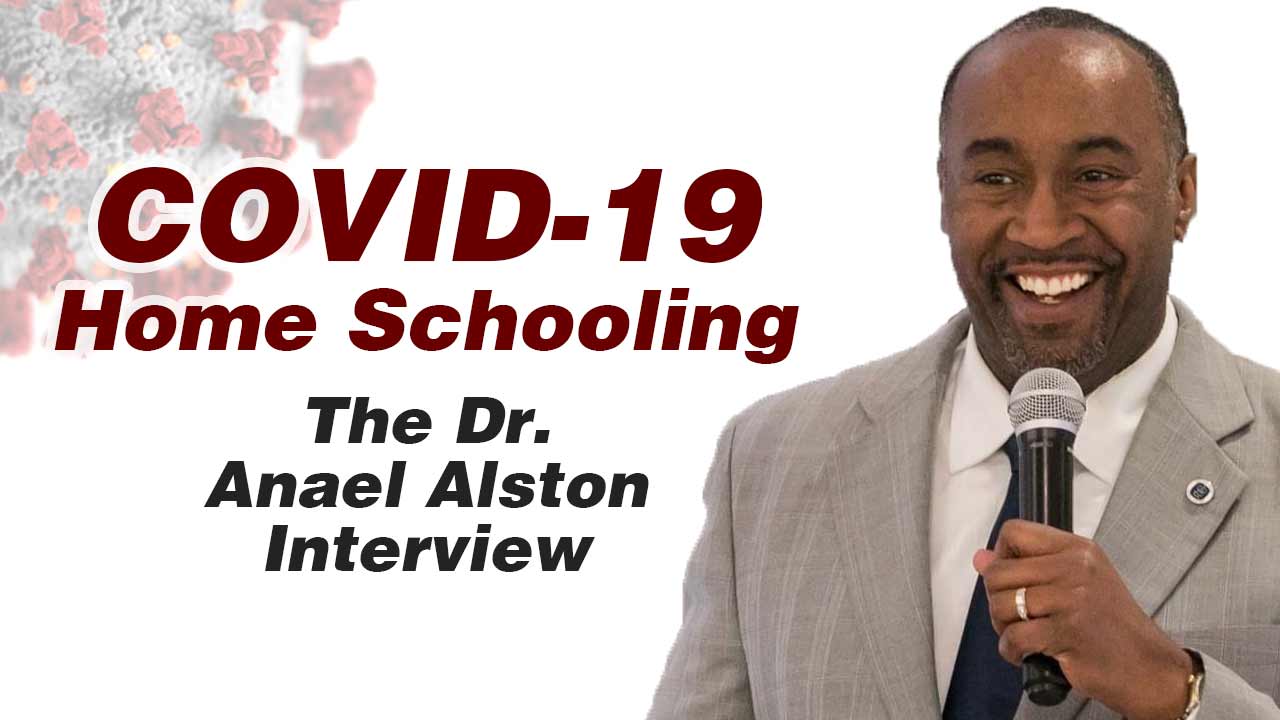
Dr. Alston is the Assistant Commissioner in the Office of Equity and Community Engagement Services for the NYS Department of Education. His experience as an educator offers us a unique perspective on the adjustment of learning models while under quarantine. In our interview, he sheds light on how his work as an educator prepared him for life under quarantine. He also gives tips on how to juggle working from home while ensuring that your children are having a productive home-schooling experience.
The Classism of a Pandemic
My sister Kyam is a Senior Accountant with a top-rated global accounting firm. Her twin daughters are at the top of their classes in all subjects. When Covid caused us all to shelter-in-place, the firm sent my sister home with everything that she needed to do her job. She was already working from home a few days a week, so the transition to full time home employee was virtually seamless. Each of the kids have their own phones and tablets, and they are able to do all of their schoolwork from their couch or bedroom. My sister and the kids follow a strict regimen and haven’t really missed a beat since this thing began. My sister’s fiance lives up in Connecticut, so she decided it would be safer for them to shelter-in-place up there. Less people walking around, no need at all to travel on public transportation, it just made sense for them. Before they left, I had come up on a few boxes of masks and I called her to offer her some. She told me that her firm had given them a care package that included masks and gloves.
I was on a video conference this week with one of the schools that I work with. This conference call was for parents and teachers alike, a check-in on how the homeschooling process was progressing for the students. More than a month into the shelter-in-place, and many of the parents on the call were expressing real issues that were impeding their children’s opportunity to properly engage in the homeschooling process. One mother stated that her child has to use her phone’s hotspot for Wi-Fi. Another mother said that because she still has to go out and work, the child is left at home with the grandma and doesn’t engage in the schoolwork.
The majority of the parents on the call were from NYCHA homes in East New York and Brownsville. I live in a brownstone in Clinton Hill. There are exactly 7 people that live in the entire brownstone, including me. I have a backyard that I can go into to get some sun, and even a stoop that I can sit on alone and watch the world. I can work from home. I don’t have to engage with society much at all, except to buy food. For those parents though, social distancing isn’t that simple. They live in tenement buildings, with hundreds of other people. The hallways and elevators aren’t cleaned properly in regular times, so there is no need to assume they are cleaned properly now. They don’t have private backyards to soak in the sun, or stoops on which they can sit in solitary contemplation. And, in many cases they also don’t have the ability to work from home.
This phrase “essential worker,” when it’s said in the media, people automatically think of our city’s first responders. But the guy that works at your bodega that has stayed open, he’s essential too. The cashier at the supermarket, the people working at Target, the lady that tends to the laundromat on the corner, they are all essential. But unlike many first responders, these essential workers have neither the salary or the benefits to insulate their lives in a way that would protect them. So, while those of us that are fortunate spend our quarantine time making tik tok videos, doing Zoom happy hours and tweeting about how horrible Donald Trump is, many of our less fortunate neighbors continue to live in a state of high-risk for contracting this virus simply because their options in life offer no other option.
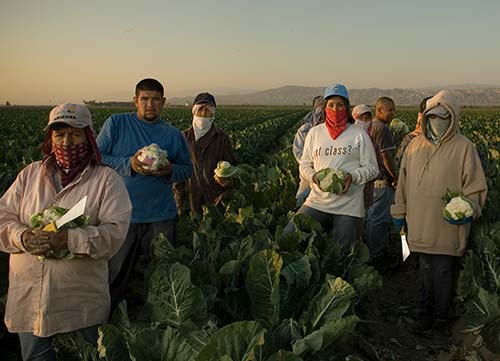
Right now, as you read this, there are undocumented immigrants in this city sharing an apartment with friends, or living in a room amongst strangers. And, if they contract Covid, they won’t go to the hospital because they are scared to be revealed as undocumented. They can’t self-isolate for fear of losing whatever income they make, or because their living arrangements don’t allow for it. If they contract Covid, they will spread it to the people around them. And, because of the lack of medical attention, the lack of resources, and the lack of trust, some of them will die, in their beds, in their rooms.
So, when you hear talking-heads and weirdo pundits discussing how this virus is disproportionately affecting Black and Brown communities, instead of listening to their cookie-cutter, bi-partisan reasoning, I want you to remember some of the situations I touched on in this article. Black and Brown communities aren’t at a greater risk because they take less precautions. Black and Brown communities are at a greater risk because racism and systemic oppression strips them of the ability to take precautions. While I’m thankful that my family and I are blessed, I’m also quite clear on how classism and oppression open our communities to be attacked by any and all enemies, even when that enemy is a virus.
Humanity Over Politics: Leadership Lives in Brooklyn
Henry Butler is in it for the Long Haul
Bernice Elizabeth Green
Waiting seems to be the order of the day – waiting for decisions to be made, waiting to hear about loved ones in nursing homes, hospitals, funeral parlors. Waiting to eat, waiting for a word, waiting for a signal all’s well, waiting to return to normal. Waiting for something to change, waiting for word on who will care, waiting for the check, waiting for help.
But from a most unlikely place – politics – comes great examples of grassroots leaders who refuse to wait. Even in place. These people in so-called normal times are expected to serve or, in a sense, “wait on” the people. They are not the ones who are on the receiving end of “Where are our politicians?” but they are leaders who offer great models for how pols can serve.
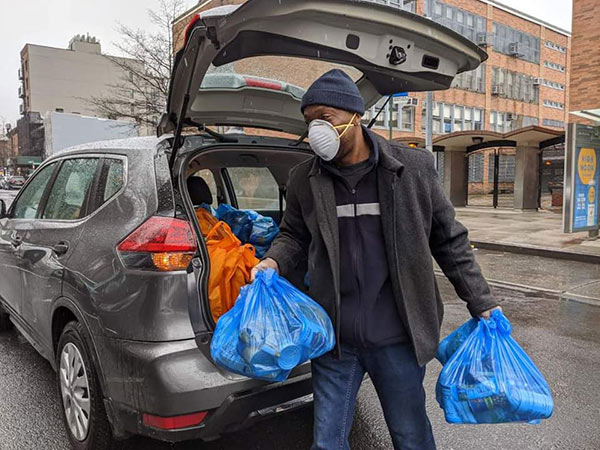
Community Board 3 leader Henry Butler is an example. Last month, as COVID-19 began surging into rage, Butler, also president of Vanguard Independent Democratic Association (VIDA), went back home to help deliver groceries to his former neighbors. Fully-masked and armed with sanitizers, skullcap and heavy sweats replacing the typical suit and tie, he hauled food in a cart – looking very much like a bottle collector. Answering to an inner call, Butler said he delivered to NYCHA’s Tompkins, Marcy and Sumner Houses, unconcerned with appearance.
Earlier this week, Butler was appointed to the position of Male Democratic State Committee/District Leader, 56th District, a position vacated by Robert E. Cornegy Jr, who resigned recently from the seat. With new CDC warnings about waves of the coronavirus returning more dangerous than ever, Butler requested we convey this message to the community:
“Everyone should try to stay home as much as possible. We have lost so many people in the Bed-Stuy and Crown Heights communities due to the COVID-19 Virus.
“Community residents have told me they are afraid to answer their phones because they fear the call will be about a loved one who has passed from the virus. I know exactly how they feel. I was awakened earlier this week by a phone call about the passing of beloved Community Board 3-member Pastor Gwen Dingle.”
The images on these pages tell the story of a leader who, in coming days, will be forced to lead from the safety of his home. Butler says he will follow Governor Cuomo’s edict and his own advice to the public.
Butler told us, “I’m urging everyone to please take this virus very seriously. Stay home. This is about protecting yourself and our most vulnerable populations.”