Home Blog Page 511

From the Desk of Eric Adams

April 29, 2020

Friends,

We will continue to keep you up to date with our emails on Monday, Wednesday, and Friday, as the COVID-19 pandemic continues to greatly impact and surround our communities.
As we continue to navigate COVID-19, we are doing everything we can to support our first-responders and frontline workers.
We need your help, Brooklyn, not just today, but everyday, because we are  #BrooklynForLife! At a time when the restaurant industry has suffered greatly, many have continued to rise above and beyond to feed those on the frontline and have truly become heroes. I have called for the creation of a “Hero Grants” program to be allocated to restaurants to support their relief efforts as well as provide support for these businesses which continue to keep our city running.
Please remember that a face mask must be worn when in public if social distancing is not possible. If you do not have access to a mask, watch and share our video on how to make one yourself.
While practicing social isolation, you can check out online webinars in a variety of topics to keep you connected, engaged, and growing through this pandemic. Scroll below for current webinars being hosted by my office in financial education, life coaching, and fitness.
And as always, if you have a home printer, I encourage you to print out a copy of our #StayStrongBrooklyn poster and place it in your window, share on social media, or safely distribute as you see fit to promote a sense of Brooklyn solidarity amid the crisis impacting each and every one of us.
 
-Eric

Updates and Important Information

  • As of 6:00 PM on Tuesday, April 28th, there are 159,865 confirmed COVID-19 cases in New York City and 42,380 confirmed cases in Brooklyn. As of 6:00 PM on Tuesday, April 28th, there were 12,287 confirmed deaths citywide, with an additional 5,302 probable deaths, including 3,678 confirmed deaths and 1,300 probable deaths in Brooklyn.
     
  • As per Governor Cuomo, all registered voters may apply for an Absentee Ballot to vote in the upcoming June 23rd elections.
     
  • As per Mayor de Blasio and Schools Chancellor Carranza, an adjusted K-12 citywide grading policy will be put into effect.
     
  • The Formula E venue at Brooklyn Cruise Terminal on July 11, 2020 has been cancelled.
     
  • The New York City Board of Elections (BOE) has canceled June’s Democratic Presidential primary.
     
  • Hunter College New York City Food Policy Center has partnered with Share Meals, Hunger Free America, BetaNYC, and Plentiful to compile a listing and guide on food resources available to New Yorkers.
     
  • New York Road Runners has released an online portal to keep you “Active at Home.”
     
  • SOMOS Community Care has opened an antibody testing center in Sunset Park. It is available by appointment only, Tuesday through Saturday, from 11:00 AM to 3:00 PM. Call 1-833-SOMOSNY (1-833-766-6769) for an appointment.
     
  • New York City partnered with T-Mobile to provide free tablets with internet access to 10,000 the New York City Housing Authority (NYCHA) seniors to stay connected with their families including a hotline for live human help.  The first neighborhoods to receive help from the $5 million venture will be Brownsville, Bushwick, Coney Island, East New York, Red Hook, and Mott Haven.
     
  • The Coalition for the Homeless has resources online to help homeless New Yorkers, including downloadable borough-specific resource guides, a crisis hotline, mobile soup kitchen schedule, New York City Department of Homeless Services (DHS) guidance, and policy papers.
     
  • All publicly permitted events that were scheduled in the month of May and June have been cancelled.
     
  • The New York City Department of Consumer and Worker Protection’s Office of Financial Empowerment has transitioned all financial counseling and coaching programs to offer services remotely. Book an appointment here. 
     
  • Beginning May 4th, the New York City Department of Sanitation (DSNY) will suspend its curbside composting program. During the suspension, any food scraps and yard waste set out for composting will be collected as trash. Residents with brown bins should store their bins in a safe location for the duration of the suspension.
     
  • The New York City Department of Environmental Protection (DEP) announced that the opening of its recreational boating season will be postponed until May 23rd.
     
  • The New York Legal Assistance Group (NYLAG) launched the NY COVID-19 Legal Resource Hotline to help New York City residents impacted by COVID-19 get answers to their legal questions on issues including unemployment benefits, employee rights, housing, public benefits, consumer debt, advance planning, stimulus payments, and special education issues.  Call (929) 356-9582 Monday-Friday 10:00 AM – 1:00 PM to leave a message with your name and contact information or visit nylag.org/hotline for more information. 
     
  • Women.NYC, which is powered by the New York City Economic Development Corporation, released a downloadable guide for free and low-cost tech courses in New York City.
     
  • Per Governor Cuomo, the PAUSE plan will stay in effect through Wednesday, May 15th. The maximum social distancing fines have been increased from $500 to $1,000. One hundred percent of a non-exempt essential service business’s workforce should stay home. Guidelines on what essential services must still be in person can be found here. A halt on all non-essential public gatherings remains in effect.
     
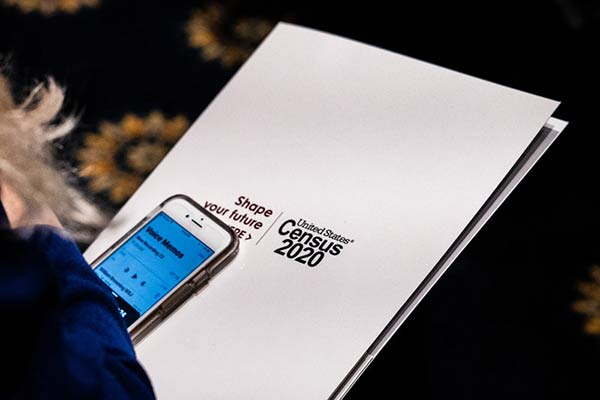
  • The Trump Administration is moving to delay some deadlines for the 2020 Census due to the novel coronavirus, including delivering data to states for congressional redistricting. The Census Bureau is requesting Congress to allow a 120-day delay on some data-reporting deadlines. The delay would accommodate social distancing guidelines for workers to prevent the spread of the disease and extend the deadline from December 2020 to April 2021. You can do your part to secure respect, money, and resources with the 2020 Census. Please fill out the Census online and #MakeBrooklynCount.
     
  • If you or your house of worship would like to sign up to participate in this rolling 24-hour prayer initiative, go to brooklyn-usa.org/24hrs-of-prayer to share and commit to the day you are planning to hold your vigil.
     
  • NYCHA’s journal has information about how they are responding to COVID-19. Information is available here about hardship reductions for NYCHA residents struggling to pay rent.
     
  • New York Cares is currently mobilizing volunteers to respond to COVID-19.
     
  • New Yorkers can use their SNAP benefits to order online.
     
  • The City has streamlined the home delivery of meals to seniors and working to support our food pantries, who are critical partners in these efforts. In the interim, you can find a list of key resources at nyc.gov/GetFood or by calling 311 and saying “Get Food.”
     
  • Free and low-cost childcare options during the COVID-19 crisis are available through Workers Need Childcare, for parents and caregivers in New York City’s essential workforce.
     
  • Mental health professionals have signed up to volunteer their services at a FREE hotline. Call (844) 863-9314 for a free appointment.
     
  • Worried about having to self-isolate in a dangerous home situation? Co-quarantined with an abuser? Please reach out and contact the National Domestic Violence Hotline.  Call 1 (800) 799-7233,  TTY 1 (800) 787-3224, or chat online at thehotline.org.
     
  • The City has created a new, online portal that will allow New Yorkers to self-report COVID-19 data, helping the City to communicate with affected members of the public and assist in the identification of areas that may require an enhanced response. By going online or calling 311, New Yorkers can quickly input information about themselves and legal guardians can add information for children or adults in their care. New Yorkers can update their status at any time through the Portal or by calling 311. The Portal is available in 11 languages: Arabic, Bengali, Chinese, English, French, Haitian Creole, Korean, Polish, Russian, Spanish, and Urdu. It is not intended as a mechanism for providing advice or treatment, and should not be relied upon as a method to obtain medical care or emergency service. Personal information will be stored securely and only accessible to City employees protecting public health. It will not be accessible by ICE, or used for law enforcement or any other purpose.
     
  • Banks have waived mortgage payments for 90 days and suspended foreclosures. Eligibility is based on financial hardship. Late payment fees and ATM overdraft fees are also suspended. All student loan interest has been suspended. 
     
  • Tax Day has been pushed back to Wednesday, July 15th. As per Mayor de Blasio, all tax lien sales will be postponed from May until at least August.
     
  • The Employee Retention Grant for small businesses with four or fewer employees is available and includes space for you to add March and April’s revenue.  Information and eligibility can be found here. Additionally, loans are available for small businesses affected by COVID-19, the application can be accessed here. The Small Business Continuity Fund will offer financial assistance to small businesses with fewer than 100 employees who have seen sales decreases of 25 percent or more will be eligible for loans of up to $75,000, to help retain employees and ensure business continuity.
     
  • We have partnered with the Brooklyn Chamber of Commerce to get businesses the relief they deserve amid the pandemic. Join the Small Business Hotline via the Brooklyn App.
     
  • Mayor De Blasio and Chancellor Carranza announced that New York City public schools are remote learning and are closed until September 2020. The DOE will provide computers and internet access to every student who needs it. Call (718) 935-5100 (press 5). Parents and guardians of students with disabilities can send questions to specialeducation@schools.nyc.gov. 
     
  • School sites are open for grab-and-go meals this week, from 7:30 AM to 1:30 PM, outside of main entrances of every school building. The program is now open to anyone who wants food, no questions asked. Go to schools.nyc.gov, or text “FOOD” or “COMIDA” to 877-877 for lists of where meals are being served.
     
  • For veterans and their families, the NYC Veterans Alliance has a list of resources on their website.
     
  • MTA buses and subways remain open, and the NYC Ferry system and Staten Island Ferry will continue to operate. MTA buses are rear-door boarding-only, with exceptions for disabled riders. On local buses, that means no more fare collection. Regular fare policy remains in effect wherever on-board payment boxes or SBS off-board ticket machines continue to be accessible.
     
  • Alternate Side Parking (ASP) is suspended through Tuesday, May 12th. Parking meters are still in effect. Rideshares and carpools have been banned by executive order.  With the exception of families, there can only be one passenger per vehicle.   
     
  • The City is recruiting TLC-licensed drivers through DeliveryTLC to help with work related to COVID-19, such as delivering food to older adults. This work will be paid $15/hour plus reimbursement for gas and tolls. Drivers will be selected on a first-come, first-serve basis. The initial need for drivers will be small, but they expect it to increase as they expand the programs.
     
  • The New York City Department of Buildings (DOB) is fining and shutting down non-essential construction sites. Essential construction may continue and such construction includes roads, bridges, transit facilities, utilities, hospitals, or health care facilities, affordable housing, and homeless shelters. A map of essential and emergency construction sites allowed to continue working can be found here.
     
  • While all Brooklyn Public Library branches are closed until further notice, services and programming are still available online at their website. 
     
  • A statewide eviction moratorium is currently in effect, including residential and commercial properties as well as foreclosures, according to the Office of Court Administration. The City will work with the State to suspend the Rent Guidelines Board process for the coming year, which will maintain all regulated rents at their current level for 2.3 million tenants in nearly one million stabilized units across the city.
     
  • Utilities have been ordered to not shut off service for gas, water, or electricity. Internet services will not be cut off during this time.
     
  • If you see price gouging, report it to 1 (800) 697-1220, fill out the complaint form on the New York State Attorney General’s website, or email askeric@brooklynbp.nyc.gov.
     
  • If you are feeling sick, please wait three to four days before contacting a doctor. Use telemedicine services BEFORE going to the doctor’s office, urgent care, or the ER. Thanks to our advocacy and Governor Cuomo’s leadership, co-pays for telemedicine consultations have been eliminated due to COVID-19. Call (800) 633-4227 or your doctor for more information if you are on Medicaid. Whether you utilize Medicaid, private insurance, or are a self-payer, options are offered across many specialty areas.  Urgent care telemedicine is available with New York-Presbyterian, Mount Sinai, orNYU Langone. Mental health telemedicine is available with Columbia Doctors. Diabetes telemedicine help is available with NYC Health + Hospitals. If you know other services, email askeric@brooklynbp.nyc.gov.
My Top 5 Black Poets on Food By Sylvia Wong Lewis

As we head into May yearning for morsels of hope, remnants of peace, writer Sylvia Wong Lewis offers a nod to the month of April. And a salute to her favorite poets for the gifts of spiritual nourishment they share with us. (BG)

It’s still April and National Poetry Month! For hungry, quarantined readers who are stuck at home sheltering from COVID-19, it’s time to look deeper into your kitchen. That’s where you will find food poems by top African-American and Caribbean writers who can satisfy your cravings. Food is their metaphor and main ingredient.

“I think poems return us to that place of mud and dirt and earth, sun, and rain,” said Kevin Young, poet and director of the Schomburg Center for Research in Black Culture, on National Public Radio’s ‘The Salt’ program. “And that’s where food comes from, and so there’s this common link,” said Young, editor of multicultural anthology called Hungry Ear: Poems of Food and Drink.

The writers that I chose here cover all of the ‘essentials’ that we need, from collard greens, kitchen grease, berry picking, to other important topics. Each of the following poems are as unique as the poets who cooked them up. One poet seduced you with chocolate. Another wondered why you eat health food. All of them reflect our culture with nuanced politics, humor, and love.

Rita Dove won the 1987 Pulitzer-Prize for poetry for her work “Thomas and Beulah” and was U.S. Poet Laureate (1993 to 1995), National Medal of Arts honoree (2012) and an English professor at the University of Virginia. Dove is known for her lyrical style and historical edge. She also writes about music in “Sonata Mulattica” and dance in “American Smooth.” I acquired an addiction to chocolate during menopause. So naturally, I was drawn to Dove’s ode to the confection called “Chocolate.” Here’s an excerpt of it, taken from the “American Smooth” collection.

Chocolate
“Velvet fruit, exquisite square
I hold up to sniff
between finger and thumb –
how you numb me
with your rich attentions!”

Maya Angelou – When I lived in the Bay Area, I had the honor of enjoying Dr. Angelou’s food several times at the home of Jessica Mitford and Robert Treuhaft, her dear friends in Berkeley, California where she camped out to write and cook. We still grieve the 2014 loss of our beloved storyteller, writer, activist and author of the 1969 autobiography, I Know Why the Caged Bird Sings. Dr. Angelou was also an extraordinary chef, host, and humorist. Her poem “The Health-Food Diner,” published in “The Complete Collected Poems of Maya Angelou,” is a hilarious poke at vegetarians. When you read the whole thing, her razor-sharp humor will get to you. She begins with raw veggies and ends fantasizing about meat. She builds her plant-based crescendo to a frenzy of pork loins, chicken thighs and Irish stew. Here’s how her poem opens.

The Health Food Diner
“No sprouted wheat and soya shoots
And brussels in a cake,
Carrot straw and spinach raw,
(Today, I need a steak).” *

Elizabeth Alexander –I met the distinguished poet, essayist, playwright, and president of the Andrew W. Mellon Foundation, in the NYC subways during the launch of her poems in Metropolitan Transportation Authority/NYC Transit’s Poetry in Motion. You may remember Dr. Alexander as the poet who delivered President Barack Obama’s inauguration poem in 2009. Her “Butter,” included in “The Hungry Ear,” is a vivid tribute to her Caribbean mother and the many delectable ways one can cook with butter. Her British West Indian menu includes Yorkshire puddings in the first half of the poem. Here are some opening lines.

Butter
“My mother loves butter more
than I do, more than anyone.
She pulls chunks off
the stick and eats it plain, explaining
cream spun around into butter!”

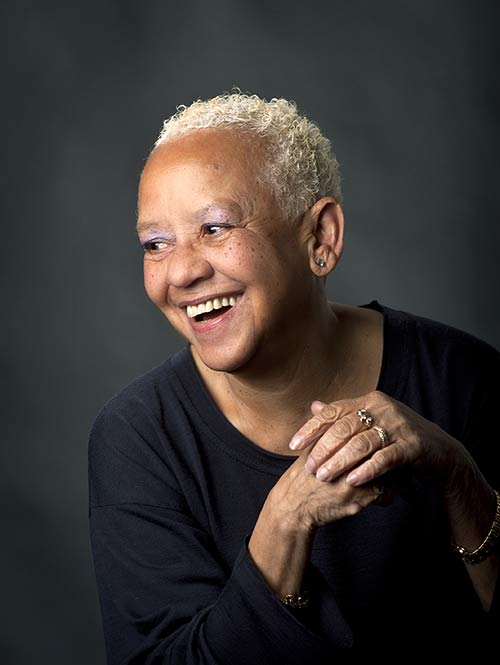
Nikki Giovanni – Dr. Giovanni is best known as a Civil Rights poet activist and co-founder of the Black Arts Movement. She writes about food as memory, sustenance and aphrodisiac. A humorous and serious poet-foodie, Dr. Giovanni is known for sharing stories about her grandmother, aunts and mother’s cooking at poetry readings. Her book, Chasing Utopia-A Hybrid, describes how she went from being the “baby in the family to becoming an elder.” So, while this book is mostly about mourning her loved ones, she spins lovely stories about them through food. This is a must-read for food poetry fans. As she searches for “Utopia” beer to toast her mother’s memory, she explained the correct way to cook grits.

The Right Way
“My Grandmother’s grits
Are so much better than mine
Mine tend to be lumpy
And a bit disoriented”

Langston Hughes – He is probably one of the most celebrated literary figures from the Harlem Renaissance. His poem entitled “Harlem” is best known as “A Raisin in the Sun,” the title of Lorraine Hansberry’s acclaimed Broadway play. This was the top poem mentioned when I asked colleagues to name their top five Black poets who told stories through the lens of food. Most everyone in my generation can recite this powerful poem by heart. Here are his most famous lines.

Harlem
“What happens to a dream deferred?
Does it dry up
      like a raisin in the sun?
      Or fester like a sore—
And then run?”

Kevin Young writes from the kitchen table. Covering race and culture he sings praises for our home life, survival and resilience. In his recent book “Brown,” he writes about everything literally brown from us brown people, James Brown, church pews to everyday life. Here’s an excerpt from Brown.

[Hospitality Blues]
Welcome. Have a seat-
The audience sits.
I insist. I’m your host.
Your money is no
Good here, no good

I hope these excerpts leave you hungry for more. Who are your ‘essential’ food authors who can help us survive the current pandemic?

Sylvia Wong Lewis is a journalist, genealogist, and chef. She also specializes in Caribbean and BIPOC (Black, Indigenous, People of Color) history and culture. Follow her on Instagram @Silvera88 and www.1619Brooklyn.com.

Publisher’s note: A version of Ms. Lewis’ story originally posted at Narrative Network.
.

To Be, or not To Be… Outside? That is the question.

While in quarantine, I have continued more or less to maintain the level of physical activity that my body is used to, mainly the running. I’m treating this time as I would if things were normal. The Brooklyn Half Marathon would’ve been happening on Saturday May 16th, and so my running schedule has been based on needing to be ready to run that half. This means that I’ve been running, outside, at least three times a week ever since we were told to shelter-in-place.

My running strategy is pretty simple. I go early in the morning and stay away from routes that have a high concentration of runners. I wear a face shield, take off all of my running clothes before coming into the house, and then shower and perform a nasal rinse directly after. My long runs allow me the opportunity to venture further out of my neighborhood, which gives me the chance to see how people in the city are behaving with regards to being outside. There are certain places, like in midtown Manhattan for example, that are total dead zones, not a person outside for blocks. However, in many of the more popular areas of Brooklyn, places like Prospect Park and Fort Greene Park, people are bustling about pretty much in a normal fashion. At the farmer’s market at Prospect Park this weekend, folk were making purchases and enjoying the beautiful day, strolling along Eastern Parkway, or jogging into the park. I did see instances of social distancing. For example, there was a line to get into the farmer’s market and the people on line were staggered about six feet apart. It was a similar scene at Fort Greene Park. There were dozens of people moving in and out of the park, walking their dogs or just enjoying the day. Many had masks on, but some did not.

So which is it? Can we go outside, or not?
As with most things, it isn’t as much what you do as it is how you do it. We know now that wearing a face mask curbs the spreading of Covid-19. We also know that the virus can live on certain surfaces for days, and can linger in the air in places where there is a high concentration of people. Some of us have witnessed firsthand the results of cluster infections — when an infected person comes into a space and multiple people become infected from being around that person. So we know that social distancing is key to survival. Most importantly, we know how dangerous Covid-19 is. We have to know. It’s taking from us people we love. Our hospitals are overrun by Covid cases. Our frontline workers are becoming infected, and some of them are dying. Every day my Facebook timeline reads like an update on the health of friends and loved ones. Some of it is good news, like the recovery of a friend, or a friend’s realization that they test negative for the virus. And some of it is bad news, like friends losing loved ones, or losing their own fight with this thing. So, we have to know how dangerous Covid is. We cannot be afforded the freedom of second-guessing this virus. At this point, I don’t care about its origin. I don’t care if it originated from bats at a wet market, or from 5G technology, or from any of the ideas your local conspiracy theorist can come up with. The only thing that matters is that we know for certain that Covid-19 is dangerous.
Taking what we know, how do we arm ourselves against the virus in a way that makes it okay for us to be outside and possibly even around other people? First, we have to follow the basics. A facemask is mandatory when around anyone other than those you’ve been quarantined with. If you’re wearing a mask, and an infected person is wearing a mask, there is less than a 2% probability of you catching the virus if you come in contact with one another. If neither of you are wearing masks, that probability rate rises to 70%. A mask is essential. Situational awareness is also essential. What are you touching while in public? Picture this, you touch a surface where the virus is living, and then touch your face. Or, you touch that surface and you don’t touch your face, but you do touch your phone and then when your phone rings you put the phone to your face. We know that the virus enters the system through the nose, the mouth and the eyes, so while outside you have to create a strategy that will guard against the virus entering your system. Don’t touch your face. Keep antiviral sanitizer with you and use it every time you touch a surface. Don’t put your phone to your face. When you get home, immediately undress, wash your hands and face thoroughly and clean your phone.

Finally, the virus is a numbers game. The more people that you come in contact with in the street, the more opportunities you give yourself to contract the virus. Limit person-to-person interactions to those that you know for certain do not have the virus. Everyone else should stay at least 6 feet away from you at all times. I don’t care if you see your long-lost best friend from second grade. If you can’t confirm with certainty that they haven’t been exposed to the virus, don’t expose yourself to them.

With a real strategy, we can still enjoy the outdoors. Without a strategy, the virus will continue to spread. Be smart, be aware, and you won’t need to be a hermit, hulled up in your apartment until the fall. If living with the virus is our new normal, then we need to begin to learn how to live with the virus. And this starts by re-learning how to behave outside.

What’s Going On

COVID-19: APRIL 2020
Deadly Spring

The Centers for Disease Control (CDC) just added 6 new signs associated with COVID-19:
Headaches
Sore Throat
Shaking with Chills
Muscle Pain
Loss of Taste
Loss of smell

US Governors like Andrew Cuomo, New York; Phil Murphy, New Jersey; Gavin Newsom, California, are reviewing their Executive Orders about lockdowns; social distancing and essential work places are in force. They are reviewing gradual rollback efforts coming into play on May 15. Those are states where— as of this press date—the virus hospital admissions, treatment numbers have flattened.

Hospital admissions for the virus are traveling south in many states. Yet, rogue governors in Texas, Florida and Georgia, at President Trump’s apparent urging, have lifted lockdown orders, encouraged people to return to tattoo and hair parlors and barber shops, where 6-foot distancing is impossible. Atlanta Mayor Keisha Lance Bottoms called Governor Kemp’s order premature during a pandemic. A few days later, she receives a text, “N word, just shut up and open Atlanta.” Was the text random, or did it originate from the Georgia Governor’s office or the U.S Attorney General’s office?

Johns Hopkins University monitors COVID-19 data in 185 countries and beyond:
The virus has killed 208,000 worldwide. On April 27, more than 3 million cases of the virus were reported worldwide with one-third of the infections existing in the USA. As of April 28, more than one million infections were reported.

COVID-19 arrives without warning and ruins everything in its path. It has tossed national health systems into disarray, coincidental with collapsing or depleting economies. State treasuries are depleted because of costs of paying to contain the contagion. While the inept US federal government has completed three rounds of economic stimuli, providing monies to the 26 million Americans who have applied for unemployment benefits, to major corporations, and to medium-sized business… to any entity but America’s 50 governors.

The major funds-obstructers to the Governors are Messrs. Donald Trump and Mitch McConnell, the US Senate GOP majority leader, who last week told governors to file for bankruptcy, then added that he would not help needy blue state governors. What’s going on? What’s wrong with this picture that the November 2020 election cannot solve?

COVID-19: THE RECOVERY
A Marshall Plan for America
The COVID-19 recovery in the United States is going to be a long and challenging one, requiring a strong, intelligent President with imagination who has an economic plan appealing to all strata of society, from the very rich to the very poor.

The president must serve all of the people, and understand that this is the time to hit all reset buttons, if change is inevitable. The recovery, like the virus, requires healing. The president must launch a Marshall Plan for America.

So, who’s going to pay the three months back rent for millions of Americans who got a waiver once businesses were shuttered?

Who will underwrite the bill for the necessary mass testing?

Are we ready for the next chapter in the COVID-19 battle: the threatened surge this fall, concomitant with the flu season?

Already, NYC Mayor Bill de Blasio has plans for a NYC Fair Recovery Task Force comprising civic leaders like Patrick Gaspard, Open Society Foundations President, and NYC’s First Lady Chirlane McCray, Chair of the Task Force on Racial Inclusion and Equity.

Meet Dr. Kizzmekia Corbett, 34, a viral immunologist at National Institute of Allergy & Infectious Disease, a division of the National Institutes of Health. She is high on the public-health-recovery radar. Corbett heads the scientific team of researchers tasked with the development of a novel coronavirus-COVID-19 vaccine. Born in NC, Corbett graduated from the University of Maryland and earned her PhD at the University of North Carolina at Chapel Hill in 2014.
Dr. Corbett worked on vaccines for SARS and MERS and knows that COVID-19 is in the same family of viruses as SARS and, further, is about 80% genetically similar to SARS. Her team began first-stage clinical trials of a vaccine to battle COVID-19 in March, two months after its appearance, which was the first of its kind in the world and the fastest progress ever toward a possible vaccine for a novel pathogen.

More than 40 worldwide research groups, including the Chinese and Germans, are conducting similar research. If Corbett’s team succeeds after its clinical trials, it would produce a working vaccine, which would prevent COVID-19 infection, for use by early 2021. Her work would result in the coronavirus being relegated to a preventable disease.

At press time, Oxford University scientists say they could have a vaccine for coronavirus by September.

COVID-19: THE 2020 ELECTIONS
Trump’s Campaign, So Far: Fake News and Faux Pas
Presumptive Democratic Presidential nominee Joe Biden’s numbers are surging in polls owing to his opponent’s malapropisms.

Donald Trump is doing a fine self-destruct job as he preps for the November election revealing his inability to manage the worst crisis of his administration! His daily TV coronavirus updates— which characterize his off-the-rails behavior and his faux pas last week, when he advised Americans to consider ingesting disinfectants like Lysol to extricate COVID-19 from their bodies—contribute to his tanking presidential poll numbers. A 17-state survey commissioned by the Republican National Committee has his handlers nervous.

The Republicans are defending 23 Senate seats this year. The Democrats need to win only four of those seats for a Senate majority. Also, Trump’s poll numbers could bring down GOP US Senators in Arizona, Colorado, North Carolina, and Maine.

The picture is just as gloomy for GOP US Senators McConnell from Kentucky, whose Democrat opponent is Amy McGrath, a former marine fighter pilot and politician, and for S.C. Senator Lindsey Graham, whose opponent is African American politico Jaime Pressly. Those two Dem contenders have raised more monies this year than their incumbent adversaries.

Biden names his female Vice President choice by tomorrow, May 1. Black leaders like SC Rep. Jim Clyburn and Al Sharpton are pressing for a Black woman Veep in a bow to the Democratic base. Will she be US Kamala Harris or Georgia’s Stacey Abrams (who was this close to a 2018 Georgia gubernatorial victory).

National polls show that 70% of the Black electorate say that it makes no difference to them. Perhaps, Biden can speculate about African Americans for Cabinet posts like Defense; Treasury; Attorney General and Homeland Security.

BLACK ENTERPRISE
Kanye West did not make Forbes Magazine’s 2020 billionaire list of 2095 names. West sent the magazine an itemized list of his assets —G.O.O.D. music label, Yeezy fashion empire, the Adidas collaboration, land and real estate holdings, cash and stock. Forbes concluded that he was indeed a billionaire, whose net worth is $1.26 billion.

West joins Jay-Z, the other HIPHOP one-man conglomerate, who made the 2019 and 2020 Forbes billionaire lists. High net worth HIPHOP moguls Dr. Dre ($800 million) and P. Diddy ($740 million) are headed for Forbes B-list.

2020 Census: Get Counted!

In these Pandemic times, you must not forget to shape your future.

Where You Are Counted
The goal of the 2020 Census is a complete and accurate count of everyone living in the United States and its five territories. You should count yourself at the place where you are living and sleeping most of the time as of April 1, 2020 (Census Day).
For some, this is straightforward. But others—including college students, service members, and people in health care facilities—may have questions about where they should count themselves or how they should respond. Other circumstances can cause confusion as well, such as moving, having multiple residences, having no permanent address, living in a shelter, or living at a hotel or RV park.
You can find answers to these questions below.
For more details about where people are counted, go to www.census.gov.

Count Everyone Living with You
If you are filling out the census for your home, you should count everyone who is living there as of April 1, 2020. This includes anyone—related or unrelated to you—who lives and sleeps at your home most of the time.
Please be sure to count roommates, young children, newborns, and anyone who is renting a space in your home. If someone is staying in your home on April 1 and has no usual home elsewhere, you should count them in your response to the 2020 Census.
If someone such as a college student is just living with you temporarily due to the COVID-19 situation, they should be counted where they ordinarily would be living on April 1, 2020.
Please count everyone living in your home. Where there are more people, there are more needs. An accurate count helps inform funding for hospitals, fire departments, schools, and roads for the next 10 years.

.