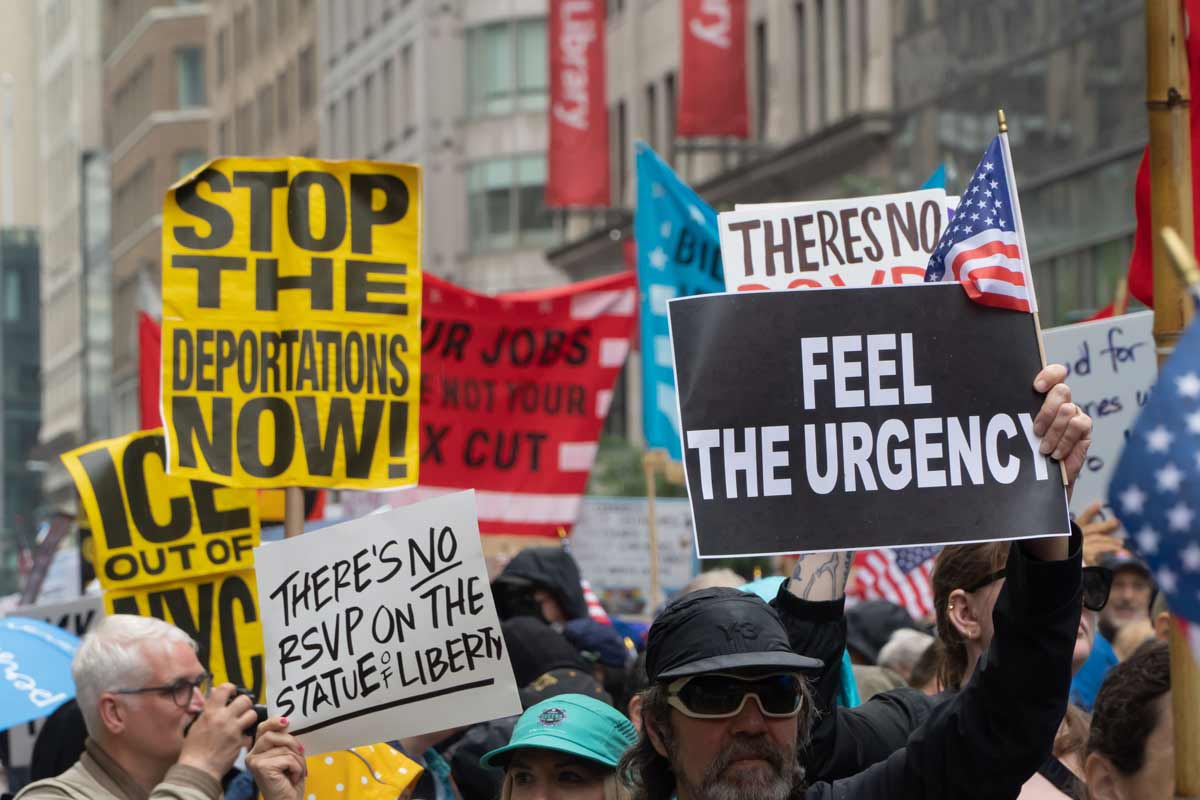
By Stacy M. Brown Black Press USA Senior National Correspondent A new report from the Prison Policy Initiative reveals how President Donald Trump’s administration is driving mass deportation by secretly using local jails—even in places with sanctuary policies—to detain immigrants.
The report, Hiding in Plain Sight: How Local Jails Obscure and Facilitate Mass Deportation Under Trump, details how these local facilities, through contracts with the U.S. Marshals Service, have become a critical infrastructure in Trump’s deportation strategy.
Building on the organization’s previous work explaining how county jails enable state and federal incarceration, this latest analysis breaks down the overlap between local criminal justice systems and federal immigration enforcement.
The report also provides extensive data tables showing the level of involvement in every state and in over 600 specific jails. “The Trump administration is circumventing city and county sanctuary policies that limit cooperation with federal immigration authorities,” the report said. “It accomplishes this through a longstanding loophole: ICE and other federal agencies can refer people for federal prosecution on immigration-related ‘crimes’ and thus use local jails’ contracts with the U.S. Marshals Service in sanctuary cities, counties, and states.”
This strategy, according to the report, turns civil immigration matters into criminal cases, thereby allowing the federal government to detain people in local jails even where sanctuary laws are on the books. As a result, local communities are unknowingly participating in federal deportation efforts.
The report also makes clear that ICE’s official numbers don’t reflect the full scale of immigrant detention in the United States. While ICE reported an average daily population of 57,200 in June 2025, the actual count—including people facing immigration-related criminal charges, those held on ICE detainers, and individuals confined in state-run facilities or overnight hold rooms—reaches approximately 83,400, a 45 percent increase over ICE’s published figures.
“Many cities and states have tried to offer sanctuary for immigrants by refusing to rent jail space to ICE and opting out of the 287(g) program, but it is not enough,” said Jacob Kang-Brown, author of the report. “The Trump administration is leveraging jails at a new scale, using local contracts with the U.S. Marshals Service and existing policing practices in order to expand detention.”
Since Trump’s return to office in January, 45 percent of all ICE arrests have occurred in jails. The report explains how ICE capitalizes on local arrests, often for minor offenses that wouldn’t result in jail time for U.S. citizens, such as driving without a license, to target immigrants. These arrests, the report notes, create a misleading appearance that ICE is focused on serious criminal activity, when in fact most detainees have little or no criminal history.
The report offers reporters and advocates access to detailed data that shows how many people are held for ICE and the U.S. Marshals in hundreds of facilities, including the change in these populations over time.
It includes the share of detained immigrants in each state held by local jails, the rates of ICE arrests occurring in jails compared to other locations, and the growing number of immigrants arrested by the U.S. Marshals on charges related to immigration status. The report also includes information on per-diem payments made by the U.S. Marshals to local jails in exchange for housing federal detainees.
It concludes by urging counties to end all collaboration with federal immigration enforcement agencies, including the U.S. Marshals Service, which holds contracts with nearly 1,000 local jails nationwide. “Via their jails, local governments are—intentionally or not—providing the infrastructure for a massive attack on immigrants,” the report said. “But by resisting cooperation with President Trump’s racist deportation machine, counties and states also have the power to contain it.”
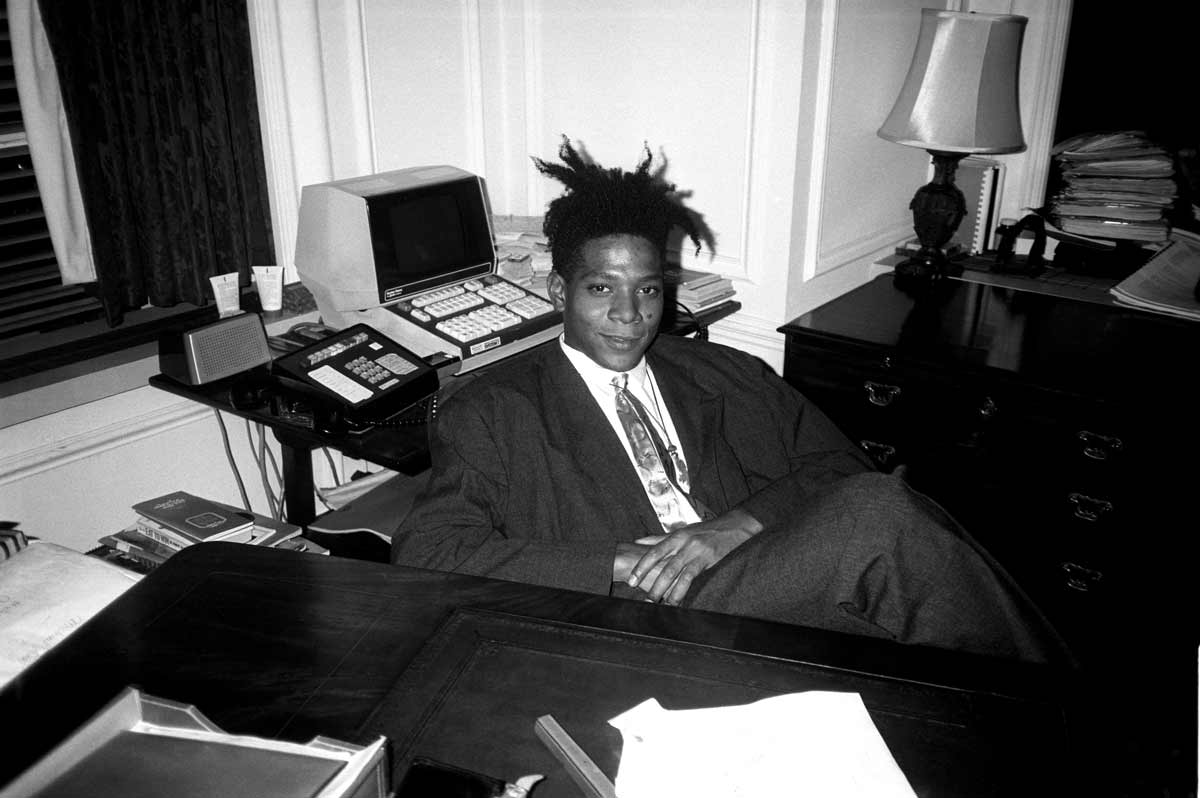
Did I ever tell you my Basquiat story? He painted the walls for a disco club in my building. When we left, his murals were still up. A corporate office was moving in, so they painted over them. -Abigail McGrath
I don’t remember the first time I ever met Jean-Michel Basquiat or IF I ever met him. Our relationship was more star-crossed than hand-pressing. Our theatre company owned a building in Chelsea which had a large empty second floor which we used for rehearsals. We rented this space out at night for parties and events. One event planner asked to rent it on a full-time basis given the proviso that they could decorate it.
Part of this decoration process was painting the walls. We gave them permission if they restored the place when they left. Meanwhile, my friend owned a paint company and one of his accountants had a son who was an artist. Since I was in the arts, my friend asked if I could be helpful in finding him a gallery. Of course, I declined because the son was an unstable high school dropout punk art-type kid who would never amount to anything.
At the same time, my friend Andy Warhol had given his studio on North Moore St. to some kid who painted on walls for free. We all clucked our teeth and thought Andy was not only being played for a sucker, but worse yet, the kid paid him in worthless scribble-like paintings. The next thing we know, this dopey-looking kid would come in at night and paint these scary-looking voodoo images all over our walls. They would light up under a certain light.
This was at the very beginning of “graffiti” art. It wasn’t a matter of “tagging”, it was creating issue-oriented art in public spaces because you wanted to, not because you were commissioned or hoped to sell it.
Street Art became more and more “in vogue” as New Yorkers became more and more intrigued with the idea of “freethinking”. Social issues were being demystified in the visual arts. Basquiat, Pere, reported that his son no longer had troubles finding a gallery; in fact, galleries were chasing him.
It was not until the father invited his boss and me to a party on North Moore St. that all three stars lined up. I realized what a big dummy I was. Jean-Michel, “the dopey kid”, was there and everyone in the art scene was fawning all over him. Ohhh! So this is the kid that Andy thought was so terrific.
Amongst the works was a portrait of his mother, Matilde, who it has been said encouraged her son’s creativity by taking him to museums, including the Brooklyn Museum, enrolling him there as a junior member when he was only six.
The picture was conventionally painted with no graffiti and no words. It was so strong an image; an emotional image, that you could feel the intelligence and kindness of this woman oozing out of the canvas and into your heart.
The father, Gerard, was a businessman: he owned several apt. buildings in Brooklyn. I remember he told landlord stories, but I forget if they were for or against tenants.
There was talk about Jean-Michel not being friendly with his father because he dumped them for a white woman. Well, that could be true, but the two of them seemed to be getting along on this night. With many people in the arts, they are not appreciated by their families. This was not true of Gerard. He knew his son’s worth and appreciated it.
The convergence came a tad late, however. The people who rented the space for an “after-hours” club went out of business and true to their word, painted over those scary voodoo images. We went back to renting the space for weddings and birthdays.
Ahhhh! What had I done? Will his legacy encourage street artists? I’m not sure. After all, JMB was a street artist with classical training. He chose to be a street artist.
Because of Gerard’s careful attention to JMBs work after he died, the legacy of being a highly valued artist endures, and that is good. It is important that young people understand that in America art is valued by fiscal reality as well as artistic.
Basquiat’s intelligence was such that whatever he chose to do would have been successful.
A Storyteller Raised by Harlem Renaissance Legends Who Lived a Novel Life
By Fern Gillespie There are people who “live a novel life.” Then there are people whose lives are “better than a novel.” Abigail McGrath, founder of Martha’s Vineyard Renaissance House Retreat for Writers and Artists (one of her many, many titles) not only lived a fascinating, adventurous life, but nurtured writers and actors from New York City to Martha’s Vineyard. For 12 years, I had the honor of working with Abigail on Renaissance House.
Abigail, who died in December 2024 at age 84, was a sixth generation Martha’s Vineyard resident, who was raised by Harlem Renaissance legends—her mother poet Helene Johnson and her aunt novelist Dorthy West. She grew up in Brooklyn with her mother and spent summers in Martha’s Vineyard at the family house. During her lifetime, Abigail traveled in many circles and worked in many creative fields as a writer, playwright, director and filmmaker.
An amazing storyteller, Abigail would reflect on her life that spanned being a Freedom Rider during the Civil Rights. During the 1960s, she modeled for Salvador Dali and became an Andy Warhol superstar as an actress in the famed 1967 film “Tub Girls.” In Lou Reed’s hit 1972 rock classic ‘Walk on the Wild Side,” Abigail was one of the famous “colored girls go doo doo doo bdoo doo’ ” in the song because her and friend Nawana talked and laughed during his act.
During the 1970s and 1980s, she co-founded the Off Center Theater in New York with her late husband Anthony McGrath. It was dedicated to fun, offbeat plays for children and later also for adults. The actors included Oscar winner F. Murray Abraham, John Leguizamo as a teen actor and Christine Baranski.
She wrote the comedy Au Pair Chocolat, a 2004 film about a Harlem mom becoming an au pair in Martha’s Vineyard, which was directed by her son Benson McGrath and co-starred Domenica Cameron-Scorsese, Martin Scorsese and Julia Cameron’s daughter.
“The Wedding,” the 1995 best-selling novel by her aunt Dorothy West, was inspired by the interracial marriage of Abigail and Tony McGrath. It would become a television mini-series produced by Oprah Winfrey and starring Halle Berry. Before writing “The Wedding,” West worked at a Martha’s Vineyard restaurant and was a freelance writer in the Martha’s Vineyard Gazette. Then Jacqueline Kennedy Onassis spotted her writing and persuaded the former Harlem Renaissance writer to pen a novel.
“Once a week, Jacqueline Kennedy Onassis would visit my aunt Dorothy West to prod her along towards finishing her novel “The Wedding.” At that time, Mrs. Onassis was a Doubleday editor and like my Aunt Dorothy, was a lifelong Martha’s Vineyard resident,” Abigail told me.
“Mrs. Onassis had befriended my Aunt Dorothy, a famed Harlem Renaissance author, and persuaded her to pen a tale inspired about the interracial marriage between me and my husband. While she was waiting in Aunt Dorothy’s home, Mrs. Onassis would tell me stories of the people on the island. All sorts of juicy gossip.”
Abigail inspired storytellers at her annual Martha’s Vineyard Renaissance House Retreat for Writers and Artists. Renaissance House was founded in 2000 to give writers the opportunity to focus on their work. Both Helene Johnson and Dorothy West, the inspirations for Renaissance House, did not have the luxury of working full time as writers.
At Renaissance House, from the late spring to the early fall, each year over 50 writers and artists would have spent a week in the Martha’s Vineyard home where Helene Johnson and Dorothy West would spend time writing. Attendees would range from professional writers to people with just a passion to write.
“The retreat provides the time in which to create new works or finish existing ones,” Abigail would say. “Renaissance House is one of the few retreats designed for issue-oriented writers, writers of color and writers of social justice. The program is offered to artists who do not have the luxury of time.”
At Renaissance House, attendees would write for a least five hours a day in a group setting. There would be meet and greets with Martha’s Vineyard writers and residents. In addition, Abigail would cook. I called it the “Martha’s Vineyard Left-Over Banquet.” Monday’s turkey would be Tuesday’s gourmet turkey sandwiches. An Abigail recipe is featured in her good friend Dr. Jessica B. Harris’ (“High on the Hog”) new book “Braided Heritage.”
For 17 years, Renaissance House has held the free dramatic reading of Frederick Douglass’ powerful speech “What to the Slave is the Fourth of July?” on July 4 at Martha’s Vineyard’s historic Inkwell Beach in Oak Bluffs. Volunteer readers would perform the 10,000-plus word address Douglass wrote during American slavery in 1852.
The director-editor-producer of Renaissance House’s annual Frederick Douglass speech has been Makani Themba, Chief Strategist at Higher Ground Change Strategies. “By reading it at the Inkwell Beach, an historically Black swimming area, the emotions and not so hidden agenda resonates with a powerful punch,” Abigail said. “Having it read by the people in the community heightens the relevancy even more.
The July 4, 2025 Frederick Douglass speech was held at The Tabernacle in Oak Bluffs. It became a moving memorial tribute to Abigail McGrath. Her friends and family are dedicated to continuing Abigail’s legacy. “We aim to fulfill my mother’s final dream,” said her son musician Jason Rosen. “We want to create “The Renaissance Garden” on her Oak Bluffs property to be a lasting space for community, creativity, and celebration of the arts.”
Abigail was a contributing writer to Our Time Press. The paper’s special series spotlighting Abby’s memorable articles launches this week on the next page. There will be a New York City tribute to Abigail McGrath on September 21 from 4:00pm to 7:00pm at Elizabeth Irwin High School at 40 Charlton Street in Greenwich Village. For more information, visit www.renaissance-house-harlem.com
There’s something magical about a neighborhood coming together for an annual shared celebration. On Saturday July 26, 2025, Quincy Street in Brooklyn transformed into a lively hub of music, laughter, and connection as an exciting block party took over the stretch between Marcy and Nostrand Avenues. Since 1953, this annual event has been bringing together neighbors, friends, and visitors to celebrate the beauty of community.
It’s a time when people come together to revel in the joy of shared spaces, diverse cultures, and spirited entertainment that reflects the heart of the neighborhood. Whether it’s the lively music, the aroma of delicious food, or the laughter of children playing, there’s something for everyone to enjoy. The block motto, “We love our community,” was evident in the smiles, conversations, and overall joy that radiated from neighbors and attendees alike, showcasing the strong bonds that make this event so special year after year.
Barbara Biggs-Glover, president of the 300 Quincy Block Association, and Treasurer Yelma Brown shared about the legacy of Curtis Felton, who served as the Block Association president for five decades before his passing. They explained that a name plaque was placed at the front of his home to honor the foundation he built for future generations.
Biggs-Glover shared that block parties are an African American tradition in NYC and she is so proud to keep the legacy going. “It is an opportunity for the residents to get to know each other and when you do the block party, you get a permit to shut down the street and allow the children to play freely in the street,” she said.
The festivities offered everything one could ask for in a perfect summer gathering—mouthwatering food, upbeat music, fun games for all ages, and an undeniable sense of community. It was a perfect reminder of how joy can bring people together in the simplest and most unexpected ways. What made the event truly special was the strong sense of community that permeated every moment.
Biggs-Glover explained that she and other members of the block associated are vested in the block. She stated, “The future of Bed-Stuy is promising. The neighborhood is undergoing changes but as new neighbors come in, we embrace them. We are a community.”
The Quincy Street block party was a vibrant celebration of Brooklyn’s incredible community spirit. The event brought together people from the block to share in the unique culture and energy that makes the neighborhood so special. More importantly, it reminded all attendees of the power of connection, the value of supporting one another, and the joy that comes from being part of a close-knit, thriving neighborhood.
Chauncey Street’s First Block Party Brings Residents Together
On July 19, 2025 Chauncey Street neighbors came together for their first official block party, bringing residents between Lewis Avenue and Stuyvesant Avenue out for a day of fun and camaraderie. Although the event was modest, it carried immense meaning for the Chauncey Street Block Association as they saw their goal of hosting a block party for the community become a reality. It was more than just a celebration—it was a day to strengthen bonds, create new memories, and set the foundation for more gatherings in the future.
A Stronger Sense of Community Block Association president Sonia Mack shared, “It is so important to know your neighbors beyond seeing each other when parking cars on the block. This is a community, and it is vital that everyone has a say in what happens on the block.”
Block association Treasurer Ken and Recording Secretary Eileen Bruckner agreed, mentioning they plan to host more events like garage sales, farmers markets and meet & greets to encourage more positive interactions and support within the community.
“It is [also] important to know who your neighbors are so you can help and support each other,” said Mack. “Today is the first time we are meeting some of the residents on the block, and it’s been so wonderful!”
Mack explained, “We have gotten together to do other activities like entering the Brooklyn’s Cleanest Block contest, which brings residents together to do something fun that will also enhance the block, ensuring we all have a part in keeping the block clean and beautiful.”
Fun, Games and More! Block residents barbecued and made special treats, enjoyed music, and conversed. The children spent the day drawing on the street with bright chalk, playing in a mini ball pit, enjoying cornhole, bubbles, and splashing in water from the hydrants. The Block Association worked with the fire department to get permission to safely open the hydrants—a service NYC residents might not realize is available.
During street closures, the FDNY can open hydrants properly to ensure the water flows safely without straining the system. The kids filled an inflatable pool and had a blast cooling off in the summer heat!!
But the block party wasn’t just an afternoon of fun; it was an opportunity to make new connections, strengthen existing relationships, and build a stronger sense of community. By hosting events like this, the neighborhood is building a network of support and resources that can benefit everyone living in the area.
The block association and residents were filled with joy after hosting their successful first block party, which brought neighbors together for a day of fun, food, and laughter. Families mingled, children played games, and everyone enjoyed the sense of community that the event created!
200 Greene Ave Block Party: A Rockin’ Good Time
On July 26, 2025 the 200 Block of Green Ave between Bedford and Franklin was alive with pure excitement and joy! The large crowd made it clear that this block rocks! There were several bouncy houses, board and chess games, Jumbo Jenga, and much more!
Families and friends gathered from all around, their laughter and chatter blending into a lively symphony that filled the air. Food stalls lined the street, offering delectable treats ranging from sizzling hot dogs to sweet, fluffy cotton candy.
Cherri, the Greene Ave Block Association president, shared that she has been on the block for 28 years and has been involved with the block party for 14 years, taking over from the previous president Dee Harris. “We look forward to doing this every year. This is a tradition.
The whole block contributes, and I organize all the activities,” she stated, “earlier we had ponies and horses, cartoon characters, and we always have the best bounce houses for the children.” She also shared with us the purpose of the event, “to build community, it is important that we know each other. When we have meetings, I encourage all the block residents to get to know each other; we are a community.”
Cherri also discussed her thoughts on Bed-Stuy and its future: “I am glad I invested in Bed-Stuy. It’s a great community, I have seen the changes, and I am hopeful that it will get even better.”
Children raced around with painted faces, their imaginations running wild as they transformed into superheroes and magical creatures. Local musicians strummed guitars and tapped rhythms on drums, drawing people in with their infectious melodies. Neighbors exchanged laughs and caught up on each other’s lives, strengthening the bonds of community.
This lively block party was not just an event; it was a celebration of true community togetherness, a reminder of the simple joys that come from shared moments and collective joy. With the promise of more gatherings in the years to come, the residents of Greene Ave bid each other farewell, their hearts full and spirits high, knowing they were part of something truly special.
500 Greene Avenue Block Party: A Legacy Continues
By Pojanee Fleury On July 26, 2025 the 500 Greene Avenue Block Party between Nostrand and Marcy Avenues transformed the street into a festive playground filled with music, food, a gaming truck, and so much more. It was clear that this block was a close-knit community of families, friends, and neighbors. The joy on the faces of everyone in the large crowd spoke volumes; this block was a hub of positive energy.
We spoke with the Block Association president who is also the block’s official Music Director and lead organizer of the block party known as DJ Red Boy. “I’ve worked in the community for well over 35 years,” he shared, “my mom was the Block Association president when I was growing up, and since I was in my teens, I was organizing the music for the block parties and eventually started DJing myself and have been ever since.”
It was clear that this legacy was here for the long haul as the block party had all the exciting trimmings, held annually for over 20 years with no signs of wavering. “With all of the negativity, we need more of this,” Red Boy declared.
No block party is complete without delicious food, and Greene Avenue didn’t disappoint. The street was lined with an incredible variety of grills and food stands, serving up dishes that celebrated Brooklyn’s rich cultural diversity. From smoky barbecue favorites to vibrant international cuisines like tacos, jerk chicken, and falafel, there was something to satisfy every palate.
The smell of sizzling food mingled with the sounds of lively music and laughter, creating the perfect festive vibe.
This family-friendly event truly had something for everyone. Kids were thrilled with the giant bounce house, where they jumped for hours, and the gaming truck, which was packed with excited young gamers challenging their friends.
Sidewalk games and chalk art stations kept little ones entertained, while adults enjoyed live music performances and mingling with neighbors. It was more than just a party—it was a joyful celebration of community and togetherness.
DJ Red Boy, also shared that although the community has changed in recent years, he and others have remained grounded. “I’m a part of the community board as well so I make sure our voices are heard.” A true leader, Red Boy’s work will surely impact the future of Bed-Stuy, as a native voice that has been instrumental in its positive development.
Annual events like the Block Party are more than just lively gatherings—it’s a reminder of what makes building community special. Neighbors come together, strangers become friends, and children grow up playing together.
It’s a day of shared stories, joyous connections, and a celebration of the vibrant energy that makes blocks like Greene Ave an undeniable treasure.
What if recovery started with being seen, heard, and understood? For many individuals struggling with substance use and mental health challenges, that kind of care is rare. July is Minority Mental Health Awareness Month, and it’s about shining a light on the unique challenges faced by underrepresented communities. In minority communities especially, stigma, cultural misunderstandings, and deep-rooted mistrust in the healthcare system often make seeking help feel unsafe or inaccessible.
“Stigma prevents people from seeking help for many years,” says Dr. Irina Kogan, MD, Director of the Division of Addiction and Recovery Services at One Brooklyn Health. “Sometimes people spend their 20s and 30s self-medicating instead of seeking professional help.”
Without culturally responsive care, recovery efforts risk missing the mark. Treatment that fails to consider a person’s background, lived experience, and cultural values can leave individuals feeling misunderstood or worse, unheard. When care is delivered with intention, cultural awareness, and respect, it becomes a powerful tool for healing.
One Brooklyn Health offers a comprehensive continuum of rehabilitation services, including its Chemical Dependency Program, designed to support individuals on their path to recovery. This program exemplifies the organization’s commitment to culturally responsive care, recognizing that effective recovery begins with understanding each person’s identity, culture, lived experience tied with their medical history.
“Our approach is non-judgmental,” Dr. Kogan explains. “We evaluate each individual’s needs and motivation for recovery. If they feel supported and not judged, people feel more motivated.” She adds, “First, we need to understand who this person is, their environment, family, and support systems. That helps us decide the best treatment approach, considering cultural and social factors.” The program supports individuals from all backgrounds and life situations.
Whether someone is worried about family, work, or school challenges related to substance use, the team is ready to listen and tailor treatment to fit each person’s unique needs. Every recovery journey is different, and the program’s personalized approach ensures that care is respectful, supportive, and effective.
The Chemical Dependency Program is a six-to-twelve-month outpatient treatment that integrates individual and group counseling, medication-assisted treatment, psychiatric care, health education, and creative art therapy. Patients also receive a light breakfast and lunch during their sessions. But what sets the program apart is its team-based, culturally responsive approach.
Counselors, social workers, and other support staff conduct thorough assessments that take into account each patient’s cultural identity, family dynamics, and environment. This foundation helps create treatment plans that truly resonate and are more likely to succeed.
In addition to therapy and medical care, patients receive comprehensive support that includes referrals for housing assistance, help with employment, and access to care for related medical conditions such as Hepatitis C and HIV. Many continue to stay connected to the program even after completing treatment, maintaining long-term relationships that reinforce stability and personal growth.
In communities where historical inequities and stigma exist, patient-centered care is critical. The Chemical Dependency Program works to create a safe, non-judgmental space where patients feel respected, supported, and empowered to pursue recovery.
The team also addresses social determinants of health, including challenges like housing instability and unemployment, which can hinder someone’s ability to stay in recovery. By providing both emotional and practical support, the program helps individuals rebuild their lives with stability and confidence.
Culturally responsive care communicates: You are seen. You are respected. Together, healing is possible. It reduces stigma, builds trust, and offers individuals, especially those in underserved communities, a meaningful opportunity for lasting recovery. Recovery is possible, and it starts here.
Whether individuals are seeking outpatient services, medication-assisted treatment, or long-term support, One Brooklyn Health’s dedicated team is here to help. Committed to healing with dignity, the program empowers every person to take the first step toward a healthier, substance-free future.
During Minority Mental Health Month, One Brooklyn Health honors the strength of its community and emphasizes that recovery does not begin with treatment alone; it begins with understanding. For support or to learn more, please contact the Chemical Dependency Program at Bishop Walker Family Care Center, part of the One Brooklyn Health Interfaith Campus, at 718-613-4450.
About One Brooklyn Health One Brooklyn Health (OBH)—comprising Brookdale Hospital Medical Center, Interfaith Medical Center, and Kingsbrook Jewish Medical Center—is nationally recognized for high-quality care in heart failure, stroke, and diabetes, among other acute care. The system includes 12 ambulatory care centers, two nursing homes, an assisted and independent living facility, a transitional housing program, an urgent care center, and a retail pharmacy. OBH’s mission is to expand access to quality medical care for Brooklyn’s most vulnerable communities and beyond. For more information, please visit their website for more information, please visit their website at www.onebrooklynhealth.org. Photo and text by Amanda Barrett of One Brooklyn Health