Home Blog Page 52

Which Superpower is Helping Africa Economically: China or the USA?

By Jeffery Kazembe Batts
IG: @kazbatts
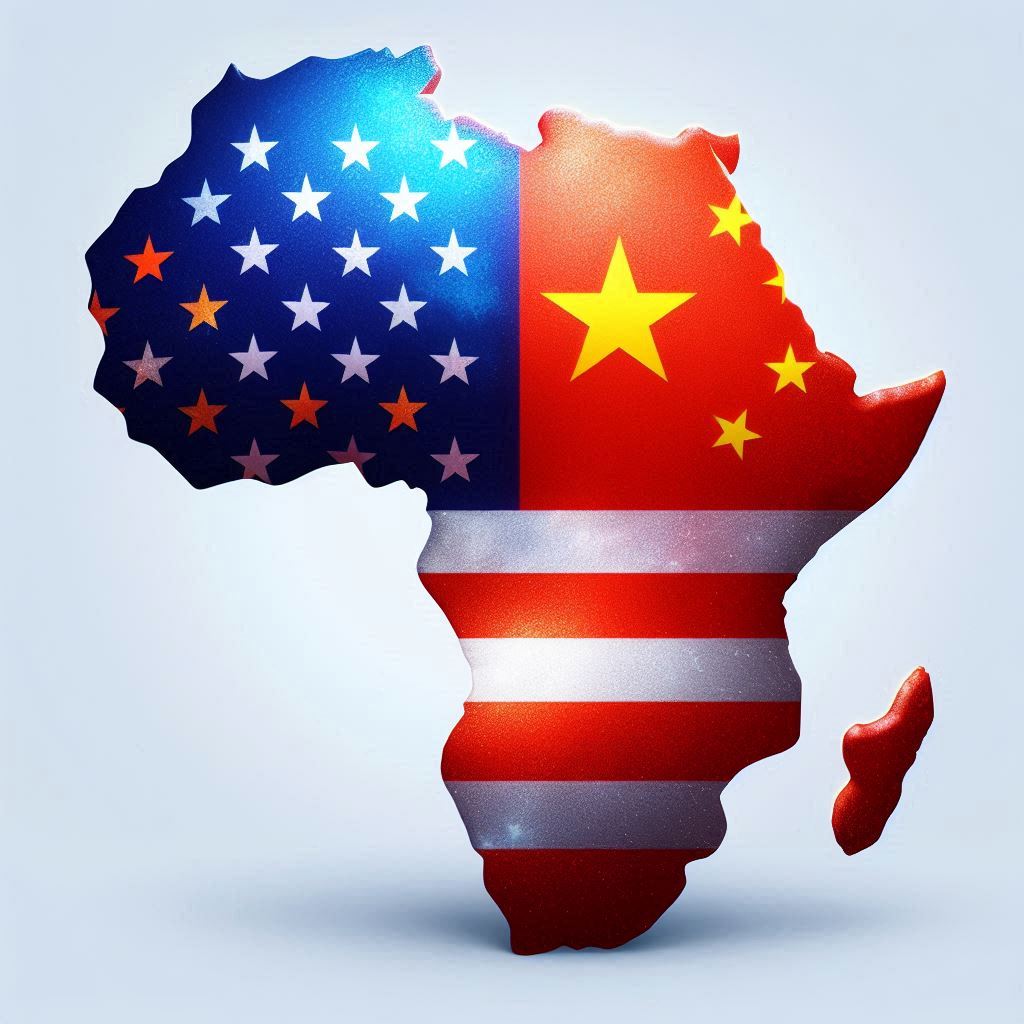
China has been the African continent’s largest trading partner for the last 16 years. The United States is third, also trailing India. How are the policies of the current Trump administration and the consistent Chinese government affecting the various economies of the 54 countries in Africa? Analyzing the tariff policy and developmental priorities towards Africa, which are different for each of the two superpowers, can help analysts, policymakers, influencers, and interested people decide what is best for African people on the ground.


In April 2025, the Trump administration introduced a baseline 10% tariff on almost all imports globally, including those from Africa. Targeted Tariffs: In addition to the baseline tariff, higher, country-specific tariffs (up to 50%) were imposed on a selection of African countries, based on factors such as their trade surplus with the U.S. and alleged use of trade barriers, according to the Center for Strategic & International Studies.

Trump’s new tariffs will undermine the 25-year-old African Growth and Opportunity Act (AGOA), which allowed duty-free access to the U.S. market for many African products. Many suspect that the Trump administration will not encourage the renewal of AGOA, which is set to expire in September 2025. Board member of the Kenya Association of Manufacturers, Pankaj Bedi says that his company will fold without access to the AGOA.


Meanwhile, at the recent Forum for China-Africa Cooperation Summit, the People’s Republic of China leader Xi Jinping announced that it will eliminate import tariffs for the entire African continent, except Eswatini. This year’s summit, which occurs every three years, was the most well-attended by African heads of state ever.

Eswatini maintains formal diplomatic relations with the Republic of China (Taiwan) and is excluded. Bilateral agreements totaling $50 billion were pledged at the September 2024 summit in Beijing.

The forum is part of China’s ongoing and consistent engagement to solidify economic integration and form a strategic alliance with Africa. Since 2013, led by Kenya, Ethiopia, Nigeria, Egypt, and Djibouti.

African states have signed up to be a part of the “Belt and Road Initiative”. According to China, the purpose of BRI is to improve connectivity and cooperation, especially in the Global South, and it is the prime mechanism for accessing Chinese financing and expertise for national infrastructure development.


China has consistently shown respect for African nationhood by having its top diplomat visit 4 or five African countries at the start of each New Year. This 35-year-old practice was continued earlier in 2025 when the Chinese Foreign Minister visited Namibia, the Republic of Congo, Chad, and Nigeria.


President Obama and Biden both had white house summits with African leaders while president. Trump has not while he was and is again president. During his first term, he called African countries “shit hole places.” In his current term, he has tried to blindside South African President Cyril Ramaphosa with a tailored video and blatantly described a transactional relationship to access African resources, especially minerals, rare earths, and oil, as his vision for economic partnership between Africa and the USA, while meeting with African leaders at the White House. According to the Director of the Kenya-based “Inter Region Economic Network”, James Shikwati, “Kenya and Africa will have to look for other markets and take advantage of the ‘Continental Free Trade Area’.


Competition between the USA and China for the hearts and minds of the people, as well as access to minerals for the production of advanced technologies, could benefit African development. Last year, lame duck President Biden visited Angola and promoted the Lobito Accord. Unlike many other projects started by Biden, President Trump has not cancelled this initiative.

The Lobito Accord centers around the Benguela Railway, which connects the port of Lobito in Angola to the interior regions of the DRC and Zambia. The railroad was originally built by the Portuguese in the early 20th century. The railroad declined after peaking in passenger and commercial use in 1973. After the Angolan Civil War ended in 2002, China stepped in.

The railway was reconstructed between 2006 and 2014 by the China Railway Construction Corporation at $1.83 billion. 100,000 Angolans were employed on the railway reconstruction. Trains reached Huambo in 2011, Kuito in 2012, and Luau near the Congolese border in 2013. The rebuilt railway was formally inaugurated in February 2015.


The G7 Partnership for Global Infrastructure and Investment (PGI), led by the USA, invested in the Lobito Corridor to connect the African continent from sea to sea. In October 2023, PGI signed an MOU between the U.S., Angola, the DRC, the EU, Zambia, the African Development Bank, and Africa Finance Corporation to develop the Corridor, initiating a new rail line expansion to Zambia.[5]

On 4 July 2023, the Lobito Atlantic Railway company secured a 30-year concession for railway services. The concession agreement encompasses the entire 1,300km railway line in Angola, extending to the 400km line into the Democratic Republic of the Congo (DRC) (up to Kolwezi), and also includes any potential service extensions in Zambia.

The awarding of the concessions took place in the presence of Presidents João Lourenço of Angola, Félix Tshisekedi of the DRC, and Hakainde Hichilema of Zambia.


Coming from the eastern side of the continent and not to be outdone by the West, China has recently committed to upgrading Tazara. The Tazara Railway, also called the Uhuru Railway or the Tanzam Railway, is a railway in East Africa linking the port of Dar es Salaam in east Tanzania with the town of Kapiri Mposhi in Zambia’s Central Province. Built in the 1970’s, Tazara has long been a symbol of African and Chinese cooperation.

Some say that the sudden interest in upgrading Tazara is because of the American focus on the Lobito Corridor. As long as strong African leaders insist on skills transfer while not burdening their nations with unpayable debt, then infrastructure assistance, including railway construction, will benefit African development.


America is currently attempting to use African countries like South Sudan to dump unwanted migrants, increasing travel bans, and imposing tariffs. Beyond UNESCO, Trump has extended his retreat from international institutions in 2025 by pulling the US out of the UN Human Rights Council and the World Health Organization. Trump has also reinstated the UNRWA funding ban and pledged to again withdraw from the Paris Climate Agreement. China recently condemned the USA’s

withdrawal for the second time under Trump from the United Nations Educational, Scientific and Cultural Organization. Tazara and Lobito railway projects come from opposite sides of the continent with different benefactors. China and the USA have opposite priorities and styles of engagement. Which will help to “Uplift the Race?” as Marcus Garvey said.

For sure there are more African people (yes, I mean Black Americans) in the USA than there are African people in China. Maybe that fact can count for something in development strategies by African heads of state?

Let’s Make a Deal

By Eddie Castro
As we go to press, the Major League Baseball trading deadline is 6 PM tonight, and with no question, the Yankees and Mets are teams to watch as far as what moves they are able to make to upgrade their respective rosters.

Both teams have dealt with issues with their respective starting rotation and bullpen, so it should be a priority for both teams to explore what players make the best fit for a strong October playoff run.


The New York Mets just got a little healthier when it comes to their pitching rotation with the returns of Sean Manaea and Kodai Senga. Although the rumors have been heating up more for them acquiring a Center Fielder, it will not be surprising for the team to add another arm.

Two names that have been linked to the Mets as far as starting pitching are Trevor Rogers (Orioles), Dylan Cease (Padres), and former National League CY Young winner Sandy Alcantara of the Miami Marlins.


As far as adding another outfielder, the Mets have been linked to names such as former top prospect Luis Robert Jr. of the Chicago White Sox and Cedric Mullins of the Baltimore Orioles. Either of those two players could be an excellent fit for the Mets, who would like a lefty bat to pencil in the bottom half of the lineup, which has struggled most of the first half of the season.

Thus far, the Mets have made one move, a move they needed badly, adding former two-time All-Star relief pitcher Gregory Soto. Soto adds another left-handed pitcher for the Mets who only had one in their Bullpen. (Brooks Raley). Soto has been one of the most dependable relief pitchers in baseball, especially when being used in high-leverage situations.


As far as the Bronx Bombers go, the struggles continue with the offense. In fact, the team has a total of 15 wins in their last 38 games. This past week, all of New York baseball fans held their breath as Aaron Judge reported discomfort in his right elbow. In what felt like the world’s most anxious MRI, the results came back as an elbow flexor strain where many feared they’re could be structural damage to the UCL (Ulnar collateral ligament).

Judge, arguably the team’s best hitter, was put on the 10-day Disabled List. The team has made a few moves when it comes to defense, which has been dreadful the past two weeks, by adding former All-Star Ryan McMahon from Colorado and former Met top prospect Amed Rosario.


The Yankees were in need of a third baseman after inconsistent play by Oswald Peraza, and Jorbit Rivas. Rosario is a right-handed bat who hits left-handed pitching really well. Aside from defense, pitching is a necessity for the time. Ace pitcher Gerrit Cole and Clarke Schmidt are both out for the season with Tommy-John Surgery, and Luis Gil has yet to debut in 2025 as he works his way back from injury.

Starting pitchers Mitch Keller, David Bednar (Pirates), Merrill Kelly (Diamondbacks), Danny Columbe, and Johan Duran (Twins). Despite the Yankees’ rotation being beat up all year, the team is still in the mix for a playoff berth. Aside from Judge, you can thank All-Star pitchers Max Fried and Carlos Rodon for that.

Gil is expected back sometime in August, but make no mistake about it, Kelly would be a great fit for the Yankees. He has pitched to a 3.33 ERA in 25 starts in 2025, ranked 7th in innings pitched (128 2/3) and tied for third in quality starts with 13. If the Yankees were to make the playoffs, the big stage on an October crisp fall night would not scare Kelly.

He had an ERA of 2.25 in four starts during the team’s 2023 World Series run. Duran or Coulombe would provide a strong high-end relief pitcher to go along with Luke Weaver and Devin Williams. Time is almost up to see if either of the New York teams can make a move that can help them make a strong playoff-contending team.


SPORTS Notes: Tune in to an All-New episode of Talk Sports with Eddie presented by Our Time Press tonight at 5 p.m. on the Our Time Press YouTube channel. We’ll discuss the trades the Yankees and Mets made at the deadline and whether the Jets and Giants are ready to take the next step in returning to the postseason.

Excellence in Brooklyn and Beyond

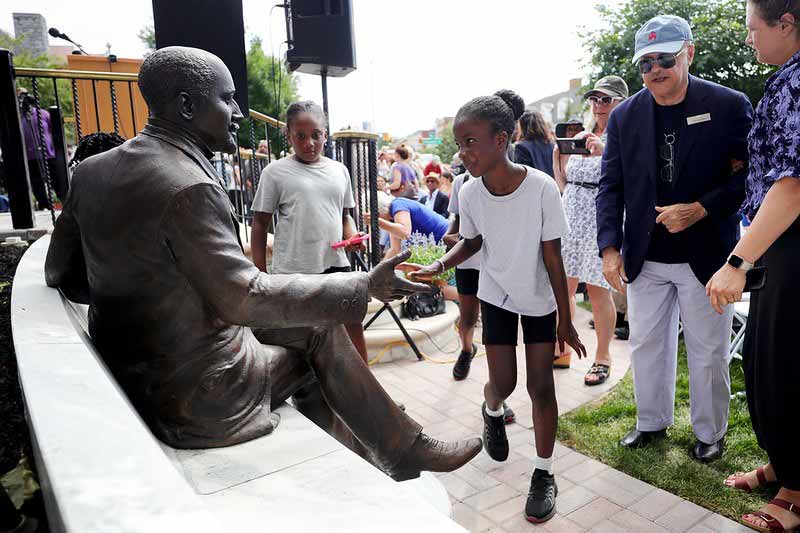
Open Palms, Open Heart: Last Saturday, July 19, Great Barrington paid tribute to the legacy of native son Dr. W.E.B.DuBois at the unveiling of a statue in his honor in front of the Mason Library on Main Street. In this photo, as historian David Levering Lewis looks on, young people took turns clasping the bronze statue’s open palm.

In his description of the event, scholar Imari Paris Jeffries said: “Du Bois meets us not with a sword … not with a fist, not with a flag. He meets us with an open hand. An open hand is never just a hand. It is a symbol, a language, a refusal. It is peace, the kind that does not forget violence, but refuses to replicate it. It is a welcome.


The statue, Dr. Jeffries said, is a model “of memory and of intellect, of unyielding belief that Black life contains multitudes, a monument to love. It is a gesture that says you belong here, even in a nation that tried to make you feel otherwise.”

Jeffries added that “thousands of monuments in the U.S. named for confederate leaders and “planted after Reconstruction in the hard soil of Jim Crow and then the aftermath of Brown v. Board [of Education]… were constructed not to grieve the dead, but to police the living.

(photo Stephanie Zollshan for the Berkshire Eagle.)


Editor’s Note: Brooklyn, NY can claim W.E.B. DuBois presence. The NAACP founder and first Crisis magazine editor lived in a Brooklyn Heights brownstone during the 1950’s. He purchased the Montague Street property from Arthur Miller, the late playwright. DuBois later moved from there to Ghana, where he passed in 1963.

Congress Rescinds Funding for National Public Radio, Public Broadcasting System and Member Stations Across the Country

By Mary Alice Miller
In a rarely used move Congress passed the Rescission Act of 2025 at the behest of Trump. On May 1 Trump signed an executive order to end taxpayer subsidization of National Public Radio and the Public Broadcasting Service.


The executive order stated that “NPR and PBS have fueled partisanship and left-wing propaganda with taxpayer dollars, which is highly inappropriate and an improper use of taxpayers’ money… To illustrate its partisan capture, NPR management asked its editors to avoid the term “biological sex” when discussing transgender issues.”


Refusal to cover the Hunter Biden laptop story, whether COVID-19 originated in a lab, a Valentine’s Day story about “queer animals”, and negative coverage of congressional Republicans were among reasons cited to deem PBS and NPR as biased media.


The rescission clawed back $1.1 billion in funding for the Corporation for Public Broadcasting for fiscal years 2026-2027. That funding was allocated for local radio and television stations in all 50 states and territories. CPB distributes federal money to more than 1,500 noncommercial TV and radio stations across the country. Small and rural stations that receive a substantial portion of their annual budget for CPB may be devastated or knocked off the air entirely.


“This vote is an unwarranted dismantling of beloved local civic institutions, and an act of Congress that disregards the public will. Two-thirds of Americans support federal funding for public media, and believe that it is a good value for taxpayer dollars,” said Katherine Maher, President and CEO of NPR in a statement.

“Americans listen to their local NPR stations daily, watch their favorite PBS shows loyally, raise their children on educational television, and listen to music stations that showcase the best of our home-grown music traditions.”


Maher added, “Public funding has enabled the flourishing of a uniquely American system of unparalleled cultural, informational, and educational programming, and ensured access to vital emergency alerting and reporting in times of crisis.”


LaFontaine E. Oliver, President and CEO of New York Public Radio called the rescission “a devastating blow to the American public broadcasting system.” The rescission will cut about $3 million from this year’s budget, and another $3 million next year.


New York Public Radio includes WNYC, Gothamist, WQXR, NJPR, The Green Space, and WNYC Studios.
“In plain speech, this is the worst possible outcome of a months-long series of attacks. This vote effectively ends federal funding for public media, which has enjoyed bipartisan support since 1967. But I will assure you, it will not be the end of public media, or New York Public Radio,” said Oliver in a statement.

“I also want to make it clear that we will do everything in our power to help secure the future of the entire public media system—not just our own.

We are currently working with major philanthropic donors on a sustainable project to aid at-risk stations as they regroup and rebuild. We’ll do whatever it takes to stand strong for our community, now and for years to come.

Our city and our democracy can’t afford for us not to.”
North Country Public Radio is a NPR member station in Canton, New York, near the Canadian border, serving an audience that’s across northern New York and western Vermont. North Country Public Radio receives between 12% and 15% of its budget from CPB.


“We have been broadcasting across the North Country for 57 years because it’s the right thing to do, and it’s the way to tell people about the communities in which they live. And it’s a way for us to share the story of the North Country with the rest of the world,” said Mitch Teich, General Manager of North Country Public Radio.


NCPR serves towns and villages so small that if they had to rely on broadcasters who were in it to make a profit to serve them, they would have no service at all.
“But I would say, by and large, the vast majority – and by which I mean the vast, vast majority – of the stories that we do at NCPR and stations across the system do really are there to promote the free flow of information that people need to make informed decisions,” said Teich. “We give those communities really a sense of community. We have been one of the very few organizations that serves people around the region and gives them something to gather around.”


The cuts to Corporation for Public Broadcasting are part of a total cancellation of $9 billion in authorized federal funding. The other portion included foreign assistance programs. Preserved was $400 million for Pepfar, an HIV prevention and treatment program created in 2003 under president George W. Bush.


The U.S. Constitution gives Congress the power of the purse to approve a budgets and then appropriate money. But under the Impoundment Control Act of 1974, the president may request the rescission of previously authorized funds, and Congress has 45 days to approve it, otherwise the money must be spent.


The Impoundment Control Act was passed in response to President Richard Nixon’s attempt to withhold congressionally appropriated funds for things he did not like. The act removed a president’s unilateral power to impound funding.


Prior to Trump’s current rescission request, few presidents were successful in implementing the Impoundment Control Act on a smaller scale. Gerald Ford was unsuccessful in rescinding funding for Head Start. Ronald Reagan was successful in rescinding funding for the Low-Income Energy Assistance Program.

George H.W. Bush rescinded funds for military construction and the research and development of military weapons. And Bill Clinton rescinded funding for certain energy programs.

Malcolm-Jamal Warner, Beloved Star of “The Cosby Show,” Dies at 54

By Stacy M. Brown
Black Press USA Senior
National Correspondent

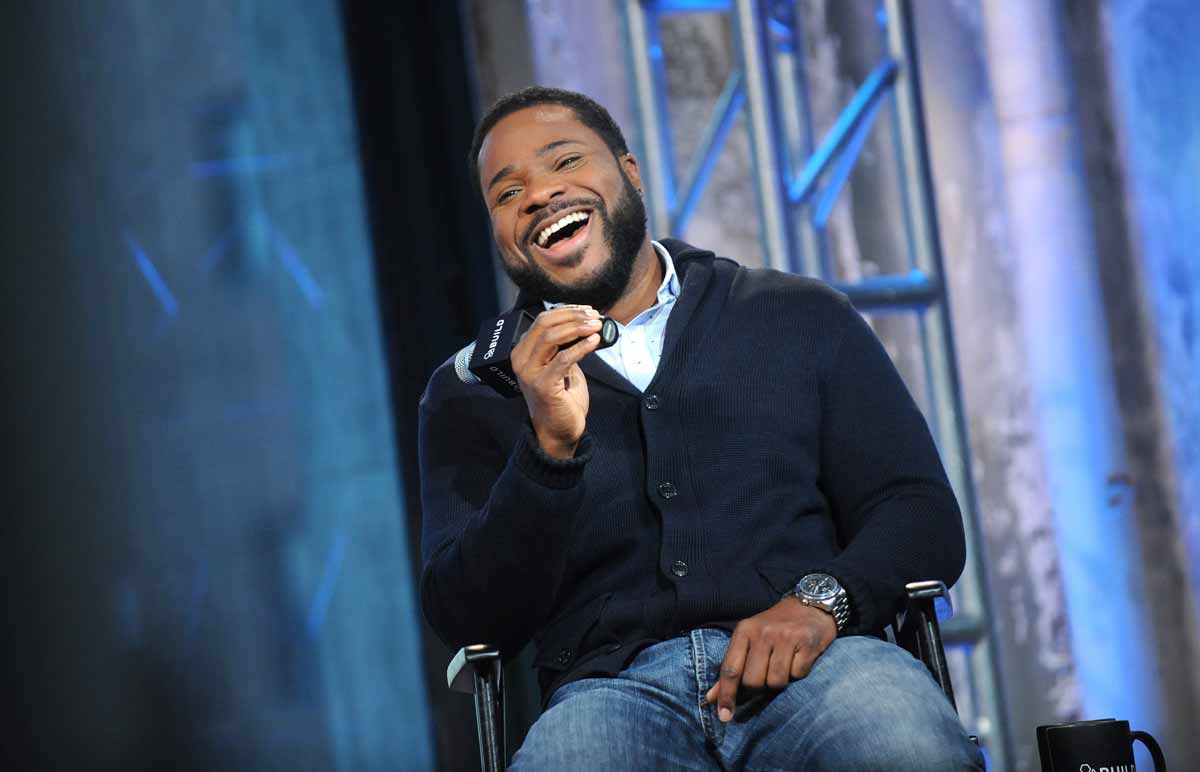
WASHINGTON — Malcolm-Jamal Warner, the actor best known for his role as Theo Huxtable on the groundbreaking NBC sitcom The Cosby Show, has died at the age of 54. Warner reportedly drowned while on a family vacation in Costa Rica, according to a family source cited by People magazine. His death was confirmed on Sunday, July 21. Warner’s sudden passing has stunned fans and colleagues alike. He is survived by his wife and daughter, whose identities have been kept private throughout his career. Authorities in Costa Rica have not released additional details, but Warner’s death is being described as a tragic accident.


Warner became a household name in the 1980s as the wisecracking middle child of Cliff and Clair Huxtable on The Cosby Show, one of the most successful and influential sitcoms in television history. His portrayal of Theo earned him an Emmy nomination and endeared him to millions of viewers during the show’s eight-season run from 1984 to 1992.


After The Cosby Show, Warner continued to build a diverse and acclaimed career. He starred in the UPN sitcom Malcolm & Eddie from 1996 to 2000, and held recurring roles in numerous TV dramas and comedies, including Major Crimes, Suits, Community, The Resident, Reed Between the Lines, Jeremiah, and 9-1-1. He also voiced “The Producer” on the popular animated series The Magic School Bus and served as an executive producer on the show.


Warner’s talents extended well beyond acting. In 2015, he won a Grammy Award for Best Traditional R&B Performance for his work on the song “Jesus Children” with Robert Glasper Experiment and Lalah Hathaway. He was also a published poet, musician, and director, and in recent years had become an outspoken advocate for mental health, particularly in the Black community. Just days before his death, Warner released what would be his final episode of his podcast Not All Hood, a series focused on unpacking generational trauma, wellness, and healing within marginalized communities.


Fans and celebrities flooded social media on Sunday, expressing shock and heartbreak. One longtime fan, 43-year-old Jalen Cooper of Washington, D.C., said, “He was more than Theo to us—he represented a generation of young Black men who finally saw themselves reflected on TV. His voice will be missed.”


Warner’s enduring presence in American pop culture spanned four decades, and he remained active in film, television, music, and podcasting until his final days. As tributes continue to pour in from across the entertainment industry and beyond, many are remembering Warner as a trailblazer who helped redefine Black manhood on screen. Actor and director Keegan-Michael Key posted simply, “Rest easy, King. You gave us more than you know.”


Warner’s family has asked for privacy during this time of grief. Funeral arrangements have not yet been made public.