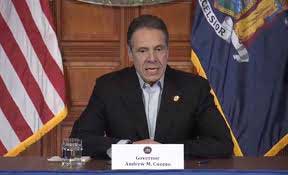
New York Governor Andrew Cuomo said yestersay that 14 other states are now investigating cases of a mysterious illness appearing in children that is potentially related to the coronavirus. The governor urged parents to “be aware” of the inflammatory syndrome believed to be connected to COVID-19 “If your child has been exposed to someone who had COVID, even if it was several weeks ago, that is a special alert in this situation,” Cuomo said at his daily press conference Wednesday. “Parents say ‘should I be concerned?’ You should be aware.” New York has now identified over 100 cases of the “pediatric multi-system inflammatory syndrome.” Doctors in the United Kingdom first noted cases of the syndrome, which appears to be similar to Kawasaki disease, a rare but serious illness seen in some children who have contracted a viral infection “New York is in many ways the tip of the arrow here,” Cuomo said. “(We are) looking at 102 cases where children who may have been infected with the COVID virus show symptoms of an inflammatory disease like Kawasaki Disease, or toxic shock-like syndrome.” According to the governor, 14 other states, as well as Washington D.C. and five European countries, have reported cases. The states include: California, Connecticut, Delaware, Georgia, Illinois, Louisiana, Massachusetts, Mississippi, New Jersey, Ohio, and Pennsylvania. Three children in New York, ages five, seven and 18, have died after showing symptoms of the illness. Of the state’s 102 identified cases, 60% have tested positive for COVID-19 and 40% tested positive for its antibodies. “That means children either currently have the virus, or could have had it several weeks ago,” Cuomo said. A majority of the cases in New York, 70%, had to be treated in an intensive care unit, while 19% required intubation and 43% are still hospitalized. Cuomo said the cases have cropped up across the state and in a wide range of ages, with a majority in children between five and 14 years old. Cases reported in New Jersey have a similar wide range in age: 3 to 18 years old, New Jersey Health Commissioner Judith Persichilli said at a separate press conference Wednesday. She said the state has received 18 reports of the syndrome from nine counties, and that four of the identified cases have tested positive for COVID-19
The governor noted on Wednesday that it was only recently that public health officials believed children to be safe from contracting the coronavirus. “We thought that children were not especially affected by the virus, to now find out that they might be, and it might be several weeks later, this is truly disturbing,” he said. Cuomo said that because the syndrome may not show up until weeks after coronavirus infection, and does not present as a normal COVID-19 case, it may not have been initially diagnosed as related to the virus. COVID-19 symptoms are predominantly respiratory; but the Kawasaki-like syndrome seen in children appears to be caused by an inflammation of blood vessels, presenting cardiac symptoms. Predominant symptoms include prolonged fever, abdominal pain and a skin rash. Afflicted children, however, have also shown had changes in skin color (becoming, pale, patchy, or blue), difficulty feeding (for infants), difficulty breathing, a racing heart, as well as lethargy, irritability or confusion. According to the governor, the state’s department of health has told hospitals to prioritize COVID-19 testing for children who come in with any of the symptoms related to the inflammatory syndrome. “This is a parent’s worst nightmare,” he said.
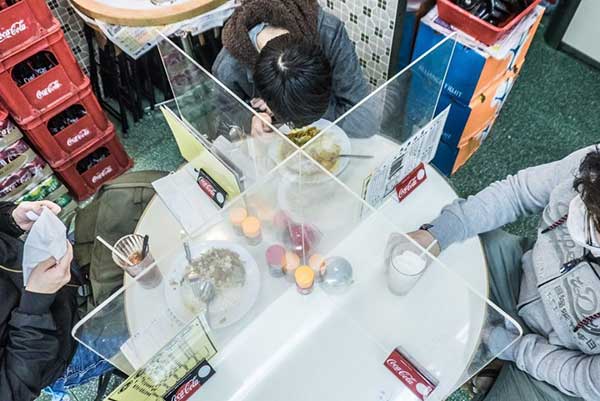
I went to Wegman’s yesterday to do food shopping and waited on a line that wrapped itself around the corner onto Flushing Avenue, while standing approximately six feet from the person in front of me. We were all wearing masks, and being around a bunch of people wearing masks feels funny. It’s solemn and alarming in subtle ways you barely notice. In intervals, the police officer at the front door allows a half-dozen or so of us in at a time. The whole process takes about 20 minutes, and we were perfectly okay with that. Once inside, the shopping experience isn’t at all the crowded boulder dash you’re used to. The supermarket is 75% empty. There are limits on the amount of certain items you can purchase — limit two boxes of spaghetti, limit two packs of chicken wings. When it’s time to pay, each checkout line is marked with social distance reminders on the ground, yellow tape every six feet. There is a plexiglass barrier in front of the cashier, and hand sanitizer stations and antiseptic wipe stations at the exit door. I put my bags in the trunk, got into the car, took my mask off and then sprayed disinfectant on my hands and phone. And then, I drove off.
Covid-19 revealed to us areas of potential vulnerability in our everyday lives that have spawned a shift. There were things in our past that we used to do with no regard to the risk associated with them. Simple things, like being in a room with 400 other people partying, or even simpler, letting our kids play in the park with other kids. Living in a pandemic has made us analyze those vulnerable points. Our schools, our food markets, our restaurants, our modes of transportation, these places are necessary in our society. These places have also shown themselves to be catalysts in spreading viruses from one person to another. The key moving forward is to find ways to continue to use our necessary spaces without placing each other in harm’s way.
Take schools, for example. Anyone who has a child knows that children are natural incubators for colds and the like. One kid has it, and by the end of the school day he’s passed it to a dozen others. How will we find comfort in sending our children back to school in September, into buildings that hold hundreds, and in some cases thousands, of other children, knowing the dangers that we now know? Some of the ideas being thrown around are revealing that the future of school will look nothing like the past at all.
One idea being mentioned is to have children come into the school only on certain days, so for example, some kids would come to school Mondays and Wednesdays, while others would come to school Tuesdays and Thursdays. On the days that they are not in the building, the children would continue remote learning. This would be a revolutionary change in education, but the foundation for creating an adequate remote-learning environment is being created and vetted at this very moment, while our children are forced to perform remote-learning during the quarantine. Educators nationwide are analyzing what is working and what is not, in order to find a path that makes sense.
I think about nights before Covid, hanging in Rustik Tavern or over at Peaches Shrimp and Crab, drinking and laughing with my friends at a packed bar, the room filled with patrons doing the same thing, the buzz of nightlife in Brooklyn. If you told me back then that hanging in a packed bar was an unhealthy thing, I would’ve certainly assumed you were referring to the drinking part, not the laughing and hanging with friends. Our restaurants and bars have been shut down for months now. Some owners have been able to pivot and provide take-out options, but the revenue generated from a few take-out orders per day is nothing compared to what a packed Friday night meant to their bottom line.
When will that next packed Friday night happen? What will it look like? The restaurant industry nationwide has lost more than $25 Billion dollars since this pandemic began, and our dining and nightlife is where we are poised to see the most change. Your waiter in mask and gloves, your temperature checked before you’re allowed to be seated, disposable menus, contactless transactions, all of it strong possibilities when the industry reopens. And those nights laughing hard at a packed bar may be a thing of the past.
COVID-19/UPDATES There are few people living in America, who are not COVID-19 101 scholars. The media (social, written, electronic) cycle is relentless. In addition to the mainstream media, Americans are treated to daily, separate, press conferences by NYS Governor Cuomo and NYC Mayor de Blasio. WGO will make some detours into other areas of American life.
Linda Villarosa
The Linda Villarosa 5/3 NY Times Magazine cover story, A TERRIBLE PRICE: The Deadly Racial Disparities of COVID-19 In America, subtitled “For the Zulu Club, a Black social organization in New Orleans, Mardi Gras was a joy. The coronavirus made it a tragedy,” is a good read. It is Pulitzer-quality prose, poised on 2020 New Orleans, punctuated by good research and analysis about race and health in post Emancipation America. Good for the voracious history reader.
America is putting the pause on the shutdown button and is getting back to business with about 40 states up and running by May 15. This is not what the scientists and doctors recommended based on their knowledge about plagues. A gradual transition was the scientists’ RX. Dr. Andrew Fauci says, “Premature end to lockdown could cause needless deaths.” While COVID-19 infections and fatalities are in decline in wisely governed states — NY, NJ, CA — that are opening up in phases, the numbers are spiking in states like Iowa, Tennessee and Texas — states which opened to business too fast. Note a 75% surge in COVID-19 infections in the American heartland since states opened early, urged on by President Trump, who fails to see the intersection of the coronavirus containment outcome and restoration of a healthy economy.
On 5/8, the US unemployment rate was 14.7%. By June 15, America should be back to work, if the old jobs exist. Another coronavirus stimulus is necessary. House Democrats have drafted a new $3 trillion stimulus proposal, which includes $1 trillion for state and city governments, with additional funds earmarked for taxpayers. GOP Senate says bill is DOA.
COVID-19 NY Economic hardships here and abroad. New York City’s Black and Latino communities are hardest hit with COVID-19 infection rates and fatalities. The major complaint from Black and brown New Yorkers is the long wait for unemployment benefits, now about six weeks. Economically, those communities suffer disproportionately without revenue streams to pay for food, rent and/or mortgages. Hunger and economic despair also plague New York’s people of color: Wakefield in the Bronx; Flatbush, East Flatbush and Crown Heights in Brooklyn and Jamaica, Queens are areas vulnerable to COVID-19. Same areas also house many Blacks from Africa, the Caribbean and Latin America who send billions of dollars in remittances annually back to their homelands to support relatives.
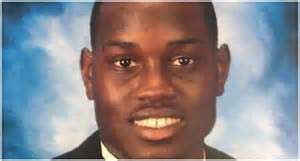
BLACKS: MEDIA MATTERS Last week, there were two stories of interest to African Americans, one is about the New York Police Department’s treatment of Blacks and social distancing in the city; and the other is about Ahmaud Arbery, who was killed in Georgia while jogging by a white father-son terrorist team, on February 23, and who were not arrested and charged until May 7. At press time, Neither the NYC Mayor nor NYPD has provided answers or solutions to the officers’ assaulting Black men — which was recorded by cell phone users— for not (6 ft) social distancing, while in other areas distributing face masks to white people sunbathing next to one another. Application of the law is still biased in NYC. Hakeem Jeffries, Al Sharpton, Eric Adams and Jumaane Williams demand cease-and-desist actions re: social distancing, the NYPD assault on Blacks.
Ahmaud Arbery
The February murder of Ahmaud Arbery, 25, by whites Gregory, 64, and Travis McMichael, 34, was committed with impunity, until the atrocity came to the attention of national media, especially to NY Times writer Charles Blow and the NY Times Atlanta bureau. The Georgia Attorney General named a fourth prosecutor, Joyette Holmes, an African American (first one in the Atlanta DA’s office), to oversee the case. The McMichael terrorists were arrested and charged with murder and aggravated assault on May 7. US Justice Department weighs hate crime charges against the McMichaels.
If you travel through the Netflix streaming universe, you should look at the feature documentary, BECOMING, adapted from the bestseller memoir by Michelle Obama which sold more than 10 million copies worldwide. BECOMING stars the former first Lady, spanning her life before, during and after her White House tenure. Documentary was produced by Higher Grounds, the Obamas production company.
Nicholas Johnson
NEWSMAKERS Congratulations to Canada-born Nicholas Johnson, Class of 2020, who is the first Black valedictorian in Princeton University’s 274 year history. His parents are medical doctors. An Operations Research and Financial Engineering major, Johnson’s senior thesis was on the development of algorithms to design community-based preventive health models to decrease obesity. During senior year he did an internship at Oxford University. In September, Johnson begins PhD studies at Massachusetts Institute of Technology in operations research. Harlem renaissance man Musa Jackson launches digital publication, Ambassador Magazine, on May 14 at 7 pm, which will cover the arts and entertainment, business and politics. Melba’s Restaurant owner Melba Wilson, President of the NYC Restaurant Alliance and Daniel Watts, star of TINA, The Tina Turner Musical are first guests. Visit ambassadordigitalmag.com.
Thomas Watkins, Chair/CEO of the Challenge Newspaper Group, including the NY Daily Challenge, hosted his 80-something birthday party in grand style at the Comus Social Club in Brooklyn. Partygoers included Jeanne Parnell, WHCR; Dr. Joyce Coppin; Evelyn Kalibala; Jean Wells, Positive Community; Drs. Karl and Faye Rodney, NY Carib News and politico Al Vann
Little Richard
RIP: Richard Penniman, Little Richard, 87, died on May 9, said his son Danny. He immodestly called himself the King and Queen of Rock and Roll. A founding father/architect of Rock and Roll, he was a quadruple talent — musician, a vocalist, pianist, guitarist and composer — without equal. He was the sexually fluid, flamboyant, musician/evangelist influenced by gospel music and the blues, who ran away from home in his mid teens. His chart-topping music classics include, “Long Tall Sally,” “Tutti Frutti,” “Lucille,” and “Good Golly Miss Molly.” Songs that were new to US music idiom US during the 50s, and liked by Blacks and whites in the USA and beyond. James Brown and Prince were acolytes, as were Elton John, Jim Bowie, the Beatles, the Rolling Stones; the latter two opened for him during European tours. He was one of the musicians honored at the inaugural Rock and Roll Hall Of Fame ceremony.
Andre Harrell, 59, died in Los Angeles, California due to chronic heart-related problems. Himself a rapper with Dr. Jeckyll and Mr. Hyde, Harrell was a record producer, composer and businessman who bridged the gap between HIPHOP and R&B cultures while fine-tuning careers of Puff Daddy, Mary J. Blige and Jodeci. Founder of the legendary UPTOWN RECORDS, he was Motown CEO.
A Harlem-based brand/media consultant, Victoria can be reached at: Victoria.horsford@gmail.com
Assemblywoman Tremaine Wright (D-Bedford-Stuyvesant, Northern Brooklyn) and Jason Salomon each picked up solid endorsements this week in their Democratic Primary race to succeed retiring State Sen. Vamanette Montgomery in the 25th Senate district covering Fort Greene, Boerum Hill, Red Hook, Bedford-Stuyvesant, Sunset Park, Gowanus, and Park Slope. Wright received the endorsement from Eleanor’s Legacy is the largest statewide women’s political organization, “Every day we are seeing the difference it makes when women lead. In the New York State Assembly, Tremaine has authored legislation to protect homeowners facing default or foreclosure, prohibit discrimination based on natural hairstyles or traits associated with race, protect adult home residents, and allow individuals to earn college credits while incarcerated. Tremaine Wright leaves no one behind when she goes to Albany. We are proud to endorse her and to increase the number of Brooklyn women in the State Senate,” said Brette McSweeney, president of Eleanor’s Legacy. “I am honored to have the support of Eleanor’s Legacy during this campaign. As the only woman in the race to be the next State Senator in the 25th District, I am dedicated to leading on the issues that matter most to women and their families. As a former small business owner, I am a champion for women to own and live their dreams. Currently, four of the nine Senators representing Brooklyn are women. The time is now for Brooklyn women to take their seat at the table,” said Wright. Not to be outdone, Salmon nabbed the endorsement of the State Public Employees Federation (PEF), New York’s second-largest state-employee union that represents over 52,000 employees including nurses, attorneys, social workers, parole officers, investigators, and more. “Today we are proud to announce that the Public Employees Federation will be supporting Jason Salmon in his race for NY-25. As a local community organizer, Jason has proven time and time again to be exactly the type of strong advocate that our communities deserve. From fighting to strengthen organized labor to demanding political representation of all people, Jason has led a movement that has put the voices of our community at the forefront. We are proud to endorse his race for NY-25,” said Wayne Spence, President of the PEF. “I am proud to receive the endorsement from the New York State Public Employees Federation (PEF),” said Salmon. “I have lived in Brooklyn my entire life and have witnessed firsthand the struggles working families go through to keep their heads above water. This is why as a community liaison, I fought hard alongside working families and unions to improve worker’s rights by increasing wages, guaranteeing safe working conditions, and providing healthcare for all. Today, as we continue to fight the COVID-19 outbreak, I am proud to stand alongside PEF and its 52,000 public employees and 15,000+ healthcare professionals as we continue the fight to protect and strengthen these rights,” said Salmon. The endorsements are the latest for both Wright and Salmon. Previously, Wright has garnered the endorsements from a number of African-American and Latino electeds throughout Central Brooklyn and the senatorial district including Montgomery and former Assemblymember Annette M. Robinson, along with Assemblymembers Felix Ortiz, Walter Mosley, Latrice Walker and Diana Richardson. Wright’s wild card endorsement is Assemblywoman Jo Anne Simon, whose district is squarely in Salmon’s base of white and progressive voters on the Downtown Brooklyn/Boerum Hill end of the district. Salmon’s endorsements include a range of mainly progressive and LBGTQ electeds and organizations including City Councilmember Carlos Menchaca, the Central Brooklyn Independent Democrats, Citizen Action, The Jewish Vote, Equality New York, the Jim Owles Liberal Democratic Club, UAW Region 9A, Lambda Independent Democrats of Brooklyn, and the Stonewall Democratic Club of NYC. Salmon’s wild cared endorsement is Reverand Anthony L. Trufants, the head pastor of Fort Greene’s popular Emmanual Baptist Church, which touches on Wright’s black base. Not to be counted out of the race is progressive candidate Jabori Brisport who has the endorsements of the politically powerful Democratic Socialists of America and the Working Families Party among other organizations. Having two progressives in the race – Salmon and Brisport – could mean they will split the vote, which can help Wright. However, in an ironic twist, Wright, a black female is being cast as the Brooklyn Democratic machine’s entrenched candidate, even though in reality, Wright’s only entrenchment credentials are to her native Bed-Stuy, where she grew up and for a number of years, owned a small business. Salmon has a big edge in fundraising as he comes from a family reportedly with deep-pocketed connections. But with more than a month to go before the June 23 primary election, the pandemic reducing open in-person public campaigning, the logistics of questionable mail-in ballots and the possibility of a low-voter turnout, this election – like many close elections – will likely boil down to who best will turn out their base. Early voting is currently scheduled to begin on June 13.
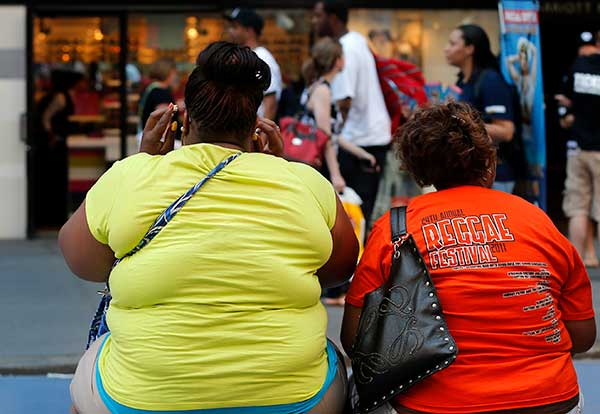
By Maitefa Angaza By now we’ve all heard that African Americans, and Black people overall, comprise the vast majority of cases of COVID-19 across the United States. The reasons cited — not that we didn’t know — are the high levels of life-threatening illnesses, healthcare disparities, income inequality, racism and stress we endure. Symptomatic of all of these is obesity. When the stress piles on, most people tend to overeat. Because we’ve been traumatized and victimized since the first boat landed on these shores with stolen human cargo, stress is an inherited risk factor for Black lives. Of course, obesity was not prevalent among enslaved Africans, most working long days of hard physical labor, sweating under a relentless sun. But after Reconstruction, when most Black people worked under less arduous conditions, they still confronted violence and institutional/everyday racism. Obesity rose as varieties of food were more available and were used to ease depression and terror. Today numbers are stratospheric in areas of the nation that are not pedestrian-friendly, but fast-food-friendly. It’s also a problem in cities with endless sidewalks for exercise, but ever-present access to processed foods. Obesity causes and/or exacerbates hypertension, diabetes, heart disease, stroke and other ailments common among the Black population. And as these diseases make us vulnerable targets for a destruction-ready COVID-19, we must begin to take obesity more seriously and advocate for greater numbers of people successfully overcoming it.
For clarifying context from the National Institute of Health:
“While obesity is a serious health issue in and of itself, it is also associated with a host of adverse proximal and distal health outcomes, including high cholesterol and hypertension, insulin resistance, type 2 diabetes, metabolic syndrome, as well as breast, colorectal, and other cancers.
“Obesity is also associated with diagnosable mental disorders, including depression; the leading cause of disability and premature mortality in the United States. Research indicates that people with diagnosable mental disorders like depression are at increased risk of cardiovascular disease and other physical health conditions because of a higher prevalence of and inadequate attention to modifiable risk factors such as being overweight and obese.” Statistics show that 80% of Black women are obese — the highest rate in the U.S. In 2018 our sisters were 50 percent more likely than non-Hispanic white women to be obese. In fact, four out of five Black women are overweight, if not obese. Some may not believe the standard assessment of overweight applies to Black women, who tend to have more curves and padding. But we must be honest as to what constitutes a threat. When breathing and mobility are compromised, when diseases are attacking or incipient, we can readily see how much weight is too much.
Nutrition education and other outreach programs are available, many free of charge. There is simple-to-process information that can aid in the battle— the type of battle in which allies are critical. Participants in these programs can learn, for example, about what defines and distinguishes obesity. Although excess body fat is most often responsible for overweight, other factors, such as water-weight, heavier bones and extra muscle can be contributing factors. Obesity, however, is almost exclusively due to excess fat.
The emergency alert is not for women alone, of course. Childhood obesity is at record levels, with Black students about 65 percent more likely to be obese than white students. And all members of a household can model for and support one another. Weight control can no longer be seen as an avoidable nuisance; COVID-19 has made that clear. Obesity often makes the difference between those who survive the coronavirus and those who succumb, because the severity of the virus’ impact is heightened by obesity’s pre-existing illnesses. We are constantly being told to stay home and stay safe. It would be wise to expand that edict by making sure to eat healthy while at home and to exercise regularly. As we approach the end of quarantine, let’s make healthy lifestyle a habit we can keep.
A campaign to address childhood obesity in the city was established last year, with Central Brooklyn as one of the areas of focus. Pediatric health care providers were outfitted with Pediatric Obesity Action Kits to share with and counsel patients. When institutions reopen, inquire about free obesity programs at the YMCA, New York Presbyterian Hospital in Brooklyn, etc. Give them some time to get their full roster of programs up and running, but in the meantime we can get up and running, or walking, or stepping, to be ready to take full advantage of supportive programs.