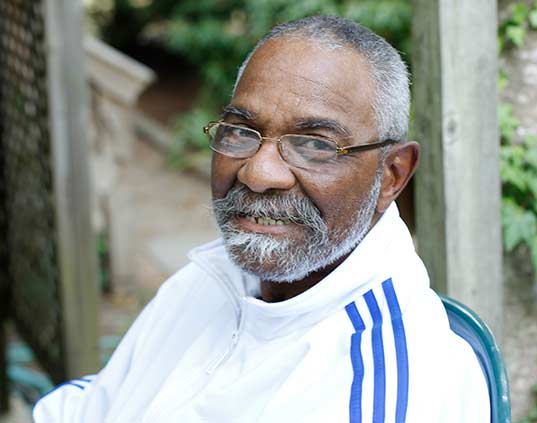
James Calvin Thompson died May 17, 2020 due to complications involving COVID and kidney failure. At the time of passing he was residing long-term (for Alzheimers) at the Cobble Hill Health Center, Brooklyn, NY, where he received exceptionally kind, compassionate, quality care.
Jim, JT, Jimmy, or Mr. T— he answered to all the names — is survived by his wife of 46 years, Dolores Brandon Thompson. They have lived in Prospect Heights since 1976.
Born in Williston, South Carolina on September 24, 1944, Thompson came north at the age of 9 to live with his father, Harold B. Thompson and his stepmother, Marceline Thompson in Canarsie, and later, Baisley Park. That family grew to include his brother Tom (currently living in Connecticut) and a sister, Sherrie (now deceased).
His mother Roberta Holmes lived and worked in Bed Stuy, where Jim would attend JHS 35. This family grew to include a sister, Lorraine Jackson (deceased) and her son Rasheen (now living in New Jersey).
As a talented young basketball player Thompson was in demand and chose to spend his high school years at Franklin K. Lane (Class of 1963), where he became co-captain of the team, All-City, (he played championship games at Madison Square Gardens) and earned a scholarship to Chanute College in Kansas. Returning to Brooklyn, he began what would become a forty + year career, spent almost exclusively in the Fort Greene housing projects (Walt Whitman Houses). Starting as an assistant teacher at the Willoughby House Day Care center (1966 – 1989), Jim later joined a Drug Intervention Program (SAPIS) as a counsellor to at-risk elementary-age schoolchildren attending PS 67.
Mr. Thompson was beloved in the neighborhood and made a real difference in the lives of the children he served (and amused), as well as the teachers and principals he never said No to. Parents knew they could trust him to love and care for their children as if they were his own.
He helped many parents get their child into the school of their choice. He never missed a day of work and although not required to be there for the breakfast program, he made it a duty to get there every morning to welcome each child and bring a smile to each face. Many were struggling against heartbreaking odds
Uniquely talented as an athlete with a joyful, playful spirit, competitive, but always the true sportsman, he threw himself wholeheartedly into HIGH ENERGY, an afterschool basketball program, devoting his Saturday mornings to building team-sport skills and leadership qualities that would set young men on paths to success and achievement.
Beyond the day job, Thompson dedicated himself to community politics and initiatives that focused on providing access to life-enhancing resources — senior centers and daycare centers throughout Brooklyn. Mentored by Sam Pinn Jr., Thompson was a founding board member and Vice-Chair to Mr. Pinn Jr. at the Fort Greene Council Inc., known also for the popular, long-running entertainment venue Jazz @ 966.
Mr. Thompson and his dear friend and working colleague Thomas Gaffney were tireless get-out-the-vote campaigners in the historic 1980 campaign that elected Roger L. Green to the NYS Assembly; it was a campaign that required Green to win an unprecedented three primary runoffs. Voters in the Fort Greene housing projects, organized and driven by the enthusiasm of Thompson and Gaffney, never gave up — they came out in force all three times.
A few years later, Mr. Thompson was elected overwhelmingly to the District 13 School Board and served for one term: more comfortable as an agitator than a politician, he chose not to run again.
James Thompson is survived by a brother, Tom, several aunts, uncles, nieces and nephews. His wife, Dolores currently resides in Prospect Heights, Brooklyn, where they have lived since 1974. James Thompson will be cremated. Ashes will eventually be placed in a grave they have in Toronto, Ontario, Canada — his wife’s hometown. A virtual memorial service is being planned. Information can be obtained by sending an email to jamescthompson@optonline.net.
Text and Photo: Delores Brandon Thompson
James Calvin Thompson, Community Hero and Political Activist, Passes
Brooklyn Officials Demand Accountability and Action forNYCHA Residents Plagued with COVID-19
By Maitefa Angaza
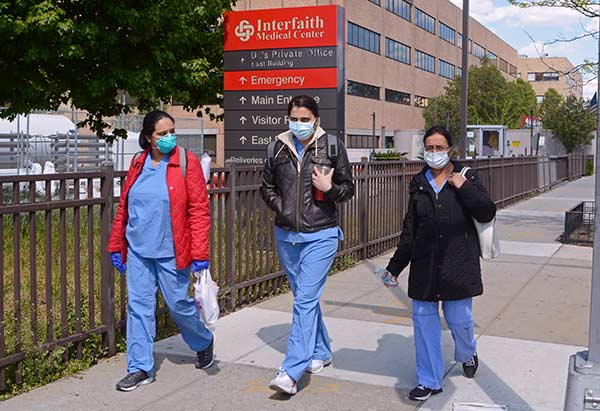
NYCHA (New York City Housing Authority) residents have suffered a crushing blow from the coronavirus, and the Marcy Houses on Park Avenue in Bedford-Stuyvesant have suffered more deaths than any other NYCHA development, with 21 to date.
Borough President Eric Adams, disgusted by the tragic disparities in the number of cases here, compared to citywide, and by the sluggish pace at which attention was paid, called a press conference in front of those projects on Tuesday. He was joined by Councilman Robert Cornegy, himself a COVID-19 survivor, and by Councilwoman Alicka Ampry-Samuel.
“You cannot go to the communities that will have the greatest impact and treat them as an afterthought, said Adams. “The numbers didn’t lie. And so, we are outraged — but not surprised — at the number of deaths that have taken place right here in Marcy Houses.”
Adams, Cornegy and Ampry-Samuel also want to know why NYCHA tenants across the city weren’t informed earlier of the epidemic nature of the spread in their developments. Adams pointed to a different response to the very first NYC case of COVID-19.
“And what troubles me is that I received a call today from a young lady that was at the convention when the first case took place in Westchester. She stated that when the doctor [who contracted the disease] was diagnosed, they got a letter telling them that they had possibly been exposed to the coronavirus. Then they got a communication saying that it was confirmed. So we were able to do contact tracing in Westchester; we should be able to do it in NYCHA.”
Cornegy, whose district covers Bedford-Stuyvesant and Northern Crown Heights, knows firsthand of the terrors of COVID-19. He is incensed by the lack of regard NYCHA residents have received from the City.
“I hold before me a letter, which we sent over a month ago to the governor’s office,” said Cornegy, “asking us to be proactive instead of reactive, asking for rapid testing at the Pfizer Center, which is only a block away from here.
“NYCHA residents are not second-class citizens. They are some of the finest contributors to the community at large. It is beyond reprehensible that now, months later, we’re beginning to understand the importance of the hundreds of thousands of residents across the city, but particularly here in Brooklyn… where those numbers are escalating every single day.”
Ampry-Samuel is Chair of the City Council’s public housing committee. Her district includes Bedford-Stuyvesant, Brownsville, Bushwick, Crown Heights, East Flatbush and Prospect Lefferts Gardens.
“I represent the 41st District, which has the highest concentration of public houses in North America, said Ampry-Samuel. “So as we’re in the budgeting season and we’re going through budget negotiations, I want to make sure that the residents of the public housing units are prioritized. We should be making sure that the residents have equity. This is to make sure that we restore our community. We have to get what we deserve, not just over the past two months, but over the past two or three decades.”
Interestingly and tragically, the city’s highest death count (per 100K people) is not in public housing, but at Spring Creek Towers (formerly Starrett City) a privately-owned development in Spring Creek, Brooklyn, where people also live close upon one another, and where recent figures reported 612 dead from COVID-19. Contrast this with predominantly white neighborhoods — 29 deaths in Soho and zero in Battery Park City.
The 46-year-old, privately-owned housing development has something else in common with the projects: the annual median income is less than $30,000. Once an amenities-rich haven for middle- and low-income New Yorkers, the development had fallen into disrepair without a major renovation in its history.
Spring Creek Towers, with it 14,000-plus population, dwarfs the Marcy Houses, with its close to 4,300 tenants, but it also holds the terrifying distinction of the #1 death toll in the city.
Dispatch from Rural Ghana

… where Hand Washing is Sustainable on Purpose
Two years ago, Brooklyn’s Stephen Mohney and Donald Yao Molato, in Ghana, provided Our Time Press with a report on sustainability projects in the rural village of WLI ((pron. Will-lee) Afegame. Mohney, a former P.S. 3 teacher and Environmental Coordinator, is founder of Tech4Ghana, a nonprofit that helps rural Ghanaian children have access to learning technology and literacy. Mr. Molato is the project’s onsite Director. In the team’s first dispatch (Our Time Press, Fall 2018) the water was not drinkable. Following is an update to that story in text and photos.
May 7, 2019
Dear Bernice (and all),
I apologize for the delay in replying to your most encouraging email. Life happened.
I traveled to rural North Carolina to celebrate my mother’s 97th birthday on March 1st. I had planned to return on the 24th but, by then, NYC was in crisis and I decided to shelter-in-place with her. I don’t know when I will be able to return. Of course, I continue my daily contact with Yao and support Tech4Ghana.
I’m so sorry to hear about the passing of Phil Goldman, who donated to the project. We appreciate his admiration for our work to serve seven schools in three communities (Wli, Fodome Ando, and Likpe Bakua) with free access to our Instructional Technology and English language literacy resources.
The past two years have been remarkable. The schools’ ICT teachers book appointments so that they can bring their classes to instruct them with our resources, none of which they have in their classrooms. We have nearly a full class set of laptops for the students. The teachers utilize our laptop, LCD projector, document camera, large wall-screen, and a public address system for their instruction in the large Computer Lab. In September 2009, the Computer Center opened. We added a small library, as you know, in 2011. Over the years, books have been shipped in barrels from Brooklyn.
We bus in the classes from two communities in either direction down the road from Wli. To ensure that instruction is not interrupted by the frequent power outages that are common, we use a gasoline-powered generator for electricity when necessary. (Solar power is our dream.)
Teachers borrow books from our Library for their classrooms and for their students to read. None of their schools have a library or appropriate-level books for their English language learners.
We have finished construction of the future community Library/Media Center for access to the public, not only for our school classes. It will have Internet enabled computers and printing/copy capacities.
Our Environmental Science Center is finished and awaiting resources. Tech4Ghana continues our re(rain)forestation on the property we own and hope to expand. The forest will be a living laboratory of environmental science for the teachers from our participating schools and their students, as well as for visitors’ research and birdwatching.
The ecological flora diversity that we have nurtured — both by our forest and campus gardens — support communities of birds, butterflies, pollinators, and other species of wildlife, the presence of which were becoming extant in Wli/Afegame.
Prior to Tech4Ghana’s water-relief effort, these families either depended on one of the two borehole well hand-pumps in the Wli village, or the nearby river. They also collected rainwater from their roofs. Some have a water storage and/or rain-collecting barrel. Several years ago, Yao had the foresight to build a septic tank, as he imagined Tech4Ghana’s essential expansion. And needs. He knew that we would have to build Restrooms, for class visits.
Source water became an issue when the water table dried up during the dry season. And during other times, the villagers could not draw from the water due to the layers of algae growing on top of it. He had to purchase water from the nearby biggest town.
The water always had suspended silt. It was not drinkable, without boiling. Too, there was no way that, even in the rainy season, it could support the needs of the Restrooms.
As previously reported, my Brooklyn friend Kofi found a borehole well driller, and we hired him to ascertain whether or not the Tech4Ghana campus had aquifer water beneath it. He thought so, and we took the gamble to drill through the bedrock.
Yao’s photos clearly show how the head-pans are filled by elevated pipes – as the person who is collecting it, stands. This convenience avoids him/her having to bend over to lift the very heavy water-filled pan to the head, usually with the assistance of another person. Sometimes, still, they choose to fill the pans with the faucets as the pan sits on the floor.
Now, as per Ghana government instructions, we share our aquifer water with the residents of the community, who otherwise have limited access to clean water. And, as you can see, Yao has successfully established a handwashing station at Tech4Ghana’s campus gate.
Tech4Ghana USA is a Brooklyn, New York based nonprofit organization registered in New York State and is a 501(c)3 public charity, as designated by the U.S. Department of Treasury/IRS. It was established in the US to raise money to support the work of Tech4Ghana, which is a registered nonprofit in Ghana. Donations are tax-charitable deductions to the fullest extent of the law.
Please visit the Tech4Ghana website to view documentation of more than ten years of development in Wli, from 2009 to the present: www.tech4ghana.org
(Bernice Elizabeth Green, Editor, Our Time AT HOME)
Rep. Yvette Clarke, Sen. Wyden lead letter to prevent AI bias in COVID-19 response
By Carib News
With the advancement of AI across the society, Congresswoman Yvette D. Clarke (NY-09) and Oregon Senator Ron Wyden led a letter to House and Senate Leadership urging that the next stimulus package include protections against federal funding of biased algorithms.
AI is playing a very key role in COVID-19 data, monitoring individuals, allocating resources, and predicting what the future holds. While AI has many benefits, it is fundamentally controlled by human programmers who may influence the outcomes based on their biases during programming.
Rep. Clarke sees these biases as detrimental to equality in the populace and is taking steps to defend and possibly prevent it through legislation.
The letter urges Leadership to include language in forthcoming stimulus legislation requiring:
Any health care provider receiving funding in the package to only deploy AI systems in medical decision-making contexts once it provides written assurances that bias tests have been performed; and
Any business with annual gross receipts of $50,000,000 or greater in 2019 receiving funding in the package to provide a statement that bias tests have been performed on any algorithms they use to automate or partially automate activities (such as employment and lending determinations) which have historically been impacted by discriminatory practices.
The letter states: “Amid this lethal pandemic, our failure to enact safeguards against algorithmic bias in sensitive AI systems – such as those used to produce health care assessments and making lending determinations – is literally a matter of life and death.”
Clarke said: “We are seeing the devastating and disproportionate impact COVID-19 has on communities of color. During such a critical time, we must ensure that the use of artificial intelligence in combating COVID-19 is not biased in providing resources to these vulnerable communities who most need it. To ensure protections for our Black and Brown brothers and sisters, Senator Wyden and I led a letter to House and Senate leadership urging that any federal dollars used for AI during coronavirus are vetted to protect against any algorithm bias.”
The letter was also signed by several other Senators.
STEM News: Princeton Names its First Black Valedictorian in the University’s History
By Alaa Elassar, CNN
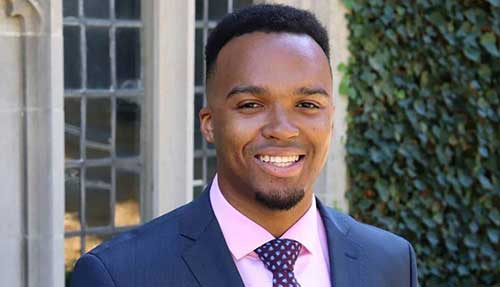
Princeton University has named its first Black valedictorian in the school’s 274-year history.
Nicholas Johnson, a Canadian student majoring in operations research and financial engineering, has been named valedictorian of Princeton’s Class of 2020, the university announced in a news release.
“It feels empowering. Being Princeton’s first Black Valedictorian holds special significance to me particularly given Princeton’s historical ties to the institution of slavery,” Johnson told CNN via Facebook message. “I hope that this achievement motivates and inspires younger Black students, particularly those interested in STEM fields.”
The graduating senior’s favorite memories at school were those spent with “close friends and classmates engaging in stimulating discussions — often late at night — about our beliefs, the cultures and environments in which we were raised, the state of the world, and how we plan on contributing positively to it in our own unique way,” Johnson said in the school’s news release release.
He also said he appreciated the university for encouraging him to explore his interests by supporting him with international internships and cultural immersion trips to Peru, Hong Kong and the United Kingdom.
Johnson’s senior thesis focused on developing algorithms to design a community-based preventative health intervention to decrease obesity in Canada.
A member of the Princeton chapter of Engineers Without Borders, Johnson also worked as a software engineer in machine learning at Google’s California headquarters during his time at Princeton.
Johnson also has a lot to look forward to. This summer, he will intern as a hybrid quantitative researcher and software developer at the D.E. Shaw Group, a global investment and technology development firm.
In the fall, Johnson will begin his PhD. studies in operations research at the Massachusetts Institute of Technology.
Although the coronavirus pandemic canceled Princeton’s in-person graduation ceremony, the school is still holding a virtual one on May 31.
Johnson told CNN it’s “disappointing” to not be able to celebrate as a class together in person this year. However, he said he is thankful to the administration for its commitment “to hosting an in person commencement for my class in Spring 2021 to celebrate our achievements.”
“I have been comforted to see how well my friends and classmates have adapted to these challenging times,” he said, “and have ensured that Princeton’s strong community persists virtually despite our physical separation from one another.”