Home Blog Page 356

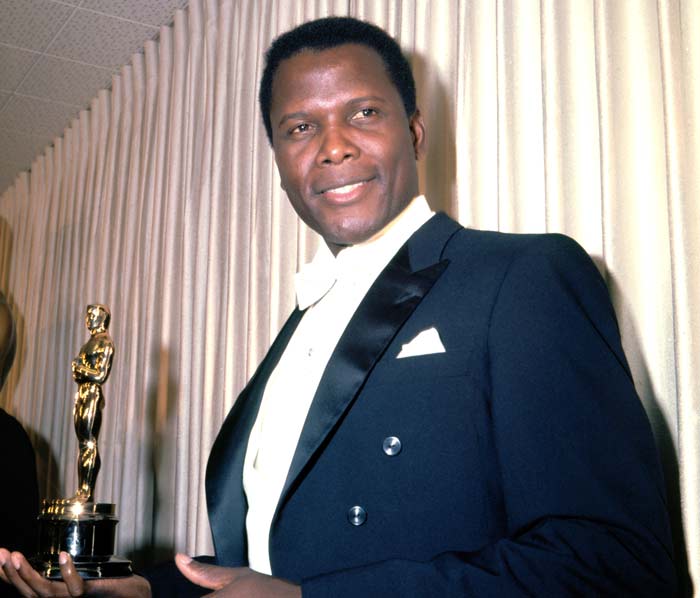
Sidney Poitier Dies: Hollywood Trailblazer, Activist, and Oscar Winner Was 94

Sidney Poitier, Oscar-winning actor, filmmaker, activist, and Hollywood trailblazer, has died at the age of 94. The news was shared by Minister of Foreign Affairs Fred Mitchell out of the Bahamas, where Poitier held dual citizenship.
Representatives for Poitier did not immediately return IndieWire’s request for comment.


Poitier broke the color barrier in Hollywood. Rising to superstar status in an industry that has forever been controlled on both sides of the camera by primarily white men, he was an actor, director, and producer who completely shifted perceptions of race that had long been held, prior to his arrival, by both audiences and studio executives.
Getting his start in the 1940s, as a member of Harlem’s American Negro Theatre, where he met lifelong friend Harry Belafonte, Poitier emerged as one of the most talented actors of his era. He was among the first Black actors to appear alongside white actors, in leading roles in films, let alone star in them. In the 1930s, ’40s and ’50s, most Black actors were relegated to projects with strictly African-American casts.


Poitier paved the way for more complex roles for Black actors, and by the time he became the first Black actor to win a Best Actor Academy Award, for “Lilies of the Field” (1963) — one of the most affecting films about faith and magnanimity — he had become a well-respected performer.
Anne Bancroft, presenting him with the Oscar, kissed Poitier on the cheek, which outraged conservatives at a time when the fight for civil rights was in full bloom. Poitier’s Oscar was meant to be a symbol that Hollywood was changing, although 57 years later, there’s still much that can be done to approach anything that resembles parity.
“I felt very much as if I were representing 15, 18 million people with every move I made,” he wrote in his 2000 memoir, “The Measure of a Man: A Spiritual Autobiography.”
Given his star power and isolation at the time as a Black actor in Hollywood, he kind of was.


Born in Miami but raised on Cat Island in the Bahamas, Poitier grew up poor. Though his tomato farmer parents had little money, Poitier knew that expectations were high.
At the age of 15, he moved to Florida, then to New York City, where he earned a living at restaurants, washing dishes, in exchange for acting lessons.


But his thick Caribbean accent and inability to sing and read were major hurdles.
“I didn’t know where I was going next,” Poitier wrote. “But I knew that failure wasn’t an option.”
While other Black actors tended to fulfill stereotypical roles, Poitier, who eventually taught himself to read, and modeled his speaking style on American newscasters, demanded to be treated equally with whites.


In 1946, he understudied for Harry Belafonte — who would eventually become a close friend and confidant — in the play “Days of Our Youth,” before landing a small part in an all-Black production of “Lysistrata,” that same year.
His first film role was in Joseph L. Mankiewicz’s Oscar-nominated film, “No Way Out” (1950), which co-starred Richard Widmark.


The film cast him as a young Black doctor who endures the bigotry of his mostly white patients. This pivotal role marked the creation of what would become the quintessential Sidney Poitier character — one that typically faced complicated issues of race with a combination of vulnerability, anger, and dignity.
It was a splashy screen debut for Poitier, which earned him considerable acclaim and recognition. Nevertheless, he was still in the shadows of his white colleagues.


He co-starred with John Cassavetes in Martin Ritt’s feature directing debut, “Edge of the City” (1957), a drama that explored the working-class American experience, via unions and racial integration.


Stardom followed with “The Defiant Ones” in 1958, which arguably laid the foundation for so-called “interracial buddy” films. The story about two convicts on the run (one Black, one white), is a tale of racial reconciliation that was released decades before Oscar-winning films like “Driving Miss Daisy” and “Green Book.” But the film was very much a product of his time, and its themes would come to define the projects Poitier accepted throughout his career.
His performance earned him his first Academy Award nomination.


Five years later, Poitier was nominated again and won the Oscar for “Lilies of the Field” (1963), becoming the first Black actor to win for a leading role.


And what was probably his peak year, 1967, saw him in an electrifying performance as a Black detective from the north trying to solve a murder in a southern town, in Norman Jewison’s “In the Heat of the Night,” likely most remembered for the “slap heard round the world”; and in Stanley Kramer’s “Guess Who’s Coming to Dinner?”, which was simultaneously groundbreaking for its portrayal of an interracial relationship, but also criticized for its white liberal pandering. Luckily, the actors carried the day, particularly Poitier and Spencer Tracy, in a swan-song performance.
That same year, he relocated to the east end of London for the sentimental high school drama “To Sir, With Love,” forfeiting his usual $1-million salary in exchange for a share of the profits.


Sandwiched between his first film role and his peak year were unheralded titles like the romance “Paris Blues” (1961), another Martin Ritt film, co-starring Paul Newman; and the thriller, “The Slender Thread” (1965), which was Sydney Pollack’s directorial debut, co-starring Anne Bancroft.


But the perception of Poitier as a Black American symbol — a kind of Black saint — and the willingness of whites to want to be affiliated with him, came with complications.


For example, in his 1973 book “Toms, Coons, Mulattoes, Mammies & Bucks,” prominent African American film and TV critic Donald Bogle wrote that Poitier’s characters “spoke proper English, dressed conservatively,” and were “almost sexless and sterile […] The perfect dream for white liberals anxious to have a colored man in for lunch or dinner.”
Stung by the criticism, Poitier retreated to the Bahamas to reassess his career. When he re-emerged, he adjusted his energies from acting to directing.


As he said in his memoir: “A shift in the tide had taken place, so I bought a boat and a lot of books and just went down to the Caribbean and cooled it for about a year.”
At the time, Poitier, who expressed concern over blaxploitation films, worried that Black youth exposed to a constant stream of Black actors portraying drug dealers, pimps, and prostitutes might begin to idolize these characters. He aimed to direct work that would be seen as refreshing, family friendly alternatives.


“Buck and the Preacher” (1972) was a semi-historical account of the emigration of ex-slaves to the western frontier.
“Uptown Saturday Night” (1974) was the first of a trilogy of comedies that was followed by “Let’s Do It Again” (1975) and “A Piece of the Action” (1977).


In “Stir Crazy” (1980), his role as director was overshadowed by the performances of stars Gene Wilder and Richard Pryor. But it was the first movie by a Black director to break $100 million at the box office.
Although, his final directorial effort, “Ghost Dad” (1990) starring Bill Cosby, was a surprisingly misconceived effort that was universally panned by critics and a box office bomb.


The private Poitier was maybe more complicated than the characters he played. His first marriage to Juanita Hardy, a former model and dancer, and mother of their four children, was tested by a nine-year affair with actress Diahann Carroll, which both admitted to.

“The guilt of that was something that 11 years of psychotherapy couldn’t ‘cure’,” he wrote.
Poitier finally divorced Hardy in 1965, after 15 years of marriage.
He eventually remarried Canadian actress Joanna Shimkus in 1976. They had two children together, including actress Sydney Tamiia Poitier (“Death Proof”).
Throughout his career, the actor, director, author, ambassador, and philanthropist earned a legion of awards and honors, including a knighthood and the Presidential Medal of Freedom.


Also a thinker and critic, as a cultural icon, his career depicted the 20th-century history of Black people in American cinema, and his emphasis on playing virtuous characters was renegade.
He broke down barriers, and was recognized as a highly revered actor, and not just a Black actor. His films have become classics, and his screen presence was infinitely captivating. He was, and still very much is, a star in every sense of the word.
What’s Going On – 1/13

JANUARY 6
The NY Times January 2, 2022 editorial, “Every Day is Jan 6 Now,”  is required reading  for anyone interested in preserving American democracy.  It  says that ‘1/6/21, is not in the past; it is every day.”  
“It is regular citizens who threaten election officials and public servants  and who want  to know when can we use the guns.”   It continues. “Republican  lawmakers are making it harder for people to vote and easier to subvert their  will if they do.  And Donald Trump and “his twisted version of reality” continue to dominate the GOP.
The essay says, “In short, the Republic faces an existential threat from a movement that is openly contemptuous of democracy and has shown that it is willing to use violence to achieve its ends. No self-governing society can survive such a threat by denying that it exists. Rather survival depends on looking back and forward at the same time.” Consider today’s American political landscape. “Republican lawmakers in 41 states have been trying to advance the goals of the Jan 6 rioters – not by breaking laws but by making them.” Battleground states like AZ, GA , PA are GOP’s major targets. Piece is rife with stats about Republicans “who believe that Biden was not legitimately elected in 2020 election and who approve violence to achieve political goals.”


Editorial faults Democrats who have slim Congressional majorities in the House and Senate, “for failing to confront the urgency of this moment, unwilling or unable to take action to protect elections from subversion and sabotage.” It concludes. “Mr. Biden and other leading Democrats should make use of what remaining power they have to end the filibusters for voting rights legislation, even if nothing else.” On 1/10, President Joe Biden and VP Kamala Harris traveled to Atlanta to make peace with voting rights advocates, many of whom boycotted the Biden/Harris summit, including 2022 Georgia gubernatorial hopeful Stacey Abrams.
The January 9 issue of the NYT includes President Jimmy Carter’s opinion piece, “America’s Democracy Is In Danger,” is another must read. He says “One year ago, a violent mob, guided by unscrupulous politicians stormed the Capitol and almost succeeded in preventing the democratic transfer of power. All four presidents condemned their actions and affirmed the legitimacy of the 2020 election.” He adds. “According to the Survey Center on American Life, almost 100 million adults across the political spectrum – agree that “the traditional American way of life is disappearing so fast that we may have to use force to save it.” He fears that the American right to free fair elections, “has become dangerously fragile at home.” He cites a 5-point plan to preserve American democracy.
While writing WGO, I received an email with a link to the 1/10 Charlotte Observer article, “Realistic Guerrilla War Exercises to be Fought Across Rural Counties, Army Warns.” US Intel is not asleep at the wheel!

CORONAVIRUS VACCINE
The Israelis are working on a 4th or 5th booster shot while the rest of the world lags behind. In the USA 243,527, 564 million, 74% of those eligible have had at least one vaccination. In the US, Coronavirus variants, Delta and Omicron have taken up residency. Pfizer will have an Omicron vaccine ready by March.
In NY, visit any of the city’s Health & Hospitals facilities to be vaccinated. Americans are advised to get vaccinated, get booster shot, get the annual flu shot, and get tested for the virus.

NEW YORK, NY
Eric Adams, the 110th Mayor of NYC, hit the ground running on January 1. The New Year’s ball dropped, and Adams was sworn in a few minutes later. Hizzoner is energetic, a man with a plan and vision to burnish the image of NY as America’s greatest city. A manager, a showman, a troubleshooter, Adams is ubiquitous, throughout the five boroughs, at subway stations, places of worship, public schools, crime scenes, visiting hospitals. He rushed to the scene of the deadly Bronx inferno, a five alarm fire, which claimed the lives of 17 people, including 8 children, most of them from Gambia, a West African nation. He set up a city fund for residents whose apartments were no longer habitable. The NY Fire Department, NY’s bravest, continues to be applauded by the building’s tenants for its excellence and professionalism under pressure.

NEWSMAKER
RIP: Sidney Poitier, 94, died. A man for all seasons, he was born in Miami. Florida on 2/20/1924, to Bahamian parents, people of modest means. He spent his childhood in the Bahamas, in Cat Island and Nassau, until he was sent to Florida, before he relocated to NY when he was 16. He arrived low in cash and heavy with a thick Caribbean accent. He worked odd jobs and joined the Army. He covered a lot of professional territory since his NY arrival. An actor, director, civil rights advocate, ambassador and philanthropist, Poitier became an American legend. He was the first Black man to win Hollywood’s most cherished prize, an Oscar for Best Actor in “Lilies of the Field.” About three generations of African Americans can recite his filmography which includes “Guess Who’s Coming To Dinner,” “Black Board Jungle,” “The Defiant Ones,” and “To Sir With Love.” My favorite Poitier film was “In the Heat of the Night,” when he slapped a racist white man in the face. That slap resonated all over the world. The viewer sensed that America was coming of age, if you view films sociologically. Poitier’s characters were willy-nilly statements about American race relations.
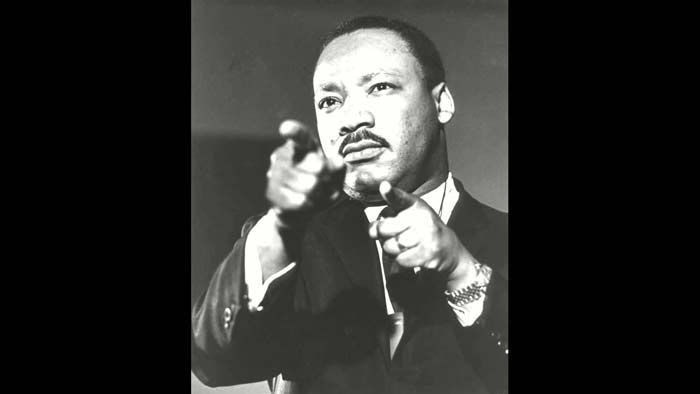
A good friend and supporter of Dr. Martin Luther King, he attended the March on Washington and the Black Political Convention in Gary, Indiana in 1972. Harry Belafonte was his BFF. Knighted by Queen Elizabeth in 1974, Poitier was the Bahamas Ambassador to UNESCO.

JANUARY CALENDAR
BAM: Dr. Martin Luther King Day, January 17: The Brooklyn Academy of Music and the Brooklyn Borough President’s Office co-host the 36th Annual Brooklyn Tribute to Dr. Martin Luther King, Jr. Talks, at BAM or via livestream. Tribute lineup: talks with scholars and civil rights leaders and performances by local artists, including Nona Hendryx with Craig Harris and Tailgaters Tales; a dance piece by Kyle Marshall; and the Mama Foundation’s SING HARLEM choir. Program will be held at BAM or via livestream.
NY Restaurant Week is back from January 18 to February 13. Dine at city’s top bistro’s at affordable price points: $29, $39, $59 Visit nycgo.com

A Harlem-based media strategy consultant, Victoria’s email address is victoria.horsford@gmail.com

BAM’s 36th Annual Dr. Martin Luther King, Jr. Birthday Tribute

“Give Us the Ballot” Address Delivered at the Prayer Pilgrimage for Freedom

Not only is The Brooklyn Academy of Music not canceling its annual Dr. King birthday tribute, but it’s also expanded the free programming this year. Events will take place on Monday, January 17 at 10:30 am in the Opera House, the BAM Harvey Theater, BAM Cinema and address BAM CAfe. Nona Hendryx will perform with Craig Harris & Tailgaters Tale and Reggie Wilson’s dance company Fist and Heel will perform his latest piece, POWER, Dr. Imani Perry delivers the keynote, there will be a screening of the documentary Attica by Stanley Nelson. A Black photographers’ exhibition inspired by the late genius, bell hooks and BAMkids will offer special activities. All visitors must present proof of vaccination and ID to attend.


Contact Assembly Member Stefani L. Zinerman


The following is an excerpt from the May 17, 1957 speech by Martin Luther King, Jr.in Washington D.C. on the topic of Brown v. Board of Education and Voting Rights.
Although made 65 years ago, it is sadly even more relevant today. For those who have heard King speak over the years, you have the added enjoyment of hearing his voice in these words.

By Martin Luther King Jr.

[From The Martin Luther King, Jr. Research and Education Institute at Stanford University]
Mr. Chairman, distinguished platform associates, fellow Americans. Three years ago the Supreme Court of this nation rendered in simple, eloquent, and unequivocal language a decision which will long be stenciled on the mental sheets of succeeding generations. For all men of goodwill, this May seventeenth decision came as a joyous daybreak to end the long night of human captivity. It came as a great beacon light of hope to millions of disinherited people throughout the world who had dared only to dream of freedom.


Unfortunately, this noble and sublime decision has not gone without opposition. This opposition has often risen to ominous proportions. Many states have risen up in open defiance. The legislative halls of the South ring loud with such words as “interposition” and “nullification.”

But even more, all types of conniving methods are still being used to prevent Negroes from becoming registered voters. The denial of this sacred right is a tragic betrayal of the highest mandates of our democratic tradition. And so our most urgent request to the president of the United States and every member of Congress is to give us the right to vote.

Audience: Yes!

Give us the ballot, and we will no longer have to worry the federal government about our basic rights.

Give us the ballot (Yes), and we will no longer plead to the federal government for passage of an anti-lynching law; we will by the power of our vote write the law on the statute books of the South (All right) and bring an end to the dastardly acts of the hooded perpetrators of violence.

Give us the ballot (Give us the ballot), and we will transform the salient misdeeds of bloodthirsty mobs (Yeah) into the calculated good deeds of orderly citizens.
Give us the ballot (Give us the ballot), and we will fill our legislative halls with men of goodwill (All right now) and send to the sacred halls of Congress men who will not sign a “Southern Manifesto” because of their devotion to the manifesto of justice. 5(Tell ’em about it) 

Give us the ballot (Yeah), and we will place judges on the benches of the South who will do justly and love mercy (Yeah), and we will place at the head of the southern states governors who will, who have felt not only the tang of the human, but the glow of the Divine.

Give us the ballot (Yes), and we will quietly and nonviolently, without rancor or bitterness, implement the Supreme Court’s decision of May seventeenth, 1954. (That’s right)

In this juncture of our nation’s history, there is an urgent need for dedicated and courageous leadership. If we are to solve the problems ahead and make racial justice a reality, this leadership must be fourfold.
First, there is need for strong, aggressive leadership from the federal government. So far, only the judicial branch of the government has evinced this quality of leadership. If the executive and legislative branches of the government were as concerned about the protection of our citizenship rights as the federal courts have been, then the transition from a segregated to an integrated society would be infinitely smoother. But we so often look to Washington in vain for this concern. In the midst of the tragic breakdown of law and order, the executive branch of the government is all too silent and apathetic. In the midst of the desperate need for civil rights legislation, the legislative branch of the government is all too stagnant and hypocritical.

This dearth of positive leadership from the federal government is not confined to one particular political party. Both political parties have betrayed the cause of justice. (Oh yes) The Democrats have betrayed it by capitulating to the prejudices and undemocratic practices of the southern Dixiecrats. The Republicans have betrayed it by capitulating to the blatant hypocrisy of right wing, reactionary northerners. These men so often have a high blood pressure of words and an anemia of deeds. [laughter]

In the midst of these prevailing conditions, we come to Washington today pleading with the president and members of Congress to provide a strong, moral, and courageous leadership for a situation that cannot permanently be evaded. We come humbly to say to the men in the forefront of our government that the civil rights issue is not an ephemeral, evanescent domestic issue that can be kicked about by reactionary guardians of the status quo; it is rather an eternal moral issue which may well determine the destiny of our nation (Yeah) in the ideological struggle with communism. The hour is late. The clock of destiny is ticking out. We must act now, before it is too late.

A second area in which there is need for strong leadership is from the white northern liberals. There is a dire need today for a liberalism which is truly liberal. What we are witnessing today in so many northern communities is a sort of quasi-liberalism which is based on the principle of looking sympathetically at all sides. It is a liberalism so bent on seeing all sides, that it fails to become committed to either side. It is a liberalism that is so objectively analytical that it is not subjectively committed. It is a liberalism which is neither hot nor cold, but lukewarm. (All right) We call for a liberalism from the North which will be thoroughly committed to the ideal of racial justice and will not be deterred by the propaganda and subtle words of those who say: “Slow up for a while; you’re pushing too fast.”

A third source that we must look to for strong leadership is from the moderates of the white South. It is unfortunate that at this time the leadership of the white South stems from the close-minded reactionaries. These persons gain prominence and power by the dissemination of false ideas and by deliberately appealing to the deepest hate responses within the human mind. It is my firm belief that this close-minded, reactionary, recalcitrant group constitutes a numerical minority. There are in the white South more open-minded moderates than appears on the surface. These persons are silent today because of fear of social, political and economic reprisals. God grant that the white moderates of the South will rise up courageously, without fear, and take up the leadership in this tense period of transition.

I cannot close without stressing the urgent need for strong, courageous and intelligent leadership from the Negro community. We need a leadership that is 1957 calm and yet positive. This is no day for the rabble-rouser, whether he be Negro or white. (All right) We must realize that we are grappling with the most weighty social problem of this nation, and in grappling with such a complex problem there is no place for misguided emotionalism. (All right, That’s right) We must work passionately and unrelentingly for the goal of freedom, but we must be sure that our hands are clean in the struggle. We must never struggle with falsehood, hate, or malice. We must never become bitter. I know how we feel sometime. There is the danger that those of us who have been forced so long to stand amid the tragic midnight of oppression—those of us who have been trampled over, those of us who have been kicked about—there is the danger that we will become bitter. But if we will become bitter and indulge in hate campaigns, the old, the new order which is emerging will be nothing but a duplication of the old order. (Yeah, That’s all right)
We must meet hate with love. (Yeah) We must meet physical force with soul force. There is still a voice crying out through the vista of time, saying: “Love your enemies (Yeah), bless them that curse you (Yes), pray for them that despitefully use you.”6 (That’s right, All right) Then, and only then, can you matriculate into the university of eternal life. That same voice cries out in terms lifted to cosmic proportions: “He who lives by the sword will perish by the sword.”7 (Yeah, Lord) And history is replete with the bleached bones of nations (Yeah) that failed to follow this command. (All right) We must follow nonviolence and love. (Yes, Lord) 

Now, I’m not talking about a sentimental, shallow kind of love. (Go ahead) I’m not talking about eros, which is a sort of aesthetic, romantic love. I’m not even talking about philia, which is a sort of intimate affection between personal friends. But I’m talking about agape. (Yes sir) I’m talking about the love of God in the hearts of men. (Yes) I’m talking about a type of love which will cause you to love the person who does the evil deed while hating the deed that the person does. (Go ahead) We’ve got to love. (Oh yes)

Prominent Guyanese-born Attorney, Colin A. Moore, has Died

0


NEW YORK, United States (CMC) — Prominent Caribbean attorney, civil rights advocate, and political and community activist, Colin A Moore, has died.  He was 80 years old.


President of the Brooklyn, New York-based Guyana Tri-State Alliance, Inc, Patricia Jordon-Langford said that Moore, who is also best known for the role he played as a lawyer in defending the ‘Central Park Joggers’ trial, “passed away quietly” on Sunday.


Grenadian Gerry Hopkins, a community activist and publicist, described Moore as “a stalwart Caribbean-American father, husband, activist, lawyer, lecturer, politician, analyst and community organizer”.
He said Moore, who was born in Guyana, on April 24, 1941, “sadly died of natural causes at the age of 80 in New York City”.


Moore was admitted to the New York State Bar in February 1979.
“Colin Moore was a skilled and tactical attorney who represented many high-profile cases in New York that sometimes provoked the ire of the reactionaries.  He was a civil rights advocate and a proponent for justice, and a patriot for his country of birth, Guyana,” said Jordon-Langford, noting that in 2019, the American Documentary Crime Drama television miniseries, “When They See Us”, directed by Ava DuVernay for Netflix, was released to wide acclaim, based on events of the 1989 Central Park Jogger’s case.


The film explored the lives of the five Black and Latino male suspects, who were falsely accused, prosecuted and falsely convicted for the rape and assault of a white woman in Central Park in Manhattan.
Jordon-Langford said that Moore was the lawyer who represented one of the “Central Park Five” suspects, Korey Wise, 16.


“And he fought valiantly to prove that the youths were coerced against a blanket of media frenzy. Thirty years later, they were all exonerated after spending six to 13 years in prison. At that time, they were all minors.
“Attorney Colin A Moore your work is done on this earth. You left an indelible legacy of civil rights activism. Rest in eternal peace.”
Former Brooklyn Supreme Court Justice, Reynold Mason, a Grenadian, said Moore was “a standout attorney in the Central Park jogger case”.


“He was a noted public speaker and political analyst,” said Mason, adding “The people of New York, and the people of the Caribbean in particular, owe much to this trailblazing Caribbean pioneer. His presence will be sorely missed.”
Mason said Moore graduated from the University of West Indies (UWI) with a Bachelor of Science degree (Honors) in economics.


On his return to Guyana, Moore was appointed executive director of the National History and Culture Council in 1964, “and helped to create the foundations of a national culture in Guyana,” Mason said.
“He lobbied to have February 23rd, the date of the Berbice Slave Rebellion, declared a national holiday, and to have Kofi, the leader of the Berbice Slave Rebellion, designated as Guyana’s first national hero,” he added.
Mason said Moore migrated to New York in 1970, attended Brooklyn Law School in September 1975 and graduated in June 1978, with the degree of Jurist Doctor.


“Moore will be remembered as a formidable visionary, articulate voice and advocate for the rights of African Americans and immigrants in the Diaspora. My deepest condolences are extended to the wife and children of the late great, brilliant, inspiring and impactful, Colin Moore.”


Yvette Rennie, the Trinidadian-born president of the Brooklyn-based J’Ouvert City International, organizer of the annual Caribbean J’Ouvert in Brooklyn, said the Caribbean community has “lost another trailblazer”.
Moore is survived by his Guyanese-born wife, Ela.

Is Your High-Rise Equipped For Fire?

In the aftermath of the deadly Bronx fire that killed at least 17 people, experts laid out some of the steps residents living in high-rise buildings can take to ensure their safety during a fire emergency.


The recommendations are based on interviews with Charles Jennings, associate professor of Security, Fire, and Emergency Management and director of the Christian Regenhard Center for Emergency Response Studies at John Jay College of Criminal Justice and Steve Zirinsky, co-chair of the American Institute of Architect New York’s Building Code Committees.


Smoke detectors: Make sure there is a smoke detector in each bedroom and one within 15 feet of the bedrooms. In new residential high-rises, buildings less than a decade old, the law requires smoke detectors to be hard-wired, or permanently connected to the building’s electrical system. Residents of older buildings will find separate smoke detectors attached to the ceilings or walls. Check regularly to see that they are operating properly, and the batteries are still good.


Self-closing doors: These doors are designed to control and contain fires for up to an hour and a half. If the fire is inside the apartment, the door will prevent the blaze from spreading into the hallway. If a public hallway catches fire, the self-closing doors will prevent fire from spreading into the apartments. Make sure the doors work as intended and remember to close them when leaving your apartment during a fire.


Emergency Exits: Know where they are and how to get there. For residents with mobility issues, plan on how to get out of the buildings if elevators are out of service. If you live on the 19th floor, how will you get downstairs or up to the roof?


Fire alarm with public address capability: A public address system allows fire officials to communicate with residents and provide guidance to those trapped inside high-rises. The fire department could ask residents to stay inside their apartments while firefighters check on fire in the building. Fire officials can use the public address system to evacuate residents when it’s safe to do so. Absent such a system, there are no real means for fire officials to communicate with all tenants at once.


Fire sprinklers: Does your high-rise have a building-wide sprinkler system? After two deadly fires in 1999, New York City enacted a law that required sprinkler systems in most new residential buildings and existing ones that underwent extensive renovations.


How do I complain and to whom? If your building doesn’t have these basic systems, the first step is to alert your building management company, landlord or super. If that doesn’t work, call 311 or file a complaint here with the Department of Buildings.