
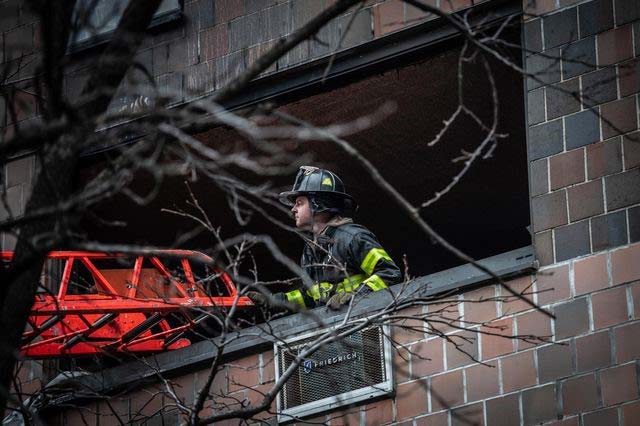

In the aftermath of the deadly Bronx fire that killed at least 17 people, experts laid out some of the steps residents living in high-rise buildings can take to ensure their safety during a fire emergency.
The recommendations are based on interviews with Charles Jennings, associate professor of Security, Fire, and Emergency Management and director of the Christian Regenhard Center for Emergency Response Studies at John Jay College of Criminal Justice and Steve Zirinsky, co-chair of the American Institute of Architect New York’s Building Code Committees.
Smoke detectors: Make sure there is a smoke detector in each bedroom and one within 15 feet of the bedrooms. In new residential high-rises, buildings less than a decade old, the law requires smoke detectors to be hard-wired, or permanently connected to the building’s electrical system. Residents of older buildings will find separate smoke detectors attached to the ceilings or walls. Check regularly to see that they are operating properly, and the batteries are still good.
Self-closing doors: These doors are designed to control and contain fires for up to an hour and a half. If the fire is inside the apartment, the door will prevent the blaze from spreading into the hallway. If a public hallway catches fire, the self-closing doors will prevent fire from spreading into the apartments. Make sure the doors work as intended and remember to close them when leaving your apartment during a fire.
Emergency Exits: Know where they are and how to get there. For residents with mobility issues, plan on how to get out of the buildings if elevators are out of service. If you live on the 19th floor, how will you get downstairs or up to the roof?
Fire alarm with public address capability: A public address system allows fire officials to communicate with residents and provide guidance to those trapped inside high-rises. The fire department could ask residents to stay inside their apartments while firefighters check on fire in the building. Fire officials can use the public address system to evacuate residents when it’s safe to do so. Absent such a system, there are no real means for fire officials to communicate with all tenants at once.
Fire sprinklers: Does your high-rise have a building-wide sprinkler system? After two deadly fires in 1999, New York City enacted a law that required sprinkler systems in most new residential buildings and existing ones that underwent extensive renovations.
How do I complain and to whom? If your building doesn’t have these basic systems, the first step is to alert your building management company, landlord or super. If that doesn’t work, call 311 or file a complaint here with the Department of Buildings.