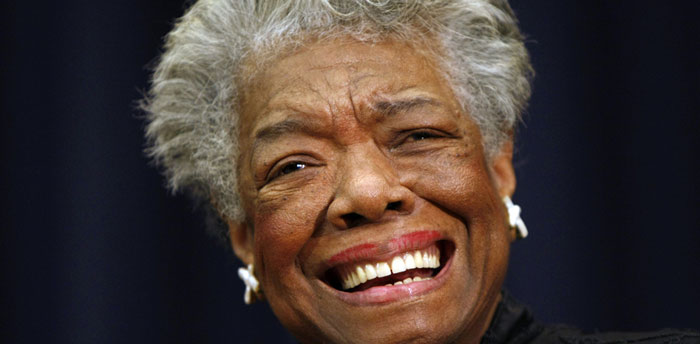
Eight years after her death, acclaimed poet, author and civil rights activist Maya Angelou has landed another historic honor. She is now the first Black woman ever to appear on an official United States coin. CNN’s Sarah Fortinsky and Devan Cole reported that a new U.S. quarter featuring the late Angelou began being circulated by the United States Mint on Jan. 10.
“The Maya Angelou quarter is the first in the American Women Quarters Program, which will include coins featuring prominent women in American history,” Fortinsky and Cole said. “Other quarters in the series will begin rolling out later this year.”
According to CNN, the quarter series will also honor Sally Ride, the first American woman in space; Asian American actress Anna May Wong; Cherokee Nation leader Wilma Mankiller; and suffragette and politician Nina Otero-Warren.
In a statement celebrating the newly released coin, Treasury Secretary Janet Yellen said: “Each time we redesign our currency, we have the chance to say something about our country — what we value, and how we’ve progressed as a society. I’m very proud that these coins celebrate the contributions of some of America’s most remarkable women, including Maya Angelou.”
Fortinsky and Cole reported that “the new coin still features George Washington’s visage on the ‘heads’ side, while the ‘tails’ side honors Angelou by evoking one of her most famous works, the autobiography I Know Why the Caged Bird Sings.”
California Representative Barbara Lee, who introduced the Circulating Collectible Coin Redesign Act of 2020 that ultimately led to the Angelou quarter, said she was pleased the effort had finally come to fruition. “The phenomenal women who shaped American history have gone unrecognized for too long — especially women of color,” she tweeted. “Proud to have led this bill to honor their legacies.” Although Lee promoted the redesign of the nation’s quarters, the subjects who ultimately won a place on the coins were determined by the general public.
“The U.S. Mint invited the public to submit names of women they view as American icons,” Fortinsky and Cole explained. “The bureau welcomed entries of women known for their work in civil rights, science and the arts, among other areas, with an emphasis on women from ‘ethnically, racially and geographically diverse backgrounds.’ The only requirement was that the women who appear on the coins must be deceased.”
Additional coins in the series will be released through 2025.
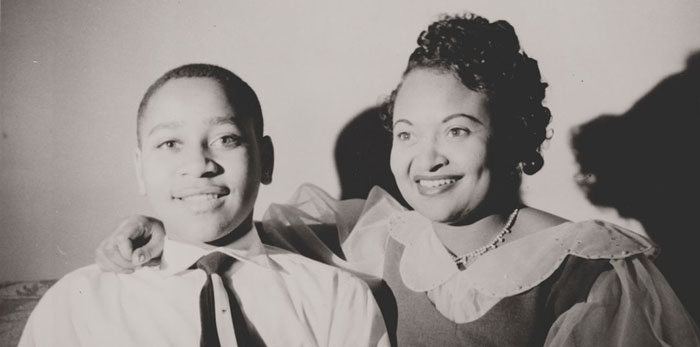
Emmett Till, a Chicago teen killed in the 1950s for the color of his skin, will be awarded a congressional gold medal. The then teen’s mother, Mamie Till-Mobley, will also be awarded after she asked for the opening of the casket during burial as a way to decry the social vice that led to the murder of her son.
According to some witnesses, Emmett whistled at a white Mississippi woman. The act breached the “South’s racist societal codes” of those days. However, other witnesses who were with the teen said the information was not valid. Before his murder, Emmett was abducted and tortured.
The teen’s killing caused pain in the hearts of social rights activists, especially after his mother showcased his dehumanized body in an open casket. Photos of his brutalized body also ended up in the papers after the Jet Magazine published them.
However, it’s nearly 7 decades after the painful death of the Black teenager yet there have not been any clear details concerning the murder. Besides two white men who confessed to having been involved in the murder back in 1955, one more person was reportedly a person of interest in Emmett’s abduction.
This has, over time deepened the void in Emmett’s family, who have lived through the years with unanswered questions. “Nothing was settled. The case is closed, and we have to go on from here,” Emmett’s close relative, Thelma Wright Edwards, told a Chicago news conference.
“On abstract levels, truth has been lost and justice has been lost. The complexity of what happened has been lost,” said Dave Tell, a professor at the University of Kansas who wrote “Remembering Emmett Till.”
In a new turn, the senate has passed a bill to award Emmett and his mother with the highest civilian honor awarded by Congress. The award is given in recognition of “what the Till family endured and what they accomplished in their fight against injustice.”
Can Senate candidates Mandela Barnes and Malcolm Kenyatta Save the Biden-Harris agenda?
President Biden and Vice President Harris’s legislative agenda is at the mercy of Sens. Manchin and Sinema. Senate candidates Malcolm Kenyatta and Mandela Barnes could change that if elected.
On the heels of a stunning demonstration of party disunity among Democrats on Thursday and near certain defeat of the imminent U.S. Senate vote on a voting rights bill as consequential as the Voting Rights Act of 1965, the people of Pennsylvania and Wisconsin may have the opportunity to send a needed lifeline to Washington to shift the ideological chasm and resuscitate the languishing Biden-Harris White House legislative agenda.
“If we don’t get it done, then we have to get more votes in the Senate that can meet the moment that we’re in right now. We need to get to a point where there are more Democrats who care about protecting our democracy,” Pennsylvania State House Representative Malcolm Kenyatta told theGrio.
Kenyatta is running for the U.S. Senate seat up for election in the Keystone State. “If folks like Senator Sinema aren’t willing to do the right thing, then we are going to need to get more votes to make sure that her intransigence doesn’t rule the day,” he said.
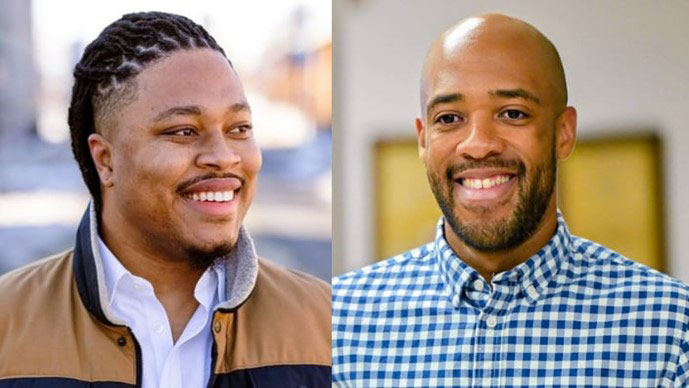
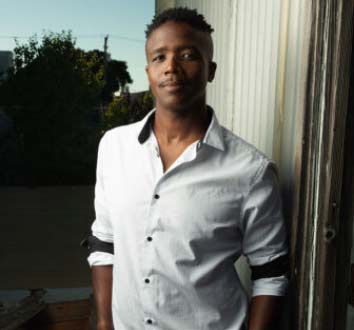
Left: Pennsylvania State House Representative Malcolm Kenyatta is running for election in the Keystone State. Right: Wisconsin Lt. Governor Mandela Barnes is running for a mid term election victory.
Kenyatta and Wisconsin Lt. Governor Mandela Barnes, who is also aiming to be elected to the Senate in this year’s 2022 midterm elections, would be only the second and third millennial ever elected to the United States Senate, following the election of Senator Jon Ossoff (D-Ga.) one year ago.
“We have to reimagine how we follow the will of the people and how we not only protect but expand democracy. We can bring new leaders who don’t come from rich ivy league schools or wealthy families,” said Quentin James, founder and president of The Collective PAC, whose mission is to build Black political power.
“These folks are going to bring a different perspective into this chamber of government, but ultimately, we’re looking to change the institutions so that democracy can flourish because right now it’s not.” If these two young, gifted, and Black rising stars in the Democratic Party closely aligned with the working class, clench what may be a hard fought victory in the fall, 2020 voters may get a fresh shot at the transformative change they hoped for in the darkest days of the pandemic.
“They [Lt. Governor Barnes and State Representative Kenyatta] would begin to restore confidence amongst parts of the democratic coalition that do not feel represented and did not feel prioritized,” Terrance Woodbury, CEO & founding partner of HIT Strategies, told theGrio.
“You know, it is quite remarkable that 56% of Black voters under the age of 50, feel like Democrats take their votes for granted. Adding these young, Black millennials to the U.S. Senate begins to give representation to voters and not just voters in Wisconsin and Pennsylvania.”
Woodbury added, “What AOC represents in Congress is not just the 350,000 constituents in her district, she represents a growing urgent progressive wing of the party far beyond the limits of her district in New York. And that’s what Democrats have to start taking advantage of, is that as the big tent party representation is not just geographic; representation is demographic, it’s ideological, and bringing in these diverse new Senators would help them reach voters that currently feel taken for granted.”
The potential for mass disenfranchisement will effectively make the efforts of Barnes and Kenyatta — and every high-potential candidate like them — more difficult in the absence of federal action. “We are facing unprecedented attacks on our fundamental right to vote everywhere — this will impact every election for every candidate. This is bigger than just my race. Right here in Wisconsin, cynical politicians are trying to rig the system so they can pick their voters, instead of allowing voters to pick their politicians,” Lt. Governor Barnes told theGrio.
“My opponent, Senator Ron Johnson has called for a partisan takeover of our elections. We’re even seeing partisan politicians making it a crime to hand bottles of water to voters waiting in long lines at polling locations. We have to act now.” “Voting rights are one of the most important things that voters of color are demanding that our leaders get done in Washington. And if that doesn’t get done, I worry about that leading to a lot of people throwing up their hands and staying home,” said Pennsylvania State Rep. Kenyatta.
“And if that occurs, we could lose the governor’s mansion and may lose the Senate seat here in Pennsylvania. We cannot afford for parts of our coalition to be out of the game because they’re pissed off about our inability to deliver.”
Ending the filibuster has become the gateway to the legacy building legislative agenda of President Joe Biden and Vice President Kamala Harris. Their agenda hangs in the balance at the mercy of Sen. Joe Manchin (D-W.Va.), Sen. Kyrsten Sinema (D-Arizona), and 50 Senate Republicans steadily resisting the President’s reinvigorated push to pass a voting rights bill.
“I think because of the lack of diversity, both gender, race, sexuality, all of it in the Senate, you have this old white, male, and stale politics that are at play. That’s really what the filibusters is about. It is keeping with tradition founded upon white supremacy and slavery,” said James.
“To have a majority of senators at this point not willing to reform it to pass a bill like voting rights, it is a sign that the institution is not just out of step with where the country is and where the majority American people are, but where our democracy should be.”
The Barnes and Kenyatta Senate campaigns represent either the prototype or moonshot at winning back Black and millennial voters in order to maintain, if not strengthen the Democrats grip on the Senate — especially in light of legislative losses on voting rights, policing reform, Build Back Better. Candidates like Barnes and Kenyatta can also help Democrats on their ideological message as it relates to Black male voters.
“I had focus groups last year with Black voters, oftentimes Black men who were at risk of defecting to the Republican party. When I would ask them, why were they less likely to vote for Democrats or why they were more likely to vote for Republicans, sometimes — not all times — it was because of ideological reasons,” said Woodbury of HIT Strategies. “It was because the party had gone too far left, or because they didn’t understand what was so wrong with the wall, along the border.
Woodbury added, “They didn’t understand what was so wrong with the gendering bathrooms. And so that’s why I’m very cautious that, if they don’t agree with us on every single issue that does not mean they are not our voters. It means you have to do a better job of messaging these issues to them end-to-end, to bring them along with us on this ideological journey.”
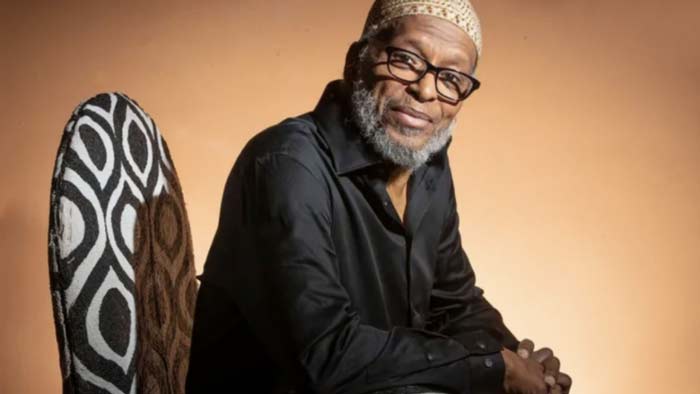
James Mtume, a reputed percussionist from Philadelphia, has reportedly breathed his last aged 75 years. His niece Lisa Lucas shared the news on Twitter, saying, “So much loss. So much grief. Rest in power to Uncle Mtume. My late father’s partner-in-crime[.] The co-creator of the songs of my life (and about my birth!). He was [an] essential part of the life of the man who made me, therefore me too. Gone now. He will be dearly, eternally missed.” The cause of the percussionist’s death hadn’t been established by the time of going to press.
Mtume is well known for his 1983 song “Juicy Fruit,” which was sampled by The Notorious B.I.G. for his 1994 debut single “Juicy.”
Mtume, an all-around musician, had a penchant for injecting conscience into his music and diving creatively into political, cultural, and artistic subjects. “Music is a unique art form. I mean all art is special,” he mentioned during his 2019 TedTalk. “But music is unique. It’s the only art form I know that can touch you, but you can’t touch it. What do I mean by that? I can touch a sculpture, I can touch a painting, I can touch a book of poetry. How do you touch a note? How do you touch sound? It runs through your body.”
Mtume, who was born James Forman in 1946, grew up in a musical household where jazz artists frequently visited his parents’ home. Despite receiving a swimming scholarship at Pasadena City College in 1966, he learnt to play the piano and percussion instruments.
Mtume as Forman would join Hakim Jamal and Maulana Karenga’s US Organization, a Black empowerment group, in the same year, taking on the moniker Mtume, which means “messenger” in Swahili. After joining Davis’ band, he made significant contributions to albums like On the Corner, Big Fun, Agharta, and Pangaea, as well as appearing on a number of projects with other notable musicians including Duke Ellington, Lonnie Liston Smith, Dizzy Gillespie, and Sonny Rollins, to mention a few.
Mtume’s shift from jazz pioneer to R&B maestro allowed his own band, Mtume, to stand out from the crowd. Fa Mtume, his son, is his only heir.
FORMS OF AUTOMATION such as artificial intelligence increasingly inform decisions about who gets hired, is arrested, or receives health care. Examples from around the world articulate that the technology can be used to exclude, control, or oppress people and reinforce historic systems of inequality that predate AI.
Now teams of sociologists and computer science researchers say the builders and deployers of AI models should consider race more explicitly, by leaning on concepts such as critical race theory and intersectionality. Critical race theory is a method of examining the impact of race and power first developed by legal scholars in the 1970s that grew into an intellectual movement influencing fields including education, ethnic studies, and sociology. Intersectionality acknowledges that people from different backgrounds experience the world in different ways based on their race, gender, class, or other forms of identity.
One approach presented before the American Sociological Association earlier this year coins the term algorithmic reparation. In a paper published in Big Data & Society, the authors describe algorithmic reparation as combining intersectionality and reparative practices “with the goal of recognizing and rectifying structural inequality.” Reparative algorithms prioritize protecting groups that have historically experienced discrimination and directing resources to marginalized communities that often lack the resources to fight powerful interests.
“Algorithms are animated by data, data comes from people, people make up society, and society is unequal,” the paper reads. “Algorithms thus arc towards existing patterns of power and privilege, marginalization, and disadvantage.” The three authors from the Humanizing Machine Intelligence project at Australian National University and Harvard’s Berkman Klein Center for Internet & Society argue that efforts to make machine learning more fair have fallen short because they assume that we live in a meritocratic society and put numerical measurements of fairness over equity and justice. The authors say reparative algorithms can help determine if an AI model should be deployed or dismantled. Other recent papers offer similar concerns about the way researchers have interpreted algorithmic fairness until now. The wider AI research community is taking note. The Fairness, Accountability, and Transparency conference recently said it will host a workshop focused on how to critique and rethink fairness, accountability, and transparency in machine learning. The University of Michigan will host an algorithmic reparation workshop in September 2022.
Still, researchers acknowledge that making reparative algorithms a reality could be an uphill battle against institutional, legal, and social barriers akin to those faced by critical race theory in education and affirmative action in hiring. Critical race theory has become a hot-button political issue, often wielded in ways that have little to do with the theory itself. Virginia governor-elect Glenn Youngkin attacked critical race theory as part of his successful campaign this fall. In Tennessee, an anti-critical-race-theory law led to criticism of books about the desegregation of US schools. By contrast, California governor Gavin Newsom this fall signed a law to make ethnic studies a high school graduation requirement by 2025. A recent study found that ethnic studies classes improved graduation and school attendance rates in San Francisco. At the same time, the 2020 Census found the US is more racially and ethnically diverse than ever. The share of Americans who identify as “white,” has declined, and the share who identify as white and another racial group has increased.
Supporters of algorithmic reparation suggest taking lessons from curation professionals such as librarians, who’ve had to consider how to ethically collect data about people and what should be included in libraries. They propose considering not just whether the performance of an AI model is deemed fair or good but whether it shifts power. The suggestions echo earlier recommendations by former Google AI researcher Timnit Gebru, who in a 2019 paper encouraged machine learning practitioners to consider how archivists and library sciences dealt with issues involving ethics, inclusivity, and power. Gebru says Google fired her in late 2020, and recently launched a distributed AI research center. A critical analysis concluded that Google subjected Gebru to a pattern of abuse historically aimed at Black women in professional environments. Authors of that analysis also urged computer scientists to look for patterns in history and society in addition to data.
Earlier this year, five US senators urged Google to hire an independent auditor to evaluate the impact of racism on Google’s products and workplace. Google did not respond to the letter. In 2019, four Google AI researchers argued the field of responsible AI needs critical race theory because most work in the field doesn’t account for the socially constructed aspect of race or recognize the influence of history on data sets that are collected.
“We emphasize that data collection and annotation efforts must be grounded in the social and historical contexts of racial classification and racial category formation,” the paper reads. “To oversimplify is to do violence, or even more, to reinscribe violence on communities that already experience structural violence.”
Lead author Alex Hanna is one of the first sociologists hired by Google and lead author of the paper. She was a vocal critic of Google executives in the wake of Gebru’s departure. Hanna says she appreciates that critical race theory centers race in conversations about what’s fair or ethical and can help reveal historical patterns of oppression. Since then, Hanna coauthored a paper also published in Big Data & Society that confronts how facial recognition technology reinforces constructs of gender and race that date back to colonialism.
In late 2020, Margaret Mitchell, who with Gebru led the Ethical AI team at Google, said the company was beginning to use critical race theory to help decide what’s fair or ethical. Mitchell was fired in February. A Google spokesperson says critical race theory is part of the review process for AI research.
Another paper, by Rashida Richardson, an assistant professor of law and political science at Northeastern University, to be published next year contends that you cannot think of AI in the US without acknowledging the influence of racial segregation. The legacy of laws and social norms to control, exclude, and otherwise oppress Black people is too influential. Richardson is also an adviser to the White House Office of Science and Technology Policy.
For example, studies have found that algorithms used to screen apartment renters and mortgage applicants disproportionately disadvantage Black people. Richardson says it’s essential to remember that federal housing policy explicitly required racial segregation until the passage of civil rights laws in the 1960s. The government also colluded with developers and homeowners to deny opportunities to people of color and keep racial groups apart. She says segregation enabled “cartel-like behavior” among white people in homeowners associations, school boards, and unions. In turn, segregated housing practices compound problems or privilege related to education or generational wealth.
Historical patterns of segregation have poisoned the data on which many algorithms are built, Richardson says, such as for classifying what’s a “good” school or attitudes about policing Brown and Black neighborhoods. “Racial segregation has played a central evolutionary role in the reproduction and amplification of racial stratification in data-driven technologies and applications. Racial segregation also constrains conceptualization of algorithmic bias problems and relevant interventions,” she wrote. “When the impact of racial segregation is ignored, issues of racial inequality appear as naturally occurring phenomena, rather than byproducts of specific policies, practices, social norms, and behaviors.”
As a solution, Richardson believes AI can benefit from adopting principles of transformative justice such as including victims and impacted communities in conversations about how to build and design AI models and make repairing harm part of processes. Similarly, evaluations of AI audits and algorithmic impact assessments carried out in the past year conclude that legal frameworks for regulating AI typically fail to include the voices of communities impacted by algorithms.
Richardson’s writing comes at a time when the White House is considering how to address the ways AI can harm people. Elsewhere in Washington, DC, members of Congress are working on legislation that would require businesses to regularly report summaries of algorithm impact assessments to the Federal Trade Commission and create a registry of systems critical to human lives. A recent FTC announcement hints the agency will establish rules to regulate discriminatory algorithms in 2022.
Some local leaders aren’t waiting for Congress or the FTC to act. Earlier this month, the attorney general of the District of Columbia introduced the Stop Discrimination by Algorithms Act that would require audits and outline rules for algorithms used in employment, housing, or credit. Updated, 12-25-21, 10:25am ET: An earlier version of this article did not include Rashida Richardson’s academic affiliation.