Home Blog Page 324

SHANE WEEKS, Chair of Shinnecock Graves Protection Warrior Society

by Stephen J. Kotzon
27East.com, Southhampton Press,

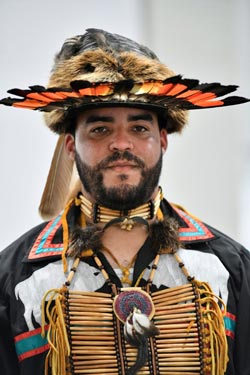
Shane Weeks, 32, a member of the Shinnecock Nation who has dedicated himself to preserving his people’s culture, is celebrating the publication of “Good Neighbors: A Shinnecock History from a Shinnecock Perspective.”


He said he hopes the book will serve as a guide for people who want to learn more about Southampton’s indigenous people from their point of view, as opposed to the view of the white settlers who colonized the tribe, as they did to native tribes across the country.
“I’ve been working on the book since 2017,” Weeks said this week. “What made me write it was the fact that almost all the resources I was coming across in my research of our tribe’s history were always told in the third person. It was very rare that I would find something that was written by our people from our own point of view.”


The book, available as an eBook or a softcover, is part memoir, part cultural guide, and part history, with Weeks describing his own experiences and touching on various aspects of the tribe’s history in an informal and accessible way.


Weeks describes how his father taught him how to hunt and fish, and how he launched his own food vending business as a teenager and traveled to powwows across the Northeast to learn more about Native American culture. Along the way, he learned the tribe’s language, its ceremonial dances and songs, and how to make his own regalia. He also picked up a few other skills, like how to use saplings to build a wigwam, or a tree trunk to build a dugout canoe.
A major theme of “Good Neighbors” is that while the Shinnecock themselves have tried to be good neighbors, colonists, who first began to settle the area in the 1640s, have not always returned the favor.


Weeks reminds readers that his ancestors were prevented from speaking their language and practicing their culture and religion starting in the 1600s, all the waythrough to the mid-20th century.


“We had to be good neighbors, so our way of life wouldn’t continue to be destroyed,” he said. “If we tried to stand up for our rights, our people would be treated horribly. That was consistent for a couple of hundred years.”


Weeks believes that because tribe members were not allowed to speak their language or practice their customs, their culture slowly began to fade away, to be replaced with a European view of history that minimized the tribe’s role and wrongly described it as a dying culture.
Fortunately, Weeks said, there have always been some stalwarts who have kept the tribe’s culture alive in the face of that oppression. “There were elders all around Shinnecock who had little bits of it,” he said. “Everybody had a little piece of the puzzle.”

Read More

https://www.27east.com/southampton-press/key-shinnecock-burial-ground-at-sugar-loaf-hill-will-at-long-last-be-returned-to-tribe-1799351/
For more story background, visit:
Shinnecock Building Moratorium, Graves Protection Act Adopted | Southampton, NY Patch

5 Facts About Black Homeownership in Brooklyn

Article By Submitted IMPACCT Brooklyn

Black homeownership in Brooklyn isn’t only important today — it’s an essential part of American history. In fact, there’s been a tradition of black Americans owning their homes in Brooklyn since the 19th Century.


That history might feel ancient amid the increasing debate over gentrification, displacement, and income inequality. In 2016, the Furman Center reported that about 25 percent of black households owned their homes in the borough. That rate has been falling year to year given the economic pressures on working class people of color.
As challenging as homeownership may be for all New Yorkers, there are still resources available for individuals ready to own their homes. And Brooklyn still stands tall a testament to how the black homeownership can empower and enrich our greater communities.

  1. Black freedmen built one of the nation’s first black-owned communities right in the middle of Brooklyn more than 180 years ago.
    New York outlawed slavery decades before the Emancipation Proclamation, which allowed a former slave from Virginia named James Weeks to purchase a lot of land in 1838. About ten years later, more than 500 black residents called the neighborhood home.
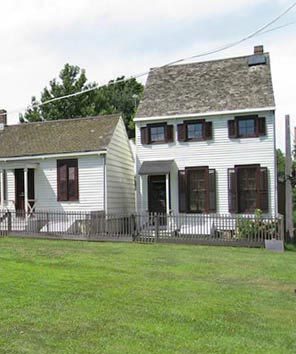
    Since its founding, Weeksville was incorporated into its surrounding neighborhoods, straddling the edge of Bed Stuy, Crown Heights, and Brownsville. Four of the historic community’s original buildings still stand as part of the Weeksville Heritage Center on Buffalo Avenue.
  2. Brooklyn’s Fort Greene has been a long-standing cultural center for Black homeowners and residents.
    It’s hard to separate Brooklyn culture and black history without also thinking about Fort Greene and the community members who sustain it.
    As the New York Times wrote a few years ago, “by the 1970s most of the area’s homes were owned by middle-income blacks, many of whom had bought them during the white exodus for the suburbs in the ’50s and ’60s. A predominantly black creative community flourished.”
    That community included artists and musicians who were able to own their homes, and it continued to flourish decades later. In 1992, Entertainment Weekly profiled Fort Greene’s “culture explosion” before and after longtime resident Spike Lee’s star began to rise:
    The concentration of talent — some of today’s most influential musicians, filmmakers, writers, and artists — echoes cultural movements like Paris’ Montmartre circle in the 1880s, Greenwich Village in the 1910s, or London’s Bloomsbury group in the 1920s. Though [music producer Bill] Stephney cautions that they don’t “sit around in parlors and discuss everything from Kunta Kinte to Ice Cube,” their work voices Lee’s rallying cry: “Black life is as important as white life.”
  3. Brooklyn saw a surge of new black families in the early and mid 20th century.
    The Great Migration saw 6 million black Americans move out of the South, with a large number of them moving to Brooklyn over the course of decades. Around that same time, New York also saw a surge of new neighbors from the Caribbean and Central America as immigration policies would relax to allow more workers into the country.
    IMPACCT Brooklyn friend Colvin Grannum of Bedford Stuyvesant Restoration Corporation detailed his own family’s experience when they came to Brooklyn for City Limits:
    Immigrants from Barbados, my parents arrived in New York in the early 1950s. They settled in the western portion of Bedford Stuyvesant, now known as Clinton Hill, and were among the first Black people to purchase a home on Cambridge Place, a tree-lined street of stately brownstones. My parents “chose” Bedford Stuyvesant because it was becoming a Black neighborhood. Massive White flight — Whites selling their homes and moving from Central Brooklyn to all-White neighborhoods in Flatbush, Queens and Long Island — communicated emphatically to my parents that a Black neighborhood was where they belonged.
  4. There’s been a steep decline in black homeownership in Brooklyn as well as the rest of the country.
    Despite its long history of black homeownership, Kings County today has the fourth-lowest homeownership rate in the country. Most Brooklynites incomes just don’t line up with residential real estate prices, and residents are not immune to America’s ongoing racial wage gap.
    That means many New Yorkers, especially New Yorkers of color, increasingly rely on assistance programs to become homeowners. A recent StreetEasy report found that black New Yorkers make up some 38 percent of applicants for Federal Housing Administration loans that offer more significant financial assistance.
    On top of everything else, as a recent report by the Urban Center found, black Americans were demonstrably hit harder than most by the 2008 housing crisis, so much so that gains made in black homeownership rate after the Fair Housing Act was passed were effectively erased by 2015.
  5. Brooklynites have a wealth of resources to make homeownership a reality today — including IMPACCT Brooklyn.
    Owning a house, co-op, or condo isn’t, but there are tools and resources readily available to all Brooklynites to help them become homeowners.
    Back in 1964, residents from Fort Greene and Clinton Hill founded IMPACCT Brooklyn (then known as the Pratt Area Community Council) to address neighbors’ concerns and needs as a collective of block associations. Working collaboratively, they helped open the Clinton Hill Library as well as new parks, community gardens, and buildings for tenants.
    The organization is committed to the same mission more than 50 years later. Our Home Services team is ready to walk all Brooklynites considering owning their home through the process and connect them to valuable resources that can make their financial goals a reality — including down payment assistance programs first-time home buyers may be eligible for, as well as individualized finance counseling.
    For more information:
    Visit www.impacctbrooklyn.org

Spring First Time
Homebuyer Webinars
hosted by IMPACCT Brooklyn

Tuesday, May 17: 6p-8:30p
Credit, Budgeting & Mortgage
Products

Thursday, May 19: 6p-8:30p
Real Estate Contracts
/Know Your Rights

Tuesday, May 24: 6p-8:30p
Shopping for a Home
/Home Inspection/Predatory Lending:

Thursday, May 26: 6p-8:30p
Life as a Homeowner
/Protect Your Investment

A Long Island mansion built on 10,000 corpses

Shinnecock attorney declares a sacred site desecrated

By Natalie Discenza
for WSHU/NPR

The Shinnecock Indian Nation might have discovered more ancestral graves underneath a mansion that the tribe reclaimed from Southampton last year after demolition started earlier this month.


The tribe has been fighting for their land back for decades. This property, known as Sugar Loaf Hill, is believed to be a sacred ancestral burial ground.


Tela Troge, a Shinnecock and an Indigenous sovereignty attorney, said the tribe brought in a ground penetrating radar team to capture images below and surrounding the mansion.
“Before we started the demo of the mansion, we did GPR around like the ground, and we found some remains,” Troge said. “But once the house was actually down, and we could get the equipment in to find out what was underneath the home, we found that, you know, there could be around 10,000 or more burials on the site.”

To Read More


The Urgency of Anti-Racist Classrooms

by Eric Duncan,
Education Trust

“For too long, students have attended classrooms that gloss over our nation’s history with race…the responsibility for developing #anti-racist classrooms falls on everyone in the education system,” writes @ericduncan211 on @edtrust’s #TheEquityLine blog.

The deadly attack on the U.S. Capitol should be taught in social studies classes for many years to come. But the way it’s taught will be a test of whether America can finally reckon with racism or if it will continue down the path it’s been on for centuries — a path where we simplify a story of racism in our country and repeat a pattern of behavior that leads to the horrific events of January 6, 2021.

Now is the time to fully adopt anti-racist education. America’s children deserve an education that critically examines the role and actions of all citizens in maintaining and perpetuating a system that leads to a horrible moment in our history. In anti-racist classrooms, educators teach the lesson that we all have a role, every single day, to make sure that these events do not repeat themselves. From the people who ignore racist comments by their friends, to the senators and representatives who vote to maintain systems of racism, to the law enforcement agencies that treat peaceful protests of people of color as threats but allow White violence to go unchecked, we are all accountable for the conditions that led to the attack on the Capitol.

Consider the story of Emmett Till’s death. Here are two versions of this same historical event taught in social studies classes across the country:
In 1954, a Black boy from Chicago, unfamiliar with Jim Crow laws, was visiting his relatives in Mississippi, when he cat-called a White woman in a local convenience store. Some of the relatives of the White woman were enraged by his disrespect, kidnapped him from his relatives’ home, tortured him for hours, and brutally murdered him. The heinous act perpetrated by these southern racists shed light on the brutality of segregation in the Deep South and led to the Civil Rights Movement, ending the Jim Crow era in America. The end.

Another version includes this:
“I like niggers — in their place — I know how to work ’em. But I just decided it was time a few people got put on notice. As long as I live and can do anything about it, niggers are gonna stay in their place. Niggers ain’t gonna vote where I live. If they did, they’d control the government. They ain’t gonna go to school with my kids. And when a nigger gets close to mentioning sex with a White woman, he’s tired o’ livin’. I’m likely to kill him. Me and my folks fought for this country, and we got some rights.”


This is a quote from J.W. Milam in a national magazine article, written just one year after the murder to which he confessed every detail of the crime that he and his brother-in-law, Roy Bryant, committed against a 14-year-old Till.

The first version of the story of Emmett Till is appealing because it is sanitized, helping us avoid the complicated reality of racism in our country and its impact on our social order. It glosses over J.W. Milam’s mindset and rationale for committing the crime. While Milam’s language is offensive,* it reveals that this wasn’t just an act of a couple of racists who in a fit of rage snapped at a sign of disrespect — this was about a working-class citizen who didn’t like a perceived threat to his way of life and felt entitled to take matters into his own hands.
Sound familiar?

The second version of the history lesson, in all its vulgarity, examines the role and intent of multiple people involved in the crime: the White jurors who acquitted the men in the face of overwhelming evidence; the White woman who exaggerated Emmett Till’s actions knowing how it would affect him; the White citizens of Mississippi and people across the country who read the graphic confession and sat silent in acceptance; the dehumanizing rhetoric of the murderer explaining with pride that he was putting a Black person in his place and maintaining social order.

For too long, students have attended classrooms that teach the first version and gloss over our nation’s history with race and the role it played in the country’s current struggles with structural and systemic racism. We can attribute much of this to a long-standing lack of representation of educators of color in the classroom and in positions to influence curricula, teacher preparation standards, and instructional materials. But the responsibility for developing anti-racist classrooms falls on everyone in the education system:  College teacher preparation programs must prepare prospective teachers to lead anti-racist classrooms; states and districts should design professional development for current teachers on anti-racist practices and classroom instruction; and all current teachers must seek out materials to deepen their knowledge and capacity to practice anti-racism in their lives and with their students.

If we want to position America’s next generation to learn from our country’s past mistakes, schools must teach students about the attack on the Capitol with this in mind. They must teach the version that includes the rhetoric of the people who commit acts of violence and abuse against those who they perceive as threats to their way of life. The version that critically examines the people around the perpetrators who fail to consistently hold them accountable for their words or bring them to justice for their actions. The version that teaches children that words used to dehumanize people like “niggers” or “illegals” cannot be ignored or else they’re used to justify inhumane acts of violence and terror like separating young kids from their families and holding them in cages.


Teaching an honest history of America’s issues with race is an important step toward dismantling systemic racism. For these lessons to take place, we need teachers who have the skills and dispositions to create safe spaces for students to critically examine and commit to changing our behaviors. We need to empower a more diverse workforce of teachers who are anti-racist in practice. The curricula, textbooks, and online materials in all schools must reflect the anti-racist principles that America purports to represent but has failed to follow. If we don’t commit to this path, our next generation is doomed to repeat our mistakes.


This article written by Mr. Duncan was originally published by The Education Trust on January 21, 2021.
*Editorial Note: The Education Trust’s policy is to avoid reprinting offensive language unless there is an extremely compelling reason to include it. In this case, we include it in support of the author’s compelling appeal to confront (and not sanitize) our country’s complicated racist past. The Education Trust is a national nonprofit that works to close opportunity gaps that disproportionately affect students of color and students from low-income families. Through our research and advocacy, Ed Trust supports efforts that expand excellence and equity in education from preschool through college, increase college access and completion particularly for historically underserved students, engage diverse communities dedicated to education equity, and increase political and public will to act on equity issues. Edtrust.org
Eric Duncan is a P-12 data and policy senior analyst at The Education Trust. He specializes in policies related to educator quality and increasing the racial diversity of the educator workforce.
Eric previously was a state policy advisor at WestEd, where he supported the organization’s federal and state policy strategy. Prior to that, Eric worked as a senior program associate at CCSSO, where he supported state efforts to diversify the teaching workforce and ensure that teachers are culturally responsive in practice through the Diverse and Learner-Ready Teachers Initiative.
He also worked as the director of district initiatives at the National Council on Teacher Quality, where he supported the development of a student teaching project with three large school districts across the country and led the organization’s communications efforts to promote evidence-based teacher quality research. Before that, Eric worked at the U.S. Department of Education, Office of the Secretary, as a LEE public policy fellow. He was a member of My Brother’s Keeper Task Force and supported the Department’s work on teacher diversity. Eric started his career in Atlanta as a high school social studies teacher. He received his undergraduate degree at Emory University and has a juris doctor from Wake Forest University.
Anthony Anderson Earns BFA Degree from Howard University at Age 51

by Fern E. Gillespie
For eight seasons, Black-ish star Anthony Anderson’s character, advertising exec Andre “Dre” Johnson, bragged about his Howard University degree. Anderson, 51, even had a Black-ish episode dedicated to a college tour of Howard with his son Junior.

In reality, Anderson had dropped out of Howard as a junior 30 years ago due to financial problems. In 2018, Anderson’s son Nathan was accepted to Howard and inspired his father to complete his college degree.

For several years, Anderson took courses at Howard online and sometimes in the classroom. This May, Anderson officially earned his BFA degree from Howard’s Chadwick A. Boseman College of Fine Arts at the Washington, DC commencement and became a member of the Class of 2022. At the ceremony, Anderson was joined by television icons Howard fine arts dean Phylicia Rashad (The Cosby Show) and his former Howard classmate Taraji P. Henson (Empire), who was the commencement speaker. 

“Yesterday was a full-circle moment,” said Anderson after the graduation. “It’s never too late! Things happen when they’re supposed to happen!”