Home Blog Page 4

Trump Administration Meddling in Congo

By Jeffery Kazembe Batts
IG: @kazbatts


Whether the rubber that fueled early industrialization or the uranium that shaped the nuclear age, and now cobalt, the Congo has been indispensable to modern life. Yet the Congolese people remain locked out of the prosperity and a decent quality of life that those resources should make possible. This is not an accident of history. Since the turn of the century, demand for smartphones, electric vehicles, and renewable energy storage has surged. Cobalt has become one of the world’s most strategic resources.

The central African nation holds some of the world’s richest deposits of cobalt, copper, coltan and lithium and accounted for 76 percent of global cobalt output in 2024, according to the US Geological Survey. A building block for a powerful Africa – Congo should be at the heart of African development. Non-Congolese forces, whether corporate on national want the cobalt and other resources. Recent trump administration facilitated maneuvers underscore how high the stakes have become.


Last December Presidents Félix Tshisekedi of Congo and Paul Kagame of Rwanda traveled to the Washington DC to sign a minerals partnership agreement intended to secure cobalt and other critical minerals for global supply chains. The deal was brokered with U.S. involvement, reflecting Washington’s growing interest in stabilizing the mineral rich east. Yet the violence continues, and the United Nations recently warned that the conflict is expanding, with drone warfare now threatening civilians and complicating humanitarian access.

Peace remains distant, and security forces shape who extracts the minerals from the earth. The optics of the meeting foreshadowed problems as the two heads of state could barely look at each other. The agreement immediately sparked public concern inside the DRC and in February, the Congolese government was forced to deny accusations that it was “selling off” national mineral wealth under the deal. “The DRC has not sold off anything at all.

The DRC has not sold anything at all,” minister Louis Watum said on the sidelines of the African Mining Indaba conference in Cape Town. Although many Congolese citizens know history and have seen foreigners enriching themselves while leaving their communities dirt poor.


Possibly compromising its sovereignty, “the DRC has submitted a list of strategic projects to Washington that will be reviewed in coming weeks by a joint steering committee”, Vice Premier Daniel Mukoko Samba said at Davos in January. Building up its security / military options, since the Kagame / Tshisekedi summit the Congo has announced the creation of a $100 million paramilitary mining security unit, backed by funding from the United States and the United Arab Emirates.

The stated goal is to protect mining sites from illegal exploitation and armed interference. a region where armed groups, foreign backed militias, and criminal networks operate in the shadows of cobalt and coltan mines. But the move raises critical questions.

Who will this force ultimately protect, Congolese communities or foreign commercial interests? Will militarization bring order, or will it deepen tensions with artisanal miners who depend on cobalt extraction for survival? And how will this new force interact with existing security actors in a region already crowded with militias, private contractors, and foreign troops? Is an American initiated military response needed.

The new unit will be deployed gradually, with an initial 2,500 to 3,000 personnel expected to be operational by December following six months of training in military collaboration, the IGM said in a statement. The paramilitary force is projected to have more than 20,000 personnel across all of Congo’s 22 mining provinces by the end of 2028.


Development and quality of life challenges are profound in the region. Creating the wealth but not benefiting from it, more than a million Congolese work in artisanal mines, often in dangerous conditions without safety equipment or legal protections. Entire communities are displaced when miners come calling. Living with environmental degradation, from contaminated rivers to stripped farmland, undermines long term development and public health. Raw cobalt is exported, refined abroad, and sold back to the world as high value products. The Congolese nation and people capture only a fraction of the wealth generated from their own land. Despite billions in mineral exports, the DRC is seeing little development.


How to build a sovereign, powerful Congo and Africa without the USA overtly and covertly undermining African interests and being a major problem? For Congo recent agreements with the United States and Rwanda, and the creation of the new mining security unit, will shape the prospects of the cobalt sector in the near future. Congo’s new strategic relationship with the Trump administration could help bring order to a chaotic industry, or history shows it could entrench the current militarized model of extraction that leaves local communities marginalized.

The path forward must be guided by a simple principle: the minerals that power the world should also power the development of the people who live atop them. The Congo has paid the price of global progress for centuries. For African people the 21st century must be different. It must be the century in which African nations, not foreign corporations or external powers, determine the destiny of their own resources. Only then will the wealth of the Congo finally build Congo.

Jets/Giants 2026 draft

0

By Eddie Castro
The NFL Draft is one of the most anticipated offseason events. It’s where some of the very best college football players witness all their hard work and dreams come true. It’s where the parents and loved ones see all their sacrifices come into good fortune as they see their son’s dream of becoming an NFL player come full circle.


For the typical New York Football fan, it’s witnessing the next step of your team rebuilding in hopes of capturing the ultimate goal, the Lombardi trophy. For the New York Giants, they had many holes to address both on the offensive and defensive sides of the ball. The team held the No.5 and No.10 picks in the first round.


At No.5, the Giants selected Arvell Reese, the 6’4/243-pound linebacker out of Ohio State. Reese along with edge rusher David Bailey were considered the best defensive player in the draft. At just 20 years old, Reese is the third youngest player to be selected in the top five of the draft. Reese played two seasons with the Buckeyes gathering a total of 960 defensive snaps. He ended his college career with 112 tackles, 13.5 for a loss, seven sacks, and two passed defended. 6.5 of those sacks came in 2025. Reese is considered an explosive and versatile player.

He was a 2024 National Champion and was an All-American in 2025 while winning the Big Ten linebacker of the year award. Reese will now be lined up with a tremendous front-seven that includes Abdul Carter, Kavon Thibodeaux and Brian Burns. The Giants would go on and select Offensive lineman Francis Mauigoa out of Miami with the 10th overall pick. The 6’6, 329-pound lineman is considered to be a top-tier pass blocker that will strengthen the team’s offensive line providing more protection for quarterback Jaxson Dart.


As far as the New York Jets go, we all know all too well the team’s now 16-year playoff drought continues to hang over the heads of owner Woody Johnson, General Manager Darren Mougey, and Head Coach Aaron Glenn. The Jets had three first-round picks and they made sure to solidify the many holes they have as a team. Gang Green had the No.2 overall pick in which they selected edge rusher David Bailey out of Texas Tech. Standing at 6”3, 251 pounds at 23-years old.

Bailey is a very explosive player who will provide interior pressure instantly for new Jets defensive coordinator Brian Duker. Last year, the Jets ranked 31st in total sacks at 26. Bailey by himself last season had 14.5 sacks for the Red Raiders. The Jets’ next pick at No.16 drafted tight end Kenyon Sadiq out of the University of Oregon.

Sadiq has been regarded as a “steal” for the Jets at No.16. He provides speed and athleticism to a Jets team that lacks just that. The 21-year-old opened many scouts and observers eyes at February’s NFL combine when he ran a 4.39 40-yard dash, the fastest time recorded by a tight end in 20 years. Sadiq also had a 43.5-inch vertical jump and an 11.1 board jump. Sadiq caught 51 passes for 560 yards (11 yards per catch) and 8 touchdowns on his way to being named second-team All-American.

Mougey would make another move in the draft jumping back into the first round to select wide receiver Omar Cooper Jr., out of Indiana. Cooper Jr. provides another weapon on offense across from their already polished Super Star in Garrett Wilson.


To put a bow on the draft for both the Jets and Giants, I think it is safe to say both organizations got it right with their picks. Both teams tackled the positions that were needed. These moves don’t necessarily mean franchise turnover by any means. However, this is a good start for both franchises to develop these young and promising players in the hope that these players along with other potential off-season moves could lead to a breakout year or at least something promising for fans to look forward to in the future.

Both the Jets and Giants look to change the narrative of being laughingstocks in their respective divisions. It’s only a matter of time before we can both see these two storied franchises not only make the playoffs, but once again start competing for division titles and perhaps beyond that. All in all, it was a good few nights to be a New York Football fan.


Sports Notes: (Baseball) The New York Yankees return to the Bronx after a 9-game round trip. They will welcome the Baltimore Orioles tomorrow night at Yankee Stadium to kick off a four-game series. The Mets wrap up their three-game set at Citi Field with the Washington Nationals tonight. They will then head West to begin a three-game set with the Los Angeles Angels tomorrow night.

As we go to press, Sports Talk With Eddie Presented By Our Time Press aired this past Wednesday. Make sure you haven’t already tuned in to our YouTube and Facebook channels to catch what was an exciting week in New York Sports.

42nd Councilman Chris Banks Hosts District Reception with Council Speaker Julie Menin

By Mary Alice Miller


For the first time in recent history, a City Council Speaker made an appearance in East New York’s 42nd Council District. Council Speaker Julie Menin trekked to The Theater at Food Bazaar in East New York. The reception was hosted by Council Deputy Leader Chris Banks.
Banks introduced Speaker Menin, stating, “Madame Speaker, I want to thank you for your leadership during these first 100 days in this council session. In this short time this council has moved meaningful legislation forward, held critical hearings, taken on real challenges especially as we work through a nearly $127 billion budget and confront the affordability crisis that is touching every corner of our city. The 42nd council district has your back and a seat at the table.”


Speaker Menin spoke of how 9/11 led her into politics when her lower Manhattan restaurant was destroyed after the second building fell. In the aftermath, she started a non profit that helped over 600 small businesses stay in the community. She was appointed to Community Board 1 and was chair for seven years after 9/11.
“Community involvement matters,” said Menin. “We successfully sued the Trump administration to get the citizenship question off the Census.”


With Banks on the Council Senior Leadership Team, Menin said “In this $127 billion budget that we are negotiating, we said a hard no to raising property taxes 9.5%. We restored $30 million in cuts to libraries and restored $30 million for cultural organizations.”
Menin continued, “Banks has a deep commitment to public housing. He said it was unacceptable not to have NYCHA residents at the administration’s hearings on housing.”


Community leaders participated in a question and answer session.
Nicole Williams, founder and CEO of Victory Music & Dance Company, asked about multi-year sustained funding for community based organizations.
Menin: “The Council restored $1.5 billion in cuts to discretionary spending for community-based organizations.”
Yolanda Moore, from East Brooklyn Congregations, represented NYCHA by asking about RADPAC.
Menin: ”Banks continues as chair of NYCHA committee. We look forward to having hearings in NYCHA. We are addressing the backlog of repairs. We are concerned about RADPAC displacement.


Banks said, “We will continue to preserve Section 9 NYCHA housing.”
Eleanor Pickney, from East New York Nehemiah Association, asked about benefits to homeowners who are left out of the discussion on affordability.
Menin: “The Council is preparing a package of legislation specifically for Black home ownership, including deed theft bills particularly seniors who are primary victims. We need to give more resources to the Dept. Of Worker and Consumer Protection. We need to be warning seniors and families about the risk of deed theft. One of our bills creates a new office focused on home ownership issues.”


Banks: “Our district is #2 citywide on tax lien issues.” Banks cited the Brown family who lost their home to a $5,000 water lien after being taken advantage of. The Council is seeking remedies to address the issue.
Pamela Lockley, President of Linden Plaza Tenants Association, asked what does naming Banks to the deputy leadership mean for us.
Menin: “He is in the room where it happens and has a major seat at the table. He is also on our budget negotiating team. He is negotiating the budget with me. That has a lot of implications for this community. It decides our priorities. Regarding legislation, we also discuss moving certain bills forward. Our Deputy Leader plays a critical role in the center of power in this City Council. We are an independent, co-equal branch of government. We have oversight hearings over the 70 city agencies to make sure the agencies are doing the right thing.”


Dr. Kabir, from Muna Social Services that has 27 food pantries across the five boroughs, asked about food insecurity with over 406,000 Brooklyn residents – 15.2% of the borough – facing food insecurity and East New York has some of the highest SNAP enrollment rates.
Menin: “We are seeing from the Trump administration cuts to SNAP, which is unacceptable. The Council, as we are negotiating the budget, we are focused on increased aid to food pantries all across our city.”
Menin launched a program in partnership with Rethink Food.
“Why do we keep bringing in catering companies from out-of-state to get the food contracts in our city? Why are these companies from Texas and Connecticut getting hundreds of millions of dollars in city contracts to provide food at schools and shelters all throughout our city?” asked Menin.


Rethink food contracts with local small businesses/restaurants. Those restaurants are then providing the food that is going to our schools and shelters. They were also key during the asylum crisis by helping to provide food.
Banks: “Campaign Against Hunger is based right here in the 42nd Council district. They are building a state-of-the-art facility in the Gateway area. We have Muna which is all across the city.”


Banks closed the event by introducing Willie Kim, VP of Compliance for Food Bazaar.
“Food Bazaar plays an important role in this community. In the beginning stages when we met with Food Bazaar, we said when they were coming into this community they were coming on our terms. We asked them to preserve this theater dedicated to community events. We asked them to host a Culinary School for schools and local community chefs to teach people how to eat healthy. They have a hydroponic farm to cut food costs. They have union jobs here at Food Bazaar,” said Banks. “They have kept their commitment from Day 1.”


It has been almost one year since Food Bazaar launched in the former Magic Johnson Theater. Previously, that area was a literal food desert. Residents of Linden Plaza, and NYCHA’s Boulevard, Linden, and Penn-Wortman Houses has to travel a mile or more to Junius Street or Gateway to access a supermarket.


Kim stated, “Food Bazaar is humbled and privileged to host this reception. We are committed to being a good neighbor in the community for years to come. We are proud to offer this event space for the community.”

Addressing Mental Health Month as a community

By Nayaba Arinde
Editor-at-Large


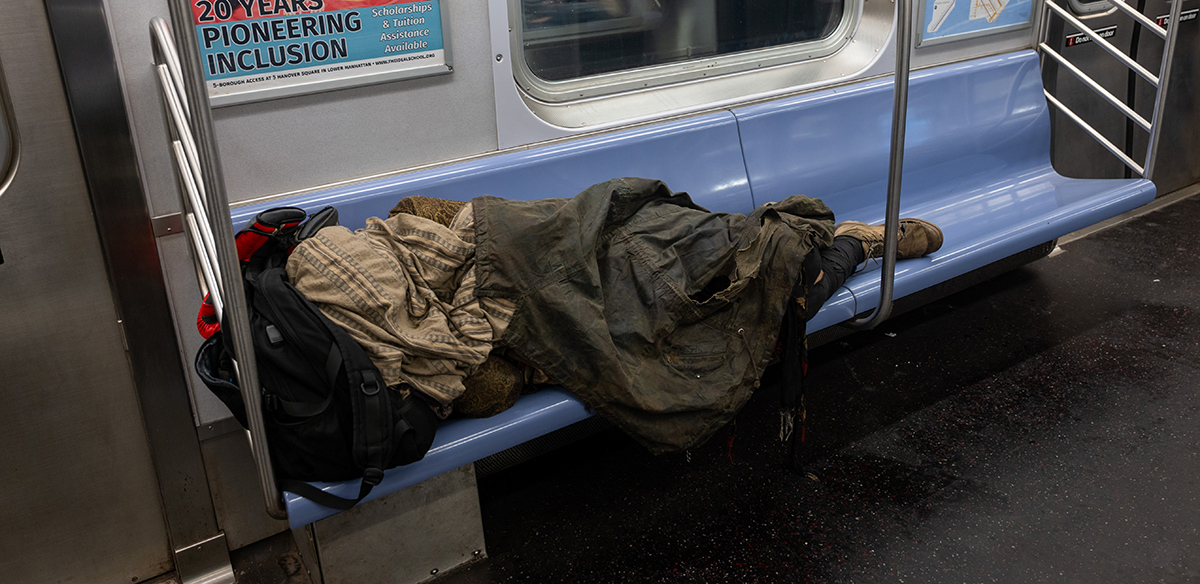
This is Mental Health Month, and mental illness–diagnosed and otherwise can be seen on these streets, trains, and all public spaces. Sometimes it is harmless, other times it is aggressive. Always concerning.
“Mental health impacts everyone in our communities,” said the National Alliance on Mental Illness–NAMI. “Stigma grows in silence. Healing begins in the community.”


A national report determined that Black adults in the U.S. are 20% more likely to report serious psychological distress than white adults, while having to navigate obstacles, including stigma, lower insurance coverage, and fewer culturally competent providers.
Traditionally, in Black communities, mental illness was not always openly discussed.
Now, that has changed. Black mental health professionals note that dealing with daily micro and macro aggressions, and the harsh effects of casual and institutionalized racism, brings a mental weight sometimes manifesting in physical consequences and psychosis that debilitates, if not recognized and addressed.


“I see anti-social behavior and social anxiety amongst the youth increasing,” family therapist Osato Ahoton told Our Time Press. “They are on the internet so much, they seem to lose the ability or desire to communicate with their peers. When the children are showing truant behavior, I ask about their COVID experience. Some of them are still finding it hard to adjust going from virtual to real life. The 2020 pandemic era has had long-lasting effects – social anxiety was one of them. It overwhelms their ability or wish to go to school because they don’t know how to communicate or build interpersonal relationships.”
It presents mental health challenges, she said, “It shows up as depression, not wanting to engage, self-isolation, substance abuse, family conflict, and running away from home.”


The official term used, the Brooklyn-focused counselor said, is the harsh– “‘Ungovernable Youth,’ we try to talk to them, negotiate their problem solving, and get to the root of the issue. I am hopeful that the young people can be brought through this, so that they can become stable, productive, successful and self-loving.”
Encouraging individuals to call them to feel heard, cared for, and not alone, NAMI said, “This Mental Health Awareness Month share your story to help break the silence.”


Daily visible are people in mental health crisis. Protective protocols are engaged by medical professionals called to a scene of mental emergencies. They are meant to be utilized by law enforcement to avoid deadly consequences like in the tragic cases of Khiel Coppin, 18, a mentally ill teen killed in a hail of 20 police bullets, when they said they thought the hairbrush he was holding was a gun, in an incident on Bed Stuy’s Gates Avenue in November 2007; and Iman Morales, the 35-year-old emotionally disturbed person (EDP) who died in September 2008, after being Tasered by NYPD officers, and falling from a storefront ledge on Tompkins Avenue. There have been so many more since then, unfortunately.


Ruth Delores Smith, LCSW-R, a 40-year experienced licensed clinical social worker, with Comprehensive Counselling said that she advises those people observing or experiencing a mental emergency, “Don’t dial 911, it is for medical and criminal emergencies…someone might get shot. You dial 988, that’s for mental health support and knowledge. They know what to say to calm somebody down, and keep the police off of a person and have 911 back down.”
This week, the creation of the 988 crisis hotline has been hailed as saving thousands of lives.
Launched in 2022, the President Joe Biden and VP Kamala Harris administration invested over $1.5 billion in the 988 Suicide & Crisis Lifeline, which provides 24/7, confidential support for mental health crises.


The Journal of the American Medical Association said that suicides in the age range of 15- to 23-year-olds were 11% lower than previously expected, between July 2022 and December 2024.
An Associated Press article by Devi Shastri, continued that, “Nearly 4,400 fewer U.S. teens and young adults died by suicide than projected in the first two-and-a-half years of the 988 mental health crisis hotline, a sign the program is working even as it faces long-term funding challenges.”


Being a resource-driven helpline, with crisis counselors, and integrated network, 988 Suicide & Crisis Lifeline said, “We understand that life’s challenges can sometimes be difficult. Whether you’re facing mental health struggles, emotional distress, alcohol or drug use concerns, or just need someone to talk to, our caring counselors are here for you. You are not alone…during difficult moments anytime, day or night.”


Ms. Smith, Criminal and Social Justice professor at Adelphi University and Monroe College, told Our Time Press, “People are just beginning to understand what depression and anxiety is. People have mental health ailments because of what is going on in the world. Gas just went up again. Am I going to have enough money?…It can be based on what’s going on day day to day everyday. When you don’t know when the next pay day is coming and you can’t pay your rent, your anxiety goes up, and you’re depressed. A lot of mental illness develops because of environmental and circumstantial stuff. It doesn’t have to be internal. It can be brought on by stressors just being in the community.’


The solution?
Ms. Smith suggested it is to “Learn how to take care of ourselves and remove the stigma associated with seeking mental health treatment.”
Six years after the Covid pandemic the lockdown angst was compounded because people of “Were never able to resolve their existing issues.” Ms. Smith analysed, “People were shut in and couldn’t go anywhere for help.”
Plus, she said, with the City’s collective experience, “We never recovered from 911, every celebration, every year we are re-traumatised…I would argue that all of us have a little crazy in us, it’s how you learn to manage it, the different coping skills and strategies.”
The solution, Ms. Smith stated is a “Better understanding and knowing that mental illness is part of life, and that it is real but manageable.”


Bronx-based psychotherapist Ms. Smith, also associated with VIP Community Services added, “I hate to say it, but some people will brag about their mental health…saying they have PTSD and trauma, because they want their entitlement, their SSI and stuff. In some communities they see their mental health as a source of income.”
Increase meaningful services


“Just because you have mental illness doesn’t mean you can’t work. We have people with intellectual disabilities, and they have a job, even with day programs. I think we have to learn to be supportive, but be realistic. We have to make sure they get their medication, and educate people about medication. Some people don’t like to take their medication because they don’t want to talk to their clinician about the side effects. They need to be educated about psychotropic medication. There are side effects.”
In this tenuous climate, Ms. Smith suggested that everyday people simply, “Don’t be afraid of mental illness. You’re not afraid of someone with diabetes, or hypertension


don’t be afraid of someone with mental illness, if you know you can provide them with the appropriate level of care.”
Anyone seeking help can call 988, or contact the NAMI HelpLine 800-950-6264

Brooklyn Org and National Grid Foundation Launch $700,000 Community Energy Initiative

0

Fern Gillespie
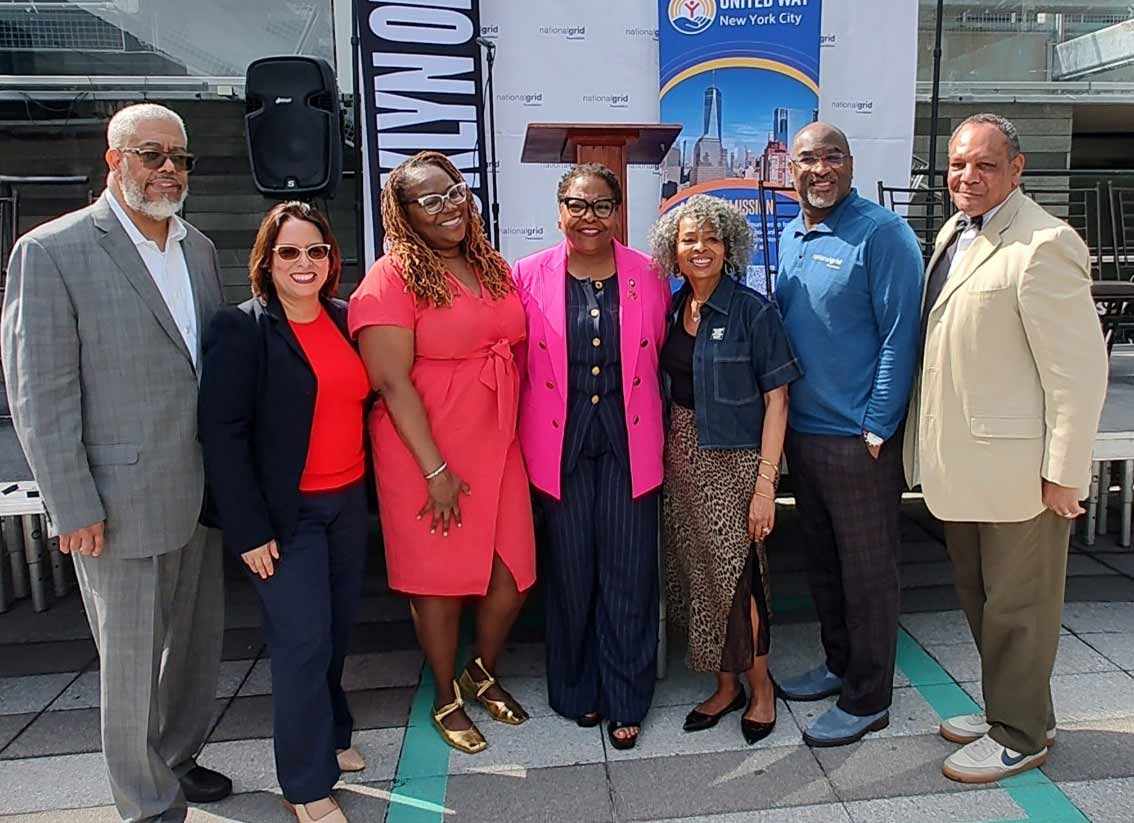
A major Brooklyn energy collaboration has been created partnering National Grid Foundation, Brooklyn Org and Brooklyn nonprofits that prepares residents for careers in the growing energy sector and supports residents with home heating and efficiency upgrades.


It’s the Brooklyn Energy Initiative, a $700,000 boroughwide effort focused on expanding opportunities in energy careers and consumer energy services launched by Brooklyn Org and National Grid Foundation. Brooklyn Org will lead the 24-month initiative which has awarded selected nonprofits $400,000 for energy workforce training through Future of Energy Workforce and $300,000 for home heating and efficiency upgrades through Future of Homes.


“This investment in energy and the future of energy workforce is hugely important. These nonprofits receiving grants will be focusing on jobs, clean energy, construction, building operations, and green infrastructure,” said Dr. Jocelynne Rainey, President and CEO of Brooklyn Org, told Our Time Press. “By investing in trusted nonprofits, we think about making sure that people who have the highest energy burden, which are often people who come from communities that are more marginalized, that they will be able to get emergency heating assistance from nonprofits, energy efficiency education, retrofits to make their houses more energy efficient and also having community-based conversations around energy and education.”


The Future of Energy Workforce, which is distributed to eight nonprofits, will be used to prepare young adults and early-career workers for STEM and energy-related careers. Grantees will provide technical training, green-skills development, job-readiness programming, and direct exposure to energy systems through Energy Hub Site Visits coordinated with the National Grid Foundation.


“I think there are different types of jobs from engineering to those who work in the field for a company like National Grid,” Dr. Robert Simmons III, Executive Director of the National Grid Foundation, told Our Time Press. He is also a veteran STEM educator. “But also highlighting for young people, is that you don’t necessarily have to have a focus on STEM, because there are a variety of ways in which you can gain employment in a STEM company. You can be an attorney, work in HR, or be like myself work on the community engagement and philanthropic side. It takes a lot of different people to run a utility as well as other STEM and tech companies. Our goal is to nurture that in young people in Brooklyn.”


At Marcy Lab, Inc, which trains low-income young adults for high-paying careers in tech through an alternative education model, the Future of Energy Workforce will be expanding opportunities tied to energy and infrastructure innovation. “Our Fellows are some of the most brilliant young technologists in this city. They’re growing up in Brooklyn neighborhoods where decisions about energy, infrastructure, and the future are made about them, not with them.

The energy sector is one of the largest, most stable, most consequential industries in the country, and it’s about to undergo a generational transformation,” Reuben Ogbonna, Executive Director and Co-Founder of the Marcy Lab School, told Our Time Press. “Our young people deserve to be the ones building that future, not just living with the consequences of it. When a Fellow walks into a six-figure technical role at a utility or an energy company, that’s not just a job. It’s a family lifted, a neighborhood that sees what’s possible, and a workforce that finally starts to look like the communities it serves.”


The additional Brooklyn Org Future of Energy Workforce grantees are: Bedford Stuyvesant Restoration Corporation, which expands economic opportunity in Central Brooklyn through workforce development, financial empowerment, and community-based programming, connecting residents to careers in growing industries including energy. Green City Force Inc, which engages young adults from public housing in service and training programs focused on sustainability, clean energy, and environmental justice, preparing them for careers in the green economy.

The HOPE Program, which provides comprehensive job training, career readiness, and employment placement services for New Yorkers facing barriers to work, with growing pathways into energy and infrastructure sectors. Red Hook Initiative, which connects youth and young adults in Red Hook to education, employment, and leadership development opportunities, including pathways into emerging industries. Resilience Education Training and Innovation Center (RETIC), which delivers hands-on training in construction, environmental resilience, and green infrastructure, preparing participants for careers in climate and energy-related fields.

St Nicks Alliance Corp, which provides workforce development, housing, and community services across North Brooklyn, with programs that prepare residents for careers in construction, energy efficiency, and building operations. Welder Underground, which offers hands-on welding and fabrication training to young adults, creating pathways into skilled trades that are critical to energy infrastructure and the green economy.
There are six nonprofits awarded the Future of Homes, where residents are eligible for programs providing heating assistance, energy efficiency education or their homes and other opportunities.


At Bridge Street Development Corporation, a grantee, Central Brooklyn homeowners and renters are provided with housing stability services, hands-on guidance to access energy efficiency programs, navigate rebates, and make informed home retrofit decisions. “Bridge Street Development Corporation is proud to partner in this important initiative to ensure that Central Brooklyn residents have access to the resources, information, and support needed to manage rising energy costs.

By pairing direct support with community-based education, we are helping residents not only get relief today, but also better navigate and benefit from the evolving energy landscape.,” Gregory Anderson, President & CEO, Bridge Street Development Corporation told Our Time Press. “This funding allows us to provide direct support to residents while also expanding community-based education around energy affordability. It helps ensure that households facing high energy burdens can access available resources today, while building the knowledge needed to make informed decisions over the long term.”


The other Future of Homes grantees are: Brooklyn Level Up, Inc is a community-rooted organization in Central and South Brooklyn that builds neighborhood resilience through energy education, resource navigation, and its Powering the Block initiative, connecting residents to efficiency programs and training local “Energy Champions.” Flatbush Development Corp delivers housing counseling and community services across Flatbush, supporting homeowners and tenants with energy efficiency education, direct assistance, and connections to retrofit and utility assistance programs.

Grow Brooklyn Inc provides housing, legal, and financial support to low- and moderate-income residents, incorporating energy education and one-on-one guidance to help IMPACCT Brooklyn is a long-standing community development organization that integrates energy efficiency services into its homeownership and housing programs, helping residents reduce utility costs and navigate retrofit opportunities. Pratt Center for Community Development is a leading research and advocacy organization that helps Brooklyn homeowners access energy efficiency and electrification upgrades while advancing equitable clean energy policies through its EnergyFit initiative.


“At National Grid, we must be engaged in conversations around sustainability, but we also must listen to the community perspective on sustainability. What does sustainability mean to folks in Brooklyn? At the end, (of the grants) there will be a convening with community members from Brooklyn Org and others to talk about the lessons that we learn during this process. What are the things that we need to do going forward to adjust? Also, to address such things as clean, energy and sustainability from the communities perspective.,” said Dr. Simmons. “We are going to be working with nonprofits where they’re going to be creating solutions in the community that address issues of sustainability and affordability. We are excited to see that take hold.”


There is a similar energy program in Queens sponsored by National Grid Foundation and organized by the United Way of New York City.

Learn more at brooklyn.org.