

After Flatbush Collapse, Brooklyn Deserves Answers—and Accountability
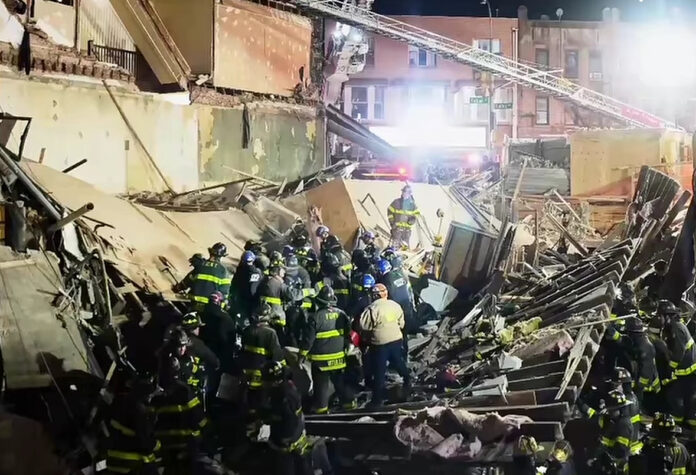
At least eight people are dead and 17 more are injured after a three-story building collapsed in Flatbush on Wednesday. Shortly after 4 p.m., the building at 1321 Flatbush Avenue gave way and fell into the construction site next door. The building beside it was damaged too, and its apartments were left exposed. Excavation was underway on the neighboring lot where a 9 story mixed used building was soon to be erected. The cause is still under investigation, but the Associated Press reported that the site had received stop-work violations earlier, and work was allowed to resume after corrections were made. Emergency crews are still digging through the rubble and one question demands answering: Could this have been prevented?
So we have to ask. Were there warning signs, like cracks, shaking or complaints from neighbors? What protections were required for neighboring buildings during excavation, and was anyone making sure they were in place? Who inspected the work, and what did they see that justified letting it continue?
Everyone involved owes the public an explanation. That means the developer, the contractors, the engineers, the property owners and the city agencies. Each of them should say what they were responsible for and produce the records showing they did it. Investigators must find out where things broke down.
For Black and brown Brooklynites, the question of whether our homes are protected didn’t start with this tragedy. Deed theft has stripped families of property and threatened the wealth they hoped to pass down to their children. The state attorney general has named Black and brown homeowners as particular targets. City officials say complaints are concentrated mostly in Brooklyn and Queens, where scammers go after seniors, immigrants and historically Black neighborhoods.
To be clear, there is no established connection between deed theft and this collapse. But my hope is that this moment pushes the institutions responsible for our safety, our housing and our ownership to act before harm is done, not after it can’t be undone.
The city’s housing blueprint draws on the 2021 Housing and Vacancy Survey. It found three or more maintenance deficiencies in 21 percent of Black households and 20 percent of Hispanic households, compared with 7 percent of white households. Those numbers don’t explain what happened on Flatbush Avenue. But they do show why concerns about neglect in our neighborhoods deserve to be taken seriously.
Accountability also means answering the questions in front of us right now. Where will displaced families live? Who will cover medical bills, funeral costs and everything people lost? How will the residents next door know their buildings are safe to come home to?
No family should have to figure that out alone. Brooklyn deserves a transparent investigation, support for survivors and real action on whatever failures the evidence reveals.