1. What life-long achievements and career highlights are you most proud of?
When I think about the accomplishments I’m most proud of, the first one is probably not something anyone would ever find on my résumé.
I was in grade school when I taught my younger brother how to ride a bicycle. He is two years younger than I am, and I remember standing behind him, holding the bike steady while he pedaled. He kept looking back to make sure I was still there. Eventually, just like we have all seen when someone learns to ride, I took my hands off the bike and he kept going.
At the time, I was simply proud that I had taught my brother how to ride a bike. Looking back, I understand that moment differently. I think it may have been the first time in my life that I experienced complete, unconditional trust. My brother trusted that I would be there to keep him from falling. That experience established something in me very early about relationships and leadership: sometimes your job is to stabilize someone long enough for them to realize they can move forward on their own. Eventually, you have to take your hands off.
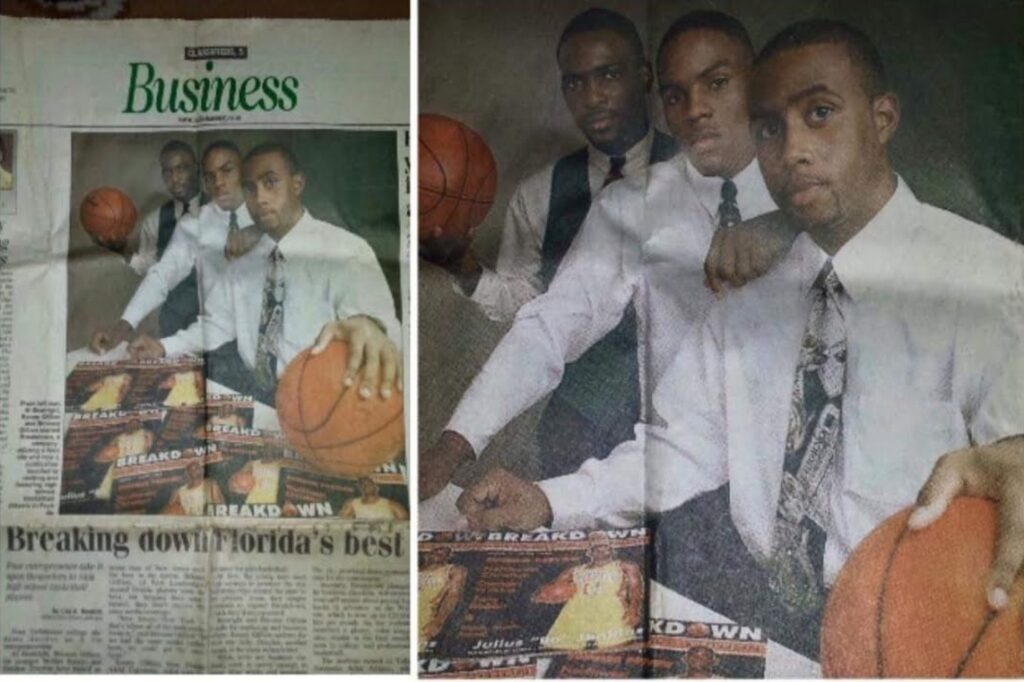
Another major accomplishment was graduating from college. That was particularly meaningful because college was not a simple journey for me. While I was still a student, I started my first business, Breakdown Magazine.
I was a sophomore when I started Breakdown. My roommates and I built it from the ground up. What began as an online publication eventually became a physical publication, expanded into events and television, and developed an audience around prep sports. When I look at what sports media and content creation have become today, I am especially proud that we were creating content, building audiences and telling athletes’ stories before the social-media environment developed into what it is today.
Buying my first home was another major milestone. I was single and purchased it completely on my own. I bought that house believing that one day I would raise a family there. Life ultimately took me in a different direction, but purchasing a home, taking responsibility for it and imagining what I could build there represented independence and possibility for me.
One of the achievements I am most emotionally connected to was organizing the Boatwright family reunion. I created the branding for Boatwright Family, Inc., including a logo built around the Sankofa bird, developed a website, and organized a three-day reunion in Hampton, Virginia. But the most meaningful part happened before the reunion.
My father and I drove throughout the East Coast, visiting relatives. We made stops to see family members across multiple states and documented those visits. We created a documentary from that journey and presented it to our family and elders during the reunion. That project became more than an event. It was about understanding where we came from, preserving family history, and giving our elders an opportunity to see their collective legacy in one place.
Another milestone was building and eventually selling my first restaurant with my family. I had grown up watching my father run his own business while also maintaining his professional career. The restaurant was one of the first times our family came together around an actual commercial enterprise. We worked together, generated revenue together, solved problems together, and ultimately sold the business. That experience taught me a tremendous amount about entrepreneurship, family, and leadership.
People who read my biography might assume that my proudest achievement today would be winning a championship or reaching the NCAA Tournament. I am certainly proud of those things, but I have never measured my life simply by wins and losses.
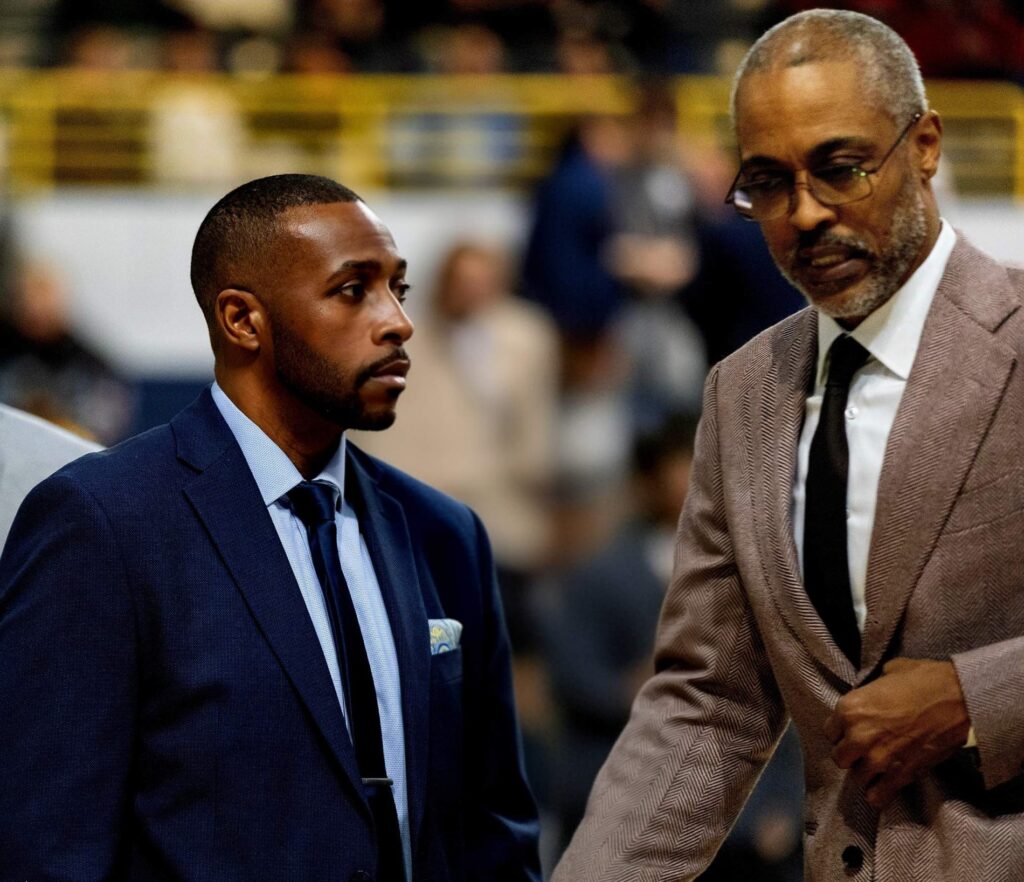
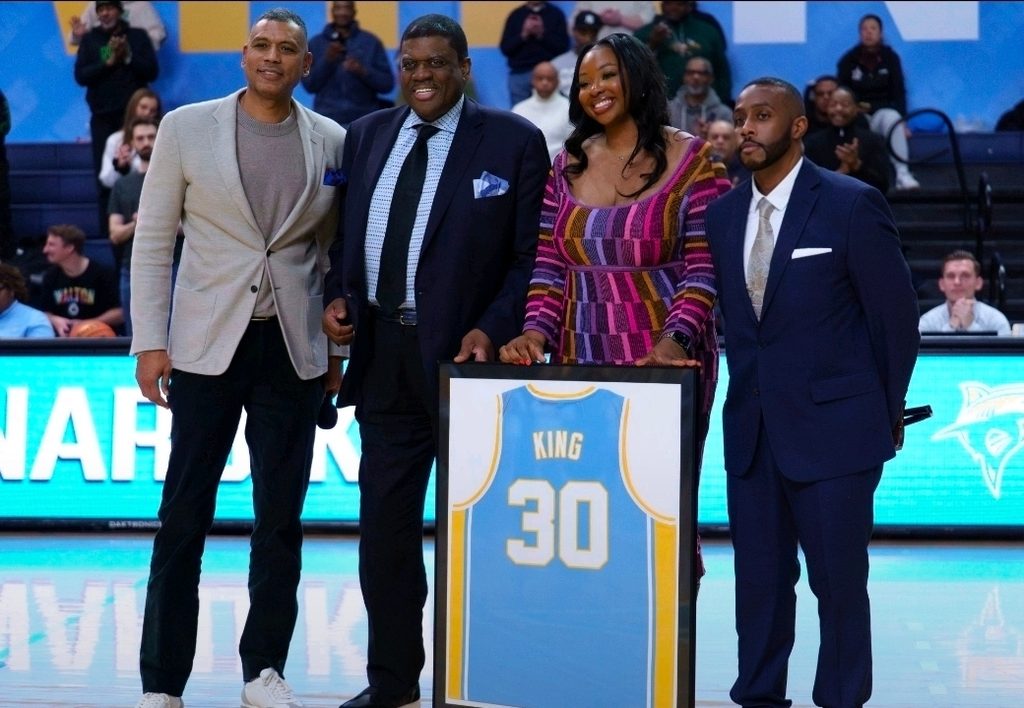
When I joined LIU in 2024 as the program’s first general manager, I entered a program that had experienced two difficult seasons. Traditionally, when people think of a basketball general manager, they think about managing
resources. At that point, there were not significant resources to manage. We first had to help build something worth managing.
Working alongside Coach Rod Strickland, our coaching staff, and our players, we gradually changed the expectations surrounding the program. Eventually, we won the NEC championship and went to the NCAA Tournament. The ring is wonderful. The tournament appearance is wonderful. But what I am most proud of is what happened to the expectation.
We went from being a program people did not expect to win to becoming a program people now expect to win. To me, that is the accomplishment.
2. Who were your role models, and what lessons did you learn from them?
Note: Bernice also asked for one or two universally known role models. I have not added names here because I want that portion to reflect a genuine influence rather than select a public figure simply for recognition.
When I think about role models, I really do not have to look very far beyond my own family.
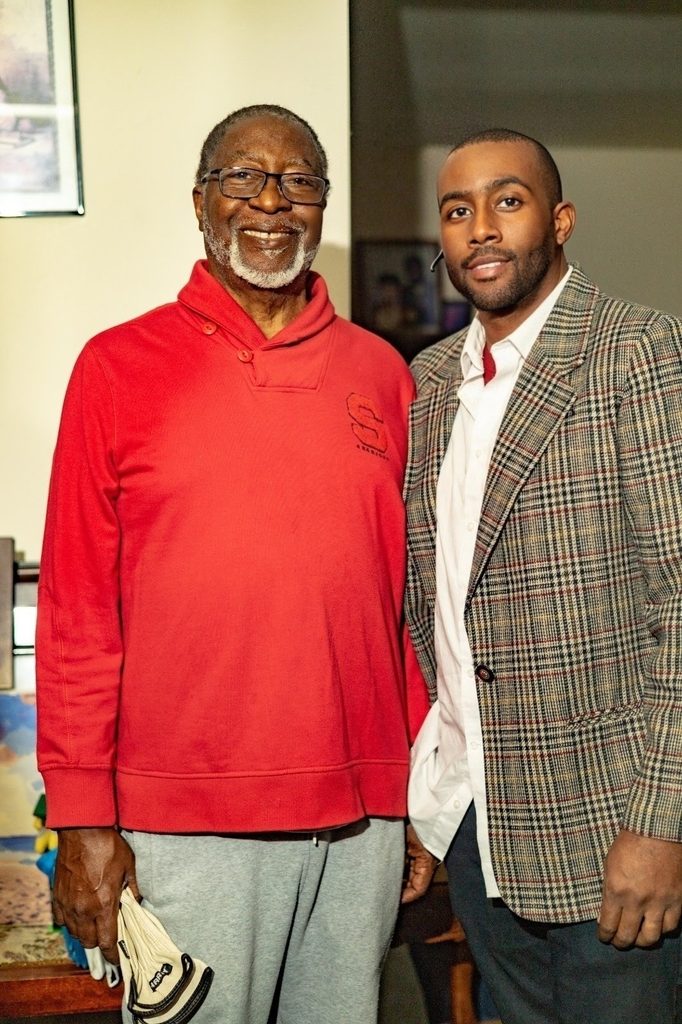
My father was probably my first and strongest role model. He is a very principled man, and he established the moral compass of our family. I grew up in a Christian household, and our faith was important, but what influenced me just as much was watching how my father actually lived.
He was one of seven children and grew up during segregation. He attended college during the Civil Rights era and graduated from Florida A&M University with a degree in chemistry. Despite the limitations that existed around him, he developed into a successful chemist, earned multiple patents, and eventually worked internationally. His work took him throughout the world, including South America and Russia, before the fall of communism, where his expertise in agricultural chemistry gave him opportunities to teach and contribute internationally.
But what impressed me most was never simply his professional résumé. It was his expectation of himself. He started his own business while he was still working professionally. He set a goal of retiring by age 40, and he accomplished it.
Watching him taught me that difficult circumstances do not give you permission to diminish your expectations for yourself. He also gave my brother and me permission to believe we could try anything. He never taught me to be afraid of failure or to dim my light because other people might be uncomfortable with it.
Because of that, I developed very high expectations for myself. I do not necessarily require someone else to tell me I did a good job. I usually know whether I gave something everything I had. The expectations I place on myself are probably higher than the expectations anyone else could place on me.
My mother influenced me in an entirely different way. She is one of ten children and comes from a tremendously accomplished family. My aunts and uncles became educators, entrepreneurs, business owners, and professionals. My mother has always celebrated everyone else’s accomplishments, but what fascinated me about her was her creativity and humility.
She can sing. She can write. She is a cosmetologist. She sews. She crochets. She can create almost anything. Throughout my childhood, I watched her use those abilities primarily to make other people happy.
One of my favorite memories is Halloween. My brother and I could come up with the most ridiculous costume imaginable. One year he wanted to be a spaceship. I wanted to be a cowboy. At another point we wanted to be Tom and Jerry. Somehow, my mother would make it happen. She did not do it because anyone would recognize her craftsmanship. She did it because she wanted to see her children smile.
That taught me something I have carried throughout my career: using your talents for the benefit of other people does not make you less important. It can actually be one of the greatest expressions of strength.
I have spent much of my professional life behind the scenes. I sometimes describe it this way: people notice the beautiful paint on the outside of a car, but the engine is what actually makes the car move. I have always been comfortable being the engine. I think my mother taught me that.
My father taught me to believe I could accomplish anything. My mother taught me that accomplishing something does not always mean you need to receive the credit for it. Together, those two lessons explain a great deal about who I became.
3. Is it intentional that you use sports and athletics as metaphors for purpose and perseverance?
It is intentional to a degree, but it is also very natural for me because athletics have been part of my life for as long as I can remember.
I played soccer and baseball when I was very young. I played basketball, ran track, and studied Taekwondo. I have always been active. Sports constantly teach lessons that extend beyond the sport itself.
Practice teaches repetition. Training teaches discipline. Competition teaches preparation. Losing teaches humility. Continuing when your body or your circumstances tell you to stop teaches perseverance.
Running is probably the athletic metaphor I identify with most because I still run, jog, and walk regularly. Movement gives me clarity. It is often the time when I think, reflect, pray, and have conversations with myself.
There is something very honest about running. There is no coach, no teammate, and no audience. It is simply you and whatever commitment you made to yourself.
Whenever I am trying to change something physically, whether I am trying to get healthier, lose weight, or become more disciplined, the process requires repetition. You cannot do something once and expect transformation. You establish a pattern.
That is interesting because we even use the word “religiously” to describe doing something consistently. It means you have repeated something so faithfully that it has become part of your life.
I think athletics provide a language that many people instinctively understand because even if someone has not competed personally, most people have participated in or followed sports in some way.
You train before you perform. You do not control every opponent. You do not control every condition. You do not always win. But you can control preparation, discipline and whether you continue moving forward. That is why sports naturally become metaphors in my writing and in the way I think about life.
4. What did the running experience teach you about perfection?
There was something happening in my life when I wrote “The Run of My Life” that gives the story a deeper meaning than simply missing a morning run.
My father had become very ill, and I was in New Jersey helping care for him. That experience forced me to confront change in a very personal way. Growing up, my father represented strength and stability to me. In many ways, children see their parents as almost indestructible. Now I was watching someone I had viewed as nearly perfect become physically vulnerable.
My morning runs became my quiet time. Life around me was changing in ways I could not control, but the run felt like something I could control. Every morning, I could wake up, put on my shoes and have those thirty minutes with myself.
So I created a very specific routine. I had been waking up before 6 a.m. every day and running. In my mind, I was going to execute that program perfectly.
Then one morning I woke up at 6:11. That was already later than the time I normally returned from the run. In my mind, the perfect streak was over. Then I walked downstairs, opened the door and saw that it was raining.
Suddenly everything was giving me permission not to go. I was late. It was raining. My routine had already been disrupted. I could have gone back to bed and told myself I would start again tomorrow. But I ran.
While I was running, I started thinking about all of the things that had been missing from this supposedly perfect plan. I had planned the run. I had not planned the rain. I had not planned the wind. I had not planned waking up late. I had not planned a car driving through a puddle and splashing me. And I certainly had not planned what was happening with my father.
That is when something became very clear to me. No matter how carefully I design my life, there will always be variables that I do not control because I am not all-powerful. I am not God.
So perfection is ultimately an impossible standard. Purpose is different. Purpose allows for the rain. Purpose allows for being late. Purpose allows for disappointment, detours and circumstances you never anticipated.
The purpose of that morning was not to leave the house at precisely 5:30. The purpose was to run. And I ran.
I realized that peace should not come from everything happening exactly the way I designed it. Peace should come from knowing why I am doing it in the first place. I can control progress. I can remain committed to purpose. But I cannot control everything required for perfection.
5. Is organization a key factor in achieving success or mindfulness?
I believe organization is the cornerstone of success.
People sometimes think of organization only in terms of calendars, schedules, files or lists. I think it starts much earlier than that. At the most basic level, organization begins with organizing your thoughts.
No matter how discombobulated your life may feel, at some point you have to center yourself enough to identify where you want to go. Once you organize your thoughts, you can begin organizing your purpose. Once you organize your purpose, you can begin measuring your progress.
I believe measurement is one of the key components of success. Whether you are trying to do well in school, improve in a sport, build a business, advance in a career or simply become a better version of yourself, you need some way of understanding whether you are moving forward.
That measurement does not always have to be written down. Sometimes it is internal. But there has to be some kind of benchmark: Am I improving? Am I learning? Am I closer to where I said I wanted to go?
Organization also creates mindfulness because it forces you to become intentional. When you organize your thoughts, you are no longer simply reacting to everything happening around you. You are making decisions based on where you want to go.
So for me, organization is not about controlling every detail of life. We already know that is impossible. Organization is about creating enough structure that when life becomes unpredictable, you still know your direction.
6. What makes failure inevitable? Is not having a purpose one of the elements?
I actually struggle a little with the premise that failure itself is inevitable.
Setbacks are inevitable. Mistakes are inevitable. Disappointment is inevitable. But I am not sure failure has to be.
If you are trying to build anything meaningful, you are going to encounter moments where things do not work. Most of the people we recognize as highly successful have experienced tremendous setbacks along the way. In many cases, those setbacks are actually how we learn what eventually produces success.
So I think failure is sometimes a very strong word. If I try something, it does not work, I learn from it, adjust and continue moving toward my purpose, I am not sure I would call that failure. I would call that progress.
The response to the setback becomes more important than the setback itself. That is true in sports and it is true in life.
You lose a game. That result is real. You do not pretend the scoreboard does not exist. But whether that loss becomes part of a larger failure depends on what happens next. Do you learn? Do you prepare differently? Do you improve? Do you continue?
Purpose is important because it gives setbacks context. If you do not understand why you are doing something, one bad result can convince you to stop. If you understand the larger purpose, one bad result becomes information.
You may have to change your method. You may have to change your timing. You may even have to change the immediate goal. But that does not necessarily mean you abandon the purpose.
7. How is purpose defined? How do you know your purpose? Is there an age when you discover it?
I believe purpose is ultimately the result of understanding. It begins with understanding yourself.
What matters to you? What gives you joy? What gives you fulfillment? What makes you feel whole? What are you willing to continue pursuing even when the immediate reward disappears? Those questions begin revealing purpose.
My own understanding of purpose is also connected to faith. I grew up in the church. As a child, I certainly did not understand everything I heard. Sometimes I was bored. Sometimes I wanted to leave. But repetition creates a foundation.
Over time, those lessons created a moral framework for me. They helped establish ideas about right and wrong, service, responsibility, faith and how I should treat other people. My purpose became an extension of that foundation.
As I have gotten older, I have been able to look at my experiences and recognize certain patterns. The jobs have changed. The industries have changed. The titles have changed. But certain things have remained consistent: building, helping people, creating opportunities, solving problems, mentoring, communicating and trying to leave something better than I found it.
That is why I do not think there is one particular age when you suddenly discover purpose. You may understand it more clearly as you mature, but you may actually be living pieces of it long before you have language for it.
Looking backward, I can see things in my childhood and early career that make much more sense to me today. So no, I do not think there is a “Purpose Store” where you walk in and purchase one.
I think purpose is revealed through understanding. Yourself, your experiences, your values and what consistently gives meaning to your life. I also believe purpose can be fluid. The expression of your purpose may change even if the foundation remains the same.
8. Can someone succeed or enjoy lifelong happiness without a defined purpose?
Absolutely. Someone can be happy without having identified a larger purpose. But I think the more important question is whether that happiness is sustainable.
Happiness itself can be temporary. You can experience happiness from a vacation, a purchase, a celebration, a relationship, an achievement or any number of things. Those experiences are real and valuable, but they are moments.
Purpose is different because purpose gives those moments somewhere to live. It creates continuity.
You accomplish one goal and realize your life is not over. You miss another goal and realize your life is not over then either. Purpose allows you to understand that an individual success or disappointment is one piece of a much larger journey.
So yes, someone can live happily without ever sitting down and defining a purpose. In fact, I think many people are probably living their purpose without ever calling it that.
But for me personally, sustainable fulfillment requires an understanding that my life is moving toward something larger than the immediate moment. I do not simply want to feel good today. I want to understand why I am doing what I am doing and how today’s experience contributes to the person I am becoming.
9. What is the difference between achieving perfection and achieving purpose?
The biggest difference is that perfection is impossible while purpose allows progress.
Perfection establishes a standard that leaves no room for variables. Everything has to happen exactly as intended. That is simply not the way life works.
If I build my satisfaction around perfection, I really only have two options. I can continue pursuing something I already know I can never completely achieve, or I can eventually become discouraged and give up. Neither option produces much peace.
Purpose works differently. Purpose includes milestones. Purpose includes setbacks. Purpose allows adjustment. Purpose allows me to falter without convincing myself that the journey is over.
That is exactly what the run taught me. My original idea of success was waking at a specific time, beginning the run at a specific time and completing the routine exactly as planned. Once I woke up late, that version of perfection had already disappeared.
But the purpose had not. I could still run. I could still think. I could still pray. I could still experience the peace that those mornings gave me. I could still move forward.
So I began understanding that purpose is not dependent upon everything going according to plan.
10. Without purpose, can you repeatedly find yourself in the wrong place at the wrong time?
I have seen this firsthand, particularly working with young athletes.
If you do not know where you are going, you become much more vulnerable to someone else deciding where you should go.
I currently work with high-level Division I athletes. A talented athlete may think his goal is simply to play basketball at the highest level possible. But that is only one goal.
If he has no broader understanding of what he wants for his life, then suddenly everyone around him gets an opportunity to define it. A parent may have one vision. An agent may have another. A coach may have another. Fans have opinions. Social media has opinions. Friends have opinions.
If the athlete has not developed his own sense of direction, all of those voices become extremely powerful.
That is why I believe knowing your purpose functions almost like a compass. It does not tell you that every decision will be perfect. But it gives you something against which to evaluate those decisions.
Does this opportunity move me toward who I want to become? Does this relationship help or hurt that direction? Does this decision support the life I am trying to build?
I sometimes think of life like a game. Simply being on the board is not enough. If you sit down to play Monopoly, you have to understand the rules, understand what the money is for, understand the properties and understand what you are actually trying to accomplish.
Life is obviously much more important than a board game, but the principle is similar. Participation alone does not create direction. You need some understanding of what you are trying to accomplish.
When you have that, it is much easier to direct your own life instead of constantly allowing other people to direct it for you.
11. What is your language for a successful life?
When I first hear the word “language,” I think about communication. So if you are asking me what language I use to communicate success, I would probably say experience.
Experience is the language through which I connect with people.
If I am speaking with a student-athlete about academics, I do not simply want to tell him, “You need to do better in class.” I want to tell him about moments when I struggled in school. I want to explain what I had to work through. I want him to understand that I am not speaking at him from some perfect position. I am speaking to him through something I have actually experienced.
Shared experiences create touch points. They allow people to see themselves in someone else’s story. That is also why storytelling has always been important to me.
You can give someone instructions, but sometimes a story allows them to understand the lesson in a completely different way.
I think that is part of what mentoring really is. You are taking your experiences, the successful ones, the painful ones, the embarrassing ones, the confusing ones, and turning them into something that may help someone else navigate their own life.
If the experiences I have accumulated can help someone else move forward, then those experiences become more valuable than they were when they happened to me.
12. How does social media affect the young people you mentor, their sense of purpose, and their understanding of the possibilities and pitfalls of the digital environment?
Today’s digital world gives young people access to extraordinary opportunities. They can learn almost anything. They can communicate with people around the world. They can build businesses, develop audiences, create
brands, tell their own stories and discover opportunities that previous generations simply did not have available to them.
But there is also a danger. Young people can begin adopting the appearance of purpose before they have actually taken the time to discover their own direction.
Social media constantly exposes you to what someone else believes success should look like. You are seeing someone else’s career, relationship, body, lifestyle and accomplishments. If you are not careful, instead of asking yourself, “What do I want my life to become?” you begin asking, “How does my life compare to theirs?”
I think that is where social media can become particularly damaging. If you constantly view other people as your competition, eventually you are competing against someone else’s goals. If you are constantly deciding that someone is either better than you or worse than you based upon what you see online, you have created a construct that may not even exist in the real world.
Purpose has to begin as a conversation with yourself.
There is nothing wrong with observing other people. There is nothing wrong with learning from them. Sometimes comparison can even provide useful perspective. But when you begin designing your own life, there has to be something inside of you that serves as the foundation.
You have to be willing to look in the mirror. You have to understand your own strengths, weaknesses, values, goals and desires. The better you understand yourself, the less vulnerable you become to having the world define you.
That is increasingly important because the digital environment itself is becoming more sophisticated. Social media already influences what we are shown and what receives our attention. Now artificial intelligence can also influence how we perceive other people and even how we present ourselves to other people.
So you can reach a point where both sides of the interaction are being altered. The person I am looking at may not be presenting a completely authentic version of themselves, and the information being delivered to me may also be filtered or manipulated before I ever see it. That makes an internal compass even more important.
One lesson I learned from my father was moderation. I remember growing up, there would be television programs that our family enjoyed watching together every week. My father could really enjoy something, and then one day he would simply stop. He would say, essentially, “I do not want this to take over.”
He approached food similarly. There were certain foods he loved, but if he felt something was becoming too habitual, he could abruptly remove it from his routine. As a child I probably did not fully appreciate what he was doing. Looking back, I realize he was very conscious of the difference between enjoying something and allowing something to control him.
I think that is an important lesson for social media. The danger is not necessarily the tool. The danger is losing awareness of how much influence the tool has acquired over you.
Technology generally makes things easier. That is usually why we invent it. But every time a tool begins doing something for us, we should be conscious of whether we are allowing one of our own abilities to weaken.
We went from doing calculations manually to calculators and computers doing them for us. We see situations now where people can operate sophisticated technology but struggle with basic skills because the technology has always performed those tasks for them. I think we have to be just as careful with thinking.
We do not want technology to do so much of our thinking, comparing, creating or deciding that we gradually dim our own light.
That is how I approach social media and artificial intelligence with young people. Use them. Learn them. Understand them. Take advantage of the opportunities they provide. But do not surrender yourself to them. Moderation is a major part of maintaining that balance.