Home Blog Page 724

Thanksgiving Special Issue: Stolen Land, Stolen Labor Revisited

The following article, “The Case for Reparations: America’s Real Debt”, updates Our Time Press’ award-winning “Stolen Land, Stolen Labor: The Case for Reparations”, published in December 1997. Inspired by the messages of Queen Mother Moore at the First Black Political Convention in Gary, Indiana (1971) and Congressman John Conyers’ introduction of a reparations bill in 1989, the article examines America’s unacknowledged Slave Age – more important than the 19th century Industrial Age or current Technology Age — as the foundation of the wealth in America.

The original article won the Investigative Reporting Award in 1998 from the New York Association of Black Journalists.

Randall Robinson’s book, “The Debt”, published two years later in the year 2000, continued the argument.

Now, as a new generation of readers discover Our Time Press, this Thanksgiving we offer another look at a story that must continue to be told, particularly in these times when conversations begin to center around the unbanked, the disenfranchised, the poor, the desperate – and what to do about them and where to move them…

Another century is ending with African-Americans still finding themselves called beggars and criminals and locked in the cellar of the very house they built, the America that others call home.

Here at the beginning of 1998, it remains obvious that the question of race continues to be an “American Dilemma”, with no one wanting to admit that America was built on the backs of Africans and at the expense of Native Americans, that Africans in the Americas are full Americans, too.

America’s 400-Year Slave Age: Era of U.S. Wealth-Building

The questions that should be asked are: “What was it like for Europeans to enjoy Affirmative Action quotas of 100% in every area they wished for a couple of hundred years?” “Why did they do it?” “What were the economic benefits to Europeans of owning African-Americans as chattel property?”

Historians talk about the Industrial Revolution starting in 18th-century England, and the Computer/Information Age of today. Left out is the Slave Age, that period of the dark days of the golden age of white supremacy. This was the time when the United States, an emerging nation at the time, dealt most efficiently with the supply and cost of manual labor.

The combination of stolen land, stolen labor and the industrial age made the United States, in those early years, the greatest ground-floor opportunity of all time, a ground-floor that was constructed and financed by the labor of Africans and the land of the Indigenous People.

More money was invested in slaves than all stock in trade, including bank stock, incorporated funds and more. This is indicative of the value placed on an unpaid labor pool and with good reason. The land was virgin territory, which is useless in a money-based value system.   The land had to be worked and transformed into infrastructure like roads, piers and railways; into products like tobacco, rice, cotton and indigo. It was the slave workforce that released the value of the land connected to ports in Brazil, the Caribbean and North America.

According to the U.S. Bureau of the Census, the first estimate of national wealth of the United States is found in “Economica: A Statistical Manual for the United States of America”, 1806 edition by Samuel Blodget, Jr. (See Table 1)

Of the $2,505 million dollars ($2.5 billion) of national wealth, $1,661 million was in land stolen from the Indigenous People, and $200 million was the value assigned to the slaves. Blodget writes, “Slaves are rated too high till they are better managed, everything else is below the mark”.   The Historical Statistics of the United States notes that, “No statement is made by Blodget as to the source material underlying his tabulations”.

By going out of his way to degrade the worth of slaves, Mr. Blodget is telling us he may have something to hide, so we checked his figures.

Stolen Land, Labor and Liberties

Taking the census of 1800 and averaging it with the 1810 census (not available to Mr. Blodget), we find him pretty accurate, and arrive at a slightly higher figure of 1,042,732 slaves. Mr. Blodget may himself have extrapolated from the 1800 census.   In any event, knowing how much difficulty the Census Bureau had counting the descendants of the slave population in 1990, it is possible that these census figures are themselves “below the mark”.

Secondly, we turn to “American Negro Slavery: A Survey of the Supply, Employment and Control of Negro Labor as determined by the Plantation Regime” by Ulrich Bonnell Phillips (1966, p. 370), and find this: “The range for prime slaves, it will be seen, rose from about $300 and $400 a head in the upper and lower South, respectively, in 1795 to a range of from $400 to $600 in 1803…”

By using these figures, we find that the minimum amount of money invested in slaves was $521,366,000 in 1805.   Therefore, the total national wealth could be more accurately calculated as $2.8 billion ($2,826,366,000), adding an additional 300 million to Blodget’s figure.   This means that 77% of the total national wealth of the United States of 1805 ($2,182,366,000) was based on holding African-Americans as property to work the land stolen by Holocaust from the Indigenous People.

By 1856, there were 3,580,023 slaves, according to an average of the 1850 and 1860 census counts.   Bear in mind here that in 1813 Congress laid a direct tax on property, including “houses, lands and slaves”. This meant that there was now an economic motivation to undercount this part of the owner’s property– the fewer slaves reported, the less taxes paid. Slaves were easier to hide than houses or land. This is coupled with the natural inclination of the census to undercount the Black population.   The evidence is clear in the General Population Statistics, 1790-1990.

By 1860, the “percentage increase in Black population over preceding census” averaged 28.8% since 1790. In the 1870 census, the percentage growth was only 9.9%.   So, what happened to the other 18.9% of the expected population? They disappeared in 1865 with the Emancipation Proclamation. No longer having a value attached to them, these 859,000 African-Americans were lost. It’s been 120 years, and judging from the low-count controversy of the 1990 census, the bureau hasn’t found them yet.

We can safely regard these census counts as the way-down-low end of an actual population estimate.

Child Abuse: Broken Backs, Broken Bones

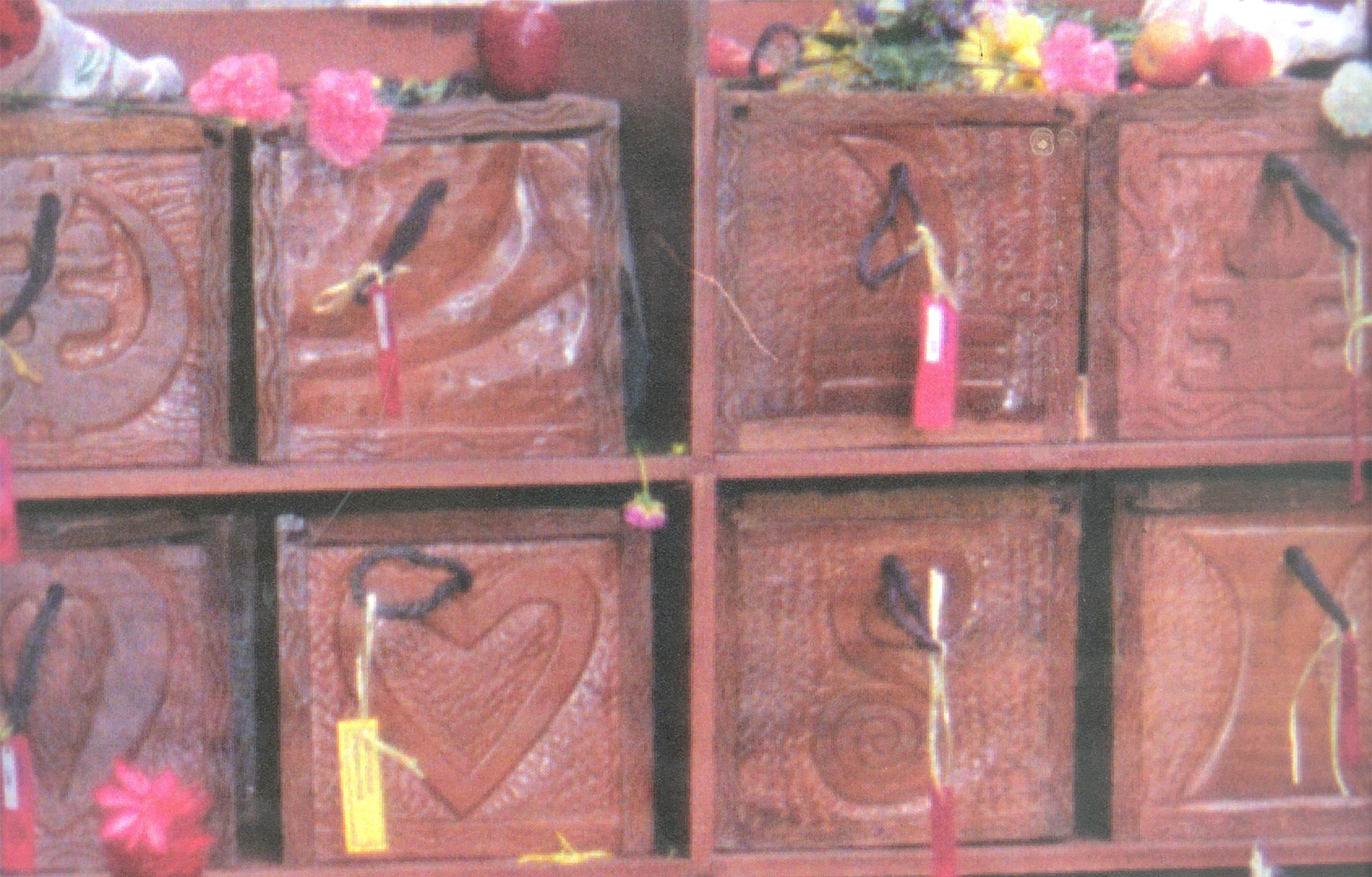
Before a final figure can be determined of the debt due on this slavery phase of the African Holocaust, some account should be taken of the working conditions.   You can get an impression by looking no further than the evidence found in the African Burial Ground in Manhattan, New York. Here, recent analysis of the remains held at Howard University shows that children as young as 7 years old were worked so hard that their bodies were misshapen and their spines driven into the brain from carrying heavy loads.

Ulrich Phillips, in “American Negro Slavery”, says of J.B. Say, an economist working around the turn of the 18th century, “Common sense must tell us, said he, that a slave’s maintenance must be less that of a free workman, since the master will impose a more drastic frugality than a freeman will adopt unless a dearth of earnings requires it. The slave’s work, furthermore, is more constant, for the master will not permit so much leisure and relaxation as a freeman customarily enjoys”.

This is why we include the entire slave population as laborers, and we leave it to others to argue why we should not.

By 1856, the advertised prices for European-owned African-Americans on a Railroad Contractor’s Credit Sale of “a choice gang of 41 slaves” ranged from a high of $2,700 for Anderson, a “No.1 bricklayer and mason”, and $1,900 for George, a “No. 1 blacksmith”, to $750 for Reuben, even though he was labeled “unsound”. The average cost for this lot of people was $1,488.

As a second reference for this number, we can look at the chart for the cost of Prime Field Hands and find that it is pretty accurate.   By multiplying the census count of slaves by the average advertised price, we arrive at a value of $5.3 billion ($5,327,079,968).

This may not look like a lot of money now, but compare it to other figures of the day. The National Wealth Estimate for the entire nation in 1856 was $12.3 billion ($12,396,000,000). [Note: All figures come from Tables in the cited U.S. Bureau of the Census publication] Total Bank Savings Deposits in 1856 were $95.6 million. Manhattan Island, Land and Buildings were worth only $900 million dollars, less than one-fifth of the value invested in African-Americans. The 1855 total capital and property investment in railroads was only $763.6 million dollars.

Why the $5 billion-dollar investment in slaves?

Nation’s 1st Wealth Builders Invested Billion Unpaid Hours

African-American slaves were the critical workers of the Industrial Age in the United States. In the same way that programmers transform computer code into products, so the labor of slaves transformed raw materials and land into products that would allow the Industrial Age to flourish in this hemisphere. Information technology has grown into the largest industry over the last thirty years. Slavery was the largest industry from the time such things were first measured in 1805, until African-Americans were freed to be paid labor in 1865.

At $865 billion a year, information technology represents about 12% of the 1997 Gross Domestic Product of $7,214 billion. In 1805, slave labor represented as much as 20% of the national wealth. By the 1850’s- 60’s, that figure rose to as high as 40%. If a 12% industry like information technology can affect the entire nation, how much impact does a 20-40% industry have? Let’s take a look at the 1850’s and the effect of slave labor on the economy.

According to J.D.B. DeBow, writing in the “Seventh Census 1850 Statistical View, Compendium”, published in 1856, “The total number of families holding slaves by the census of 1850 was 347,525. (See U.S. Census Table XC below). On the average of 5.7 to a family, there are about 2,000,000 persons in the relation of slave owners, or about one-third of the whole white population of the slave states; in South Carolina, Alabama, Mississippi and Louisiana, excluding the largest cities, one half of the whole population”.

In his work, “History of American Business & Industry”, Alex Groner observes, “In the sense that they were large and complex producing units, the big plantations were the South’s factories. The hundreds of slaves included large numbers of production workers -the field hands- as well as such specialists and skilled artisans as carpenters, drovers, watchmen, coopers, tailors, millers, butchers, shipwrights, engineers, dentists and nurses…Because virtually entire families could be put to work in the fields for most of the year, the slave economy proved ideal for cotton culture.

The price of a good field hand, about $300 before Whitney’s invention, doubled in twenty years. Poor whites, who could afford neither slaves nor land at the higher prices, moved West in mounting numbers and soon dominated the Southwest……It was not only the plantations of the South but also the factories, shipping merchants and banks of the North whose economies became tied more and more closely to cotton.

What North and South had in common was the prosperity resulting from the growth of cotton production. The size of the crop climbed steadily, from 80 million pounds in 1815 to 460 million, or more than half the world’s output by 1834, and to more than a billion pounds by 1850… From 1830 until the Civil War, cotton provided approximately half of the nation’s total exports”.1

At an average of 400 man-hours per 400-pound ginned bale of cotton (based on census averages), these billion pounds required a billion hours of unpaid man-hours.   These were supplied by African-American men, women and children, working as slave labor under threat of torture and death.

Banking on Slavery

Thus produced, the cotton crop traded hands on exchanges like the largest one in New York. Longevity counts in business, and many banking institutions trace their founding origins back to that time, including Bank of Boston -1784, Brown Brothers Harriman-1818, Chase – 1799, First Maryland Bancorp – 1808, Fleet Financial Group, Inc.-1791, J.P. Morgan Co., Inc.-1838, to name a few. U.S. Trust of New York (1853) was only a gleam in some banker’s eye at the time, and Price Waterhouse, the famous accounting firm, had just gotten its start in 1849. These banks and other businesses participated in cotton transactions that were all handled as they usually are, for a fee.   And so the brokers, traders, lenders, etc. all profited first. Then came the employees of the firms, the landlords, the washerwomen, the street vendors, messengers, haberdashers, milliners and all their families, and mortgage holders and service providers in an even wider circle.

Slave-Produced Crops Totaled more than 60% of U.S. Exports

Now traded, cotton found its way to 25 of the 35 states and territories for manufacturing. We don’t have to assume how the product was distributed, we can look at the 1850 list of cotton manufactures. (See U.S. Census Table CXCVL) Here, we see there were 1,064 businesses directly employing over 92,000 people across the country. Leading the way is Massachusetts, using 223,607 bales of cotton while employing over 29,000 people. It is also interesting to note that the export of slave crops cotton, tobacco and rice totaled over 60% of all the nation’s exports.   This meant that the shipping industry, the dockworkers and the factories on both sides of the Atlantic, all made a living from the peculiar institution of African-Americans working as slaves.   It was possible for people throughout Europe to work in cotton factories or peripheral industries in their home countries, save their money and book passage to America. Here, the newly arrived immigrant could get off the boat and work selling apples on Wall Street to the employees of the Cotton Exchange. A seamstress from English mills could come and find work making dresses for the wives and mending the coats of the men who worked in the financial district.   Maybe you’ve heard stories like these before.

When an industry produces over 60% of the national exports, it reaches farther than can be seen from the docks or from the fields. And there were other crops as well. There were 2,681 sugar plantations and 8,327 hemp planters.   In 1850, there were over 20 million bushels of sweet potatoes, 3 million bushels of Irish potatoes, 7 million bushels of peas and beans, and 8 million pounds of wool, all produced in slave-holding states. The African-Americans that Europeans called nere-do-well, helped clothe and feed this nation when the Europeans couldn’t.

Money Pump: Government, White Families Profited Most

The government profited most of all. The export of slave-produced crops allowed this emerging nation to import, from the more industrialized countries (with tariffs applied), without incurring a trade deficit.

Also, slave-intensive industries such as agriculture, manufacturing and transportation comprised over 60% of the total private production income at the time. In one way or another, this money was taxed. The slaves themselves were taxable as property beginning in 1815.   The Federal Government profited by first placing a tax on the slave as a unit of property, and again when taxes were paid on the land the slaves improved.   Taxing authorities, whether federal or local, made their money at some point in the trading of cotton and again when salaries found their way into taxable areas.   The government uses a myriad of ways to raise the money it needs to do what it has to do – to build the infrastructure of the nation.   To build the roads, forts and pay the federal marshals. This was done, in a large part, with slave dollars flowing like an irrigating stream, watering national, state and local governments at various stops along the way.

Thus, assets were being used to develop the country for the benefit of Europeans and their heirs.   And now today, the United States stands as a money pump with $7 trillion worth of pressure, creating jobs for Joe Blow in Idaho, and millionaires and billionaires with fortunes that span the globe. But it is a pump that was primed with the blood of African and Indigenous people.

Mother Moore -1971, John Conyers -1998

Speaking Truth to Power

In recognition of the wrong done, in 1989 Congressman John Conyers sponsored a bill to lead to reparations, H.R.40: “A bill to acknowledge the fundamental injustice, cruelty, brutality and inhumanity of slavery in the United States and the 13 American colonies between 1619 and 1865, and to establish a commission to examine the institution of slavery, subsequent de jure and de facto racial and economic discrimination against African-Americans, and the impact of these forces on living African-Americans, to make recommendations to the Congress on appropriate remedies and for other purposes.”

Forty-six years ago, Queen Mother Moore was at the First Black Political Convention in Gary, Indiana.   There she stood in a hotel lobby, crowned with a gold Gele and African dress, handing out literature and accepting hugs while shouting, “Reparations. Reparations honey, get your reparations. They got to pay you”.

The Queen Mother was right. It is in the context of reparations that the nation should be discussing Affirmative Action as part of the mix of options a moral nation would consider paying a long-overdue debt.

And $5 trillion dollars is not a lot of money for the harm done.

This number is only a fraction due for the human hours expended during the slavery phase of the African Holocaust. It does not include the theft of intellectual property rights, inventions and patents.

It certainly does not include damages for pain, suffering and the return of lost lives. Until this debt is acknowledged and paid, America will forever be paying the interest and never touching the principal.
 

Harvey Weinstein And Martha’s Vineyard: A Sad Little Boy From Brooklyn Goes Too Far

What do you say to your neighbor when he has been publicly accused of rape, sexual harassment and in general, just being a pig?

Do you shun him? Do you say that you ‘re not surprised? Do you act as if nothing has happened?

On the tiny island of Martha’s Vineyard, just off the coast of Massachusetts, Harvey Weinstein was a major player. He was a partner in a restaurant, donated to charities and was thought of as a regular mensch. He loves the island and its historical “New England” heritage. His wife loves it, so do his kids. It is their second home. When you’re as rich as Harvey, you have a lot of choices as to where to make your second home and Martha’s Vineyard was his. The sad little boy from Brooklyn actually thought that “they” would let him “in” and that with enough money, he could do no wrong. Harvey, who once was a celebrity, is now a pariah.

It is never “ok” to break the law; not even jay walking, yet, how many of us come to a full stop at five corners in the middle of the night in January? (A local bottle neck)
Treating women like chattel has been around since day one. AT LAST, we are doing something about it in the courts.

In 800 B.C. ish, when King David sent Uriah off to be killed in the war so that he could shtoop Bathsheba; was that harassment? If so, why would so many people name their sons after him?

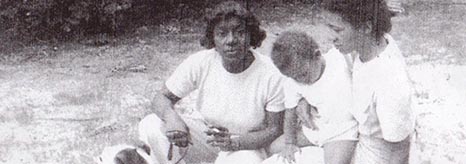
In the 1920’s, when Frank Crowninshield, the editor of Vanity Fair, asked my mother, Helene Johnson (the Harlem Renaissance poet), to have sex with him, she refused. When he said that if she did not have sex with him, he would see to it that none of her poetry was ever published in Vanity Fair again, she said: “But, I’m only 17” and he said, “all the better”. Vanity Fair never published another word of hers.

In the 1940’s, When my friend Annie’s mother was told that she would be given a better shift at the garment factory if she let the foreman touch her, she said, “no”. When he said that he would fire her if she did not come across with the goods, she changed her mind.
In the 1960’s When my buddy Nawana went out with a wealthy guy that she met at Max’ Kansas City, she assumed that she would have to repay him at the end of the evening. As the evening became more and more extravagant she realized that a black leather mask in the closet was probably the least of his kinky desires.

Sexual harassment is about power as much as it is about sex. I’m not saying that the actual groping doesn’t feel good or that it is a minor part of the picture, it is a great big part of the picture, but it is only a part of the picture.

For the most part it is men who harass women because they are bigger and stronger than we are. The person with the strength and power gets the person without the strength and power to yield to their needs.

If we take sexual harassment to be creating an uncomfortable sexual atmosphere, then, we are in a whole new ball of wax when it comes to judgment. It is difficult to separate out the fine line between a joke and an uncomfortable situation. People are often coming up to me and saying: “Abby, you’ll appreciate this…” then they tell a joke that is demeaning to black people or to women or to both. They think they are being liberal and funny as all get out, if they could jump into my head, they would see just how out of touch they were.
Uncomfortable is the key word here. Now, here’s the rub…sometimes those jokes are funny. All jokes are at someone’s expense so why not the underdog? Knowing the difference between funny and insulting requires thinking.

So, what was our friend and neighbor Harvey Weinstein thinking? Did he realize that what he was doing was against the law?

Harvey Weinstein, like it or not, is one of us. He is a Vineyarder. True, he is a first-generation summer resident, but let’s face it, we never shunned him. He has chosen to spend a good deal of his life on this island and, like the rest of us, wishes only good things to happen here. Clearly, he loves it here.

Okay, he’s a pig, but he’s “our” pig. One could say that he was only exercising his droit de seigneur as a big shot Hollywood guy which was part of the package of being a success. Along with the trophy wife, the trophy mcmansion and the trophy ride, the trophy shtoop was just another notch on the trophy belt.

I have a casting director friend whose major job was procuring good-looking blonde women for him.

BUT, Harvey wasn’t the only one he did it for. They don’t call it the casting couch for nothing.

Harvey brought a lot of wonderful things to Martha’s Vineyard, those things are still here.
Can a bad man do good things? Clearly, he can. Do we accept those good things? Obviously, we do. Are we bad for accepting them? What excuses will we have for not giving them back?

There is no need to ponder as to what would happen to Harvey if he were black. The man would be under the jail right now. If he were black and asked the judge for a respite to go to some self-help program, the judge would be falling off his seat, reeling with laughter. Harvey isn’t black, and they are still throwing the book at him.

Harvey went too far, but we all have a long way to go. “The times, they are a changing”. What was acceptable yesterday is no longer acceptable today. Ten or twenty years from now, eating meat may be against the law. Does that mean that we meat eaters are criminals today?

Women no longer have to wear push up bras to get the job. We now have the courage to say “no more” Now we can say;” No more, I have had enough and if you continue, I will put your ass in jail.”

It will be interesting to see how much jail time Harvey, the poor little boy from Brooklyn is going to do.

Analysis: The UN CARICOM Donor Conference:   The Economic Future of the Caribbean?

By Rebecca Theodore

CARICOM’s strategy for the promotion of economic unification among its member states and the harmonization of Caribbean foreign policy now depends entirely on the United Nations Development Program. CARICOM’s  leadership, in partnership with the United Nations, is now devoted to a new “social contract” with the government and people of the Caribbean. CARICOM is now a symbol of hope   for the future of the Caribbean. CARICOM now represents an exclusive coherence for Caribbean states as   the   Donor Conference takes effect at the United Nations headquarters in New York.

And there is much logic to this approach.

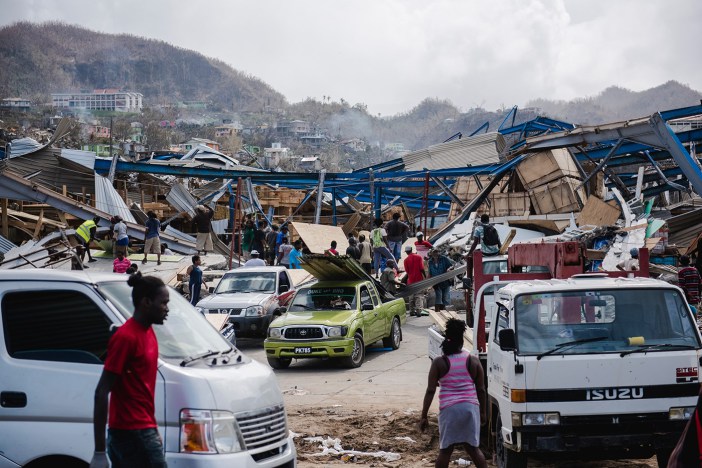
Whereas the fundamental premise of this UN CARICOM Donor Conference lies in the promotion of economic development for   Caribbean   states   devastated by   Hurricanes Maria and Irma, respectively; the political development of the Caribbean, sustainable and human development and democratic challenges in the Caribbean demand special emphasis as well.

The point is that cooperation between the Caribbean Community (CARICOM) and the United Nations must not only be   reinforced around the arena of economic development or   rebuilding the economies of the devastated Caribbean member states as the first climate-resilient countries in the world. Cooperation between CARICOM and the United Nations must   also be instituted in programs tailored according to the   needs of the Caribbean.

Hence, the goal should not only be to   amass   money   but to   rebuild a Caribbean   where   citizens can have “the rights to a free and independent press, an independent judiciary, and transparency and shared accountability   between government and people.” The   goal should also seek to strengthen democratic   governance in the Caribbean and an adherence to the tenets of electoral reform, to ease people from the oppression of their corrupt governments and the rights to   health care, education and basic human rights.

In this regard, if there is a point where two  meanings collide in this juncture, it is between   the UN Haitian Donor Conference of 2010 and   this   present   CARICOM conference of   2017.

For it is here that the words of past World Bank President Robert Zoellick on the Haitian   Donor Conference comes to light.

“It is time to create anti-corruption tools, conduct regular audits, publicize detected cases of corruption and ask officials to make ethics pledges.”

Following this, the irony of Hillary Clinton also rings clear. “We are called to do better than in the past, ….. Leaders must make the decision to guide a strong, accountable and transparent recovery.”

But then, if we are called   to do better than in the past, it is evident that certain clauses must also be revisited. There should also be mechanisms to ensure that the governments to which this donor aid is diverted be   held accountable to the public, and that ethical and professional standards are upheld. It is imperative that the beginning of this economic consciousness be accompanied by new measures for “freedom of the press” in many Caribbean states, because the media can only play a constructive role in democracy if there is an empowering environment that allows it to do so.

It should also be noted that on the Caribbean island of Dominica, where the cost of Hurricane Maria’s damage has been estimated as US$1 billion, a monopolistic media is used to propagate discord rather than consensus, and hate speech instead of clearheaded discussion. Compounded   to this, the Election Commission in Dominica continues to violate the recommendations of Organization of American States election observers for voter identification cards for all its citizenry, thus contributing to disparagement and democratic decay of the electoral process.

Additionally, if the Caribbean is to use the proceeds of this UN CARICOM Donor Conference as an aid to attain the United Nations Sustainable Development Goals by 2030, then regional organizations like the   Organization of American States (OAS) should also seek to work together with CARICOM states  to rehabilitate the   core institutions of democracy in the Caribbean.

Notwithstanding, the partisan politics practiced in many Caribbean states   is   also an impediment to economic development and   thwarts the agenda of the UN Sustainable Development Goals of ending poverty, inequality and employing policies that build economic growth and the social needs of   job opportunities, education, health and social protection.

Moreover, if democracy requires the active participation of the citizenry, then the parameters of this Donor Conference   must   also be stitched around CARICOM’s objective of the promotion of greater understanding among its people and the advancement of their social, cultural and technological development. The Caribbean, and especially Dominica, need strong education and health systems, as well as a government with strong, accountable institutions as specified in Goal 16 of the UN Sustainable Development Goals, which is dedicated   to the promotion of justice for all, and building effective, accountable institutions at all levels. Lack of transparency in countries like Dominica can also evoke global costs, which could be detrimental to both the economic and political process, and could explode into regional and global consequences.

Thus far, Caribbean governments   must  take ownership and establish national frameworks for the achievement of the United Nations  17 Sustainable Development Goals in this United Nations CARICOM Donor Conference.   Likewise, the Caribbean must be   developed as a feasible, reorganized modern society based on solidarity, the rule of law and freedom of expression and association.

To this end, the Caribbean’s reconstruction package at this UN CARICOM Donor Conference should benefit all the people of the Caribbean, regardless of status or location, and there should be no exclusion. In an   everchanging international environment, laced with ambiguity and intricacy, CARICOM must be   ardent to the United Nations as a principal medium for multilateral cooperation and a plinth from which Caribbean states can be mirrored. The need for economic development is wide-ranging, but the need for “disaggregated information” on the Caribbean through a free independent press that will   build peace and social consensus and provide better coordination and exchange of information between CARICOM member states and the United Nations should   be a sought-after goal as well.


#metoo

0

In elementary school, me and my friends used to play this game we called stung. It actually wasn’t much of a game, it was simply one of us calling out the name of a girl, and then when she turned around the person that called her would grab his crotch and scream stung!

In junior high school, there was a female student that was fully developed at her early age. All of the boys in our school would ogle as she played at gym class, went to the board to do a math problem, or even just when she walked through the hallway. One of my friends used to dare me to squeeze her butt. I had seen him do it to her numerous times, he’d walk right up to her and without her consent he’d squeeze her butt and run, so I knew where his dare was coming from. And although I never took the dare, I did think about it.

Around that same time, there was a woman who lived on my block, one building over from me. She was in her mid- to late 20’s when I was 13. She used to spend time around me and my friends, and sometimes she’d ask us questions of a sexual nature. One time she asked me if I knew how to French kiss. When I admitted that I did not, she leaned in and tongue-kissed me. She told me after the kiss that that was what a French kiss felt like. She was a woman. I was a child. Somehow, my mother got word that this woman was spending an inappropriate amount of time with me and my friends. My mother proceeded to put the “fear of God” into this woman, and she was never heard from again.

#metoo spread virally in October as a way to denounce sexual abuse, assault and harassment. As a sort of response to the many allegations against Harvey Weinstein, women and some men took to social media to tell their stories. The hashtag has grown now to include over a million posts on Twitter and Facebook. Looking at the posts, reading the stories, many from people that I know made me realize exactly how normalized sexual abuse is in our society. I’ve heard the term “rape culture” used before by pseudo-intellectuals and those wishing to polarize gender discussions, and quite honestly, I used to ignore the theory altogether. How could I be affected by rape culture? I love my mother. I love my sisters. I’ll beat up someone for trying that stuff with my daughter. What I didn’t realize was how nuanced our programming had become, how utterly ignorant I had been to my own culpability and victimization of these behavior systems. But yes, we live with the patterns of rape culture sewn into our normalized lives.

I began to look into my own behavior, going back into adolescence and even into childhood. That game of stung? It was certainly inappropriate. That friend that used to run up on my classmate and squeeze her butt, simply because she was more developed than our other classmates? He was committing sexual assault. The young woman that showed me what a French kiss was? Her behavior was criminal. I was only 13, and she was an adult who should’ve known better. In my life, there are dozens of stories where maybe youthful exuberance crossed the line into sexual objectification, times where thinking something was funny or acting in a certain way for the benefit of obtaining sex might have been crossing the line of acceptable behavior. So, #metoo has now become so much more than just a trending hashtag. It has become a mirror, a chance for us to see ourselves in these stories, to realize that maybe she didn’t like it, maybe she didn’t want it, maybe we were wrong for assuming that she did, maybe we were wrong for assuming all this time that we were right.

The power of social media is its ability to reach us all through our phones, laptops and other media devices, and to relay messages globally in a matter of keystrokes. I implore you to take some time and read the stories of #metoo. And then look in the mirror and take inventory of your behavior. Our women and men deserved to be heard on this, but even more importantly, we all need to hear it.

WHAT’S GOING ON

RIP: WALTER SMITH, Jr.

Walter Smith

New York-based publisher Walter Smith, Jr., 80, beloved Black newspaper mogul and businessman, joined the ancestors on Friday, November 10.  Outspoken and aggressive, Smith was always a quick learner and a visionary. As publisher and editor in chief of the NY Beacon and the Philadelphia Observer, two weekly newspapers which cater to African-American readers, Smith kept his fingers on the pulse of American politics, civil rights, business, race matters and almost everything which impacted the Black experience. He enjoyed writing provocative editorials, which he would send to an intimate database of about 100 friends and associates. The Trump presidency accounted for weekly adrenalin rushes which resulted in characteristic Smith vitriol.

Born in South Carolina and raised in North Carolina, Smith was the only boy of 10 children. He attended segregated schools, including the North Carolina College at Durban, and saw combat in the US Army during the Korean War.   A postwar employer reluctantly forced him to exercise stock options. Years later, when he wanted to buy a home, he asked his employer for a salary advance. The response was, “sell some of your stock”. That signaled the beginning of his entrepreneurial endeavors.     In 1982, Smith purchased the NY Beacon, which was known as “Big Red”, a popular numerology sheet-cum-newsletter which had a robust circulation of 100,000.   He also acquired the Philadelphia Observer and pursued nonpublishing business opportunities. He developed the NY Beacon  brand into a competitive world-class publication focused on local and national hard news with columnists notable for their arts, culture, business, Black society and sports expertise. [Visit newyorkbeason.net]

Smith created the Northeast Publishers Association and was the regional director of the National Newspaper Publishers Association, a Black publishers trade association. He ran the New York Beacon franchise with his wife Miatta Smith. They have homes in Puerto Rico, Miami, Atlanta and NY. Walter is survived by Miatta, his children and grandchildren.

2017 ELECTION RESULTS

Justin Fairfax

Americans turned out in large numbers last week to ensure Democratic victories across the land. The vote indicated the Democratic National Committee is doing something right and that the electorate is not enamored with the Donald Trump American dystopia. Women, especially Black women, plus urban, suburban Democrats made the difference at the polls.   Ralph Northam is Virginia Governor-elect whose Lieutenant Governor-elect is African-American Justin Fairfax.     Phil Murphy is NJ Governor-elect whose Lieutenant Governor is African-American Sheila Oliver.

There were almost a dozen Black Democratic mayoral victories last week. And the winners are: Vi Lyles, Charlotte, NC; Melvin Carter, St. Paul, Minnesota; Yvonne Picer, Massachusetts; Mary Parkham-Copelan, Milledgeville, GA; millennial Booker Gainor, Cairo, Georgia; Eddie Moore, Health Springs, SC; and Liberian-born Wilmont Collins, Helena, Montana.   African-

Andrea Jenkins

American Andrea Jenkins was elected to the Minneapolis City Council, making her the first openly transgender person elected to any office in the USA.

The Democratic Party’s success at the polls last week was a response to the anti-Trump mood that’s pervasive throughout the nation.   The Democratic National Committee deserves applause for its work in organizing myriad groups and interests and motivating the electorate to go to the polls. Now to take back the Senate next year and curb the POTUS 45 agenda.

The GOP response to last week’s ostensible anti-Trump election results are surprising. Approximately 29 Republican congressmen announced their exit from the House of Reps next year. Will these exit disclosures affect their votes. Not really.  On November 14, some US Senators announced a possible end of the Affordable Care Act’s (Obamacare) individual mandate as part of their tax overhaul plan.

ONLY IN AMERICA

The 10/26 NY Times Business section story, “HOW TO GET POWER? Get Organized”, about America’s Black elites who are ready to be more politically engaged and proactive.   They are responding to the protracted inequities in America vis-à-vis Black America. The elitists’ plan is to organize three structures in 2018: 1) a super PAC(political action committee) to run political ads and host events, 2) a federal super PAC to support candidates who conform to the PACs agenda, and 3) create a 501©(4) group or social welfare nonprofit which will integrate the two foregoing structures. The key HOW TO GET POWER architects include Karen and Charles Phillips, CEO of Infor software; Robin and Tony Coles, who heads biotech company Yumanity Therapeutics; Marva Smalls, global head of inclusion strategies for Viacom; William M. Lewis, chairman of investment banking at Lazard Freres; Raymond J. McGuire, who heads Citigroup corporate and investment banking; and Adebayo Ogunlesi, private equity executive, Goldman Sachs’ lead director. If those names are unfamiliar, you need to study Black wealth in the USA. The elites have been meeting this summer in East Hampton, NY and Kiawah Island in South Carolina, where they have held audiences with GOP US Senator Tim Scott and Congressman James E. Clyburn.   The plan is hopeful and sounds like a page out of the Koch Brothers political action playbook. The Koch Brothers are customers of Charles Phillips’ company Infor. WGO will provide updates on HOW TO GET POWER?

NOVEMBER OUTINGS

The Complexions Contemporary Ballet season begins on November 14-26 at the Joyce Theater, located at 175 Eighth Avenue, Manhattan. The Complexions dance company operates under the direction of its African-American founders/artistic directors Dwight Rhoden and Desmond Richardson, both Alvin Ailey alumni. Company is known for its signature style of athleticism, virtuosity and passion, and for its diverse dance roster. [Visit complexionsdance.org]

The CUNY Haitian Studies Institute, housed at Brooklyn College, hosts a special event on November 16 from 4-9 pm, which presents a Haitian art exhibition featuring the works of nine fine artists, including Eric Girault and Yolene Legrand, and a Haitian Revolution Conference led by Professor Pierre Buteau to celebrate the Battle of Vertieres, which was held on 11/18/1803. Exhibit is open until 11/27.   [Call 718.951.5000, Ext. 3842]

Ishmael Reed

Margaret Troupe hosts a Harlem Arts Salon event featuring award-winning novelist and MacArthur Awardee Ishmael Reed; James Demby, son of late novelist William Demby, who wrote KING COMUS; Carla Bland and Melanie Masterson-Sherazi in a panel discussion, book reading excerpt and Q&A which includes a copy of the book, food and wine on November 19 at 2 pm at 1925 Seventh Avenue, Suite 7L, Harlem. [Call 212.749.7771 or e-mail harlemartssalon@gmail.com]

The Dorsey Art Gallery hosts its 33rd Annual Holiday Auction and Exhibit for Children of NYC on December 2 at 7 pm at its headquarters located at 553 Rogers Avenue, Brooklyn, NY. [Call 718.771.3803]

A Harlem-based management consultant, Victoria Horsford can be reached at Victoria.horsford@gmail.com.