Home Blog Page 722

Harvey Weinstein And Martha’s Vineyard: A Sad Little Boy From Brooklyn Goes Too Far

What do you say to your neighbor when he has been publicly accused of rape, sexual harassment and in general, just being a pig?

Do you shun him? Do you say that you ‘re not surprised? Do you act as if nothing has happened?

On the tiny island of Martha’s Vineyard, just off the coast of Massachusetts, Harvey Weinstein was a major player. He was a partner in a restaurant, donated to charities and was thought of as a regular mensch. He loves the island and its historical “New England” heritage. His wife loves it, so do his kids. It is their second home. When you’re as rich as Harvey, you have a lot of choices as to where to make your second home and Martha’s Vineyard was his. The sad little boy from Brooklyn actually thought that “they” would let him “in” and that with enough money, he could do no wrong. Harvey, who once was a celebrity, is now a pariah.

It is never “ok” to break the law; not even jay walking, yet, how many of us come to a full stop at five corners in the middle of the night in January? (A local bottle neck)
Treating women like chattel has been around since day one. AT LAST, we are doing something about it in the courts.

In 800 B.C. ish, when King David sent Uriah off to be killed in the war so that he could shtoop Bathsheba; was that harassment? If so, why would so many people name their sons after him?

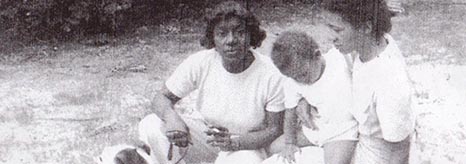
In the 1920’s, when Frank Crowninshield, the editor of Vanity Fair, asked my mother, Helene Johnson (the Harlem Renaissance poet), to have sex with him, she refused. When he said that if she did not have sex with him, he would see to it that none of her poetry was ever published in Vanity Fair again, she said: “But, I’m only 17” and he said, “all the better”. Vanity Fair never published another word of hers.

In the 1940’s, When my friend Annie’s mother was told that she would be given a better shift at the garment factory if she let the foreman touch her, she said, “no”. When he said that he would fire her if she did not come across with the goods, she changed her mind.
In the 1960’s When my buddy Nawana went out with a wealthy guy that she met at Max’ Kansas City, she assumed that she would have to repay him at the end of the evening. As the evening became more and more extravagant she realized that a black leather mask in the closet was probably the least of his kinky desires.

Sexual harassment is about power as much as it is about sex. I’m not saying that the actual groping doesn’t feel good or that it is a minor part of the picture, it is a great big part of the picture, but it is only a part of the picture.

For the most part it is men who harass women because they are bigger and stronger than we are. The person with the strength and power gets the person without the strength and power to yield to their needs.

If we take sexual harassment to be creating an uncomfortable sexual atmosphere, then, we are in a whole new ball of wax when it comes to judgment. It is difficult to separate out the fine line between a joke and an uncomfortable situation. People are often coming up to me and saying: “Abby, you’ll appreciate this…” then they tell a joke that is demeaning to black people or to women or to both. They think they are being liberal and funny as all get out, if they could jump into my head, they would see just how out of touch they were.
Uncomfortable is the key word here. Now, here’s the rub…sometimes those jokes are funny. All jokes are at someone’s expense so why not the underdog? Knowing the difference between funny and insulting requires thinking.

So, what was our friend and neighbor Harvey Weinstein thinking? Did he realize that what he was doing was against the law?

Harvey Weinstein, like it or not, is one of us. He is a Vineyarder. True, he is a first-generation summer resident, but let’s face it, we never shunned him. He has chosen to spend a good deal of his life on this island and, like the rest of us, wishes only good things to happen here. Clearly, he loves it here.

Okay, he’s a pig, but he’s “our” pig. One could say that he was only exercising his droit de seigneur as a big shot Hollywood guy which was part of the package of being a success. Along with the trophy wife, the trophy mcmansion and the trophy ride, the trophy shtoop was just another notch on the trophy belt.

I have a casting director friend whose major job was procuring good-looking blonde women for him.

BUT, Harvey wasn’t the only one he did it for. They don’t call it the casting couch for nothing.

Harvey brought a lot of wonderful things to Martha’s Vineyard, those things are still here.
Can a bad man do good things? Clearly, he can. Do we accept those good things? Obviously, we do. Are we bad for accepting them? What excuses will we have for not giving them back?

There is no need to ponder as to what would happen to Harvey if he were black. The man would be under the jail right now. If he were black and asked the judge for a respite to go to some self-help program, the judge would be falling off his seat, reeling with laughter. Harvey isn’t black, and they are still throwing the book at him.

Harvey went too far, but we all have a long way to go. “The times, they are a changing”. What was acceptable yesterday is no longer acceptable today. Ten or twenty years from now, eating meat may be against the law. Does that mean that we meat eaters are criminals today?

Women no longer have to wear push up bras to get the job. We now have the courage to say “no more” Now we can say;” No more, I have had enough and if you continue, I will put your ass in jail.”

It will be interesting to see how much jail time Harvey, the poor little boy from Brooklyn is going to do.
Analysis: The UN CARICOM Donor Conference:   The Economic Future of the Caribbean?

By Rebecca Theodore

CARICOM’s strategy for the promotion of economic unification among its member states and the harmonization of Caribbean foreign policy now depends entirely on the United Nations Development Program. CARICOM’s  leadership, in partnership with the United Nations, is now devoted to a new “social contract” with the government and people of the Caribbean. CARICOM is now a symbol of hope   for the future of the Caribbean. CARICOM now represents an exclusive coherence for Caribbean states as   the   Donor Conference takes effect at the United Nations headquarters in New York.

And there is much logic to this approach.

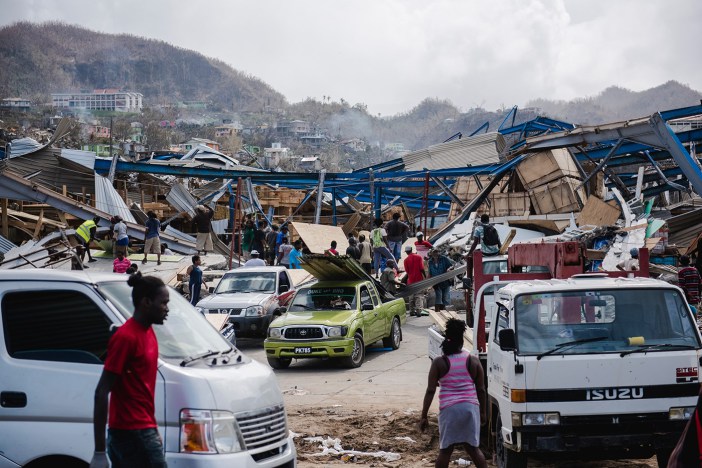
Whereas the fundamental premise of this UN CARICOM Donor Conference lies in the promotion of economic development for   Caribbean   states   devastated by   Hurricanes Maria and Irma, respectively; the political development of the Caribbean, sustainable and human development and democratic challenges in the Caribbean demand special emphasis as well.

The point is that cooperation between the Caribbean Community (CARICOM) and the United Nations must not only be   reinforced around the arena of economic development or   rebuilding the economies of the devastated Caribbean member states as the first climate-resilient countries in the world. Cooperation between CARICOM and the United Nations must   also be instituted in programs tailored according to the   needs of the Caribbean.

Hence, the goal should not only be to   amass   money   but to   rebuild a Caribbean   where   citizens can have “the rights to a free and independent press, an independent judiciary, and transparency and shared accountability   between government and people.” The   goal should also seek to strengthen democratic   governance in the Caribbean and an adherence to the tenets of electoral reform, to ease people from the oppression of their corrupt governments and the rights to   health care, education and basic human rights.

In this regard, if there is a point where two  meanings collide in this juncture, it is between   the UN Haitian Donor Conference of 2010 and   this   present   CARICOM conference of   2017.

For it is here that the words of past World Bank President Robert Zoellick on the Haitian   Donor Conference comes to light.

“It is time to create anti-corruption tools, conduct regular audits, publicize detected cases of corruption and ask officials to make ethics pledges.”

Following this, the irony of Hillary Clinton also rings clear. “We are called to do better than in the past, ….. Leaders must make the decision to guide a strong, accountable and transparent recovery.”

But then, if we are called   to do better than in the past, it is evident that certain clauses must also be revisited. There should also be mechanisms to ensure that the governments to which this donor aid is diverted be   held accountable to the public, and that ethical and professional standards are upheld. It is imperative that the beginning of this economic consciousness be accompanied by new measures for “freedom of the press” in many Caribbean states, because the media can only play a constructive role in democracy if there is an empowering environment that allows it to do so.

It should also be noted that on the Caribbean island of Dominica, where the cost of Hurricane Maria’s damage has been estimated as US$1 billion, a monopolistic media is used to propagate discord rather than consensus, and hate speech instead of clearheaded discussion. Compounded   to this, the Election Commission in Dominica continues to violate the recommendations of Organization of American States election observers for voter identification cards for all its citizenry, thus contributing to disparagement and democratic decay of the electoral process.

Additionally, if the Caribbean is to use the proceeds of this UN CARICOM Donor Conference as an aid to attain the United Nations Sustainable Development Goals by 2030, then regional organizations like the   Organization of American States (OAS) should also seek to work together with CARICOM states  to rehabilitate the   core institutions of democracy in the Caribbean.

Notwithstanding, the partisan politics practiced in many Caribbean states   is   also an impediment to economic development and   thwarts the agenda of the UN Sustainable Development Goals of ending poverty, inequality and employing policies that build economic growth and the social needs of   job opportunities, education, health and social protection.

Moreover, if democracy requires the active participation of the citizenry, then the parameters of this Donor Conference   must   also be stitched around CARICOM’s objective of the promotion of greater understanding among its people and the advancement of their social, cultural and technological development. The Caribbean, and especially Dominica, need strong education and health systems, as well as a government with strong, accountable institutions as specified in Goal 16 of the UN Sustainable Development Goals, which is dedicated   to the promotion of justice for all, and building effective, accountable institutions at all levels. Lack of transparency in countries like Dominica can also evoke global costs, which could be detrimental to both the economic and political process, and could explode into regional and global consequences.

Thus far, Caribbean governments   must  take ownership and establish national frameworks for the achievement of the United Nations  17 Sustainable Development Goals in this United Nations CARICOM Donor Conference.   Likewise, the Caribbean must be   developed as a feasible, reorganized modern society based on solidarity, the rule of law and freedom of expression and association.

To this end, the Caribbean’s reconstruction package at this UN CARICOM Donor Conference should benefit all the people of the Caribbean, regardless of status or location, and there should be no exclusion. In an   everchanging international environment, laced with ambiguity and intricacy, CARICOM must be   ardent to the United Nations as a principal medium for multilateral cooperation and a plinth from which Caribbean states can be mirrored. The need for economic development is wide-ranging, but the need for “disaggregated information” on the Caribbean through a free independent press that will   build peace and social consensus and provide better coordination and exchange of information between CARICOM member states and the United Nations should   be a sought-after goal as well.


#metoo

0

In elementary school, me and my friends used to play this game we called stung. It actually wasn’t much of a game, it was simply one of us calling out the name of a girl, and then when she turned around the person that called her would grab his crotch and scream stung!

In junior high school, there was a female student that was fully developed at her early age. All of the boys in our school would ogle as she played at gym class, went to the board to do a math problem, or even just when she walked through the hallway. One of my friends used to dare me to squeeze her butt. I had seen him do it to her numerous times, he’d walk right up to her and without her consent he’d squeeze her butt and run, so I knew where his dare was coming from. And although I never took the dare, I did think about it.

Around that same time, there was a woman who lived on my block, one building over from me. She was in her mid- to late 20’s when I was 13. She used to spend time around me and my friends, and sometimes she’d ask us questions of a sexual nature. One time she asked me if I knew how to French kiss. When I admitted that I did not, she leaned in and tongue-kissed me. She told me after the kiss that that was what a French kiss felt like. She was a woman. I was a child. Somehow, my mother got word that this woman was spending an inappropriate amount of time with me and my friends. My mother proceeded to put the “fear of God” into this woman, and she was never heard from again.

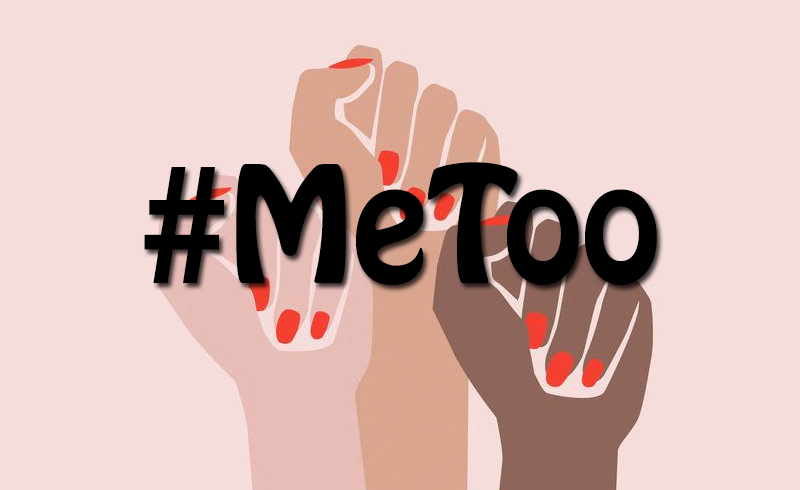
#metoo spread virally in October as a way to denounce sexual abuse, assault and harassment. As a sort of response to the many allegations against Harvey Weinstein, women and some men took to social media to tell their stories. The hashtag has grown now to include over a million posts on Twitter and Facebook. Looking at the posts, reading the stories, many from people that I know made me realize exactly how normalized sexual abuse is in our society. I’ve heard the term “rape culture” used before by pseudo-intellectuals and those wishing to polarize gender discussions, and quite honestly, I used to ignore the theory altogether. How could I be affected by rape culture? I love my mother. I love my sisters. I’ll beat up someone for trying that stuff with my daughter. What I didn’t realize was how nuanced our programming had become, how utterly ignorant I had been to my own culpability and victimization of these behavior systems. But yes, we live with the patterns of rape culture sewn into our normalized lives.

I began to look into my own behavior, going back into adolescence and even into childhood. That game of stung? It was certainly inappropriate. That friend that used to run up on my classmate and squeeze her butt, simply because she was more developed than our other classmates? He was committing sexual assault. The young woman that showed me what a French kiss was? Her behavior was criminal. I was only 13, and she was an adult who should’ve known better. In my life, there are dozens of stories where maybe youthful exuberance crossed the line into sexual objectification, times where thinking something was funny or acting in a certain way for the benefit of obtaining sex might have been crossing the line of acceptable behavior. So, #metoo has now become so much more than just a trending hashtag. It has become a mirror, a chance for us to see ourselves in these stories, to realize that maybe she didn’t like it, maybe she didn’t want it, maybe we were wrong for assuming that she did, maybe we were wrong for assuming all this time that we were right.

The power of social media is its ability to reach us all through our phones, laptops and other media devices, and to relay messages globally in a matter of keystrokes. I implore you to take some time and read the stories of #metoo. And then look in the mirror and take inventory of your behavior. Our women and men deserved to be heard on this, but even more importantly, we all need to hear it.

WHAT’S GOING ON

RIP: WALTER SMITH, Jr.

Walter Smith

New York-based publisher Walter Smith, Jr., 80, beloved Black newspaper mogul and businessman, joined the ancestors on Friday, November 10.  Outspoken and aggressive, Smith was always a quick learner and a visionary. As publisher and editor in chief of the NY Beacon and the Philadelphia Observer, two weekly newspapers which cater to African-American readers, Smith kept his fingers on the pulse of American politics, civil rights, business, race matters and almost everything which impacted the Black experience. He enjoyed writing provocative editorials, which he would send to an intimate database of about 100 friends and associates. The Trump presidency accounted for weekly adrenalin rushes which resulted in characteristic Smith vitriol.

Born in South Carolina and raised in North Carolina, Smith was the only boy of 10 children. He attended segregated schools, including the North Carolina College at Durban, and saw combat in the US Army during the Korean War.   A postwar employer reluctantly forced him to exercise stock options. Years later, when he wanted to buy a home, he asked his employer for a salary advance. The response was, “sell some of your stock”. That signaled the beginning of his entrepreneurial endeavors.     In 1982, Smith purchased the NY Beacon, which was known as “Big Red”, a popular numerology sheet-cum-newsletter which had a robust circulation of 100,000.   He also acquired the Philadelphia Observer and pursued nonpublishing business opportunities. He developed the NY Beacon  brand into a competitive world-class publication focused on local and national hard news with columnists notable for their arts, culture, business, Black society and sports expertise. [Visit newyorkbeason.net]

Smith created the Northeast Publishers Association and was the regional director of the National Newspaper Publishers Association, a Black publishers trade association. He ran the New York Beacon franchise with his wife Miatta Smith. They have homes in Puerto Rico, Miami, Atlanta and NY. Walter is survived by Miatta, his children and grandchildren.

2017 ELECTION RESULTS

Justin Fairfax

Americans turned out in large numbers last week to ensure Democratic victories across the land. The vote indicated the Democratic National Committee is doing something right and that the electorate is not enamored with the Donald Trump American dystopia. Women, especially Black women, plus urban, suburban Democrats made the difference at the polls.   Ralph Northam is Virginia Governor-elect whose Lieutenant Governor-elect is African-American Justin Fairfax.     Phil Murphy is NJ Governor-elect whose Lieutenant Governor is African-American Sheila Oliver.

There were almost a dozen Black Democratic mayoral victories last week. And the winners are: Vi Lyles, Charlotte, NC; Melvin Carter, St. Paul, Minnesota; Yvonne Picer, Massachusetts; Mary Parkham-Copelan, Milledgeville, GA; millennial Booker Gainor, Cairo, Georgia; Eddie Moore, Health Springs, SC; and Liberian-born Wilmont Collins, Helena, Montana.   African-

Andrea Jenkins

American Andrea Jenkins was elected to the Minneapolis City Council, making her the first openly transgender person elected to any office in the USA.

The Democratic Party’s success at the polls last week was a response to the anti-Trump mood that’s pervasive throughout the nation.   The Democratic National Committee deserves applause for its work in organizing myriad groups and interests and motivating the electorate to go to the polls. Now to take back the Senate next year and curb the POTUS 45 agenda.

The GOP response to last week’s ostensible anti-Trump election results are surprising. Approximately 29 Republican congressmen announced their exit from the House of Reps next year. Will these exit disclosures affect their votes. Not really.  On November 14, some US Senators announced a possible end of the Affordable Care Act’s (Obamacare) individual mandate as part of their tax overhaul plan.

ONLY IN AMERICA

The 10/26 NY Times Business section story, “HOW TO GET POWER? Get Organized”, about America’s Black elites who are ready to be more politically engaged and proactive.   They are responding to the protracted inequities in America vis-à-vis Black America. The elitists’ plan is to organize three structures in 2018: 1) a super PAC(political action committee) to run political ads and host events, 2) a federal super PAC to support candidates who conform to the PACs agenda, and 3) create a 501©(4) group or social welfare nonprofit which will integrate the two foregoing structures. The key HOW TO GET POWER architects include Karen and Charles Phillips, CEO of Infor software; Robin and Tony Coles, who heads biotech company Yumanity Therapeutics; Marva Smalls, global head of inclusion strategies for Viacom; William M. Lewis, chairman of investment banking at Lazard Freres; Raymond J. McGuire, who heads Citigroup corporate and investment banking; and Adebayo Ogunlesi, private equity executive, Goldman Sachs’ lead director. If those names are unfamiliar, you need to study Black wealth in the USA. The elites have been meeting this summer in East Hampton, NY and Kiawah Island in South Carolina, where they have held audiences with GOP US Senator Tim Scott and Congressman James E. Clyburn.   The plan is hopeful and sounds like a page out of the Koch Brothers political action playbook. The Koch Brothers are customers of Charles Phillips’ company Infor. WGO will provide updates on HOW TO GET POWER?

NOVEMBER OUTINGS

The Complexions Contemporary Ballet season begins on November 14-26 at the Joyce Theater, located at 175 Eighth Avenue, Manhattan. The Complexions dance company operates under the direction of its African-American founders/artistic directors Dwight Rhoden and Desmond Richardson, both Alvin Ailey alumni. Company is known for its signature style of athleticism, virtuosity and passion, and for its diverse dance roster. [Visit complexionsdance.org]

The CUNY Haitian Studies Institute, housed at Brooklyn College, hosts a special event on November 16 from 4-9 pm, which presents a Haitian art exhibition featuring the works of nine fine artists, including Eric Girault and Yolene Legrand, and a Haitian Revolution Conference led by Professor Pierre Buteau to celebrate the Battle of Vertieres, which was held on 11/18/1803. Exhibit is open until 11/27.   [Call 718.951.5000, Ext. 3842]

Ishmael Reed

Margaret Troupe hosts a Harlem Arts Salon event featuring award-winning novelist and MacArthur Awardee Ishmael Reed; James Demby, son of late novelist William Demby, who wrote KING COMUS; Carla Bland and Melanie Masterson-Sherazi in a panel discussion, book reading excerpt and Q&A which includes a copy of the book, food and wine on November 19 at 2 pm at 1925 Seventh Avenue, Suite 7L, Harlem. [Call 212.749.7771 or e-mail harlemartssalon@gmail.com]

The Dorsey Art Gallery hosts its 33rd Annual Holiday Auction and Exhibit for Children of NYC on December 2 at 7 pm at its headquarters located at 553 Rogers Avenue, Brooklyn, NY. [Call 718.771.3803]

A Harlem-based management consultant, Victoria Horsford can be reached at Victoria.horsford@gmail.com.

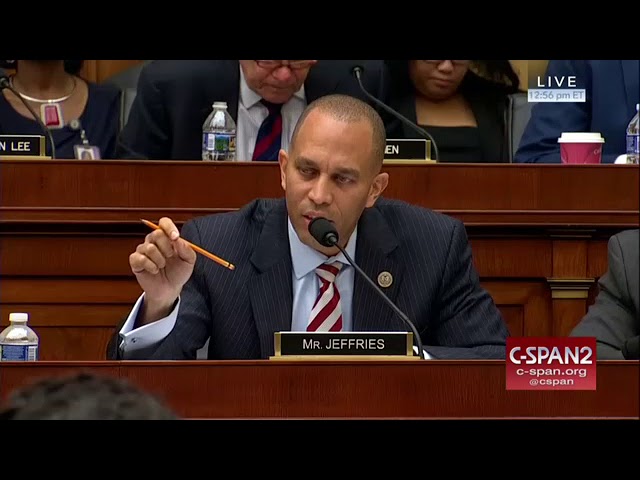
Congressman dismantles Jeff Sessions in epic 5-minute cross-examination

Shortly after his election, we spoke with Congressman Hakeem Jeffries while standing on Lafayette Avenue, and congratulated him on running with the big dogs on the Budget and Judiciary Committees. He leaned in and said, “I might have to put some Brooklyn on them”. Well, he did just that in his questioning of Attorney General Jefferson Beauregard Sessions III this past Tuesday.


Sessions’ own words come back to haunt him

By Judd Legum, thinkprogress.org

In testimony before the House Judiciary Committee on Tuesday, Attorney General Jeff Sessions repeatedly came under heavy criticism from Democratic members. At issue was his statement, delivered under oath during his confirmation hearings, that neither he nor anyone else on the Trump campaign had contact with Russia during the course of the 2016 election. It was subsequently revealed that Sessions had multiple meetings with the Russian ambassador and knew about other contacts between campaign staff and Russians.

Perhaps the most effective questioning came from Rep. Hakeem Jeffries (D-NY). His strategy was simple: use Sessions’ own words to make his point.

Jeffries started by establishing that Sessions claimed he “didn’t recall” the answer to various questions dozens of times during his appearances before Congress as attorney general. Jeffries then summarized Sessions’ comments to Fox Business host Lou Dobbs on October 4, 2016 in which he blasted Hillary Clinton for the exact same behavior, suggesting that it could be criminal.

Jeffries was limited to five minutes, so he didn’t have time to read Sessions’ full quote from his October 2016 appearance with Dobbs ahead of the vice presidential debate, but here it is.

SESSIONS: “Lou, that’s the way you lie. That’s the way people do it in court. I’ve seen it many, many times. Well, I don’t remember, but if. And she said 35 times before the FBI interview that she couldn’t remember? If you can remember and you don’t — if you say — and you say, I can’t remember, then that’s as false a perjurious (sic) statement as if you flat-out gave a false statement.”

“Mr. Attorney General, do you still believe that the intentional failure to remember can and constitute a criminal act?” Jeffries asked.

“If it’s an act to deceive, yes,” Sessions acknowledged.

Sessions’ defense for his inaccurate statements during his confirmation hearing was that his answers were not an attempt to deceive. Rather, Sessions said his testimony reflected his best recollection of the events at the time and that, as soon as he became aware of new facts, he corrected the record.

But Jeffries noted that on February 23, 1999, during the Senate impeachment trial of Bill Clinton, Sessions told a story about a “young police officer” who said something inaccurate during a deposition in a federal lawsuit but then later corrected his statement. Sessions said it was “my decision whether the officer would be prosecuted for his perjury”.

Sessions said he “concluded that a sworn police officer who had told a plain lie under oath, even a young officer, should be prosecuted in order to preserve the rule of law and the integrity of the system”. In explaining his vote to convict Clinton and remove him from office, Sessions said, “I cannot hold a young police officer to a different and higher standard than the President of the United States”.

“The Attorney General of the United States of America should not be held to a different standard than the young police officer whose life you ruined by prosecuting him for perjury,” Jeffries concluded as his time expired.