Home Blog Page 688

Winnie Mandela: Tactical Visionary and Profile in Courage

0

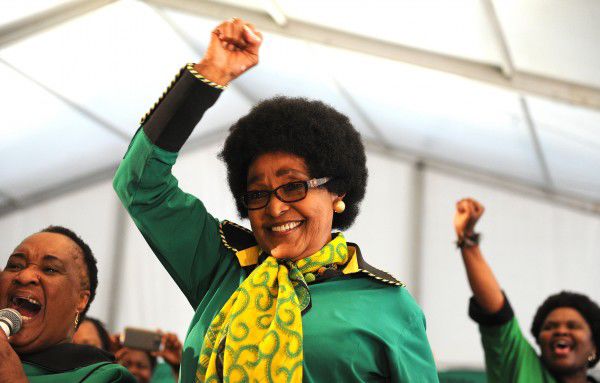
Winnie Madikizela-Mandela joined the ancestors on April 2nd at the age of 81, leaving the nation of South Africa bereft of an iconic leader and the world in mourning. Although she came to public prominence as the wife of freedom fighter, and later president, Nelson Mandela, she built sarong and lasting legacy of her own. Winnie passed as a valued member of the Parliament, the nation’s governing body. This was a significant victory after devoting her life to the reestablishment of a nation governed by the indigenous people of the land. Winnie was also able to witness a major victory before her death. Early last month, Parliament passed, by a 241 to 83 majority, a law allowing the government to seize — without compensation — land owned by white farmers.

Egregious disparities in landownership had persisted more than two decades after the African National Congress assumed rule. Winnie had persistently pressed for this reform to deliver some measure of justice to a people brutalized and disenfranchised under the apartheid regime. Born one of nine children in the rural area of Transkei in 1936, the future “Mother of the Nation” was born Nomzamo Winifred Zanyiwe Madikizela. (Nomzamo means, “She, who will go through trials” in the Xhosa language.) After moving to Johannesburg as a young adult, she became the nation’s first Black female social worker. Nelson and Winnie were introduced by his friend Oliver Tambo; she was a friend of Tambo’s wife Adelaide. Winnie said that even in those early days of dating, Mandela was consumed with his calling. He had opened, along with Tambo, the first Black law firm in South Africa, and was quickly rising as a leader in the antiapartheid movement. “I had so little time to love him,” she said.

Married to the world’s most famous political prisoner, Winnie Mandela kept the faith and the fight over the 27 years of his imprisonment, organizing for the retaking of ownership of the lad from white settlers. During that time she raised the couple’s two daughters, Zenani and Zindzi, while organizing relentlessly as well, for the protection of people involved in the resistance. And citizens, including many young people and children, were being murdered in the streets, on the road, and in their homes by the government’s merciless armed forces.

Her activism on behalf of the people and her advocacy for justice for her husband kept Winnie the target of a suppression campaign. Regularly detained and tortured by the government, she was, in one incidence, released from prison in October 1970, after having spent 491 days in solitary confinement. In 1977, she was sentenced to live in banishment for more than 10 years in a home that initially had no floor or ceiling, no running water or electricity and that was surrounded by steel mesh and barbed wire. She lived alone, as Zenani had married and moved away and Zinzi was sent away to school, when Winnie saw depression infecting the young woman’s spirit as a result of the banishment. Yet Winne managed to make a few friends in the little town of Brandfort. She made a few friends, educated some people about their rights, and paid for a local student to go to school, all while escaping the eye of the armed guards.

After her return to society, Winnie remained a freedom fighter, maintaining the acumen and fortitude to help organize people across the globe in a long, but eventually successful, campaign to press for the release of her husband and for the abolition of apartheid. It is not often noted just how instrumental she was in these victories. She personally petitioned a government official to begin the proceedings for her husband’s release. Then prior to his release in 1990, Winnie was offered a home to live in with her husband in a remote area. She refused, saying that she would live with him only when he was rightfully returned to his people. And she prevailed.

Her time with her husband would not be long, however. They were divorced two years later in a controversial trial, him citing loneliness and accusing her of an affair. She countered with accusations of her own that she did not quite make clear. It appeared that being apart for close to 30 years had taken an almost-inevitable toll on the marriage.

Despite a protracted character-assassination campaign by the former apartheid government, Winnie held the hearts and minds of her most ardent supporters and would later regain the support of the people overall. In 1991, she was implicated in the murder of “Stompie” (James Seipel), supposedly ordering it because he was a police informant. Her years of active resistance had always been marked by heartbreaking betrayals by people she thought were friends and allies, but who were actually sent by the government to spy on her. In this case, the state imprisoned close members of her team, then threatened them with death (capital punishment) if they did not testify that Winnie ordered and orchestrated the kidnapping of Stompie and other youth. They complied, and she was arrested.

Winnie’s six-year jail sentence was later appealed and reduced to a fine and a two-year suspended sentence – proof according to many – that it was known all along that she had no involvement. But despite the support at home, the intended damage to her international reputation had been done, chiefly because the world was led to believe that she had been charged with murder, although she never was.

A 2017 film titled, Winnie, premiered on PBS in February. In the documentary, director Pascale Lamche interviews former members of the government’s surveillance and legal team who lay out, step-by-step, exactly how they went about framing Winnie and turning public opinion against her. Unrelated to the film, however, is the fact that some of Winnie’s public statements and private missteps served to bolster the efforts of her accusers. Although her final days were marked by victory with the passing of the landownership law, she suffered a defeat as well when the Supreme Court of this new South Africa ruled that she held no claim to Nelson Mandela’s village home, which she’d hoped to secure for their daughters. Her memory, her mission and her sacrifices will always be remembered, however.

Our Time Press asked a few local women active in various arenas to speak on their memory of Winnie Mandela. Their comments follow:

Councilwoman Inez Barron:

“We are saddened to learn the news of the passing of our sister warrior, Winnie Mandela. The sacrifices, the leadership and the stamina which she displayed, not only during the time of the battle for independence, but beyond that time, are memorable and exemplary. We know that she has left a great legacy, we appreciate her sacrifices and we extend our deepest condolences to her family.”

Celeste Morris,

CEO, Morris Allsop Public Affairs, former publisher of the Big Black Book:

“She was so courageous – in her fight, her thoughts and in how she had to live her life when her husband went to jail! She had some support, she had certain principles she wanted to live by and freedom was still her guiding light. And so, I think we have to salute her as a woman of the ‘Dura Milaje,’ because she was a warrior. May we be inspired and display the strength and courage that she did.”

Monifa Bandele,

Co-founder, Malcolm X Grassroots Movement, VP/CPDO, Moms Rising:

“Winnie Mandela represents a national leader and what it means to be a strategist. She was one of the architects of the global movement to dismantle apartheid. We talk about how inspirational she was as this maternal figure and an amazing partner in her campaign to free her husband from prison. I always want to uplift Winnie Mandela as a global activist who really marshaled the world. I don’t think any country was untouched by the antiapartheid movement through her efforts to change her country. That’s just powerful!”

Moikgantsi Kgama, founder of ImageNation Cinema Foundation

“Many think we know Winnie because she was married to Nelson Mandela,” said Kgama. “But the fact is, we know Nelson Mandela because Winnie consistently agitated for his release and the total dismantling of apartheid. She was the more radical and less comprising of the two. This is probably why mainstream media rarely gives her the credit she deserves.”

Winnie Mandela is survived by her daughters Zenani Mandela-Dlamini and Zinzi Mandela.
Martin Luther King Jr.: 50 Years Later

Activists today are taking up Dr. King’s mantle and reviving the Poor People’s Campaign.

By Michael K. Honey

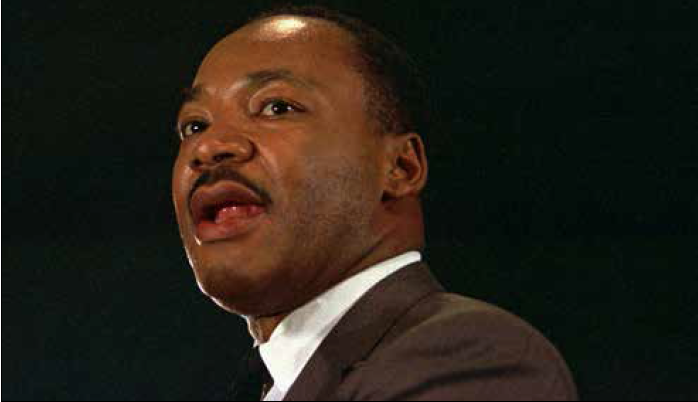
Fifty years ago, on April 4, 1968, a bullet robbed us of one of the great human-rights leaders of the 20th century. The assassination of Martin Luther King Jr. in Memphis, Tennessee, accelerated the racist backlash of the late 1960s. Along with the murder of Robert F. Kennedy two months later, this tragic trajectory led to the election of Richard M. Nixon, who escalated the Vietnam War and unleashed police and FBI forces against movements for change.1

However, the bonds of memory cannot be so easily dissolved. Ending poverty and fighting for union rights are back on the economic-justice agenda today. Fifty years after King, Memphis remains an appropriate launch pad for these campaigns. “Fight for $15” organizers met there, picketing McDonald’s and marching on the anniversary of the Memphis sanitation workers’ strike. The American Federation of State, County, and Municipal Employees (AFSCME), which will be meeting in Memphis on the 50th anniversary of King’s death, launched its “I Am 2018” campaign to fight for racial and economic justice and combat so-called right-to-work laws.

The Rev. William Barber, the Rev. Liz Theoharis, and others also met in Memphis to begin their new Poor People’s Campaign to end poverty, which is modeled on King’s original crusade.2

Read More


A lesson in Fake News

I know. The term fake news reminds you of Trump, right? But the term itself is a necessary one in today’s media environment. Every day, millions of Americans wake up and check social media. Our timelines are filled with all kinds of information – status updates, pictures, and links to “news” stories. While some of those links are actual verified news stories, many of them are not. They could be blog posts, they could be posts from satire sites like onion.com, or even worse, they could be outright fake news. And if you don’t believe that we are all subject to ingesting fake news, think again. If you utilize social media enough, you too will at some point be fooled, and will react to fake news. The most recent example of many of us being fooled by fake news just occurred last week.

Last week, a blog post on the blogging platform Medium discussed a tuition scandal at Howard University. The blog post alleged that financial aid employees had colluded to steal almost $1 million in financial aid and grant money. The post alleged that six employees had been fired as a result, and it accused Tyrone Hankerson, Jr. of stealing more than $400,000 by himself. Tyrone was the only person to be accused by name in the blog post. The post was written under a pseudonym. Almost immediately, the post went viral, being shared through Facebook and Twitter. With all the makings of a scandal, readers honed in on the name Tyrone Hankerson, Jr. as the focal point of the story. People began to search the name in social media, and what they found reinforced the story they read. Tyrone’s Instagram and Facebook were full of pictures of the young man seemingly living in opulence. Birkin bags, fur coats, trips to beautiful places, even a picture of himself in front of a new Range Rover; the young college student appeared to be living a life far beyond the means of most college students. The pictures matched the story. Surely, this kid must be stealing money. No college student can afford a fur coat, right? Tyrone became a pariah, with social media castigating him as a scammer.

The news of the scandal was true. The President of the University came out and explained that he had found (through investigating) that there had been severe mismanagement of funds between 2007 and 2016, and as a result, six employees were fired. Although Tyrone did work in the department from 2011-2015, he was not one of the employees who were fired due to the scandal. Furthermore, Tyrone still attends Howard. He is currently finishing up his final year towards a degree in law. If Tyrone was really at the center of the scandal, wouldn’t he had been at the very least been kicked out of the school and arrested?

Now portrayed as a scammer and deviant, Tyrone sought to clear his name by sitting down with Roland Martin. According to his lawyer, Tyrone has never been contacted by Howard University regarding the financial mismanagement being investigated. He never even heard his name associated with the investigation until it appeared in the blog post on Medium. He still attends Howard Law, graduated from Howard as an undergrad Summa Cum Laude, and even spoke at commencement. As for the blog post that started this whole thing, it has been taken down. What spread in the news cycle like a breaking story has fizzled out once challenged. That isn’t news. That’s fake news!

Clickbait. Clout-chasing. These are millennial terms that most of us probably have never heard. Clickbait is web content whose main goal is to get the user to click on a link to go to a specific Web site. Clout-chasing is when a blogger or social media user speaks bad about a person in order to gain popularity for their own blog, Web site or social media page. Either of these new-age concepts can be the impetus for fake news. Tyrone’s lawyer stated that he believes that Tyrone was named in the blog post because of his relationship to the current Howard president, and because his supposed lifestyle as portrayed on social media may have garnered a few enemies. He may be right. Meanwhile, those of us who read the links on our timelines for information need to be more resilient about what we spend time reading. Because that sensational headline could just be clickbait, or someone clout-chasing.

Brooklyn Community Board 9 Vote for Next District Manager Stalls

Brooklyn Community Board No. 9 (BK CB9) serves the communities of South Crown Heights, Prospect-Lefferts Gardens, Wingate and portions of North Flatbush. This area is feeling the squeeze from displacement caused by higher-income New Yorkers leaving posh neighborhoods to set up stakes in areas that are cheaper than where they once lived. In the midst of this neighborhood transition, BK CB9 is without a District Manager to manage the day-to-day needs of the residents and the board members. Some residents in that district wonder—some softly and others loudly—When will this community district have another District Manager? Pearl Miles had been a fixture in the District Manager’s seat until BK CB9 members voted her out of the position on October 28, 2015.

Next, Carmen Martinez, a CB9 board member, claimed the reigns of the community district office for a short time. Martinez enjoyed four months—from June to October of 2016. Rancor developed over the $100,000 annual salary bestowed to her. Other issues that rubbed many the wrong way was the absence of a search committee and the inadequate publicizing of the job vacancy. Given BK CB9 is nine members short of a full community board, Martinez would have better served the district by chairing/co-chairing a committee or being a vitally important committee member.

Many community district offices may appear to be quaint, independent buildings but they are a part of New York City government and must adhere to New York City rules. This latest effort at securing a competent administrator was officially ushered in when Unella Rhone-Perry became the Search Committee Chairperson. Rhone-Perry managed the dispersal of the job vacancy notice and scheduling interviews. The vacancy notice went out on January 2, 2018. It states, “…seeking an energetic dynamic and dedicated Community Organizer to serve as District Manager…” The interview period was during the month of February 2018.

While the number of interviews conducted is undisclosed to the public at this time, three candidates had been selected and were to be presented to the public on March 27, 2018, which was the night to vote for the next District Manager: Simone Bennett, BK CB9 Education Committee Chairperson; Fitzroy Searles, BK CB2 Community Associate. Searles has been employed by BK CB2 since 2014 where he is responsible “for resolving constituent service requests, managing board committees and providing administrative staff.” The third candidate’s name was not available, and the candidate was absent the night the vote was to take place. At approximately 10:05 PM, Board Chairperson Musa Moore directed the audience to leave Middle School 61’s auditorium so that the 25 attending community board members could have an impromptu executive session regarding the vote for the next District Manager. At approximately 10:45 PM, community residents, elected officials’ representatives and other attendees were requested to return to the auditorium. Mr. Moore informed the body that 1) The three resumes had not been reviewed, 2) A vote had been taken that resulted in increasing the number of job candidates from three persons to six, and 3) The voting was rescheduled to occur during the April general community board meeting on Tuesday, April 24, 2018. On March 28, 2018, this reporter called the BK CB9’s office to request the names of the District Manager candidates who were present at BK CB9’s March 27, 2018 general community board meeting to ensure accuracy of reporting. BK CB9 Community Assistant Khalid Nixon answered the telephone. Mr. Nixon gave the directions to e-mail this inquiry to the e-mail address: bk09@cb.nyc.gov. Mr. Nixon would then forward the request to BK CB9 Chairman Musa Moore. This reporter acted on the directions that same afternoon. As of March 30, 2018, response has not been received.

Environmental Chaos

In the March 22 issue we reported that at the current rate, by 2050 the prediction is that the mass of plastic pollution in the ocean will equal the mass of fish. As horrifying as that thought is, the climate-change predictions in the following article tell of an overheated world of mass migrations, melting glaciers, fire, droughts, extreme weather, and agricultural disruption that makes our characterization of the planet we’re leaving future generations as an overheated garbage dump, is not hyperbole, but rather a sad truth. 32 years is no time at all. The young people now protesting against gun violence and their disdain for the adult population and political leaders who allow it to continue will only grow, and we will be guilty of the greatest sin of all time, the virtual destruction of the planet for human habitation. David Mark Greaves, Editor – Our Time Press

Thanks to Climate Disruption, Earth Is Already Losing Critical Biosphere ComponentsBy Dahr Jamail, Truthout | Report

(Photo: NASA Goddard Space Flight Center; Edited: LW / TO)

Two weeks ago, I gave a keynote presentation about anthropogenic climate disruption (ACD) at a large sustainability conference in Chico, California. During the question-and-answer session following my talk, a student asked me what I thought the world would look like by 2050. His question stopped me in my tracks. I had to pause and take a deep breath, to prepare myself emotionally for what I had to tell him.

Here is the gist of what I said: Based on years of research for my forthcoming book, The End of Ice, along with my work compiling these monthly climate disruption dispatches for four years now, I know that by 2050, we will be inhabiting a dramatically different planet. I believe we will already have tens — if not hundreds — of millions of climate refugees from sea-level rise and conflicts born of lack of food and water. What we currently call extreme weather events (massive floods, droughts, hurricanes) will have long since become the norm. In the US, growing food in the Midwest and the central valley of California will be extremely difficult, if not largely impossible, due to shifting weather patterns of rainfall and drought. Some swaths of the world, including the Gulf states in the Middle East and parts of the US Southwest, will be largely uninhabitable due to simply being too hot. Greenland and the Antarctic will both be experiencing dramatically advanced melting, and most of the glaciers in the contiguous 48 US states will have long since ceased to exist. And given that we are officially already amidst the Sixth Mass Extinction Event of the planet, which humans triggered, the biological annihilation that comes with this is happening apace.

Read More