What to Know
New York, New Jersey and Connecticut are on “pause,” shutting down all non-essential businesses and enacting new density control measures; NJ says day care centers can only stay open if they care solely for essential workers’ children
As of Wednesday, more than 38,000 people in the three states had tested positive for COVID-19; at least 447 have died; NYC has more than 20,000 cases alone and three-quarters of the 366 deaths statewide
The doctor coordinating response for the White House Coronavirus Task Force says 50% of all new U.S. cases and nearly 1/3 of U.S. deaths are coming from the NYC metro area right now
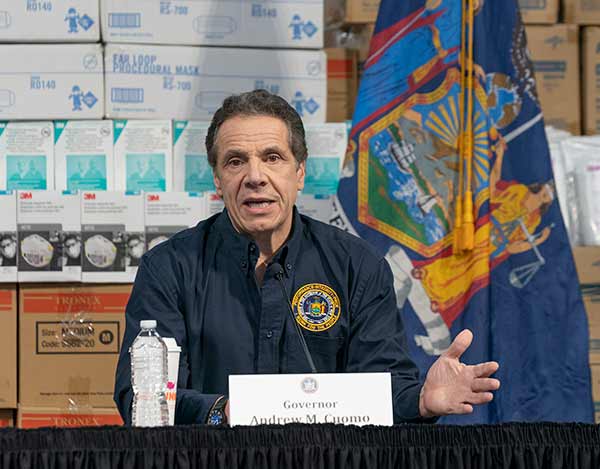
Gov. Andrew Cuomo blasted the feds’ $2 trillion proposed economic relief package Wednesday, saying it would be “terrible” for New York, which faces an accelerating rate of infection that doubles case count every few days and an economic shortfall worsened by each day of response to the crisis.
“We have 15 times the problem of the next state. Every state will have a different apex with this virus. New York is first,” Cuomo said Wednesday. The Senate plan, which still needs a vote before it goes to President Trump, would give New York $3.8 billion, a “drop in the bucket” compared with the up to $15 billion Cuomo says the state needs for the crisis. He’s already spent $1 billion.
“How do you plug a $15 billion hole with $3.8 billion? You don’t,” Cuomo said. “The House bill would give us $17 billion. That’s a dramatic difference.”
The rapid infection spread has hastened the approach of the “apex” of the crisis in New York, Cuomo said. The wave, now more like a tsunami, could crash on the health care system in three weeks rather than 45 days — and with life-saving supplies already heavily depleted, New York is increasingly desperate for resources to get through just the immediate future. Mayor Bill de Blasio has said he expects the crisis to be worse in April than in March, potentially even worse come May — and no one should get their hopes up that everything will be back to normal by Easter.
De Blasio also vented his frustration with the stimulus bill, saying in a Twitter thread that the bill is “nowhere close to what we need to fight this epidemic,” and the city getting “$1 billion out of a $150 billion pot does not reflect reality.”
The predicament is such that the Columbia ER doctor who famously survived Ebola a few years ago, and now finds himself on the front lines of the COVID-19 war, says he’s more fearful of the new virus than of the one that nearly killed him.
As of Wednesday night, nearly 33,000 cases had been confirmed in New York, an increase of more than 7,000 from the day before. At least 366 people have died. The city, impaired by the density that makes it one of the world’s most vibrant places, bears the brunt of the impact, with more than 20,000 cases across the five boroughs as of Wednesday night. The mayor’s office said the death toll had soared to 280, the biggest increase in deaths the city had seen so far.
One hospital in the city, Elmhurst Hospital in Queens, had 13 patients being treated for COVID-19 die over the span of 24 hours, according to NYC Health & Hospitals. In a statement, the hospital group said the number was “consistent with the number of ICU patients being treated there,” with Elmhurst being “at the center of this crisis.”
Faced with mounting deaths, the city medical examiner is building a makeshift morgue in Manhattan, City Hall said. The measure, which has been used in the past during mass casualty events like 9/11, falls within the purview of the city emergency declaration that de Blasio signed weeks ago, a spokesperson for the mayor’s office said. To date, more than half (52 percent) of NYC fatalities have been people 75 and older; 3 percent of victims are younger than 45, according to the city’s data. But most of the total cases (56 percent) are impacting people younger than 50; 2 percent of NYC cases as of Wednesday are people no older than 17.
NYC Death Toll Spikes 110% in 36 Hours; Cuomo Blasts ‘Terrible’ Fed Plan as Cases Soar to 32K
Community Calendar
(@ home edition)
Friday, March 20th
Sam Gilliam: Watercolors PACE Gallery Online Viewing Room thru 3/28. Acclaimed 86-year old artist Sam Gilliam’s much-anticipated watercolor show is at Manhattan’s Pace Gallery as scheduled, but the gallery is closed. A lyrical abstractionist, Gilliam is among the major innovators who proved that abstract art could be made relevant to the African American experience. His sculptural draping and paintings are acclaimed across the world, but his watercolors are seldom seen. Enjoy at pacegallery.com/viewing-rooms/sam-gilliam.
Saturday, March 21st
Elevator to the Gallows Turner Classic Movies at midnight and Sun, 3/22at 10am. TCM screens this 1958 French film (titled Frantic in the U.S.) with music by Miles Davis. It’s a murder noir thriller directed by a young Louis Malle, for which Davis, on the spot, composed a beautiful score as he watched it. Check for your local TCM station.
Monday, March 23rd
Lunch Doodles with Mo Willems The Kennedy Center Website 1pm weekdays. Kids’ author Mo Willems is the current Education Artist in Residence at the Kennedy Center. He’ll invite guests into his studio virtually for the next few weeks to grab paper and pencils, pens, or crayons and create. Learners of all ages worldwide can draw, doodle and explore new ways of writing. Each episode has an activity page to download and episodes remain online to be streamed afterwards. Join in at kennedy-center.org/education/mo-willems.
Tuesday, March 24th
Virtual Tours & Exhibitions at Museums Nationwide via Google Arts & Culture. Take advantage of your time at home to not only see exhibitions from museums around NYC, but also some not as easy to get to most days. Google Arts & Culture offers a variety of treats for every artistic taste. See local works and take virtual tours of the Brooklyn Museum, The Whitney, Museum of the City of New York, MoMA and The Met. Then venture outside the city to the Frederick Douglass National Historic Site in Washington, D.C., and The George Eastman Photography Museum in Rochester, NY or the Museum of African Art in Los Angeles and Los Angeles County Museum of Art with its “Reigning Men: Fashion in Menswear, 1715 – 2015” exhibition along with its 27,000 other artifacts, paintings and sculptures from Iran, France, Japan, Italy, etc. All at artsandculture.google.com/partner.
Wednesday, March 25th
Unladylike2020 Unsung Women Who Changed America During Women’s History Month this PBS “American Masters” animated film series presents the stories of women from many backgrounds and endeavors who advocated and innovated. There are short films on, Bessie Coleman, Sissieretta Jones and many others. New episodes will be added each Wednesday up until August 26th and all can be viewed at unladylike2020.com/watch.
Thursday, March 26th
The Pulitzer Center’s Printable Lesson Plans for Students In an effort to contribute to the ongoing education of students now home from school, The Pulitzer Center has stepped up to make accessible valuable to students of varying ages information about history, society and cultures. Included are lesson plans on the 1619 Project, Cocoa and Justice in The Ivory Coast, Sourcing Our Stuff: Exploring Ethics in Clothing, Accessories and Food and more. The lesson plans are printable at the center’s site at pulitzercenter.org/builder.
Saturday, March 28th
Coronavirus Cleaning Day Tips The CDC offers the following guidelines to help keep your home free of coronavirus. For laundry, use bleach with detergent for whites, peroxide or color-safe bleach for colors. (Read labels to avoid damage.) Use “sanitize” or “steam” settings and high heat in the dryer and a final rinse of 150 degrees in dishwashers. Look for products such as wipes, sprays and concentrates with “disinfectant” on the label and an EPA registration number. Disinfect high-touch surfaces such as countertops, doorknobs, cellphones, and toilet-flush handles. Remove grease or grime before disinfecting surfaces and let the disinfectant remain on the surface several minutes. (Check label for wait times.) For a homemade disinfectant mix a quarter-cup of chlorine bleach with a gallon of cool water. After disinfecting food-prep surfaces rinse them with water before use. And be aware – some household air purifiers and filters don’t necessarily kill microorganisms.
1948 Olympian Herbert Douglas Has His Say
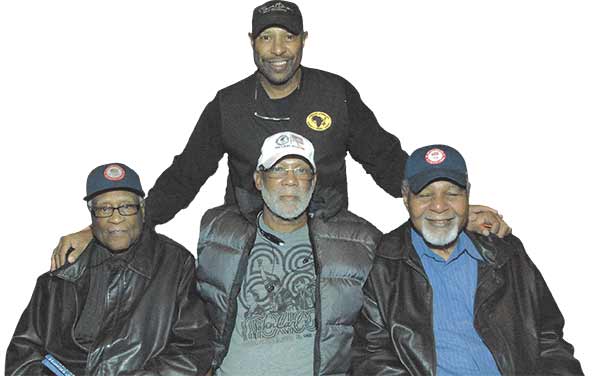
Herbert Douglas Jr.
My name is Herbert Douglas Jr. I’m a native of Pittsburgh Pennsylvania, but I now live in Philadelphia and I’m interviewing with who?
David Mark Greaves, Our Time Press:
You were scheduled to attend the African American Heritage event in Philly that was canceled. What were you most looking forward to?
HDJ: Well, I always want to help people as much as I possibly can. I know that Everett Staton, he works 24/7. He worked 24.7 on this and we have to help him. So, John Carlos, he’ll come up and be the speaker and then he’ll introduce me, and I am now the oldest living African American Olympic medalist.
OTP: You sound like Everett had qualities that you said your father had taught you: organization, initiating, follow-through. Could you tell us about that?
HDJ: My dad went blind, he went sightless at 41, and during that time, from then on, he taught me how to analyze, organize, initiate and follow through, and I’m only six years older than him when he died. He lived to be 20 days less than 92.
OTP: Wow!
HDJ: Yeah, so what did he do? Be independent. He didn’t want my mother to grab him by the arm taking her places where she wanted to go. So he was the first African American in 1930 to get a guide dog from The Seeing Eye company, in Montclair, New Jersey.
OTP: A quick personal question as a former track man. You’re a long-jump champion. What were your feelings and emotions when Bob Beamon made his incredible jump?
Oh… That was incredible! Yeah. He jumped 29 feet 2 1/2 inches! He didn’t stop at 28 feet. The world record was 27 feet 4 inches. He passed 28 feet and landed at 29 feet. But I actually believe, you know, he’s like 6’2 or ‘3, and some of these basketball players, I think you will agree… with the spring they have, they could jump 30 feet.
OTP: You’re probably right. You spoke of your father. What about your mother?
HDJ: Now my mother, when he went blind, he was 41 and she was 27. Fourteen years older than my grandmother. He felt so bad about it that he wanted her to find someone else to raise my sister and me. Now, ironically my sister was born on the same day that he went blind. Yeah, he’s a story within himself, how he ran a business for 30 years and 24 of those total years he was blind.
He had a storage garage and he treated every car in that garage and there were 200 and some cars in that garage. In the end, I had to work for three years and I worked from 8 at night to 8 in the morning, because he couldn’t get reliable young help. They would take cars out joyriding, so he had to depend on me and he said that’s the first time he felt his affliction.
The good people took defense jobs; he got a lot of young people and they were joyriding the cars and he was getting sued. He asked me, ‘Well you gotta quit school.’ I said, “I’ll do it.” I was at Xavier University and then I went onto Pitt on a football scholarship. Now think of this Mr. Greaves. I graduated and won three state championships in high school and they wouldn’t give me a scholarship. So I went to Xavier. I went under the tutelage of Ralph Metcalf. He placed second in 1932. Then at 1936 he came back and placed second again to Jesse Owens.
Yes. He was like a big brother to me. If the war hadn’t come along, I would have been down there as assistant coach to him, because he was really grooming me to be his assistant.
My family laid the foundation for me to have good work ethics and then they taught me how to be independent. My mom was with him all those years and we were lucky that she was there because she was more proud of me being in the Olympic games because we didn’t have anyone but Joe Louis and Jesse Owens during that time.
OTP: You were sort of joining them in that firmament, Jesse Owens and Joe Louis were also sort of a big representation of Black power.
HDJ: They did it for sports, and then Jesse he transcended and went beyond track and field. And Joe Louis was as smart as any of us; he just didn’t have the formal training. If Joe Louis had had the formal training, he could have been a doctor, a lawyer, anything like that. It used to kind of get under my craw, because all the comedians would say what he said after a fight. The one phrase and maybe you know it or maybe you’re too young to know. He was talking pretty good and then at the end, he said I’m glad I won. Then all of the comedians took that and ran with it.
OTP: Joe Louis also said something else about a boxer in the ring that became very famous. “He can run, but he can’t hide.”
HDJ: You’ve got it right. He runs but he can’t hide.
Bernice: Excuse me, I’m Bernice Greaves. David’s wife. I have a question for you.
HDJ: Yes ma’am.
Bernice: Today, we get our information on the computer, the cell phone, the TV, everything. How was it back then, how did you get the information about Jesse Owens and Joe Louis? Was it word of mouth, Black papers, church, how did that happen?
HDJ: A couple of years ago I was on a program at Texas State University and there was a Black young journalist on the panel. So, she did the research and she found out that in the south the white writers and most of the white papers in the South, they wrote nothing, very little about Jesse Owens. That he won the 100, that he won the 200, he won the bronze but other than that nothing. In the north, which was supposed to be more liberal, they wrote about Jesse Owens, but very few of them wrote about the other four Black guys that won gold medals. Unless you were from the immediate city, they’d write about John Woodruff, Pittsburg, Cornelius Johnson on the West Coast in the high jump – he won a gold medal. Archie Ball Williams was a Tuskegee airman and he won a gold medal and Metcalf won a gold medal on the 4×1 relay team. But… The difference was then the Pittsburgh Courier would write an extensive article just like the whites would write extensive articles about the white athletes. And in the Black community, we got our coverage.
All the writers at that time were writing in the major papers and we didn’t have the coverage like we have today. I feel so proud when I see African American anchor Joy Reid. Fredricka Whitfield – she’s with CNN now. She came to some of my birthday parties, where she was the MC. Al Whitfield was her father and she called me Uncle Herbie.
Now the deal at the Games was, they put all of us in one Quonset hut in the Royal Air Force base. It was a blessing that they put all of us Blacks in one part of the Olympic residence. That’s how it was segregated back then in the 1930s and 40s. When I met Mandela I said, “You know all you guys are in one precinct,” and some of them were smarter than him. He was a boxer and he had intestinal fortitude to keep going. I listen to all the speeches and they were all good. You know, they were smart. Now it’s coming to the light that you can see how African Americans who are just as good as anyone else in the world just like we were in sports.
Sure. Well, looking at people like Barack Obama, Michelle Obama, had you imagined seeing them up there in the White House as you were growing up?
HDJ: Yup, you know why?
OTP: Why?
HDJ: Because I went through school with just about the same people and when I graduated this class only had three blacks in it, and I was the president of the homeroom class. That’s the fear, that’s the essence of fear, because if we are equal in the first through the twelfth grade, and they thought I should be the president – that’s why I thought that Obama would be the president. My friend Harrison Dillard. Said he couldn’t believe it because he went to a predominantly Black school and I went to a predominantly white school in high school and junior high.
Being with these kids every day, they start respecting you. So they respected Obama, and if they respect you… In fact, I had a very good friend named Reagen Henry. He owned 22 radio stations. He was a graduate of Harvard, and he was a good student, but everyone who pushed him was — well we weren’t in a position to push him, and the whites pushed him, and God bless him, he died at the age of 76. But when he died he owned 22 radio stations.
OTP: We’re talking about pushing people. When you were working for Schieffelin in the spirits industry, what were you able to achieve in terms of pushing people forward?
HDJ: In corporate America… I was just reading a letter, because I’m going to Pittsburgh where William J. Schieffelin, Jr. [was] the seventh generation to distribute Moet Hennessy in the United States. Now, he was one month older than me, and his birthday was February 9th and mine was March 9th. In 1906 his great grandfather gave a speech in Missouri and he said [that] the most embarrassing thing we have in the United States is the way we treat colored people. That was in 1906 and he said all the whites should join hands, go down with the whites in the south and try to rectify this problem.
I stayed with that company 30 years because I knew that William J Schieffelin the 5th, he was liberal, to the extent that in 1894 he joined hands with who? Booker T Washington. He’s the one that brought the Spaldings in, the Eastman Kodaks, he brought the rich people in.
OTP: Gotcha.
HDJ: He joined hands with Booker T. Washington and that’s why Booker T Washington was able to build Tuskegee Institute, now University, which is still in existence. His grandfather used to tell me he was eight years old when he went down there and they couldn’t – there was no place for them to stay in Tuskegee, so they stayed in a train car. He remembered that very vividly, and how his dad would go down there for board meetings. He was on the board for 55 years and of those years, 22 years, he was the head of the board of trustees. So he was liberal.
And there’s one thing that I feel was equivalent to making the Olympic team and winning a medal. When I left Schieffelin and Company 32 years ago, I left three African American vice presidents, and I hired 2 of them!
Next week: 1968 Olympian John Carlos
What’s Going On
COVID-19
The COVID-19 crisis is unique and nondiscriminatory. To say that we – as in the world- are all in this together is the mastery of understatement. The new coronavirus visited all continents save Antarctica. It is responsible for a pandemic health crisis and an imminent recession like no other in decades. It has brought the world to a standstill and a race for a cure. COVID-19 info dominates the news cycle, 24/7. President Trump and New York Governor Andrew Cuomo schedule daily press conferences with virus progress updates. They both say that they had a 3/17 productive telephone call. And that was great news. Who could have imagined “Gotham” in near lockdown, schools, businesses closed with employees working from home. Restaurants/bars open for pick-up and takeout until 8 pm. Essential businesses such as supermarkets and pharmacies can maintain normal hours. There is news saturation and we cannot consume enough. Some NYS coronavirus stats on the morning of Tuesday, March 17 follow. There were 1374 confirmed cases and 12 deaths. The breakdown by city – New York City, 644; Westchester County, 380; Nassau County, 131; Suffolk County 84; Rockland County, 23; and Albany County, 22. Approximately 20% of the NY cases required hospitalization.
NYC Councilman Ritchie J. Torres, a 2020 candidate for US Congress, NYS Assembly members Helene Weinstein and Charles Barron have tested positive for COVID-19.
To avoid info duplication and more gloom, I submit some info about medical research and technology employed to check the spread of COVID-19, the disease caused by the new coronavirus. To date, there is no vaccine to combat the virus. However, the first dose of an experimental coronavirus vaccine was administered to three volunteers in Seattle on March 16. The vaccine mRNA-1273 was developed by the National Institute of Health and Moderna Inc., a biotech company. Overseas, China has purchased large quantities of a Cuba-manufactured drug, antiviral recombinant interferon alpha 2B, to treat its coronavirus patients. Same Cuban antiviral has been purchased by Latin American, African and European nations. China, which employs traditional medicine and western pharmaceuticals in treating the virus, also purchased Japan’s antiviral Fapilavir, which has been successful in the reduction of recovery. A Chinese hospital pressed robots into service to treat virus-afflicted patients, to minimize virus transmission to doctors and nurses. Media sources about Cuba antiviral include oncubanews.com, wwwradiorebelde.cu; and www.workers.org.
On a lighter note, I submit a self-check for COVID-19, which many friends shared with me. “Every morning, take a deep breath, hold it for more than 10 seconds. If done without coughing, discomfort, stiffness or tightness, there is no Fibrosis in the lungs…….that is no infection.”
Haitian American Yamichi Alcindor, PBS Newshour White House correspondent and MSNBC contributor, recently asked Trump at a press conference if he accepted any responsibility for the arrival of COVID-19 since his administration closed the Pandemic Office, an Obama White House initiative. He responded. “No, it’s a nasty question,” which is untrue and he was ill informed. Alcindor emerged as journalist of the week distinguished because she was the only journalist bold enough to ask the question that her colleagues would not broach.
BUSINESS MATTERS
It is not yet a done deal. African American media mogul Byron Allen is one of three suitors who want to acquire TEGNA, (the renamed Gannett broadcast and digital business, when it was spun off from the publishing business/assets.) Allen of Byron Allen Media Group, is only suitor who made an all cash $8.5 billion bid to the media giant.
WOMEN IN THE NEWS
This week’s column references 2020 political primaries and the African American New York women politicians. Democrats, Assemblywoman Inez Dickens, and Congresswoman Yvette Clarke Central Harlem, are running for re-election. The NYS Democratic primary date for congressional and state races will be held on June 23.
That primary has been obscured by the Democratic Presidential Primaries and recently by the COVID-19 crisis. A veteran politico, Inez Dickens, was a member of the New York City Council, from 2006 to 2016, before her successful run for the NYS Assembly, where she represents Harlem, Morningside Heights, Washington Heights, Hamilton Heights and parts of El Barrio. Political life is a part of her DNA. Her dad, Lloyd Dickens, a Harlem real estate entrepreneur, and her uncle, Thomas Dickens, occupied the selfsame NYS Assembly seat in the 50s and 60s. Being primaried, the Assemblywoman is polling strong. She hosted the Charlie Rangel Awards Dinner last month at Mist Harlem, honoring Carl McCall and New York State’s most prominent union leaders, Kyle Bragg, President of SEIU 32BT; Shaun Francoise, President of AFSCME; and Greg Floyd, President Of Teamster Local 237, men who routinely make the NYS 100 Most Important People List. While looks like she is sailing towards a primary victory, the rumor mill suggests that she could return to the NYC Council next year. ……Yvette Clarke was first elected to Congress in 2006 representing the 9th Congressional District in Central Brooklyn. The daughter of former NYC firebrand Councilwoman Una Clarke, Yvette is running for re-election and has about six challengers, including newbies and New York City Council members who will be term limited next year.
NEWS MAKERS
Spring begins March 20.…….Birthday greetings to Aries: Tony Abulu, filmmaker; Ambassador Shirley Barnes; James Brooks, entrepreneur, Mariah Carey, Brenda Clark, retired educator, Rodrigo Duterte, Phillipines President; Melanie Edwards, historian; Ronald Guy Harlem community leader; Karen Horsford; Rocky Horsford Jr; Ernest Hopkins, health executive; Bob Johnson, BET co-founder; Bob Law, radio legend; Chaka Khan; Peter Wayne Lewis, fine artist/academic; Wangari Maathai, first African woman Nobel peace laureate; Eddie Murphy; Rob Owens, events coordinator; Nancy Pelosi; Ivo Philbert, Jackie Robinson Foundation and Cove Caribbean Thursday Coordinator; Dedra Tate, Unlimited Contacts; Ruby Ryles Martin; Patricia McConnell; Leon Merrick, DDS; Kim Jack Riley; Diana Ross; Maxine Sidberry; Maxwell Sidberry; David Walker, philanthropist; and Willie Walker.
BLACK ART/CULTURE
Lights are out at NYC performing arts venues, including places favored by African Americans like the Schomburg Center, Apollo Theater, National Black Theatre, New Federal Theatre, and Brooklyn’s Billie Holiday Theatre.
Six decades after the phenomenal Banana Boat Song, Belafonte announced at his 93rd birthday tribute at the Apollo that his archives will sail home to the Schomburg Center for Research in Black Culture. His culture trove includes his songs, movies, letters, memorabilia about his life as a musician, actor and activist. Many happy returns, Mr. B.
GALAS
The Harlem Commonwealth for Community Improvement (HCCI) hosts its annual LET’S BREAK BREAD TOGETHER Benefit Dinner at Marina Del Rey, Bronx, on
Thursday, April 23. The Gala Dinner honorees are: Dr. Thelma Adair, Educator and Human Rights Advocate; Calvin Martin, Convent Avenue Baptist Church; John C. Murnane, Erin Construction and Development Co.; Patricia Stevenson, Harlem News Group; and Debra Washington, First Republic Bank.
A Letter to the Self Isolated

I was like you last week, working, hanging out, stuck in the wonderful normalcy of regimen, up at this time, to work by this time, home by this time. I walked past hundreds of people last week, thousands even, and I can’t tell you which one coughed, which one touched their face and then touched the pole on the subway, which one seemed sick. Houdini said that what the eyes see and the ears hear, the mind believes. I disagree. I say that your eyes only see what you believe to be so. And last week, I didn’t see anything bothersome about normal.
I knew about COVID-19. Like you, I followed it with a passing interest ever since the first reports of this virus popping up in China at the end of last year. Then, a person was found to be infected with the virus in New York. If you understand world affairs, then even that news was no surprise. New York City is a world city, one of many crossroads on the planet. Any malady in the world finds its way past Lady Liberty. Since the turn of the century we’ve gone through Ebola, Sars, Mers, Avian Flu, Swine Flu, each pandemic iteration was dangerous, and each one was solved. So, like you, I was cognizant of the virus, but not careful, not protective, not really concerned.
Then the guy that was found to be infected with COVID-19 was revealed to have infected 100 other people in New Rochelle. Then, the first confirmed case appeared in Brooklyn.
Then, the Utah Jazz was set to play the Oklahoma City Thunder on television, and they canceled the game because Rudy Gobert tested positive for COVID-19. Then, minutes later, the NBA suspended the entire season. And, it all happened so fast that it felt surreal. Just like that, everything changed. Now, my eyes told me a different normal. I began noticing the person coughing, noticing the guy who rubbed his face and then touched the subway pole. My eyes began telling me a different thing. It told me that I could be next, I could be potentially putting myself in harm’s way of contracting this Covid-19 with every handshake or elevator button I press.
The weekend came, and more cases came with it. And then, Assemblyman Charles Barron announced that he was positive with COVID-19. Mr. Barron is a pillar of this borough, a man that is welcomed in any neighborhood, around any dinner table, in any establishment. I don’t think I’ve ever felt more vulnerable to a disease as I did when I heard that Charles Barron was positive, because my way of life is templated from guys like him. I’m welcomed in any neighborhood, in any establishment, I try to move and be of service in this borough the way that he and others have shown me. And if Charles Barron could get it, then certainly any one of us could.
Sunday night we had dinner at a restaurant. We were the only ones dining. Outside were the sounds of hysteria, people filing into supermarkets to grab whatever they could, sirens flying to crime scenes in the distance, people in the streets with masks and gloves interacting with folk without. Our Uber driver had four different types of disinfectant sprays in his passenger seat. Social media became the fastest source of news. It was there where I first heard that the City would be closing the schools. I run a hydroponics lab at PS81. No sooner than the word came about schools being closed, I got an email from the grantee of the lab telling me that I should destroy all organic matter in the lab, because there is no telling how long the schools would be closed. Beautiful tomato vines, crisp kale, sturdy pepper plants, growing beautifully in the school lab, and I now had to make decisions about how best to keep them alive. In a way, we are all learning how to do that.
Like you, I woke up today in social isolation. Schools are closed. Bars are closed. COVID-19 cases are increasing. And while we work from home, or play Uno with our kids, or binge watch our favorite shows, our eyes are seeing a new normal, one that will surely be present even when we finally get to the other side of this. It can feel like being on a rollercoaster, at the apex of the climb, looking over the front row into a drop that makes your heart hide in your stomach and takes the breath away from your screams. This ride of social isolation is both kinda fun and kinda terrifying. But, I believe that when we finally get to the bottom of this drop, the ride will even out, come to a full stop, and we will all be able to continue with our lives. That is my hope.