Home Blog Page 494

Study: More than Half of U.S. Students Experience Summer Learning Losses Five Years in a Row

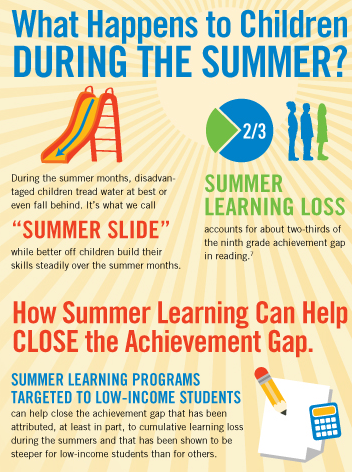
Washington, July 9, 2020—Following U.S. students across five summers between grades 1 and 6, a little more than half (52 percent) experienced learning losses in all five summers, according to a large national study recently published. Students in this group lost an average of 39 percent of their total school year gains during each summer. The study appeared in American Educational Research Journal, a peer-reviewed publication of the American Educational Research Association.


“Many children in the U.S. have not physically attended a school since early March because of the Covid-19 pandemic, and some have likened the period we’re in now to an unusually long summer,” said study author Allison Atteberry, an assistant professor at the University of Colorado—Boulder. “Because our results highlight that achievement disparities disproportionately widen during the summer, this is deeply concerning.”


“Teachers nationwide are likely wondering how different their classes will be in the coming fall,” Atteberry said. “To the extent that student learning loss plays a larger-than-usual role this year, we would anticipate that teachers will encounter even greater variability in students’ jumping-off points when they return in fall 2020.” 


For the study Atteberry and her co-author, Andrew J. McEachin, a researcher at the RAND Corporation, a nonprofit research organization, used a database from NWEA, which includes more than 200 million test scores for nearly 18 million students in 7,500 school districts across all 50 states from 2008 through 2016. 


The authors found that although some students learn more than others during the school year, most are moving in the same direction—that is, making learning gains—while school is in session. The same cannot be said for summers, when more than half of students exhibit learning losses year after year. 
Twice as many students exhibit five years of consecutive summer losses—as opposed to no change or gains—as one would expect by chance, according to the authors. 
The pattern is so strong that even if all differences in learning rates between students during the school year could be entirely eliminated, students would still end up with very different achievement rates due to the summer period alone. 


“Our results highlight that achievement disparities disproportionately widen during summer periods, and presumably the ‘longer summer’ brought on by Covid-19 would allow this to happen to an even greater extent,” said Atteberry. “Summer learning loss is just one example of how the current crisis will likely exacerbate outcome inequality.” 
Among the students studied, depending on grade, the average student loses between 17 and 28 percent of school-year gains in English language arts during the following summer. In math, the average student loses between 25 and 34 percent of each school-year gain during the following summer.


However Atteberry and McEachin focus their attention not on average patterns of summer learning loss, but rather on the dramatic variability around those means from one student to another. 
“For instance. in grade 2 math, at the high end of the distribution, students accrue an additional 32 percent of their school-year gains during the following summer,” said Atteberry. “At the other end of the distribution, however, students can lose nearly 90 percent of what they have gained in the preceding school year.” 


“This remarkable variability in summer learning rates appears to be an important contributor to widening achievement disparities during the school-age years,” Atteberry said. “Because summer losses tend to accumulate for the same students over time, consecutive losses add up to a sizeable impact on where students end up in the achievement distribution.” 
Atteberry noted that more research is needed to better understand what accounts for most of the summer variation across students. Prior research, including a 2018 study published in Sociology of Education, has found that race/ethnicity and socioeconomic status predict summer learning but, together, account for only up to 4 percent of the variance in summer learning rates. 


Policy leaders across the United States have experimented with different approaches, including extending the school year and running summer bridge programs, to address concerns with summer learning losses. These need to be further assessed for effectiveness, said Atteberry. 
Researchers have pointed to gaps in resources such as family income, parental time availability, and parenting skill and expectations as potential drivers of outcome inequality. Many of these resource differences are likely exacerbated by summer break when, for some families, work schedules come into greater conflict with reduced childcare. 


“Our results suggest that we should look beyond just schooling solutions to address out-of-school learning disparities,” Atteberry said. “Many social policies other than public education touch on these crucial resource inequalities and thus could help reduce summer learning disparities.” 
This study was supported by funding from the Kingsbury Center at the NWEA, the Smith Richardson Foundation, and the Institute of Education Sciences.
The Truth Behind ’40 Acres and a Mule’

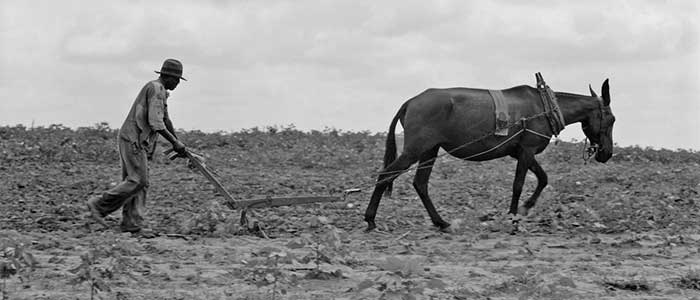
We’ve all heard the story of the “40 acres and a mule” promise to former slaves…
The promise was the first systematic attempt to provide a form of reparations to newly freed slaves, and it was astonishingly radical for its time, proto-socialist in its implications. In fact, such a policy would be radical in any country today: the federal government’s massive confiscation of private property — some 400,000 acres — formerly owned by Confederate land owners, and its methodical redistribution to former black slaves. What most of us haven’t heard is that the idea really was generated by black leaders themselves.
It is difficult to stress adequately how revolutionary this idea was: As the historian Eric Foner puts it in his book, Reconstruction: America’s Unfinished Revolution, 1863-1877, “Here in coastal South Carolina and Georgia, the prospect beckoned of a transformation of Southern society more radical even than the end of slavery.” Try to imagine how profoundly different the history of race relations in the United States would have been had this policy been implemented and enforced; had the former slaves actually had access to the ownership of land, of property; if they had had a chance to be self-sufficient economically, to build, accrue and pass on wealth. After all, one of the principal promises of America was the possibility of average people being able to own land, and all that such ownership entailed. As we know all too well, this promise was not to be realized for the overwhelming majority of the nation’s former slaves, who numbered about 3.9 million.

What Exactly Was Promised?
We have been taught in school that the source of the policy of “40 acres and a mule” was Union General William T. Sherman’s Special Field Order No. 15, issued on Jan. 16, 1865. (That account is half-right: Sherman prescribed the 40 acres in that Order, but not the mule. The mule would come later.) But what many accounts leave out is that this idea for massive land redistribution actually was the result of a discussion that Sherman and Secretary of War Edwin M. Stanton held four days before Sherman issued the Order, with 20 leaders of the black community in Savannah, Ga., where Sherman was headquartered following his famous March to the Sea. The meeting was unprecedented in American history.


Today, we commonly use the phrase “40 acres and a mule,” but few of us have read the Order itself. Three of its parts are relevant here. Section one bears repeating in full: “The islands from Charleston, south, the abandoned rice fields along the rivers for thirty miles back from the sea, and the country bordering the St. Johns river, Florida, are reserved and set apart for the settlement of the negroes [sic] now made free by the acts of war and the proclamation of the President of the United States.”

Section two specifies that these new communities, moreover, would be governed entirely by black people themselves: ” … on the islands, and in the settlements hereafter to be established, no white person whatever, unless military officers and soldiers detailed for duty, will be permitted to reside; and the sole and exclusive management of affairs will be left to the freed people themselves … By the laws of war, and orders of the President of the United States, the negro [sic] is free and must be dealt with as such.”


Finally, section three specifies the allocation of land: ” … each family shall have a plot of not more than (40) acres of tillable ground, and when it borders on some water channel, with not more than 800 feet water front, in the possession of which land the military authorities will afford them protection, until such time as they can protect themselves, or until Congress shall regulate their title.”


With this Order, 400,000 acres of land — “a strip of coastline stretching from Charleston, South Carolina, to the St. John’s River in Florida, including Georgia’s Sea Islands and the mainland thirty miles in from the coast,” as Barton Myers reports — would be redistributed to the newly freed slaves. The extent of this Order and its larger implications are mind-boggling, actually.


Who Came Up With the Idea?
Here’s how this radical proposal — which must have completely blown the minds of the rebel Confederates — actually came about. The abolitionists Charles Sumner and Thaddeus Stevens and other Radical Republicans had been actively advocating land redistribution “to break the back of Southern slaveholders’ power,” as Myers observed. But Sherman’s plan only took shape after the meeting that he and Stanton held with those black ministers, at 8:00 p.m., Jan. 12, on the second floor of Charles Green’s mansion on Savannah’s Macon Street. In its broadest strokes, “40 acres and a mule” was their idea.


Stanton, aware of the great historical significance of the meeting, presented Henry Ward Beecher (Harriet Beecher Stowe’s famous brother) a verbatim transcript of the discussion, which Beecher read to his congregation at Plymouth Church in Brooklyn, New York and which the New York Daily Tribune printed in full in its Feb. 13, 1865, edition. Stanton told Beecher that “for the first time in the history of this nation, the representatives of the government had gone to these poor debased people to ask them what they wanted for themselves.” Stanton had suggested to Sherman that they gather “the leaders of the local Negro community” and ask them something no one else had apparently thought to ask: “What do you want for your own people” following the war? And what they wanted astonishes us even today.


Who were these 20 thoughtful leaders who exhibited such foresight? They were all ministers, mostly Baptist and Methodist. Most curious of all to me is that 11 of the 20 had been born free in slave states, of which 10 had lived as free men in the Confederacy during the course of the Civil War. (The other one, a man named James Lynch, was born free in Maryland, a slave state, and had only moved to the South two years before.) The other nine ministers had been slaves in the South who became “contraband,” and hence free, only because of the Emancipation Proclamation, when Union forces liberated them.


Their chosen leader and spokesman was a Baptist minister named Garrison Frazier, aged 67, who had been born in Granville, N.C., and was a slave until 1857, “when he purchased freedom for himself and wife for $1000 in gold and silver,” as the New York Daily Tribune reported. Rev. Frazier had been “in the ministry for thirty-five years,” and it was he who bore the responsibility of answering the 12 questions that Sherman and Stanton put to the group. The stakes for the future of the Negro people were high.


And Frazier and his brothers did not disappoint. What did they tell Sherman and Stanton that the Negro most wanted? Land! “The way we can best take care of ourselves,” Rev. Frazier began his answer to the crucial third question, “is to have land, and turn it and till it by our own labor … and we can soon maintain ourselves and have something to spare … We want to be placed on land until we are able to buy it and make it our own.”


And when asked next where the freed slaves “would rather live — whether scattered among the whites or in colonies by themselves,” without missing a beat, Brother Frazier (as the transcript calls him) replied that “I would prefer to live by ourselves, for there is a prejudice against us in the South that will take years to get over … ” When polled individually around the table, all but one — James Lynch, 26, the man who had moved south from Baltimore — said that they agreed with Frazier. Four days later, Sherman issued Special Field Order No. 15, after President Lincoln approved it.


The response to the Order was immediate. When the transcript of the meeting was reprinted in the black publication Christian Recorder, an editorial note intoned that “From this it will be seen that the colored people down South are not so dumb as many suppose them to be,” reflecting North-South, slave-free black class tensions that continued well into the modern civil rights movement. The effect throughout the South was electric: As Eric Foner explains, “the freedmen hastened to take advantage of the Order.”


Baptist minister Ulysses L. Houston, one of the group members that had met with Sherman, led 1,000 blacks to Skidaway Island, Ga., where they established a self-governing community with Houston as the “black governor.” And by June, “40,000 freedmen had been settled on 400,000 acres of ‘Sherman Land.’ Sherman later ordered that the army could lend the new settlers mules; hence the phrase, “40 acres and a mule.”


And what happened to this astonishingly visionary program, which would have fundamentally altered the course of American race relations? Andrew Johnson, Lincoln’s successor and a sympathizer with the South, overturned the Order in the fall of 1865, and, as Barton Myers sadly concludes, “returned the land along the South Carolina, Georgia and Florida coasts to the planters who had originally owned it” — to the very people who had declared war on the United States of America.

Related News …
Congresswoman Sheila Jackson Lee Keeps Attention On Critical Matters: 40 Acres Plus…

Last year, Houston’s Rep. Sheila Jackson Lee, D-Texas, sponsored a bill in Congress known as H.R. 40, or the Commission to Study and Develop Reparation Proposals for African-Americans Act. For more than two decades before her, Rep. John Conyers, D-Mich., introduced it year after year without success. 
It’s receiving greater attention, Jackson Lee said.
The Congressional Black Caucus met on it earlier this month. 
“There is no better time for H.R. 40 to be part of the national dialogue and part of the national legislative response,” she said. 
The “40” references 40 acres of land promised, but never fully delivered, to former slaves by Union Army Gen. William Sherman in 1865.

Black Activists, Electeds Weigh in On Police Reforms, Gun Violence

By Ariama C. Long, KCP

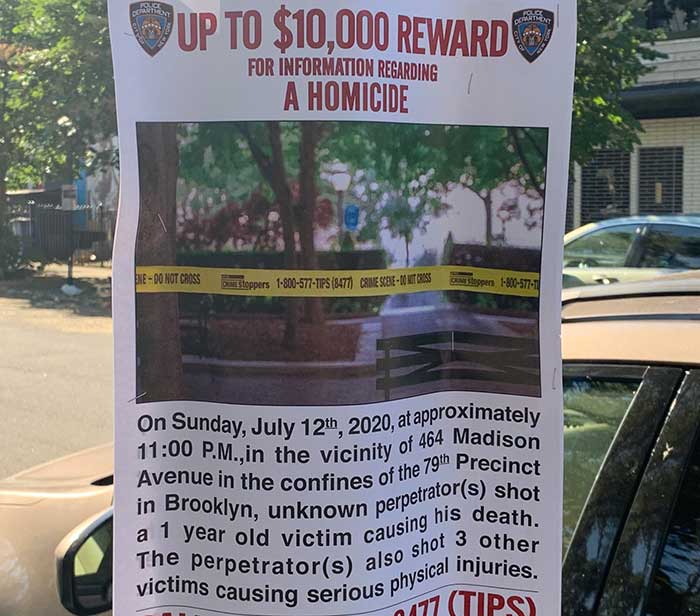
Gun violence in New York City shows no sign of slowing down with 28 shootings, 45 victims, and two deaths citywide this past weekend; and 41 shootings, 49 victims and 8 murders total in Brooklyn since July 4th, according to police records [this does not include last night’s shootings of 17 people].


Regardless of political party, residents are opposed to the substantial upswing in gun violence and crime for the past weeks and months that’s heavily plaguing neighborhoods, causing activists call for police abolishment to take a serious hit. A unified solution as to the root problem of the violence and its impact on police reforms and racial justice legislation has yet to be agreed on.


Still, the resounding call for structural changes to law enforcement hasn’t lessened, even amid battles between pro-Blue and Black Lives protests this past weekend. Instead, a serious look at both community-based accountability and reformed policing is becoming the norm across the board.


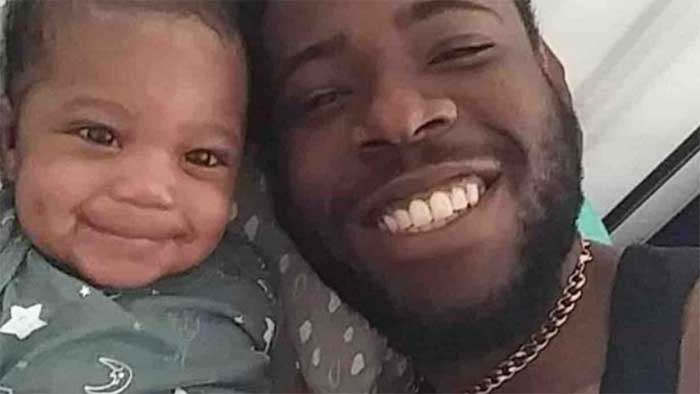
“It’s just so painful and it’s not acceptable. It’s not something we can ever look away from. It’s something we have to address and stop,” said Mayor Bill De Blasio on July 13 about the heartbreaking death of Davell Gardner Jr., the 1-year-old shot in the stomach at a park in Bedford-Stuy this weekend. “It’s never just about police. It has to be about community and police together.”


Among those weighing in on the issue was Constantin Jean-Pierre, the Republican candidate running against U.S. Rep. Yvette Clarke (D-Brownsville, Crown Heights, East Flatbush, Flatbush, Kensington, Midwood, Prospect Heights, Prospect-Lefferts-Gardens, Park Slope) in the general election on Nov. 3.


Jean-Pierre lost a relative to gun violence this past Sunday when his 34-year-old pregnant ‘niece’ was shot in the head while outside an after-hours club in Schenectady, New York on July 9.
Jean-Pierre said he’s the first as a Black man to say there should be police reforms, but anti-police rhetoric can’t be allowed. He said defunding the police means to him abolishment and it can’t go to that extent because “we’re fighting too many battles at one time” including illegal guns in the local community and statewide.


“Somebody shot my niece in the head. Okay, I don’t care whether that person was Black or White. I don’t care if it was a man or woman, I want that person. I want the police to go find that person immediately and let them go die in jail. That’s how I feel about it,” said Pierre. “My son called me crying. My son is crying. My son is stressed and I’m not the only one feeling this. There’s a lot of families in this district feeling that.”
Pierre, who worked in the Department of Corrections’ Administration of Children’s Services, attributes the uptick in shootings to talk of defunding the police because they’ll be “nobody to check” criminals.


“I walk down the street, there’s graffiti all over the place. I feel like I’m back in the 80s,” said Pierre about the lack of order.
On the opposite side of the political spectrum is State Sen. Zellnor Myrie (D-Brownsville, Crown Heights, East Flatbush, Gowanus, Park Slope, Prospect Heights, Prospect Lefferts Gardens, South Slope, Sunset Park), who was instrumental in proposing recent police reform legislation. He responded on Twitter on July 6 to the upticks in shootings, neighborhood violence, and policing.
“Think about the false choice law enforcement and others are presenting to the community: (a) Do not criticize us, our history, or our practices and we will keep you safe; OR (b) Criticize our structural failures and you will die from crime. We reject this choice. We do not deny the uptick. It’s alarming and we are fully against it. Same as we were last year pre-bail reform and pre- the current uptick,” said Myrie in the thread.


Black Lives Matter Brooklyn Branch President Anthony Beckford said, “It’s basically all the same messaging of the fact that it needs to stop and we need to provide more in regards to resources, community accountability. Also, finding out those who are bringing the guns into our community, because at the end of the day people are impoverished. They can’t really afford these high rent costs so you know they can’t afford these guns, but there is an iron pipeline in our community.”
He said conditions that create the element of crime, like lack of education and poverty, still need to be addressed.
Beckford, a U.S. Marine Corp veteran, said any roll back to police reform efforts would be protecting the status quo, and that not all policing is oppression. The NYPD has had a racist and toxic environment, he said, and that needs to be dismantled in order to usher in an era of community-focused safety.


Additionally, Beckford just released a list of Black Lives Matter demands for more law enforcement reforms Sunday that he plans to put before the Mayor and City Council.
The list contains eight points, such as the banning of any Blue Lives Matter or Punisher insignia/patches, civil lawsuits against the City due to police misconduct will use 45 percent of an officers pension to pay for the lawsuit, NYPD officers must live within city limits and within two miles of their command, no more transferring an officer with numerous misconduct complaints to another position or precinct, officers with connections to hate groups should be terminated, donations from corporations to the NYPD are to be returned and future donations banned, NYPD officers mandated to purchase liability insurance from one company, and the Police Benevolent Association (PBA) and Sergeants Benevolent Association (SBA) Unions should be disbanded.

Fostering Confidence in the Community: An Interview with Barber Christian Thompson

Chi Ossé
Our Time Press

Since I was nine years old, I have called the Bed-Stuy, Crown Heights area home. The deaths of Breonna Taylor, George Floyd, and Ahmaud Arbery have inspired deeper conversations around BLM, policing, and proper local investment. Now it’s more important than ever to ask ourselves what we want and need within our community. In this column, I will interview local black business owners to collect their experiences and their thoughts on the community’s socio-economic, political state and how it has changed over time.


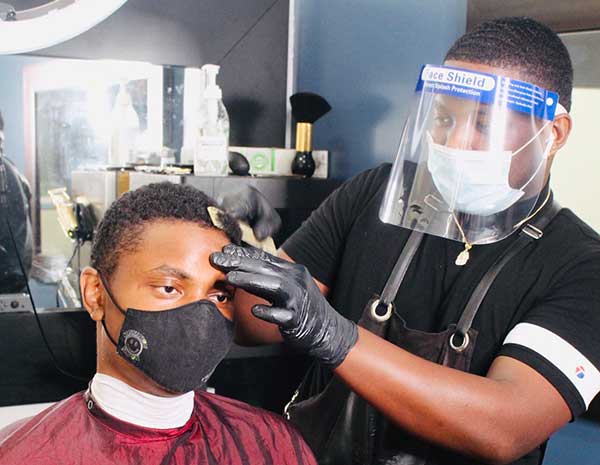
Christian Thompson, a 24 year old self-taught barber and artist who grew up in Bed-Stuy, cut my hair the other day following social distancing guidelines. Being a barber is no happenstance for Thompson. He loves his work. He has a BA in English and African Studies from The University of Albany, SUNY. He was actually an accountant before opening his own shop but realized the happiness he got from cutting hair superseded the lure of a higher salary. As he smoothly ran his gold clippers through my hair, he said, “cutting hair is like creating a fast portrait.” He lives to boost the confidence of others, to see their delighted faces. He knows making people look good can help them build the courage to get that job or apply for that school program. Thompson further explained that his work is a form of making the community visible and fostering a sense of camaraderie, something that is seriously lacking at the moment.


As Thompson looked out from his transparent face shield and surveyed the state of my hair, I asked him more about his experiences growing up in Bed-Stuy. He went to high school in Brownsville, NY, he said, an under-resourced school in an underdeveloped neighborhood. Thompson recounted, “I never understood why my teachers had to buy classroom supplies… using their own salaries.” He did understand though that his teachers were not getting paid enough and a lack of resources only made it harder for them to do their job. “It made me extremely sad to see, and it discouraged me from being a teacher myself,” he told me.
Unfortunately, school was not the only institution that failed him growing up. Thompson recalled being stopped by the police on numerous occasions, including for walking on the sidewalk in his school uniform and for biking legally to his mom’s house. Like most black men, Thompson learned from an early age to take his hands out of his pockets and to remove his hoodie to avoid being harassed by NYPD. Still cutting my hair contently, Thompson divulged, “honestly, growing up in the neighborhood taught me how police officers treated black people. It just seemed like they hated us.”


Thompson also commented on the races of cops when paired. “I think it’s also part of the law enforcement system in NYC to pair a white police officer with a Latin or black officer, but usually they treat you just the same as their white counterparts.” The policing system is the issue here, corrupt from within and perpetuating white supremacy even through their non-white actors. The police were never created to protect people of color but rather to oppress them. Moreover, at Thompson’s first BLM protest for Mike Brown in 2014, he was frightened and “felt the tension in the crowd… like people were still afraid to speak up during those times.” He was outside protesting “but you could tell that we were still being submissive to the oppression we were taught.”


When asked about what he wants to see in Bed-Stuy now, Thompson answered, “more community programs for black and brown kids.” Most of the programs were cancelled and other organizations like the YMCA now have fees. Thompson also expressed fear about the school to prison pipeline. He understands that we need supportive youth networks to actively avoid this nation’s inclination to criminalize black youth and that bringing people together is necessary for both the people’s wellbeing and the neighborhood’s. In fact, Thompson finds himself reminiscing over an earlier time when he felt there truly was more camaraderie in Brooklyn. A time “before the Barclay Center” with block parties and drum circles. But now due to “newcomer” complaints “the drummer circle is only allowed to play for two hours.” He further lamented, “I feel like there was more culture before it was gentrified.” 


But Thompson is doing his own piece to bring about that ideal of community and culture he misses. When asked about his business and its connections to the black community, Thompson answered beautifully, “The barbershop is a safe place where a lot of black men feel like they can be vulnerable. They come in and can talk to their barber about whatever is going on in their lives. Black men are used to being judged harshly in society and I feel like barbershops are a space where they can be expressive and be themselves without being seen as a threat.” 

The Two Bed Stuys

I spent my Sunday afternoon having a wonderful at-home brunch with some friends on the deck of my girlfriend’s house in Bed Stuy. It was just us and two other couples… our quarantine bubble. We bought wine from Bed Vyne Wine and Spirits over on Tompkins, and we cooked food and played this game called Guesstures.

It’s really a fun game, kinda like charades. It was a beautiful day on Sunday, clear and sunny, the kind of Sunday that you spend laughing and kicking back. On this brownstone-lined block, It seemed like everyone was finding ways to enjoy this Sunday. People were either in their backyards grilling and liming, or they were on their stoops talking and people-watching. Our company left at around ten o’clock, and my lady and I took to our normal evening routine of binge-watching a Netflix series. With the peculiar influx in fireworks either being sold or given away in our neighborhoods, we’ve become accustomed to hearing random pops and explosions into the night. This Sunday night was no different, as pops and explosions seemed to ring off until well after midnight. Around that time, we turned the television off and went to bed.


The next morning, I awoke to the news that a one-year old child was killed on Madison between Throop and Marcus Garvey. A sobering realization indeed, as this happened just three blocks from my girlfriend’s home. I know that block well though. When I was a teenager, the younger brother of a friend who lived on that block was killed, also to gun violence. His likeness adorns the wall of the bodega on the corner.


Bed Stuy has become a peculiar place. It’s become the kind of community where you literally have multi-million dollar homes on the same block as housing tenements that house residents who are in abject poverty. The class-divide within the community is probably one of the widest in the entire nation. Can you name another community where a CEO lives right next door to families who are on public assistance? Bed Stuy wasn’t always like this. Before the attraction of development and the price gouging that inevitably came with gentrification, we were a solid community, we were one. In the 1940’s, when Harlem was becoming overcrowded, Bed Stuy became like an annex for Harlem, as droves of Blacks who couldn’t find respite uptown decided to settle in the Stuy. My grandmother was one of those people. When she found work in Sheepshead Bay, she left Harlem and moved into a Brownstone on Madison St between Marcy and Nostrand, just a couple blocks West of the heinous murder that took place on Sunday. Her one-bedroom railroad apartment wasn’t going for $2600 like the rates are today.

Those elders, the first of a new generation of working-class Blacks to move into this community in the 30’s and 40’s, they were all just trying to make it, trying to live out their days in search of something better, collectively. Those of us of a certain age can remember being a child, and doing something wrong while on the street, and word of what you did getting back to your mother, because someone who knew her from the community saw you acting up and decided to give her a phone call. That is the Bed Stuy that I grew up in.


The other day I was walking down Marcy from Dekalb after a run. When I got to Lafayette, there were scores of people from the community sitting in Von King Park, meditating. The event was called Meditating for Black Lives, but I could only count maybe a dozen Black people actually meditating. Meanwhile, across the street from the park there was a long line forming to grab some java from the new boutique style coffee shop right on Greene. But, just two blocks south, as I passed the Louis Armstrong Houses on Quincy and Marcy, the smell of garbage was unbearable.

The garbage had been collected, but the liquid residue from the garbage was still all along the sidewalk and the smell was bringing rodents out to find what was left of their food source. As I walked cautiously, so as to make sure I didn’t step on one of the rats that were scurrying to the street, one of the building doors was propped open. The smell from inside of the building nearly matched the smell outside of the building. Because, while you may live in a newly built apartment building that ensures its tenants that during this Covid-19 pandemic, the maintenance staff will be extra diligent in making sure the common areas of your building are sufficiently disinfected, the Louis Armstrong Homes are run by the New York CIty Housing Authority, and they don’t care how clean the common areas of the Louis Armstrong Houses are.


It was right then that I thought, if the people up the block are serious about caring for Black Lives, I sure hope they are discussing the ways in which systemic racism oppresses Black Lives. I mean, meditation is good, but the best meetings are the ones you leave with action plans.


The truth is that we prop up one type of Bed Stuy and we totally forget about the other. One type of Bed Stuy gets the attention of systemic change agents and policy makers in the form of developers and business executives who have drawings and building plans and money. The other type of Bed Stuy seems to only get the attention of those same change agents and policy makers when a one year old boy gets killed. And, as our new neighbors ride around on $1500 mountain bikes with signs that read Black Lives Matter, the Black Lives in Louis Armstrong Houses and in Medgar Evers Houses and in Betty Shabazz Houses and in Marcy Projects and in Tompkins Projects are being completely ignored, fed unhealthy food, fed unhealthy images of themselves, fed an unhealthy environment, and fed the precept of “less-than as the norm” in subtle ways; like NYCHA not making sure the common areas in the Louis Armstrong Houses are as impeccable as those at 66 Rockwell. They are treated like criminals all day every day, from almost everyone in their community, even their own selves. The guns? They are in our communities because the gun, to America, is as natural as apple pie. And, when we add together the circumstances listed with the hundreds of other circumstances not listed, the results of our wicked behavior towards ourselves is that a precious one-year old boy lost his life on that beautiful Sunday evening. His name was Davell Gardner Jr.