Home Blog Page 4

What will African-American Leaders do when South Africa & Israel Differ?

0

By Kazembe Batts
IG: @kazbatts

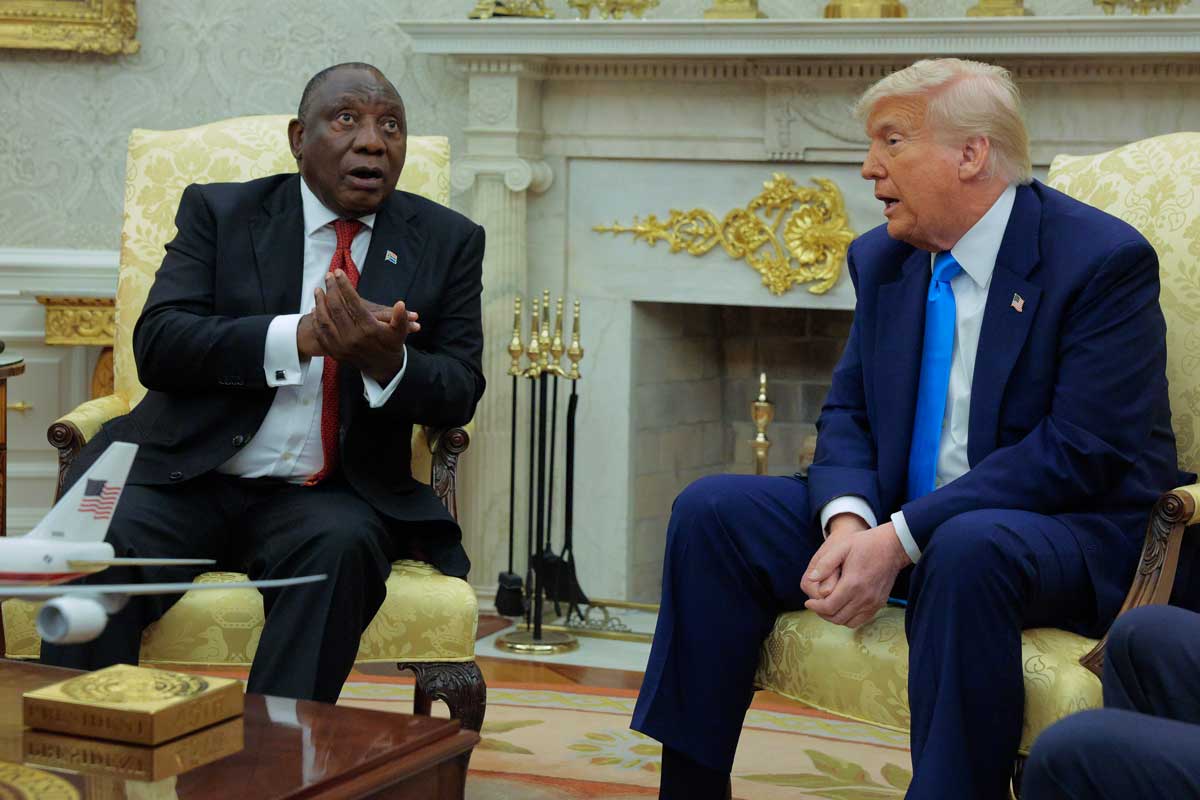
Relations between the United States, South Africa, and Israel are complicated. The current Trump administration has overtly frozen and downgraded relations with Africa’s most industrialized nation, South Africa. During a May 21 meeting in the White House, President Donald Trump attempted to embarrass South African President Cyril Ramaphosa by raising unsubstantiated claims of “white genocide” and showing what critics described as a misleading video of a funeral car caravan.

Trump also criticized South African legislator Julius Malema for using the historic liberation slogan “kill the Boer.” At the same time, Israeli Prime Minister Benjamin Netanyahu has visited the White House at least six times since Trump returned to the presidency. Under Trump, the United States has moved in lockstep with Israel in its confrontation with Iran—an action Netanyahu has urged the United States to take for decades.


Meanwhile, diplomatic relations between South Africa and Israel have deteriorated sharply. South Africa successfully brought a case against Israel at the International Court of Justice (ICJ), accusing it of genocide against Palestinians. The ICJ ruled that the allegations were “plausible,” a decision that deepened the diplomatic rift between the two countries.

Since Nelson Mandela walked out of prison in 1990, most American presidents—George H.W. Bush, Bill Clinton, George W. Bush, Barack Obama, and Joe Biden—have acknowledged the historic struggle against apartheid and maintained generally supportive relations with the ANC-led government in South Africa. Trump, however, has taken a markedly different approach.


The MAGA dominated administration demanded that the South African ambassador to the United States Ebrahim Rasool leave his post because he spoke up for African sovereignty and then appointed L. Brent Bozell III as the U.S. ambassador to South Africa.

Bozell quickly echoed Trump’s controversial views about conditions in South Africa and was later rebuked by South African Foreign Minister Ronald Lamola, who stated: “Broad-based Black Economic Empowerment is not racism, as regrettably insinuated by the ambassador.” Trump has also cut bilateral aid to South Africa, affecting health and nutrition initiatives.

At the same time, his administration has prioritized immigration pathways for white South Africans, even chartering planes to bring some migrants to Virginia. South Africa’s foreign policy has also contributed to tensions with Washington.

Since the end of apartheid, South Africa has aligned itself with the Global South and maintained diplomatic and economic relations with countries such as Russia, Iran, and China. Washington often views these ties as contrary to Western strategic interests, while South Africa insists that they reflect its sovereign right to pursue an independent foreign policy.


Economically, South Africa benefits from the African Growth and Opportunity Act (AGOA), particularly in the automobile sector. Although Trump reluctantly extended AGOA last year, his administration has hinted that it could be revoked to pressure South African political leaders. In contrast, Israel remains firmly embedded in the United States’ strategic framework.

For decades it has been the largest recipient of American foreign aid. Pro-Israel organizations such as the American Israel Public Affairs Committee (AIPAC) and the Anti-Defamation League (ADL) have successfully lobbied to maintain this assistance and to reinforce Israel’s influence in U.S. politics and global affairs. As a result, the contrast is striking.

The United States under Trump is openly aggravated with South Africa and increasingly out of sync with its leadership. Israel, on the other hand, continues to enjoy extraordinary support—often described by critics as being treated almost like a 51st state by successive American administrations.


The question then becomes: what is the status of South Africa–Israel relations? The answer is that the relationship is severely strained. Since South Africa filed its ICJ case in 2023 and the court ruled that the allegations of genocide against Palestinians were plausible, bilateral ties have deteriorated sharply. Israel denies the allegations. Adding to the intrigue, three planeloads of Palestinians recently arrived in South Africa without prior public notice. Observers have questioned whether individuals from the Occupied West Bank or Gaza could have traveled without Israeli approval.

Many South African leaders and activists have drawn parallels between the treatment of Palestinians and the treatment of Black South Africans under apartheid. Israel strongly rejects this comparison. Diplomatic tensions escalated further when Israeli chargé d’affaires Ariel Seidman was declared persona non grata by South Africa and asked to leave the country for allegedly abusing diplomatic privileges. Israel retaliated by expelling South Africa’s ambassador to Palestine, Shaun Edward Byneveldt.


Within the United States, these developments raise complicated questions—particularly for Black America. Historically, African Americans played a crucial role in the global anti-apartheid movement. When Nelson Mandela visited the United States after his release from prison, he thanked the community at Boys and Girls High School and at City College on 125th Street in Harlem before beginning his national tour.

Recently, after his tense White House meeting with Trump, President Ramaphosa traveled to Chicago to pay tribute at the funeral of Rev. Jesse Jackson. At the podium he reminded attendees that Jackson not only ran for president but had also traveled to South Africa shortly after Black Consciousness leader Steve Biko was murdered by apartheid police.

For decades, Black America has stood firmly with South Africa and its people. Today, however, the geopolitical landscape is more complicated. Several influential U.S. political leaders—Hakeem Jeffries in the House of Representatives, Chuck Schumer in the Senate, and Yvette Clarke in the Congressional Black Caucus—represent Brooklyn constituencies.


When South Africa and Israel pursue conflicting geopolitical agendas, what positions will Black American leadership take? Will they continue to support South Africa and push back against Trump administration policies? Difficult choices lie ahead—choices that will shape the future of Africa’s most industrialized nation and determine how Black America continues its long tradition of engagement with South Africa.

No Mets-ing Around: Mets Reload for War

0

By Eddie Castro
With the recent change in daylight savings and the Brooklyn temperature flirting with 70-degree weather, this is just a sign that the 2026 baseball season is officially near. If the 2026 World Baseball Classic is any indication of what we can expect for the upcoming Major League season, all Baseball fans are in for quite the treat. One of the team’s that is expected to be in the middle of it all will be the New York Mets.

During the off-season, the Mets made key additions to the team in hopes of becoming a serious playoff contender this year following a disappointing 2025 campaign. It was clear this off-season General Manager David Stearns’ approach to free agency was to make the necessary additions to avoid those failed high-leverage situations New York failed to capitalize on in the second half last year. What Stearns was able to do was improve the roster by getting upgrades both athletically and defensively.


In the infield, the Mets traded Brandon Nimmo to the Texas Rangers in exchange for second basemen Marcus Semien. Although Nimmo was a fan favorite and the longest tenured Met at the time of the trade, bringing in Semien improves their defense tremendously despite his offensive numbers going down the past three years. The moves also provide the team with financial flexibility.

Nimmo was owed $101.5 million over the next five seasons. The Mets also signed shortstop Bo Bichette, Center Fielder Luis Robert Jr. And Jorge Polanco to solidify their infield/outfield upgrades.

As far as pitching goes, the team currently has six starting pitchers on the roster lead by Freddy Peralta whom the team acquired via trade with the Milwaukee Brewers back in January.

Kodai Senga, Nolan McLean, Sean Manaea, Clay Holmes, and David Peterson round up the potential starting pitching for the Mets for 2026. It is unknown whether the Mets will go with a rare six-man pitching rotation to begin the season, however, you can pretty much pencil in Peralta as the team’s Opening Day starter next Thursday against the Pittsburgh Pirates. Bullpen upgrades were also made lead by former Yankees Devin Williams and Luke Weaver.


With the flurry of moves the Mets have made, the team is poised to compete and contend in 2026, however, it is important to point out they are in one of the most competitive, if not the most competitive divisions in all of baseball (National League East). The Mets now have a balanced offense minus Pete Alonso who left via free agency and signed with the Baltimore Orioles.

The offense will be led by Super Star Juan Soto. The expectations are once again high for this team. The dedication to improve was present with the free agent moves. Now, for the Mets is all about finding their identity as a team and bringing the excitement back to Citi Field. We are officially less than a week away from Opening Day.


Sports Notes: (Baseball) We are less than a week from Opening Day for the Yankees and Mets. (Basketball) The Brooklyn Nets will try to salvage the fourth and last regular season meeting with their cross-town rival the New York Knicks. The two teams will play at the Barclays Center tomorrow night.

Champions on the Ground, Anchors of the Culture

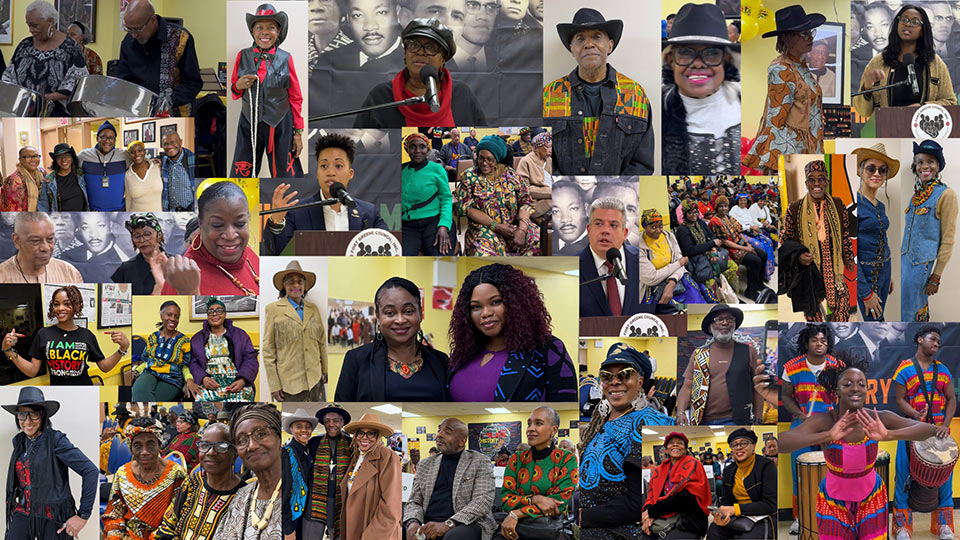
“Women’s History Month is not only about the well-known names in history books. It is also about the everyday leaders, mothers, caregivers, educators, advocates, community organizers, and elders whose dedication strengthens neighborhoods and inspires future generations. These women serve as cultural anchors, storytellers, and protectors of traditions, ensuring that history, resilience, and wisdom are passed down from one generation to the next. In Brooklyn and throughout New York City, Black and Brown women have played a particularly vital role in building strong, vibrant communities. They have led grassroots movements, created safe spaces for youth and older adults, and championed programs that address the real needs of families; from food security and education to healthcare and social support.” Above, Fort Greene Senior Citizens Council, Inc., celebrates Black History and Women’s History months.

War and Global Unrest: Black Folks Respond

By Nayaba Arinde
Editor-at-Large

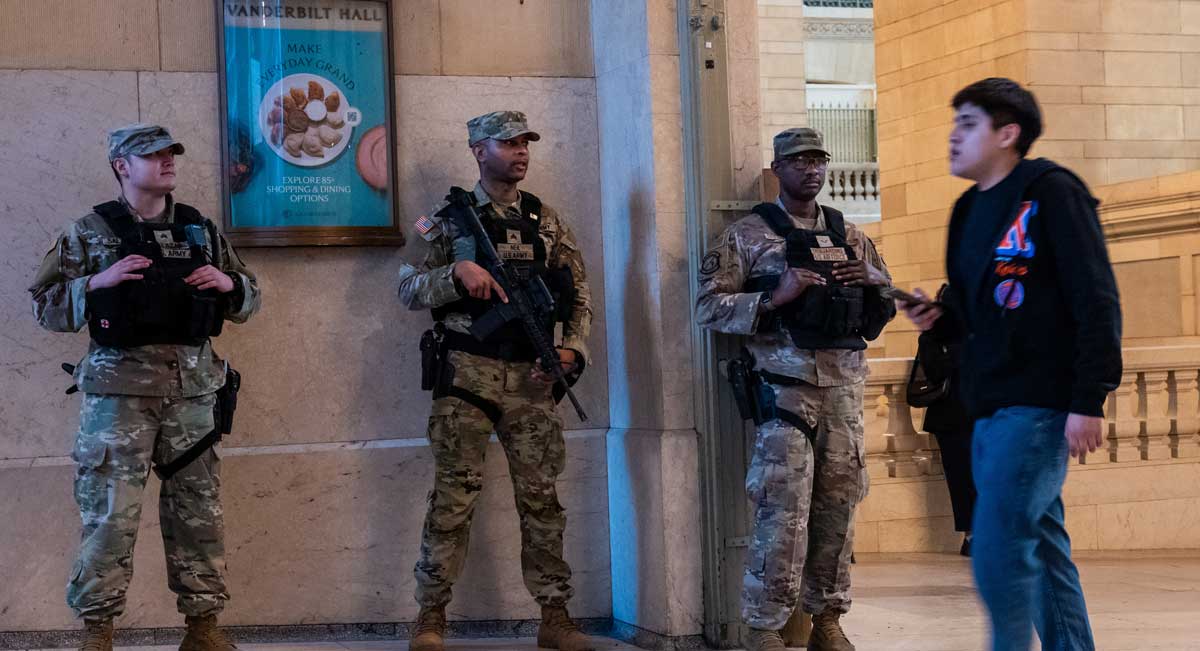
As the media has the nation hyper-focused on the war with Iran over 6,000 miles away from the five boroughs, healthcare, housing, and groceries, are the concerns of most New Yorkers. This, alongside crime on the streets, food insecurity, unemployment, the increasing cost of daily living, and high transportation costs.


But President Donald Trump’s major combat operations in Iran dominates the 24-hour news cycle.
Un-or-under-reported by the mainstream press are several countries struggling with violent conflicts, regional instability, and social unrest–such as Sudan, DR Congo, Nigeria, Haiti, Ethiopia, Eritrea, France, Cuba, Mexico, and the Ukraine.


“We ourselves live in the global world, and we often times don’t have time to think about it because we are so busy with our daily crisis,”Colette Pean, member of the human rights community advocacy December 12th Movement organization told Our Time Press. “But, I think we will feel it in the cut back of essential services, as more money gets spent on a war that we didn’t need to be in. I think we will feel the inflation in gas prices, both when we go to the pump, when we purchase items that have to travel, as the price of everything goes up”.


NYC Mayor Zohran Mamdani slammed what he called, “Opening a new theater of war. Americans do not want this. They do not want another war in pursuit of regime change. They want relief from the affordability crisis.

They want peace…I am focused on making sure that every New Yorker is safe. I have been in contact with our Police Commissioner and emergency management officials. We are taking proactive steps, including increasing coordination across agencies and enhancing patrols of sensitive locations out of an abundance of caution.”


Attorney General Letitia James urged New Yorkers to remain vigilant for price hiking in the wake of heightened geopolitical conflict in the “Middle East,” affecting supply chains. “There is no excuse for unfairly raising prices of essential goods and services that New Yorkers depend on. With sudden increases in oil prices poised to drive up costs for New Yorkers, I am encouraging everyone to be on the lookout for unreasonable price hikes.”


“While events overseas are beyond New York’s control, they can affect the price of food and fuel costs and report price gouging to my office…so that it can be investigated and appropriate action can be taken,” said New York Secretary of State Walter T. Mosley.
Governor Kathy Hochul called on folk to report price gouging, so she can hold “unscrupulous actors accountable.”


As the Iran battle–Trump has called a pre-emptive measure, stretches into its third week, he termed the deadly conflict “a short-term excursion.” Despite mixed messages, with cabinet statements that it may be a prolonged battle, Trump said this week that the war, “is very complete, pretty much,” adding that his military had decimated Iran’s ability to respond to the American bombardment.


As Iran has struck back, hitting nations like Saudi Arabia, the UAE, Qatar, Bahrain, and Dubai, Trump has denied that it was a U.S. Tomahawk missile that hit a girls school in Iran, killing more than 170 people, many of them children.
While Iran’s Revolutionary Guards said that they may block oil shipments sailing from the Gulf, Trump threatened that if Iran attacked ships within the Strait of Hormuz “death, fire and fury will reign upon them.”


“I think everyone is just deeply concerned with irrational, unchecked, unstructured, impromptu behavior of our president, without really looking at how these issues impact upon everybody else,”
Rev. Dennis Dillon told Our Time Press. “Such as, the price of gas, the price of travel flights, people getting stranded, myself included coming from the Jesse Jackson funeral and celebration of his life in Chicago.”


Stranded for two days, Dillon, the publisher of The New York Christian Times, and pastor of Broklyn’s New Rise Church Global said, “The airline said there were delays because of the war, and JFK Airport was overbooked because of the extra flights for people who are trying to get back. So, obviously we have a president who is not thinking through these things. He is impulsive, arrogant and ignorant, and that’s what drives him and it is sad.

This is a man who is totally devoid of love and compassion. The concern of the community is that this is an unnecessary war, with the killing of innocent people, including our service men and women for no good reason.”


Meanwhile on Saturday, close to Mayor Mamdani’s Gracie Mansion home on the Upper West Side, opposing protestors got into a violent confrontation where a smoking explosive device was thrown.
The Florida-based far-right “Stop the Islamic Takeover of New York City” demonstration organizer Jake Lang, is a Trump-pardoned January 6 riot participant and current U.S. Senate candidate, who thought bringing a roasted pig to Mamadani’s home during Ramadan–was a flex.


His twenty or so supporters were met by over a hundred counter protestors. Now facing federal terrorism charges, police said that two men, Emir Balat, 18, and Ibrahim Kayumi, 19, drove from Pennsylvania with at least 3 improvised explosives–one was thrown into the crowd, and none of the devices detonated.


Mamdani called it “A vile protest rooted in white supremacy.” Neither he nor his wife Rama were home.
“I’m the first Muslim mayor of our city. Anti-Muslim bigotry is nothing new to me, nor is it anything new for the 1 million or so Muslim New Yorkers who know this city as our home.”


At a press conference on Monday, Police Commissioner Jessica Tisch said, “We have been in a heightened state of alert in New York City since the start of hostilities in Iran, and we remain in that posture …[with] additional counterterrorism resources throughout New York City.”


Saying that people should “stay hopeful that this difficult time will pass,” Bed Stuy businessman Lookman O. Afolayan, owner of Buka New York restaurant, told Our Time Press, “The war we now face is troubling and unexpected for many Americans. Families were already dealing with rising costs, and this conflict will likely make life even more expensive and uncertain…
This moment should also remind us of the importance of leadership and accountability in the leaders we elect.”


Activist Colette Pean told Our time Press, “The impact of the war I think we will feel it as the focus of so many things gets distorted, and people have to think ‘Who are we?’ ‘What is our place in the world, and how do we relate,’ because when we talk about this particular action, we have to talk about what happened when they bombed Nigeria? And when they took President Maduro and his wife out of Venezuela? What does it mean when they are bombing small boats in the Caribbean where so many people are from; and blockading Cuba? It’s all part of a global conflict.

Those of us with relatives in different parts of the world, are going to feel it when they go into a financial crisis because of the cost of energy, because a lot of this is based on economics.”

Rev. Valerie Cousin Named Interim Chair of Bridge Street Development Corporation

Fern Gillespie
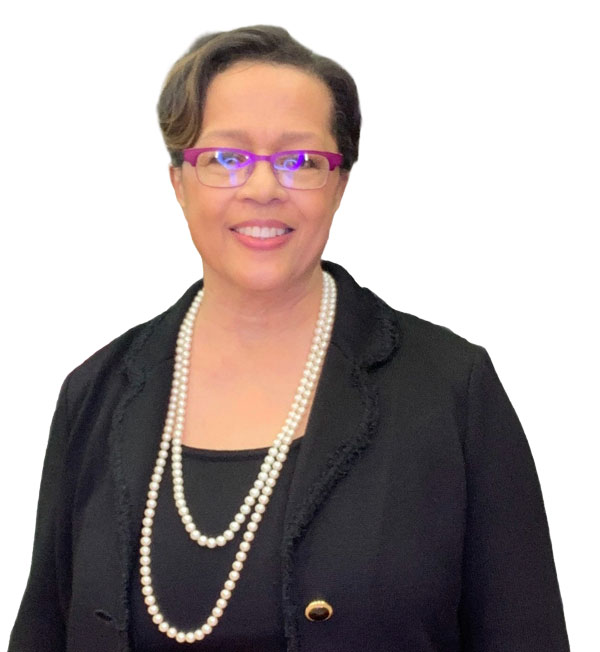
When the Bridge Street Development Corporation (BSDC) Board of Directors recently appointed Rev. Valerie Cousin as its interim chair, she had already served 27 years as a key member of the BSDC board. Over the decades, she had been an active BSDC board member operating as chair of fundraising, board secretary and other duties.


Bridge Street Development Corporation is an instrumental part of her life. Her husband Rev. David Byron Cousin, Sr., is pastor of Bridge Street AME Church, the church which founded BSDC in 1995. She is the executive pastor of the church. Rev. Cousin balances the trio of roles as the church’s first lady, executive pastor and interim board chair with the skill set of an executive administrator, which was her career as a college official for over 20 years.


“At Bridge Street Development Corporation, our motto is Building on Community Strength. The entire board of directors helps support the work and vision of our CEO. Whether it’s community engagement, supporting our small businesses, assisting churches and faith-based institutions that own buildings to rehab them to get the equity and increase the quality of life of folks living in them,” Rev. Cousin told Our Time Press.

“Whether it’s constructing multi-use buildings or rehabbing existing buildings in the community that provide affordable housing. We support community engagement with programs, not only in our senior buildings, but in the Open Streets program with commerce, public spaces, and community performances.”


Gregory Anderson, President & CEO, Bridge Street Development Corporation, and Rev. Cousin have collaborated on social impact community programs for years.
“Rev. Valerie Cousin has been a trusted advisor and steady leader throughout my tenure as President & CEO,” Anderson told Our Time Press.

“As board secretary and a long-standing member of our Executive Committee and other key committees, she has consistently provided thoughtful guidance, deep institutional knowledge, and a deep commitment to our mission. I am confident she will continue to serve the organization well as Interim Board Chair. I look forward to continuing our work of Building on Community Strength with Rev. Cousin in her new role.”


Previously Edward Odom, Jr. was the longtime board chair of Bridge Street Development Corporation. “She is a very dedicated, hard-working, committed individual to her community, her church and her family,” Odom told Our Time Press. “I want to acknowledge Edward Odom, Jr., for his strong leadership, professionalism, and steady hand as Board Chair during several important periods of growth and transition for the organization.,” said Anderson. “We are pleased that he will continue to serve as a member of the Board.” Rev. Cousin agreed. “Edward Odom has had an instrumental impact on BSDC. I am looking forward to his involvement as a board member.”


Before being called to the ministry in 2004, Rev. Cousin aspired to be a president of a community college. Her career in higher education spanned positions as manager of student loan, and financial aid’s accounting office at Fairleigh Dickinson University; assistant dean for business and finance at a Westchester community college and director of business affairs at Purchase College.

She holds a Bachelors degree in accounting from Alabama State University, Master of Public Administration from Seton Hall University, and a Master of Divinity in Preaching and Worship from Columbia University/Union Theological Seminary. In addition, she holds a Certificate in Fundraising and Development from Marymount College.


“While I was studying education at Columbia University, one day I was sitting in my car and I felt a level of unrest in my spirit. Columbia Union theological seminary was across the street. The spirit started talking at me, saying to go over there and audit a class,“ she recalled. “I said, I’m not interested in preaching.

My husband is a pastor. We don’t need two pastors in the house.”
Since the 1980s, she has been a pastor’s wife. Her husband, Rev. David Byron Cousin, Sr., and her were college sweethearts who had married in 1981. Together, with their two sons, the couple moved to his pastoral appointments in New Jersey’s Salem, East Orange and Princeton.

She got involved in local community nonprofits and gained leadership roles on the Princeton YMCA board and at Rheedlen Center for Children and Families board (now Harlem Children’s Zone) when he was appointed to Harlem. In 1997, the family became a part of Brooklyn’s Bridge Street AME Church.


Switching from education to theology at Columbia University was a pivotal move for Rev. Cousin. “After auditing the theology class at Columbia, I accepted the call to the ministry,” she said. “Being a college president was a passion of mine. It was a desire, but I don’t think it was ever a calling. When you have the most urgent call of your life, that’s the one that you should be doing. I left my job and went into the seminary full time.”


Bridge Street AME welcomed her as a minister. “My husband sked me what title I was interested in functioning under,” she said. “Based on my skill set on working in higher education administration, dealing with policies and procedures, I told him after research that I wanted to be executive minister. The executive arm of your leadership.”


As executive minister, she transferred her higher education administration skills to the church management. Rev. Cousin created AME procedure manuals for baptisms, funerals, class leaders and stewardesses. Soon, she was giving workshops at churches, even the historic first AME church founded in Philadelphia in 1794.

“You name it, I was the manual queen,” she said. “Manuals help you keep order. I believe that everyone needs to know what everybody is supposed to do. This way, there’s no room for error. The Methodist Church is a church of order. We have our Methodist order of worship. You can go to any AME church and the order of worship will be similar.”


She was born in Chicago in a family of six siblings. Her parents worked at Chicago’s ComEd. In 1969, at age nine, her father moved the family to his widowed mother’s rural farm in Alabama. It was, at first, a culture shock for a city kid. “My grandmother still had an outhouse. She had a woodburning stove where she did all her cooking. Somebody had to cut that wood up in the fall to make sure that she had enough wood to go through the winter,” she remembered.

“My father would help his mother with any maintenance and upkeep on the farm.” Living in Alabama was life-changing for her. She attended Alabama State University, met her husband and pledged AKA, where she is still an active soror.


“I’m working with the Missionary Society at Bridge Street doing community outreach. I’m working with the youth, the Women’s Ministry and the Christian Education Department. All of those components have community service work that they do. I’m out there with them,” she said. “We all have gifts, graces, intellect and human capital that we can bring to the table to make our world, our community, our church what we know that it can become.”