Home Blog Page 342

Judge Jackson’s Nomination Spotlights Impact of Black Women Judges

By Fern E. Gillespie
Exclusive to Our Time Press

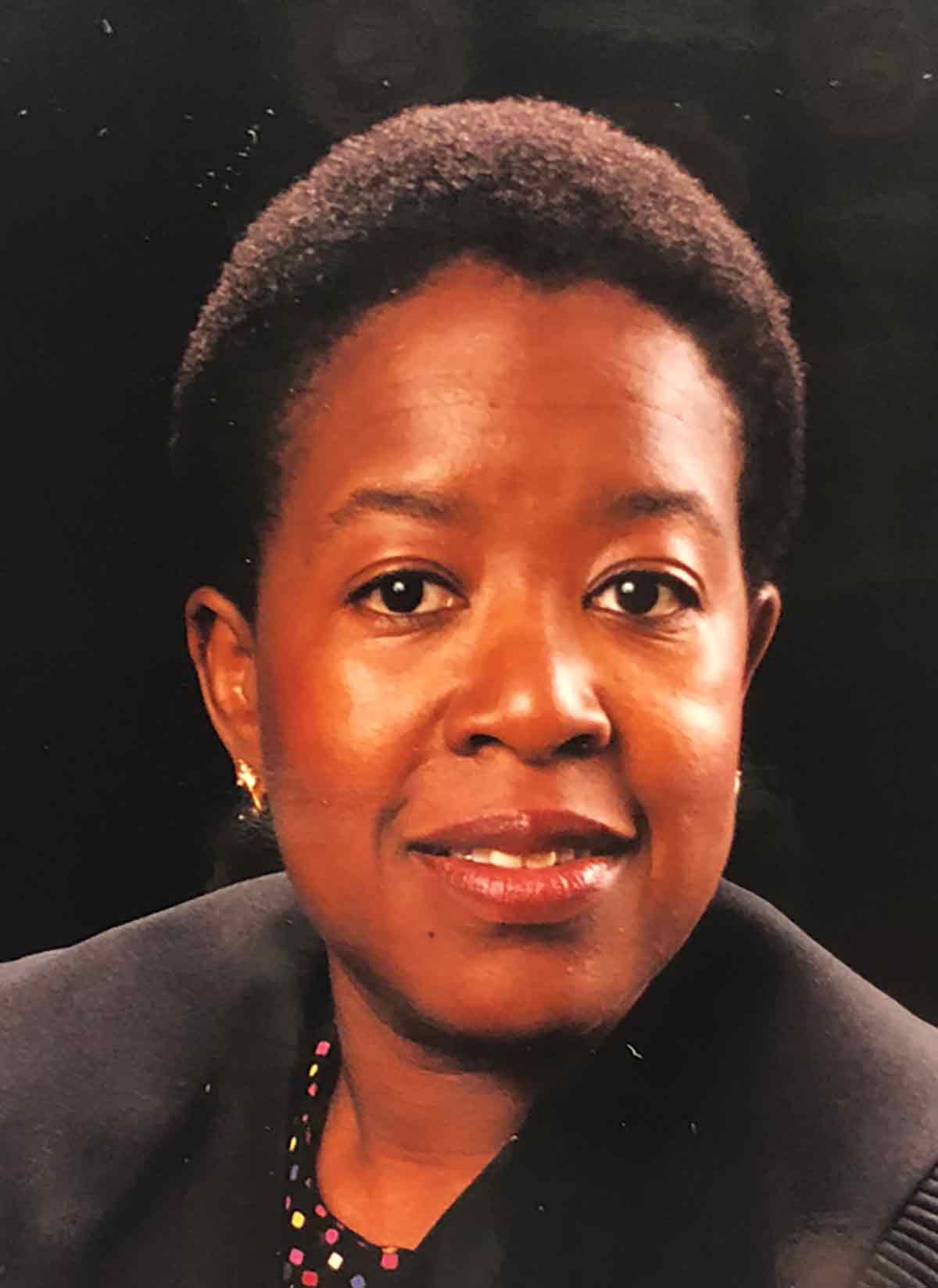
For Brooklyn Supreme Court Justices Michelle Weston and Lisa S. Ottley, who were “firsts” in New York’s judicial system, Judge Ketanji Brown Jackson’s momentous nomination to the U.S. Supreme Court is an historic recognition of African American women judges.


“First, let me congratulate Judge Ketanji Brown Jackson on her nomination to the U.S. Supreme Court. The fact that we are just now witnessing the historic nomination of the first Black woman to the United States Supreme Court speaks volumes as to African American women jurists who are qualified, experienced and have stellar legal careers, yet have been overlooked,” said Justice Ottley.  “Our struggle for representation, diversity and respect on every level in government continues and we should view this nomination as long overdue.”  


“I was beyond ecstatic and beaming with pride. Judge Ketanji Brown Jackson is brilliant,” said Justice Weston. “She brings with her some of the same life experiences I have which has served me well as a jurist. She was a criminal defense attorney, private practitioner, and has experience as a trial jurist before ascending to the appellate bench. Her profound and diverse background strengthens her candidacy, as she can relate to the plight of the everyday person.”


 Justice Ottley, the first African American Judge to be appointed as Supervising Judge of the Civil Court in Kings County, is an elected Supreme Court Justice in Kings County. There, she presides over Guardianship matters, a Motion Part and Trials. She was elected to the Civil Court in 2008. In 2010, she was appointed the Supervising Judge of the Civil Court. Prior to her appointment as Acting Justice of the Supreme Court, she presided over cases in both the Civil and Family Court in Kings County, as well as arraignments in Criminal Court. As Supervising Judge of the Civil Court, Kings County she presided over the Trial Assignment Part in Civil Court.


A lifelong Brooklyn resident, Justice Ottley knew since childhood she wanted a career in law. She attended James Madison High School and was enrolled in the law program as an honor student. She graduated from CCNY’s specialized program in Urban Legal Studies, earned a master’s degree in Urban Affairs-Economic Development from Hunter College and obtained her law degree from Temple University School of Law.


Justice Weston’s judicial career began in 1989, when she was appointed to Criminal Court by Major Ed Koch. By1990, she became the first African American woman elected to Supreme Court in the Second Judicial District. In 1993, she was appointed as the Court’s first Black female justice to serve an Associate Justice of the Appellate Term for the Second, Eleventh, and Thirteenth Districts. In addition to hearing appeals at the Appellate Term, Justice Weston presides over medical malpractice trials in New York State Supreme Court. In1995, she was assigned to the Civil Term of Supreme Court where she has presided over a broad spectrum of cases, including matrimonial, guardianship and medical malpractice actions.


A lifelong Brooklyn resident, Justice Weston’s family migrated from Trinidad and Tobago. She holds a bachelor’s degree from St. John’s University and a law degree from Rutgers University. In addition to her judicial duties, Justice Weston has served in several leadership positions in the New York State Bar Association; Chair of the Judicial Section; Chair of the Committee on Procedures for Judicial Discipline, and a member of the House of Delegates. She is currently an adjunct professor at Brooklyn Law School.


In 2021, the New York State Unified Court System conducted a self-reported statewide judicial survey. The responding results were in New York, 68% of state-paid judges identified as white, while 13% noted that they were Black.

Harris in Selma: ‘We will not let setbacks stop us’

By Monique Beals – The Hill
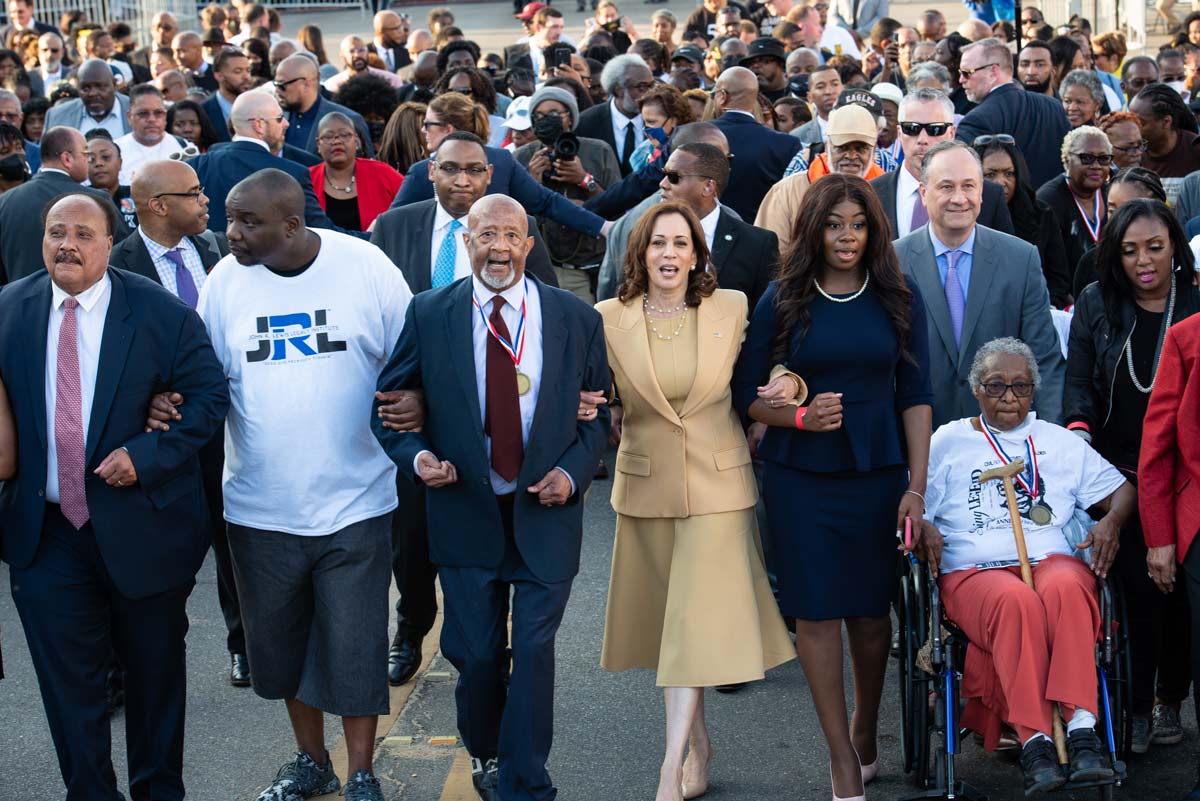
Vice President Kamala Harris promised to push ahead with the Biden administration’s voting rights agenda despite recent setbacks during her remarks in Selma, Ala. on Sunday commemorating the 57th anniversary of “Bloody Sunday.” 
“In a moment of great uncertainty, those marchers pressed forward and they crossed,” Harris said on Sunday of the civil rights activists who in 1965 crossed Edmund Pettus Bridge in Selma and were beaten and tear gassed.


“We must do the same. We must lock our arms and march forward,” she added. “We will not let setbacks stop us.”
Harris said that honoring the legacy of those who marched would require a push for “Congress to pass federal voting rights legislation” and “to lift up state legislatures that have passed pro-voter laws and that we keep fighting to prevent the passage of the anti-voter laws.”
“It demands we keep going to court to defend this sacred freedom, and it demands we register voters, volunteer as election workers and yes, of course, drive souls to the polls,” the vice president added.


Harris, who is the first African American, Indian American and female vice president, linked arms with fellow marchers and led a large crowd across the historic bridge.
Harris was joined by Secretary of Housing and Urban Development Marcia Fudge, Secretary of Transportation Pete Buttigieg, Secretary of Education Miguel Cardona and others on the same bridge where marchers including the late Rep. John Lewis were met with violence.
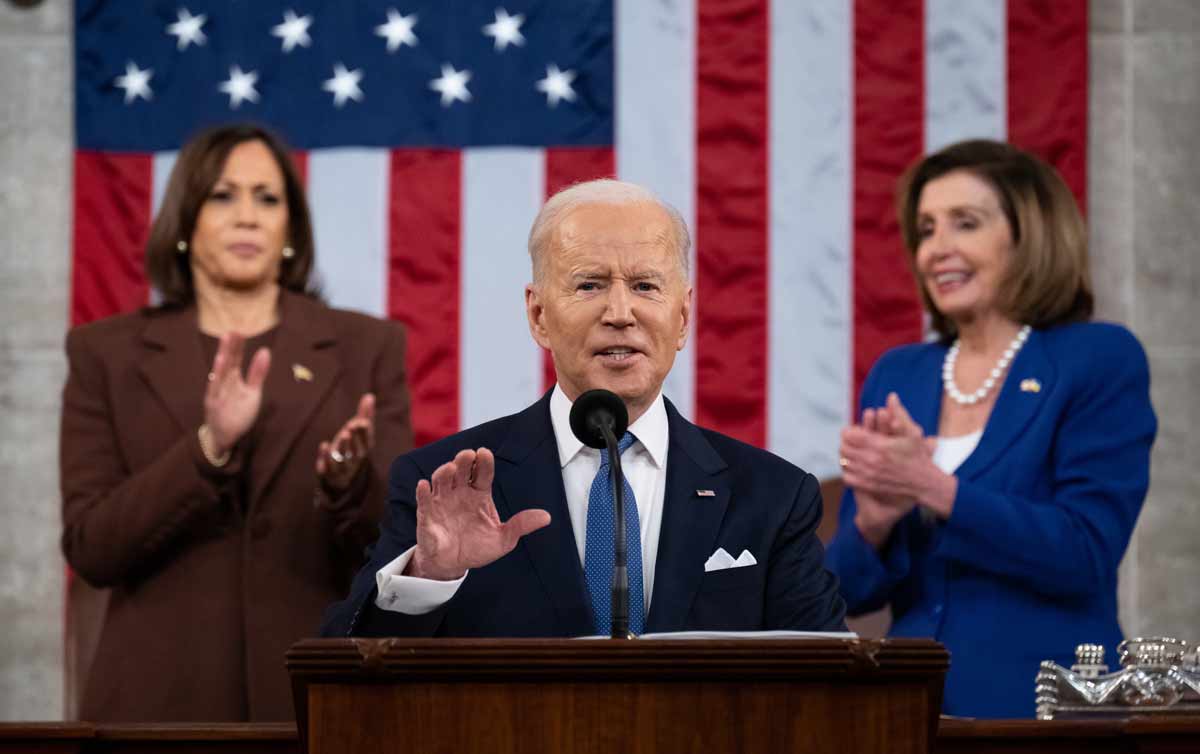
On Tuesday during his first State of the Union address, Biden spoke of voting rights and called upon Congress to pass the John Lewis Voting Rights Advancement Act and the Freedom to Vote Act, both of which have faced Republican opposition in the Senate, which requires 60 votes. 


Democrats were also unable to unify their 50 senators around removing the Senate filibuster to allow them to move forward alone on voting rights legislation, with Sens. Joe Manchin (D-W.Va.) and Kyrsten Sinema (D-Ariz.) voting down the reform proposal. 
Last year on “Bloody Sunday,” Biden signed an executive order directing federal agencies to strengthen voting rights and reduce barriers to the ballot box for minority groups.
Since then, Harris has made voting rights a critical part of her agenda as Republican strongholds have enacted laws that critics say disenfranchise certain people, especially communities of color. 


“President Biden and I are working with this cause every day,” she said Sunday. “We have put the full power of the executive branch behind our shared effort, and if we all continue to work together, to march together, to fight together, we will secure freedom to vote.”

10th Anniversary of Death of Trayvon Martin Observed at National Action Network

Led by Mrs. Sybrina Martin, Mayor Adams, Rev. Sharpton and others

by Ben Yakas
www.gothamist.com

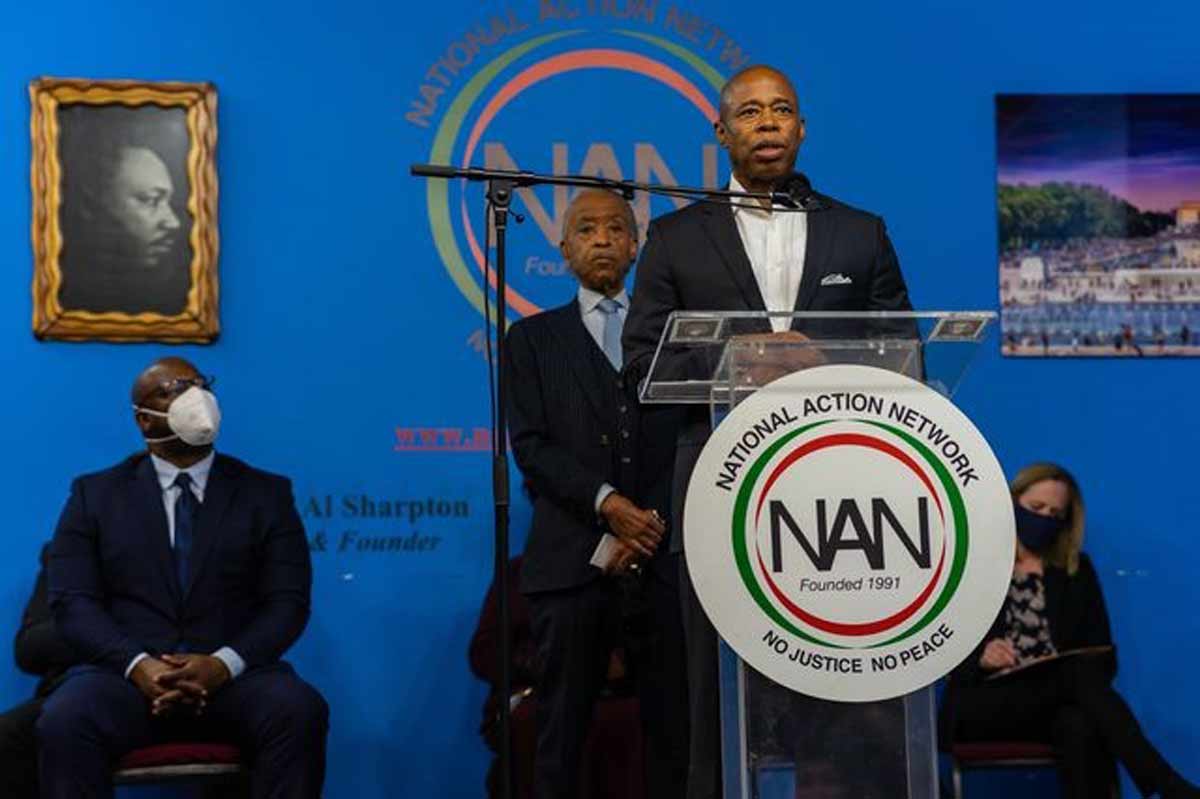
Reverend Al Sharpton and Mayor Eric Adams were joined by Sybrina Fulton and her family to commemorate the 10 year anniversary of the murder of Fulton’s son, Trayvon Martin, in Harlem on Saturday.


“Of course today is a bittersweet day,” said Fulton, who noted that she usually does not make plans or appearances on the anniversary of her son’s death. “A lot of people talk about Trayvon Martin’s story — it’s not a story for me, it’s a tragedy. Because a story has a beginning and an ending. There is no ending for what I carry in my heart.”


Fulton, who started the Trayvon Martin Foundation in the wake of her son’s death to bring awareness to ending gun violence, said “we have to continue to hold people accountable for killing our loved ones…we can’t give up, we’ve come too far.”


Adams credited Fulton with turning her pain into a purpose, transforming it from “a burial into a planting, and today we see the fruits of her harvest in the foundation that she has established and continued to pursue.”


Adams spoke of how Fulton has worked to redefine the term “stand your ground,” the Florida statute that neighborhood watch coordinator George Zimmerman used as his defense after he fatally shot the unarmed 17-year-old Martin on February 26th, 2012, in Sanford, Florida.


Adams argued that Fulton had turned the phrase into a rallying cry to fight against discrimination and unfair laws. He said that continuing the fight for Martin now means fighting against bigotry of all kinds, and connected it to hate crimes happening throughout NYC recently.


“Trayvon was shot and killed because of who he looked like,” Adams said. “That is what you’re seeing if someone is Asian, they’re being murdered because of who they look like. Someone who is in the transgender community is being assaulted because of who they look like. Someone who is Jewish…is being attacked because of who they look like. Someone who is wearing a hijab that is being spat on or assaulted because of who they look like. If we stand our ground for Trayvon, we’re standing our ground for every group in the city. You cannot be treated based on what you look like.”
Zimmerman was ultimately acquitted of the charges of second degree murder and manslaughter, and, after a three-year inquiry, the Department Of Justice decided not to charge him with a hate crime either.


Sharpton, who introduced Adams and Fulton, said unequivocally that Martin was a victim of a hate crime: “We wanted today, 10 years later, to say in his name [that] we stand against all hate crime — whether it’s against Blacks, Latinos, Asians, Jews, gays, hate against anybody is wrong. You can’t just fight for yours; you got to fight [for] everyone.”


At Saturday’s event, held at National Action Network’s House of Justice at 145th Street and Lenox Avenue, Sharpton criticized what he called “microwave activists” — people who get “heated up” for one issue and then disappear — and called Adams a “long distance runner” in comparison.
“Eric Adams is not here because he’s mayor, he’s mayor because he’s been there all along,” Sharpton said. “Don’t get it twisted. A lot of folks that will criticize him in the name of their [activism] were not active when Eric Adams was an activist out there, when there were just a few of us. Don’t show up late to class and start taking attendance; get a seat in the back.”

“Wall of Strength”: Biden Stands Ground in State of Union Address

Venezuela Can Bring Putin to his Knees

by Greg Palast
 
I’m sure Putin is laughing when he hears Biden list his new so-called “sanctions” which are as serious as canceling Putin‘s Walmart discount card.
It’s about the oil, Mr. Biden. The price of oil. The more Ukrainians Putin kills, the higher the price of oil.


Right now, Russian tanks have pushed the price of oil past $100 a barrel. That’s a windfall worth an additional half a billion dollars a day to Russia’s treasury. With 43% of Russia’s entire federal budget coming from oil and gas royalties, Putin doesn’t care if his oligarchs are barred from getting tickets to see Hamilton.


The doubling of energy prices over the next year would bring Putin a quarter trillion dollar windfall.
Want to stop Putin‘s tanks?
Turn off his war windfall.


How? Unleash the largest reserve of oil on the planet:  Lift the cruel, crazy, unjustified embargo of Venezuela.
Venezuela is capable of pumping 2 million barrels of oil a day for export.  If Biden announces an end to the embargo, the price of oil will nosedive in 20 minutes.  However, the US and Europe have laid siege to Venezuela, stopping everything from food to supplies of parts to get its oil industry back up and running.


Stop choking Venezuela’s economy and starving the Venezuelan people, who are no enemies of America, who invaded no one, and the price of oil will collapse.


The Biden administration continues to prosecute Donald Trump‘s mad embargo of Venezuela.  The embargo was triggered by Venezuela‘s insistence on taking back control of its oil industry—and, Heaven forbid, taxing Exxon.


The excuse I hear from Republicans and Democrats alike is that Venezuela is not a democratic state. As opposed to Saudi Arabia, Kazakhstan, Qatar and Russia? It’s fascinating to me that European Union blockades oil from Venezuela but continues to take oil from Russia.


We are paying the price of Trump‘s policy, now Biden’s, at the pump and Ukrainians are paying in Odessa.


When I was a BBC reporter covering Venezuela, I got to know its people and their presidents, including Hugo Chavez and Nicolas Maduro, as well as the opposition. Maybe Biden doesn’t like Maduro, and Exxon and BP certainly do not like Maduro, but he is the elected president. And I can tell you that while Maduro is not popular anymore because of the suffering imposed by the embargo, he was democratically elected.


And that’s more than can be said for the so-called “President“  that the US and Europe have recognized, Juan Guaido, who never even ran for president. Guaido is a rich white guy who has lived in Washington for years. The Venezuelan people, whatever they feel about Maduro, are not going to go back to white “Spaniard“ control of their mestizo nation.


So let’s make a deal: We recognize the elected government in Venezuela and Putin recognizes the elected government of Ukraine.


And if Putin doesn’t like that deal, we still recognize Venezuela, and unleash their oil, without doubt the greatest weapon on this battlefield.


Yes, the Germans have agreed (for this week at least) to cancel Nord Stream 2, the new gas pipeline from Russia.  But that’s one more cruel joke in which the Ukrainians are the punchline, ignoring Nord Stream 1. Germany continues to take Russian oil and Nord Stream gas, sending Putin nearly $1 billion a day.  This is the commercial equivalent of the Hitler-Stalin pact.
The US and UK governments have seized Venezuela’s oil revenues (and even its gold reserves), leaving its people to starve.  Yet, we are not holding back payments to Putin.


The fact that Germany has, by reports, vetoed banning Russia from the SWIFT international payments system is a clear indication that German industrialists are more than happy to send cash to Putin as long as the carbon keeps coming.


End the strangulation of Venezuela and tankers full of LNG (Liquid Natural Gas) from the South American nation could cut Putin’s pipeline noose from around Europe’s neck.


So there’s your choice, President Biden: Is maintaining Trump’s embargo of Venezuela so important that you will continue to let Germany fund this invasion?

Climate Crisis is Confronting U.S and World
with Threats to National, Global Security

By Joseph A. Davis
Society of Environmental Journalists

It wasn’t Russia that defeated Napoleon’s army of a half-million in 1812. It was the Russian winter (along with arrogance, denial and perhaps typhus).
For the generals who study war today, however, climate is a threat they understand and respect, even if they have not learned all its lessons.
Yet while the connections between climate change and national security have been very much on the mind of the Biden defense and intelligence agencies, they have not made prime-time cable news much lately.
It was barely noticed, for instance, when Russia vetoed (may require subscription) a U.N. Security Council resolution in December that would have defined climate change as a threat to peace. The United States supported the resolution, as did a majority of the Security Council and U.N. member nations, but Russia saw the resolution as a pretext for meddling in the internal affairs of nations.
Nor did cable nightly anchors make much mention of four major reports (may require subscription) on climate and security that the Biden administration issued in October, hoping to arouse a sense of urgency.
So even as the climate crisis deepens gradually, the world is quicker to focus on more immediate situations, like the potential Russian invasion of Ukraine.

 Long a concern for military
Up until World War I, weather and disease often killed more soldiers than weapons did. After the Spanish-American War, Army bacteriologist Walter Reed became famous for confirming that yellow fever was caused by the bite of a mosquito — today understood to be a climate-linked vector. Sick and injured soldiers are now treated at a major medical center outside the nation’s capital that bears Reed’s name.
Still, the military is challenged by the need to fight in harsh and hostile climates. The U.S. military has developed special tactics (and even special units) for warfare in alpine, desert and jungle environments.
 
One reason the military keeps bringing up climate in strategic thinking is that they have learned many of these lessons at a great price: American lives. The U.S. military studies military history as a way to win wars.
So military concerns over climate began long before the Biden administration. The Obama security establishment raised the climate-security link back in 2014. A major report (may require subscription) issued that year sounds like what the military is saying today. The concern goes back further. The U.S. Naval War College was studying climate change as early as the 1980s.
Yet during all those years, there has also been concerted pushback from the battalions of fossil-state Congress folk, often Republicans, who would just rather not take climate change seriously.
 
A conflict multiplier
Security strategists say that climate change exacerbates the root causes of conflict: terrorism, political instability, disease, poverty, hunger and refugee migration, to name a few.
Climate catastrophe could seriously disrupt the world’s agriculture and shaky financial system. As water becomes scarcer in a hotter world, conflict over water will raise risks of war. The world’s appetite for fossil fuels was seen as one reason for the wars in Iraq. Climate disasters — wet or dry — will drive mass migration within and across national borders.
And not only will global heating promote wars, it will make them harder to fight.
Climate has been blamed as a factor in one of the bloodiest recent wars, the civil war in Syria that began in 2011 and then metastasized. The argument is that climate-worsened drought caused the displacement of farmers, which amplified the political and military conflict.
This theory has been challenged and can hardly be taken as the whole cause. On the other hand, the drought, which had begun years before and affected many nations in North Africa and the Middle East, contributed to the social and political convulsions eventually labeled as the Arab Spring.
For the U.S. military, another dimension of the climate-security nexus is the far-flung array of military bases. The exact number is classified, but there are an estimated 5,000 of them in all, with some 600 of them overseas. The bases themselves can be drastically impacted by extreme weather, sea level rise and other manifestations of climate change which can impair their readiness and ability to operate.
 
Biden administration reports
The Trump administration did not encourage discussion of climate and security. But on Jan. 27, 2021 — at the very beginning of Biden’s presidency — he issued an executive order telling U.S. agencies to put the climate crisis at the center of foreign policy and national security.
The four agencies’ October reports — from the Defense Department, the Department of Homeland Security, the National Security Council and the Office of the Director of National Intelligence — were a response to that Biden administration order and are worth attention.
Their release, we might note, was timed strategically just before the COP26 climate conference in Glasgow. The reports reiterated and underlined many of the climate-security concerns that had been put forth (and debated) during earlier decades.
As noteworthy as they were, the four reports did not seem to change much. The world climate conference in Glasgow did not produce the breakthroughs or consensus that many had hoped for. And Congress remains deadlocked on Biden’s main climate legislative proposal, the “Build Back Better” bill.
Yet the four reports were a timely, fresh and thorough restatement of the many ways climate change threatens and challenges U.S. national security.
Importantly, they also collectively present Biden’s vision of the need to address the climate crisis with a “whole of government” effort. And they pinpointed many kinds of U.S. climate action that would not depend on Congress or the Paris treaty framework.
Determined to use his executive powers for climate action, Biden in December 2021 ordered virtually all federal agencies to use their purchasing power to tackle climate.
But the order exempted procurement related to national security, combat and intelligence or military training. And even though the Pentagon had reduced its greenhouse gas emissions in recent years, the military remained the largest emitter of any federal agency.
 
Many possible world trouble spots
Climate-security experts pinpoint areas of the world where there could be climate-related trouble ahead. Here are a few to keep an eye on:

The Sahel region: The sub-Saharan African region known as the Sahel is characterized by a climate-driven herding economy. It includes Burkina Faso, Cameroon, Chad, Gambia, Guinea, Mauritania, Mali, Niger, Nigeria and Senegal. Since the late 1960s, a prolonged drought (along with human activity) has made desertification a threat to herders’ way of life. Terrorism is a problem in parts of the Sahel.

Horn of Africa: This area, which includes parts of Ethiopia, Kenya and Somalia, has suffered historic drought for years. The resulting hunger and population displacement has not only presented a humanitarian crisis but has also caused and deepened ongoing civil wars.

The Mekong and Southeast Asia: The 3,000-mile-long Mekong River runs through China, Myanmar, Laos, Thailand, Cambodia and Vietnam. Dams in upstream nations have sparked conflict with downstream nations who depend on its water. Climate change has only worsened the various conflicts, many of them international, caused by human use (and overuse) of this river.

Arctic Ocean: Climate change has heated the Arctic more than other parts of the globe, melting ice and opening up the Arctic Ocean to shipping and other new human activity. Despite the existence of the Arctic Council, international competition and conflict over shipping, fishing, oil, mining and military use of these waters may intensify. Arctic nations include Canada, Denmark, Finland, Iceland, Norway, Russia, Sweden and the United States — along with many Indigenous peoples.

Middle East: Conflict has festered in the Middle East for centuries, and the climate in many parts has been harsh. Water has long been one of the many sources of conflict among nations there. Even today, nations like Turkey, Syria, Iraq and Iran experience conflict over dams on the Tigris-Euphrates river system. The Jordan River has also been a source of tension between Israel and its Arab neighbors.

Afghanistan: The U.S. may think it is done with Afghanistan. But climate change has been one of the many things worsening life in that nation. And the United States could end up reengaging with Afghanistan simply as part of international efforts to relieve the deepening hunger there. Afghan hunger has many causes (including the Taliban), but prolonged climate-driven drought is one of them.

Central America: Migration from troubled Central American nations through Mexico into the United States has been a source of conflict in U.S. politics. At times, it has even engaged the U.S. military at the border. Certainly, the drivers of migration include violence, corruption and economic poverty. But climate change and weather disasters have been increasingly recognized as factors. Drought has caused crop failure in El Salvador, Guatemala and Honduras.