Home Blog Page 341

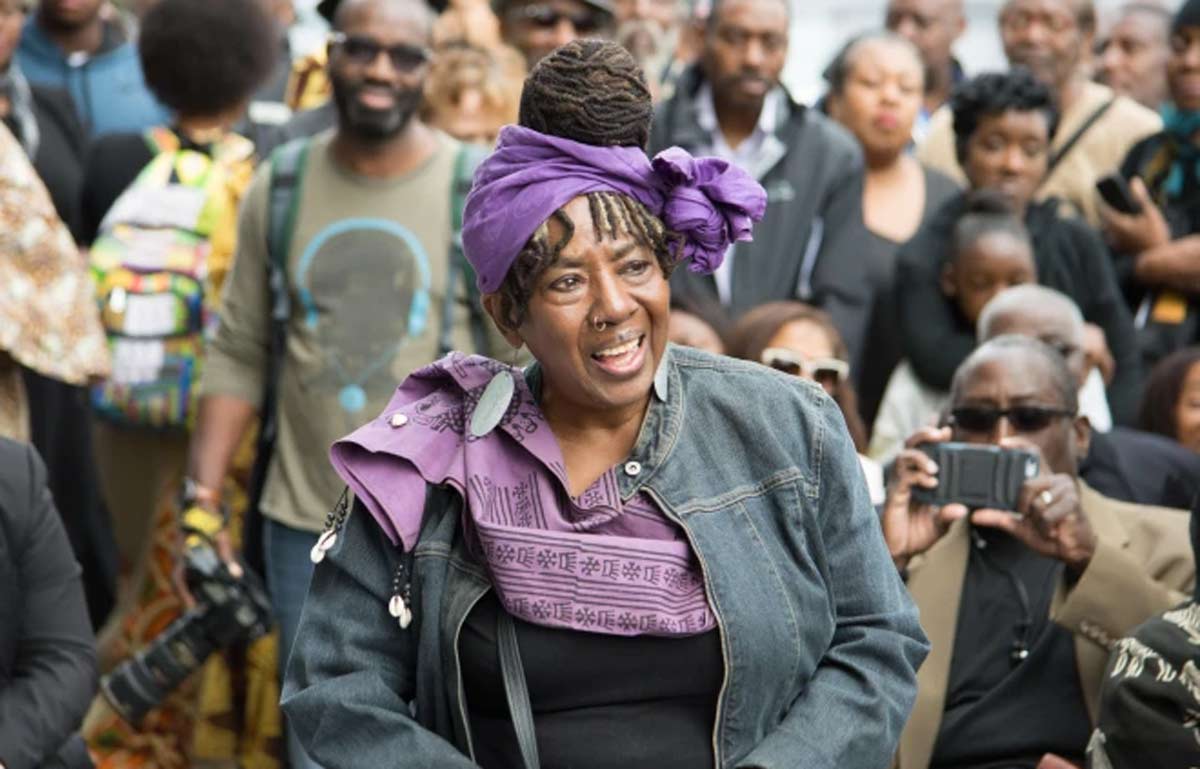
Black Rose: “A Goddess of African Culture”

0

By Maitefa Angaza

March 10, 2022

Black Rose’s instinct for style was a homegrown asset. “My mother was an expert dressmaker,” she said. “She taught us how to make dresses and hats. We modeled our fashions at church, community centers and then some clubs in Harlem.”
Along with her sister and two friends, all talented “seamstresses” as they were called then, she produced a series of well-received fashion shows featuring their designs. She would soon combine her love of fashion and growing love for her cultural legacy in a way that would forever impact her life.


“Kwame Braithwite asked if I wanted to be a Grandassa model,” said Black Rose. It fit in with what I was doing, but being a Grandassa Model took it to the next level!”
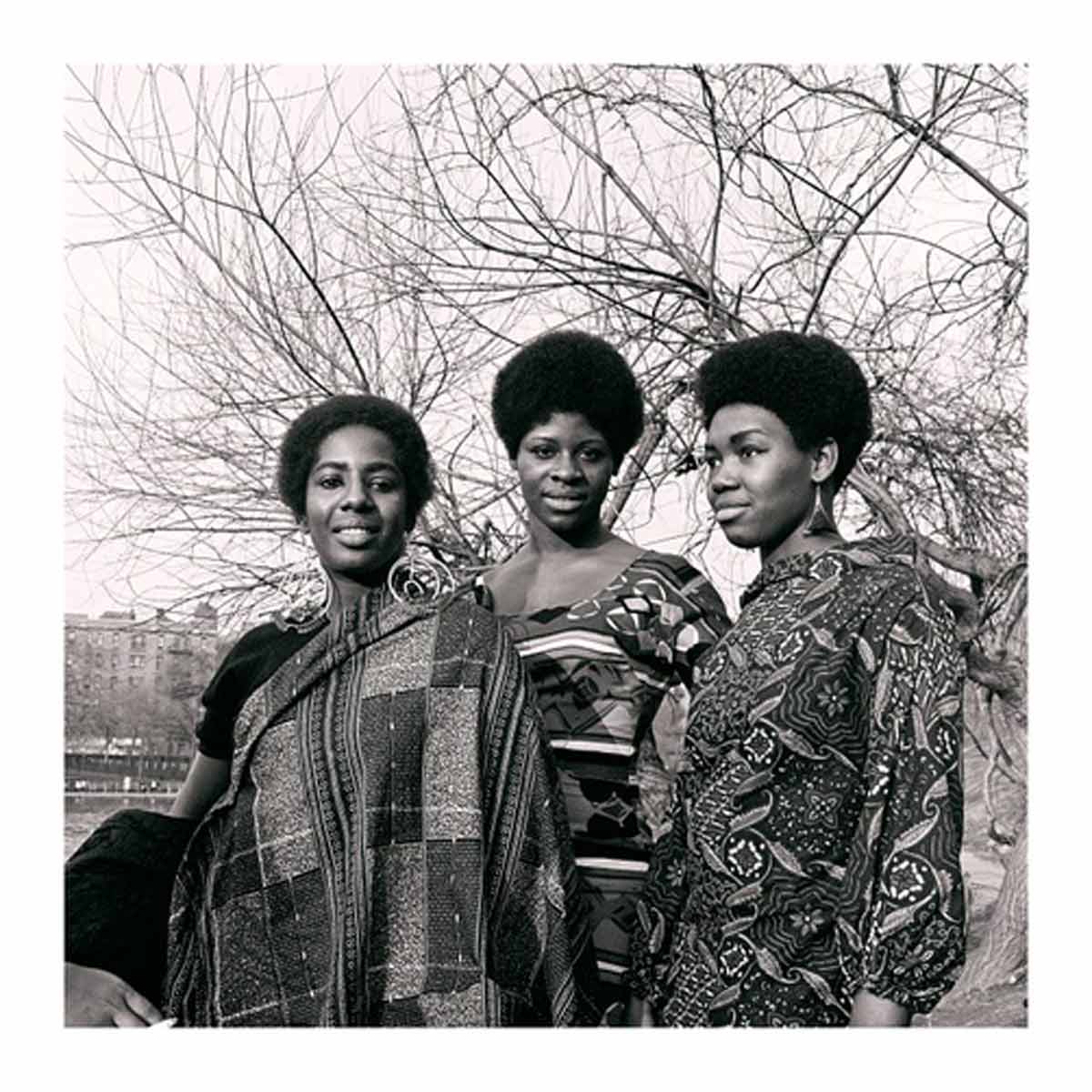
The Grandassa Models’ hairstyles represented authentic pride in their heritage along with the clothing. Fascinated by the texture and artistic possibilities of Black people’s hair, Black Rose chose barber training in order to work with this texture because cosmetology schools taught that pressing or perming were the only options. Still a hairstylist today, she graces Black women with beautiful hair in its natural state — although she doesn’t use that term for it.
“I don’t so much say, ‘natural hair.’ Everybody has hair that is natural to them, African people have African hair. Our hair is unique and our beauty is unique.”


A dream came true for Black Rose when she was invited to visit Africa for the first time.
“In 1977 I went home to Nigeria as an artist participant at Festac,” she said. (She’d later visit an additional eight African nations.) “I was chosen to produce an African hairstyles extravaganza at Lagos City Hall, a really fabulous place!”
She was featured on the front page of a leading newspaper there, with the headline “Goddess of African Culture.” In the U.S. she was also featured on the cover of The Liberator magazine and on a Lou Donaldson’s Good Gracious! album cover.

Black Rose has always had several things going on. She worked at Revlon as a quality-control inspector with on-the-job training as a chemist. The latter discipline is among those she still nurtures, as she does in the production of her Aromas of Dignity essential oil blend, sold at shops in several states and at Namaskar here in NYC. Her life has been an adventurous and rewarding journey and Black Rose has been honored to take.


“I became aware of how much we have given the world and how much we still have to offer,” she said. “We will continue with our legacy and reach higher heights. There’s no valid reason not to continue on that path.”

Celebrating the 60th Anniversary of “Naturally ‘62,” and Intrepid Women & Visionary Men

By Maitefa Angaza

They were Black and Beautiful, proud and confident, talented and innovative. The Grandassa Models were what many young girls in the 1960s would learn was an example to strive for as they grew into their own knowledge and love of self. These intrepid women and the visionary men who were their friends and partners are being celebrated this year, the 60th anniversary of their iconic Black beauty and culture show, Naturally ‘62. The Center for Brooklyn History at Brooklyn Public Library in collaboration with events programmer Souleo conducted a live YouTube interview with three of the pioneers about their historic and universally impactful journey.


Two Grandassa models from that first ‘62 show, Black Rose Nelmes and Barbara Adzua Solomon were interviewed, along with Bob Gumbs, one of the founding members and producers at AJASS. He represented the group, sibling activists Elombe Brath and photographer Kwame Brathwaite, Frank Adu, Klytus Smith and Ernest Baxter.
Gumbs commented on this impactful and inspirational time.


“We have to remember that beginning in 1958 to 1960, Africa was beginning to emerge, with several independent countries,” Gumbs said. “People began to look at Africa and say, ‘This is where we came from and it is now our time to represent ourselves as beautiful Black people.’ ”
But not everyone was on board or ready for a paradigm shift. Some were dismissive or even mocking and hostile when presented with the new aesthetic.

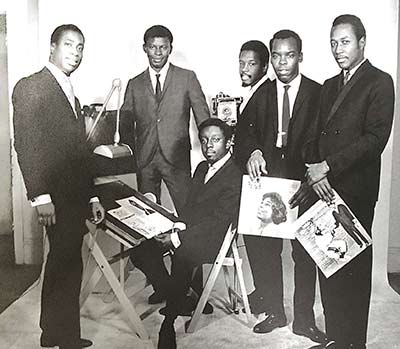
AJASS members (L-R) Bob Gumbs, Frank Adu, Elombe Brath, Kwame Brathwaite, David K. Ward, Chris A. Hall. Missing is member Shirley Anderson.


“The European standard of beauty was the focus at that time,” Black Rose said. “So anyone who wore their hair in its natural state—their African hair with its unique texture—people thought you were crazy! People would come over many times to me and ask, ‘What did you do to your hair?!’ or ‘Are you going to do something with your hair?’


Carlos Cooks introduced the Natural Standards of Beauty Contest organized by the African Nationalist Pioneer Movement, which he founded. It was held annually on his mentor Marcus Garvey’s birthday, as Garvey is credited with being the first to use the term, “Black Is Beautiful” long before the Black Power Movement. As Cooks had, in turn, served as a mentor to AJASS since its founding in 1959, the men adopted their usage of the phrase from him.
In 1956 Shirley Anderson was a founding, and only woman, member of the Jazz Arts Society. She married and parted ways with the brothers before the organization became the African Jazz Arts Society, and later AJASS, with the acquiring of a physical space. Having presented concerts in the Bronx for a few years, the members of AJASS were experienced producers by the time the Naturally shows were introduced.


Brath worked continuously as a photographer, and after shooting one of the Natural Standards contests, was dismayed to see some of women who’d just worn natural hair in the contest, walking around with straightened hair a few days later. (Solomon, who’d participated in the contests and was in love with her natural hair, was one of the exceptions.) So he approached his collaborators about starting an event of their own.


The models who came to take part in this new show were Black women of the community with an interest in and/or allegiance to the Black aesthetic. But they were not models. Fortunately, a young model named Jimmy Abu stepped up to train them in the ways of the profession. And thus was born, “Naturally 62: The Original African Coiffure and Fashion Extravaganza Designed to Restore Our Racial Pride and Standards,” the event’s full original title. It was held at The Purple Manor Jazz Club in Harlem on January 28th and headlined by celebrated jazz drummer and composer Max Roach and co-hosted by jazz vocalist and actress Abbey Lincoln, who would marry that year.


“We had not planned to do a second show because it was still a new concept for us,” said Gumbs. “But we were so impressed with the turnout that we did a second show [that night], and from there history was made. Many people credit it as the start of the Black Is Beautiful movement. It became a symbol—in terms of hair, fashion and identity—of who we were as Black people.”


Solomon remembers it with great pleasure. “The next thing I know, we were performing, we were filling up the Rockland Palace, a huge ballroom!” she said. “And we had dancers, people singing, people playing. It was just a wonderful experience, a wonderful extravaganza! And to top it all off—the cherry on the cake—we were celebrating ourselves! We were celebrating our uniqueness, the very thing that makes us special in America.”

Part Two of this article will appear next week with more photos by Kwame Brathwaite.

AuntyLand Film Festival Spotlights Short Films from Women Creatives

 by Fern E. Gillespie

At age 60, when most people retire, Sylvia Wong Lewis visualized a new career.
However, to tell her multicultural family story she decided to use the medium of film. “From Shanghai to Harlem” traces her Black and Chinese, Southern and Caribbean family’s immigration and migration story from Shanghai, Trinidad, Mississippi, Louisiana to Harlem. It was a hit at film festivals and scooped up awards.


To give emerging and established mature women filmmakers an opportunity to tell their stories in film, she created the AuntyLand Film Festival (ALFF), which is available to the public online March 8-31 in honor of Women’s History Month. The slate includes 19 narrative short independent films, 20 minutes or less, from women and BIPOC filmmakers. ALFF has interactive, live filmmaker talkback Q&A sessions. The film themes are Arts, Society & Experimental; Romance, Culture & Comedy and Global, Environment & Activism.


“I think mature women have interesting stories. You’ve traveled a lot, seen a lot and done a lot. It should be valued,” said Lewis. “Once you reach 50, you realize that you have this superpower where you don’t care what people think. You have this superpower to change the narrative. We can see through the patriarchal false scripts that are out there. So, we need to tell our story, show our story and write our story. Show the full sweep of womanhood and the life of people of color.”


Lewis’ inspiration to create ALFF was her husband, Bryon Lewis, the legendary founder of UniWorld Group, which was the largest African American advertising agency in the country. He is also considered “The Grandfather of Black film festivals” as the founder of the Acapulco Black Film Festival, now called the American Black Film Festival, which he sold to Jeff Friday. “I dedicate ALFF to Byron,” she said. “He introduced me to my first film festival.”


While ABFF is a destination high-power event packed with mega stars, VIP screenings, business networking and workshops, the AuntyLand Film Festival is an intimate cultural online event with short films by mature women.


“I wanted to bring filmmakers together to share their stories and promote their films with the general public. I use the culture as a lens,” said Lewis. “Want to use the multicultural stories and cultures to tell stories. I believe the stories can help people. I think we need to leave our cultural footprint in cinema and film. I want to leave a legacy and help others to leave a legacy.”


Through Auntyland, Lewis honors women elders who are an important part of the fabric that holds Black culture together. “I wanted to give tribute to the people in the community who I called Auntie. Who were not my aunts, but they I called them on Auntie,” she explained. “And I wanted to give recognition to my aunts, who helped me. They intervened in my life in good ways. They were like other mothers to me.”


The organization team for ALFF are curators/judges, who are filmmakers and multimedia creatives,  Louise Fleming, Yoko Lytle and Marjorie Clarke. The moderators for the filmmaker talkback Q&A sessions are award-winning filmmakers O.Funmilayo Makarah and Shannon Joy Shird. 
 
Some of the ALFF films include: “Miss Alma Thomas: A Life in Color,” the first documentary to explore Alma Thomas’ life as a Black woman artist who re-started in her 60s by Jon Gann. “Carnival Queens,” a work-in-progress about Caribbean American women at the famed West Indian Day Parade by Tiffany Bradley. “Weep Not,” a story about trauma and reclamation by Lenore Thomas Douglas.


“I think that creative people are the best people,” said Lewis. “Because of our artistic and creative energies, I think that we have superpowers that can bring more positive change to the world. That’s why I’m doing this AuntyLand Film Festival.”


The full ALFF lineup will be available on Vimeo, 24/7 for the 24-day festival. available on the festival’s YouTube Channel. For more information, visit https://www.auntylandfilmfest.org.

What’s Going On – 3/10

NEW YORK, NY
A recent New York Daily News cover story read: “City ends vax mandate for indoor activities,” “Students allowed to go mask free in schools” and “Mayor Adams says we can’t sit at home. ” A few days earlier New York State Governor Hochul said that the 5-day office workweek is a thing of the past since COVID arrived. Many large New York City corporate chieftains concur with her. These are mixed messages. Who is telling the truth? Then consider New York City stats and people fearful about public transportation. Who knows what normal is going to look like?

So many NYS electeds are running for re-election. Is Andrew Cuomo staging a comeback? Will he be on NYS ballot? Which office? When the going gets rough or he is staging a comeback? Cuomo heads to Black churches. Last year, he visited Mt. Neboh Baptist in Harlem while his sex harassment scandal unfolded. He later resigned. Last Sunday, he attended service at God’s Battalion of Prayer Pentecostal church in Brooklyn. Is a ballot announcement imminent?

THE NATION
COVID has been downgraded from pandemic to endemic status by everyone save the scientific community. COVID protocols have been relaxed throughout the lower 48. I plan to err on the side of caution and keep my masks when I go out.

Last week, the US Senate unanimously passed a bill to make lynching a federal hate crime. Named the Emmett Till Bill, after the 14-year-old Black teenager who was tortured and murdered in 1955, it will be punishable for up to 30 years in prison.

TEXAS: In last week’s governor’s primary results in Texas, Governor Greg Abbott won handily. As crazy and racist as he is, most of his GOP contenders were running far to his right. Democrat Beto O’Rourke, who ran against Ted Cruz for the US Senate a few years ago, won the Democratic primary vote for governor.

2022 WOMEN ELECTEDS: 2022 MIDTERMS: Black women in politics. Congress member Karen Bass is running for Los Angeles Mayor. Democrat Stacey Abrams in Georgia, who lost the race for governor in 2018. Most believe was stolen by current governor Brian Kemp, who was then Georgia secretary of state. Florida Congress member Val Demings eyes the US Senate seat currently occupied by Marco Rubio.

Janai S. Nelson, a scholar of election law, takes the helm as President and Director- Counsel, at the NAACP Legal Defense Fund on March 14. She succeeds Sherrilyn Ifill, the seventh LDF President, who was recently considered as a US Supreme Court Justice nominee.

LAND USE/NY
What was once 282 West 132 Street, the southeast lot on Frederick Douglass Boulevard has been vacant since 2008 and will be developed into an eight-story, 85 foot high building with 52 residential units and commercial space. The lot was purchased by Hillcrest Management in 2015 for almost $15 million.

The 3656 Freedom Tower project, arguably the largest skyscraper in North America, in the tony Hudson Yards area, had to be scuttled. Subject building was to be headquarters for the NAACP and another Black culture museum. Led by Black real estate baron Don Peebles, the project had a lineup of investors that was predominantly Black architecture, developer and financing. Like other proposals submitted to NYC, it did not win City Council approval last year. This is a new year and a new City Council.

BUSINESS MATTERS
Darryl Lelie is the first Black owner of a restaurant on New York’s City Island, a seafood enclave in the Bronx. His SEAFOOD KINGZ 2, located at 634 City Island Avenue, opened on February 26 and serves everything from king crab legs to fried lobster tails.

Read Crain’s NY Business Magazine issue about 105 Notable Black Leaders, which highlights trailblazers in law, medicine, finance, entertainment, business, engineering and construction. The following is an abbreviated list of the NOTABLES, including Michael Pugh, Carver Federal Savings Bank; Michael Garner, Metropolitan Transit Authority; Larry Scott Blackmon, Fresh Direct VP and The Blackmon Organization Consultants; Cheryl McKissack Daniel, McKissack & McKissack; Leonard “Charlamagne Tha God” McKelvey, The Black Effect Podcast Network: Paisley Demby, Goldman Sachs; Melvina Miller, Association for a Better NY CEO; Jessica Walker, Manhattan Chamber of Commerce CEO and Rodneyse Bichotte Hermelyn , NYS Assembly and Democratic Brooklyn Party chief.

ARTS AND CULTURE
THEATER: The 110-year old Cort Theatre on NYC’s Great White Way, will be renamed after award-winning theater/film/TV thespian James Earl Jones. The Cort was the venue where Jones made his Broadway debut.

“PARADISE SQUARE, A NEW MUSICAL” is a story that centers on a Black saloon owner and her Irish American husband who live in lower Manhattan’s mean streets and how their cultures intersect in the early 1860s. The musical opens in preview on March 15 at the Barrymore Theatre on Broadway.

“Emmett Till, A New American Opera” conceived by Clare Coss and composed by Mary D. Watkins premiers in concert performances at the Gerald W. Lynch Theater at John Jay College in Manhattan on March 23. Story item above about Emmett Till Bill.

FINE ARTS: The Caribbean Art Fair, CAFA, is back in Barbados in its 12th iteration from March 9 to 23. The 12th edition of the CAFA fine art and performance expo can be viewed in person or virtually. Founded by Anderson Pilgrim, CAFA will showcase work by more than 40 artists from the Caribbean, the USA, Africa and the United Kingdom. Tafa, Danny Simmons, Sadikisha Collier, Ademola Olugebefola, are some of the participating artists. Workshops, panel discussions, concerts and spoken word are on the 2022 CAFA menu. Visit cafafair.com and caribbean.global

FILM: AuntyLand Film Festival unspools March 8 to March 31. The brainchild of New York journalist/filmmaker Sylvia Wong Lewis, AuntyLand Film Festival is a platform for short films, 20 seconds to 20 minutes, by and for diverse women and girls. Cash rewards will be given to outstanding submissions. Visit auntylandfilmfestival.org.

A Harlem-based media consultant, Victoria can be reached at victoria.horsford@gmail.com

The struggle is about continuity, who came before

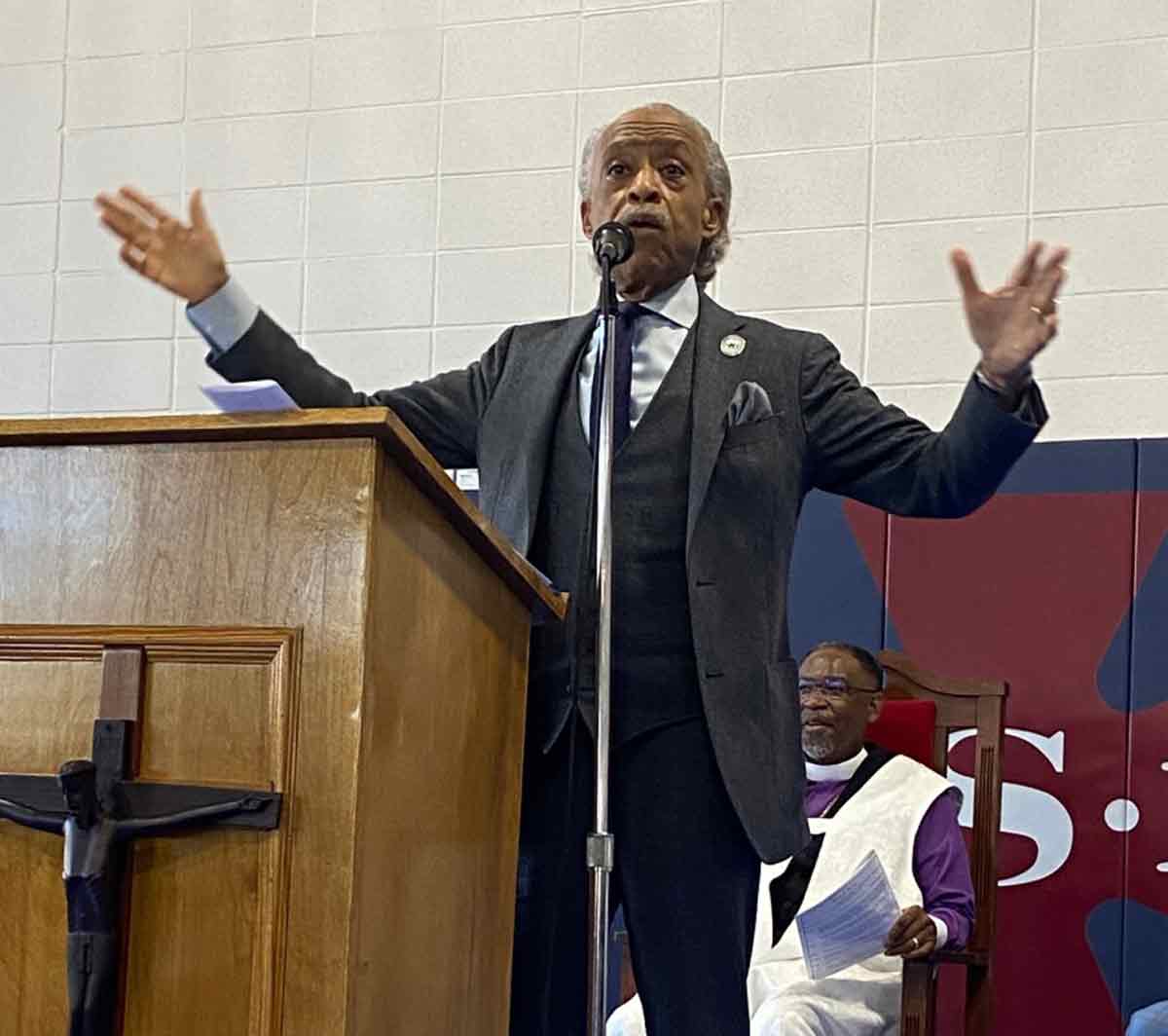
Rev. Sharpton Speaks in Selma

By David Mark Greaves
Before this year’s march across the Edmund Pettus Bridge commemorating Bloody Sunday, Reverend Al Sharpton spoke at the Selma Community Center in Selma, Alabama, and he began saying “as I look out at this audience and look at the times we’re in, my mind went to the Book of Joshua 4th Chapter 19th Verse. Joshua 4 19” Sharpton reads the verse and asks “What do these twelve stones mean that were thrown in Gilgal?


His answer to the question took him from Selma to Ukraine and back. “We come to Selma every year, march across the bridge every year,” but many do that and “not know what the bridge means,” not understand what gave the six hundred peaceful marchers, including future congressman John Lewis, the courage to face Billy clubs, water hoses and dogs, and light the fire in the movement for voting rights.


“Some of us take this as commemoration weekend rather than a continuation of struggle. This is not a ‘Let’s go see the Bridge,’” moment, it’s about being connected. “By not making the connection makes a mockery of the blood shed on that bridge.” He said that when Amelia Boykin, Rev. Hosea Williams, were teargassed and shed blood on that bridge, they did not do that to become a tourist site for the State of Alabama.”


It came as a result of the killing of Jimmy Lee Jackson at a voter registration rally. It was local activist Amelia Boykin, who said, “We will protest what they did to Jimmy and to disenfranchise us from the right to vote.” Hers is one of those names not known to many, but she is one of the stones in the movement.

On Changes in the Culture
Rev. Sharpton said there has always been ebb and flow in moving forward as a people, infighting, dissension, societal pressures are always in the mix. “Even in biblical days, they had not even gotten out of Egypt good, when they started to rebel against Moses,” he noted.
“As soon as we got to mainstream culture, we started calling ourselves the “n” word. Calling our mothers whores and bitches…dropping your pants down and calling your mother a ‘b’.” Sharpton says these are a people in the wilderness, going from “We Shall Overcome” to “It’s Hard Out Here For a Pimp,” as examples of the effect mainstream culture had on a people and making them worshippers of the “Golden Calf”. “Wilderness behavior,” he calls it.


He spoke of the dividers among the people, sowing discord and divisiveness for their own ends and driven by their own agendas. The example he gave of turning on your own, was how Jesse Jackson, “Who came out here as a student” was treated. Jackson had organized busloads of workers, started a movement, and in his run for president energized the Black vote. “Those registered voters he put on in ‘84 and ’88, elected Blacks that would not call his name afterward.”
“People come in, do the work, and you mainstream yourself away from the very struggle that sponsored you.”
He said that Jackson’s run led to Douglas Wilder in Virgina, David Dinkins in New York, “all the way to Barack Obama being president. These stones mean something.”
It is the lives and deeds of these people that enabled successes that are enjoyed today. “You didn’t get here by yourself. You ain’t that smart… …You are the result of people who laid down on that bridge and made a way for you,” said Sharpton.

Respect for Elders
Decrying an attitude he finds too prevalent Sharpton says, “Nowhere in the Bible, nowhere in history, do people disrespect their elders. But you’ve got this new negro ‘woke’ thing. That you feel you can’t make it unless you condemn those ahead of you.”


“The struggle is not about competition, it’s about continuity,” and respecting those who came before. Failure to recognize this, that we are all one people and there is no point in the foolishness of being Black and yet saying how different you are based on where you came from…recently. Barbados, Mississippi, New York. “You were kidnapped and that’s where you were dropped off. Our forefathers made no reservation to come here.”
“The minute they can convince you to denounce Moses, denounce where you come from. They can pick you off and then manipulate you in their way.”


Societal forces has caused a forgetfulness of where we came from, allowed it to “substitute what they want you to believe. Which brings you to where we are right now with the disassembly of voting rights, because they got you “woke. You need to get up and clean up and go to work, otherwise, you’re not woke yet.”

Ukraine and Democracy
Martin the third called me up and said we have to deal with the African students being held in Ukraine. Won’t let them get out. We started calling the State Department, Black caucus is on it. Jim Clyburn is on it. Why? Because we have been trained to think globally.
Anybody who comes out here now and claims it started with them, they’re false prophets.
Sharpton said that knowing where he came from has given him the strength to last. “I’ve come through folks who knew good times and bad times” his “stones in the ground.” .
When we cross that bridge with the vice president, Kamala Harris, a Black woman, don’t ya’ll forget there’s a straight line from Shirley Chisholm to Kamala Harris.
When you see Ketanji Brown Jackson being questioned for the Supreme Court, don’t you forget it was Jim Clyburn who told Joe Biden, to say publicly he’d nominate a Black woman to the Supreme court.


“Don’t you forget that one night at the Democratic National Convention, I was sitting in the front row with the chairman of the DNC when someone rushed by me during the commercial break. It was Jim Clyburn going to Joe Biden saying “you told me you’d nominate a Black woman to the Supreme Court if you’re elected.” Biden said I will,” “Then go out there and say that.”
“When we see Jackson on the Supreme Court, remember it was because of the stone that was Jim Clyburn.”
This country right now is standing up for Democracy in Ukraine. We were raised to pray for people’s rights. We’re all over Selma today, praying for the people in Ukraine. Why? Because we don’t want to see children dislocated. We don’t want to see brutality. We identify with the suffering in Ukraine and the need for democracy. But I also send this message, you cannot fight for democracy in the Ukraine and give repressive voting laws in Alabama. You cannot fight for the right for people to vote in Ukraine, and then turn around and change the voting laws and districts in North Carolina and Georgia. You’ve got to fight for democracy at home and abroad.”


Sharpton spoke of a case now before the court, asserting that courts have no right to reverse the opinion in a redistricting case. This is after a previous court had done just that, declaring a redrawn map to be discriminatory. He said that if the court, which is stacked 6-3 conservative finds for the plaintiff, “then you’re right back at state’s rights when it comes to drawing districts. That’s how close we are to be going back.” [The Supreme Court ruled on Monday that the court’s ruling stands, that the maps were discriminatory.]

A Woman’s Faith
Rev. Sharpton recounted his experiences of being in the courtroom when the verdict comes in on racially-charged cases. He was there when the police were acquitted in the Amadou Diallo trial. And there with the parents when they acquitted the case of Sean Bell. And so it was with uncertainty that he sat between the parents of Ahmaud Arbery, ready to provide comfort as the verdict came. Over the course of the trial when things did not look good, Ahmaud’s mother, Wanda Cooper-Jones would say, “God will find a way.” Sharpton said he’d be on the phone with Benjamin Crump about a jury of eleven whites and one Black in the deep south, “And Wanda would say ‘God will find a way.’”
When the verdict came “guilty” “Wanda said ‘thank you Jesus.’ She taught me the strength of prayer.”
At the end of the presentation, Sharpton said he was going to preach and surely did. He had spoken earlier about the need for roots, and he went back to his, and for two minutes he went into full Baptist minister come-to-give-the-guest-sermon-and-shake-the-congregation with a church organist who knows exactly what to do. Cannot be put into words, must be heard. Here is the link to Sharpton’s full comments https://www.kasu.org/2022-03-06/full-comments-from-rev-al-sharpton-in-selma-alabama. Or https://www.youtube.com/watch?v=YRMrNgMWirk