WASHINGTON, D.C. – Today, the Emmett Till Antilynching Act (H.R. 55), legislation introduced by Congressman Bobby L. Rush (D-Ill.), was signed into law, and Congressional Black Caucus released the following statement: “This is a moment of historic consequence. The Emmett Till Antilynching Act — which passed the United States House of Representatives in a vote 422–3 and unanimously in the Senate — is being signed into law by President Biden finally designates lynching as a federal hate crime in America,” said Congressional Black Caucus Chairwoman Joyce Beatty. “Despite more than 200 attempts to make lynching a federal crime over the past 120 years, it has never before been done. That ends today. We are proud Congressman Bobby Rush remained steadfast in championing this critical legislation. This bill clearly conveys our nation will no longer ignore this shameful chapter of our history, and the full force of the U.S. federal government will be brought to bear against those who commit this heinous act.”
“Lynching is a longstanding and uniquely American weapon of racial terror that has for decades been used to maintain the white hierarchy,” said Congressman Bobby Rush. “Perpetrators of lynching got away with murder time and time again — in most cases, they were never even brought to trial. Legislation to make lynching a federal crime and prevent racist killers from evading justice was introduced more than 200 times, but never once passed into law.”
Ernest Owens thegrio.com OPINION: The slap heard ‘round the world at the Oscars was just that—a slap. Those concerned about how others will view Black people need to take a step back and let go of the white gaze. Sunday night’s Academy Awards took an interesting turn when now newly minted Oscar-winning actor Will Smith slapped comedian Chris Rock for making a tasteless G.I. Jane joke about his wife, Jada Pinkett Smith. Jada, who’s been open about having alopecia, was visibly uncomfortable on camera while Rock mocked her baldness. Will, who clearly had had enough people taking cheap shots at him and his wife, gave Rock that work in real time. Whether or not you believe Will should have hit Chris, some have wrongly assessed the situation altogether. Social media has been lit ablaze by some who have accused the entertainer of “setting us back” for his actions. Some even have accused him of embarrassing the Black community and creating a hurdle for future Black performers at the infamously ultra-white Academy Awards. It’s one thing to shake your head in disappointment, but it’s another thing to now act like one Black celebrity’s controversial actions will hurt our community collectively. Rather than falsely appearing concerned, such arguments reinforce white supremacy by perpetuating the white gaze. Translation: By considering how white people view us as an entire community based on individual behavior, we give them justification for how they continue to marginalize us overall. For starters, any white person who decided not to advance the rights of Black people based on Will Smith slapping someone was never going to do so to begin with. Imagine thinking that such an incident was enough to seriously “set the culture back.” Look how stupid that sounds: Will Smith violently defending his wife has made white people not want to care about Black people and our issues. All of this reeks of respectability politics that older generations often cling to as a way to cope with the illusion that they can save themselves from white supremacy. Think about the ways some in our community still believe that if Black youth don’t wear hoodies, they might not be killed by police—or how being educated and articulate will somehow make white people suddenly not be threatened by you (ask the Obamas how that worked out for them). The truth is that this isn’t how white supremacy works at all. Being caught up in the white gaze (such as fixating on how white people view the interactions of Black people) won’t make our lives easier. In fact, such ideas reveal internalized racism within the Black people who perpetuate this. It’s anti-Black to think that Black people must live their lives considering the viewpoints of white people to succeed. It’s even worse to blame individuals within our community for being imperfect as a way to justify the discrimination against us. Will Smith’s slap will never justify the Academy’s longstanding history of racism in Hollywood. It will never be a legitimate scapegoat for them to roll back their diversity and inclusion efforts in the future. White supremacy will never be the fault of Black people but the bigots who will afflict us regardless of how approachable, nice and respectable we are. Don’t let this moment in Oscars’ history make some of y’all forget that. Stop recycling racist talking points and actually recognize that two things can be true at the same time: That Black people can make unpopular decisions and still be worthy of advancing in society at the same damn time. Ernest Owens is the Editor at Large of Philadelphia magazine and CEO of Ernest Media Empire, LLC. The award-winning journalist has written for The New York Times, NBC News, USA Today and several other major publications. Follow him on Facebook, Twitter, or Instagram and ernestowens.com.
Barbara Sprunt, npr.org Jackson answered a question on Republicans’ minds about whether the nine-member high court should be expanded, as liberal groups have called for. Jackson said her stance on court expansion matches that of Amy Coney Barrett, a nominee of former President Trump. “In my view, judges should not be speaking to political issues and certainly not a nominee for a position on the Supreme Court,” Jackson said.
Sen. Dick Durbin fact checked Sen. John Cornyn, R-Texas after Cornyn asked Jackson why she called former President George W. Bush and former Defense Secretary Donald Rumsfeld “war criminals.” Jackson said she didn’t remember using the term. Over a lunch break, Durbin researched the matter and later told the hearing Jackson never made those remarks.
Sen. Ted Cruz attempted to link Jackson’s career with critical race theory, despite her repeated statements that the academic approach (used predominantly in law schools) “doesn’t come up in my work as a judge.” Cruz alleged Georgetown Day School, where Jackson serves on the board of trustees, is “overflowing” with the theory and brought children’s books as props. Jackson told the Texas Republican that the board doesn’t control curricula.
Jackson defended herself against claims she is soft on sentencing child pornography defendants. She said she takes these crimes extremely seriously as a judge and as a mother and called on Congress to change laws on sex abuse materials to stay current in the digital era. Republican Sens. Josh Hawley and Ted Cruz, among others, have painted Jackson as a judge who metes out lenient sentences for those convicted of possessing and distributing child pornography. “Congress tells judges what we’re supposed to do when we sentence and what I’d say is that Congress has to determine how it wishes for judges to handle these cases,” Jackson said.
She also defended her record as a public defender for Guantanamo Bay detainees, noting that public defenders “don’t get to pick their clients.” Jackson added “we’re entitled to be treated fairly. That’s what makes our system the best in the world. That’s what makes us exemplary.” Overall, Jackson is following the playbook of past nominees in being circumspect in her statements about her judicial philosophy. If the name of the game is getting confirmed, transparency is not a nominee’s friend. And the nature of the partisan state of affairs means that the senators asking questions aren’t always focused on the nominee either. Senators on both sides of the aisle used part of their questioning time to bemoan the role of “dark money” in the nominating process.
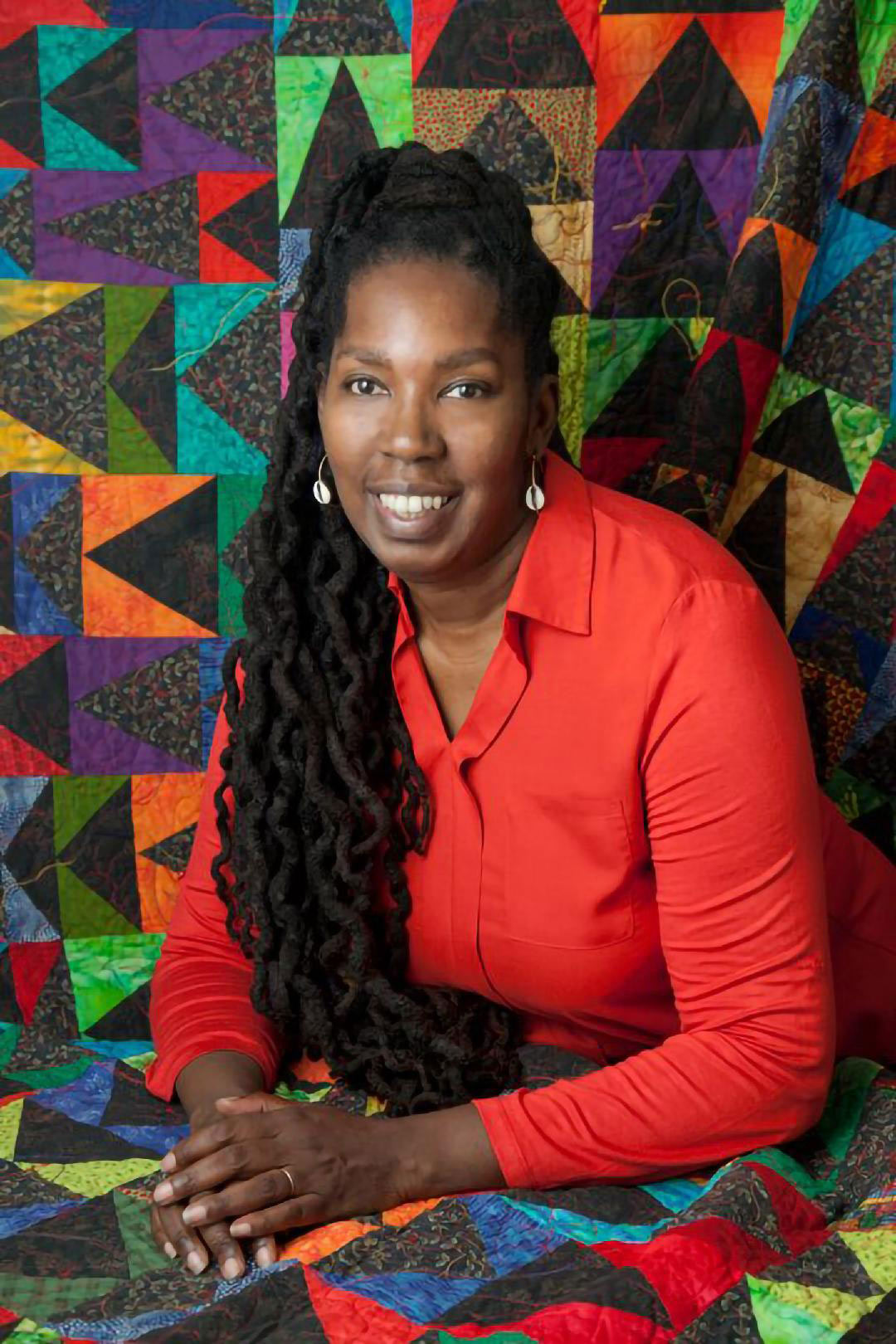
By Fern E. Gillespie For over 30 years, Dr. Myrah Brown Green has been a quilt artist and professor of textile arts exploring the presence of African symbols in modern art and African symbols in North American quilts.
Myrah is multi-talented. She is a renowned quilt maker, curator, writer, photographer, painter, mixed media artist and scholar whose quilts are in numerous collections such as the Smithsonian’s Anacostia Museum and in the collection at Michigan State University. Her quilt exhibitions include the international Arts in Embassy Program, American Bible Society, Brooklyn Museum of Art, New England Quilt Museum, Nathan Cummings Foundation in New York and the American Craft Museum at the Payne Weber Gallery.
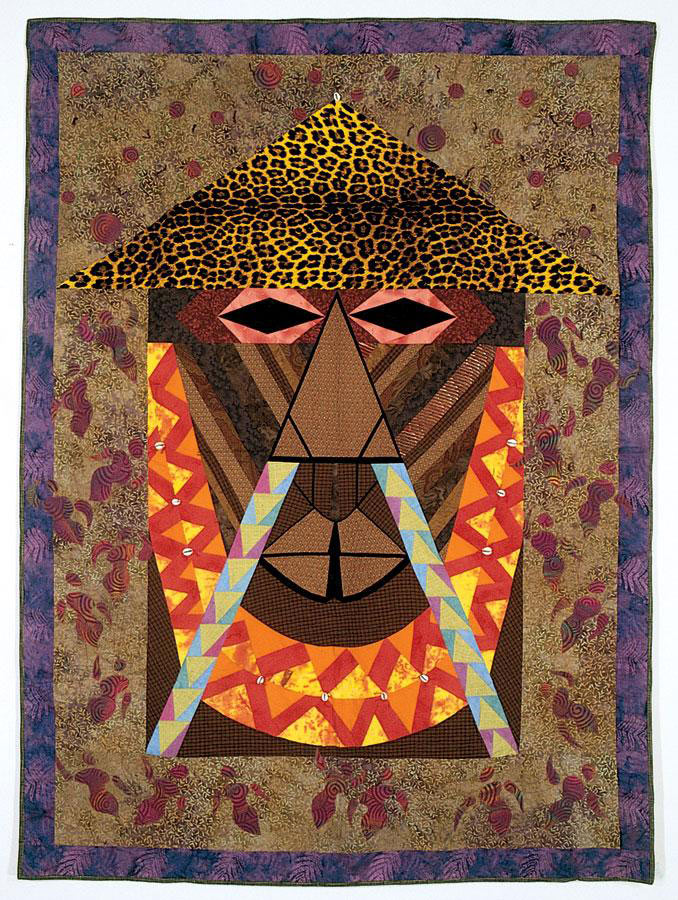
“Requiem for Dada Luka”
From March 19 – April 10, 2022, the FiveMyles Gallery in Crown Heights will host Green’s exhibition My Underground Railroad and How I Got Through, a collection of works in homage to the women in her mother’s family and also her personal mental liberation from creative self-doubt. In addition to quilts, the exhibition includes linoleum cut images on paper and fabric along with photographs and mixed media installations. It’s created in special collaboration with Summer-Zaire Bell, Sannii Crespina-Flores and Cheryl Thomas.
Ironically, her first quilt was so disappointing Green gave up on quilting. When she attended Pratt, a class project was to create a fiber art piece. She decided to create her first quilt. She was an A student, but she was devastated that her first quilt was graded a C. “I had bought the best velvet and the most vibrant colors,” she recalled to Our Time Press. “It wasn’t until many years later that I realize that I deserved the C, because there was no batting in it. I did not know what I was doing. I didn’t know that quilts have three layers.” Many years later, she heard about a quilt guild workshop for children. Her daughters were not interested, but she got hooked. At the guild, she learned how to strip piece quilt sections on newspaper and magazines. “I’m a self-taught quilter,” she explained.
However, while renowned Black quilt artists like Faith Ringgold and Bisa Butler incorporate African fabrics in their art, Green does not. Instead, she sews appliques. “I really was not an African fabric kind of girl,” she said. “I have probably have one of the best collections of African fabrics. I love African fabrics, but I never really used it in my quilts. I finally decided many years later I would use hand-dyed fabrics from Africa. Sometimes, I would gift fabrics when someone transitioned.”
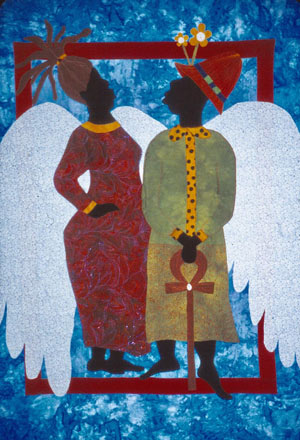
“My Angels”
Green’s quilts have African symbols. “When you look at my work, although there are no African fabrics in most of my works, it looks like there are. It’s because of how I use the colors to make a statement,” she explained, describing the quilt she made dedicated to the Yoruba goddess Oya.
Like many quilters, sewers, fiber artists and fabric collectors, Green kept her first quilt. “The back is satin and the top is velvet,” she explained. “A couple of years ago I decided it was time for it to go. Then I said maybe I can salvage some of it. So, I cut the top away and then I quilted it for this show. I created almost a tribute to my grandmother. It is like a Egungun Yoruba costume. Like an ancestor robe.”
Visitors to My Underground Railroad and How I Got Through, will see Green’s current magnificent quilts and her redesigned first quilt. It will be draped on a stand in memory of her grandmother.
In addition to her Pratt MFA, Green has earned a doctorate in Interdisciplinary Studies with a focus in Art History from Union Institute University and a doctorate in business administration from Boston University. She holds the title of Distinguished Lecturer of Art and Advisor to the Dean of Humanities and the Arts at the City College of New York where she also teaches a course that she designed entitled Quilt Making in American History. She has authored many works including her award-winning book Brooklyn on my Mind: Black Artists from the WPA to the Present published in 2018. She continues her academic research in The Presence of African Symbols in Modern Art which has spread to the presence of African symbols in North American quilts.
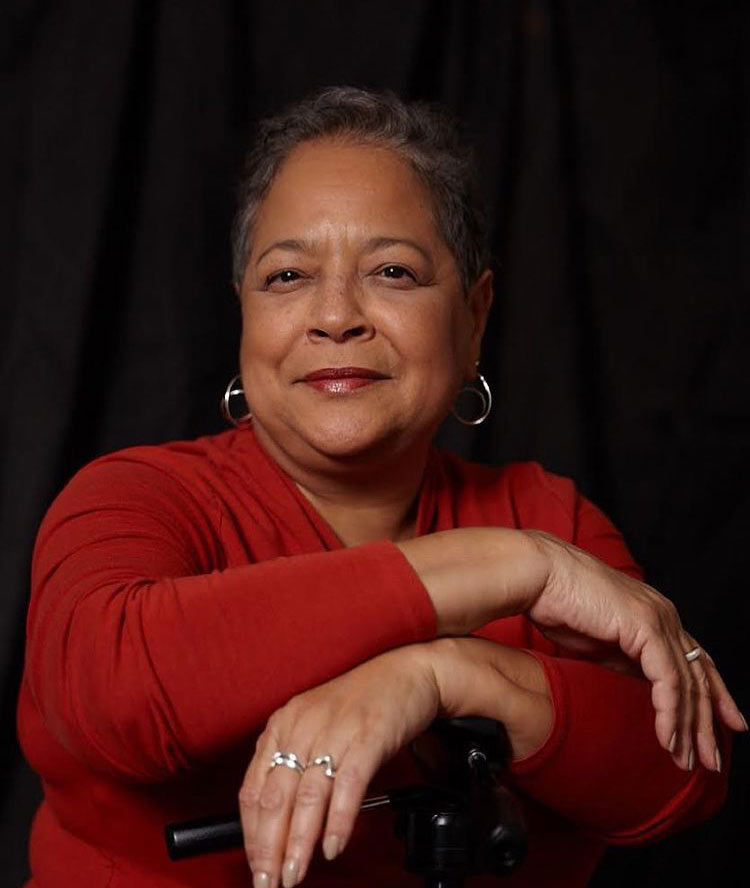
By Fern E. Gillespie Independent filmmakers, Black filmmakers, film scholars and the creative community are mourning the loss of Michelle Materre, who died on March 11 of cancer.
For over 30 years, Materre’s knowledge of film and her acute business skills have impacted generations of filmmakers. As an independent media consultant to filmmakers and film/video organizations, she advised on strategy, funding, distribution, marking and production. Some of her projects included acclaimed award-winning films like “Ralph Bunche: The Odyssey Continues” by William Greaves; “Sweet Honey in the Rock: Raise Your Voice” by Stanley Nelson; “Chisholm ’72: Unbought & Unbossed” by Shola Lynch and Channel Thirteen/WNET’s national series “The Rise and Fall of Jim Crow.” Michelle served a three-year term as curator of Channel Thirteen/WNET popular series “Reel New York,” a showcase of independent film and video-makers. For over a decade, she programmed the “Harlem Film Festival” series at Aaron Davis Hall at CCNY.
From 1992 to 2001, Materre was co-founder of the film distribution and marketing company, KJM3 Entertainment Group, Inc. and directly managed the release of 23 independent films. She was behind the marketing of renowned director Julie Dash’s landmark film “Daughters of the Dust,” which was entered into the Library of Congress National Library of Film in 2004. In addition, Materre curated Creatively Speaking, a film series dedicated to women filmmakers and people of color. Her most noted series were “Tell It Like It Is: Black Independents in New York: 1968-1986” and “One Way or Another: Black Women’s Cinema, 1970-1991,” with the latter being listed in The New Yorker as “The Most Important Repertory Series of 2017.”
“During this period, filmmakers were typically producing totally on their own, without limited support and resources from institutions and grant-making agencies – indeed getting the work produced ‘one way or another,’” Materre wrote in Black Camera: An International Film Journal in 2019. “Yet, this work lives on and remains relevant today, fulfilling the mission of the Creatively Speaking Film Series to capture the often-buried voices, harsh realities, and boundless creativity of historically marginalized and underrepresented filmmakers of color.” Since 2000, Materre served as associate professor of Media Studies and Film at The New School, later becoming the director of the Media Management Program, the director of Creative Strategies at the Institute for Race, Power, and Political Economy and the director of the Bachelor’s Program for Adults and Transfer Students.
Early in her career, she was a staff writer/producer for Henry Hampton’s Blackside Productions, and an assistant story editor for MGM/UA in the feature film division. Materre earned a master’s in educational media from Boston College. She served on the boards of New York Women in Film and Television, Women Make Movies, International Youth Leadership Institution and was active in the Black Documentary Collective.
Black women filmmakers have become a force in the field and Materre was a muse and mentor. “After a friendship that spanned over 35 years, I said goodbye to my sista friend Michelle Materre. A force to be reckoned with, Michelle’s love for Third World cinema and her lecture series Creatively Speaking has helped hundreds of young visionaries make their films. A staple at The New School, Michelle taught and mentored hundreds more,” wrote Emmy and Peabody award-winning director Neema Barnette, the first Black woman to direct a network sitcom (“What’s Happening Now!”) in her tribute to Materre on Facebook. “There will be celebrations of Michelle’s life and we will make sure her work continues. Michelle was a true warrior Queen who fought battles with bravery and hope. Rest in Power Michelle, because you know how much you were loved.”