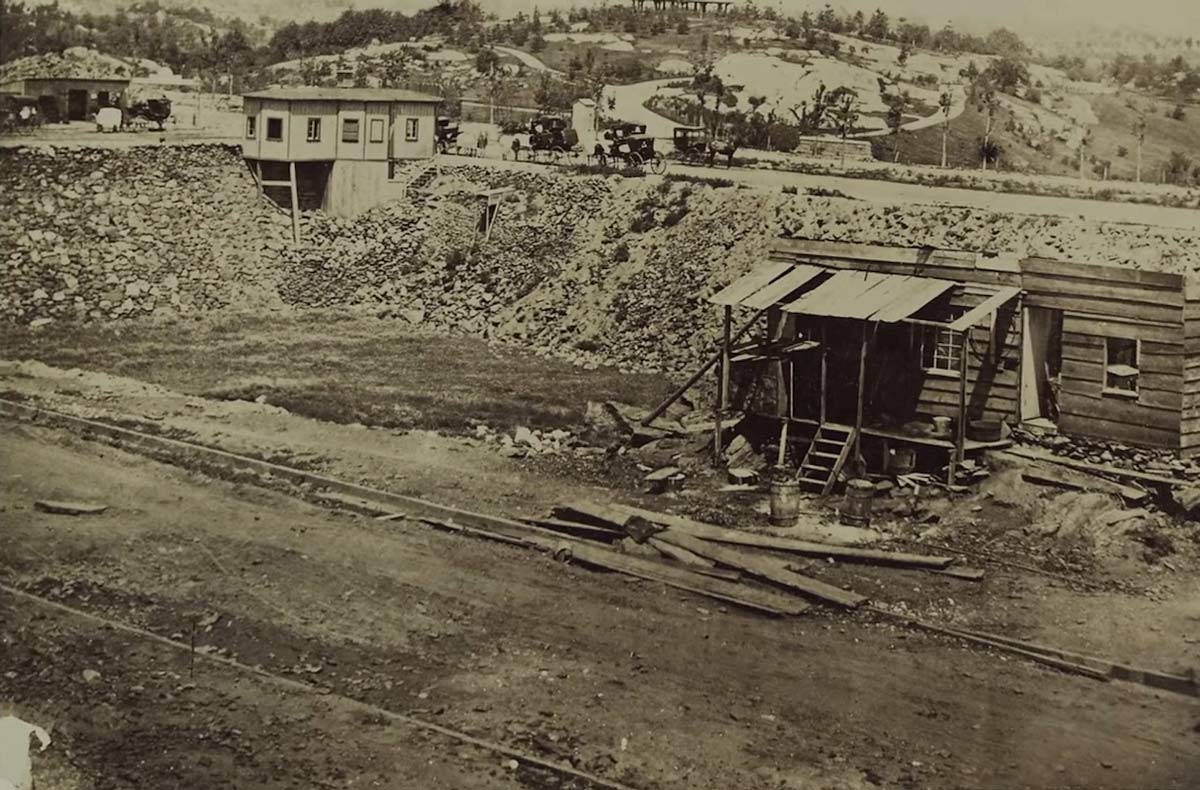
More than history is underfoot in Central Park where Seneca Village thrived from 1825 to 1853.
For more than two decades, scholar/public historian Cynthia R. Copeland has emphasized that enterprising 19th century Americans of African descent owned a portion of Central Park’s 843-acre real estate. Before Central Park was known by its famous name, Seneca Village was a self-contained, enterprising site around what is now 81st Street nr. Central Park West.
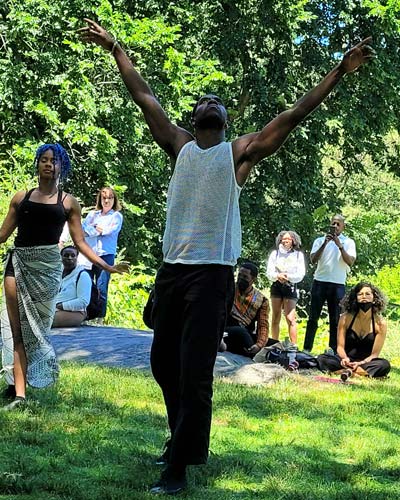
This year marked the 157th anniversary of Juneteenth and the first anniversary of its recognition as a federal holiday. photo/Bernice Elizabeth Green
“Seneca Village was a place of opportunity. It was a reaction to racism,” said Cynthia Copeland, president of the Institute for the Exploration of Seneca Village History. In 1825, a 25-year-old African American shoe shiner named Andrew Williams purchased land — 3 lots for $125, in the middle of Manhattan, two years before slavery was abolished in New York. More free Black Americans followed, fleeing the disease and discrimination of downtown, and together they created a thriving settlement of their own, known as Seneca Village.
Earlier this year, in response to a CBS reporter’s query about why the story hasn’t been told until recently, Copeland said, “The victorious are the ones who get to write the stories,” said Copeland. “These were people who were forgotten. And it is unfortunate that the story was hidden for so long. But it’s great that the story has emerged.”
When “elites wanted to create a park that rivaled those of Europe, they were drawn to the middle of Manhattan,” CBS News reported.
A media “Smear campaign,” said Copeland: ‘We’ve got to get rid of all those people that live in the park that shouldn’t be there. They are tramps, squatters, and thieves.’ This is the kind of language that they used.”
In 1853 the city used eminent domain to take control of the land. In all, about 1,600 residents were displaced, including nearly 300 from Seneca Village. “People put up a fight,” Copeland said.
In 1998, Cynthia Copeland (with Nan Rothschild and Diana Wall) formed The Seneca Village Project. They conducted historic and documentary research about the Village and advocated for archeological excavation and commemoration. They later formed an Advisory Committee comprised of scholars and community members. In 2011, they organized the archeological excavation of Seneca Village that uncovered thousands of artifacts. -BG
By Renee Collymore, Candidate, Female District Leader, 57 AD
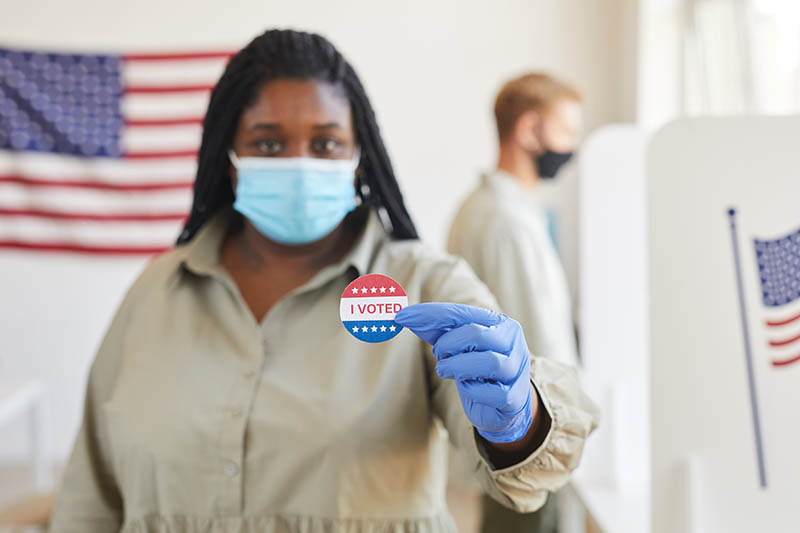
In recent weeks, we have seen an interesting turn of events within the Democratic Party of Brooklyn, particularly in the 57th Assembly District, which includes Ft Greene, Clinton Hill, Prospect Heights, Crown Heights, parts of Bedford-Stuyvesant, and Williamsburg as it relates to the Democratic Poll Workers and the seat of the Female District Leader.
In recent weeks, Shaquana Boykin, who is currently the State Committee Member, has had her duties taken away because of what is being called mismanagement and neglect in hiring local residents to work the polls for the Primary and General elections. It was also uncovered that Ms. Boykin has taken jobs set for Democratic Poll Workers, given them to Republicans, leaving thousands of local residents begging for work to make ends meet. As the 57th Assembly District has over 3,000 registered Poll Workers, Ms. Boykin has only assigned 49 people to work, during her 2 years in office.
“I have repeatedly asked Shaquana to work for Early Voting and she simply would not answer. I think District Leaders should support their Poll Workers or at the very least, acknowledge that I am asking you something,” said Poll Worker Colette Boston. “I am disgusted that Ms. Boykin was not honest and/or forthcoming when I asked her about assigning me to work the polls this cycle. She refused to tell us the truth about her responsibilities being taken away and that she could no longer assign us jobs, yet led us to believe that she could,” Poll Worker Monica P.
When elected to the position of State Committee, an important role is the hiring of local residents for the Board of Elections, as Poll Workers, which in the past has been known to help many Seniors on a fixed income, college students and everyday working people.
“It’s clear, the opponent doesn’t want this job, but CERTAINLY, I do! I live my life to serve my community by improving the lives of our residents and advancing our understanding of how to create the neighborhood that we would like to see. I honor the people who live here and my desire is to make things better for us all,” Says Collymore.
Our Time Press has contacted Ms. Boykin about Collymore’s allegations but she answered “No” to a request for comment.
The housing boom in Brooklyn continues to explode and elderly Black homeowners are frequently being preyed upon by unscrupulous real estate buyers. Cease and desist zones are designed to help prevent aggressive real estate solicitation from brokers, agents, or real estate speculators that target private residences. However, Brooklyn’s only cease and desist zone is in the East New York and Cypress Hills communities. Lacey Tauber, Legislative Director for Brooklyn Borough President Antonio Reynoso, spoke at a June 9 public hearing and advocated a borough-wide cease and desist zone.
A recent report from StreetEasy shows that homes in the city are selling at the fastest rate in six years and Realtor.com reports that the median selling price for homes in Brooklyn was $870,000 in April 2022. Which is a $285,000 jump from January 2020. In this hot market, real estate flippers, developers and scammers are praying on homeowners.
This is a problem throughout the borough, but it’s particularly an issue for seniors living in neighborhoods of color. The Center for New York City Neighborhoods reports that the largest percentage — 36% of the calls they have received from homeowners reporting real estate scams since 2020– came from Brooklyn and that Black homeowners were four times more likely to call them to report a scam than white homeowners.
Borough President Antonio Reynoso has been in the office since January but has already assisted constituents from Bedford Stuyvesant, Crown Heights and Prospect Lefferts Gardens who have dealt with harassment from real estate agents as well as possible deed fraud. These are all gentrifying communities with long-standing black populations and all the impacted constituents were seniors.
It’s true that not every potential buyer is attempting fraud. However, many do take advantage of seniors to sell their homes for significantly under-market value. The resulting loss of generational wealth is a racial justice issue that must be proactively addressed.
The Borough President wants to thank District Attorney Eric Gonzalez and Attorney General Letitia James for their leadership on this issue. But the scale of this issue is such that it’s time to take broader action by designating the whole borough as a cease and desist zone. We know now which neighborhoods are hotspots, but the borough was constantly changing and we should be proactive about protecting the next hot neighborhood from speculators.
Additionally, a program like this is only as good as awareness and enforcement on a large scale. Creating awareness of the program is challenging particularly reaching seniors without reliable Internet access and the language isolated. So rather than having an opt-in requirement that would need extensive outreach and education to be effective, property should be placed onto the list by default with an opt-out option for those who are looking to sell.
Any new designation must come with significant funding to ensure adequate enforcement measures.
Thompson, Cheney & Jan 6 Committee Have Revealed Bad Actors Bringing U.S. Close to the Edge
Jan. 6 panel says Trump fleeced his base and 5 other takeaways from the 2nd hearing
June 13, 2022 www.npr.org Domenico Montanaro It wasn’t in prime time this time, but the Jan. 6 committee held an eyebrow-raising hearing Monday in its second of seven promised ones. This hearing pulled back the curtain on what life was like on the Trump campaign and in the White House in the days following election night 2020. With taped testimony from Trump’s campaign advisers and lawyers, the committee painted a picture of a president who refused to listen to the truth, insulated himself in a bubble of election lie conspiracies, fleeced his own supporters out of money based on the lie and wielded the power to incite violence. Here are 6 takeaways of what we learned from the hearing:
1.It was “Team Normal” vs. Trump. This is the kind of stuff you usually only get from deeply reported, post-campaign books. Instead, it was live on television with taped, on-camera testimony from the people at the highest levels of the Trump campaign. The committee used lots of footage from its taped interviews with professionals from Trump’s 2020 campaign – Trump’s campaign manager, Bill Stepien, senior adviser Jason Miller and multiple lawyers. (Stepien was originally scheduled to testify in person but was unable to do so because his wife went into labor.) Stepien said he was happy to be referred to as “Team Normal,” though not everyone buys that rebranding of the person who led the effort to re-elect Trump. Still, this group of campaign professionals say they all had the same message: they tried to tell Trump the truth – that the outlook was bleak, he should not declare victory on election night, he was going to lose and that his election fraud claims were, as former Attorney General Bill Barr called them: “bogus and silly,” “idiotic,” “stupid,” “complete nonsense,” “crazy stuff.” And that’s not including the three times the Monday viewing audience heard Barr say the claims were “b*” and “doing a great great disservice to the country.”
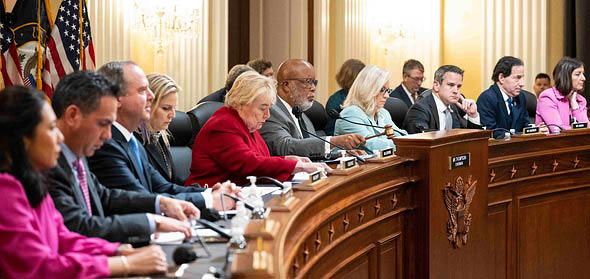
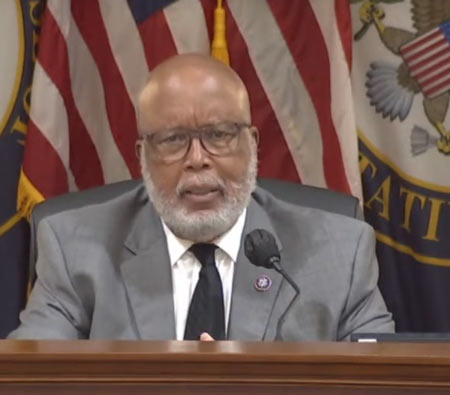
Rep. Bennie Thompson, Mississipi, Chairman of the House Committee investigating the Jan. 6th attack on the Capitol.
2.Former U.S. Attorney General Barr: Trump didn’t listen, became “detached from reality” Trump broke with the team that had run his campaign and was trying to get him re-elected and instead went down a deep rabbit hole of false conspiracies that were debunked repeatedly by lawyers and Justice Department officials. Barr described the fast-and-furious nature of those conspiracies as “whack-a-mole.” Former Acting Attorney General Richard Donoghue said the Justice Department looked into specifics, they debunked them and told the president that. How’d Trump react? “He wouldn’t fight us on it, he would just move on to another,” Donoghue said in taped testimony. According to the testimonies, Trump looked like a president throwing anything he could at the wall to try and stay in power. “If he really believes this stuff,” Barr said during his interview with the committee. “He’s become detached from reality.” Trump dismissed the people who knew the numbers and who checked on his false claims. It became clear in the hearing, based on the broad array of testimony, that Trump began listening to three controversial figures – Rudy Giuliani (who Stepien and campaign adviser Jason Miller described as “intoxicated” on election night), lawyer Sidney Powell and former trade adviser Peter Navarro.
3.Coming from so many Republicans testifying, it’s much harder for them to simply be dismissed. It’s notable that the people the viewing audience heard from Monday in their testimony were all Republicans. That carries weight. Even when it comes to Stepien – he’s working for Republican Harriet Hageman, the Trump-endorsed candidate in Wyoming, who is challenging Vice Chair Liz Cheney. These were many of the people in Trump’s inner circle – on his campaign, trying to elect him, and even his family, Jared and Ivanka Trump, who had formally worked in his White House. Conservatives are getting a different message where they get their news and information, but if they do peek at the primary source material and who it’s coming from – many people who are on their side – it’s possible some might break through. It at least makes it harder for Trump to dismiss them.
4.The committee began to lay out a fleecing of MAGA In the second part of the hearing, an investigator for the committee said in a taped interview that $250 million was raised off the election lies from Trump supporters following Election Day, including $150 million in the first week. But, the investigator said, most of the money went to groups supporting Trump, not to fund court battles. The committee said most of the money went to Save America PAC, which is the major Trump-supporting political action committee. Trump’s press releases go out through it, for example. It said money also went to other outside groups supporting Trump and where ex-Trump officials pull a salary; a charitable foundation with connections to former Trump chief of staff Mark Meadows; and even the Trump hotel chain. “The Big Lie was also a big rip off,” said committee member Zoe Lofgren, D-Calif. She added that Trump “supporters deserve better than what Trump and his allies did.” A lot of this was presented in summary, but it would be good for the committee to present some of the details of their findings as well. And there’s also a legal question about the fundraising practice – was it illegal or merely corrupt?
5.A lot of people have faced consequences from Jan. 6, but they’re mostly not the people at the top – yet. In her opening statement, Cheney noted the consequences that many have faced already due to Jan. 6. “Hundreds of our countrymen have faced criminal charges,” Cheney said. “Many are serving criminal sentences because they believed what Donald Trump said about the election and they acted on it. They came to Washington D.C., at his request, they marched on the Capitol at his request and hundreds of them besieged and invaded the building at the heart of our constitutional Republic.” More than 840 people have been charged from the Jan. 6 riot and insurrection, but many have said – and the committee has shown – that Trump is who inspired them to be there, and there have been relatively few consequences for him and those in his inner circle who spurred them on. “As one conservative editorial board put it recently, ‘Mr. Trump betrayed his supporters by conning them on January 6th, and he is still doing it,” Cheney continued.
6.Over two days of hearings, the committee is methodically establishing the building blocks of their public prosecution that Trump is responsible for Jan. 6. The committee’s case against Trump essentially boils down to this: -He had the motive (and of course opportunity as president) – to cling to power and to make money. -He had the capacity to incite violence. That was evidenced by the testimony of former Philadelphia City Commissioner Al Schmidt. Once Trump went after him on Twitter, Schmidt said he faced death threats. -And people acted on what he said. That was clear from testimony from white nationalists Thursday, who said they went to D.C. because they believed they were acting at Trump’s behest. And then after a day of hearing all of the false conspiracies and election lies Trump was throwing out, there was video of people on Jan. 6 echoing those lies. There are five more hearings to come, including Wednesday and Thursday. Some 20 million people watched Thursday night. The question is how many will be following and taking in the material themselves rather than through their preferred ideological source of information.
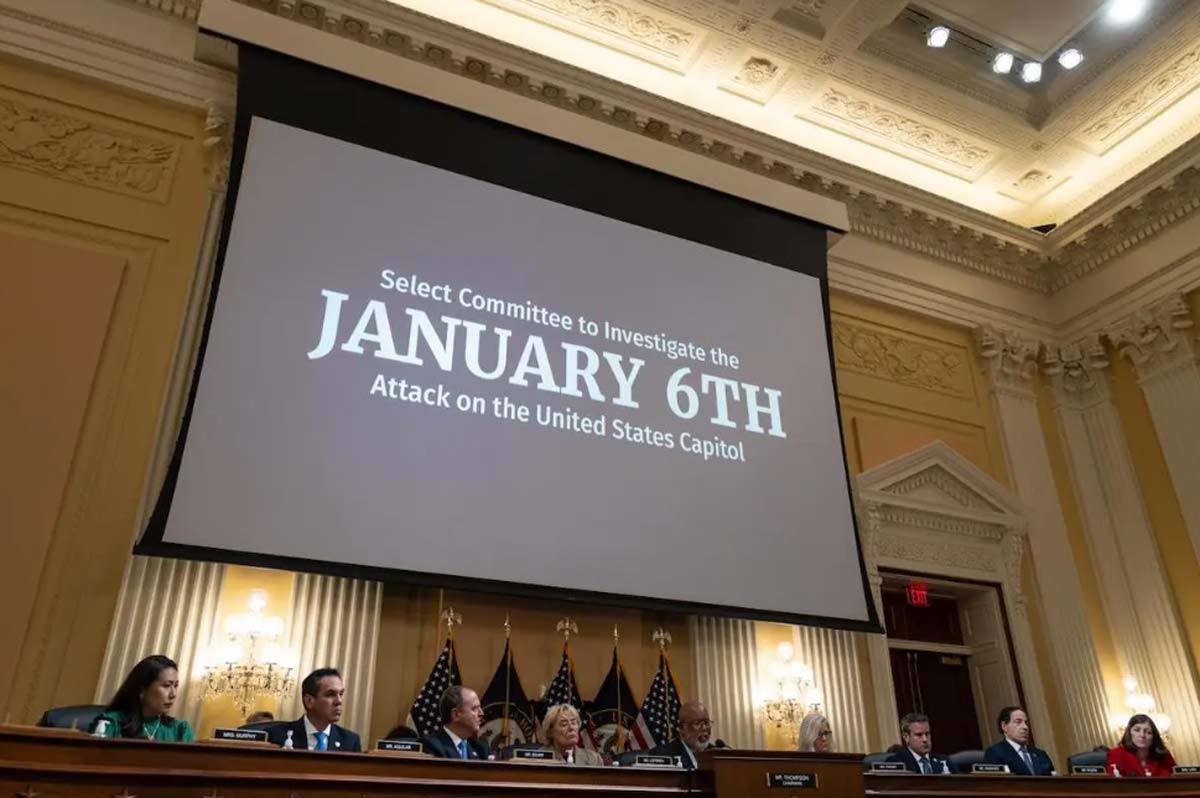
View From Here By David Mark Greaves The hearings of the Select Committee to Investigate the January 6th Attack on the United States Capitol, chaired by U.S. Representative Bennie G. Thompson (D-MS), are Appointment Television. Riveting, jaw-dropping and frightening in the implications, the coverage by most all major outlets of what may prove to be the most important “mini-series” of all time: The story of a coup to take over the United States of America aided and abetted by the President of this union.
This is a miniseries that can, and we hope and pray, save the nation from falling under a despotic regime. It has everything you would want as an attention getter: a plot to take over the United States of America, led by a sociopathic President, a drunken former mayor, a woman who said, “Reasonable people” wouldn’t believe her, a pillow salesman, various slimy opportunists, political operators and assorted members of the “KKK Caucus” as Rep. Alexandria Ocasio Cortez calls its Republican members.
Right now, the committee is laying the factual groundwork for any conclusions. There are none of the usual political speeches, just the facts with the panelists answering questions and telling the story in sworn testimony. On Monday, we saw that everyone around Trump had told him he lost but each time he’d double-down on the lie that he won. He did not want any facts to impinge on either his delusion or his desire to remain in power.
The lie was also useful in raising $250 million in donations for an Official Political Defense Fund that doesn’t exist.
The committee is methodically connecting the dots and we don’t know just yet, if for the big reveal, they find coordination between Trump sending the crowd to the Capitol and the Proud Boys and Oath Keepers militia groups, who were prepositioned to breach the Capitol. When Rep. Liz Cheney says “He called the mob, lit the fuse, then sent them to the Capitol” she’s telling us what the committee has proof of. And when Republican Rick Perry says that reports from the committee that he asked for a pardon for his role in the insurrection are “shameless, soulless lies,” you can’t but be amused at what he has coming, because denial is futile. Making an assertion of requests for pardons is not an idle comment. The committee wouldn’t say it unless they could prove it. “A coup in search of a legal theory,” is how Federal District Court Judge David O. Carter in Calif. described the actions of Trump’s lawyers.
Looking ahead, Cheney outlined the topics of hearings through June, which will focus on Trump’s attempts to stay in office by pressuring the DOJ, former Vice President Mike Pence, and state officials and how he summoned a violent mob and directed them to march on the Capitol, where they obstructed the duties of the Congress. Stay tuned.