Home Blog Page 20

Joyful Noise in Downtown Brooklyn: The ‘We Outside’ Tour Takes Over the Paramount

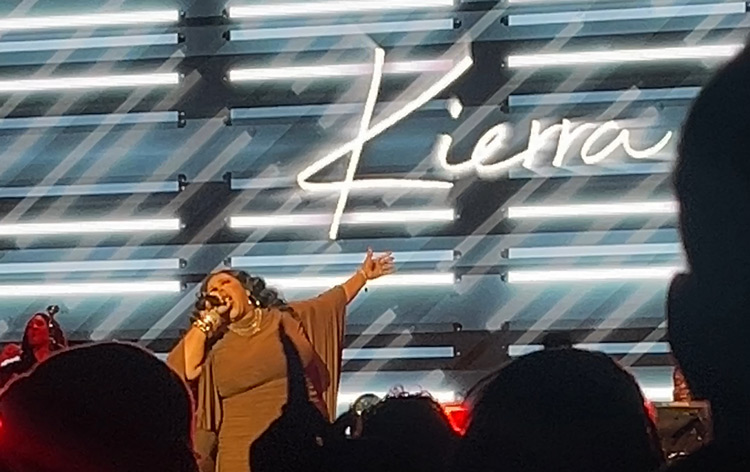
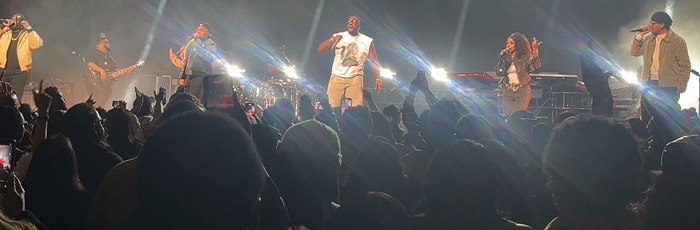
The We Outside Tour, led by three-time Grammy winner Tye Tribbett, alongside Transformation Worship and Grammy-nominated artist Kierra Sheard, made its mark last Sunday at the newly restored Brooklyn Paramount—once a movie palace and now a 2,700-seat showpiece in Downtown Brooklyn. Gospel fans packed the venue, which felt equal parts cathedral and concert hall, for a night of high-energy worship.

The room buzzed as Transformation Worship opened the evening, blending secular sounds with classic gospel lyrics in the intricate style that has become synonymous with the ministry. Watching Pastor Mike Todd weave Notorious B.I.G. and Kendrick Lamar into traditional gospel was remarkable in itself, but the collective kept the focus firmly on Jesus. Fans arrived ready for a dynamic set, and TW delivered. Hits like “Overflow,” “Undefeated Champion,” and “Look at My Fruit” energized the audience before a surprise appearance from Grammy Award–winning artist Naomi Raine.

Transformation Worship closed with a powerful performance of “Let Him Cook,” from their latest project, Faith in Fire. By “Him,” the collective was unequivocally singing about Jesus Christ—but Pastor Mike Todd and Transformation Worship also left the Brooklyn Paramount crowd warmed up, hyped, and hungry for more.

No discussion of gospel royalty is complete without the name Clark, and Kierra “Kiki” Sheard honored that lineage from the moment she stepped onstage. She opened with a tribute to the Clark Sisters, leading the room in a spirited rendition of “You Brought the Sunshine.” In that moment, the essence of the We Outside Tour was crystalized: the intersection of concert and congregation. Sheard’s set transformed the hall into a full-fledged COGIC Sunday night revival, moving seamlessly from early favorites from I Owe You and Free to fervent exhortation and encouragement.

The production value of the show matched the strength of the performances. Crisp lighting cues, seamless transitions, and a band functioning as a single, well-oiled engine—drums, bass, keys, organ, and guitar—created a unified sound. The background vocalists elevated every chorus, layering harmonies that turned hooks into choir moments and giving the night the polish of an arena tour without sacrificing the warmth of a church service.

Tye Tribbett remains a singular force in gospel music, his energy both magnetic and contagious. Nearly two hours in, fans seemed only more eager to jump, sing, shout, and dance as he ran through a medley of hits, including “He Turned It,” “New,” “Be Alright,” and “Everything.” But the night was more than entertainment.

Tribbett led worship with intention, reminding the crowd that faith is “trust training” and that this music is, at its core, worship. If Sunday night at the Brooklyn Paramount is any indication, the future of gospel is loud, unashamed, and very much outside.

Brooklyn DA Obtains Sentencing of Disbarred Attorney for Stealing Deeds of 11 Brooklyn Properties, But What About Others

0

By Mary Alice Miller
Brooklyn District Attorney Eric Gonzalez announced on November 12 that disbarred Brooklyn attorney Sanford Solny, who stole the deeds to 11 residential properties across Brooklyn, primarily from minority homeowners in financial distress, has been sentenced to two and a half to seven years in prison. Corporations he owns were also ordered to pay $120,000 in fines. The defendant falsely promised to help facilitate short sales, but instead transferred ownership of the homes to himself or companies he controlled and collected rent for years.


The deed thefts were part of a decade long fraudulent scheme targeting minority homeowners facing foreclosure.
“This defendant is a serial scammer who deserves every day he will now spend behind bars. He stole valuable homes, as well as the financial stability and integrity of his victims, leaving many in financial ruins,” said District Attorney Gonzalez. “My office investigated, tried and convicted this defendant, holding him accountable and returning the stolen deeds to their rightful owners. We are committed to continue prosecuting deed theft cases vigorously to protect vulnerable individuals from falling prey to fraudsters who seek to exploit high property values.”


The District Attorney said that, according to the evidence, between 2012 and 2022, the defendant, whose law license was suspended in 2012 before he was disbarred in 2023, carried out a fraudulent real estate scheme targeting homeowners in foreclosure. He presented himself as a financial expert who could negotiate with lenders to sell the homes for less than what was owed on the mortgage — a process known as a short sale — to help clients avoid foreclosure. Instead, using an array of false statements, he tricked his victims into unwittingly signing over their deeds to corporations he controlled.


The defendant defrauded 15 victims, many of whom had limited legal or financial literacy by convincing them they were getting help. Instead, the defendant transferred ownership of their homes to his companies and in some cases collected rent from tenants already living there. The 11 properties included homes in Bedford-Stuyvesant, East Flatbush, Canarsie, East New York and Ocean Hill, among other neighborhoods. Victims lost their homes, their equity and, in many cases, suffered damage to their credit as the foreclosure proceedings remained unresolved.


According to prosecutors, at a bench trial before Brooklyn Supreme Court Justice Danny Chun, the judge promised at conviction that any sentence he would issue would be no more than seven years. Absent that constraint, the District Attorney’s office would have recommended a sentence of seven to 18 years in prison.
The judge also nullified the deeds to the 11 properties, which were held by corporations the defendant controls, returning them to the defrauded homeowners.


According to The People’s Coalition to Stop Deed Theft, Solny is linked to the theft of over 240 homes across New York, primarily in Brooklyn and Queens, many of whom may not have their homes returned.
“This is a gross miscarriage of justice,” said Evangeline Byars of the People’s Coalition to Stop Deed Theft.
Patrice and Wendy Sawadogo had two homes stolen — one in East New York, one in Flatbush.


According to The People’s Coalition to Stop Deed Theft, the DA now says only the East New York home will be returned, despite the fact that Solny collected rental income from both properties for more than 11 years.
“This is outrageous,” the Sawadogo family said. “Solny stole our deeds and collected the rent. Now they’re telling us we only get one home back? We were defrauded. We deserve both our properties returned.”


“For more than 14 years, Sanford Solny unlawfully controlled our properties, collected rent, and deprived us of ownership. Now, as victims finally awaited justice, our property has been sold out from under us, and we are being served eviction notices to vacate our own homes,” they said.


The People’s Coalition to Stop Deed Theft—which has been leading the charge against systemic deed and foreclosure fraud— and calling for a Moratorium on all evictions in New York State due to the Deed Theft and Illegal Foreclosure crisis.
The People’s Coalition to Stop Deed Theft calls for: Full property return to all victims; Reversal of charge reductions; Immediate halt to evictions connected to deed theft cases; and Public accountability from the Brooklyn DA.


A spokesperson fo DA Gonzalez explained underlying factors in the cases that were resolved and unresolved.
“We charged all the cases that we were able to charge,” said the spokesperson.
Other people may have has dealings with Solny, but either they did not contact the DA’s office, or it wasn’t in Brooklyn or it wasn’t a crime.


“Not every transaction that Solny was ever involved with was illegal. He was a real estate person and that was what he did, but some of the things were illegal,” said the spokesperson.
The agreement that all of those victims made with Solny was to give away their property. They made an agreement with Solny to lose their property, and he promised a short sale.
Effectively, they lost their property before they met Solny. For some of the victims, the property was sold by the bank because of the debt on them.


They are asking why they did not get their property back, but the truth is they lost the property before they met Solny. This is why they went into the agreements with Solny, to salvage anything they could from property that was underwater,” said the spokesperson.


Eleven deeds were vacated but not all could get their property back because the bank had already sold some of them. At that point the deed does not belong to Solny anymore, and even though the deed was vacated at that point it was moot.
If someone thinks they are a victim of any kind of fraud, they should contact the Brooklyn District Attorney’s Office.
“If there are any other people, we would obviously look at their cases to see if there is anything we can do,” said the spokesperson. “Remember the statute of limitations is five years on fraud, so some people who think they have been scammed before that time, it is too late.”

“Mass Blackout” Says Support Black and Local Businesses

0

By Nayaba Arinde
Editor at Large
Somebody shoot off an email to HR. Black money is scheduling a vacation next week. Taking time off from being spent on frivolous or unnecessary products or actions. The “Mass Black Out, people’s money week off,” is slated to have the prolonged impact of the principles of Dr. Carlos Russell’s Black Solidarity Day. Economists will dissect the decimal points to determine precisely how much Black spending contributes to the nation’s Gross Domestic Product.


“Consumer boycotts like these have proven themselves to be effective in the short term. But beyond one particular campaign, it is important for those who care about the plight of small businesses and Black-owned businesses in particular to support these businesses year round,” Kenneth Ebie, Founder & Principal, Ebie Strategies told Our Time Press. “The National Blackout taking place from November 25th through December 2nd is a reminder that the real power is always with the people – consumers and workers, not colossal corporations or Washington, D.C. And that power is unlocked when individuals pay attention, take agency and participate in these forms of collective economic action.”


Stressing that it will be a “Peaceful, strategic withdrawal of labor and consumer spending to demonstrate ‘that real power belongs to the people,’” Civil rights attorney Benjamin Crump, is promoting next week’s call to ‘Black Out the System.’
Patronizing Black-owned and small businesses as opposed to the national chains and conglomerates is an alternative option being proposed for those who need to buy food, medicine, and essentials.
Or:
Economic boycott organizers suggest that you can start now, buying your food, snacks, vital kitchen and bathroom needs, chotskies, and other essentials, because from Tuesday, November 25th to Tuesday, December 2nd, 2025, a compilation of organizations and individuals will be hosting the major mass boycott.
Participation is, of course, a personal choice, but it is perhaps the easiest form of collectively effective passive protest.
Keep your dimes, your shekels, and all that folds, swipes, or taps in your pockets, are the repeated marching orders to emphasize the power of the Black dollar. Again.


Activist Cinque Brath said that economic discipline is key, with the ethos for growth and community development being, “‘Buy Black – Today, Yesterday, Tomorrow – until justice is the law of these lands.’”
While the government is back to work after the recent 6 week closure, Attorney Crump and Blackout The System organization stated that the national Mass Economic Boycott was called to “demonstrate their frustration with the shutdown of the American government which has adversely affected the distribution of welfare services in the form of ‘Food Stamps’ now known as SNAP/EBT to over 42 million Americans by ‘avoiding work and spending.’”


BlackWallStreet.org noted that the United States Black buying power is “on a steady rise. In 2019, it was reported at $1.4 trillion and is expected to grow to $1.8 trillion by the year-end of 2024.”
“We should not squander our money on frivolous things,” Dr. Segun Shabaka, chair of the National Association of Kawaida Organizations (NAKO), told Our Time Press. “We should put our financial resources together and build up the Black community, and focus on economic activity, and how we can use our financial strength to sustain and build up our community. We need to invest in factories, entities, and production that empower Black people financially and contribute to self-reliance and self-development.”
The Selig Center for Economic Growth quoted that “African American buying power reached $1.6 trillion, accounting for 9% of the nation’s total buying power.”


With the close of 2025 expected to amass at least $1.98 trillion, Black observers are imploring the Black community to harness all that spending power into a focused point to pry open new economic opportunities. The Black dollar circles out of the community quickly, if not spent with Black businesses.
The Institution and McKinsey have stated that by December 2025, Black household consumer spending could reach as high as $2.1 trillion. Other projections project that Black spending will increase to $3 trillion by 2030.
The revelation only emphasizes the demand to hold the discontinued pennies, crumpled or smoothed-out dollars, or easy plastic.


Several groups are organizing this ‘Mass Blackout.’ Their tagline is, “We’re not asking. We’re shutting it down. No backing out. Prepare for impact.”
The list of their no-can-dos is significant—no work, no spending, no events, no restaurants, etc.
“To prevent spike spending before and after the blackout, we ask that all participants purchase goods needed from community-owned stores leading up to and after the date. This helps with sustained impact, and keeps our money.”
People should only be purchasing from small, local businesses for non-essential items like food, medicine, and emergency supplies, organizers suggest.


While the 43-day shutdown is now over, its impact had a domino effect. There are a myriad of issues fueling the national grassroots organizers’ call for a one-week complete economic boycott.
The activism is similar to the February boycott spurred by President Donald Trump’s anti-DEI policies. There were nationwide rallies, protests, and boycotts of major stores for the 24-hour Economic Blackout held on Friday, February 28, 2025, from 12:00 a.m. to 11:59 p.m. There were several ongoing and recurring boycotts of companies like Amazon, Starbucks, and Walmart.


Repeated reports reiterated that after dropping their Diversity, Equity, and Inclusion (DEI policy, the resultant organized rolling boycott had Target losing $15.7 billion.
Although disputed in some arenas, stating that the loss occurred a couple of years before that action, nonetheless, Target’s share prices fell 22% during the still ongoing boycott.


The February 2025 ‘Not My President’ and the June’ No King’s Day’ countrywide protests were examples of how this coordinated action can achieve the success that organizers are hoping for.
This is aimed to be another March 2025 ‘Hit them In Their Profits—no Buying from Amazon,’ type boycott.
However, the proactive aspect of the week-long protest is that the community should turn its intentional, active focus to Black and small businesses.


During early boycotts this year, Raymond Dugue, 1st Assistant President General of the United Negro Improvement Association, told Our Time Press that the UNIA has always pushed a race and community-first self-empowerment and cooperative economics, adding that with their Queens-based well-stocked store, “Who needs Target or Costco when we have our own – FACA ROC, a Black-run supermarket funded by Black people serving Black people while only hiring Black people. This is what we mean when we say race first. The need to build our own institutions – schools, banks, etc – is the only practical long-term solution that will lead to our eventual salvation as a race.”


The recent government shutdown exposed a revealing underbelly with federal workers going unpaid but forced to work for weeks, SNAP benefits halted for 42 million Americans, and airlines in disarray with air traffic controllers and TSA agents taking go-slow, no-show action.
This, on the backs of months of Elon Musk’s and Trump’s now defunct Department of Government Efficiency (DOGE)–decimating agencies like the Department of Health and Human Services, USAID, USDA, food safety inspectors from the Department of Agriculture, and the Food and Drug Administration.


The national mass boycott will have a host of demands from city to city.
“I will not go against the call in support of the Black community, to spend my money with white stores, corporate businesses, and conglomerates,”
Bed Stuy businessman Mark Lawson told Our Time Press. “I didn’t know about the boycott, and to be honest, I was going shopping in Jersey next week, but I am not going to argue with Black people to spend my money with white companies. I will stay local. There’s lots of great stores right here in Brooklyn.”


Pablo Blanco- Garinagu Scholar- Pan Africanist Researcher told Our Time Press,
“Our fight is multifold. It has a layer of social activision, social justice, economics and politics. Our ancestors showed us we can pivot the system. It requires us to move as one unit to effectively challenge the system, with strategic allies at the local, national, and international level. This is a long-term fight. We must prepare future generations to embark on the fight to keep it going.”


He continued, “Engaging in the fight requires a level of class consciousness, class collaboration, and understanding. The system was not designed for us to thrive in. Therefore, we must force it to.”
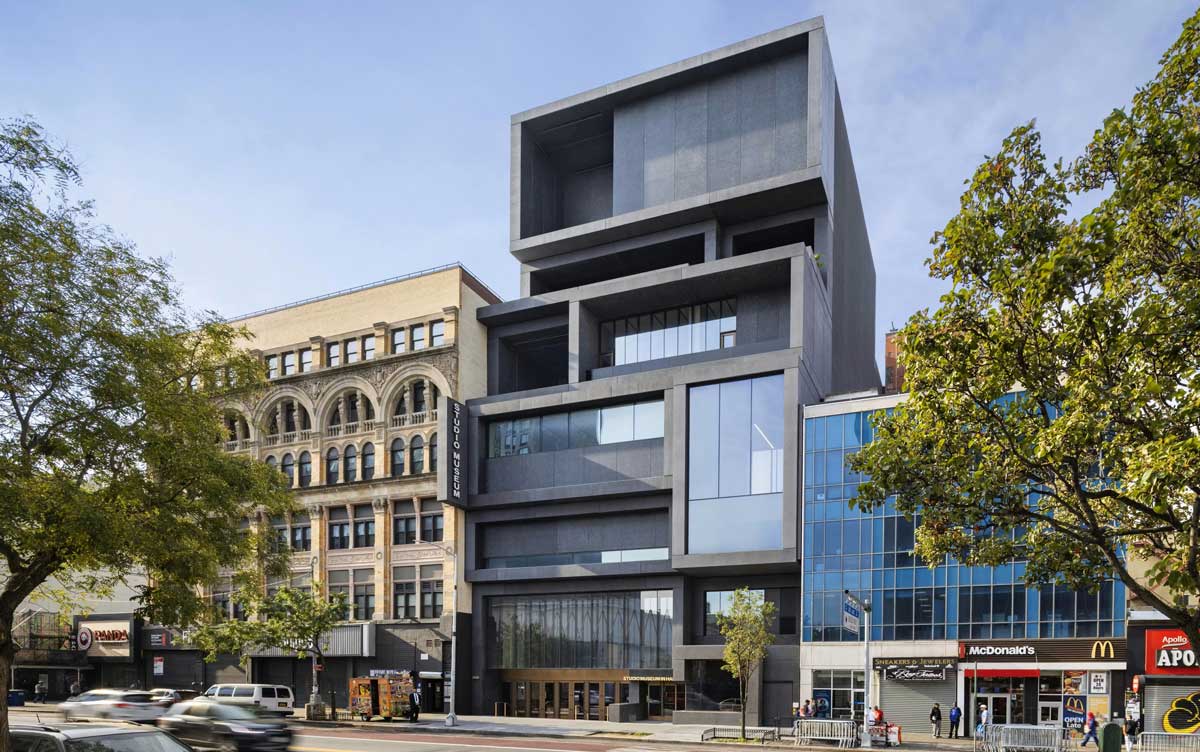
Brooklyn Curator Pamela Ford and Sculptor Helen Ramsaran Check Out the New Studio Museum in Harlem

0

Fern Gillespie
When Brooklyn sculptor Helen Evans Ramsaran returned to the Studio Museum in Harlem (SMH) for the unveiling of the new building, she was amazed.


“I was just overwhelmed with the beauty of this space. The flow of space,” the 82 year-old artist told Our Time Press. “Another thing that impresses me too is there are places in that building where you can just go and sit and be quiet. The space in the basement rises up. You have teers like bleachers. It seems that someone very sensitively sat down and said, this is what I would like a new African American museum to be like. I think the whole museum is amazing.”


Ramsaran is an integral part of the Studio Museum in Harlem history. In 1973, after a career as an art professor in the 1960s at HBCU colleges FAMU and Bowie State, she moved to New York to work as the exhibition coordinator at the Studio Museum in Harlem’s first location on Fifth Avenue. Under Ed Spriggs, the director, she worked with the early group legendary master artists like Betye Saar, Benny Andrews, Romare Bearden and Bob Blackburn.


In 1994, her Afrocentric organic bronze sculptures were showcased in her major solo exhibition, “Sanctuary Group,” at the Studio Museum in Harlem. Her bronze sculptures explored African spiritual traditions. The artwork was also featured in the Studio Museum in Harlem’s first Sculpture Garden.


Last year, her exhibition “Strange Fruit” was held at Bed Stuy’s Welancora Gallery. Artnet press championed her work as “UnSung.” She is a part of a small veteran group of Black women sculptors who work with bronze like Babara Chase Riboud and the late Elizabeth Catlett. Located in Crown Heights for 26 years, she creates small and enormous sculptures. “When I went off to Africa, I was impressed with what African people had done with natural forms.

You know, they would take these natural grasses and they could create a whole house with grasses,” she said. Currently, she focusing a major project honoring Black children who have been killed called “Seeds.” “It takes certain conditions for seeds to grow,” she said. “I feel like these children had been put in the position where their potential was about to be realized. Everything been bowed down. I’m working on that series now.”


For Pamela Ford, the Studio Museum in Harlem’s former Director of Education from 1996 to 1999, visiting the new building was “a very different world.” “The building itself is giving you that feeling,” she told Our Time Press. “When I went to the reception for the Studio Museum in Harlem alumni, I found myself standing in the heart of the building and going, wait, what was here before? The structure is so magnificent.

Of course, it’s needed because of the kind of art that necessary to show in really high ceilings. The old building was nice and it was certainly an upgrade from what they originally had on Fifth Avenue. But this is magnificent. And even the little touches like addressing this idea of the public stoops they put in the front. So people could sit so it becomes a community space.”


“The roof deck positions you in Harlem looking down at the rest of downtown from this the wonderful vantage point,” she continued. “It addresses things like a space for programming, a new cafe downstairs, all these things that we envisioned in earlier capital projects in the 1990s.”


Ford, a Brooklyn art consultant and educator and good friend of Ramsaran, still fondly recalls her education work at the museum. “The biggest challenge was getting the local community come in and some of the things that I think we did a good job with was like when I started doing some programming in sculpture garden for free. That was visible from 125th St. and it actually got some people to come in. It was kind of like meeting your neighbor over the garden fence.”


A Studio Museum in Harlem art collaboration that Ford initiated with the Board of Education still exists in Brooklyn. “We established a program for African American and Latin American teenagers to create a mural project that was related to our exhibition about African American artists going to Mexico in the 1930s to work with the Mexican muralists. They were learning techniques like print making and true fresco murals. They created a mural,” she said. “In the last couple of years, I’ve stumbled on it at Paul Robeson High School in Brooklyn. It was the pride of the place in the front.”


Brooklyn is a base for many of America’s top Black artists. These Brooklyn artists are part of the Studio Museum in Harlem’s history — Kehinde Wiley, Kara Walker, Lorna Simpson, Mickalene Thomas, David Hammons, Sonia Louise Davis, Malcolm Peacock, Nari Ward, Sable Elyse Smith, Tschabalala Self, Devin N. Morris, Kevin Beasley, Jeffrey Meris, Charisse Pearlina Weston, Sonia Louise Davis , Zoe Pulley, Hank Willis Thomas. Even Thelma Golden, the Director and Chief Curator at the Studio Museum in Harlem, was a longtime Brooklyn resident.


Currently, Ford is a consultant tour guide for the Brooklyn Museum. For several years, she served as Program Director at the Romare Bearden Foundation and curated the exhibition “From Process to Print: The Graphic Works of Romare Bearden.” The acclaimed exhibit traveled to eight cities including Chicago, Baltimore and Austin.


“I met Bearden as a teenager, when he was doing a film in my neighborhood. He was very kind to myself and my boyfriend. We were both art students in college. So, I felt like it was coming full circle when I got the job at the Bearden Foundation,” she said. “People who knew him, would tell me that Bearden, a co-founder of the Studio Museum in Harlem, was an educator and supporter. That he was concerned. That’s the genesis of the Studio Museum in Harlem. Understanding what Black artists need.”

Of Faith, Fortitude, and New York’s Bravest

0

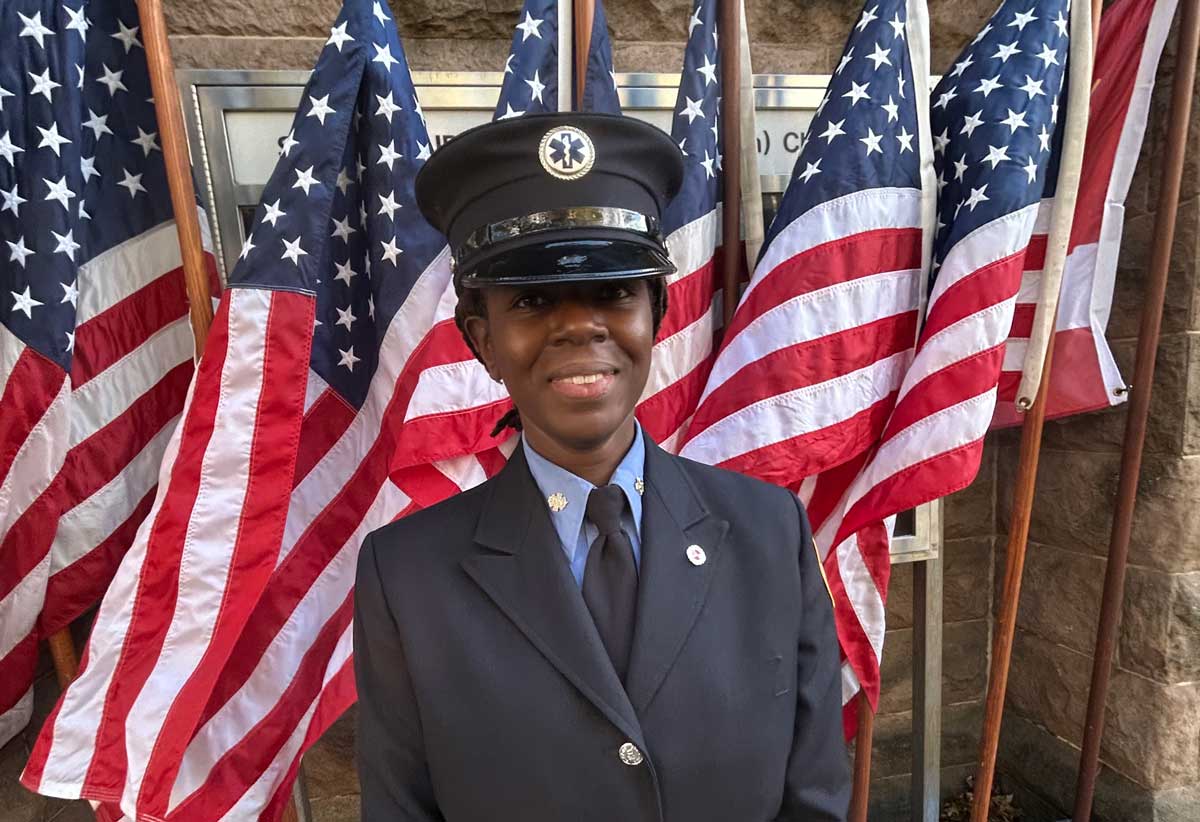
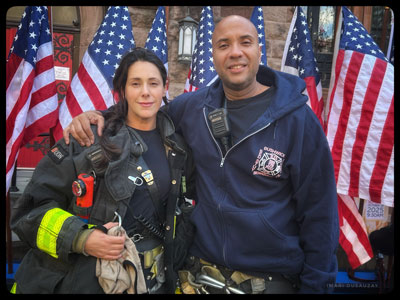
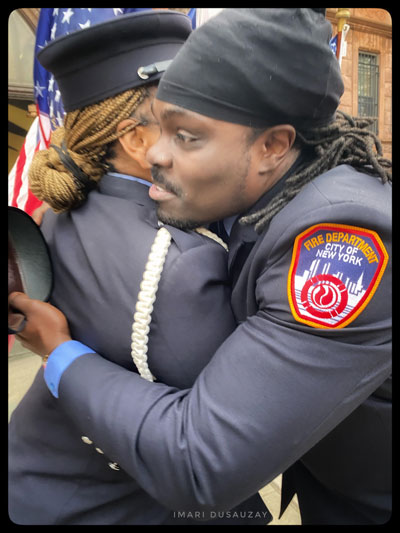
The Vulcan Society Inc held its 2025 Annual Memorial Service in honor of departed members, on Sunday at St. Philips Episcopal Church on Macdonough Street in Bedford-Stuyvesant. The Rev. Dr. V. Simpson Turner delivered the stirring invocation and sermon — with special messages in honor of three firefighters who passed recently, and Attorney General Letitia James spoke of the awesomeness of the “warriors” departed and present.

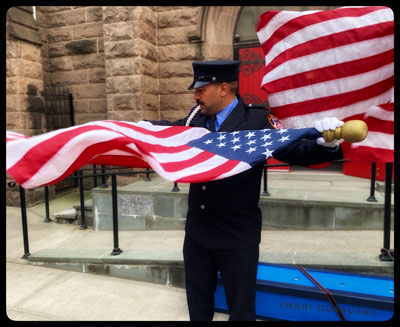
FDNY Vulcan Society president Jonathan Logan delivered the opening welcome assisted by Captain Andrew Brown, emcee, and Phyllis Wright. Outside the historic church, an honor guard stood on MacDonough Street at military attention, as flags were waved and taps played. The Vulcan Society of Black Firefighters is celebrating its 85th year. (All Vulcan Society event photos were taken by Imari DuSauzay for Our Time Press.)