Home Blog

Bob Law Stood Tall on the Frontlines and Behind the Scenes, His “Clarion Call” Made News

0

By Nayaba Arinde
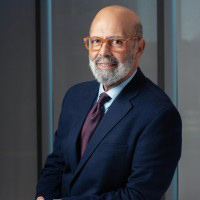
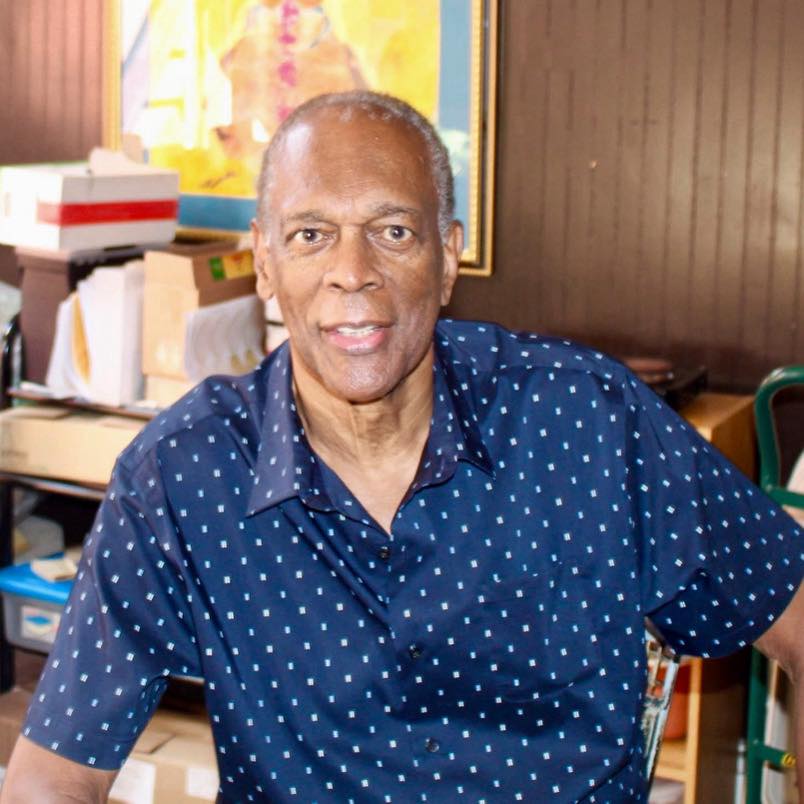
The Tall One has joined The Ancestors. Tributes have come in thick and fast for Bed Stuy’s born and raised radio legend Bob Law, 86, who passed away on Monday, March 30th, 2026.
His popular midnight to 5 a.m. weeknight show ‘Night Talk,’ first aired on WWRL 1600AM, and in 1981 it became the first live nationally syndicated Black radio talk show. He continued his community focus with his From The Streets show on WBAI.

Calling Law the “influential radio broadcaster whose nationally syndicated program ‘Night Talk’ transformed the airwaves into a platform for Black political consciousness and community organizing,” Prof. Sam Anderson, told Our Time Press that Law “leaves behind a legacy that spanned more than five decades at the intersection of media, activism, and Black community empowerment.”


Bob Law’s family said with heavy hearts they acknowledged the outpouring of love and tributes for the legendary broadcaster, community activist, father and great grandfather, “We know that he was embraced by the world…he taught us grace, tenacity and empathy, and to be fierce in our love for each other, and our people. We are forever blessed to have been loved by him. His light will always shine brightly through his legacy.”


For 50 years, Bob Law was a community cornerstone. A trusted and respected source of information and opinion.
The Black community is coming up for air from recent losses on the Black press front include Daily Challenge publisher Tom Watkins, and Attorney Brian Figeroux, publisher of Immigrant’s Journal, Worker’s, World Today, and the Caribbean American Weekly.
“My heart is with the family and loved ones of Bob Law,” Brooklynite Attorney General Letitia James told Our Time Press. “Bob was a renowned radio talk show host and a tireless activist for the Black community, and his impact will continue to be felt for generations to come. May he rest in peace.”
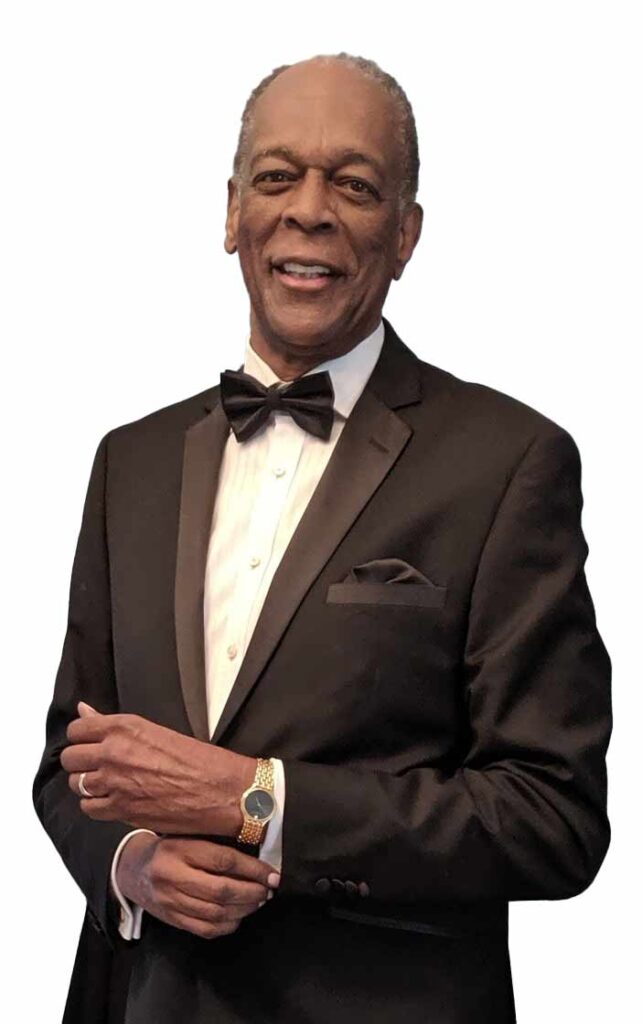
“He is preceded in death by his wife, Muntu Law, and is survived by his two daughters, Aisha Patrice Law Abdullah and Abina Law Napier, as well as his younger sister, Carol Peppers. He has 3 grandchildren and two great-grandchildren. Also, he was born on April 6, 1939.”


Law was a High School of Art and Design and Pratt Institute alum, in the pursuit of a career as a graphic artist, but the civil rights and the Black Power self-determination movement grabbed his attention and his motivation.
He joined the Brooklyn chapter of the Congress of Racial Equality (CORE), in 1962, as a student at Pratt, Law. Further entrenching himself in the Movement, he became a field secretary and student organizer with the Student Nonviolent Coordinating Committee (SNCC). He worked alongside Kwame Ture formerly known as Stokely Carmichael, and Jamil Al Amin also known as H. Rap Brown.


“The passing of Bob Law marks the transition of not just a man—but a movement, a messenger, and a mighty voice that spoke unapologetically for Black people, Black truth, and Black empowerment,” Fatiyn Muhammad, WBLS executive producer and radio host told Our Time Press. “Bob Law was more than a radio host—he was a pillar in Black Talk Radio, a fearless truth-teller, and a community soldier who understood that the microphone was not just a tool for conversation… but a weapon for liberation. As the longtime host of ‘Night Talk’ on WWRL Radio, Bob Law created a platform that became essential listening in the Black community. ‘Night Talk’ wasn’t just a show—it was a classroom, a battleground, and a sanctuary.”


The show is cited as propelling the recently late Rev. Jesse Jackson‘s 1984 presidential campaign into being.
Tackling issues like systemic racism, economic injustice, political awareness, community accountability, Muhammad called Law “A movement builder” whose “influence extended far beyond the airwaves.

He was instrumental in the historic Million Man March in October 1995 called by the Honorable Minister Louis Farrakhan, helping to amplify its message of unity, accountability, and empowerment for Black men across this nation.”


And then there is the health store.
Bob Law lost his wife Muntu last year. Together they ran Namaskar Bob Law’s Health & Wellness Store in Crown Heights. Fatyin Muhammad continued, “Sister Muntu took the time to assist my wife, Haniyfa, with herbal and natural health products that supported her in her battle with Sickle Cell Disease. That wasn’t business—that was love, compassion, and commitment to our people’s well-being.”


Student Minister Arthur Muhammad of Muhammad Mosque No. 7, told Our Time Press, “Bob Law is known mostly for his sultry, smooth captivating voice. But, what needs to be highlighted is his ability to organize our people around efforts that were in the news, but also efforts that did not make the news. He took issues that weren’t on the front page, or on the nightly news–but were issues of injustice, and he organized and rallied around these issues. The results of his clarion call–the marching, the rallying, the protesting–that made the front page news. Through his organizing of our people, he made the news, and he was the news.”


“Nana Bob Law, a towering influential and enduring figure in Black radio [with] over five decades of distinguished professional work and service in the interest of
the Black community,” Dr. Maulana Karenga, National Chair of the National Association of Kawaida Organizations (NAKO), told Our Time Press. “Bob stressed the central role of Black radio and other media in cultivating, deepening and expanding the consciousness of our people.


This consciousness was ethical, political and economic and fostered mutual respect, informed voting and spending, and informed understanding and action around critical issues of our time.”
Karenga called Law “a multidimensional man” who worked his wife Nana Muntu…”to build businesses and political organizations to serve the interests of the Black community.”


The professor of Africana studies at the Department of California State University, and the creator of Kwanzaa, praised Law’s legendary work ethic, as a broadcaster and radio host of “Night Talk,” “From the Streets With Bob Law,” and the podcast “Bob Law Now.”


“I appeared on all of these and enjoyed our exchange. He was also a community organizer who mobilized and organized the community around issues of political and economic empowerment and resistance to various forms of oppression.”


“Sometimes words are not enough to describe a man who was a giant in stature and in intellect. A man bold enough to speak truth to power. Though Bob Law was known for his wise and insightful commentary on his late-night radio show ‘Night Talk,’” said Brother Daleel Jabir Muhammad. The Eastern Regional Protocol Director of Muhammad Mosque No.7, told Our Time Press, “Black people in the metropolitan New York area loved him for his activism, bold and uncompromising stand in the streets at rallies, and in leading new directions in political awareness.

He stood tall with many outspoken grassroots activists on the front line in the cause of Black Solidarity and Black Liberation. His unwavering support for the Honorable Minister Louis Farrakhan that established their friendship and an unbreakable bond of brotherhood from the late 1960’s, 70’s up until his untimely recent passing will truly be remembered. I admired Bob Law for being an outspoken proponent for lifting Black folks up from being degraded and marginalized in society to being recognized for who we really are and our greatness in unity.”


Standing over 6.5’’, affectionately dubbed The Tall One, in a poetic tribute, fellow New York radio veteran Imhotep Gary Byrd told Our Time Press:
“Bob Law has passed.
The message left me speechless.
From his Respect Yourself Movement at WWRL dedicated to lift Black youth.
To his national Night Talk platform.
A citadel of information, wisdom, and truth.
To the Million Man March, where he was a Broadcast Beacon.
To the endless parade of police brutality battles of every season.
Through the continued building of community projects dedicated to highlighting our best.
To demonstrating over and over that our activism would never take a rest.
My Brother The Tall One, Broadcast Activist, Father, Husband, and author, filmmaker and friend.
Dedicated to our people until the very end.
Now he becomes an ancestor who fills us all with pride.
His love and dedication are forever with us inside.
Though he towered over many who listened, and also those he saw
His gift was his love for our people.
We will never forget The Brother we call Bob Law.”
Forum: Immigrants are the Bargaining Chip Keeping the Government Shut Down

0

By Mary Alice Miller
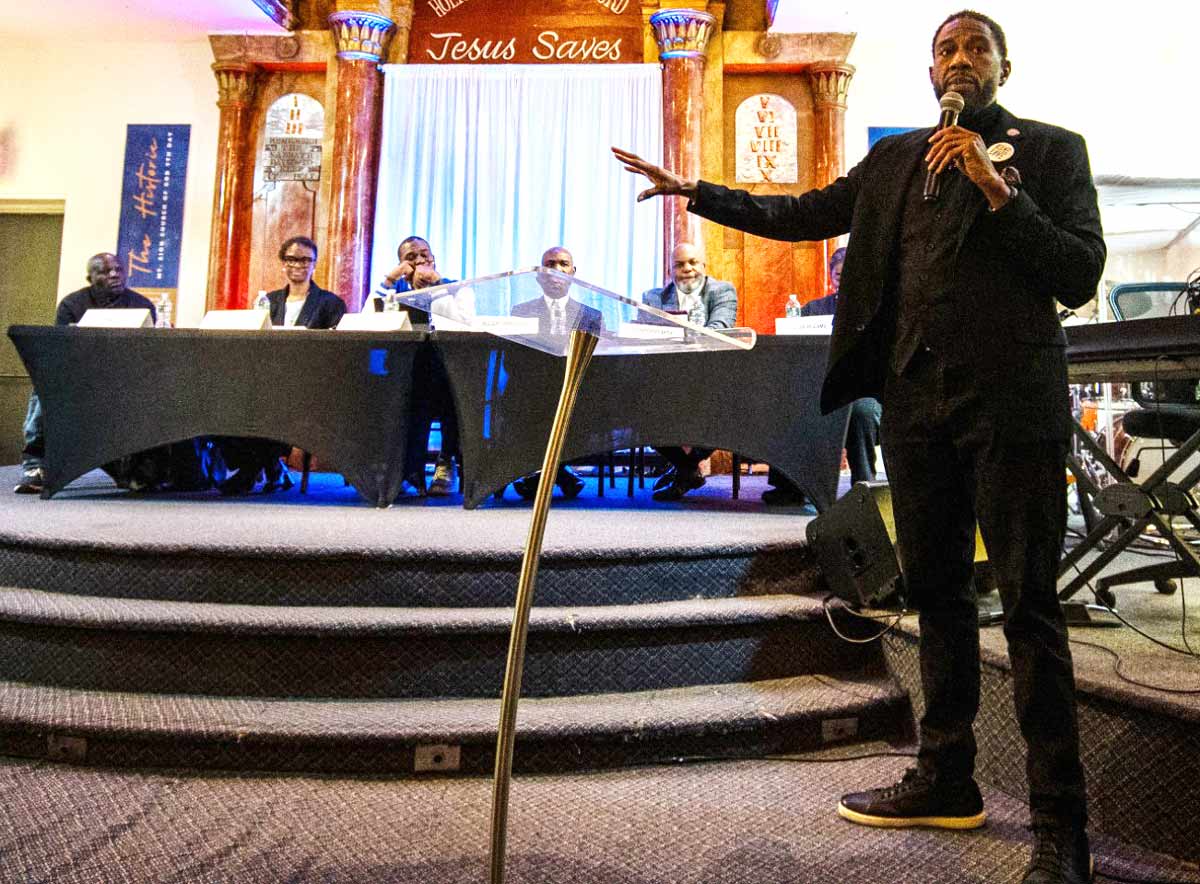
The Brooklyn Center for Quality Life recently hosted a national online forum entitled “Immigrants Are the Bargaining Chip Keeping the Government Shut Down: Long Lines, Empty Wallets, and Political Games” to discuss their “Don’t Shut the Door” Campaign and the impact of immigration on Black communities.


The federal government remains shut down, and according to the BCQL, “immigrants are being used as the bargaining chip to reopen it. The fight over immigration policy has brought the machinery of government to a grinding halt, with real consequences for real people: TSA workers going unpaid, airports in chaos, and families in our own congregations living in terror. And the White House is making it worse.”
Pastor Gilford Monrose opened the forum by describing the purpose of the Don’t Shut the Door campaign.


“As proud citizens of the Caribbean, Afro Latinos, and Africa, we commit to supporting and uplifting our brothers and sisters who are still navigating the immigration system or living undocumented. We believe in keeping doors open, advocating for justice, and creating pathways for a brighter future for all,” said Monrose.


Monrose said, “We are in a peculiar situation. Never before in the history of the work we have been doing we have immigrants who have been naturalized or first or second generation who are now saying we are going to close the door behind us so you are breaking the law by being undocumented and should follow the law.”


Monrose continued, “This kind of message is dangerous and damaging to people who need to go to houses of worship to find hope, inspiration, aspiration. We want to define the role of faith leaders in advancing just and humane immigration policies and build solidarity across congregations throughout America.”


Brian St. Jean, Community Outreach Coordinator for the NYS Office for New Americans (ONA) spoke about services offered.
The NYS Office for New Americans, founded in 2012, is the nation’s first statutorily created immigrant services office. It assists all new Americans with accessing and navigating a variety of free services and support through a statewide network of community-based providers.
“We help fund community-based organizations throughout NYS to provide the services that we offer,” said St. Jean.


According to the ONA website, New Americans are immigrants, refugees, asylees, undocumented individuals, and all new comers who reside in the United States. Many New American families are mixed status, meaning different family members have different immigration status.
About 25% of NYS residents are immigrants.


St. Jean outline ONA’s program areas: citizenship and civic engagement; developmental disabilities services; English language learning; immigration legal services; mental health support; and workforce development.
Pastor Mullary Jean-Pierre talked about Temporary Protected Status (TPS), and its impact on Haitians.
“TPS provides lawful immigration status and work authorizations to individuals who cannot safely return back to their home countries,” said Jean-Pierre. That is the situation with the Haitian population. We cannot return back to our home country for many, many years.”


Jean-Pierre spoke about the conditions that make it dangerous for Haitians to return to the country, from the 2010 earthquake where about 250,000 Haitian citizens lost their lives, to current widespread gang violence and political instability which has led to a humanitarian crisis with rape, underage gang members who have guns.


Jean-Pierre said, “We don’t have a stable government, a political structure that can receive people, the 350,000 Haitians who are now TPS holders. With the collapse of essential public institutions, we don’t have enough institutions to be able to help 350,000 Haitians who may be deported.”


Concluding his presentation, Jean-Pierre said, “We can’t go back because of the conditions, but we’re adding value to the country here. If they deport them you’re going to weaken or worsen the labor force, disrupt business operations because the sectors that we dominate most in is hospitality, hospitals and airports.”


Bishop Orlando Findlayter said when a group of local clergy started in 2009, “advocating specifically and primarily for Black immigration reform, people from the Caribbean, Central America, South America, and Africa. Why? Because when people hear immigration, normally two things come to mind: the Latino community and people coming across the border. People forget that New York is a border state. No one talks about the northern border. People cross the northern border all the time.”


Findlayter pointed out that “most people from the Caribbean, Central America, South America, and Africa don’t cross a border. Their entrance to the United States is a Visitor’s Visa. They apply for it, get it, come here, and overstay that visa. The reason most people overstay the visa is because the legal immigration system is broken.”
Findlayter said, “There is a need for comprehensive immigration reform. People who want to do the right thing are told to get to the back of the line. What line?”


Findlayter gave statistics on the population of undocumented people in the United States and their tax and consumer spending contributions on the national, state, and local levels.
“We don’t say illegal alien. We say undocumented. Language matters. Illegal alien designation is designed to dehumanize a person. If I can dehumanize you, I can mistreat you, use you, abuse you, and then disregard you,” said Findlayter. “We want to educate, train, and support faith leaders. Let us work together to provide you with the information so that you can equip your members, your parishioners, your community on how to navigate this complex system.”


Findlayter pointed out that, “The president and vice president are not against immigration. They are not against immigrants. Both of them are married to an immigrant. They’re just against immigration from certain parts of the world.”
There are 44 countries in the world where you don’t need a visa to come to the United States – 40 of those 44 are European countries and 4 are Asian countries. Not one country in Africa or the Caribbean can you come here without a visa.


“We are asking faith leaders to work with us to call this what it is: the immigration policy of the United States is racist in nature. If they dehumanize us that is an excuse to abuse us,” Findlayter said.
“We want to gather monthly, clergy and community, to work together to figure this out,” said Findlayter.

Study Highlights Long-term Values of Attending an HBCU

0

Fern Gillespie
Since the Reconstruction Era, Black colleges and universities have nurtured generations of Black graduates in scholarly achievement and community pride. Now, a new study has been released observing that attending a historically Black college or university (HBCU) as a young adult may be linked with better later-life cognitive outcomes for Black Americans.


In the study, published in Jama Network Open, the authors sampled 1,978 Black American adults who attended college between 1940 and 1980. This period encompassed Brown v Board of Education ruling that racial segregation in schools was unconstitutional; and the 1964 Civil Rights Act, which barred racial discrimination in school. In the study, 35 percent attended an HBCU. The study discovered HBCU alumni outperformed peers from predominantly white institutions in memory, language, and overall cognition decades later.


“HBCU attendees had better cognition across all three of those different time periods,” Dr. Marilyn Thomas, an assistant professor of medicine at the University of California, San Francisco told The Guardian. She said at age 62, Black adults who had attended an HBCU had better memory and cognitive function than those who attended a predominantly white institution (PWI).

Patrick Riley


“What’s really important about this finding is that it suggests that, yes, culturally affirming spaces actually can help promote and protect cognitive health,” said Dr. Thomas, who studies exposures to racism and a variety of health outcomes that are correlated with the stress. “It’s even more than that because it doesn’t just demonstrate that it’s protective against cognitive health, but the benefits to this exposure last well beyond graduation – these are people at mean age 62. These benefits are long lasting.”


During the study’s period of 1940 to 1980, some of the high profile HBCU graduates making major impacts have included: Dr. Martin Luther King (Morehouse), Stacey Abrams (Spelman), Dr. Toni Morrison (Howard), Oprah Winfrey (Tennessee State), Debbie Allen (Howard), Phylicia Rashad (Howard), Mayor David Dinkins (Howard), Spike Lee (Morehouse), Jesse Jackson (North Carolina AT&T), and Reginald Lewis (Virginia State University).


A recent University of Michigan study said 83 percent of HBCU students reported a sense of belonging in their campus community. “We have known for years that students of color feel more at home and perform better in schools where they feel supported and safe.

The student environment fit is very important for student success,” Dr. Michael Lomax, President of UNCF, wrote on the UNCF website. “A recent report reaffirmed just how important campus climate is to student outcomes. The Gallup-Purdue poll noted that Black graduates of HBCUs are significantly more likely to have felt supported while in college and to be thriving afterward than their Black peers who graduated from predominantly white institutions.”


“HBCUs are rooted in faith, community and service,” wrote Dr. Lomax. “That is why I often say that HBCUs offer a true value/values proposition. Not only are they are a great value to their students, but they also produce students with great values.”

For Etophia Lane, President of The Bizness Girl, the goal to attend Hampton University was inspired by her family, friends and church in Brooklyn. “My decision to attend an HBCU was shaped by my faith, my family, my educational experiences and of course the film School Daze,” she told Our Time Press. “My church community also played a significant role.

Our family’s pastor, the late Rev. Dr. Thomas E. Moore of Shiloh Baptist Church in Brooklyn, was connected to the Hampton Ministers Conference, and I was surrounded by family and church members who were proud graduates of HBCUs such as Virginia State University, Hampton University, and Howard University. With these influences combined, attending an HBCU felt like a natural and meaningful path for me.”


At Bizness Girl, Lane creates networking collaborations with other Black women business owners. She balances her business with community outreach as an organizer for New York State Senator Jabari Brisport. The duo mission of business and community is credited to her experience as a Hampton University graduate.

“Hampton’s motto—“The Hand, the Head, and the Heart”—is something every Hamptonian learns and strives to live by. By applying those principles, I’ve been able to build a strong and diverse network across many industries, connecting with people from all walks of life—from multi-millionaires to those living below the poverty line,” she said. “Hampton instilled in me the importance of giving back to my community, continuously learning and growing, and using my network to create meaningful impact while leading with compassion. For over 20 years, the foundation Hampton provided has supported me on my journey as an entrepreneur and now in my work serving Brooklyn residents for New York State Senator Jabari Brisport as Director of Constituent Services and Organizing.”


When New York award winning journalist and TV talk producer, Patrick Riley was a teen, he visited his older sister at Clark College. He became fascinated by the Atlanta University Center, a consortium of HBCUs Spelman, Morris Brown, and Morehouse. “Morehouse looked like me–a campus full of Black, educated and elegant men,” he recalled. “A Different World” gave me the hint of what it might be like at a Black college. “Morehouse Man” Spike Lee’s “School Daze” sealed the deal.”


Riley became well known on the Morehouse campus for his creative leadership. By senior year, he was involved with the Kennedy Center Awards and catapulted into a career as a TV producer, media personality, and published author. He worked as a producer on Oprah’s projects including interviewing celebs at “Oprah Legends Ball,” covering OJ trial for Geraldo Rivera, producing segment for Wendy Williams Show and special projects for clients including BET, NBC and CBS.


“Whether in the streets of New York City, London, Accra, or Athens, I run into Morehouse brothers – and that’s such a solid feeling,” Riley said. “There’s always a Homecoming or Reunion to get you back on the campus – to refuel and remind you that HBCUs produce love, drive and success. HBCUs aren’t everybody’s thing. But they should be.”


The HBCU study was published this year in Jama Network Open with co-authors from Rutgers University, the University of Alabama at Birmingham, Columbia University, Boston University and Harvard University. These are all institutions whose have DEI programs that have been eliminated or restructured.


“There’s an attack right now on DEI programs, promoting diversity, bringing people in from different backgrounds and different ideologies – all that is under scrutiny right now,” Dr. Thomas said. “But what this [study] does is it shows us actually when you do create environments where socially marginalized people feel more welcome or feel more affirmed, they live healthier lives.”


The author Fern Gillespie, a graduate of Howard University, is a HBCU advocate. She worked with the United Negro College Fund for several years on national public relations campaigns under the late Dr. William H. Gray III, President of UNCF.
xx

Binta Vann, Family and Friends on The Reasons HBCUs Work for Us

“Mental health, like physical and spiritual health, demands balance and intentional self-care. This new research on the long-term mental health benefits for HBCU graduates is both bittersweet and entirely logical.
“As a Spelman College graduate and having watched friends from my Brooklyn childhood thrive at HBCUs, I’ve witnessed firsthand the self-awareness, confidence, and quiet strength those experiences cultivate. “
“In many ways, Black colleges remain the last true psychological safe zones for our youth. Spaces that offer protection, push you toward excellence, and give you full permission to be yourself.


“That environment plants something lasting: when life gets hard, you return to yourself, your community, your people. That instinct doesn’t disappear at graduation. It deepens for life.
“This isn’t to say that students who didn’t attend HBCUs can’t develop that same grounding. But there is something about the shared experience of HBCU culture, however diverse its students, that builds a community with no expiration date.”
— Binta Vann, Bed-Stuy native, product of NYC Public Schools, Spelman College graduate, and marketing executive

No Explanation of Identity
“Those of us who attend HBCUs often experience better mental health because we’re in spaces where we don’t have to explain our identity—we’re simply understood and supported. We’re seen as the standard, not the exception. We’re grounded in legacy and community and constantly affirmed that we belong.”
— Najah I. Vann, Virginia State University

Culturally Rich
If you have attended an HBCU, you’ll likely experience better mental health because you are exposed to environments that are culturally rich and affirming, create and foster strong community bonds, and reduce experiences of marginalization. HBCUs foster mental wellness by creating a sense of belonging that’s essential for thriving.”
— Naim I. Vann, Howard University

Life-long Friends
“My three brothers and I graduated from HBCUs. I am forever grateful for my parents’ sacrifice. Spelman gave me the community and individual confidence to understand my place in this world. But most importantly, I gained life-long, supportive friends that will always tell me the truth but also make me laugh.”
-Patrice Blakemore, Graduate of Spelman College

Role Models Guided and Reinforced Dreams
“For the first time I can recall, I was taught by women of African American descent who looked like me. They were all well-educated and held PhDs. They supported and encouraged me. I always knew I could achieve whatever I desired- which was a Doctor of Jurisprudence. However, they provided additional reinforcement of my lifelong desire to be an Attorney.”
-Chanet Richard, Spelman Alum

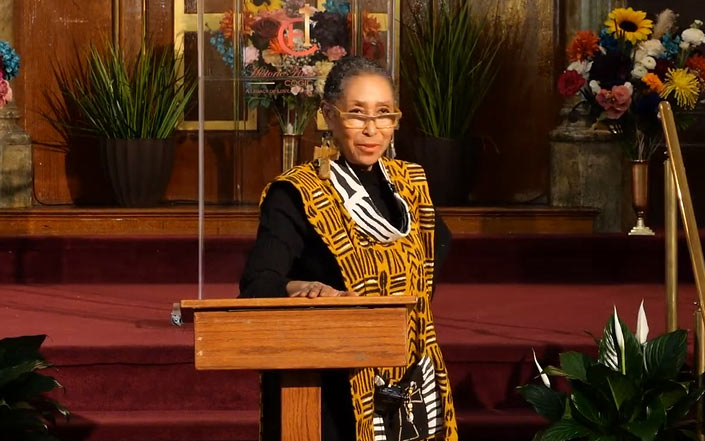
Brenda Brunson-Bey Delivered Her Increasingly Popular Pastoral Message “Sister, Who Do You Think You Are?” to Brooklyn’s Historic First Church congregation, March 29 Palm Sunday.


I am honored to welcome Brenda Brunson-Bey, the founder of Tribal Truths Collections whose Afro/African infused designs celebrate the culture while embracing global influences and contemporary styles. Her clothes are rooted in a family legacy of seamstresses and tailors. She brings spiritual and creative purpose to her work.

She holds a degree in biology and chemistry from Morris Brown College in Georgia. And studied fashion, buying merchandise and communications at the Fashion Institute of Technology. Her entrepreneurial experience includes her time at Brooklyn’s 4W Circle and her own signature store, through which she has bult a loyal following that includes individuals such as Aretha Franklin, Sweet Honey in the Rock, and Maya Angelou.


Beyond fashion, she has made meaningful community contributions through her involvement with markets, fairs and many events, including Fort Greene Juneteenth and other arts festivals. She brings together in one place women and families who sell merchandise to give each an opportunity to shine and prosper.

Brenda Brunson-Bey: Happy Palm Sunday and Happy Womens HerStory Day! I always like to put an extra meaning on things. I call women’s history, Herstory.
When we have Black history month, I call it Ourstory month because we hear too much of his Story about us. So, this is about our story, about US.
My name is Brenda Brunson Bey. It is a pleasure to be here. I feel like I’m home.
I’m from Augusta, Georgia. My peopole are from Georgia and South Carolina. I grew up going to church with one of the first black women to have a church there which was not looked at as something so great at the time. I’m a Civil Rights baby, was in high school and college when Civil Rights was starting.
But my grandparents came from South Carolina and we also went back once a month to what we call our home country church, Poplar Spring Baptist Church. The singing here reminds me of my home church … because it, like my home church’s music, celebrated us as a people. And the poem says …
Our worst fear is not that we are inadequate
Our deepest fear is that we are powerful beyond measure
It is our light, not our darkness that most frightens us.
We ask ourselves who am I to be brilliant, gorgeous, talented and fabulous?
Actually, who are you not to be?
You are a child of God.
Your playing small does not serve the world,
There is nothing enlightening about shrinking so that other people won’t feel insecure around you.
We were born to manifest the glory of God within us.
It is not just in some of us. It is in everyone. And as we let our own light shine, we unconsciously give other people permission to do the same.
As we are liberated from our own fear, our presence automatically liberates others.”


These words were eritten by a woman back in the 70’s Maryim Williamson.
Nelson Mandela spoke them very often when he was alive; they say something about who we are as a people.
Recently I was asked to be a Guest Editor for a Woman’s Herstory piece for the local paper called Our Time Press. Do you know it? It’s been around for some 30 years, run by a husband and wife.


And they asked me would I do a story on myself and I said yes, but I don’t go anywhere by myself. I always bring along as many people as I can.


So, I asked Our Time Press, “Would you mind if I expand on the stories?” And they did not. I left the papers home, but you can go online and find them on ourtimepress.com


We have one more story to do coming up in next week’s piece, but in total I got my story plus the insights of nine other women other than just myself into a story that has become a series with a directory to follow.


Co-Founders’ Note to Readers: Visit ourtimepress.com or YouTube to hear Sis. Brunson-Bey’s moving comments about US to Historic Church’s congregation. A woman who, creatively and consistently, puts into practice what she preaches, Brenda’s work has engendered support for Our Time Press in spreading awareness of the cultural significance of all of us embracing and telling Ourstory. Thank You, “Dr.” Brunson-Bey.