

An Our Time Press Special
(Winner 1998 New York Association of Black Journalists First Place in Personal Commentary)
By David Greaves
The empty buses rolled into Brooklyn early Saturday morning. Across the rain-washed Manhattan Bridge, the Greyhounds came, their empty seats silhouetted against gas station neon, appearing as ghosts through fog-wet windows. The buses were coming to transport the keepers of the maternal instinct of the African People. The Mother Wit. The Women.
It was Saturday, October 25, 1997. And as if to demonstrate the power of the Sisterhood, two women, known only to family, friends and co-workers, gave life to an event which will stand as a milestone for Africans-in-the-Americas.
As they returned from the March, we saw that over a million women had flexed a spiritual muscle that did not involve the usual power players of big-time media, money, national fame or political clout. This March is another stunning achievement in the legacy that Black women have given America.
Whether it was Sojourner Truth, Harriet Tubman, Fannie Lou Hamer, Ida B. Wells, Mary McCloud Bethune or any of the unknown others, March conveners Phile Chionesu and Asia Coney, take their place in the long line of women who saw the need to save the children of our ancestors and acted. It was about women beating a spiritual drum that summoned over a million souls, and by its very existence, told them anything is possible.
This is the spirit that many bring back and put to work in their lives and in their homes. It is a nurturing process, and as the first life-givers, African women have had more practice than most. That shared consciousness of childbearing and nurturing in hard circumstances allows them to communicate and connect on a level that men have to work at to even approach.
During the Million Man March, there was hugging and good feeling, and there is no denying that much personal and practical work was done. But from the women who loom large in my life, I have learned that they communicate differently and, in more detail, than men do. What many men are now learning to do, many women have mastered long ago. Now they are moving to some other level of spiritual connectivity that we will learn more of as we watch it take shape and crystallize into action. And that is what makes this coming together of women so potentially powerful.
Women are convening the Mother Wit. They are focusing on a series of goals. And we at OUR TIME PRESS are not going to miss the opportunity to record embryonic stages and chart the progress. It is necessary that this be done so that proper credit can be given. We have experienced the effects of the Million Man March on the men and on their communities in ways subtle and unknown. Businesses were born, attitudes were changed and lives were touched. This paper itself was helped by the energy after that March.
In urban centers across America, crime has been going down. We know intuitively that the work of the men returning from our March had a large role in that. But because there was little charting of the effects of the individual work that the returning men did: the tutoring, the mentor programs, the lives that they touched, the result of their efforts is a prize that others are claiming.
This will not happen with this Million Woman March. Partly because it follows the Million Man March and lessons have been learned, but mostly because it is women who did it. Over the next few months, there may be profound changes in our communities; and while others will be recording them, OUR TIME PRESS would like to record them also.
Now that the March is over, as plans are made and actions are taken, we will be continuing this mission. Readers may want to write to us about what they have been doing and the results of those actions: whether it is nurturing businesses, or nurturing the diverse elements of the home and the village, write about it. OTP will be taking periodic looks at these efforts, and like a stop-action camera, trained on a flower in bloom, we will attempt to record a small part of the achievement.
As we celebrate the 2026 March International Women’s “Herstory” Month, let us take time to remember, elevate and pay homage to Our Sisters on the ground who are leading efforts nationwide to build and sustain community, while providing support — and shoulders — for each other in these critical times.
Our Time Press pays tribute to women in the community — most barely known — who are carrying on the work of the women who came before them, who helped create them.
Ideally, they should be told of their fierceness, talent, beauty, intelligence and appreciated for their works. However, when they rise up warrior-like, ready for action, there are some who would bring them down, and query, “Sister, Who Do You Think You Are?”
Ten powerful sisters declare their Somebodiness and their strength through their strong answers to that question in short vignettes, this week and next.
Those stories remind us that while Sisters face an uphill battle, they’ve been facing it for generations before us. And young Sisters moving up from the rear may face it for generations ahead of us. But either way, all things equal, it’s a win-win. For Strong Sisters.
We will accept real support, the real love, the real camaraderie and the real estates stolen from us.
So, this month let’s take the time to celebrate give The Sisters.
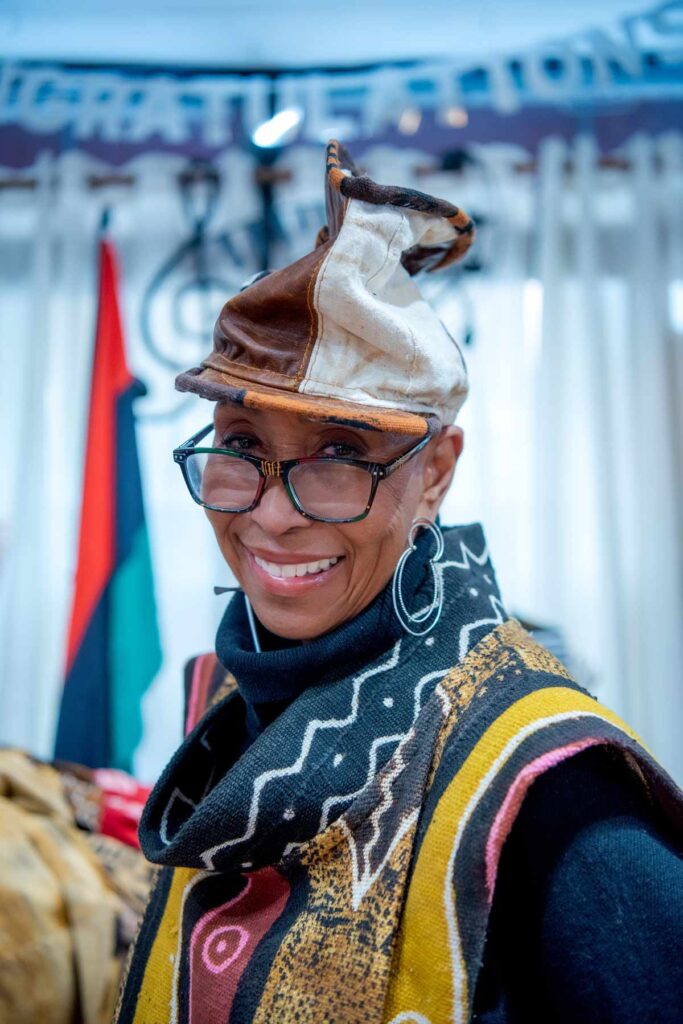
As a young woman growing up in the 50’s and 60’s in Augusta, GA, sewing was always a piece of southern culture. Each girl had to learn to crochet by 8 or 9 years old. By 10 or 11, you had to be able to embroider a pillowcase or sheet edge. In High School, we had a class called Home Economics, where even boys got to know basic hand stitching.
Creating was always a part of my life from drawing and painting to crochet and knitting and sewing. An elder neighbor, Ms. Missy gave me my first foot pedal sewing machine. This gave me the capacity to make garments. I started altering my bought clothing and customizing and redesigning as a teenager. By 16, I was making my and some friends prom and special event costumes and dresses.
Later in life, I found out from my father’s oldest sister, Aunt Ruth Reid, that the Brunson family was raised “post slavery” to creatively sew and tailor. My father, Bill Brunson, Sr., came to New York in 1933. An extraordinary tailor, but because of racism, could only get a job in a Jewish owned cleaners doing alterations.
My Aunt Ruthie migrated here, too and made her living as what was then termed, a seamstress but could design and create any garment from cutting to completion. I always admired her independence and take-charge personality.
If I think about who influenced me most besides the natural education from school, it had to be my Aunt Ruthie. When I went into my first real retail experience, 4-W Circle of Art and Enterprise Collective Store, Ruthie was so proud that I was carrying our “Brunson family,” tradition. She had always dreamed of having a sewing factory and store. After 4W, I opened my own retail store, Tribal Truths Collection, which served me and the community for 16 years.
While I don’t presently have a physical retail space, I continue to create monthly collective Pop-Ups and semi-annual shows and sales, here in New York and other cities. We call these our customized “traveling stores,” which feature from 6-18 other culturally focused artists, jewelers, designers and craft persons.
My advice to others is to study your family creative gifts and traditions no matter artistic, technical, medical, etc., because I believe our ancestry makes you form, understand and carry on your innate and God-given interests. Develop, even as a hobby, if not a career, so these ancestral gifts and dreams can be passed on through “YOU,” to the next and future generations. “YOU,” truly are your ANCESTRAL DREAM-LINK.
Brenda Brunson-Bey is Founder of Tribal Truths and Guest Editor, Our Time Press 2026 March International Women’s History Month
Dr. Norma Raybon of Spelman College Helped Me Find My Voice
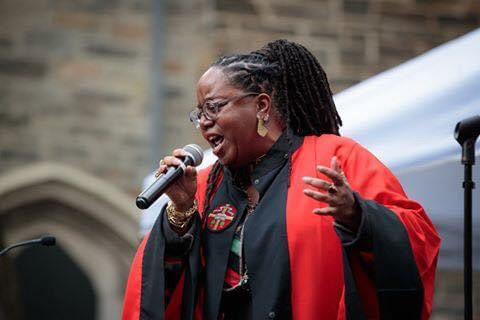
“To inspire” originally carried a literal sense of breathing life into something. Its meaning expanded later to include an external influence animating a person’s mind or spirit. It is the sentiment I apply to my resilient college music instructor, Dr. Norma Raybon, who inspired me to sing by breathing life into my voice.
I first joined my church’s choir around age 11, and from grades 6 through 12 I had an “average” voice. But my church choir was filled with loving, maternal women who were always gracious and supportive. My choir director was my mentor & protector, making sure I always had a ride to and from rehearsal to whichever random foster home the State of Massachusetts had assigned to me.
Because of my disorganized childhood, I nearly missed my opportunity to attend Spelman College in Atlanta, Georgia. I registered for classes over the phone and most of the required first-year classes were already full.
The registrar asked if I had any hobbies or interests that would translate into courses. I casually mentioned the debate team, working after school at the Red Cross and singing in the choir. I never guessed how important the choir would be. The next thing I knew, I was enrolled in Music Theory and The Spelman College Glee Club (SCGC) under the direction of Dr. Raybon.
Unlike my church choir that rehearsed once a week and learned music by ear, SCGC met Monday through Friday, and I learned music via sheet music. Prior to Music Theory class, I had no idea how to read sheet music. Dr. Raybon seemed not to care. She held us responsible for singing every song with breathtaking beauty and an exhausting amount of power.
Dr. Raybon was different in that she focused on demanding intentional skill instead of rewarding genetic talent. Singing beautifully went from being forever impossible to presently difficult. Becoming an effective and reliable singer meant stacking certain habits until they became instinctive. Singing requires very deep and consistent breathing; the engagement of muscles in my abs and my back; constantly accurate posture; keen listening; uninterrupted observation and a good memory.
I also learned under Dr. Raybon that “singing beautifully” also requires: Punctuality. Organization. Practice. Rehearsal. Articulation. Volume. Precision.
I was so busy absorbing these new skills and alien concepts that I had no idea I was finally learning to create art with my own body. All I knew was that Dr. Raybon was always asking for more and I was always willing to give it.
What Dr Raybon did not tell me was as important as what she knew and perhaps intentionally did not share. Dr. Raybon never warned me that singing could take over my identity. She did not promise free travel, billboards, hotels & beautiful clothes. She made no mention of applause, awards or financial gain.
Yet she gave me what she knew I already had inside: tools for life.
In the fall of 2000, I was on tour as a professional gospel vocalist singing both lead & background vocals in a whirlwind tour of Australia, New Zealand, Hungary & Italy. Since then, I’ve added many cities in France, Brazil, Argentina, Ecuador, Columbia, Mexico and here in the US.
In New York City, I’ve had the honor to perform multiple times at Carnegie Hall, Radio City, The Apollo, City Center, Lincoln Center, Symphony Space, and Aaron Davis Hall and innumerable sacred spaces and performance venues.
Dr. Norma Raybon gave me tools, and directives and standards. Because of her consistent reminders, I have permanent mental, physical and spiritual habits. Because of her expectations I am always seeking to learn music and to improve how I learn music. Because of her groundedness, being a professional vocalist is a fact instead of a compliment.
Because of her artistic generosity, I can honestly say that I sing to live and I live to sing and to inspire others coming after me. For that, I am eternally grateful.
- –Hortensia Gooding
Who Do You Think You Are?
In the beginning, I was extremely insecure. I had no idea—none—that I was talented in any way. I was humble, respectful, quiet, and always smiling. I followed directions well. My mother once told me I was going to be a teacher, and that was that. No debate. No dramatic career crisis. Just a declaration spoken with the kind of certainty only mothers possess.
When I graduated from college, many of my friends were headed to law school. It sounded impressive. Important. I told my mother I wanted to be a lawyer too. She listened and calmly replied, “Be a teacher first.”
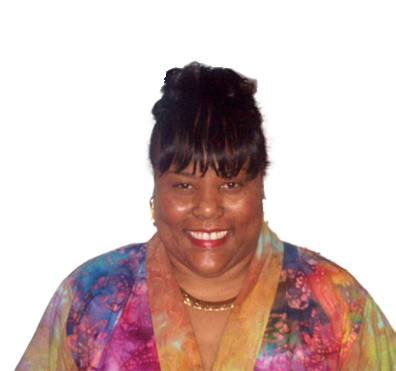
So I did—and I never looked back.
Teaching wasn’t just a job. It was my calling. Of all the grades I taught, kindergarten held my heart. The children arrived as blank slates—open, curious, fearless. Together we created worlds filled with joy, brilliance, and love. As they grew, so did I. My creativity expanded alongside theirs. Everything revolved around beauty, growth, and possibility.
And yet, despite all of this, there was a quiet question following me: Who did I think I was?
The truth is, I didn’t know I was smart until I was in my forties.
That realization startled me.
I went back to school and pursued a Ph.D., not for a title or prestige, but to prove something to myself—that I was, in fact, brilliant. That decision changed everything. As an elementary school principal, I became determined that no child under my leadership would grow up unaware of their own brilliance. I made it my mission to ensure that every student, teacher, and staff member knew they were extraordinary.
I didn’t just say it—I built an environment around it. A place where joy, laughter, peace, beauty, and love were not extras, but essentials. Under that leadership, the school became a National Blue Ribbon School of Excellence. It was astounding, but also deeply simple: when people believe in their brilliance and are supported with resources, care, and vision, they rise.
That was the artistry—nurturing brilliance and sustaining it.
I thought retirement might slow me down. Instead, it accelerated everything. When I retired, I was so busy I wondered how I ever had time to work. My creativity didn’t stop; it grew exponentially. I founded a tour company called Fantastic Travelers, designed especially for retired seniors. For ten years, I took groups around the globe—to Cape Town, Naples, Andalucía, Lisbon, Athens, Istanbul, Hong Kong, Bali, Singapore, Bangkok, Tokyo, Seoul, Marrakesh, and Dubai.
We traveled with a photographer, and together we created magazines and books after each tour. Every participant was featured as a VIP—because they were. Everyone was seen, celebrated, and included in the artistry of the experience. Travel became more than movement; it became affirmation.
My final creative endeavor brought everything full circle: The Art of Living, a book that weaves together my 40-year African American art collection with the design of my home. It is a reflection of a life shaped by intention, beauty, and spirit.
So—who do I think I am?
I am a brilliant, creative sister who has been blessed to express herself alongside other like minds. I am someone who has spent a lifetime expanding the meaning of artistry and creativity—through spirit, intellect, and physicality. And above all else, through spirit.
Because the spirit is where art begins and ends.
The spirit is universal.
The spirit is timeless.
And the spirit, ultimately, creates the true Art of Living.
We traveled with a photographer, and together we created magazines and books after each tour. Every participant was featured as a VIP—because they were. Everyone was seen, celebrated, and included in the artistry of the experience. Travel became more than movement; it became affirmation.
My final creative endeavor brought everything full circle: The Art of Living, a book that weaves together my 40-year African American art collection with the design of my home. It is a reflection of a life shaped by intention, beauty, and spirit.
So—who do I think I am?
I am a brilliant, creative sister who has been blessed to express herself alongside other like minds. I am someone who has spent a lifetime expanding the meaning of artistry and creativity—through spirit, intellect, and physicality. And above all else, through spirit.
Because the spirit is where art begins and ends.
The spirit is universal.
The spirit is timeless.
And the spirit, ultimately, creates the true Art of Living.
- Dr. LaVerne Nimmons