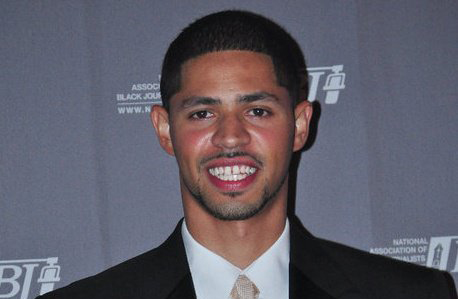
I graduated from Grand Street Campus High School (Progress High School for professional careers) nearly 9 years ago. Wow! does time flies. I remember me telling my friends that my dream is to either play professional basketball or to become one of the best sportswriters to come out of this beautiful borough called Brooklyn! At 22, I got my start at becoming a writer and working on my skills joining Our Time Press. After my first article and seeing my face in the newspaper and coming to tears, I took a minute to think about the time and dedication I put in to appreciate that fine moment. That’s why it gives me great pleasure to let the OTP universe know about these 3 young men from my high school alumni making a step forward towards greatness.
These 3 football stars, wide receivers Taysir Mack, Ahmad Bah and defensive back Justin Phillip were athletes to watch at the school and now have committed to colleges. On January 3rd, Mack decided to take his talents to the University of Indiana after committing to Rutgers earlier in the year. Mack literally made his decision just before his announcement and chose the Hoosiers over the Scarlet Knights after the program (Rutgers) fired head coach Kyle Flood. Mack is a three-star and is the No. 7-ranked prospect in New York State. The 6’-4” Mack is the Brooklyn Courier All-Brooklyn Player of the Year helping GSC towards an undefeated season. He put up some huge numbers catching 66 receptions for 1,210 yards and an amazing 16 touchdowns.
Mack’s teammate, Ahmad Bah, also recommitted with schools as well deciding to play for Rutgers over Buffalo. In his inaugural season with the Wolves, Bah had 33 catches for 727 yards and 10 TD’s. As for the third musketeer of the high school trio, Phillip had 73 tackles, 4 interceptions and a touchdown.
These three athletes not only put in great performances, but give other young athletes in Brooklyn hope that with hard work and dedication dreams can come true. It doesn’t have to do with where you come from or where you been, just have a plan and think “big” on where you’re heading.
Sports Notes: (Basketball) BREAKING NEWS AS WE GO TO PRESS. On Monday morning, the Knicks have decided to part ways with Coach Derek Fisher. In two seasons, the team went a combined 40-96 during Fisher’s stint with the Knicks. Assistant Kurt Rambis will take over on an interim basis.
The December 2015 Brooklyn Rental Market Report is out, revealing rent figures for studio, 1-bed and 2-bed units in specified neighborhoods increased moderately since November 2015.
Average studio rent in Bedford-Stuyvesant and Crown Heights were $1,603 and $1,690, respectively, compared to Brooklyn’s average of $2,156. Bedford-Stuyvesant’s increase is attributed to leasing 377 Jefferson Avenue’s luxury units.
Average 1-bed rents in Bedford-Stuyvesant, Crown Heights, Bushwick and Prospect-Lefferts Gardens (PLG) were $2,007, $1,931, and $1,702, respectively, lower than $2,586 for Brooklyn.
Average 2-bed rents in Bedford-Stuyvesant, Crown Heights, Bushwick and PLG were $2,422, $2,417, $2,362, and $2,214, respectively, below the Brooklyn average of $3,394.
Average rents in Brooklyn increased 0.02%, or $2,711.25 in November 2015 to $2,711.89 in December 2015.
The report doesn’t present data for 30 neighborhoods in East, South and West Brooklyn except for Bay Ridge. Anomalies such as publishing Crown Heights data but none for adjoining Prospect Heights, though new and rehab construction have occurred, exists in the report.
Find more statistics at www.mns.com/Brooklyn_rental_market_report.
Anaya Torrence is seen as a wonder for some people. Anaya started taking piano classes at Mrs. Robinson’s Music School at age 3. By age 5, she was playing Bach. Patricia Robinson, the music school’s director, believes “the sky’s the limit” for Anaya—her “Little Mozart”. Attika Torrence, her father, believes Anaya is one of many brilliant minds.
“I think my daughter is brilliant and I think many of our children are brilliant. Because [my wife and I] have invested in our family, it shows in our daughter.”
This investment is in the form of exposure to several arts and sports programs. Migdalia Torrence, Anaya’s mother, first visited Mrs. Robinson’s Music School when she was pregnant and returned two years later to hear that her daughter still had time before starting classes. At age 3, Anaya was given a test to judge her ability to follow directions and recognize shapes, which she passed. By 4, she played “Princess Waltz” at her first recital.
Ms. Torrence enrolled her daughter also in a performing arts program for children at Brooklyn College for instruction in ballet and musical theater. When Dwana Smallwood opened her performing arts center in 2015 on Lexington Avenue in Bedford-Stuyvesant, she had her daughter involved in the Summer Arts Intensive. The two also go to Prospect Park to play tennis and Kensington Stables for horseback riding.
Migdalia Torrence, previously the education director of a day care center, sold the business to be a full-time homemaker. She reasoned, “If I can be what I was to all those children, I can be all that for my child”.
This family tapped into the resources found in and out of Bedford-Stuyvesant to provide a fertile environment for themselves. “Don’t be afraid to let our children try different things. We have been searching for her talent, her brilliance. We’ve arranged for Anaya to do gymnastics, soccer, ballet, swimming, tennis, horseback riding and karate. All we’re doing is giving her the opportunity to exercise her ability”, explained Attika Torrence.
It is true that Anaya is not alone in her brilliance. She does not sit in an empty classroom at Success Academy in Bed-Stuy, at Brooklyn College, at Dwana Smallwood Performing Arts Center, nor other programs she attends. She is with other children, being a young girl. It is during recitals that her competitive side reveals itself. Mrs. Robinson declared, “In fact, she’s competitive with others. She doesn’t want anyone to be better than she is”.
The next opportunity to see “Little Mozart” compete with other bright stars is Sunday, February 21, 2016, 4:00 PM at Berean Missionary Baptist Church, 1635 Bergen Street in Brooklyn for the Mu Te Or chapter of the National Association of Negro Musicians Black History Concert.
The following article regarding the Atlantic Yards Community Benefits Agreement was published by OTP in August 2005. We reprint it now to see what was promised to get community support, versus what has been achieved with two of the main signatories, the ACORN and BUILD organizations, no longer around. There is the High School for Construction Trades, Engineering and Architecture, opened a year later some free tickets and use of a suite for the less popular events, and a call to NYCHA residents for possible jobs as “Concession Cashiers and Counter Servers,” who must be “able to work different shifts”. The seeming difference between the promise and the reality is something to be examined as rezoning and development negotiations move forward across the city. DG
By Danielle Douglas
Forest City Ratner Companies’ addition of the Community Benefits Agreement to their Atlantic Yards plan has gained the developer increased support from community leaders. At a July 19th rally at Duryea Presbyterian in Brooklyn, Rev. Al Sharpton joined Assemblyman Roger Green, Comptroller Bill Thompson and National Urban League President Marc Morial in pledging allegiance to FCRC’s proposal for the much-contested Atlantic rail yards. FCRC’s newfound supporters united with Rev. Herbert Daughtry of the Downtown Brooklyn Neighborhood Alliance (DBNA), Bertha Lewis of the Association of Community Organizations for Reform (ACORN) and countless other political, religious and community leaders to discuss the benefits of the CBA.
Rev. Sharpton, who has never backed a Ratner project, threw his support behind the developer because he believes, “This project gives the most to our community”. He went on to say that Extell, the developer behind the UNITY alternative, has not made as much of an effort to assess the needs of the Black community or engage its leaders. Sharpton believes that opponents of the FCRC proposal need to put aside their differences and consider what the CBA has to offer. “Only one of two people will win in this process. We can’t stand by and be outside with an attitude, unemployed, [with] no affordable housing while we have two rich guys arguing, one with a commitment to our people and the other who’s going to come in with an overnight do-it-yourself attitude,” says Sharpton.
Senator Velmanette Montgomery, one of the leading forces behind the UNITY alternative, says she is still analyzing the CBA and is particularly concerned with the enforceability of the agreement. However, the CBA does contain specific procedures, from mediation to litigation, if the developer breaches the agreement. Montgomery, who represents the district in which development is being built, says, “I feel compelled to be guided by my constituents and their sentiment is that issues of traffic impact, environmental impact, the size of the project and taking of private property have not been fully addressed. Before we get to the benefits plan, which are 10 years out, we should be talking about the impact the development is going to have on the community”.
The Community Benefits Agreement, which was signed on June 27th by Bruce Ratner, Mayor Bloomberg and a consortium of community leaders, seeks to provide economic and housing opportunities for members of the project’s surrounding community.
Workforce Development Component
In order to address disproportionately high unemployment rates for people of color, Brooklyn United for Innovative Local Development (BUILD), one of the authors of the CBA, is working to develop and implement the workforce terms of the agreement. As it stands, the agreement requires the developer to hire at least 35% minority and 10% female construction workers, as well as award 20% of contract dollars to minority-owned construction companies.
Many immigrant minorities have access to capital via loans from their national banks, a financing option that’s unavailable to African-Americans. To aid those who may not otherwise have access to much-needed capital to bid, the director of BUILD’s small business development, Michael West, says, “Forest City Ratner is using its financial leverage with financial institutions to make available loans, lines of credit and other resources to minority business, construction businesses and other businesses that need those capital input. Of course, there’s a process that they are going to have to go through to qualify, but those resources will be available to minorities that are not tapped into banks and foreign countries where they have access to capital”.
Our Time Press questioned the broad definition of the term “minority” and wonders what percentage of the contract dollars promised to minorities will actually go to Black- and Hispanic-owned companies. Assemblyman Roger Green, who is working with BUILD, says the information is still forthcoming, but believes attention should be focused on getting a commitment on the construction managers of the project. Green revealed that Atlanta-based McKissack & McKissack, the oldest African-American construction company in the country, would in fact be the construction managers for the first phase of the arena development. Decisions on remaining managerial posts are yet to be made.
Among the many initiatives of the workforce component of the agreement, one of the standout long-term initiatives is the creation of a High School for Construction Management and Trades. “The school will focus on construction technology, construction management and facilities management; students who graduate from the school their senior year will receive a regents diploma and a union card,” says Green. Another attractive initiative is the Employment Linkage and Targeted Job Training, which seeks to match the participant’s level of skill with that required by employers’ business objectives.
As with every development that affects low-income communities, the promise of jobs remains a primary buzzword in the fight to win over residents. However, many of the jobs promised tend to be minimum-wage positions with no room for career growth. Green says, “The pre-construction, construction and post-construction will all be tied to project labor agreement with prevailing wages. That’s being hammered out now; we did our part by defining the workforce development component, but organized labor now has to come to the table and essentially establish a Project Labor Agreement”.
Housing Component
ACORN is leading the development and implementation of the housing initiatives prescribed by the CBA, which calls for 50% of the 4,000 to 4,500 units to be designated affordable housing. “This project includes 2,250 units of affordable housing starting for people who earn $13,000 on up,” says West. According to the terms of the CBA, FCRC and ACORN have committed to long-term apartment affordability and not only affordability at initial leasing.
One of the largest points of contention with FCRC’s proposal has been the developer’s intention to use eminent domain to obtain 13 of the 24 acres needed for the project. The CBA briefly addresses this concern by acknowledging that the developer will provide rental units to displaced residents, but does not make any effort to negotiate the use of the controversial measure. At the rally, Assemblyman Green said the abuse of eminent domain was more of a human rights issue than a property rights concern, but he went on to say that residents in low-income communities are being displaced on a daily basis because of exorbitant rents. He suggested that some Prospect Heights residents’ homes might have to be sacrificed for the greater good of the community, low income to upper income, as a whole. Green quoted Dr. King in saying, “An injustice anywhere is a threat to justice everywhere”.
Community Facilities & Amenities Component
The DBNA will take the lead on this initiative, which includes the construction of a health care center and six acres of open space for community use. The developer will also make the arena available to community groups as well as designate a number of seats for seniors and youth throughout the year.
Environment Assurances
The First Atlantic Terminal Housing Committee (FATHC) will oversee this component of the agreement; establishing a Committee on Environmental Assurances to address the short- and long-term environmental issues that will affect the surrounding community as a result of the intended project. Environmental issues to be addressed include, but are not limited to: an on-site and off-site rodent abatement program; a staging plan for construction that minimizes the effects of idling trucks; a pedestrian and vehicular traffic plan; and encouragement of all contractors to use low sulfur diesel in trucks operating at the project.
The Metropolitan Transportation Authority(MTA) is slated to make a final decision between Extell Development Corporation and Forest City Ratner Companies before the end of the summer. The hope is that whichever group wins the bid, the promises to involve the community in the development process will be kept and consideration will be made of the effects this project will have for years to come.
For the complete Community Benefits Agreement please log on to Brooklyn United for Innovative Local Development’s (BUILD) website at http://www.buildbrooklyn.org (THIS SITE IS INACTIVE)
Michael Feeney, seasoned in his field on the level of veteran journalists who’ve spent two or more decades in print, cared for his community, his culture, his craft. And his work reflected it. We met him in 2010 during the Schomburg’s celebration of the donation of Maya Angelou’s collection. Michael covered it for the NY Daily News. He was 26. And he was impressive. We were thrilled when the Daily News selected him to run their Harlem neighborhood beat, and elated with his move to Harlem around that time. An interview with Khalil Gibran Muhammad, the Schomburg Center director, was the last time we sat with Michael. We felt privileged sitting in on the conversation between those two brilliant young men. As with Khalil, we thought of Michael as “our future”. We are saddened and we will miss Michael Feeney.
NABJ Mourns the Loss of Member Michael J. Feeney
WASHINGTON (Feb. 1, 2016) — The National Association of Black Journalists (NABJ) mourns the loss of member Michael J. Feeney, a former reporter for The New York Daily News, immediate past president of the New York Association of Black Journalists and a past recipient of NABJ’s Emerging Journalist of the Year Award.
Feeney, 32, died Sunday after going into cardiac arrest while being treated for a staph infection in his kidneys, according to an obituary published in The Daily News.
“I am shocked to learn of Michael’s passing. He was a respected leader within NABJ, having served with distinction as chapter president of the New York Association of Black Journalists for years. His leadership led to that chapter receiving the NABJ Chapter of the Year Award,” NABJ President Sarah Glover said. “He was a tenacious journalist who possessed a passion and energy for telling stories reflective of diverse communities — stories which otherwise might not have been told.”
Glover first met Feeney in 2003 at the NABJ Region II Conference in Atlantic City as he traveled with other Delaware State students to their very first NABJ conference. She fondly remembers his ambitious desire to learn the craft and meet working black journalists.
Feeney learned journalism from the best. He was taught by NABJ founder DeWayne Wickham at Delaware State University and was a founding member of the university’s student chapter.
“Michael Feeney was friend, a mentee and a former student of mine whom I admired greatly. He was far more talented than he allowed himself to believe; much more the master of his destiny than he was willing to contemplate,” Wickham said. “He was an immensely talented young black man for whom — like far too many of our young black men — death came way too early. I trust that he is already at work in God’s newsroom.”
“I am heartbroken to hear of Michael’s untimely passing as I have watched him grow from a young inquisitive child into a remarkable man and journalist,” said Allison J. Davis, an NABJ founder. “Michael often thanked me and the late great Reggie Harris for igniting the spark that ultimately became his profession, but it was I who thanked him for making us so proud of his many accomplishments in the industry we so dearly loved. His death is a great loss to journalism, NABJ and to our community of Teaneck, New Jersey, a place he still called home. He will truly be missed by all the lives he touched.”
For five years, Feeney distinguished himself as a versatile reporter at The New York Daily News. Feeney advanced from being a crime reporter to covering Upper Manhattan, which included the Harlem, East Harlem, Washington Heights and Inwood neighborhoods. While excelling as a beat reporter, he also covered entertainment and culture showing an innate ability to shift from hard news to feature reporting.
As a freelancer, Feeney covered the riots in Baltimore following the death of Freddie Gray for NBC BLK. Prior to working for the Daily News, he covered entertainment and culture for The Record in North Jersey and news and entertainment for TheGrio.com. He contributed to EBONY Magazine, including a feature story on actress and HIV/AIDS activist Sheryl Lee Ralph and Hairfinity owner Tymeka Lawrence.
“The New York Association of Black Journalists is saddened by the passing of former President Michael J. Feeney. It is with deep sorrow that we mourn him,” NYABJ President Julie Walker said. “He was a dedicated leader of the organization and an outstanding journalist. Michael, who served four years as president of NYABJ, worked tirelessly furthering our goals and revitalizing the chapter. He was a mentor to so many just starting out as journalists and a constant voice for those working tirelessly in media.”
A proud native of Teaneck, New Jersey, he was a 2005 graduate of Delaware State University. Feeney was a champion of historically black colleges. Upon being honored with NABJ’s Emerging Journalist of the Year Award in 2010, he went on a speaking tour which took him to several HBCU campuses.
“Michael was a gregarious, warm and joyous person,” Glover added. “‘Feeney,’ as he affectionately was known, inspired veteran journalists and aspiring journalists because of his energy, his enthusiasm and his commitment to helping others. He was a little brother to me and so many NABJers.”
Funeral arrangements are pending.
NABJ extends its sincerest condolences to Michael’s mother Ms. Reba Willis, his twin brother Anthony, their family and Michael’s colleagues and friends who also mourn his passing.
An advocacy group established in 1975 in Washington, D.C., NABJ is the largest organization for journalists of color in the nation, and provides career development as well as educational and other support to its members worldwide. For additional information, please visit www.nabj.org.