The final general election presidential debate between Hillary Clinton and Donald Trump will take place Wednesday, October 19th. The debates start at 9:00pm and will run uninterrupted for 90minutes.
Third and Final Presidential Debate: Where to watch and what to expect
Coaches’ Corner: H.S. Girls Varsity Soccer
H.S. Girls Varsity Soccer
Brooklyn Tech vs. James Madison, 10/9/2016
Tech 3, Madison 0
Photos & Interview: Nathaniel Adams
Brooklyn Tech Coach Peter Schmidt-Nowara:
“The game went really well. In our last game we had just played this team last week, and the game was far more intense. We made it to the last minute, Brooklyn Tech won the game from a last-minute call. The early goals can help you spread the play and keep possession. I am really pleased with the game. Nia Blankson got the first 2 goals. The last goal was scored by Nicole Sparacio.”
James Madison Coach Richard Tighe:
We gave them too many chances early in the game to score. We were a little loose in defending, especially in midfield, kids running into the play, and when you get behind 2 goals to a team as good as Brooklyn Tech, it is really tough to come back.
So I talked to the kids by halftime about digging in and being a little tougher. By the second half, we controlled the plays a little bit more. We had one breakdown which led to a goal by the other team. But it was a much better second half, but unfortunately, the problem is, you can’t put yourself into that position.”
What’s Going On By Victoria Horsford
By Victoria Horsford
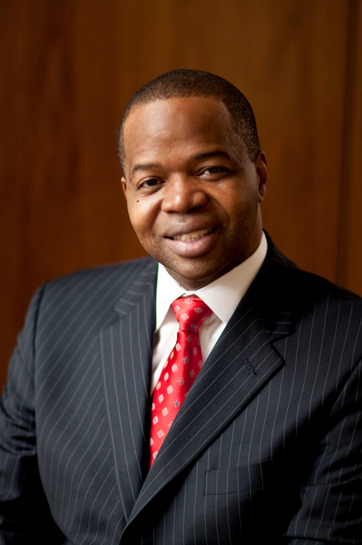
Kenneth ThompsonKENNETH THOMPSON
Kenneth Thompson, Brooklyn District Attorney, 50, died a few days after announcing a leave of absence, owing to a battle with cancer. Arguably one of the best and brightest District Attorney’s in the United States, his transition is a major loss for the people of Brooklyn and anyone interested in his brand and interpretation of the American criminal justice system. During his three years in office, he casted a wide net to address ways of making the justice system work for all of his constituents. His death is a major loss. I always thought that the District Attorney’s Office was the gateway to much larger, greater things for Thompson.
THE 2016 ELECTIONS
Without benefit of any crystal ball or soothsayer, I mused a few weeks ago that the American Fourth Estate created Donald Trump, GOP presidential hopeful, and that it was media’s responsibility to bring about his demise after the mysterious weekend Trump tapes which aired nonstop! I also reckoned that reality TV Trump would also shoot himself in the foot, accelerating his fall. He is doing a good job. The destruction of the Republican Party has been a part of the collateral damage of his rise to GOP prominence. American politics is so fluid today, thanks to the Donald, not only does a Hillary Clinton White House victory seem inevitable, it is possible that the Democrats are in a position to retake Congress.
Interim National Democratic Committee Chair Donna Brazile has her work cut out for her while war rages within GOP ranks between Trump and GOP incumbents. She can help steer the Democrats to multiple victories at the White House and in Congress; ideally delivering a majority in both chambers. Trump is the inadvertent gift that keeps giving to America and the Democratic Party. No one envies candidates who are on the GOP undercard which Trump heads. The gods work in mysterious ways.
HARLEM, USA
Assemblyman Keith Wright
More news from the Whole Foods Building on Lenox from 124th-125th Streets. American Outfitters opened its palatial doors last week following the BURLINGTON lead. A TD Bank branch opens on October 15 on Lenox at 124th Street in Harlem …. $150 and $50 VISA gift cards are TD incentives for new customers……… On 125th Street between Fifth and Lenox, the signage is up for TJ Maxx and Bed Bath and Beyond.
Assemblyman Keith Wright spoke at the monthly Community Board 10 meeting last week. He said that he did not know where his career would twist or turn next. He was humble and appealing asking the community to reach out to him with suggestions about his career direction. His CV is rich with possibilities. A NY attorney before his career in public service, scion of one of Harlem’s most prestigious families, he can do almost anything. Rumors persist about his return to the NYC Council.
EDUCATION
Supreme Court Justice Clarence Thomas is an invisible man at the new Smithsonian Museum of African-American History and Culture. And white American conservatives are pissed. Kudos to the museum staff, what an enlightened oversight. One of my major regrets about the “Age of Obama” is that he never named a Black person to the US Supreme Court. African-Americans do need someone with Black sensibilities among the elitist SCOTUS. Clarence Thomas does not fit the bill. He takes orders from the American far right and the likes of the billionaire Koch Brothers.
BLACK ENTERPRISE
Read the Fortune magazine article, 50 Most Popular Women And What We Can Learn from Them. African-American women who made the list are Rosaling Brewer, Sam’s Club CEO/President, #19; Ann-Marie Campbell, Home Depot EVP US Stores, #20;
Ursula Burns, Xerox CEO/Chairwoman, first Black woman to run a Fortune 500 Company, #20; and Beyonce, who is Fortune’s Bonus Pick, #51. Hillary Clinton is on the cover of the same magazine with article, “IS HILLARY GOOD FOR BUSINESS: An Inside Look At Her Plan for the Economy”.
Read Forbes magazine observation about Cash Kings. For more than a decade, Forbes has been monitoring the Top 20 HIP-HOP Cash Kings. Rappers who have dominated that list in the top five include Dr. Dre, Puff Daddy, Jay-Z. These are performers who have earned an average of $22.5 million per act, per year, or a combined total of $4.5 billion pretax. Kanye West, Timbaland, Akon, 50 Cent, Drake are among the rap elite earners.
EDUCATION/CULTURE
Howard University’s Communication School celebrates its 45th Anniversary this year and gets a name change. The school will be renamed the Cathy Hughes School of Communications this month. Cathy Hughes is the founder of Radio One and TVOne media emporium and a philanthropist. Howard Communication School is the beneficiary of a $4 million donation by the Cathy Hughes and Alfred Liggins III Foundation.
The Dorsey Art Gallery presents a fine art exhibition, JAMES DENMARK, from October 23 to November 6 at 555 Rogers Avenue in Brooklyn, NY. [718.771.3803]
American history buffs and book lovers are advised to check out Gerald Horne, African-American professor/scholar, who is the subject of the 3-hour, IN-DEPTH session on BOOK TV this month.
Fine Arts photographer Chester Higgins’ new exhibit, PASSING THROUGH, hangs at the Sugar Hill Children’s Museum of Art and Storytelling, which opened on October 1 and runs through August 27, 2017. Show is a chronology of Higgins’ travels through Africa, the Americas and Harlem from 1969 to 2002. Sugar Hill Museum is located at 898 St. Nicholas Avenue in Harlem. [212.335.0004]
FALL PREVIEW
Women For Hillary In Harlem fundraiser is a hot ticket on Thursday, October 13 at Lenox Sapphire, located at 241 Lenox Avenue. Attendees can make a donation, register to vote on-site, get an absentee ballot for early voting and network. A-listers, politicos and muck-the-mucks will be in attendance. October 14 is the last day to register to vote in NY.
Café Mocha Radio hosts its 2016 SALUTE HER: BEAUTY OF DIVERSITY AWARDS, presented by Toyota, at Mist Harlem, 46 West 116 Street, October 13, 6:30 to 9:30 pm. Honorees are Harriette Cole, Lifestylist/Author; Tiffany “The Budgetnista” Aliche, Educator/Author; Chung Seto, Political Consultant; Jo-Ann & Aliyyah Baylor, Make My Cake principals; Dwana Smallwood, Smallwood Performing Arts; Monique Carswell, NBCUniversal; Corliss Stone-Littles, CSL; and Debra Fraser-Howze,OraSure Technologies. Café Mocha Radio, affectionately named “radio from a woman’s perspective”, and its NY affiliate, WBLS-FM, celebrate these distinguished women. For more info, call 917.217.2222.
Hazel Dukes
The West Harlem Group Assistance (WHGA) celebrates its 45th Anniversary of community development and service at a benefit gala honoring David Dinkins, the 106th Mayor of NYC; Hazel Dukes, President, NAACP NYS Conference; Reginald Higgins, Principal of PS 125 Ralph Bunche, on October 18 at 6 pm at the Espace Ballroom, located at 635 West 42 Street, Manhattan. Founded in 1971, the WHGA revitalized the under-invested West and Central Harlem communities, which had many pockets of urban blight. [Visit whgainc.org]
Colloquium Depot, Ltd. and CAMY (Connect-A-Million-Youth), Inc. co-host the Second Annual Arts Exhibition From Umbrellas to Canvas, which is a ban on bullying month event, on October 19 from 6-8 pm at Gibney Dance Studios, located at 280 Broadway, Manhattan.
Leake & Watts hosts its Annual Awards Gala on Thursday, October 27 and will honor Joyce Coppin Mondesire at the Pierre Hotel Manhattan. A children and family services organization, Leake & Watts was founded in 1831 as an orphanage, and has morphed into an organization serves morethan 11,000 individuals annually through its 43 programs at 27 sites scatters throughout New York City. which provided omnibus education, family support and stabilization, foster care and jevenuen justice services. Underserved population. Visit leakeandwatts.org/2016gala.
A Harlem-based consultant, Victoria Horsford can be reached at victoria.horsford@gmail.com
The View From Here
By David Mark Greaves
On the Passing of District Attorney Kenneth Thompson
Because of the life Ken Thompson lived, people are now free who were once in prison, minor offenders had their lives transformed and Brooklyn was blessed with a District Attorney who tempered justice with wisdom and set the gold standard for public service in Kings County.
To lose him so young, a man of such substance, so central to efforts of fairness in justice, so powerful and sure-footed on decisions whether popular or not, feels like something went wrong in the world of expected tomorrows, and the sorrow of the loss of his wife and children ripples across the borough and state and in exoneration movements across the country. Words cannot express the pain of his passing, but the diversity of Brooklyn in mourning together will be a fitting testament to the man and the county he served.
The Most Dangerous Terrorist: Donald J. Trump
Never has a terrorist threatened the institutions of the nation as Donald Trump has promised as we close out the last three weeks of this campaign for the Presidency of the United States of America. The world must be aghast that in a world where climate change is changing the planet and our grandchildren will not know the world we grew up in, where North Korea has nuclear weapons in the hands of a tempestuous dictator, where Israel builds more settlements and the Middle East has endless turmoil, where hundreds of thousands are being killed in wars and millions are refugees, and in this the greatest of nations is having debates about sex and calling each other liars. Oh my God!
There can be disagreements with President Obama on issues of foreign and domestic policy, but there can be no disagreement that with the three generations in the White House living quarters, we have had eight years of scandal-free grace and wit and a living example of what an ideal First Family would be.
After we’ve all taken a shower to wash off the stench Trump promises to bring to the next debate, let’s redouble our efforts to swamp him at the polls and ensure that the likes of him do not come this way again. David Mark Greaves
Correcting “Corrections”
NYC Corrections Commissioner Joseph Ponte in Deep-Dive conversation about a System he helped to improve Part II of II-Part Interview.
OTP Editor David Greaves: Rikers. Looking back at some reports over the last year or so, looks like you guys have some challenges.
Commissioner Ponte: That we do.
OTP: Could you give an overview of your 14-point plan and its impact?
Commissioner: We spent several months just kind of doing a very deep dive into the organization. I wanted to build off of what other people had done before. We found that City Hall, the City Council, nobody had any information on what things needed to be done in order to fix the issues in the New York City Department of Corrections. There was no overall plan.
So we issued a written survey to all of our staff and had 80% return — which is remarkable. The comments really gave us a sense of what was broken. It was an organizational health survey and we rated at the bottom of the barrel. You couldn’t have gotten any lower, really.
The staff was afraid and unhappy, and it showed. The place was dirty and there were the obvious things you see and hear about Rikers. The 14-point plan was really designed to address every issue and each issue was kind of dependent on the other. So a lot of things that were just either weren’t there or broken or had to get fixed in order for us to take the next step. For instance, we needed to hire more staff and better quality.
Problem was our applicant investigative unit wasn’t able to do that. It was too small and didn’t have the skillset to do that. So then we had a higher-up in the applicant investigative unit get the skills to interview and hire better staff. So everything we had to do from the very beginning to build the foundation was kind of from where the 14 points evolved. We then built the rest of it.
So the 14-point plan really encompassed everything, from the quality of staff to the training of staff to the safety of staff to the programming of inmates. I mean most of our inmates got zero to no programming. I mean they could go to rec, they could go to law library, but that was basically it.
They actually become very good at doing legal research. So that was their recreation so to speak, or program. There were no other options.
Because there was really no other options.
OTP: So you concentrated on all of these points in one unit as opposed to throughout the whole system.
Commissioner: Right. The entire process included cleaning the place up, doing the infrastructure changes, making sure all the locks and doors work and then retraining the officer, reclassifying the inmates, putting inmates, putting officers back, then the inmates in where the officer has ownership of his or her housing areas, and then adding the program piece.
So for most of these areas, there’s up to five hours of additional programs, that’s not counting rec and law library. That’s part of the additional programming. And some of the programming is done by our own counselors, so the plan also includes adding people full-time on staff.
Some of the plan is activated in the housing unit with the inmates that live there and some of it’s done in other areas within the facility.
OTP: So what are the most popular programs?
Commissioner: There’s no one-size-fits-all. It’s individually driven. For some, it’s education, others, food service handling. We’ve got a K-9 program which teaches them how to train dogs to make them adoptable. We’ve had electrical, plumbing. But barely, I mean it’s not teaching them to be plumbers or electricians; it’s introductory safety courses.
OTP: So they get certificates for the dog training program ….
Commissioner: Correct.
OTP: …and with the OSHA program, which people can’t wait to get into, you get an OSHA certification?
Commissioner: Right. So we teach the basics of safe food handling. When you get out of jail, and you got a record, your employment chances are difficult. So these guys understand that this certificate may be just that little but it can make you hireable where before you’ve got a criminal record and nothing else.
They’re signing up for this and we’re getting 60%, 70% participation in programs, which for me I’ve never seen in jails and prisons. Part of it is they’ve never had anything. We literally could offer nothing before. Participation in the “I Can” program is just exploding.
OTP: What are your goals for the correctional officer side? What have you done to change the correctional officer training and that kind of thing? What have you found is a challenge in this area?
Commissioner: Officers didn’t see themselves as role models. We had to shift the staff from focusing on the punitive. In the past, when inmates misbehaved, we locked them up. Misbehave again, we locked you up longer. So as we ended that model, we needed the officer to be more engaged with the inmate.
You’ll see them playing basketball, playing checkers, they have video games. Because that’s the only way you’re going to break through to have a dialogue. So it’s really for them to develop relationships with the inmate, so the inmate will actually talk.
These kids are tough so we’re not going to pat them on the back and have a regular conversation. You’re going to have to work on that for days and days and eventually there might be dialogue.
We had to change their role. Their roles were much different than they even are today and we’ve got some that felt good about that and we had some that thought the old way was better. So we’re in a transition point. `
Right, so we’re hiring a lot of new people. By next year, the end of next year, calendar year, we’ll have turned over almost half of our officers. So that’s a good opportunity to really change the culture.
We have a recruitment unit who will be more than happy to come and talk to any community, any group, any school, anytime. We have everything from cooks, mechanics, maintenance officers, nurses, doctors, I mean we, about anything you could possibly think of as a profession, there’s some of them in our system somehow.
Basically, all the inmate ever saw in the course of a day was their officer. Now we have counselors who work in the housing units with the inmates every day. That’s made a difference.
And any profession you can think of off the top of your head, we have probably somebody in the agency that does that; from planning, strategic planning to construction to buildings too, I mean the whole host of things. Because we do it all. So we build things, we manage buildings, we do maintenance, you know, so, we do plowing in the winter. We plow our own rows.
We started gardening programs in several of our facilities with the Horticulture Society of New York.
Probably one of the more impressive encounters I’ve had since I’ve been here was walking through our adolescent facility on some tour. I don’t know who was with us, and somebody asked the officer, you know, “How’s your job going?”
And the officer said, in his own words, that he felt really good about the job because he was here about changing peoples’ lives. To have an officer even say that, it’s like that it is a big — I was like wow! somebody listened. He thought of his job now not as a guard. He said, “I can change these guys’ lives”.
But really for me, it was like with all the hard work in the two and a half years I’ve been here, it’s nice to hear that, and he wasn’t saying that for me to hear. It was telling somebody that walked into it what he thought of it.
It’s like your role now is how you change peoples’ lives.
But the thing that it did was it, for the first time, it made the officer and the inmate have a dialogue about something that they both could work on. So to manage the dog training, to get them out for walks. (The Plan) just changed the conversation of the unit. It changed the officer’s role in those areas, like, overnight. And people were going in there, say, boy, this is remarkable, and it wasn’t about the dog.
It was really about the relationship, the officer and the inmates had to develop. And so we got now how many? And we’re trying to expand them more and more …
The officers (feel) they have changed peoples’ lives. I’m here in case there’s a problem, and that’s basically what my role was.
I don’t know of anybody who gets into corrections just to get into corrections. As I spend time in systems and get into the management of prisons and facilities, I see that the exciting piece is: you can change lives for the better, and culture piece: that you could change lives, change culture and basically change environment.