Home Blog Page 775

Commuter Vans Get More Legitimate

By Akosua K. Albritton

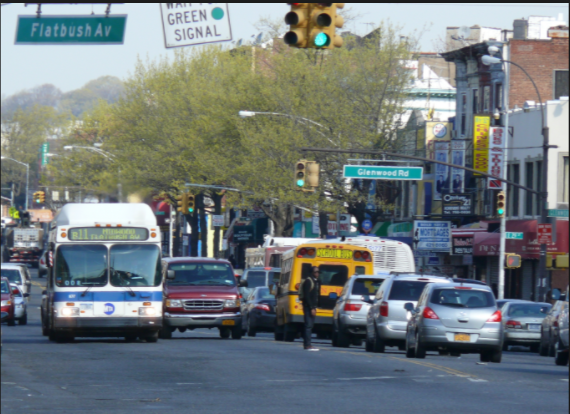
Every day, thousands of New Yorkers board commuter vans and buses to get to their destinations. The rides may be smooth or the rides may be nerve-racking. Most drivers play the radio for the passengers’ enjoyment, while others entertain passengers with the latest movies or music videos. For the most part, the drivers are men. Every now and then, passengers are greeted by a woman behind the wheel.

The drivers may be independent van owners or they are associated with a particular van line. In Brooklyn, the licensed van lines include Alexis Van Lines, Black Street Van Lines, Brooklyn Van Lines, Ace VIP Transportation and Royal Rose Transportation. Van lines in Queens specify the neighborhoods that are served. For example, Flushing is served, in part, by G & E Express, Inc. Jamaica is served by Ricketts’ Community Transportation Systems. Rosedale is served, in part, by Scarlet Girl Van Lines. Confidence Transportation serves Elmont. There are 54 TLC-licensed van lines that serve Brooklyn and Queens. There are at least two serving the Bronx, 12 serving Manhattan and four serving Staten Island.

Some issues that tarnish this industry are rogue commuter van drivers that aren’t licensed, commuter van drivers that are very lax in the upkeep of their vehicles, and reckless commuter van drivers. This industry turned a corner on January 25, 2017. In City Hall’s Blue Room, Mayor Bill de Blasio chaired a hearing on 14 pieces of legislation of which three, Int. No. 570-A, Int. No. 860-A and Int. No. 861-A, are classified as Commuter Van Reform Bills which deal squarely with more regulations for commuter van operations in the five boroughs. Those present to relish the moment were Leroy Morrison, owner of Alexis Van Lines; Winston Williams, owner of Black Street Van Lines; and Hector Ricketts, owner of Community Transportation Systems, Inc.

Mayor de Blasio informed the audience that the legislation would not be signed that day. “The City of New York has 30 days to have them signed or they will be executed into law automatically.” The mayor estimated “the signing occurring within two weeks”.

After reading the law classifications and numbers for the 14 pieces of legislation, the mayor moved into the hearing. Hector Ricketts was first to talk. His testimony addressed the need for the safety of the vehicles and the driving habits of van drivers. He also asserted, “The city will call commuter vans when we [New Yorkers] are in crisis. When it is over, you forget about us [van drivers]. Thanks to Nick Smith and his staff and the mayor and his staff for working with them to finally have the vans come out into the light”. Nick Smith is the Deputy Chief of Staff for CM Jumaane Williams, CD45. Smith is credited for finalizing the bills’ language. He worked closely on this project in order to gain traction for the bills and advocated for the bills within City Hall.

Following Ricketts was Leroy Morrison who said, “For years, it has been a situation of the city using commuter van lines when the MTA is on strike or there are floods or other bad weather conditions. But once the situation is resolved, we were put back in the shadows. But today is our day. Van lines are coming out of the dark and into the light finally”.

It is the offices of CM Jumaane Williams (CD45, Brooklyn), Chair of the Transportation Committee, and CM Daneek Miller (CD27, Queens) that penned the bills’ language and got them passed through the City Council. Int. No. 570-A “stops the practice of recording the requests for trips, services and passenger manifests”. Int. No. 860-A directs the “Taxi & Limousine Commission (TLC) to limit commuter van licenses to 735 unless an annual TLC study of van safety and public demand indicates otherwise”. Int. No. 861-A deals with the “penalties for operating an unlicensed commuter van: [Such] operation is punishable by a fine between $1,000 and $2,000 and/or up to 60 days of imprisonment. Minimum civil penalties would increase to the following intervals: $1,000 – $3,000 for the first offense; and $2,000 – $4,000 for subsequent offenses within two years”.

Another instrumental player in this legislative game is Phillip Hom, Special Counsel at Windels Marx. Hom’s specialties are ground transportation and government relations. He “prepares clients to comply with complex, legal and regulatory framework overseen by taxi and limousine regulators and public agencies”.

The sense of victory and accomplishment were apparent for Ricketts, Morrison and Williams. Hector Ricketts is called “the father of commuter vans”. He not only operates Community Transportation Systems, but is a consultant to motor coach, limousine, school bus and ambulette drivers. Winston Williams is a quiet leader, preferring to give the floor to more vocal advocates. Leroy Morrison is the consummate booster. This reporter met the three men while riding a commuter van the afternoon of the hearing. Morrison made other passengers aware of how vans were finally coming out of the dark and into the light of day. Possibly, the frequent reference to “the light of day” has to do with local authority getting active in stopping vans to check licenses.

Also present at the hearing was Alexis Van Line’s namesake. In 1997, Morrison shut down Pebbles Transportation to operate Alexis Van Lines. This business is named after his daughter Alexis. Alexis Morrison has not taken up the family business.
Black History Month: Dashikis and Dreadlocks

Learning to be Black and Proud

By Aishamanne Williams

I’ve had dreadlocks since I was 5 years old. My mother and father have them, so they were normal for me. I loved when my mother twisted my locks and put them in a ponytail or braided them.

image by YC-Art Dept

But my grandmother didn’t think they were normal. There were times when I’d be at her house playing by myself but listening to conversations between her and my mother: “If you’re not going to perm her hair, at least put some barrettes or bows in it. She needs to look more girly.” My mother’s responses were firm: “She doesn’t need to look ‘girly’, she’s already a girl. Her hair doesn’t need to be straight because she’s not white. She doesn’t have a problem with it, and it’s only when people begin telling her the things like you’re saying that she’ll start to feel like something is wrong with her.”

When my mother was a child, my grandmother combed and braided her hair. When she was a young adult she relaxed it herself. But when she got older, she became a Rastafarian, which is a spiritual movement centered around Black empowerment, living a natural lifestyle and praising Jah (God). That’s when she started wearing dreads.

My grandmother was worried that kids would make fun of me. I didn’t fear that because I didn’t understand it; I had no idea that my hair was something to make fun of.

I usually had it covered under a tam (my school allowed me to wear a hat to observe my religion), but when it wasn’t, classmates just asked innocent, curious questions like, “How long have you had locks?” Or, “Do they feel heavy?”

But in 3rd grade, when my parents switched me from private school to public school, that changed.

Different and Self-Conscious

At my new school, the questions about my hair were judgmental and mean-spirited. The school was predominantly Black, just like my previous school, but the students looked at me like I was different. The girls either permed their hair so it was straight or wore it in weaves. They wanted to know if I ever wanted to cut my dreads, if I felt bad about not being able to pass a comb smoothly through my hair. Even teachers asked me why my parents made me wear locks, as if they had forced me to do something against my will. There was an assumption that I didn’t like my hair. They felt sorry for me.

Whenever my friends had conversations about their hair, which was a lot, I didn’t join in because I tried to avoid the subject of my own hair as much as I could. But eventually, they’d focus on me; they acted as if my hair was something that happened to me, a punishment I was given.

“Would your parents ever let you cut your hair?”

“Yes, but I don’t want to.”

image by YC-Art Dept.

“Why not? Don’t you want your hair to be straight?”

“No, I don’t care.”

“I would die if I had to have the same hairstyle for the rest of my life.”

“I can put my hair into a lot of different styles.”

“So why don’t you do all those styles?”

“I don’t need to. I like it how it is.”

“Whatever. I feel bad for you.”

“For the first time, I became self-conscious. I worried that people insulted me behind my back. I tried to remind myself that my hair was a statement of pride, and my mother reinforced this whenever I spoke to her about it.”

“They don’t know themselves,” she would say, “and you do. They’re trying to be something they’re not and meet certain beauty standards, but you’re not doing that because you know yourself. Don’t ever let them make you forget who you are.”

She told me that society will try to make me hate my looks and aspire to be like the girls in the media, most of whom are white. Later, I learned that what my mother was talking about is “Eurocentrism”, a focus on European culture or history to the exclusion of a wider view of the world. “Your hair represents strength, spirituality and your African roots,” she’d say.

Black Girl Magic

When I entered 10th grade last year, a lot changed, both inside and outside. Phrases like “Black Girl Magic” and “Black Excellence” gained popularity on the Internet. New groups and magazines were dedicated to promoting self-love among people of color. Suddenly, it seemed like being Black was something to celebrate. Black performers like Amandla Stenberg and Willow Smith were outspoken about learning to love themselves and embracing their culture for its beauty. Learning about what it means to be Black and discussing it with other people helped me feel less different.

On platforms like Tumblr and Instagram, I learned the term “cultural assimilation”. The idea that people of color have internalized Eurocentric beauty standards and have thus turned to self-hate began to make sense.

Even from a young age, these standards are embedded into our psyches as children of color; we subconsciously believe that anything related to whiteness is beautiful, and the farther you are from that standard, the less appealing you are. Now I understand why the girls in my school had such a hard time seeing my hair as “beautiful”: my hair is a radical expression of my blackness, and other people simply couldn’t handle it.

Beautiful Black People

The summer before 10th grade I’d discovered street festivals and fairs where African jewelry, clothing and other items are sold. Whenever I went to one, I saw beautiful Black people. They all looked different but had one thing in common: They were unapologetically Black.

Their freedom to express themselves was like an energy that radiated from them; you could see it in their eyes and feel it when they walked. They may have felt it in me, too because at every fair I went to at least 10 people told me how beautiful my hair was. I didn’t look any different at these fairs than I did at school, but the audience was different: I was surrounded by people who were trying to reconnect to their roots and embrace their blackness, so they saw the beauty in me. My friends at school were blinded by Eurocentrism. It wasn’t their fault.

Fortunately, my mother helped me to understand that. She’d taught me about the social, political and economic implications of my race, and I knew that most of my friends weren’t raised this way. Her words took on deeper meaning as I got older.

I started to express my newfound self-love at school. I wore African head-ties, clothing and jewelry. My friends complimented me a lot and it helped me make new friends with people in my school who saw that I was celebrating my culture and they admired me for it.

I Love Your Dashiki!

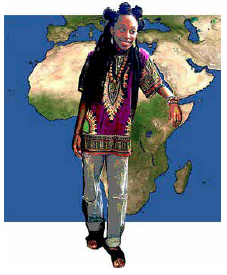
Every May, my school has a day called “Spring Fling”, where every grade is assigned a color and we come to school dressed in our respective colors. My grade had green, so I wore a purple and green dashiki (a loose, brightly colored shirt from West Africa), and an African beaded necklace with colorful earrings to match. I styled my hair up into buns. As soon as I got to school, the attention was all positive: “I love this look”, “Where did you get that dashiki?” “Your hair is so gorgeous”. The comments that really stuck with me were more specific, like, “I love how proud you are of your culture. It’s so admirable”. Or, “You’re so pro-Black. That’s really cool”.

The comments made me feel like loving myself was also about being an example to show others what freedom looks like. Two other girls in my grade started wearing dashikis. We are the minority, but we are being ourselves, causing ripples in the vast ocean of cultural assimilation and self-hatred.

Of course, you can be proud of being Black without wearing African clothing or dreadlocks. But by wearing these things, I feel I’m fighting the racist conditioning we’ve been subject to for generations. Seeing girls like me who celebrate their roots helps other girls feel more confident in expressing themselves however they want to, and that is important to me.


Coretta Scott King Speaks

Mr. Chairman and Members of the Committee:

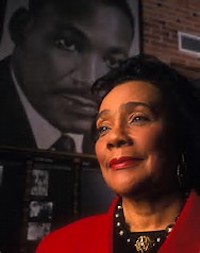
Thank you for allowing me this opportunity to express my strong opposition to the nomination of Jefferson Sessions for a federal district judgeship for the Southern District of Alabama. My longstanding commitment which I shared with my husband, Martin, to protect and enhance the rights of black Americans, rights which include equal access to the democratic process, compels me to testify today.

Civil rights leaders, including my husband and Albert Turner, have fought long and hard to achieve free and unfettered access to the ballot box. Mr. Sessions has used the awesome power of his office to chill the free exercise of the vote by black citizens in the district he now seeks to serve as a federal judge. This simply cannot be allowed to happen. Mr. Sessions’ conduct as a US Attorney, from his politically-motivated voting fraud prosecutions to his indifference toward criminal violations of civil rights laws, indicated that he lacks the temperament, fairness and judgment to be a federal judge.

The Voting Rights Act was, and still is, vitally important to the future of democracy in the United States. I was privileged to join Martin and many others during the Selma to Montgomery march for voting rights in 1965. Martin was particularly impressed by the determination to get the franchise of blacks in Selma and neighboring Perry County. As he wrote, “Certainly no community in the history of the Negro struggle has responded with the enthusiasm of Selma and her neighboring town of Marion. Where Birmingham depended largely upon students and unemployed adults to participate in non-violent protest of the denial of the franchise, Selma has involved fully 10 per cent of the Negro population in active demonstrations, and at least half of the Negro population of Marion was arrested on one day.” Martin was referring of course to a group that included the defendants recently prosecuted for assisting elderly and illiterate blacks to exercise that franchise. In fact, Martin anticipated from the depth of their commitment twenty years ago, that a united political organization would remain in Perry County long after the other marchers had left. This organization, the Perry County Civic League, started my Mr. Turner, Mr. Hogue, and others, as Martin predicted, continued “to direct the drive for votes and other rights.” In the years since the Voting Rights Act was passed, black Americans in Marion, Selma and elsewhere have made important strides in their struggle to participate actively in the electoral process. The number of blacks registered to vote in key Southern states has doubled since 1965. This would not have been possible without the Voting Rights Act.

However, blacks still fall far short of having equal participation in the electoral process. Particularly in the South, efforts continue to be made to deny blacks access to the polls, even where blacks constitute the majority of the voters. It has been a long, up-hill struggle to keep alive the vital legislation that protects the most fundamental right to vote. A person who has exhibited so much hostility to the enforcement of those laws, and thus, to the exercise of those rights by black people should not be elevated to the federal bench.

The irony of Mr. Sessions’ nomination is that, if confirmed, he will be given life tenure for doing with a federal prosecution what the local sheriffs accomplished twenty years ago with clubs and cattle prods. Twenty years ago, when we marched from Selma to Montgomery, the fear of voting was real, as the broken bones and bloody heads in Selma and Marion bore witness. As my husband wrote at the them, “it was not just a sick imagination that conjured up the vision of a public official, sworn to uphold the law, who forced an inhuman march upon hundreds of Negro children. Who ordered the Rev. James Bevel to be chained to his sickbed, who clubbed a Negro woman registrant, and who callously inflicted repeated brutalities and indignities upon nonviolent Negroes peacefully petitioning for their constitutional right to vote.”

Free exercise of voting rights is so fundamental to American democracy that we cannot tolerate any form of infringement of those rights. Of all the groups who have been disenfranchised in our nation’s history, none has struggled longer or suffered more in the attempt to win the vote than black citizens. No group has had access to the ballot box denied so persistently and intently. Over the past century, a broad array of schemes have been used in attempts to bloc the black vote. The range of techniques developed with the purpose of repressing black voting rights run the gamut from the straightforward application of brutality against black citizens who tried to vote, to such legalized frauds as grandfather clause exclusions and rigged literacy tests.

The actions taken by Mr. Sessions in regard to the 1984 voting fraud prosecutions represent just one more technique used to intimidate black voters and thus deny them this most precious franchise. The investigations into the absentee voting process were conducted only in the black belt counties where blacks had finally achieved political power in local government. Whites had been using the absentee process to their advantage for years, without incident. Then, when blacks, realizing its strength, began to use it with success, criminal investigations were begun.

In these investigations, Mr. Sessions, a US Attorney, exhibited an eagerness to bring to trial and convict three leaders of the Perry County Civic League including Albert Turner, despite evidence clearly demonstrating their innocence of any wrongdoing. Furthermore, in initiating the case, Mr. Sessions ignored allegations of similar behavior by whites, choosing instead to chill the exercise of the franchise by blacks in his misguided investigation. In fact, Mr. Sessions sought to punish older black civil rights activists, advisers and colleagues of my husband, who had been key figures in the civil rights movement in the 1960’s. These were persons who, realizing the potential of the absentee vote among blacks, had learned to use the process within the bounds of legality and had taught others to do the same. The only sin they committed was being too successful in gaining votes.

The scope and character of the investigations conducted by Mr. Sessions also warrant grave concern. Witnesses were selectively chosen in accordance with the favorability of their testimony to the government’s case. Also, the prosecution illegally withheld from the defense critical statements made by witnesses. Witnesses who did testify were pressured and intimidated into submitting the “correct” testimony. Many elderly blacks were visited multiple times by the FBI who then hauled them over 180 miles by bus to a grand jury in Mobile when they could more easily have testified at a grand jury just twenty miles away in Selma. These voters, and others, have announced they are now never going to vote again.

I urge you to consider carefully Mr. Sessions’ conduct in these matters. Such a review, I believe, raises serious questions about his commitment to the protection of the voting rights of all American citizens and consequently his fair and unbiased judgment regarding this fundamental right. When the circumstances and facts surrounding the indictments of Al Turner, his wife, Evelyn, and Spencer Hogue are analyzed, it becomes clear that the motivation was political, and the result frightening — the wide-scale chill of the exercise of the ballot for blacks, who suffered so much to receive that right in the first place. Therefore, it is my strongly-held view that the appointment of Jefferson Sessions to the federal bench would irreparably damage the work of my husband, Al Turner and countless others who risked their lives and freedom over the past twenty years to ensure equal participation in our democratic system.

The exercise of the franchise is an essential means by which our citizens ensure that those who are governing will be responsible. My husband called it the number one civil right. The denial of access to the ballot box ultimately results in the denial of other fundamental rights. For, it is only when the poor and disadvantaged are empowered that they are able to participate actively in the solutions to their own problems.

We still have a long way to go before we can say that minorities no longer need be concerned about discrimination at the polls. Blacks, Hispanics, Native Americans and Asian Americans are grossly underrepresented at every level of government in America. If we are going to make our timeless dream of justice through democracy a reality, we must take every step possible to ensure that the spirit and intent of the Voting Rights Act of 1965 and the 15th Amendment to the Constitution is honored. The federal courts hold a unique position in our constitutional system, ensuring that minorities and other citizens without political power have a forum in which to vindicate their rights. Because of this unique role, it is essential that the people selected to be federal judges respect the basic tenets of our legal system: respect for individual rights and a commitment to equal justice for all.

The integrity of the courts, and thus, the rights they protect, can only be maintained if citizens feel confident that those selected as federal judges will be able to judge with fairness others holding differing views.

I do not believe Jefferson Sessions possesses the requisite judgment, competence and sensitivity to the rights guaranteed by the federal civil rights laws to qualify for appointment to the federal district court. Based on his record, I believe his confirmation would have a devastating effect not only on the judicial system in Alabama, but also on the progress we have made everywhere toward fulfilling my husband’s dream that he envisioned over twenty years ago. I therefore urge the Senate Judiciary Committee to deny his confirmation.

I thank you for allowing me to share my views.


Washington (CNN)The Senate has silenced Elizabeth Warren

Washington (CNN)The Senate has silenced Elizabeth Warren.

And by doing so, majority Republicans just handed the liberal firebrand a megaphone — further elevating President Donald Trump’s fiercest and most prominent critic in the Senate and turning her into a Democratic hero.

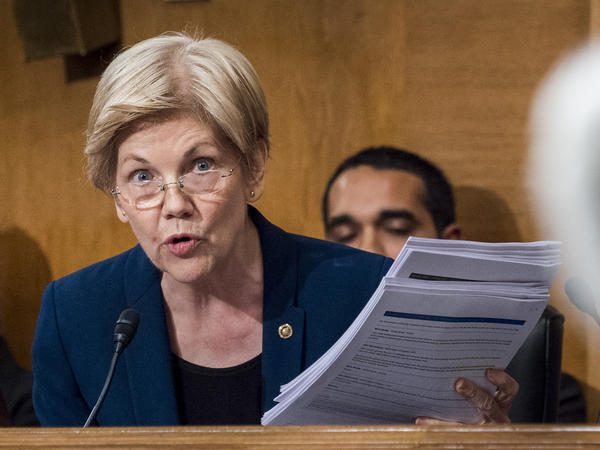
The rebuke of Warren came after the Massachusetts Democrat read a letter written 30 years ago by Coretta Scott King, the widow of Martin Luther King Jr., opposing the nomination of Jeff Sessions for a federal judgeship.

Warren cited the letter during a debate on the nomination of Sessions — now an Alabama senator — as Donald Trump’s attorney general. Reading from King’s letter to members of the Senate Judiciary Committee in 1986, Warren said: “Mr. Sessions has used the awesome power of his office to chill the free exercise of the vote by black citizens in the district he now seeks to serve as a federal judge.”

Republicans cried foul — charging that Warren violated Senate rules against impugning another senator. A vote along party lines upheld that decision, turning what could have been an ordinary late-night partisan floor speech for political devotees into a national story.

“They can shut me up, but they can’t change the truth,” Warren later told CNN’s Don Lemon.

READ MORE