Home Blog Page 768

Interfaith UniverSoul: “Using Humor to Beat Depression”

By Priscilla Mensah

Guess what everyone? The circus is in town, and attending may be not only entertaining but also good for your health. The circus that I am referring to is the UniverSoul Circus which largely features African-American-themed acts. While attending this circus, you are sure to jam to some of the hottest African-American songs and dance to all the latest dance moves.

In my household, going to the circus meant one thing, and one thing only. This meant that we would be in Prospect Park for the UniverSoul Circus. My father loved that going to the circus meant we would see ourselves on stage and be represented in a positive light. I especially looked forward to being thoroughly entertained each year.

Research suggests that humor, which is heavily present in the acts of the UniverSoul Circus, can be beneficial in combatting depression in children and seniors. Maybe that is the real reason why I looked forward to the circus each year but was too young at the time to realize it.

Going to the UniverSoul Circus and watching various things such as men on stilts, outrageously dressed clowns and acrobats in the air can be great for your emotional well-being. Doing so allows your mind to take a break from what may be stressing you and refocus on something more positive. Under this context, humor acts as a distractor of sorts (www.healthcentral.com).

Comedian Kevin Hart is a great example of how humor can be beneficial in combatting depression. Hart draws from occurrences in his own personal life, both past and present, to create his comedy skits. Many of the things that he jokes about, under normal circumstances, can easily cause depression. The comedian chooses to present serious issues in a way that is entertaining and humorous. Much like the acts of the UniverSoul Circus, Hart’s skits are great for the soul and are sure to leave the audience “weak,” as the young people would say in referring to the state of extreme laughter.

This concept of using humor to combat depression is nothing new. I have come across countless books that lists laughter as a remedy for anxiety. Moreover, I have seen several documentaries on prominent comedians that highlight the fact that many of them had difficult upbringings and turned to humor and comedy for relief.

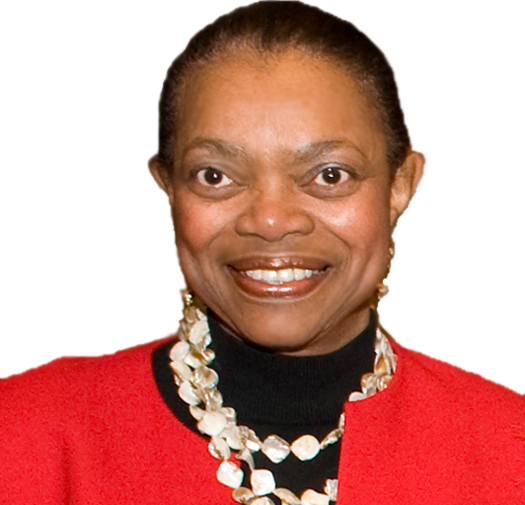
Equipped with this information, it makes perfect sense that the UniverSoul Circus partnered with Interfaith Medical Center to host Health Night on April 11, 2017 at 7pm. Health Night, which took place at Floyd Bennett Field @Aviator Sports, included LaRay Brown, CEO of Interfaith Medical Center as guest ringmaster. For those who entered the code HEALTH, tickets were discounted 25%.

Priscilla Mensah is an avid reader and scholar who resides in Brooklyn, New York. Her passions include community empowerment and improvement. Priscilla can be reached at pmensahbrooklyn@gmail.com.
The Role of the Artist in Telling Our Stories

Four Black Authors Win 2017 Pulitzer Prizes;  Second Achievement for Brooklyn’s Lynn Nottage

The 2017 Pulitzer Prize winners, announced in New York City, April 10, recognized four black writers among the 21 authors.

At the announcement in New York City, Pulitzer Award Administrator Mike Pride described the role of the literary prizes as “telling the story of America and the world.”

But for “our” contemporary post-Harlem Renaissance artists – who are intent on staying free of enforced perspectives that shade truth, there’s another level of action or service beyond the act of storytelling.

Artist Danny Simmons in the February 2008 edition of Legacy Ventures’ Our Time AT HOME publication, commented to writer Victoria Horsford on arts and activism: “Creative expression is an integral part of the human experience.   I don’t know if a man can survive without art in any shape or form. My work has a black esthetic in its underpinnings… My activism is arts-related activism.”

And writer/journalist/psychotherapist Laurie Nadel, this week explained why the community must protect its artists: ‘Artists are our canaries in the coal mine. The President’s decision to cut funding for the National Endowments for the Arts and the Humanities should remind us that dictators are threatened by artists and writers.  It is an ominous sign.

“After the military seized power in Chile after President Salvador Allende’s assassination in 1973, soldiers raided artists’ homes and burned ‘Cubism’ because they thought it referred to Castro’s Cuba and ‘Revolution in the Arts.’  In the present climate, art challenges us to face our fears and get stronger. ”

Lynn Nottage, in an Our Time Press interview set by Marcia Pendelton last month, added her opinion on Donald Trump’s relation to the arts saying “President Trump revels in non-literacy.”

There are many other dimensions to the artists’ role, and we will share our perspective on them in future stories. Meanwhile, please join us and readers globally in applauding this year’s Black Pulitzer-prize winners:

Hilton Als

Hilton Als for Criticism (The New Yorker Magazine). Mr. Als, a theatre critic, won for his “bold and original reviews that strove to put to put stage dramas within the real-world cultural context, particularly the shifting landscape of gender, sexuality and race.” His work often furthers discussions on the intersections of theater, race, identity, sexuality and class in the United States. Specifically, he won for articles related to “The Color Purple” and “Dear Evan Hansen.”


Tyehimba Jess

Tyehimba Jess for Poetry (“Olio”) (Poetry).  Olio is Jess’ collection of sonnets, songs and narratives that highlight the lives of “unrecorded African-American performers” before the Civil War up to World War I.  Scott Joplin figures prominently in this book which also explores the worlds of little-known artists.

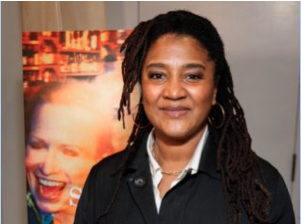
Lynn Nottage for Drama (“Sweat”). With this year’s award, Nottage became the first female playwright to win the Pulitzer Prize twice. Sweat is a “nuanced yet powerful drama (currently running on Broadway) that reminds audiences of the stacked deck still facing workers searching for the American dream.” It that tells the story of a group of friends who work with each other and follows their friendships as talk of layoffs at the factory where they work starts up. Lynn Nottage also won for “Ruined” in 2009.

Colson Whitehead

Colson Whitehead for Fiction (“The Underground Railroad). Whitehead’s novel, which also won the National Book Award, tells the story of a teenage heroine, Cora, in 1850s Georgia who tries to escape a cotton plantation and start her journey toward freedom.

Our Time Press also acknowledges the Pulitzers for the presence of other giants of African descent on its own committee. They include: Dr. Tommie Shelby, PhD, Caldwell Titcomb professor of African and African American Studies an Philosophy at Harvard University; 2009 Pulitzer-winning journalist Eugene Harold Robinson, former assistant managing editor of The Washington Post and member of the National Association of Black Journalists; Poet, essayist Elizabeth Alexander, former Yale University professor and chair, African American Studies, and currently a Columbia University faculty member; and Dominican-American writer Junot Diaz, creative writing professor at Massachusetts Institute of Technology, and fiction editor at Boston Review, who received a 2008 Pulitzer Prize for Fiction.

Role of the Artist continues: Page 8: James Forman, Jr. and Chris Hayes; Page 8: McKenzie’s Profile of Phyllis Bowdoin; Page 9; Menshah’s “as told to” with Eric Kusunoki on Barack “Barry” Obama

Phyllis Bowdwin: Retired Educator Makes an Encore Performance

By Margo McKenzie

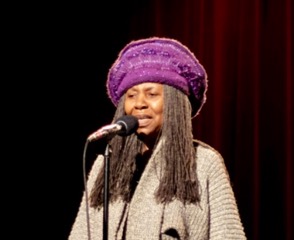
An oral tradition that goes back thousands of years to the ancestral lands of Africa came alive last month when Phyllis Bowdwin took center stage at Lincoln Center during the acclaimed Moth* annual storytelling showcase.


Phyllis Bowdwin

Bowdwin, a retired educator, is an heir to the griots of long ago who passed down culture, music, philosophy, history, our stories and so much more.  She masterfully shared her story to a thundering ovation at March 29th event.


So what’s the story behind how this 21st century woman found herself immersed in the ancient art form of storytelling?


Phyllis Bowdwin’s route to storytelling may first appear circuitous, but in fact it was her destiny from the start.


In the 1960’s, Ms. Bowdwin began her career as a secretary/bookkeeper, and made jewelry on the side.


She became a casting director at ABC, then moved on to adult public education with the New York City Department of Education.


She traveled to Taxco, Mexico to study silversmithing and to the Ivory Coast to learn filigree from a goldsmith in the town of Korhogo. These apprenticeships contributed to the skills she needed to tell a story in precious metal.  She created what she called her Middle Passage brooch, a piece of jewelry purchased by the Smithsonian Institute in New York, along with her 18-by-24-inch poster.

This was her first story in silver: the cramped quarters of the hull of a slave ship. “I decided to make the pin because I was disturbed that nothing had been done in terms of erecting a monument or permanent commemoration of the time of the Middle Passage,” she told a reporter in 1994.


More recently, she credits Mel Glen, a teacher at a United Federation of Teachers’ writing workshop for nudging her into the oral storytelling arena. Glen repeatedly urged her to pitch one of her stories to The Moth, a not-for-profit organization devoted to the art of storytelling worldwide. The organization’s story slams the call for contestants to stand on the stage and tell their true stories within five minutes without the aid of props or papers.


With her mother’s Alzheimer’s diagnosis and her own memory slipping, Phyllis flatly refused.

But later, when she learned The Moth planned to conduct a story slam in the Bronx, her borough of residence, she attended out of curiosity. She found the staff to be surprisingly young, efficient and very friendly — which made her feel right at home. Phyllis pushed through stage fright and won that story slam, her first, on January 13, 2017, her deceased mother’s birthday.


On February 20th, she competed against 9 other story slam winners at a Grand Slam, which took place in Brooklyn at the Williamsburg Music Hall.  She didn’t win, but Jennifer Hixon, the event’s senior producer, liked her story so much she offered her a slot on The Moth’s Main Stage at Lincoln Center–her first gig!


A month later, Phyllis performed a trial run of her story at The Moth’s Main Stage at UCLA in Los Angeles, California..  The Moth flew Phyllis to California and paid all the other expenses for her March 20th performance at UCLA.


A week later, back in New York, she stood on the stage at Lincoln Center and captivated the crowd with her true story about a mime who molested her in front of a lunchtime crowd and how she fought back.


There were no judges to award her a trophy, but positive responses from the founder of The Moth and the audience convinced her she was a winner.


Adding to her accolades, one of the Lincoln Center contestants invited Phyllis to retell her story in New Haven, Connecticut. Now, The Moth is sending her to do the Boston Main Stage on April 26-27th.


Though a retired educator who left the stage of the classroom, Phyllis has found a second stage on which to make her encore performance in life: storytelling.


Moving forward, her goal is to put together a one-woman show. She wants to explore the professional storytelling circuit because she has many stories to share. She told Our Time Press, “Everyone benefits from a good story. People listen, relax, open up and relate.  Storytelling helps break down barriers and foster understanding.


“It helps us see that we are all human, we are all one. This is what I want to do when I grow up.” This story about Phyllis’ encore as storytelling continues to evolve.


What’s your story?


Reporter’s note: The Moth, now in its 20th year, is a nonprofit group headquartered in New York City dedicated to the art and craft of storytelling worldwide.

________________________________


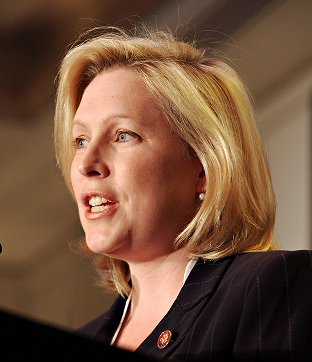
GILLIBRAND URGES COLLEAGUES TO REJECT BILL THAT WOULD TAKE AWAY FUNDING FROM FAMILY PLANNING HEALTH CLINICS

 ON SENATE FLOOR, GILLIBRAND URGES COLLEAGUES TO REJECT BILL THAT WOULD TAKE AWAY FUNDING FROM FAMILY PLANNING HEALTH CLINICS

Gillibrand: I am struggling to understand why, amid all of the problems we have to solve here in this country and around the world, why this Congress seems to have such a singular fixation on controlling women’s access to health care.

 Washington, D.C. – U.S. Senator Kirsten Gillibrand spoke on the Senate floor this afternoon to urge her colleagues to oppose the Title X Congressional Review Act resolution of disapproval.

The resolution would overturn a federal regulation that prohibits states from discriminating against family planning health care providers and denying them federal funding. Family planning health centers provide primary, preventive, and reproductive health care services to millions of American women.

Below are Senator Gillibrand’s remarks as prepared for delivery:

Mr. President, I rise to oppose the Title X Congressional Review Act resolution of disapproval.

 This bill would permit discrimination against family planning health care providers, who provide primary, preventive, and reproductive health care services to millions of women across the country.

It would allow states to take away federal funding from family planning clinics, and make it much harder for millions of American women to meet with their health care providers and access basic care.

And I am struggling to understand why, amid all of the problems we have to solve here in this country and around the world, why this Congress seems to have such a singular fixation on controlling women’s access to basic health care.

This legislation is so far out of touch with the actual needs of our constituents.

If we cut funding from women’s health clinics, is that going to create more good-paying jobs? Is it going to open more factories in our upstate rural towns?

 I don’t believe it will.

 It’s certainly not going to make anyone healthier.

There are millions of American women, including thousands of women in my state of New York, who rely on Title X health clinics for treatments, for preventive care, and for family planning services.

They need these health clinics, because they provide contraception counseling, cancer screenings, and medical expertise, right there in their communities.

 Many of the women who use these services have nowhere else to go to access care – because Title X clinics are often the only affordable option for them, or may even be the only place at all that’s within driving distance of their communities.

 Yet once again, my colleagues are pushing legislation to limit women’s options for accessing health care, and make it harder for thousands of New York women to get the care and treatments they need.

I continue to be amazed by how little empathy there seems to be for the millions of women in our country who don’t have the resources to travel to major hospitals outside of their communities, and desperately need these local clinics to stay healthy.

And let’s be very clear about whom this legislation would hurt the most.

 This bill would hurt women in small towns and rural communities more than anyone else. It would cause lower-income women to struggle even more.

 Every single one of my colleagues has many women in their states who rely on Title X clinics, and would suffer if these clinics had their federal funding taken away.

 So I urge my colleagues in this chamber, when it’s time to vote on this legislation, think about the women who live in your states.

Think about the women who live in small towns and rural communities, who are just trying to access basic women’s health care services that they can afford.

 Think about the women who don’t have big hospitals or big cities nearby.

 Think about the women who don’t have enough money to travel.

This bill would hurt them. It would make their lives harder, not easier.

We all have a responsibility to stand up for the women in our states, and that includes defending their access to health care and basic family planning services.

 So I urge my colleagues to vote against this very discriminatory bill.

I yield the floor.


We Can Win the War on Homelessness

By State Senator Velmanette Montgomery

As part of his “War on Homelessness”, Mayor de Blasio announced a highly controversial plan to open 90 new shelters across the city. As the State Senator for a district that is home to multiple shelters, I strongly believe that there is a need to revisit state and city policies on housing and how we utilize federal, state and city resources in a more efficient and humane way to address homelessness. While shelters divide communities, affordable housing enhances and strengthens neighborhoods.

I am proud to have in my district numerous developments built by Neighborhood Preservation Companies (NPCs). These not-for-profit housing development organizations provide quality affordable and supportive housing while respecting the fabric and character of the community. For the last 25 years, before developers “discovered” Brooklyn, NPCs have been the source of revitalization for our communities and have been on the front lines of building homes for low- and middle-income New Yorkers.

Regrettably, in an environment that embraces incentivizing luxury developers, our NPCs are left underfunded when they are more than ready to join us in solving this crisis. In this year’s budget, the governor has proposed cuts to the Neighborhood Preservation Program (NPP), an important state funding source for our NPCs. Meanwhile, there is continued support for programs like 421-a, which only continues this trend of subsidizing luxury developments that reap few benefits for average New Yorkers. Every dollar the government gives away to luxury developers in exchange for a handful of “affordable” units could instead be invested in NPCs that are dedicated to providing permanent affordable, low-income and supportive housing.

It is a grave injustice for something as fundamental as housing to be out of reach for tens of thousands while luxury condominiums seem to go up every other day. If we continue to rely on private developers and incentivize market-rate projects that do not add to our tax base, we will not solve the housing crisis and we will force more people into shelters.

I call on Governor Cuomo, Mayor de Blasio and my colleagues in the city and state to come together to create a plan that includes and gives preference to NPCs who have expertise in building permanent low- and middle-income affordable and supportive housing.