Home Blog Page 731

US Virgin Islands: The American citizens battered by hurricane Maria – and forgotten

Most of the 100,000 citizens here have no drinkable water or power, but the territory has been overlooked in the storm’s aftermath

By Oliver Laughland in St Thomas, US Virgin Islands

If Irma hit like a right hook, then Maria was the sucker punch, battering the islanders while they were already down. Almost a month after the first of two deadly hurricanes collided with the US Virgin Islands, the recovery is still in its infancy.

‘We pray for dawn’: Trump’s words ring hollow in Puerto Rico’s devastated interior

92% of people still have no electricity after Hurricane Maria hit two weeks ago, and many people are trapped by debris and facing a lack of food and water.

Power lines droop over the main roads in Charlotte Amalie, the territory’s capital. More than half of the roof of St Thomas’s commercial airport no longer exists, replaced with sky blue tarps that ripple in the breeze. All the territory’s schools remain closed, with hopes to reopen on Tuesday. Around 90% of the territory is without power and the vast majority of the population are still without potable water.

While the plight of neighbouring Puerto Rico, hit hard by Maria over two weeks ago, has prompted a national outcry in the face of a slow federal recovery effort, the continuing crisis on the US Virgin Islands, home to 100,000 US citizens, has received less focus.

The White House blamed “difficult logistics” for preventing Donald Trump from stopping here during his trip to Puerto Rico earlier in the week. But on Friday vice-president Mike Pence flew into the American territory’s second island of St Croix, where Maria hit the hardest. He vowed that the administration “will be with you every day until the US Virgin Islands comes all the way back”.

The territory’s governor, Kenneth Mapp, a registered Republican who ran as an independent, backed the sentiment. “There is no country that responds to disasters like the United States of America,” he said.

Dominica in tatters weeks after Maria: ‘We saw everything totally destroyed’

Things are slowly improving after the devastation of its strongest hurricane on record, but much of the island is still isolated without power and water.

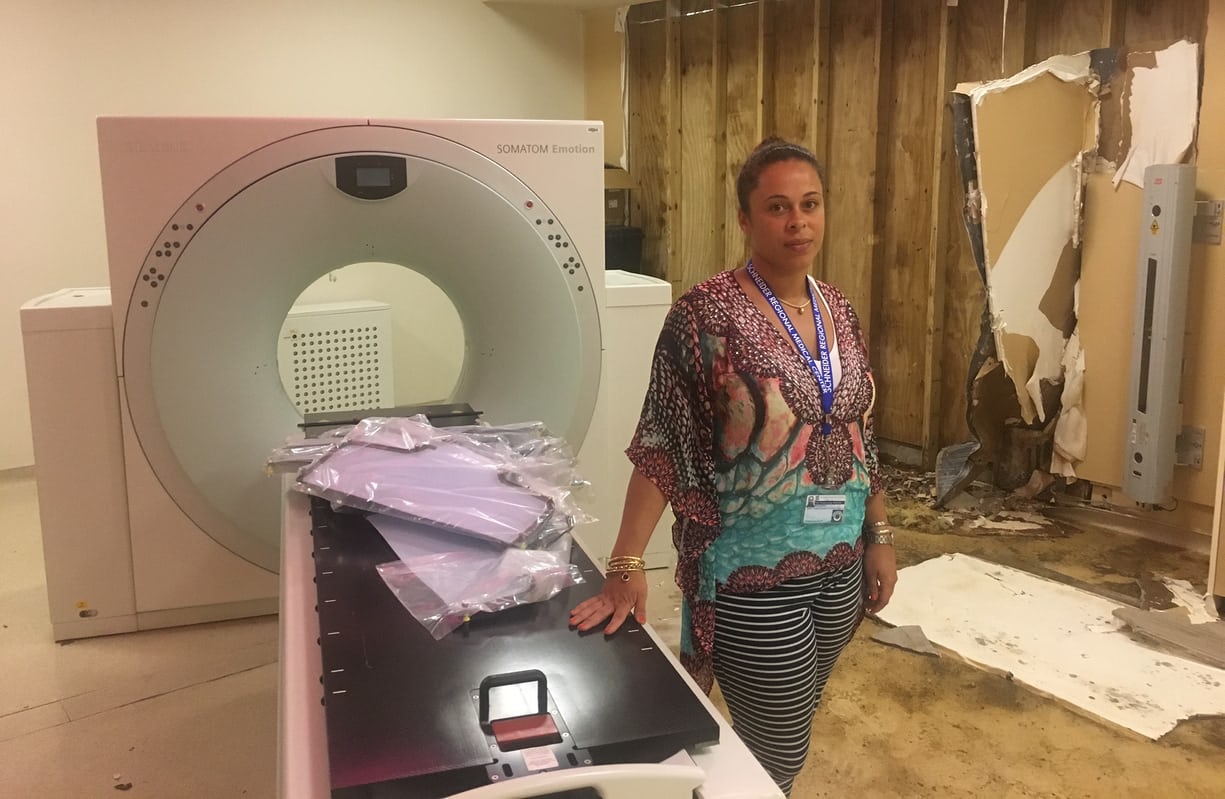
When Maria arrived a week later, with the roof already damaged, the hospital was flooded once again. The water has not fully receded and a few inches cover the floor of the cancer center, where Irma’s winds destroyed the facility’s only MRI scanner. Commissiong Dickson said the hospital had received significant federal assistance, but added that it would take an estimated two years to repair the damage.

Fema has begun to roll out inspection teams. But, said agency spokeswoman Renee Baffles, it had been “very difficult” to reach all the island’s remote communities, many of which have no formal addresses. More than 14,600 islanders have so far registered for assistance with Fema, but there are undoubtedly many thousands more in need of aid.

With no access to the internet and no working radio or TV, Velma Samuel and Tamika Francis had no idea how to contact Fema and apply for assistance. Although the pair had given up hope for their government, they had not given up on the island itself.

“I love my island,” said Francis. “I was born and raised here. So no matter what we go through here, I will never feel like like leaving,”

She turned back towards the rubble and continued clearing it, piece by piece.

The Guardian’s independent, investigative journalism takes a lot of time, money and hard work to produce. Please go to: www.theguardian.com and make a contribution.


Working to Rewrite the Narrative: the CUNY Black Male Initiative Conference

0

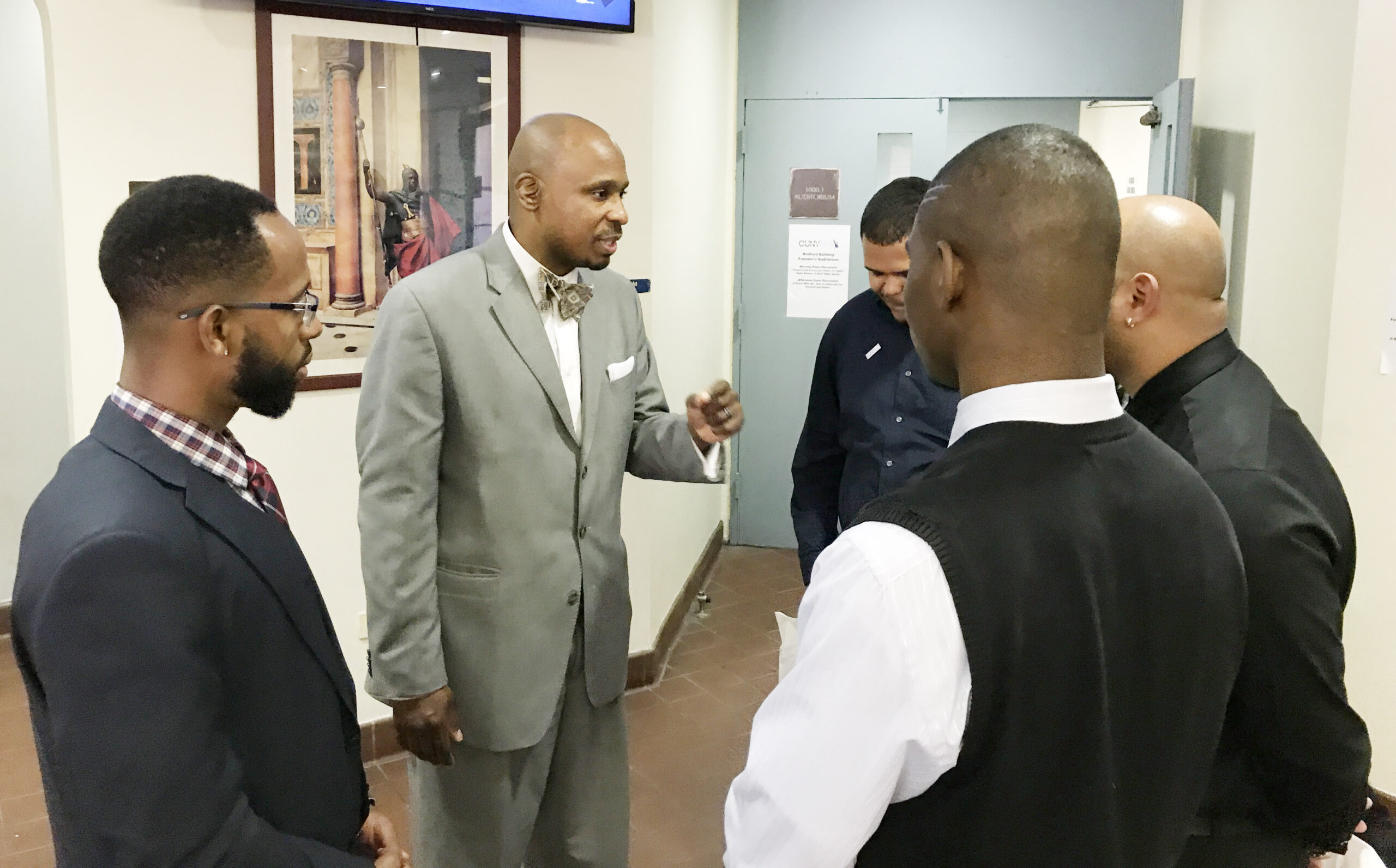
Last Friday, more than 1,000 students, faculty, administrators and parents from communities throughout the tristate area convened on Bedford Avenue at Medgar Evers College for the 12th Annual CUNY Black Male Initiative Conference. The conference is a CUNY-wide initiative intended to enrich and support the educational success of males from underrepresented groups, particularly African-American, Caribbean and Latino males. The initiative was created in 2004 as a method to offset the evident pattern of ongoing discrimination that many underserved Black men in New York City face, particularly in the arenas of education, criminal justice and employment. The BMI and the need to speak to issues of disparity in relationship to young Black males was echoed by President Obama’s “My Brother’s Keeper Initiative”, which was launched in 2014.

The theme of this year’s BMI Conference was Rewriting the Narrative. The panel discussions throughout the day focused on five key topics: media, advocacy, economics, policy and incarceration. All of the discussions and programming targeted the processes and methods of dispelling stereotypes and negative imagery associated with men of color. The conference had not one but two keynote speakers. The morning keynote lecture was given by Dr. Bryant Marks, Professor of Psychology and the Director of the Morehouse College Male Initiative. The afternoon keynote lecture was given by Mychal Denzel Smith, a writer for the Nation magazine.

Black men of all ages were on hand to learn and to educate one another. For many of the younger students it was their first time hearing about certain concepts or being included in certain conversations. Former Hip-Hop Minister Conrad Tillard moderated a media panel discussing the importance of being a creator of social media content and not just a user. He stressed the need for Black men to maintain a solid online reputation and presence, and working to change the online perception of Black men as thugs and deviants. Erika Pearson, a Management Consultant for Ernst and Young, moderated a panel about finances. This was probably the most interactive panel of the day as students were prompted to speak about their economic goals while panelists offered them insight on how to reach those goals. Asking questions was demanded of the crowd throughout every panel, turning instructional sessions into town hall-style discussions. During breaks in between panels, many attendees got a chance to catch some of the panelists and even the keynote speakers in the hallway to further discuss the myriad of concepts presented throughout the day. On a break, I got a chance to speak to Dr. Marks about the theme of the conference and its significance. “The theme this year is around narrative change. What is the story we tell ourselves about Black and Latino males? For most Americans, that story is negative. So, what we want to do is to challenge that and say okay, what is the story? How did it form? How accurate is it? And finally, how do we change it?”

When discussing the importance of the Black Male Initiative Conference, keynote speaker Mychal Smith spoke frankly about the perceived need to attach an inordinate level of urgency to such an event. “It’s never not important. I’m often bothered by the language of the now more than ever talk, or because things are more present in our minds or more pushed to the forefront via media and headlines that these issues haven’t always existed, or that these issues were less important before. It’s always important. It’s always important to be doing this kind of work where you are coming together in the community to think critically. And I think that more than anything else we can do that in the community together. And that’s what BMI is fostering.”

The students are the focal point of the conference and the information and resources presented to them will enhance not only their educational experience but will serve as support as they move into the various fields of employment. A group of young men from Union County College in Cranford, New Jersey came to the conference to be a part of the discussions and they were more than satisfied about the information they received. Terrell Germany, 18, said he enjoyed the panel on finance. “I learned about finance, how to budget your life, you know? Being so young and having a job, you want to start now by establishing a good ground base of finance. You want to have a surplus. When you’re older, you don’t want to be in debt.” Terrell’s classmate, Amir Malcolm, 18, agreed. “We have to educate ourselves. A lot of times in our communities financial literacy isn’t taught to us. So, it is our responsibility to go out and to seek that literacy and that knowledge.”

As I left the conference, I found myself walking behind a group of young men, and those young men were discussing some of the things they learned at the conference. If the goal of the Black Male Initiative is to introduce concepts and ideals to young Black men with the hopes of enhancing their educational experiences and to prepare them for life, then this conference certainly succeeded in that mission.


WHAT’S GOING ON

USA WEEK IN REVIEW

The State of the Union: Just when you thought that you heard it all,

Bob Corker

Republican US Senator Bob Corker said last week, “I think that Secretary Tillerson, Secretary Jim Mattis and White House Chief of Staff John Kelly are those people that help separate our country from chaos,” meaning Trump, POTUS 45. Corker continued saying that he feared that Trump was steering the nation on the path to WWIII. Corker is the lone GOP messenger who confirmed White House incompetence.

What is the White House doing about the humanitarian crises in America’s Caribbean territories like Puerto Rico and the US Virgin Islands. What benefits accrued to PR and USVI after the Trump “paper towel” visit last week. An entire region is disabled because of energy and power shortages. Why does the Caribbean basin countries not take advantage of its greatest natural resource, the sun and the supply of energy it provides.

NOTES ON RACE: The Dove marketing culture has a problem with Black women, white women and racism in its ads. The latest Dove racist ad emerged last week in the digital world. It opens with a Black woman who morphs into a lighter woman who morphs into a white woman. Hence, the Black woman goes from dirty black who cleanses herself to whiteness. Dove soap items are Unilever products. In 2011, there was a Dove ad with three women standing next to each other. This is not the first time. A 2011 Dove ad with three women, each standing side to side with the Black woman on the far left with alleged bad skin. The second woman is lighter and the third one is the lightest who boasts smooth skin. The ad copy next to woman #3 read, “Visibly more beautiful skin”.

The Dove marketing formula is traveling from Black and dirty to white and

clean. Perhaps it is time to boycott the Unilever product brands which are legion. Remove the following brands from your shopping carts: Hellman’s, Lipton, Knorr, Vaseline, Breyers. Dove needs to hire some Black people to improve their race sensitivities.

NEW YORK, NY

Is the Obama clan fated to become New Yorkers? Rumors run rampant about Barack and Michelle about to purchase a co-op unit at 10 Gracie Square on Manhattan’s Upper East Side.

Barry Jenkins

HARLEM: Yes, Barry Jenkins, director of the 2017 Oscar-winning film MOONLIGHT, about the lives of poor, dark Black people, greeted the Manhattan Community Board 10 general meeting on 10/5 to talk about his next film, an adaptation of James Baldwin’s novel, “If Beale Street Could Talk”, which will be shot on location in Harlem consistent with the Baldwin family’s wishes and Jenkins. Film production begins in late October with lots of exterior shots on Edgecombe Avenue.

The First Corinthian Baptist Church, on Adam Clayton Powell, Jr. Boulevard at 116th Street in Harlem, hosts Community Conversations on Health and Wellness on October 21st from 12-2 pm, and everyone is invited.  Featured speakers at the “Overcoming Stress and Achieving Wellness” talk include First Lady of NYC Chirlane McCray, FCBC Sr. Pastor Rev. Dr. Walrond; Dr. Gary Belkin, NYC Mental Health Commissioner; and Dr. Sidney Hankerson, Columbia University Medical School. Food and massage will be available, and health insurance sign-ups are some of the event highlights.

INTERNATIONAL AFFAIRS

MacDella Cooper

On October 10, presidential elections were held in Liberia to determine who will succeed President Ellen Johnson Sirleaf, Africa’s first elected woman president who has served for 12 years. There are 20 registered candidates eyeing the Liberian presidency, including one woman, MacDella Cooper, 40, former NY model-turned-philanthropist who ran in the city’s A-list circles.   Current Vice President Joseph Boakai; George Manneh Weah, former soccer star, erstwhile paramour of Ms. Cooper; Benoni Urey, the country’s richest man; Alexander Cummings, former Coca-Cola executive; and Prince Johnson, former warlord, are among the 20 contestants.  To be sure, there will be a runoff unless one of the candidates scores 50% of the votes. Sirleaf shifts support from one candidate to another. It is rumored that she will relocate to Kenya and transfer some of her key assets there after the election.

Spain and Iraq are not the only nations dealing with separatist groups, the Catalonians and the Kurds, respectively, who both held recent referendums. In Nigeria, a separatist group in the southeast wants independence. This is 50 years after the civil war which claimed the lives of 1 million people for the selfsame matter. Nigerian President Muhmmadu Buhari has identified the indigenous people of Biafra a terrorist organization.   His government also has to deal with the terrorist Boko Haram in the northeast. ….. After independence, the former British part of Cameroon and the former French part of Cameroon united evolving into a Francophone entity. Anglophone and Francophone Cameroon are not harmonious. English Cameroonians want independence.

ARTS/CULTURE

Read author/entrepreneur Yvonne Stafford’s 9/29 Crain’s NY Magazine op-ed, “As Small Businesses Disappear, City Government Stands Idly By: Rising Rents, Gentrification and Upzonings are Erasing the Character of Historic Commercial Strips. Essay resonates with people who once lived in the city’s ethnic-specific neighborhoods.

The Columbia University Center for Jazz Studies presents the  ARMSTRONG CONTINUUM (as in Louis) with performances by Jon Batiste and Wycliffe Gordon at the Miller Theater, located at Broadway at 116th Street on October 12.

The Essie Green Galleries’ new exhibit, RECOLLECTIONS, features works by Romare Bearden, Allen Stringfellow, Geraldine McCullough, James Van Der Zee and Arthur Coppedge, opens with a reception on October 14th at 419A Convent Avenue, 148th Street, Harlem. [Call 212.368.9635]

NEWSMAKERS

Special birthday greetings to Tuskegee Airman Reginald Brewster who turned 100 last week.  A Harlem resident, a retired lawyer, centenarian Brewster’s eyes no longer work but his hands deftly play classical piano daily. His memories of the Tuskegee Airmen, his war days in England are graphic and lucid. The Tuskegee Airmen, US military personnel, were exceptional African-American aviators and one of the most respected fighter groups during WWII. They paved the way for the full integration of the US military.

RIP: Virgo Hardware founder Altiman Armstrong, 88, has died. The Jamaican-born handyman with multiple skill sets, relocated to Harlem in the 1970s and opened Virgo Hardware on Lenox at 129th Street where he stocked hardware items and provided locksmith, plumbing and masonry services. Armstrong moved VIRGO, his zodiac sign, to 188 Lenox Avenue in the 80s, where it is one of Central Harlem’s oldest Black-owned businesses.

HIGHER LEARNING

The 2018 US News and World Report list of the Top 80 Historically Black Colleges and Universities (HBCUs). The following list includes the Top 10 of 55 ranked schools in descending order: 1)Spelman College, 2)Howard University, 3)Hampton University, 4)Morehouse College, 5)Xavier A&M, 6) Florida A&M University, 7)Tuskegee University, 8)NC A&T, 9) Clafin University, 10)Fisk University, 11)Dillard University.

A Harlem-based management consultant, Victoria Horsford can be reached at victoria.horsford@gmail.com.
Thinker’s Notebook: Chasing Kaepernick

For this week’s column, I humbly present to you a story about a regular guy from Brooklyn and his quest to meet with the most polarizing name in sports today, Colin Kaepernick. This is a fascinating story, filled with suspense, plot twists and a cliffhanger ending that will leave you on the edge of your seat.

Spoiler alert! The regular guy from Brooklyn is me. Now, let’s begin.

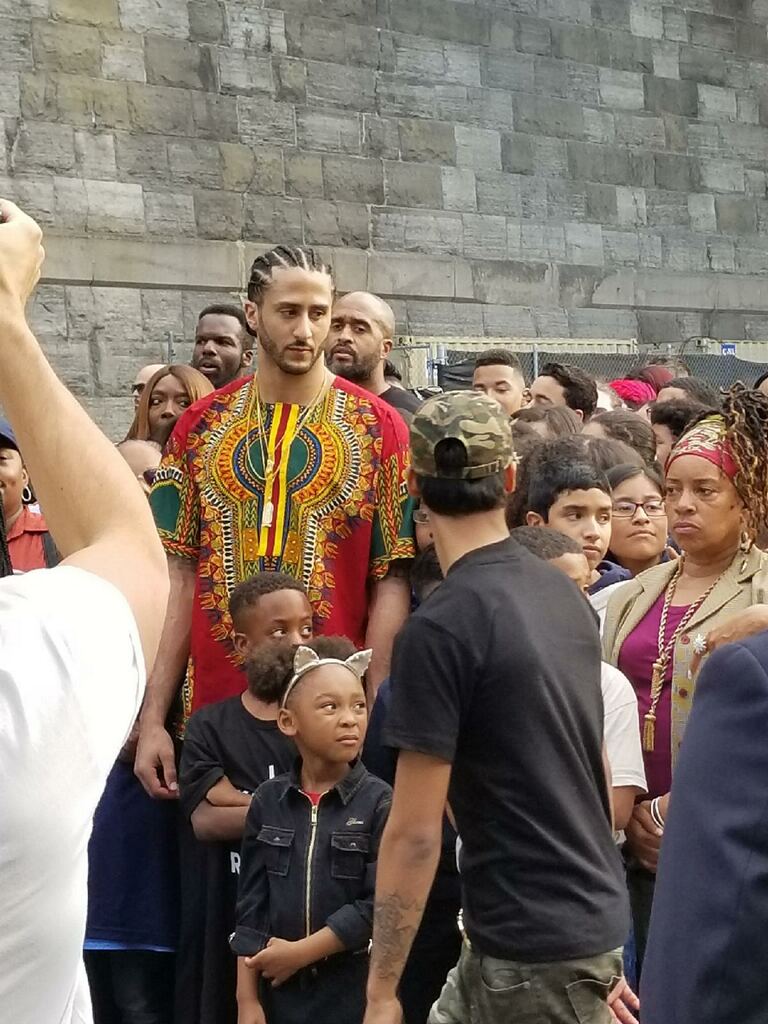
Colin Kaepernick with Black Veterans for Social Justice founder Job Mashariki. Kaepernick has donated $50,000 to the organization as part of his million-dollar pledge

During the 2016 football season, San Francisco 49ers Quarterback Colin Kaepernick made the decision to kneel during the singing of the national anthem before the start of the game. His decision was an attempt to bring to light many of the injustices that people of color continue to struggle with in this country, his ire specifically focused on the unwarranted and unnecessary killings of Blacks at the hands of the police. You see, in 2016, there were 39 incidents of unarmed Black men being murdered by police officers. Terence Crutcher was killed by police after his vehicle stalled on the road in Tulsa, Oklahoma. He was shot in the back while walking towards his car with his hands raised in the air. Philando Castile was killed in Falcon Heights, Minnesota while sitting in the passenger seat of a car his fiancée was driving. They were stopped for a busted taillight. His girlfriend’s 4-year-old daughter was in the backseat when the officer killed him. The day before Mr. Castile was killed, Alton Sterling was murdered by officers in Baton Rouge, Louisiana. He was already detained and lying prone on the ground when an officer shot him dead. It was murders like these that compelled Kaepernick to take a stand by kneeling for the anthem.

By now, you know about how Kaepernick’s actions were received by this nation. You probably know that he opted out of his contract with the 49ers after the end of the season, and that he has not been acquired by any team this year, even though one could argue that he is the best QB without a job in the league. What you might not know, however, is that Kaepernick’s stance on injustice was not just relegated to on-field demonstrations. In October 2016, Kap began his “Million Dollar Pledge”. His mission was to donate one million dollars plus the proceeds from his jersey sales for that year to organizations working in oppressed communities–$100,000 per month for 10 months. This pledge wasn’t publicized, probably because the narrative was too busy trying to paint him as anti-American.

In January 2017, as part of his Million Dollar Pledge, Kap donated $25,000 to Black Veterans for Social Justice. BVSJ is a nonprofit organization based in Bed-Stuy that works to service veterans and the community at-large. The organization was founded by Job Mashariki in 1979. Job is my father-in-law. When I heard about the donation, I was both excited and proud for the organization. I can speak clearly for the work BVSJ does in our communities, so it was an honor to know that Kap and his organization considered BVSJ enough to donate.

During that 2016 football season, Kap was teammates with Antoine Bethea. Antoine is a friend of mine, his wife and my sisters are dear friends. When I heard about the donation, immediately I thought that it would be a great idea to bring Kap to Brooklyn so that he could see his dollars being put to use. I contacted Antoine’s wife Samantha and told her what I was thinking. She spoke to Antoine about it, and the two of them sent me the phone number and e-mail address to Cat Collins. Cat is a media consultant that works with Kap. I contacted Cat and let him know what I was thinking. Cat liked the idea and told me that he’d work on making it happen for me.

That was in January.

As the months and the seasons changed, Kaepernick’s demonstration and subsequent job search began to play out in the court of public opinion. Teams weren’t checking for him, choosing to either stand pat on their QB roster, or to sign players who don’t begin to compare to Kaepernick talent-wise. Those paying attention began to wonder, was the NFL blackballing Colin? All summer, Cat and I went back and forth through e-mail, working to try to get Kap to Brooklyn. It didn’t work once because he had a trip to Africa. Another time, he was dealing with preparing himself to be scouted by teams. Always a task or engagement kept us from getting him here. I understood. Colin’s brand, his image and his stance were beginning to magnify and expand beyond the reach of courtesy. He was becoming the poster child for social awareness, bigger than our small organization could reach. I was beginning to think that it might not happen.

In August, Our Time Press co-founder Bernice Green sent me an e-mail that reignited hope. Her e-mail said that I would be covering a press conference organized by 100 Blacks in Law Enforcement, Councilman Jumaane Williams and retired Detective Frank Serpico. The press conference would be an official show of support for Colin Kaepernick, and was to be held right at Brooklyn Bridge Park. Bernice was situating an opportunity for me to have one-on-one time with Kap before the presser. This was the opportunity I’d been waiting for. Kap would be in Brooklyn and I’d get to not only thank him personally for his donation, but I’d get to interview him for a story. Win-win never sounded so sweet! I e-mailed Cat the night before the press conference to let him know that I’d be there so that he could prepare Kap to meet with me. That morning of the press conference, on my way over to the park, I checked my e-mails. Cat had sent a reply. It said that Kaepernick would not be at the press conference. I began to feel like Captain Ahab, wandering the blue sea obsessed with crossing paths with Moby Dick. Maybe my goal was too lofty. Maybe my gratitude to Kap, not just for his donation but for the position he took on injustice, maybe it didn’t matter.

As summer ended and the new football season began, I stopped entertaining the idea. Obviously, if Kap was still interested in playing the game, he’d be using this time wisely. He’d be working out and studying film and no way would he have the time to entertain my idea. Then the season began and those who were dissatisfied with Kap not being signed to a team called for a boycott of the league. Then our idiot-in-chief Donald Trump had the audacity to call the players who were continuing Kaepernick’s protest sons of bitches, and that sparked a wave of new protesting from both sides of the argument. What began as a spark of awareness has erupted into an uncontrollable forest fire fueled by hate and ignorance. People are attacking other people in the stands of games for not saluting the flag. Other people are outraged at players for disrespecting the military and the flag with their protests, never mind the fact that it was a Navy Seal who gave Kap the idea to kneel in protest in the first place. And Kap still hasn’t been signed. The whole thing has been corrupted, and now instead of just wanting to thank Kaepernick for his stance, I’m more concerned about the climate that exists now that his stance has been hijacked and altered to fit the narrative of the weak and insensitive. These are precarious times.

Last Friday, I received a call from Wendy McClinton, the CEO of BVSJ. Wendy is the kind of person that brings light into the darkness. If you see her name pop up on your phone, you’re more than likely going to smile. So as I answered the phone smiling, she said something that I didn’t expect to hear. She said, “Marlon, we need a couple of people to go uptown to represent the organization at a photo shoot for Colin Kaepernick. Are you available?” I’m not going to lie, my first thought was, “Here we go again. Another whale for Ahab to chase”. But I said, of course I’m available, and wanted to know where and when. Wendy relayed all of the information to me and she sent a letter of thanks to be given to Kaepernick personally. Once I saw Cat’s name on the paperwork, I began to think that this was the real thing. Five of us took the trip uptown – myself, three employees of the organization and the founder, my father-in-law Job Mashariki. The shoot time was 3:45pm. We left Brooklyn at 2:00pm, and by 3:40, we were only at 85th Street and Broadway. Traffic in the city is ridiculous. I called the contact and told her that we were on our way, just running late due to traffic. Her response was for me to hurry because they were setting up for the shoot and wouldn’t wait. Was I going to lose this time because of traffic? We rushed as quickly as we could to the meeting point. When we pulled up, we could see the crowd formed for the shot. There was a tall man in a dashiki standing in the front of the crowd as if the crowd were his entourage. The man was Colin Kaepernick. I hopped out of the van and ran about half a block to make it into the shot. Amassed behind Kaepernick were children from a nearby school, as well as other representatives from organizations he’s donated to. Just like that, I was standing two people away from Kap, a part of a photo shoot for a well-known magazine. Talk about finding Moby Dick!

When the shoot was over, and after the kids got their autographs, I introduced myself to Kap. I thanked him for his donation and told him what the money is being used for. I thanked him for his service to our community and told him that we support him in the County of Kings. He thanked me for taking the time to come to the shoot and we spoke a little about who was better-looking. I said that I am, and I believe that. It was a good conversation. I told him that if he needed an extra wide receiver to practice with, I’m available. His look said thanks, but no thanks. We posed for some pictures and then I introduced him to Mr. Mashariki. Kap was very endearing. He listened to everyone talking to him and responded with genuine thought. After a few minutes, his team rushed him into his vehicle and we got back into ours. It had been 10 months in the making, but I was finally able to shake Kap’s hand and to thank him. His decision to kneel has blossomed into this entire investigation into our nation’s ideals and values, an internal audit of our country that was much-needed and very overdue. And though it seems at times that we as a people might drown in the severity of these issues, just like Ahab did when he finally came face-to-face with Moby Dick, I can assure you that we will not. In fact, when it’s all over, we will all be better because of it.

I still haven’t gotten him to Brooklyn though. Maybe I’ll e-mail Cat this week.

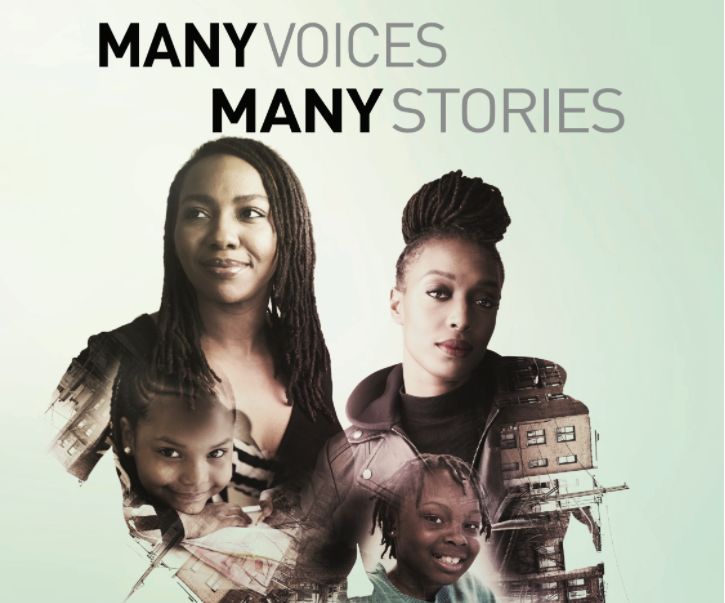
Brooklyn Millennials Comedian Franchesca Ramsey and Black Lives Matter’s Opal Tometi On Subway Posters Speaking Out on Poverty in Brooklyn

Black millennial Brooklynites MTV and Comedy Central comedian Franchesca Ramsey and Black Lives Matter co-founder Opal Tometi are speaking out about the 23 percent of Brooklynites who are living in poverty and the impact of volunteering, advocacy and philanthropy to make a positive difference.

They are ambassadors for the Brooklyn Community Services ONE Brooklyn Community “Many Lives, Many Voices” public service poster campaign seen at many Brooklyn subway stations through the end of October.

Ramsey, a former “Nightly Show with Larry Wilmore” contributor, will make history as the first Black woman to host a show on Comedy Central during the 2017-2018 television season. Already she’s a popular video blogger with over 29 million views on YouTube and the host of the hilarious MTV Web series “Decoded”, which tackles race, gender and pop culture. But, to the former Florida resident, gentrification in Brooklyn is serious business.

“When gentrification occurs people try to look on it as a positive thing. They say the neighborhood is getting better. It’s getting nicer–without realizing that the downside of it is that a lot of people living in the community end up getting pushed out,” said Ramsey. “How can we do it in a way that partners with the people that have always been there so they can also reap the benefits of a cleaner street or a safer neighborhood and without losing the people that have raised their families there and started their businesses there? The way to make our communities better is to make sure it’s better for everybody, not just one small section.”

New York-based Nigerian-American writer, strategist and community organizer Opal Tometi is a co-founder of the historic movement #BlackLivesMatter. The impact of this landmark project has landed her on leadership lists with media outlets like Fortune, POLITICO and TheRoot.

Currently, she is executive director of Black Alliance for Just Immigration, the leading Black organization for immigrant rights.

“The way to address poverty I believe we need a radical investment in our communities, particularly in low income and poor communities all across the Borough of Brooklyn,” said Tometi. “That can look like investing in a quality education system, affordable housing, jobs programs and transportation for folks that can’t afford it.”

Sponsored by Investors Bank, the ONE Brooklyn Community “Many Voices, Many Stories” subway posters spotlight a diverse group of notable Brooklyn residents who are advocates for an inclusive Brooklyn. The campaign has 26 notable Brooklynite ambassadors ranging from children to adults that represent media, culture, entertainment, interior design, fashion, cuisine, education and social justice activism. These ambassadors include Jocelyn Cooper, partner and co-founder of AFROPUNK; educator Nadia Lopez, principal/founder of Mott Hall Bridges Academy; and MSNBC’s Chris Hayes. The posters, which are on view at the BCS Web site, will be in many Brooklyn subway stations through the end of October. For more information, check out BCS on www.wearebcs.org.